From Surf Wiki (app.surf) — the open knowledge base
Sawfish
Family of fishes
_(20937469632)_(cropped).jpg)
Family of fishes
) Myledaphus pustulosus from the Hell Creek Formation of Garfield County, Montana |journal=Transactions of the Kansas Academy of Science |volume=121 |issue=3–4 |pages=279–296 |doi=10.1660/062.121.0412 |s2cid=92493020 }}|PS= (see article for discussion)}} (1) P. dubius was only described 6 years later by Bleeker in 1852 (see e.g. Wueringer2009 ref + Van Oljen, Faria & McDavitt, 2007. The curious holotype of Pristis dubius Bleeker, 1852 and the unravelling of Bleeker's sawfish taxonomy. Raffles Bulletin of Zoology 14). (2) P. dubius is not recognized as a valid species by recent authorities (see refs listed in #1). -- Green sawfish, Pristis zijsron (below)
- Anoxypristis White & Moy-Thomas, 1941
- †Propristis Dames, 1883
- Pristis Linck, 1790
Sawfish, also known as carpenter sharks, are a family of very large rays characterized by a long, narrow, flattened rostrum, or nose extension, lined with sharp transverse teeth, arranged in a way that resembles a saw. They are among the largest fish, with some species reaching lengths of about 7-7.6 m. They are found worldwide in tropical and subtropical regions in coastal marine and brackish estuarine waters, as well as freshwater rivers and lakes. All species are critically endangered.
They should not be confused with sawsharks (order Pristiophoriformes) or the extinct sclerorhynchoids (order Rajiformes) which have a similar appearance, or swordfish (family Xiphiidae) which have a similar name but a very different appearance.
Sawfishes are relatively slow breeders and the females give birth to live young. They are generally harmless to humans, but can inflict serious injuries with the saw when captured and defending themselves.
Sawfish have been known and hunted for thousands of years, and play an important mythological and spiritual role in many societies around the world.
Once common, sawfish have experienced a drastic decline in recent decades, and the only remaining strongholds are in Northern Australia and Florida, United States. All five species are rated as Critically Endangered by the International Union for Conservation of Nature (IUCN). They are hunted for their fins (to make shark fin soup), and for the use of other parts, including the teeth and rostrum, in traditional medicine. They also face habitat loss. They are protected in Australia, the United States and several other countries, meaning that sawfish caught by accident have to be released and violations can be punished with hefty fines.
Taxonomy and etymology
The scientific names of the sawfish family Pristidae and its type genus Pristis are derived from the .
Despite their appearance, sawfish are rays (superorder Batoidea). The sawfish family has traditionally been considered the sole living member of the order Pristiformes, but recent authorities have generally subsumed it into Rhinopristiformes, an order that now includes the sawfish family, as well as families containing guitarfish, wedgefish, banjo rays and the like. Sawfish quite resemble guitarfish, except that the latter group lacks a saw, and their common ancestor likely was similar to guitarfish.
Living species
The species level taxonomy in the sawfish family has historically caused considerable confusion and was often described as chaotic.
Anoxypristis contains a single living species that historically was included in Pristis, but the two genera are morphologically and genetically highly distinct. Today Pristis contains four living, valid species divided into two species groups. Three species are in the smalltooth group, and there is only a single in the largetooth group.
| Genus and species group | Image | Scientific name | Common names (most frequently used listed first) | IUCN status | Distribution | Main habitats | Anoxypristis | Pristis | Smalltooths | Largetooths |
|---|---|---|---|---|---|---|---|---|---|---|
| [[File:AnoxypristisCuspidataCSIRO.jpg | 140px]] | Anoxypristis cuspidata | ||||||||
| (Latham, 1794) | Narrow sawfish, | |||||||||
| knifetooth sawfish, pointed sawfish | [[File:CR IUCN 3 1.svg]] Critically endangered | Indo-Pacific | Marine waters, estuaries | |||||||
| [[File:Pristis clavata (Dwarf sawfish) in Aqua park.png | 140px]] | Pristis clavata | ||||||||
| Garman, 1906 | Dwarf sawfish, | |||||||||
| Queensland sawfish | [[File:CR IUCN 3 1.svg]] Critically endangered | Indo-Pacific | Marine waters, estuaries | |||||||
| [[File:Pristis pectinata SI2.jpg | 140px]] | Pristis pectinata | ||||||||
| Latham, 1794 | Smalltooth sawfish | [[File:CR IUCN 3 1.svg]] Critically endangered | Atlantic | Marine waters, estuaries | ||||||
| [[File:Aquarium Genoa 01.JPG | 140px]] | Pristis zijsron | ||||||||
| Bleeker, 1851 | Green sawfish, | |||||||||
| longcomb sawfish, narrowsnout sawfish, olive sawfish | [[File:CR IUCN 3 1.svg]] Critically endangered | Indo-Pacific | Marine waters, estuaries | |||||||
| [[File:2009 Pristis microdon2.JPG | 140px]] | Pristis pristis | ||||||||
| (Linnaeus, 1758) | Largetooth sawfish, | |||||||||
| common sawfish, wide sawfish, freshwater sawfish, river sawfish, Leichhardt's sawfish, northern sawfish | [[File:CR IUCN 3 1.svg]] Critically endangered | Atlantic, | ||||||||
| Indo-Pacific, | ||||||||||
| East Pacific | Marine waters, estuaries, rivers, lakes |
Extinct (fossil) species
In addition to the living sawfish, there are several extinct species that only are known from fossil remains found around the world in all continents. or probably a junior synonym of the sclerorhynchoid Onchopristis. Indisputable sawfish genera emerged in the Cenozoic age about 60 million years ago, relatively soon after the Cretaceous–Paleogene mass extinction. Among these are Propristis, a monotypic genus only known from fossil remains, as well as several extinct Pristis species and several extinct Anoxypristis species (both of these genera are also represented by living species). Historically, palaeontologists have not separated Anoxypristis from Pristis. and Mesopristis,
The extinct order Sclerorhynchoidei had long rostra with large denticles similar to sawfishes and sawsharks. This feature was convergently evolved, recently proposed as 'pristification', and their closest living relatives are actually skates. While they are often called "sawfishes", the more accurate common name for sclerorhynchoids is "sawskates".
Appearance and anatomy
Sawfish are dull brownish, greyish, greenish or yellowish above, The underside is pale, and typically whitish.
Saw
The most distinctive feature of sawfish is their saw-like rostrum with a row of whitish teeth (rostral teeth) on either side of it. The rostrum is an extension of the chondrocranium ("skull"), The rostrum length is typically about one quarter to one third of the total length of the fish, The rostral teeth grow in size throughout the life of the sawfish and a tooth is not replaced if it is lost. In Pristis sawfish, the teeth are found along the entire length of the rostrum, but, in adult Anoxypristis, there are no teeth on the basal one-quarter of the rostrum (about one-sixth in juvenile Anoxypristis). The number of teeth varies depending on the species and can range from 14 to 37 on each side of the rostrum.{{refn|group=note|Correct rostral tooth count refers to visible teeth and alveoli ("tooth sockets") from lost teeth. In some species, females on average have fewer teeth than males.
Head, body and fins

_(6924477086).jpg)
Sawfish have a strong shark-like body, a flat underside and a flat head. Pristis sawfish have a rough sandpaper-like skin texture because of the covering of dermal denticles, but in Anoxypristis the skin is largely smooth. and somewhat resemble a cobblestone road. They have small eyes and behind each is a spiracle, which is used to draw water past the gills. The gill slits, five on each side, are placed on the underside of the body near the base of the pectoral fins. Unlike sawfish, sawsharks also have a pair of long barbels on the rostrum ("saw").
Sawfish have two relatively high and distinct dorsal fins, wing-like pectoral and pelvic fins, and a tail with a distinct upper lobe and a variably sized lower lobe (lower lobe relatively large in Anoxypristis; small to absent in Pristis sawfish). The position of the first dorsal fin compared to the pelvic fins varies and is a useful feature for separating some of the species. There are no anal fins.
Like other elasmobranchs, sawfish lack a swim bladder (instead controlling their buoyancy with a large oil-rich liver), and have a skeleton consisting of cartilage. Males have claspers, a pair of elongated structures used for mating and positioned on the underside at the pelvic fins. The claspers are small and indistinct in young males.
Their small intestines contain an internal partition shaped like a corkscrew, called a spiral valve, which increases the surface area available for food absorption.
Size
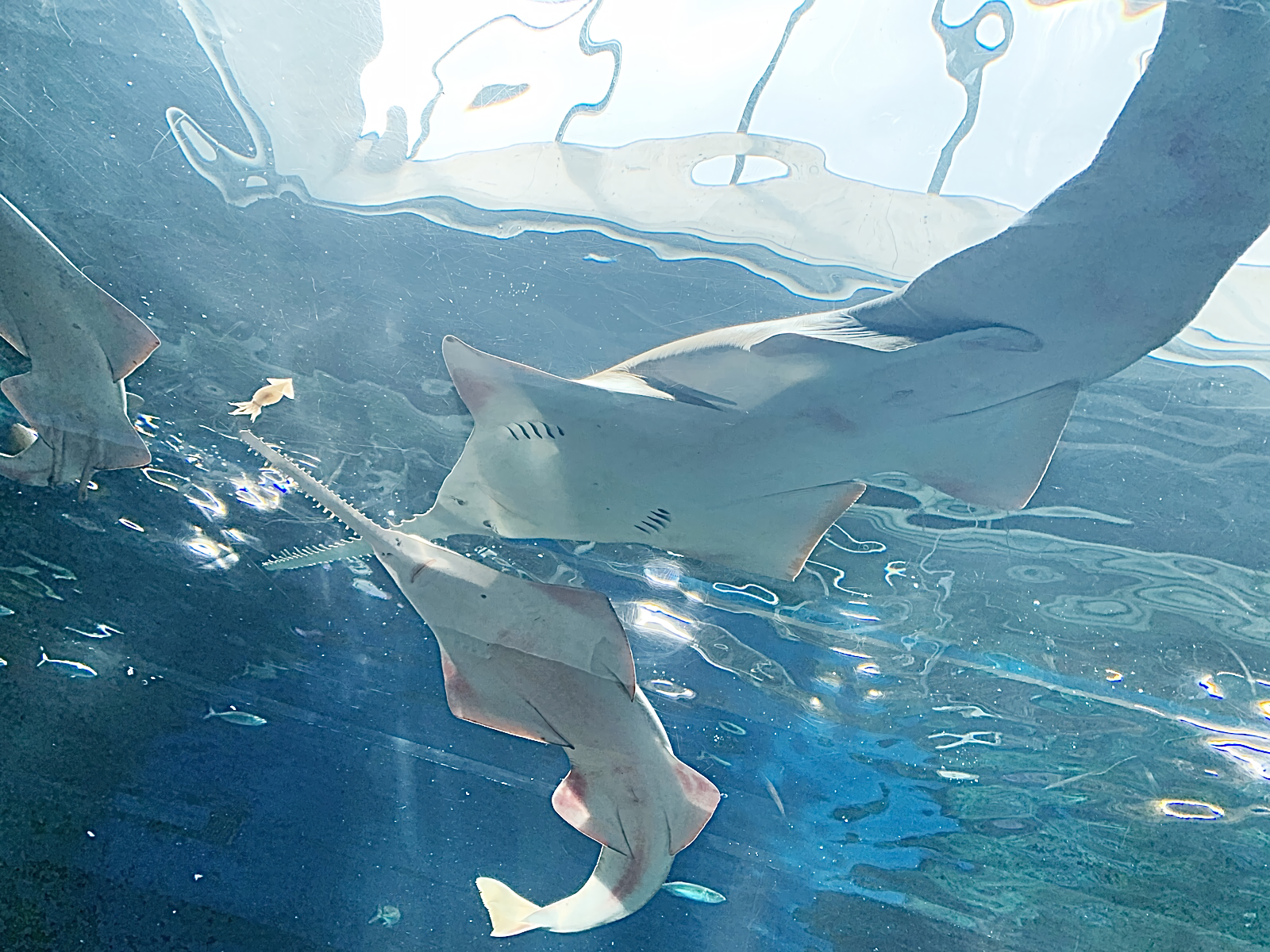
Sawfish are large to very large fish, but the maximum size of each species is generally uncertain. The smalltooth sawfish, largetooth sawfish and green sawfish are among the world's largest fish. They can certainly all reach about 6 m in total length and there are reports of individuals larger than 7 m, but these are often labeled with some uncertainty. or possibly even more. Old unconfirmed and highly questionable reports of much larger individuals do exist, including one that reputedly had a length of 9.14 m, another that had a weight of 2400 kg, and a third that was 9.45 m long and weighed 2591 kg.
The two remaining species, the dwarf sawfish and narrow sawfish, are considerably smaller, but are still large fish with a maximum total length of at least 3.2 m and 3.5 m respectively. In the past it was often reported that the dwarf sawfish only reaches about 1.4 m, but this is now known to be incorrect.
Distribution

Range
Sawfish are found worldwide in tropical and subtropical waters.
Historically they ranged in the East Atlantic from Morocco to South Africa, and in the West Atlantic from New York (United States) In the East Pacific they ranged from Mazatlán (Mexico) to northern Peru. Although the Gulf of California occasionally has been included in their range, the only known Pacific Mexican records of sawfish are from south of its mouth. They were widespread in the western and central Indo-Pacific, ranging from South Africa to the Red Sea and Persian Gulf, east and north to Korea and southern Japan, through Southeast Asia to Papua New Guinea and Australia. Today sawfish have disappeared from much of their historical range.
Habitat
_(Bimini,_western_Bahamas).jpg)
Sawfish are primarily found in coastal marine and estuarine brackish waters, but they are euryhaline (can adapt to various salinities) and also found in freshwater. For example, it has been reported as far as 1340 km up the Amazon River and in Lake Nicaragua, and its young spend the first years of their life in freshwater. There are reports of narrow sawfish seen far upriver, but these need confirmation and may involve misidentifications of other species of sawfish.
Sawfish are mostly found in relatively shallow waters, typically at depths less than 10 m,
The dwarf and largetooth sawfish are strictly warm-water species that generally live in waters that are 25-32 C and 24-32 C respectively. Sawfish are bottom-dwellers, but in captivity it has been noted that at least the largetooth and green sawfish readily take food from the water surface. They are often found in areas with seagrass or mangrove.
Sawsharks are typically found much deeper, often at depths in excess of 200 m, and when shallower mostly in colder subtropical or temperate waters than sawfish.
Behavior
Breeding and life cycle

Relatively little is known about the reproductive habits of the sawfish, but all species are ovoviviparous with the adult females giving birth to live young once a year or every second year. In general, males appear to reach sexual maturity at a slightly younger age and smaller size than females. As far as known, sexual maturity is reached at an age of 7–12 years in Pristis and 2–3 years in Anoxypristis. In the smalltooth and green sawfish this equals a total length of 3.7-4.15 m, in the largetooth sawfish at 2.8-3 m, in the dwarf sawfish about 2.55-2.6 m, and in the narrow sawfish at 2-2.25 m. This means that the generation length is about 4.6 years in the narrow sawfish and 14.6–17.2 years in the remaining species.
Mating involves the male inserting a clasper, organs at the pelvic fins, into the female to fertilize the eggs. However, through genetic testing it has been shown that at least the smalltooth sawfish also can reproduce by parthenogenesis where no male is involved and the offspring are clones of their mother. In Florida, United States, it appears that about 3% of the smalltooth sawfish offspring are the result of parthenogenesis. It is speculated that this may be in response to being unable to find a partner, allowing the females to reproduce anyway.
The pregnancy lasts several months. The pupping grounds are in coastal and estuarine waters. In most species the young generally stay there for the first part of their lives, occasionally moving upriver when there is an increase in salinity. The exception is the largetooth sawfish where the young move upriver into freshwater where they stay for 3–5 years, sometimes as much as 400 km from the sea. In the green and dwarf sawfish there are indications that both sexes remain in the same overall region throughout their lives with little mixing between the subpopulations. In the largetooth sawfish the males appear to move more freely between the subpopulations, while mothers return to the region where they were born to give birth to their own young.
The length of the full lifespan of sawfish is labeled with considerable uncertainty. A green sawfish caught as a juvenile lived for 35 years in captivity, In the narrow sawfish it has been estimated that the lifespan is about 9 years, and in the Pristis sawfish it has been estimated that it varies from about 30 to more than 50 years depending on the exact species.
Electrolocation
The rostrum (saw), unique among jawed fish, plays a significant role in both locating and capturing prey. The head and rostrum contain thousands of sensory organs, the ampullae of Lorenzini, that allow the sawfish to detect and monitor the movements of other organisms by measuring the electric fields they emit. Electroreception is found in all cartilaginous fishes and some bony fishes. In sawfish the sensory organs are packed most densely on the upper- and underside of the rostrum, varying in position and numbers depending on the species. Utilizing their saw as an extended sensing device, sawfish are able to examine their entire surroundings from a position close to the seafloor. It appears that sawfish can detect potential prey by electroreception from a distance of about 40 cm. Some waters where sawfish live are very murky, limiting the possibility of hunting by sight.
Feeding

Sawfish are predators that feed on fish, crustaceans and molluscs. In captivity they are typically fed ad libitum or in set amounts that (per week) equal 1–4% of the total weight of the sawfish, but there are indications that captives grow considerably faster than their wild counterparts.
Exactly how they use their saw after the prey has been located has been debated, and some scholarship on the subject has been based on speculations rather than real observations. The final method involves pinning the prey against the seabed with the underside of the saw, in a manner similar to that seen in guitarfish. Prey fish are typically swallowed whole and not cut into small pieces with the saw, although on occasion one may be split in half during capture by the slashing motion. Prey choice is therefore limited by the size of the mouth. A 1.3 m sawfish had a 33 cm catfish in its stomach.
It had been suggested that sawfish use their saw to dig/rake in the bottom for prey, but this was not observed during a 2012 study, or supported by later hydrodynamic studies. Large sawfish often have rostral teeth with tips that are notably worn.
Saw and self-defense
Old stories often describe sawfish as highly dangerous to humans, sinking ships and cutting people in half, but today these are considered myths and not factual. Sawfish are actually docile and not aggressive to humans and only use their saws against people defensively such as when captured; they can inflict serious injuries when defending themselves, by thrashing the saw from side to side. The saw is also used in self-defense against predators, such as sharks, that may eat sawfish. In captivity, they have been seen using their saws during fights over hierarchy or food.
Relationship with humans
In history, culture and mythology
The largetooth sawfish was among the species formally described by Carl Linnaeus (as "Squalus pristis") in Systema Naturae in 1758, but sawfish were already known thousands of years earlier.
Sawfish were occasionally mentioned in antiquity, in works such as Pliny's Natural History (77–79 AD). Pristis, the scientific name formalised for sawfish by Linnaeus in 1758, was also in use as a name even before his publication. For example, sawfish or "priste" were included in Libri de piscibus marinis in quibus verae piscium effigies expressae sunt by Guillaume Rondelet in 1554, and "pristi" were included in De piscibus libri V, et De cetis lib. vnus by Ulisse Aldrovandi in 1613. Outside Europe, sawfish are mentioned in old Persian texts, such as 13th century writings by Zakariya al-Qazwini.
Sawfish have been found among archaeological remains in several parts of the world, including the Persian Gulf region, the Pacific coast of Panama, coastal Brazil and elsewhere.
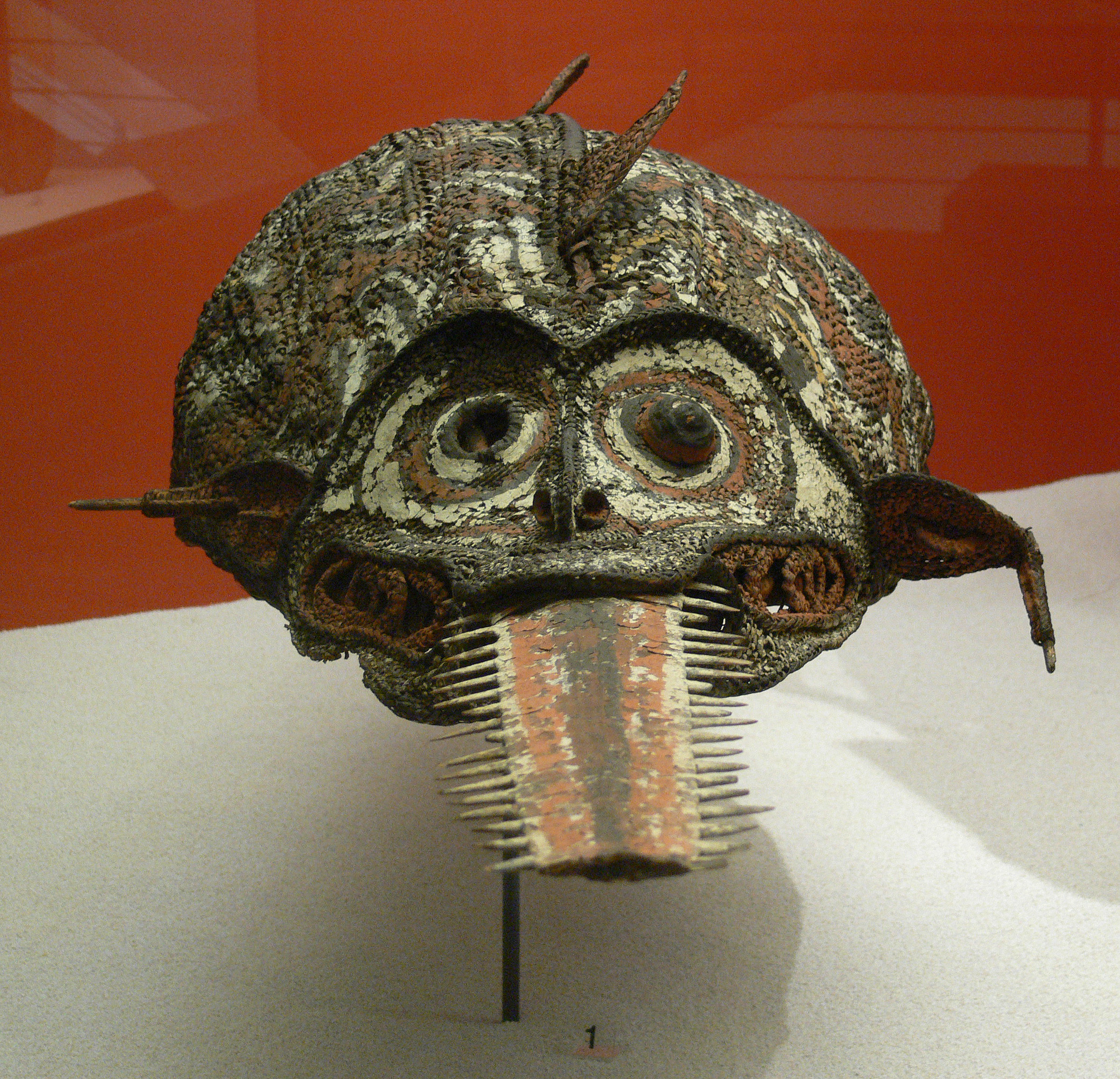
The cultural significance of sawfish varies significantly. The Aztecs, in what is currently Mexico, often included depictions of sawfish rostra (saws), notably as the striker/sword of the monster Cipactli. Numerous sawfish rostra have been found buried at the Templo Mayor, and two locations in coastal Veracruz had Aztec names referring to sawfish. The sawfish saw is part of the dancing masks of the Huave and Zapotecs in Oaxaca, Mexico. The Guna people on the Caribbean coast of Panama and Colombia consider sawfish as rescuers of drowning people, and protectors against dangerous sea creatures. Also in Panama, sawfish were recognized as containing powerful spirits that could protect humans against supernatural enemies.
In the Bissagos Islands off West Africa, dancing dressed as sawfish and other sea creatures is part of men's coming-of-age ceremonies. In Gambia, the saws indicate courage; the more saws are on display in a house, the more courageous the owner is seen to be. In some other parts of coastal Africa, sawfish are considered extremely dangerous and supernatural, but their powers can be used by humans, as their saw is seen to retain powers against disease, bad luck and evil.
In Asia, sawfish are a powerful symbol in many cultures. Asian shamans use sawfish rostrums for exorcisms and other ceremonies to repel demons and disease. They are believed to protect houses from ghosts when hung over doorways. Among European sailors, sawfish were often feared as animals that could sink ships by piercing/sawing the hull with their saw (claims now known to be entirely untrue), but there are also stories of them saving people. In one case, it was described how a ship almost sank during a storm in Italy in 1573. The sailors prayed and made it safely ashore, where they discovered a sawfish that had "plugged" a hole in the ship with its saw. A sawfish rostrum said to be from this miraculous event is kept at the sanctuary of Carmine Maggiore in Naples.
.png)
Sawfish have been used as symbols in recent history. During World War II, illustrations of sawfish were placed on navy ships, and used as symbols by both American and Nazi German submarines. Sawfish served as the emblem of the German U-96 submarine, known for its portrayal in Das Boot, and was later the symbol of the 9th U-boat Flotilla. The German World War II Kampfabzeichen der Kleinkampfverbände (Battle Badge of Small Combat Units) depicted a sawfish.
In cartoons and humorous popular culture, the sawfish—particularly its rostrum ("nose")—has been employed as a sort of living tool. Examples of this can be found in Vicke Viking, Fighting Fantasy volume "Demons of the Deep", , and Terraria.
A stylized sawfish was chosen by the Central Bank of the West African States to appear on coins and banknotes of the CFA currency. This was due to it being a mythological representation of fecundity and prosperity. The image takes its form from an Akan and Baoule bronze weight, used for exchanges in the trade of gold powder.
In aquariums

Sawfish are popular in public aquariums, but require very large tanks. In a review of 10 North American and European public aquariums that kept sawfish, their tanks were all very large and ranged from about 1500000 to(-). In captivity they are quite robust, appear to grow faster than their wild counterparts (perhaps due to consistent access to food). Some individuals have lived for decades, but breeding them has proven difficult. Unsuccessful breeding attempts had taken place earlier at Atlantis Paradise Island, including a miscarriage in 2003. Nevertheless, it is hoped that this success may be the first step in a captive breeding program for the threatened sawfish. Tracking studies indicate that if sawfish are released to the wild after spending a period in captivity (for example, if they outgrow their exhibit), they rapidly adopt a movement pattern similar to that of fully wild sawfish.
Among the five sawfish species, only the four Pristis species are known to be kept in public aquariums. The most common is the largetooth sawfish, with studbooks including 16 individuals in North America in 2014, 5 individuals in Europe in 2013 and 13 individuals in Australia in 2017; this was followed by the green sawfish, with 13 individuals in North America, and 6 in Europe. In 2014, studbooks included 12 smalltooth sawfish in North America, and the only ones kept elsewhere are at a public aquarium in Colombia.
Decline and conservation

Sawfish were once common, with habitat found along the coastline of 90 countries, locally even abundant, but they have declined drastically and are now among the most threatened groups of marine fish.
Fishing for various uses
Sawfish and their parts have been used for numerous things. In approximate order of impact, the four most serious threats today are use in shark fin soup, as traditional medicine, rostral teeth for cockfighting spurs and the saw as a novelty item. As traditional medicine (especially Chinese medicine, but also known from Mexico, Brazil, Kenya, Eritrea, Yemen, Iran, India and Bangladesh) sawfish parts, oil or powder have been claimed to work against respiratory ailments, eye problems, rheumatism, pain, inflammation, scabies, skin ulcers, diarrhea and stomach problems, but there is no evidence supporting any of these uses. and as recent as the 1920s in Florida it was regarded as the best fish oil for consumption.
Sawfish fishing goes back several thousand years, The saw has been described as sawfish's Achilles' heel, as it easily becomes entangled in fishing nets. Sawfish can also be difficult or dangerous to release from nets, meaning that some fishers will kill them even before bringing them aboard the boat, In Australia where sawfish have to be released if caught, the narrow sawfish has the highest mortality rate,
Habitat destruction and vulnerability to predators
Although fishing is the main cause of the drastic decline in sawfish, another serious problem is habitat destruction. Coastal and estuarine habitats, including mangrove and seagrass meadows, are often degraded by human developments and pollution, and these are important habitats for sawfish, especially their young. In a study of juvenile sawfish in Western Australia's Fitzroy River about 60% had bite marks from bull sharks or crocodiles. Changes to river flows, such as by dams or droughts, can increase the risk faced by sawfish young by bringing them into more contact with predators.
Endangered sawfish and other fish in Florida are showing strange behaviors and dying because of environmental toxins. These toxins, produced by microalgae near the sea bottom, affect the neurological systems of fish.
21st century status
The combined range of the five sawfish species encompassed 90 countries, but today they have certainly disappeared entirely from 20 of these and possibly disappeared from several others. The sawfish is now presumed extinct in 55 nations (including China, Iraq, Haiti, Japan, Timor-Leste, El Salvador, Taiwan, Djibouti and Brunei), with 18 countries with at least one species of sawfish missing and 28 countries with at least two. The United States and Australia appear to be the last strongholds of the species, where sawfish are better protected. Science Advances identifies Cuba, Tanzania, Colombia, Madagascar, Panama, Brazil, Mexico and Sri Lanka as the nations where urgent action could make a big contribution to saving the species.
Australia

The only remaining stronghold of the four species in the Indo-Pacific region (narrow, dwarf, largetooth and green sawfish) is in Northern Australia, but they have also experienced a decline there. Violations can result in a fine of up to AU$121,900. Under CITES regulations, Australia was the only country that could export wild-caught sawfish for the aquarium trade from 2007 to 2013 (no country afterwards). This strictly involved the largetooth sawfish where the Australian population remains relatively robust, and only living individuals "to appropriate and acceptable aquaria for primarily conservation purposes". Numbers traded were very low (eight between 2007 and 2011), and following a review Australia did not export any after 2011.
Largetooth sawfish have been monitored in Fitzroy River, Western Australia, a primary stronghold for the species, since 2000. In December 2018, the largest recorded mass fish death in the river occurred when more than 40 sawfish died, mainly because of heat and a severe lack of rainfall during a poor wet season.
A study by Murdoch University researchers and Indigenous rangers, which captured more than 500 sawfish between 2002 and 2018, concluded that the survival of the sawfish could be at risk from dams or major water diversions on the Fitzroy River. It found that the fish are completely reliant on the Kimberley's wet season floods to complete their breeding cycle; in recent drier years, the population has suffered. There has been debate about using water from the river for agriculture and to grow fodder crops for cattle in the region.
Sharks and Rays Australia (SARA) are conducting a citizen science investigation to understand the sawfish's historical habitats. Citizens can report their sawfish sighting online.
Rest of the world
Except for Australia, sawfish have been extirpated or only survive in very low numbers in the Indo-Pacific region. For example, among the four species only two (narrow and largetooth sawfish) certainly survive in South Asia, and only two (narrow and green sawfish) certainly survive in Southeast Asia.

The status of the two species of the Atlantic region, the smalltooth and largetooth sawfish, is comparable to the Indo-Pacific. For example, sawfish have been entirely extirpated from most of the Atlantic coast of Africa (only survives for certain in Guinea-Bissau and Sierra Leone), as well as South Africa. The only relatively large remaining population of the largetooth sawfish in the Atlantic region is at the Amazon estuary in Brazil, but there are smaller in Central America and West Africa, and this species is also found in the Pacific and Indian Oceans. The smalltooth sawfish is only found in the Atlantic region and it is possibly the most threatened of all the species, as it had the smallest original range (range 2100000 km2) and has experienced the greatest contraction (disappeared from c. 81% of its original range). and it is possible that the only remaining viable population is in the United States. However, the Florida population retains a high genetic diversity, This makes it "illegal to harm, harass, hook, or net sawfish in any way, except with a permit or in a permitted fishery". and all the remaining sawfish species were added in 2014, restricting trade in them and their parts in the United States.

Since 2007, all sawfish species have been listed on CITES Appendix I, which prohibits international trade in them and their parts. The only exception was the relatively robust Australian population of the largetooth sawfish that was listed on CITES Appendix II, which allowed trade to public aquariums only. Illegal fishing continues and in many countries enforcement of fishing laws is lacking. If protected their relatively low reproduction rates make these animals especially slow to recover from overfishing. Uniquely in this family, the narrow sawfish has a relatively fast reproduction rate (generation length about 4.6 years, less than one-third the time of the other species), it has experienced the smallest contraction of its range (30%) and it is one of only two species considered Endangered rather than Critically Endangered by the IUCN. The other rated as Endangered is the dwarf sawfish, but this primarily reflects that its main decline happened at least 100 years ago and IUCN ratings are based on the time period of the last three generations (estimated about 49 years in dwarf sawfish).
There are several research projects aimed at sawfish in Australia and North America, but also a few in other continents. The Florida Museum of Natural History maintains the International Sawfish Encounter Database where people worldwide are encouraged to report any sawfish encounters, whether it was living or a rostrum seen for sale in a shop/online. and this was repeated on the same date in 2018.
Notes
References
References
- (2016). "Rays of the World". [[CSIRO]].
- (2014). "Ghosts of the coast: Global extinction risk and conservation of sawfishes". Aquatic Conservation: Marine and Freshwater Ecosystems.
- (2009). "The biology of extinct and extant sawfish (Batoidea: Sclerorhynchidae and Pristidae)". Review in Fish Biology and Fisheries.
- (2014). "Sawfish: A Global Strategy for Conservation". IUCN Species Survival Commission's Shark Specialist Group.
- Wueringer, B.. "How sawfish use their saw". Sawfish Conservation Society.
- {{FishBase family. (2017)
- Moore, A.L.B.. (2015). "A review of sawfishes (Pristidae) in the Arabian region: diversity, distribution, and functional extinction of large and historically abundant marine vertebrates". Aquatic Conservation.
- "Cultural Importance of Sawfish". Florida Fish and Wildlife Conservation Commission.
- Platt, J.R.. (2 July 2013). "Last Chance for Sawfish?".
- "Pristidae". [[International Union for Conservation of Nature]].
- (4 October 2017). "Appendices I, II and III". CITES.
- Slezak, M.. (3 August 2016). "Queensland fisherman caught selling bills of endangered sawfish". The Guardian.
- (2017-05-16). "Why Report Sawfish Encounters?". University of Florida.
- {{LSJ. pri/sths. πρίστης. longref
- (April 2012). "Largetooth Sawfish". University of Florida.
- (2012). "Biology of Sharks and Their Relatives". CRC Press.
- (2016). "A new species of guitarfish, Rhinobatos borneensis sp. nov. with a redefinition of the family-level classification in the order Rhinopristiformes (Chondrichthyes: Batoidea)". Zootaxa.
- (2013). "Species delineation and global population structure of Critically Endangered sawfishes (Pristidae)". Zoological Journal of the Linnean Society.
- (2012). "A DNA sequence-based approach to the identification of shark and ray species and its implications for global elasmobranch diversity and parasitology". Bulletin of the American Museum of Natural History.
- Department of the Environment. (2017). "Pristis pristis — Freshwater Sawfish, Largetooth Sawfish, River Sawfish, Leichhardt's Sawfish, Northern Sawfish". [[Department of the Environment and Energy]].
- (2016). "Rays of the World: Supplementary Information". CSIRO Special Publication.
- (17 November 2017). "Catalog of Fishes". [[California Academy of Sciences]].
- "Pristis pristis". shark-references.com.
- Cicimurri, D.J.. (2009). "A Partial Rostrum of the Sawfish Pristis lathami Galeotti, 1837, from the Eocene of South Carolina". Journal of Paleontology.
- Seitz, J.C.. (2014). "A Brief Review of the Fossil Record of the Pristids and Sclerorhynchids". Fossil Sawfish.
- (2019). "Paleobiology of the Late Cretaceous sclerorhynchid sawfish, ''Ischyrhiza mira'' (Elasmobranchii: Rajiformes), from North America based on new anatomical data". Historical Biology.
- Cappetta, H.. (2012). "Handbook of Paleoichthyology". Verlag F. Pfeil.
- (2024). "Pristification: Defining the convergent evolution of saws in sharks and rays (Chondrichthyes, Neoselachii)". Mesozoic.
- (2019). "The first three-dimensional fossils of Cretaceous sclerorhynchid sawfish: ''Asflapristis cristadentis'' gen. et sp. nov., and implications for the phylogenetic relations of the Sclerorhynchoidei (Chondrichthyes)". Journal of Systematic Palaeontology.
- (2021a). "The first skeletal record of the enigmatic Cretaceous sawfish genus ''Ptychotrygon'' (Chondrichthyes, Batoidea) from the Turonian of Morocco". Papers in Palaeontology.
- (2021b). "The skeletal remains of the euryhaline sclerorhynchoid †''Onchopristis'' (Elasmobranchii) from the 'Mid'-Cretaceous and their palaeontological implications". Zoological Journal of the Linnean Society.
- (2021). "Corrections to the nomenclature of sawskates (Rajiformes, Sclerorhynchoidei)". Bionomina.
- (April 2011). "Fisheries Fact Sheet — Sawfish". Government of Western Australia, Fisheries Department.
- (September 2015). "Evolutionary origins and development of saw-teeth on the sawfish and sawshark rostrum (Elasmobranchii; Chondrichthyes)". Royal Society Open Science.
- (1968). "Replacement of Rostral Teeth in Sawfishes and Sawsharks". Copeia.
- Marine Fisheries Service, National Oceanic and Atmospheric Administration. (12 December 2014). "Endangered and Threatened Wildlife and Plants; Final Endangered Listing of Five Species of Sawfish Under the Endangered Species Act". Federal Register.
- Allen, G.. (1999). "Marine Fishes of Tropical Australia and South East Asia". Johns Hopkins University Press.
- (2003). "Bilateral asymmetry in the rostrum of the smalltooth sawfish, Pristis pectinata (Pristiformes: Pristidae)". Journal of the North Carolina Academy of Science.
- "Sawfish Anatomy". Sawfish Conservation Society.
- (2017-05-03). "Sawfish Anatomy". University of Florida.
- (2004). "Sharks of the World". Collins.
- "Sawfish". SeaPics.
- Martin, R. Aidan. "Big Fish Stories". ReefQuest Centre for Shark Research.
- (2016). "Near-term embryos in a Pristis pristis (Elasmobranchii: Pristidae) from Brazil". Journal of Fish Biology.
- (2017). "''Pristis clavata'' — Dwarf Sawfish, Queensland Sawfish".
- Debelius, H.. (1997). "Mediterranean and Atlantic Fish Guide". IKAN Unterwasserarchiv.
- (22 January 2015). "The Mediterranean's Missing Sawfishes".
- (2009). "Putative extinction of two sawfish species in Mexico and the United States". Neotropical Ichthyology.
- (2017). "Pristis zijsron — Green Sawfish, Dindagubba, Narrowsnout Sawfish".
- "Pristis pectinata (Latham, 1794)". Sawfish Conservation Society.
- Seitz, J.. (2017-05-10). "Knifetooth Sawfish". University of Florida.
- "Pristis pristis (Linnaeus, 1758)". Sawfish Conservation Society.
- (2017-05-04). "Sawfish Myths". University of Florida.
- (2002). "Recent occurrence of the smalltooth sawfish, Pristis pectinata (Elasmobranchiomorphi: Pristidae), in Florida Bay and the Florida Keys, with comments on sawfish ecology". Florida Scientist.
- FSUCML. (14 April 2017). "Researchers Discover Critical Clue in the Mystery of Sawfish Mating". Florida State University.
- Lee, J.J.. (1 June 2015). "Rare Fish Performs "Virgin Births"—First Known in The Wild".
- (2015). "Facultative parthenogenesis in a critically endangered wild vertebrate". Current Biology.
- Zielinski, S.. (5 June 2015). "'Virgin births' won't save endangered sawfish". ScienceNews.
- (25 December 2016). "FSUCML scores another scientific first: Dr. Dean Grubbs and colleagues document and assist pregnant sawfish give birth in the wild". Florida State University, Coastal and Marine Laboratory.
- (2016). "Long-term site fidelity of endangered small-tooth sawfish (Pristis pectinata) from different mothers". Fishery Bulletin.
- (2015). "Whole mitogenome sequencing refines population structure of the Critically Endangered sawfish Pristis pristis". Marine Ecology Progress Series.
- (Autumn 2015). "Sawfish. Ancient predators in need of modern conservation tools". Wildlife Australia.
- (1 March 2012). "The function of the sawfish's saw". Current Biology.
- Wueringer, B. E.. (1 January 2011). "Sensory Systems in Sawfishes. 1. The Ampullae of Lorenzini". Brain, Behavior and Evolution.
- Crew, Becky. (2013-04-18). "Zombie birds, astronaut fish, and other weird animals". Adams Media.
- (1952). "On the utility of the saw of the sawfish". Copeia.
- Eilperin, J.. (2012). "Demon Fish: Travels Through the Hidden World of Sharks". Knopf Doubleday Publishing.
- (2006). "Cultural importance and decline of sawfish (Pristidae) populations in West Africa". Cybium.
- (2011). "Fishes: The Animal Answer Guide". Johns Hopkins University Press.
- Blench, Roger. (2006). "Archaeology, language, and the African past". Altamira Press.
- Raloff, Janet (2007). [http://www.sciencenews.org/articles/20070811/bob9.asp Hammered Saws] {{Webarchive. link. (2008-04-17 , ''Science News'' vol. 172, pp. 90–92.)
- https://web.archive.org/web/20250907102956/https://terraria.wiki.gg/wiki/Sawtooth_Shark
- (31 May 2012). "The endangered Smalltooth Sawfish gives birth at Atlantis, Paradise Island". Bahamas Local.
- "Saving Sawfish". Georgia Aquarium.
- (2004). "Elasmobranch Husbandry Manual". Ohio Biological Survey.
- Herrick, R.. (27 October 2014). "When sawfish go wild: Released aquarium animals learn to swim with current, study finds". ABC News.
- (11 February 2021). "'Hedge trimmer' fish facing global extinction". BBC News.
- (April 2016). "Memories of sawfish fisheries in a southwestern Atlantic estuary". SPC Traditional Marine Resource Management and Knowledge Information Bulletin.
- (2 February 2016). "What is the fate of amputee sawfish?". American Fisheries Society.
- (2004). "A guide to releasing sawfish". Queensland Government, Department of Primary Industries and Fisheries.
- (12 April 2017). "Photos show crocodile eating sawfish in Australia". BBC News.
- (2017). "An upstream migration fought with danger: freshwater sawfish fending off sharks and crocodiles". Ecology.
- Moodie, Claire. (1 June 2019). "More than 40 dead sawfish on Gina Rinehart's cattle station fuels concern about water plan". Australian Broadcasting Corporation.
- Mazzei, Patricia. (April 15, 2024). "What's Killing Endangered Sawfish in Florida?". The New York Times.
- (17 April 2014). "Australian endangered species: Largetooth Sawfish". The Conversation.
- Kilvert, Nick. (17 October 2019). "'I can't say it was unexpected': Sawfish research team comes home empty-handed". Australian Broadcasting Corporation.
- Moodie, Claire. (24 December 2019). "Sawfish researchers call for protection of crucial global stronghold in the Kimberley". Australian Broadcasting Corporation.
- "Sharks And Rays Australia Research Organisation".
- (2013). "Status and the potential for extinction of the largetooth sawfish Pristis pristis in the Atlantic Ocean". Aquatic Conserv: Mar. Freshw. Ecosyst..
- (2011). "Genetic Diversity Despite Population Collapse in a Critically Endangered Marine Fish: The Smalltooth Sawfish (Pristis pectinata)". Journal of Heredity.
- (2009). "Recovery Plan for Smalltooth Sawfish (''Pristis pectinata'')". [[National Marine Fisheries Service]].
- Walker, C.. (4 June 2003). "Sawfish Is First Sea Fish on U.S. Endangered List".
- Marine Fisheries Service, National Oceanic and Atmospheric Administration. (12 July 2011). "Endangered and Threatened Wildlife and Plants; Endangered Status for the Largetooth Sawfish". Federal Register.
- (25 January 2020). "Man fined $2000 for killing endangered smalltooth sawfish".
- (3–15 June 2007). "Convention on International Trade in Endangered Species of Wild Fauna and Flora". Fourteenth meeting of the Conference of the Parties.
- Casselman, A. Sawfish. (18 April 2019). "Searching for the world's last remaining sawfish".
- Williams, T.. (30 January 2018). "Recovery: Smalltooth Sawfish Flickering Back". [[The Nature Conservancy]].
- "Sawfish Research". Sawfish Conservation Society.
- (17 October 2018). "International Sawfish Day 2018". NOAA Fisheries.
This article was imported from Wikipedia and is available under the Creative Commons Attribution-ShareAlike 4.0 License. Content has been adapted to SurfDoc format. Original contributors can be found on the article history page.
Ask Mako anything about Sawfish — get instant answers, deeper analysis, and related topics.
Research with MakoFree with your Surf account
Create a free account to save articles, ask Mako questions, and organize your research.
Sign up freeThis content may have been generated or modified by AI. CloudSurf Software LLC is not responsible for the accuracy, completeness, or reliability of AI-generated content. Always verify important information from primary sources.
Report