From Surf Wiki (app.surf) — the open knowledge base
Nintendo
Japanese video game company

Japanese video game company
| Field | Value | |
|---|---|---|
| name | Nintendo Co., Ltd. | |
| logo | Nintendo.svg | |
| logo_caption | Logo used since May 2016 | |
| image | Headquarters of Nintendo Co., Ltd.jpg | |
| image_alt | Headquarters in Kyoto, Japan | |
| image_caption | Headquarters in Kyoto, Japan | |
| native_name | 任天堂株式会社 | |
| native_name_lang | ja | |
| romanized_name | Nintendō kabushiki gaisha | |
| former_name | {{Unbulleted indent list | |
| type | Public | |
| traded_as | {{Unbulleted list | |
| ISIN | ||
| industry | {{Unbulleted list | |
| founded | in Shimogyō-ku, Kyoto, Japan | |
| founder | Fusajiro Yamauchi | |
| hq_location | 11–1 Kamitoba Hokodatecho | |
| hq_location_city | Minami-ku, Kyoto | |
| hq_location_country | Japan | |
| area_served | Worldwide | |
| key_people | {{Unbulleted indent list | |
| products | List of products | |
| brands | {{Collapsible list | title=Video game series |
| production | {{Unbulleted list | |
| Hardware<br /> <!-- 2020: 690,000 (3DS) + 21,030,000 (NS) | 21,720,000; 2021: 20,320,000 (NS) + 8,510,000 (NSLite) = 28,830,000 -- | |
| Software<br /> <!-- 2019: 13,220,000 (3DS) + 118,550,000 (NS) | 131,870,000; 2020: 4,990,000 (3DS) + 168,720,000 (NS) = 173,710,000 -- | |
| production_year | 2023 | |
| services | {{Unbulleted list | |
| revenue | () | |
| revenue_year | 2023 | |
| operating_income | () | |
| income_year | 2023 | |
| net_income | () | |
| net_income_year | 2023 | |
| assets | () | |
| assets_year | 2023 | |
| equity | () | |
| equity_year | 2023 | |
| num_employees | 8,205 | |
| num_employees_year | 2025 | |
| divisions | {{Unbulleted list | |
| subsid | {{Collapsible list | |
| website | ||
| footnotes |
| Nintendo Koppai (1889) | Yamauchi Nintendo (1889–1933) | Yamauchi Nintendo & Co. (1933–1947) | Marufuku Co., Ltd. (1947–1951) | Nintendo Playing Card Co., Ltd. (1951–1963) | | TOPIX Core30 component | Nikkei 225 component | Video games | Electronics | Shuntaro Furukawa (president) | Shigeru Miyamoto (executive fellow) | Animal Crossing | Art Style | Big Brain Academy | bit Generations | BoxBoy! | Brain Age | Chibi-Robo! | Cruis'n | Custom Robo | Donkey Kong | Dr. Mario | Excite | F-Zero | Famicom Detective Club | Fire Emblem | Fossil Fighters | Golden Sun | Kid Icarus | Kirby | The Legend of Zelda | The Legendary Starfy | Mario | Mario Kart | Mario Party | Metroid | Mother | Pikmin | Pilotwings | Pokémon | Punch-Out!! | Puzzle League | Rhythm Heaven | Splatoon | Star Fox | Super Mario | Super Smash Bros. | Touch! Generations | Wario | Wars | Wii | Xenoblade Chronicles | Yoshi | Hardware 17.97 million | Software 213.96 million | Nintendo eShop | My Nintendo | Nintendo Switch Online | Business Development | Entertainment Planning & Development | Platform Technology Development | 1-Up Studio | iQue | | Monolith Soft | Next Level Games | Nintendo Cube | Nintendo European Research & Development | Nintendo Pictures | Nintendo Sales | Nintendo Software Technology | Nintendo Stars | Nintendo Studios Singapore (80%)-- | (80%) | Nintendo Technology Development | Retro Studios | Shiver Entertainment | is a Japanese multinational video game company headquartered in Kyoto. It develops, publishes, and manufactures both video games and video game consoles.
The history of Nintendo began when craftsman Fusajiro Yamauchi founded the company to produce handmade hanafuda playing cards. After venturing into various lines of business and becoming a public company, Nintendo began producing toys in the 1960s, and later video games. Nintendo developed its first arcade games in the 1970s, and distributed its first system, the Color TV-Game in 1977. The company became internationally dominant in the 1980s after the arcade release of Donkey Kong (1981) and the Nintendo Entertainment System, which launched outside of Japan alongside Super Mario Bros. in 1985.
Since then, Nintendo has produced some of the most successful consoles in the video game industry, including the Game Boy (1989), the Super Nintendo Entertainment System (1991), the Game Boy Advance (2001), the Nintendo DS (2004), the Wii (2006), and the Nintendo Switch (2017). It has created or published numerous major franchises, including Mario, Donkey Kong, The Legend of Zelda, Pokémon, Super Smash Bros., Animal Crossing, Metroid, Kirby, and Star Fox. The company's mascot, Mario, is among the most famous fictional characters, and Nintendo's other characters—including Luigi, Donkey Kong, Samus, Link, Kirby, and Pikachu—have attained international recognition. Several films and a theme park area based on the company's franchises have been created.
Nintendo's game consoles have sold over 860 million units worldwide as of May 2025, for which more than 5.9 billion individual games have been sold. The company has numerous subsidiaries in Japan and worldwide, in addition to second-party developers including HAL Laboratory, Intelligent Systems, and Game Freak. It is one of the wealthiest and most valuable companies in the Japanese market.
History
Main article: History of Nintendo
Early history
1889–1932: Origin as a playing card business
According to Nintendo, the business' first western-style card deck was put on the market in 1902, although other documents indicate the date was 1907, shortly after the Russo-Japanese War. Although the cards were initially intended to be exported, they quickly gained popularity within and without Japan. During this time, the business styled itself as Marufuku Nintendo Card Co. The war created considerable difficulties for companies in the leisure sector, which were subject to new levies such as the ja ("playing cards tax"). Nintendo subsisted and, in 1907, entered into an agreement with Nihon Senbai—later known as the Japan Tobacco—to market its cards to various cigarette stores throughout the country. A Nintendo promotional calendar from the Taishō era dated to 1915 indicates that the business was named but still used the Marufuku Nintendo Co. brand for its playing cards.
Japanese culture stipulated that for Nintendo to continue as a family business after Yamauchi's retirement, Yamauchi had to adopt his son-in-law so that he could take over the business. As a result, Sekiryo Kaneda adopted the Yamauchi surname in 1907 and headed the business in 1929. By that time, Nintendo was the largest playing card business in Japan.
1933–1968: Incorporation and expansion
In 1933, Sekiryo Kaneda established the company as a general partnership named investing in the construction of a new corporate headquarters located next to the original building, near the Toba-kaidō train station. Because Sekiryo's marriage to Yamauchi's daughter produced no male heirs, he planned to adopt his son-in-law Shikanojo Inaba, an artist in the company's employ and the father of his grandson Hiroshi, born in 1927. However, Inaba abandoned his family and the company, so Hiroshi was made Sekiryo's eventual successor.
World War II negatively impacted the company as Japanese authorities prohibited the diffusion of foreign card games, and as the priorities of Japanese society shifted, its interest in recreational activities waned. During this time, Nintendo was partly supported by a financial injection from Hiroshi's wife Michiko Inaba, who came from a wealthy family. In 1947, Sekiryo founded the distribution company responsible for Nintendo's sales and marketing operations, which would eventually go on to become the present-day Nintendo Co., Ltd., in Higashikawara-cho, Imagumano, Higashiyama-ku, Kyoto.
In 1950, due to Sekiryo's deteriorating health, Hiroshi Yamauchi assumed the presidency and headed manufacturing operations. His first actions involved several important changes in the operation of the company: in 1951, he changed the company name to and in the following year, he centralized the manufacturing facilities dispersed in Kyoto, which led to the expansion of the offices in Kamitakamatsu-cho, Fukuine, Higashiyama-ku, Kyoto. In 1953, Nintendo became the first company to succeed in mass-producing plastic playing cards in Japan. Some of the company's employees, accustomed to more cautious and conservative leadership, viewed the new measures with concern, and the rising tension led to a call for a strike. However, the measure had no major impact, as Hiroshi resorted to the dismissal of several dissatisfied workers.
In 1959, Nintendo moved its headquarters to Kamitakamatsu-cho, Fukuine, Higashiyama-ku in Kyoto. The company entered into a partnership with Walt Disney Productions to incorporate its characters into playing cards, which opened it up to the children's market and resulted in a boost to Nintendo's playing card business. Nintendo automated the production of Japanese playing cards using backing paper, and also developed a distribution system that allowed it to offer its products in toy stores. By 1961, the company had established a Tokyo branch in Chiyoda, Tokyo, and sold more than 1.5 million card packs, holding a high market share, for which it relied on televised advertising campaigns. In 1962, Nintendo became a public company by listing stock on the second section of the Osaka Securities Exchange and the Kyoto Stock Exchange. In the following year, the company adopted its current name, and started manufacturing games in addition to playing cards.
In 1964, Nintendo earned . Although the company experienced a period of economic prosperity, the Disney cards and derived products made it dependent on the children's market. The situation was exacerbated by the falling sales of its adult-oriented playing cards caused by Japanese society gravitating toward other hobbies such as pachinko, bowling, and nightly outings. When Disney card sales began to decline, Nintendo realized that it had no real alternative to alleviate the situation. After the 1964 Tokyo Olympics, Nintendo's stock price plummeted to its lowest recorded level of .
In 1965, Nintendo hired Gunpei Yokoi to maintain the assembly-line machines used to manufacture its playing cards.
1969–1972: Classic and electronic toys
Yamauchi increased Nintendo's investment in a research and development department in 1969, directed by Hiroshi Imanishi, a long-time employee of the company. Yokoi was moved to the newly created department and was responsible for coordinating various projects. Yokoi's experience in manufacturing electronic devices led Yamauchi to put him in charge of the company's games department, and his products would be mass-produced. During that period, Nintendo built a new production plant in Uji, just outside of Kyoto, and distributed classic tabletop games like chess, shogi, go, and mahjong, and other foreign games under the Nippon Game brand. The company's restructuring preserved a couple of areas dedicated to playing card manufacturing.
In 1970, the company's stock listing was promoted to the first section of the Osaka Stock Exchange, and the reconstruction and enlargement of its corporate headquarters was completed. The year represented a watershed moment in Nintendo's history as it released Japan's first electronic toy—the Beam Gun, an optoelectronic pistol designed by Masayuki Uemura. In total, more than a million units were sold. Nintendo partnered with Magnavox to provide a light gun controller based on the Beam Gun design for the company's new home video game console, the Magnavox Odyssey, in 1971. Other popular toys released at the time included the Ultra Hand, the Ultra Machine, the Ultra Scope, and the Love Tester, all designed by Yokoi. More than 1.2 million units of Ultra Hand were sold in Japan.
1973–present: History in electronics
1973–1978: Early video games and Color TV-Game
The growing demand for Nintendo's products led Yamauchi to further expand the offices, for which he acquired the surrounding land and assigned the production of cards to the original Nintendo building. Meanwhile, Yokoi, Uemura, and new employees such as Genyo Takeda continued to develop innovative products for the company. The Laser Clay Shooting System was released in 1973 and managed to surpass bowling in popularity. Though Nintendo's toys continued to gain popularity, the 1973 oil crisis caused both a spike in the cost of plastics and a change in consumer priorities that put essential products over pastimes, and Nintendo lost several billion yen.
In 1974, Nintendo released Wild Gunman, a skeet shooting arcade simulation consisting of a 16 mm image projector with a sensor that detects a beam from the player's light gun. Both the Laser Clay Shooting System and Wild Gunman were successfully exported to Europe and North America. However, Nintendo's production speeds were still slow compared to rival companies such as Bandai and Tomy, and their prices were high, which led to the discontinuation of some of their light gun products. The subsidiary Nintendo Leisure System Co., Ltd., which developed these products, was closed as a result of the economic impact dealt by the oil crisis.
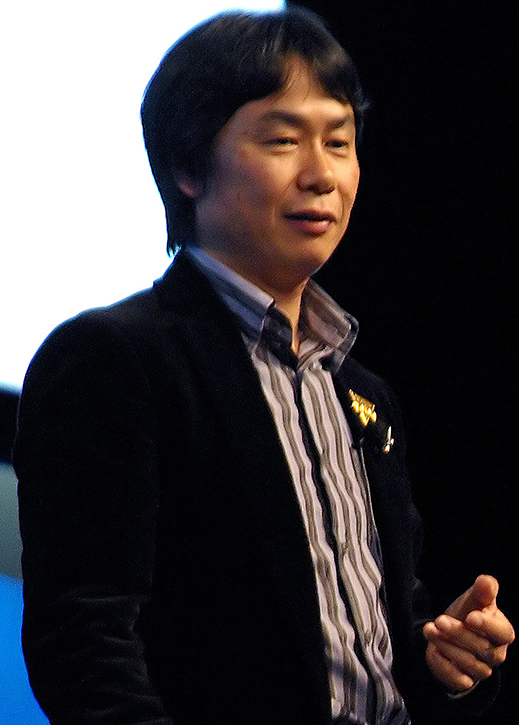
Yamauchi, motivated by the successes of Atari and Magnavox with their video game consoles, acquired the Japanese distribution rights for the Magnavox Odyssey in 1974, and reached an agreement with Mitsubishi Electric to develop similar products between 1975 and 1978, including the first microprocessor for video games systems, the Color TV-Game series, and an arcade game inspired by Othello. During this period, Takeda developed the video game EVR Race, and Shigeru Miyamoto joined Yokoi's team with the responsibility of designing the casing for the Color TV-Game consoles. In 1978, Nintendo's research and development department was split into two facilities, Nintendo Research & Development 1 and Nintendo Research & Development 2, respectively managed by Yokoi and Uemura.
Shigeru Miyamoto brought distinctive sources of inspiration to the company, ranging from the natural environment and regional culture of Sonobe, to popular culture influences like Westerns and detective fiction, and to folk Shinto practices and family media. They are seen in most of Nintendo's major franchises which developed following Miyamoto's creative leadership.
1979–1987: Game & Watch, arcade games, and Nintendo Entertainment System
By the late 1970s, Nintendo was struggling financially. Two key events in Nintendo's history occurred in 1979: its American subsidiary was opened in New York City, and a new department focused on arcade game development was created. In 1980, one of the first handheld video game systems, the Game & Watch, was created by Yokoi from the technology used in portable calculators. It became one of Nintendo's most successful products, with over 43.4 million units sold worldwide during its production period, and for which 59 games were made in total. The success of Game & Watch led Yamauchi to shift the company towards more electronic games in the years that followed.

Nintendo entered the arcade video game market with Sheriff and Radar Scope, released in Japan in 1979 and 1980 respectively. Sheriff, also known as Bandido in some regions, marked the first original video game made by Nintendo, and was published by Sega and developed by Genyo Takeda and Shigeru Miyamoto. Radar Scope rivaled Galaxian in Japanese arcades but failed to find an audience overseas and created a financial crisis for the company. To try to find a more successful game, they put Miyamoto in charge of their next arcade game design, leading to the release of Donkey Kong in 1981, one of the first platform video games that allowed the player character to jump. The character Jumpman would later become Mario and Nintendo's official mascot. Mario was named after Mario Segale, the landlord of Nintendo's offices in Tukwila, Washington. Donkey Kong was a financial success for Nintendo both in Japan and overseas, and led Coleco to fight Atari for licensing rights for porting to home consoles and personal computers.
In 1983, Nintendo opened a new production facility in Uji and was listed in the first section of the Tokyo Stock Exchange. Uemura, taking inspiration from the ColecoVision, began creating a new video game console that would incorporate a ROM cartridge format for video games as well as both a central processing unit and a picture processing unit. The Family Computer, or Famicom, was released in Japan in July 1983 along with three games adapted from their original arcade versions: Donkey Kong, Donkey Kong Jr. and Popeye. Its success was such that in 1984, it surpassed the market share held by Sega's SG-1000. That success also led to Nintendo leaving the Japanese arcade market in late 1985. At this time, Nintendo adopted a series of guidelines that involved the validation of each game produced for the Famicom before its distribution on the market, agreements with developers to ensure that no Famicom game would be adapted to other consoles within two years of its release, and restricting developers from producing more than five games per year for the Famicom.
In the early 1980s, several video game consoles proliferated in the United States, as well as low-quality games produced by third-party developers, which oversaturated the market and led to the video game crash of 1983. Consequently, a recession hit the American video game industry, whose revenues went from over $3 billion to $100 million between 1983 and 1985. Nintendo's initiative to launch the Famicom in America was also impacted. To differentiate the Famicom from its competitors in America, Nintendo rebranded it as an entertainment system and its cartridges as Game Paks, with a design reminiscent of a VCR. Nintendo implemented a lockout chip in the Game Paks for control on its third party library to avoid the market saturation that had occurred in the United States. The result is the Nintendo Entertainment System, or NES, which was released in North America in 1985. The landmark games Super Mario Bros. and The Legend of Zelda were produced by Miyamoto and Takashi Tezuka. Composer Koji Kondo reinforced the idea that musical themes could act as a complement to game mechanics rather than simply a miscellaneous element. Production of the NES lasted until 1995, and production of the Famicom lasted until 2003. In total, around 62 million Famicom and NES consoles were sold worldwide. During this period, Nintendo created a copyright infringement protection in the form of the Official Nintendo Seal of Quality, added to their products so that customers may recognize their authenticity in the market. By this time, Nintendo's network of electronic suppliers had extended to around thirty companies, including Ricoh (Nintendo's main source for semiconductors) and the Sharp Corporation.
1988–1994: Game Boy and Super Nintendo Entertainment System
In 1988, Yokoi and his team at Nintendo R&D1 conceived the Game Boy, the first handheld video game console made by Nintendo. Nintendo released the Game Boy in 1989. In North America, the Game Boy was bundled with the popular third-party game Tetris after a difficult negotiation process with Elektronorgtechnica. The Game Boy was a significant success. In its first two weeks of sale in Japan, its initial inventory of 300,000 units sold out, and in the United States, an additional 40,000 units were sold on its first day of distribution. Around this time, Nintendo entered an agreement with Sony to develop the Super Famicom CD-ROM Adapter, a peripheral for the upcoming Super Famicom capable of playing CD-ROMs. However, the collaboration did not last as Yamauchi preferred to continue developing the technology with Philips, which would result in the CD-i, and Sony's independent efforts resulted in the creation of the PlayStation console.
The first issue of Nintendo Power magazine, which had an annual circulation of 1.5 million copies in the United States, was published in 1988. In July 1989, Nintendo held the first Nintendo Space World trade show with the name Shoshinkai to announce and demonstrate upcoming Nintendo products. That year, the first World of Nintendo stores-within-a-store, which carried official Nintendo merchandise, were opened in the United States. According to company information, more than 25% of homes in the United States had an NES in 1989.
In the late 1980s, Nintendo's dominance slipped with the appearance of NEC's PC Engine/TurboGrafx-16 and Sega's Mega Drive/Genesis, 16-bit game consoles with improved graphics and audio compared to the NES. In response to the competition, Uemura designed the Super Famicom, which launched in 1990. The first batch of 300,000 consoles sold out in hours. The following year, as with the NES, Nintendo distributed a modified version of the Super Famicom to the United States market, titled the Super Nintendo Entertainment System. Launch games for the Super Famicom and Super NES include Super Mario World, F-Zero, Pilotwings, SimCity, and Gradius III. By mid-1992, over 46 million Super Famicom and Super NES consoles had been sold. The console's life cycle lasted until 1999 in the United States, and until 2003 in Japan.
In March 1990, the first Nintendo World Championship was held, with participants from 29 American cities competing for the title of "best Nintendo player in the world". In June 1990, the subsidiary Nintendo of Europe was opened in Großostheim, Germany; in 1993, subsequent subsidiaries were established in the Netherlands (where Bandai had previously distributed Nintendo's products), France, the United Kingdom, Spain, Belgium, and Australia. In 1992, Nintendo acquired a majority stake in the Seattle Mariners baseball team, and sold most of its shares in 2016. On 31 July 1992, Nintendo of America announced it would cease manufacturing arcade games and systems. In 1993, Star Fox was released, which marked an industry milestone by being the first video game to make use of the Super FX chip.
The proliferation of graphically violent video games, such as Mortal Kombat, caused controversy and led to the creation of the Interactive Digital Software Association and the Entertainment Software Rating Board, in whose development Nintendo collaborated during 1994. These measures also encouraged Nintendo to abandon the content guidelines it had enforced since the release of the NES. Commercial strategies implemented by Nintendo during this time include the Nintendo Gateway System, an in-flight entertainment service available for airlines, cruise ships and hotels, and the "Play It Loud!" advertising campaign for Game Boys with different-colored casings. The Advanced Computer Modeling graphics used in Donkey Kong Country for the Super NES and Donkey Kong Land for the Game Boy were technologically innovative, as was the Satellaview satellite modem peripheral for the Super Famicom, which allowed the digital transmission of data via a communications satellite in space.
1995–2000: Virtual Boy, Nintendo 64, and Game Boy Color
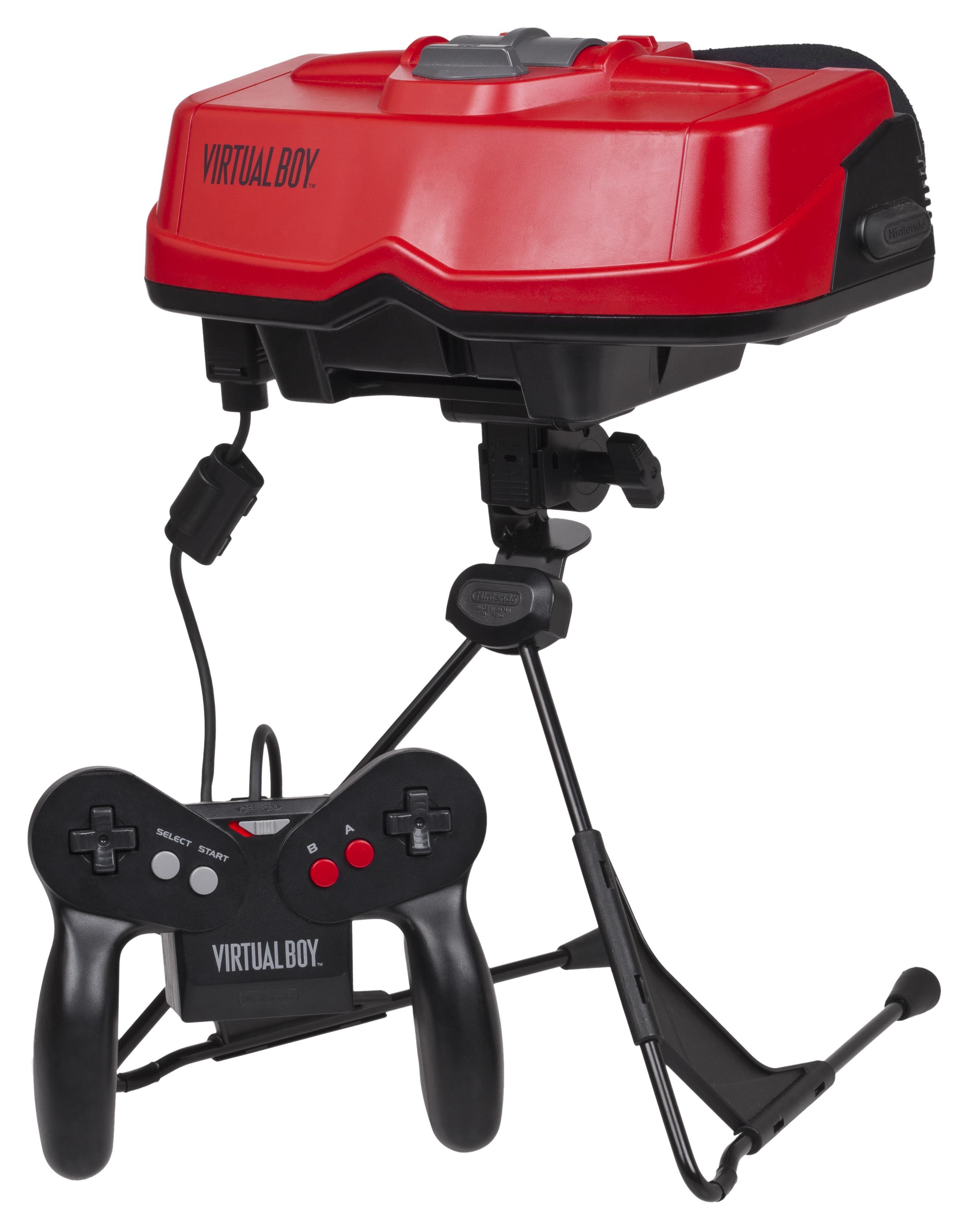
In 1995, Nintendo released the Virtual Boy, a console designed by Yokoi with stereoscopic graphics. Critics were generally disappointed with the quality of the games and red-colored graphics, and complained of gameplay-induced headaches. The system sold poorly and was quietly discontinued. Amid the system's failure, Yokoi formally retired from Nintendo.
In February 1996, Pocket Monsters Red and Green (known internationally as Pokémon Red and Blue) was developed by Game Freak and released in Japan for the Game Boy, establishing the popular Pokémon franchise. The game went on to sell 31.37 million units, with the video game series exceeding a total of 300 million units in sales as of 2017.
The Nintendo 64 was released in June 1996 in Japan, September 1996 in the United States and March 1997 in Europe. Though planned for release in 1995, the production schedules of third-party developers influenced a delay, The console was in development since mid-1993, when Nintendo and Silicon Graphics announced a strategic alliance to develop the console. NEC, Toshiba, and Sharp also contributed technology to the console. The Nintendo 64 was marketed as one of the first consoles to be designed with 64-bit architecture. In 1997, Nintendo released the Rumble Pak, a plug-in device that connects to the Nintendo 64 controller and produces a vibration during certain moments of a game. By the end of its production in 2002, around 33 million Nintendo 64 consoles were sold worldwide, and it is considered one of the most recognized video game systems in history. 388 games were produced for the Nintendo 64 in total, some of which – particularly Super Mario 64, The Legend of Zelda: Ocarina of Time, and GoldenEye 007 – have been distinguished as some of the greatest of all time.
In 1998, the Game Boy Color was released. In addition to backward compatibility with Game Boy games, the console's similar capacity to the NES resulted in select adaptations of games from that library, such as Super Mario Bros. Deluxe. Since then, over 118.6 million Game Boy and Game Boy Color consoles have been sold worldwide.
A series of administrative changes occurred in 2000 when Nintendo's corporate offices were moved to the Minami-ku neighborhood in Kyoto, and Nintendo Benelux was established to manage the Dutch and Belgian territories.
2001–2003: Game Boy Advance and GameCube
In 2001, two new Nintendo consoles were introduced: the Game Boy Advance, which was designed by Gwénaël Nicolas with stylistic departure from its predecessors, and the GameCube, which features a 128-bit Gekko processor from IBM and a DVD drive from Panasonic. During the first week of the Game Boy Advance's North American release in June 2001, over 500,000 units were sold, making it the fastest-selling video game console in the United States at the time. By the end of its production cycle in 2010, more than 81.5 million units had been sold worldwide. As for the GameCube, even with such distinguishing features as the miniDVD format of its games and Internet connectivity for a few games, its sales were lower than those of its predecessors, and during the six years of its production, 21.7 million units were sold worldwide. The GameCube struggled against its rivals in the market, and its initial poor sales led to Nintendo posting a first half fiscal year loss in 2003 for the first time since the company went public in 1962.
.png)
In 2002, the Pokémon Mini was released. Its dimensions were smaller than that of the Game Boy Advance and it weighed 70 grams, making it the smallest video game console in history. Nintendo collaborated with Sega and Namco to develop Triforce, an arcade board to facilitate the conversion of arcade titles to the GameCube. Following the European release of the GameCube in May 2002, Hiroshi Yamauchi announced his resignation as the president of Nintendo, and Satoru Iwata was selected by the company as his successor. Yamauchi would remain as advisor and director of the company until 2005. Iwata's appointment as president ended the Yamauchi succession at the helm of the company, a practice that had been in place since its foundation.
In 2003, Nintendo released the Game Boy Advance SP, an improved version of the Game Boy Advance with a foldable case, an illuminated display, and a rechargeable battery. By the end of its production cycle in 2010, over 43.5 million units had been sold worldwide. Nintendo also released the Game Boy Player, a peripheral that allows Game Boy and Game Boy Advance games to be played on the GameCube.
2004–2010: Nintendo DS and Wii
In 2004, Nintendo released the Nintendo DS, which featured such innovations as dual screens – one of which is a touchscreen – and wireless connectivity for multiplayer play. Throughout its lifetime, more than 154 million units were sold, making it the most successful handheld console and the second bestselling console in history. In 2005, Nintendo released the Game Boy Micro, the last system in the Game Boy line. Sales did not meet Nintendo's expectations, with 2.5 million units being sold by 2007. In mid-2005, the Nintendo World Store was inaugurated in New York City.
.jpg)
Nintendo's next home console was conceived in 2001, although development commenced in 2003, taking inspiration from the Nintendo DS. Nintendo also considered the relative failure of the GameCube and instead opted to take a "Blue Ocean Strategy" by developing a reduced performance console in contrast to the high-performance consoles of Sony and Microsoft to avoid directly competing with them. The Wii was released in November 2006, with a total of 33 launch games. With the Wii, Nintendo sought to reach a broader demographic than its seventh-generation competitors, with the intention of also encompassing the "non-consumer" sector. Nintendo invested in a $200 million advertising campaign to that end. The Wii's innovations include the Wii Remote controller, equipped with an accelerometer system and infrared sensors that allow it to detect its position in a three-dimensional environment with the aid of a sensor bar; the Nunchuk peripheral that includes an analog controller and an accelerometer; and the Wii MotionPlus expansion that increases the sensitivity of the main controller with the aid of gyroscopes. By 2016, more than 101 million Wii consoles had been sold worldwide, making it the most successful console of its generation, a distinction that Nintendo had not achieved since the 1990s with the Super NES.
Several accessories were released for the Wii from 2007 to 2010, such as the Wii Balance Board, the Wii Wheel and the WiiWare download service. In 2009, Nintendo Iberica S.A. expanded its commercial operations to Portugal through a new office in Lisbon. By that year, Nintendo held a 68.3% share of the worldwide handheld gaming market.
2011–2016: Nintendo 3DS, Wii U, and mobile ventures
After an announcement in March 2010, Nintendo released the Nintendo 3DS in 2011. The console produces stereoscopic effects without 3D glasses. By 2018, more than 69 million units had been sold worldwide; the figure increased to 75 million by the start of 2019.
In 2012 and 2013, two new Nintendo game consoles were introduced: the Wii U, with high-definition graphics and a GamePad controller with near-field communication technology, and the Nintendo 2DS, a version of the 3DS that lacks the clamshell design of Nintendo's previous handheld consoles and the stereoscopic effects of the 3DS. With 13.5 million units sold worldwide, the Wii U is the least successful video game console in Nintendo's history. In 2014, a new product line was released consisting of figures of Nintendo characters called Amiibos.
On 25 September 2013, Nintendo announced its acquisition of a 28% stake in PUX Corporation, a subsidiary of Panasonic, to develop facial, voice, and text recognition for its video games. Due to a 30% decrease in company income between April and December 2013, Iwata announced a temporary 50% cut to his salary, with other executives seeing reductions by 20%–30%. In January 2015, Nintendo ceased operations in the Brazilian market due in part to high import duties. This did not affect the rest of Nintendo's Latin American market due to an alliance with Juegos de Video Latinoamérica. Nintendo reached an agreement with NC Games for Nintendo's products to resume distribution in Brazil by 2017, and by September 2020, the Switch was released in Brazil.
On 11 July 2015, Iwata died of bile duct cancer, and after a couple of months in which Miyamoto and Takeda jointly operated the company, Tatsumi Kimishima was named as Iwata's successor on 16 September 2015. As part of the management's restructuring, Miyamoto and Takeda were named creative and technological advisors, respectively. The financial losses caused by the Wii U, along with Sony's intention to release its video games to other platforms such as smart TVs, motivated Nintendo to rethink its strategy concerning the production and distribution of its properties. In 2015, Nintendo formalized agreements with DeNA and Universal Parks & Resorts to extend its presence to smart devices and amusement parks respectively.
.jpg)
In March 2016, Nintendo's first mobile app for the iOS and Android systems, Miitomo, was released. Since then, Nintendo has produced other similar apps, such as Super Mario Run, Fire Emblem Heroes, Animal Crossing: Pocket Camp, Mario Kart Tour, and Pokémon Go, the last being developed by Niantic and having generated $115 million in revenue for Nintendo. In March 2016, the loyalty program My Nintendo replaced Club Nintendo. The NES Classic Edition was released in November 2016. The console is a version of the NES based on emulation, HDMI, and the Wii remote. Its successor, the Super NES Classic Edition, was released in September 2017. By October 2018, around ten million units of both consoles combined had been sold worldwide.
2017–2024: Nintendo Switch and expansion to other media
The Wii U's successor in the eighth generation of video game consoles, the Nintendo Switch, was released in March 2017. The Switch features a hybrid design as a home and handheld console, Joy-Con controllers that each contain an accelerometer and gyroscope, and the simultaneous wireless networking of up to eight consoles. To expand its library, Nintendo entered alliances with several third-party and independent developers; by February 2019, more than 1,800 Switch games had been released. The Switch has shipped over 150 million units worldwide , becoming the third-best selling console of all time behind the PlayStation 2 and Nintendo DS. It is also Nintendo's most successful home console to date, surpassing the Wii's 101.6 million units.

In 2018, Shuntaro Furukawa replaced Kimishima as company president, and in 2019, Doug Bowser succeeded Nintendo of America president Reggie Fils-Aimé. In April 2019, Nintendo formed an alliance with Tencent to distribute the Nintendo Switch in China starting in December.
In April 2020, Reuters reported that ValueAct Capital had acquired over 2.6 million shares in Nintendo stock worth over the course of a year, giving them an overall stake of 2% in Nintendo. Although the COVID-19 pandemic caused delays in the production and distribution of some of Nintendo's products, the situation "had limited impact on business results"; in May 2020, Nintendo reported a 75% increase in income compared to the previous fiscal year, mainly contributed by the Nintendo Switch Online service. The year saw some changes to the company's management: outside director Naoki Mizutani retired from the board, and was replaced by Asa Shinkawa; and Yoshiaki Koizumi was promoted to senior executive officer, maintaining his role as deputy general manager of Nintendo EPD. By August, Nintendo was named the richest company in Japan.
Super Nintendo World, a theme park area, opened at Universal Studios Japan in 2021. Nintendo co-produced an animated film The Super Mario Bros. Movie alongside Universal Pictures and Illumination, with Miyamoto and Illumination CEO Chris Meledandri acting as producers. In 2021, Furukawa indicated Nintendo's plan to create more animated projects based on their work outside the Mario film, and by 29 June, Meledandri joined the board of directors as a non-executive outside director. According to Furukawa, the company's expansion toward animated production is to keep "[the] business [of producing video games] thriving and growing", realizing the "need to create opportunities where even people who do not normally play on video game systems can come into contact with Nintendo characters". That day, Miyamoto said that "[Meledandri] really came to understand the Nintendo point of view" and that "asking for [his] input, as an expert with many years of experience in Hollywood, will be of great help to" Nintendo's transition into film production. Later, in July 2022, Nintendo acquired Dynamo Pictures, a Japanese CG company founded by Hiroshi Hirokawa on 18 March 2011. Dynamo had worked with Nintendo on digital shorts in the 2010s, including for the Pikmin series, and Nintendo said that Dynamo would continue their goal of expanding into animation. Following the completion of the acquisition in October 2022, Nintendo renamed Dynamo as Nintendo Pictures.
In February 2022, Nintendo announced the acquisition of SRD Co., Ltd. (Systems Research and Development) after 40 years, a major contributor of Nintendo's first-party games such as Donkey Kong and The Legend of Zelda until the 1990s, and then support studio since. In May 2022, Reuters reported that Saudi Arabia's Public Investment Fund had purchased a 5% stake in Nintendo, and by January 2023, its stake in the company had increased to 6.07%. It was raised to 7.08% by February 2023, and in the same week by 8.26%, making it the biggest external investor. In November 2024, Saudi Arabia's PIF dropped back to 6.3%.
Super Nintendo World opened at Universal Studios Hollywood in early 2023, followed by a Donkey Kong-themed expansion of the original land at Universal Studios Japan in 2024, and the opening of a Super Nintendo World area at Universal Epic Universe in Orlando in May 2025. The Super Mario Bros. Movie was released on 5 April 2023, and has grossed over $1.3 billion worldwide, setting box-office records for the biggest worldwide opening weekend for an animated film, the highest-grossing film based on a video game and the 15th-highest-grossing film of all-time.
Nintendo reached an agreement with Embracer Group in May 2024 to acquire 100% of the shares in Shiver Entertainment, a company that has specialized in porting triple-A games like Hogwarts Legacy and Mortal Kombat 1 to the Switch, making it a wholly owned subsidiary of Nintendo, subject to closing conditions. In October 2024, the company opened the Nintendo Museum on the site of its former Uji Ogura plant, where it had manufactured playing and hanafuda cards. The same month, Nintendo announced Nintendo Music, a mobile application enabling one to listen to soundtracks from Nintendo games. By November 2024, Nintendo gained full ownership of Monolith Soft, a first-party developer behind Xenoblade Chronicles and provided support for The Legend of Zelda: Tears of the Kingdom.
2025–present: Nintendo Switch 2
The successor to the Switch, the Nintendo Switch 2, was released on 5 June 2025. It has a larger display and more internal storage than the original Switch. It has updated graphics, controllers, and social features. It supports 1080p resolution and a 120 Hz refresh rate in handheld or tabletop mode, and 4K resolution with a 60 Hz refresh rate when docked. On 10 June, Nintendo reported that the Switch 2 had sold more than 3.5 million units worldwide, becoming the fastest selling console in history, overtaking the previous record-holder, the PlayStation 2. In September 2025, Nintendo announced that the sequel to The Super Mario Bros. Movie, titled The Super Mario Galaxy Movie, is scheduled to be released on 3 April 2026. On 27 November 2025, Nintendo announced that it would acquire Bandai Namco Studios Singapore through a share transfer with Bandai Namco Studios starting with a 80% stake on 1 April 2026, followed by the rest of its stake when operations have stabilized. Following this, BNSS would rebrand to Nintendo Studios Singapore.
Products
Main article: List of Nintendo products
Nintendo's central focus is the research, development, production, and distribution of entertainment productsprimarily video game software and hardware and card games. Its main markets are Japan, America, and Europe, and more than 70% of its total sales come from the latter two territories. As of May 2025, Nintendo's game consoles have sold over 860 million units, for which more than 5.9 billion video games have been sold globally.
Toys and cards
Main article: List of Nintendo products#Toys and cards
Video game consoles
Main article: Nintendo video game consoles
Since the launch of the Color TV-Game in 1977, Nintendo has produced and distributed home, handheld, dedicated, and hybrid consoles. In the 1980s, its first consoles to be successful were the Game & Watch and Nintendo Entertainment System. In the 1990s Nintendo launched new generations of home consoles with the Super Nintendo Entertainment System and Nintendo 64 and achieved global success with the Game Boy handheld console. In the 2000s, Nintendo found wide success again, with both the Nintendo DS and Wii. Each has a variety of accessories and controllers, such as the NES Zapper, the Game Boy Camera, the Super NES Mouse, the Rumble Pak, the Wii MotionPlus, the Wii U Pro Controller, and the Switch Pro Controller.
Video games
Main article: List of Nintendo products
Nintendo's first electronic games are arcade games. EVR Race (1975) was the company's first electromechanical game, and Donkey Kong (1981) was the first platform game in history. Since then, both Nintendo and other development companies have produced and distributed an extensive catalog of video games for Nintendo's consoles. Nintendo's games are sold in both removable media formats such as optical disc and cartridge, and online formats which are distributed via services such as the Nintendo eShop and the Nintendo Network.
Corporate structure
Main article: List of Nintendo development teams
Nintendo's internal research and development operations are divided into three main divisions:
- Nintendo Entertainment Planning & Development (EPD), the main software development and production division of Nintendo, which focuses on video game and software development, production, and supervising;
- Nintendo Platform Technology Development (PTD), which focuses on home and handheld video game console hardware development; and
- Nintendo Business Development (NBD), which focuses on refining business strategy for dedicated game system business and is responsible for overseeing the smart device arm of the business.
Entertainment Planning and Development (EPD)
The Nintendo Entertainment Planning & Development division is the primary software development, production, and supervising division at Nintendo, formed as a merger between their former Entertainment Analysis & Development and Software Planning & Development divisions in 2015. Led by Shinya Takahashi, the division holds the largest concentration of staff at the company, housing more than 800 engineers, producers, directors, coordinators, planners, and designers.
Platform Technology Development (PTD)
The Nintendo Platform Technology Development division is a combination of Nintendo's former Integrated Research & Development (IRD) and System Development (SDD) divisions. Led by Ko Shiota, the division is responsible for designing hardware and developing Nintendo's operating systems, developer environment, and internal network, and maintenance of the Nintendo Network.
Business Development (NBD)
The Nintendo Business Development division was formed following Nintendo's foray into software development for smart devices such as mobile phones and tablets. It is responsible for refining Nintendo's business model for the dedicated video game system business and overseeing development for smart devices.
Branches
Notable board members include Shigeru Miyamoto, Satoru Shibata and Outside Director Chris Meledandri, CEO of Illumination Entertainment; notable executive officers include Yoshiaki Koizumi, Deputy general manager of Entertainment Planning & Development division, Takashi Tezuka and Senior officer of Entertainment Planning & Development division.
Nintendo Co., Ltd.
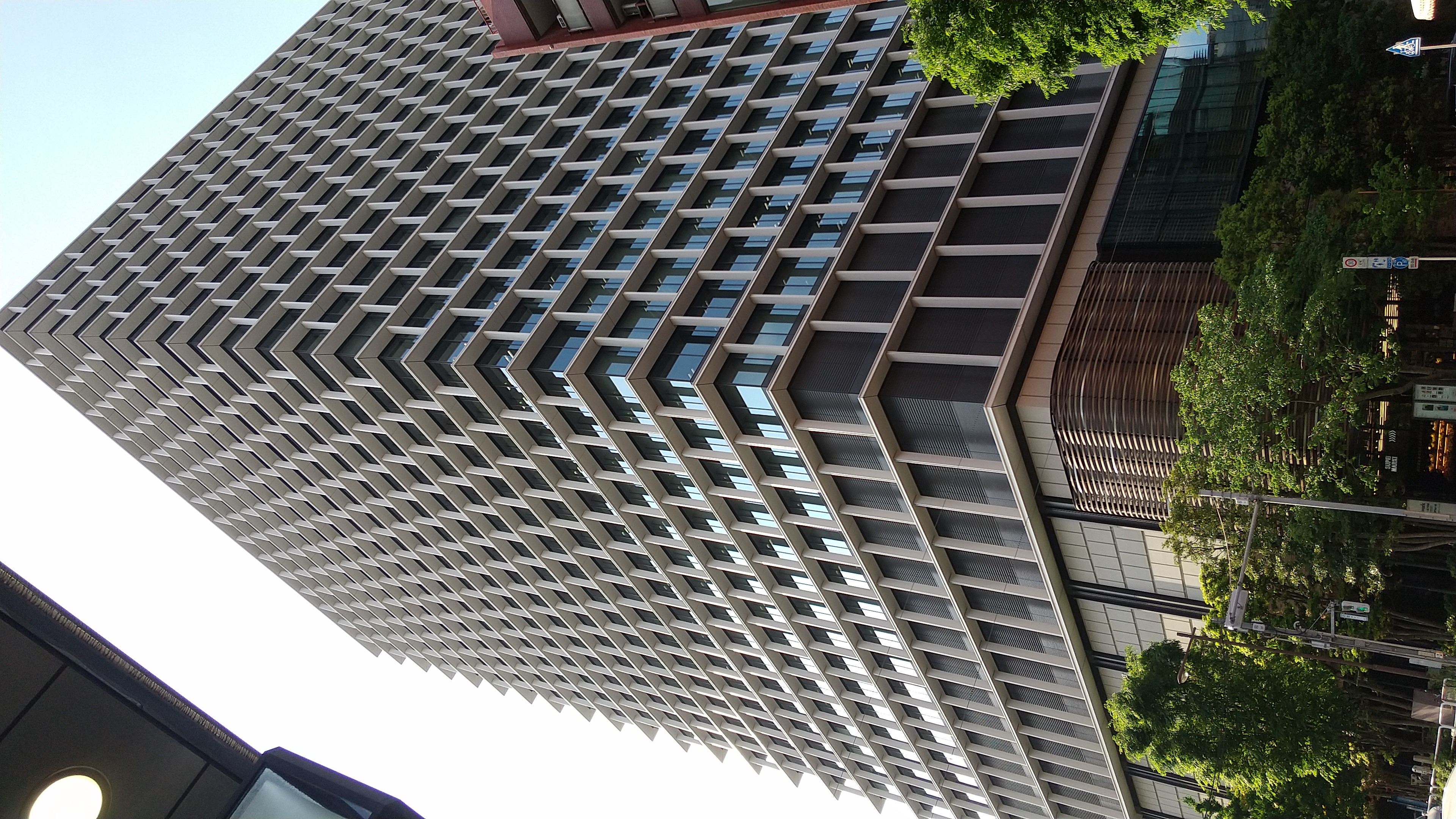
Headquartered in Kyoto, Japan since the beginning, Nintendo Co., Ltd. oversees the organization's global operations and manages Japanese operations specifically. The company's two major subsidiaries, Nintendo of America and Nintendo of Europe, manage operations in North America and Europe respectively. Nintendo Co., Ltd. later moved from its original Kyoto location to a new office in Higashiyama-ku, Kyoto; this became the research and development building in 2000 when the head office relocated to its location in Minami-ku, Kyoto.
| File:Nintendo 1889.jpg | 1889–1933, in Shimogyō-ku, Kyoto | File:Nintendo Former Headquarters Building.jpg | 1933–1959, in Shimogyō-ku, Kyoto | File:Nintendo Kyoto Research Center (Former headquarters) - panoramio.jpg | 1959–2000, in Higashiyama-ku, Kyoto | File:Headquarters of Nintendo Co., Ltd.jpg | 2000–present, in Minami-ku, Kyoto
Nintendo of America Inc. (NOA)

Nintendo founded its North American subsidiary in 1980 as Nintendo of America (NoA). Hiroshi Yamauchi appointed his son-in-law Minoru Arakawa as president, who in turn hired his own wife and Yamauchi's daughter Yoko Yamauchi as the first employee. The Arakawa family moved from Vancouver, British Columbia to select an office in Manhattan, New York due to its central status in American commerce. As both were from extremely affluent families, their goals were set more by prestige than money. The seed capital and product inventory were supplied by the parent corporation in Japan, with a launch goal of entering the existing $8 billion-per-year coin-op arcade video game market and the largest entertainment industry in the US, which had already outclassed movies and television combined. During the couple's arcade research excursions, NoA hired young gamers to work in the poorly maintained warehouse in New Jersey to receive and service game hardware from Japan.
In late 1980, NoA contracted the Seattle-based arcade sales and distribution company Far East Video, consisting solely of experienced arcade salespeople Ron Judy and Al Stone. The two had already built a decent reputation and a distribution network, founded specifically for the independent import and sales of games from Nintendo because the Japanese company had for years been the under-represented maverick in America. Now as direct associates to the new NoA, they told Arakawa they could always clear all Nintendo inventory if Nintendo produced better games. Far East Video took NoA's contract for a fixed per-unit commission on the exclusive American distributorship of Nintendo games, to be settled by their Seattle-based lawyer, Howard Lincoln.
Based on favorable test arcade sites in Seattle, Arakawa wagered most of NoA's modest finances on a huge order of 3,000 Radar Scope cabinets. He panicked when the game failed in the fickle market upon its arrival from its four-month boat ride from Japan. Far East Video was already in financial trouble due to declining sales and Ron Judy borrowed his aunt's life savings of $50,000, while still hoping Nintendo would develop its first Pac-Man-sized hit. Arakawa regretted founding the Nintendo subsidiary, with the distressed Yoko trapped between her arguing husband and father.
Amid financial threat, Nintendo of America relocated from Manhattan to the Seattle metro to remove major stressors: the frenetic New York and New Jersey lifestyle and commute, and the extra weeks or months on the shipping route from Japan as was suffered by the Radar Scope disaster. With the Seattle harbor being the US's closest to Japan at only nine days by boat, and having a lumber production market for arcade cabinets, Arakawa's real estate scouts found a 60000 sqft warehouse for rent containing three officesone for Arakawa and one for Judy and Stone. This warehouse in the Tukwila suburb was owned by Mario Segale, after whom the Mario character would be named, and was initially managed by former Far East Video employee Don James. After one month, James recruited his college friend Howard Phillips as an assistant, who soon took over as warehouse manager. The company remained at fewer than 10 employees for some time, handling sales, marketing, advertising, distribution, and limited manufacturing of arcade cabinets and Game & Watch handheld units, all sourced and shipped from Nintendo.
Arakawa was still panicked over NoA's ongoing financial crisis. With the parent company having no new game ideas, he had been repeatedly pleading for Yamauchi to reassign some top talent away from existing Japanese products to develop something for Americaespecially to redeem the massive dead stock of Radar Scope cabinets. Since all of Nintendo's key engineers and programmers were busy, and with NoA representing only a tiny fraction of the parent's overall business, Yamauchi allowed only the assignment of Gunpei Yokoi's young assistant who had no background in engineering, Shigeru Miyamoto.
NoA's staffexcept the sole young gamer Howard Phillipswere uniformly revolted at the sight of the freshman developer Miyamoto's debut game, which they had imported in the form of emergency conversion kits for the overstock of Radar Scope cabinets. The kits transformed the cabinets into NoA's massive windfall gain of $280 million from Miyamoto's smash hit Donkey Kong in 1981–1983 alone. They sold 4,000 new arcade units each month in America, making the 24-year-old Phillips "the largest volume shipping manager for the entire Port of Seattle". Arakawa used these profits to buy 27 acre of land in Redmond in July 1982 and to perform the $50 million launch of the Nintendo Entertainment System in 1985 which revitalized the entire video game industry from its devastating 1983 crash. A second warehouse in Redmond was soon secured, and managed by Don James. The company stayed at around 20 employees for some years.
On 10 August 1993, Nintendo of America rolled out the Nintendo Gateway System.
The organization was reshaped nationwide in the following decades, and those core sales and marketing business functions are now directed by the office in Redwood City, California. The company's distribution centers are Nintendo Atlanta in Atlanta, Georgia, and Nintendo North Bend in North Bend, Washington. , the 380000 sqft Nintendo North Bend facility processes more than 20,000 orders a day to Nintendo customers, which include retail stores that sell Nintendo products in addition to consumers who shop Nintendo's website. Nintendo of America's Canadian branch, Nintendo of Canada, is based in Vancouver, British Columbia with a distribution center in Toronto. Nintendo Treehouse is NoA's localization team, composed of around 80 staff who are responsible for translating text from Japanese to English, creating videos and marketing plans, and quality assurance.
Nintendo of America announced in October 2021 that it will be closing its offices in Redwood City, California, and Toronto and merging its operations with its Redmond and Vancouver offices. In April 2022, an anonymous quality assurance worker filed a complaint with the National Labor Relations Board, alleging Nintendo of America and contractor Aston Carter had engaged in union-busting activities and surveillance. The employee had been fired for mentioning unionizing efforts in the industry during a company meeting. The companies agreed to a settlement with the employee in October 2022. In March 2024, Nintendo of America restructured its product testing teams, resulting in the elimination of over 100 contractor roles. Some of the affected contractors were given full-time roles.
Nintendo of Europe SE (NOE)
Nintendo's European subsidiary was established in June 1990, based in Frankfurt, Germany. The company handles operations across Europe (excluding Scandinavia, where operations are handled by Bergsala on behalf of NOE), as well as South Africa. Nintendo of Europe's United Kingdom branch (Nintendo UK) handles operations in that country and in Ireland from its headquarters in Windsor, Berkshire. In June 2014, NOE initiated a reduction and consolidation process, yielding a combined 130 layoffs: the closing of its office and warehouse, termination of all employment, in Großostheim; and the consolidation of all of those operations into, and terminating some employment at, its Frankfurt location. As of July 2018, the company employs 850 people. In October 2018, Nintendo of Europe announced plans to relocate to a new 160,000 sqft headquarters in Frankfurt, eventually moving into the location in 2020 during the COVID-19 pandemic. In 2019, NOE signed with Tor Gaming Ltd. for official distribution in Israel.
| File:Großostheim Nintendo 20110127.jpg | Former Nintendo of Europe headquarters in Großostheim, Germany, until 2014 | File:Frankfurt Herriotstraße 4.20130511.jpg | Former Nintendo of Europe headquarters in Frankfurt, Germany, until 2020 | File:Edificio Adamastor Fernando Guerra & Sérgio Guerra – Fotografia de Arquitectura.JPG | Former Nintendo of Europe (formerly Nintendo Iberica) office in Lisbon, Portugal, until 2025 | File:Nintendo of Europe headquarters in Frankfurt, Germany, after 2020.jpg | Current Nintendo of Europe headquarters in Frankfurt, Germany, after 2020
Nintendo Australia Pty. Ltd. (NAL)
Nintendo Australia was established in June 1993, and is based in Scoresby, Victoria, a suburb of Melbourne. It handles the publishing, distribution, sales, and marketing of Nintendo products in Australia and New Zealand. Its original headquarters was located in Mulgrave, Victoria. Prior to NAL assuming publishing and distribution of all Nintendo products in Australia in January 1994, distribution was handled in Australia by Mattel Australia and in New Zealand by Video One on behalf of Mattel.
The founding General Managers of NAL were Graham Kerry (formerly the Managing Director of Mattel Australia) and Susumu Tanaka (then-transferred from Nintendo UK and currently a Senior Executive Officer at Nintendo's global HQ in Kyoto). Former Managing Directors include current Nintendo of America CEO Satoru Shibata and Rose Lappin, who previously worked on Nintendo products for Mattel Australia prior to joining NAL in 1993. Since its establishment, NAL has also published and distributed third-party video games in Australia for publishers such as Virgin Interactive Entertainment, Accolade, Atlus, Sega of Europe, Capcom Europe, Rising Star Games, Marvelous, Bandai Namco Entertainment, Enix & Square Enix, Hudson Soft, Disney Interactive and Tomy, amongst others.
Nintendo of Korea
Nintendo's South Korean subsidiary was established on 7 July 2006 and is based in Seoul. In March 2016, the subsidiary was heavily downsized due to a corporate restructuring after analyzing shifts in the current market, laying off 80% of its employees, leaving only ten people, including former CEO Hiroyuki Fukuda. This did not affect any games scheduled for release in South Korea, and Nintendo continued operations there as usual. Takahiro Miura would later take over as CEO in 2018. In April 2025, the subsidiary gained international attention when its website unintentionally leaked the presence of young Pauline in Donkey Kong Bananza.
Nintendo Singapore
Nintendo's Singaporean subsidiary was established on 26 September 2025. Takahiro Miura is the supervising branch manager. In November, Nintendo also announced its plans to acquire Bandai Namco Studios Singapore and rename it Nintendo Studios Singapore.
Greater China
Nintendo Phuten was incorporated in Taipei, Taiwan in 1991 as Phuten Co., Ltd. As Nintendo's Taiwanese subsidiary, it distributed Nintendo's products in Taiwan until its closure in 2014. Its responsibilities was handed over to Nintendo (Hong Kong) Limited until 2025 when Nintendo Taiwan Co., Ltd. was formed in Taipei to handle sales in the region.
Nintendo (Hong Kong) Limited was incorporated on 7 April 2005. It marketed the Wii in Hong Kong, after Nintendo could not market the console in Mainland China under iQue for being unable to circumvent the ban on foreign-made consoles imposed by the Chinese government. It currently handles distribution of Nintendo consoles in Hong Kong. Taiwan was also included under the division from 2014 until 2025.
Subsidiaries
Although most of the research and development (R&D) is being done in Japan, there are some R&D facilities in the United States, Europe, and China that are focused on developing software and hardware technologies used in Nintendo products. Although they all are subsidiaries of Nintendo (and therefore first-party), they are often referred to as external resources when being involved in joint development processes with Nintendo's internal developers by the Japanese personnel involved. This can be seen in the Iwata Asks interview series. Nintendo Software Technology (NST) and Nintendo Technology Development (NTD) are located in Redmond, Washington, United States, while Nintendo European Research & Development (NERD) is located in Paris, France, and Nintendo Network Service Database (NSD) is located in Kyoto, Japan.
Most external first-party software development is done in Japan, because the only overseas subsidiaries are Retro Studios and Shiver Entertainment in the United States (acquired in 2002 and 2024, respectively) and Next Level Games in Canada (acquired in 2021). Although these studios are all subsidiaries of Nintendo, they are often referred to as external resources when being involved in joint development processes with Nintendo's internal developers by the Nintendo Entertainment Planning & Development (EPD) division. 1-Up Studio and Nintendo Cube are located in Tokyo, Japan, and Monolith Soft has one studio located in Tokyo and another in Kyoto.
Nintendo established The Pokémon Company alongside Creatures and Game Freak to manage the Pokémon brand. Similarly, Warpstar, Inc. was formed through a joint investment with HAL Laboratory, which was in charge of the Kirby: Right Back at Ya! animated series as well as the web series It's Kirby Time. Both companies are investments from Nintendo, with Nintendo holding 32% of the shares of The Pokémon Company and 50% of the shares of Warpstar, Inc. Following the success of the Super Mario Bros. movie, Nintendo bought out HAL Laboratory's stake in Warpstar in April 2025, and by August 2025, rebranded the subsidiary as Nintendo Stars to focus on further multimedia initiatives involving Nintendo's IP.
Other notable subsidiaries include:
- iQue (China) Ltd.
- SRD Co., Ltd.
- Nintendo Pictures
- Nintendo Systems
Additional distributors
Active Boeki
Active Boeki is a distribution company based in Kobe that handles the distribution of Nintendo hardware and software in Southeast Asia and the Middle East since the Game & Watch era, under the responsibility of Nintendo Co. Ltd. in Japan. The company works with local resellers, such as Singapore-based Maxsoft handling distribution and sales in Singapore, Malaysia, Indonesia, Thailand and the Philippines. Active Boeki also works with resellers such as UAE-based Active Gulf and Saudi-based Shas Samurai, responsible for distribution and sales in the United Arab Emirates, Oman, Saudi Arabia, Qatar, Bahrain and Kuwait. In 2023, Active Boeki through Shas Samurai has ceased its distributing operations for Saudi Arabia, as AIC Trading received distribution rights for Nintendo in the country, overseen by Nintendo of Europe. Active Boeki through Maxsoft is also no longer the sole exclusive distributor for Nintendo in Southeast Asia after the appointment of new distributors in charge of distribution, sales, promotion and pop-up stores related to Nintendo products domestically in all countries previously covered by Maxsoft except Indonesia, such as Convergent Systems responsible for Singapore and Malaysia, Synnex for Thailand, and VST-ECS for the Philippines.
Bergsala
Bergsala, a third-party company based in Sweden, exclusively handles Nintendo operations in the Nordic region. Bergsala's relationship with Nintendo was established in 1981 when the company sought to distribute Game & Watch units to Sweden, which later expanded to the NES console by 1986. Bergsala was the only non-Nintendo owned distributor of Nintendo's products until 2019, when Tor Gaming gained distribution rights in Israel.
Tencent
Nintendo has partnered with Tencent to release Nintendo products in China, following the lifting of the country's console ban in 2015. In addition to distributing hardware, Tencent helps with the governmental approval process for video game software.
Tor Gaming
In January 2019, Ynet and IGN Israel reported that negotiations about the official distribution of Nintendo products in the country were ongoing. After two months, IGN Israel announced that Tor Gaming Ltd., a company established in earlier 2019, gained a distribution agreement with Nintendo of Europe, handling official retailing beginning at the start of March, followed by opening an official online store the next month.
Marketing
Main article: Nintendo marketing
Nintendo of America has engaged in several high-profile marketing campaigns to define and position its brand. One of its earliest and most enduring slogans was "Now you're playing with power!", used first to promote its Nintendo Entertainment System. It modified the slogan to include "SUPER power" for the Super Nintendo Entertainment System, and "PORTABLE power" for the Game Boy.
Its 1994 "Play It Loud!" campaign played upon teenage rebellion and fostered an edgy reputation. During the Nintendo 64 era, the slogan was "Get N or get out". During the GameCube era, the "Who Are You?" suggested a link between the games and the players' identities. The company promoted its Nintendo DS handheld with the tagline "Touching is Good". For the Wii, they used the "Wii would like to play" slogan to promote the console with the people who tried the games including Super Mario Galaxy and Super Paper Mario. The Nintendo 3DS used the slogan "Take a look inside". The Wii U used the slogan "How U will play next". The Nintendo Switch uses the slogan "Switch and Play" in North America, and "Play anywhere, anytime, with anyone" elsewhere.
Trademark
During the peak of Nintendo's success in the video game industry in the 1990s, its name was ubiquitously used to refer to any video game console, regardless of the manufacturer. To prevent its trademark from becoming generic, Nintendo pushed the term "game console", and succeeded in preserving its trademark.
Stores
Nintendo operates or licenses retail stores across the world.
Hong Kong
In Hong Kong, a third-party franchisee operates several Nintendo Switch-focused retail stores under the name of NSEW. The first store opened in March 2020 in Sham Shui Po. Two additional stores later opened, alongside a temporary pop-up store in the Hong Kong International Airport.
Another Nintendo Switch-focused store, Assemble, is located in Wan Chai. This store opened on 14 November 2024. This store features a dedicated section to third-party developer and publisher Cygames.
Israel
In June 2019, Nintendo's official Israeli distributor TorGaming Ltd. opened the second brick-and-morter Nintendo retail store in the world, entitled Nintendo Israel, at Dizengoff Center in Tel Aviv. The store was Dizengoff Center's second largest launch.
Japan
On 1 February 2019, Nintendo announced that it would open Nintendo Tokyo as a facility at the then-under-construction Shibuya Parco department store in the Fall of that year, being their first self-managed store in the country. The store opened with the complex on 22 November 2019.
Since Nintendo Tokyo's opening, two additional Nintendo stores have opened in Japan. Nintendo Osaka opened on 11 November 2022, located on the thirteenth floor of the Daimaru Umeda department store in Kita-ku, as a store-within-a-store. Nintendo Kyoto, located within the Takashimaya Department Store building in Kyoto, opened on 17 October 2023.
Saudi Arabia
In May 2012, Shas Samurai, Nintendo's official representative in Saudi Arabia, opened a "Nintendo World Store" at Al Faisaliah Mall in Riyadh.
United States
Nintendo opened its first retail store, Nintendo World (now Nintendo New York), on 14 May 2005, at the former location of the Pokémon Center at Rockefeller Center in New York City.
Nintendo opened its second US store called Nintendo San Francisco in the city's Union Square neighborhood on 15 May 2025.
The Nintendo of America headquarters in Redmond, Washington has a private store which is open only to employees and invited guests.
Pop-Up Stores
Additionally, Nintendo launched official pop-up stores in 2021 at various Japanese cities, and later in 2023 in Seoul, Singapore, and Hong Kong.
Logos
In use since the 1960s, Nintendo's most recognizable logo is the ovoid racetrack shape, especially the red-colored wordmark typically displayed on a white background, primarily used in the Western markets from 1985 to 2006. In Japan, a monochromatic version that lacks a colored background is on Nintendo's own Famicom, Super Famicom, Nintendo 64, GameCube, and handheld console packaging and marketing. Since 2006, in conjunction with the launch of the Wii, Nintendo changed its logo to a gray variant that lacks a colored background inside the wordmark, making it transparent. Nintendo's official, corporate logo remains this variation. For consumer products and marketing, a white variant on a red background has been used since 2016, and has been in full effect since the launch of the Nintendo Switch in 2017.
File:Nintendo 1889.svg | 1889–1950 File:Nintendo - 1950.png | 1950–1960 File:Nintendo - 1960.svg | 1960–1965 File:Nintendo - 1965.png | 1965–1967 File:Nintendo - 1967.png | 1967–1968 File:Nintendo - 1968.png | 1968–1970 File:Nintendo Logo 1970.png | 1970–1972 File:Nintendo - 1972.png | 1972–1975 File:Nintendo red logo.svg | 1975–present File:Nintendo gray logo.svg | 1975 logo with grey coloring, 2004–2016 File:Nintendo.svg | 1975 logo with red background, 2016–present
Policy
Financial
Unlike most Japanese companies, Nintendo has generally kept a large cash reserve instead of using the extra funds for investments or stock buybacks and dividends, a policy set in place by Hiroshi Yamauchi. As of September 2025, the company is estimated to have in cash reserves, amounting to around 120% of its sales. This cash reserved helped Nintendo quickly recover from poor sales of the GameCube and Wii U, as well as provide financial assurance for Nintendo to put into long-term projects.
Content guidelines
For many years, Nintendo had a policy of strict content guidelines for video games published on its consoles. Although Nintendo allowed graphic violence in its video games released in Japan, nudity and sexuality were strictly prohibited. Former Nintendo president Hiroshi Yamauchi believed that if the company allowed the licensing of pornographic games, the company's image would be forever tarnished. Nintendo of America went further and games released for Nintendo consoles could not feature nudity, sexuality, profanity (including racism, sexism or slurs), blood, graphic or domestic violence, drugs, political messages, or religious symbolswith the exception of widely unpracticed religions, such as the Greek Pantheon. The Japanese parent company was concerned that it may be viewed as a "Japanese invasion" by forcing Japanese community standards on North American and European children. Past the strict guidelines, some exceptions have occurred: Bionic Commando (though swastikas were eliminated in the US version), Smash TV and Golgo 13: Top Secret Episode contain human violence, the latter also containing implied sexuality and tobacco use, River City Ransom and Taboo: The Sixth Sense contain nudity, and the latter also contains religious images, as do Castlevania II and III.
Nintendo's content policy is responsible for the Genesis version of Mortal Kombat having more than double the unit sales of the Super NES version, largely due to Nintendo forcing its publisher Acclaim to recolor red blood to look like white sweat within the game and to tone down its gorier and more violent graphics. By contrast, Sega allowed blood and gore to remain in the Genesis version (though a code is required to unlock the gore). Nintendo allowed the Super NES version of Mortal Kombat II to ship uncensored the following year with a content warning on the packaging.
Video game ratings systems were introduced with the Entertainment Software Rating Board (ESRB) of 1994 and the Pan European Game Information of 2003, and Nintendo discontinued most of its censorship policies in favor of consumers making their own choices. Today changes to the content of games are done primarily by the game's developer or, occasionally, at the request of Nintendo. The only clear-set rule is that ESRB AO-rated games will not be licensed on Nintendo consoles in North America, a practice which is also enforced by Sony and Microsoft, its greatest competitors in the present market. Nintendo has since allowed several mature-content games to be published on its consoles, including Perfect Dark, Conker's Bad Fur Day, Doom, Doom 64, BMX XXX, the Resident Evil series, Killer7, the Mortal Kombat series, Eternal Darkness: Sanity's Requiem, BloodRayne, Geist, Dementium: The Ward, Bayonetta 2, Devil's Third, and Fatal Frame: Maiden of Black Water.
Certain games have continued to be modified, however. For example, Konami was forced to remove all references to cigarettes in the 2000 Game Boy Color game Metal Gear Solid (although the previous NES version of Metal Gear, the GameCube game Metal Gear Solid: The Twin Snakes, and the 3DS game Metal Gear Solid 3: Snake Eater 3D, included such references), and maiming and blood were removed from the Nintendo 64 port of Cruis'n USA. Another example is in the Game Boy Advance game Mega Man Zero 3, in which one of the bosses, called Hellbat Schilt in the Japanese and European releases, was renamed Devilbat Schilt in the North American localization. In North American releases of the Mega Man Zero games, enemies and bosses killed with a saber attack do not gush blood as they do in the Japanese versions. However, the release of the Wii was accompanied by several even more controversial games, such as Manhunt 2, No More Heroes, The House of the Dead: Overkill, and MadWorld, the latter three of which were initially published exclusively for the console.
License guidelines
Nintendo of America also had guidelines before 1993 that had to be followed by its licensees to make games for the Nintendo Entertainment System, in addition to the above content guidelines. Guidelines were enforced through the 10NES lockout chip.
- Licensees were not permitted to release the same game for a competing console until two years had passed.
- Nintendo would decide how many cartridges would be supplied to the licensee.
- Nintendo would decide how much space would be dedicated such as for articles and advertising in the Nintendo Power magazine.
- There was a minimum number of cartridges that had to be ordered by the licensee from Nintendo.
- There was a yearly limit of five games that a licensee may produce for a Nintendo console. This rule was created to prevent market over-saturation, which had contributed to the video game crash of 1983.
The last rule was circumvented in several ways; for example, Konami, wanting to produce more games for Nintendo's consoles, formed Ultra Games and later Palcom to produce more games as a technically different publisher. This disadvantaged smaller or emerging companies, as they could not afford to start more companies. In another side effect, Square Co. (now Square Enix) executives have suggested that the price of publishing games on the Nintendo 64 along with the degree of censorship and control which Nintendo enforced over its games, most notably Final Fantasy VI, were factors in switching its focus towards Sony's PlayStation console.
In 1993, a class action suit was taken against Nintendo under allegations that their lockout chip enabled unfair business practices. The case was settled, with the condition that California consumers were entitled to a $3 discount coupon for a game of Nintendo's choice.
Intellectual property protection
Main article: Intellectual property protection by Nintendo
Nintendo has generally been proactive in ensuring that its intellectual property in both hardware and software is protected. Nintendo's protection of its properties began as early as the arcade release of Donkey Kong which was widely cloned on other platforms, a practice common to the most popular arcade games of the era. Nintendo did seek legal action to try to stop the release of these unauthorized clones but estimated they still lost in potential sales to these clones. Since then, Nintendo has been proactive in preventing copyright infringement of its games by video game emulators and fan games and other works using the company's intellectual property. The company has also suffered from various data breaches and has sought action against those that have released these leaks.
Seal of Quality
The gold sunburst seal was first used by Nintendo of America, and later by Nintendo of Europe. It is displayed on any game, system, or accessory licensed for use on one of its video game consoles, denoting the game has been properly approved by Nintendo. The seal is also displayed on any Nintendo-licensed merchandise, such as trading cards, game guides, or apparel, albeit with the words "Official Nintendo Licensed Product".
In 2008, game designer Sid Meier cited the Seal of Quality as one of the three most important innovations in video game history, as it helped set a standard for game quality that protected consumers from shovelware.
NTSC regions
In NTSC regions, this seal is an elliptical starburst named the "Official Nintendo Seal". Originally, for NTSC countries, the seal was a large, black and gold circular starburst. The seal read as follows: "This seal is your assurance that NINTENDO has approved and guaranteed the quality of this product." This seal was later altered in 1988: "approved and guaranteed" was changed to "evaluated and approved". In 1989, the seal became gold and white, as it currently appears, with a shortened phrase, "Official Nintendo Seal of Quality". It was changed in 2003 to read "Official Nintendo Seal".
The seal currently reads:
PAL regions
In PAL regions, the seal is a circular starburst named the "Original Nintendo Seal of Quality". Text near the seal in the Australian Wii manual states:
Charitable projects
In 1992, Nintendo teamed with the Starlight Children's Foundation to build Starlight Fun Center mobile entertainment units and install them in hospitals. By the end of 1995, 1,000 Starlight Nintendo Fun Center units were installed. The units combine several forms of multimedia entertainment including gaming, and are a distraction as well as brightening moods and boosting children's morale during hospital stays.
Environmental record
Nintendo has consistently been ranked last in Greenpeace's "Guide to Greener Electronics" due to Nintendo's failure to publish information. Similarly, they are ranked last in the Enough Project's "Conflict Minerals Company Rankings" due to Nintendo's refusal to respond to multiple requests for information.
Like many other electronics companies, Nintendo offers a recycling program for customers to mail in unused products. Nintendo of America claimed 548 tons of returned products in 2011, 98% of which became reused or recycled.
Legacy
It is considered that Hiroshi Yamauchi's strategic decisions, mainly to take Nintendo into the world of electronic games, ensured not only the success of his company but the survival of the industry as a whole, as it "restored public confidence in electronic games after the gloomy collapse of the U.S. market in the early 1980s". The company was already the most successful in Japan by 1991, with its products having "redefined the way we play games" and its business model having prioritized title sales strategies over consoles, unlike what most distributors at the time were doing.
Its social responsibility policy and philosophy focused on quality and innovation have already led to Nintendo being classified as a "consumer-centric manufacturer", something that has allowed it to differentiate itself from its direct competitors, Sony and Microsoft. Forbes magazine has since 2013 included Nintendo in its list of the "World's Best Employers", which takes into consideration work environment and staff diversity. Time magazine in turn chose Nintendo in 2018 as one of the "50 Genius Companies" of the year, saying that "resurrection" has become a "habit" of the company and highlighting the success of the Nintendo Switch over the Wii U. Its capital in 2018 exceeded ten billion yen and net sales were over nine billion dollars, mostly in the North American market, making it one of Japan's richest and most valuable companies.
Nintendo characters have had a significant impact on contemporary popular culture. Mario has gone from being just a corporate mascot to a "cultural icon", as well as one of the most famous characters in the industry. According to John Taylor of Arcadia Investment Corp. the character "is by far the biggest single property in electronic gaming." Other prominent company characters include Princess Peach, Pikachu, Link, Donkey Kong, Kirby, and Samus Aran.
Notes
References
Bibliography
References
- Peckham, Matt. (3 December 2015). "President Tatsumi Kimishima on the Future of Nintendo".
- (12 March 2013). "Freelancers!: A Revolution in the Way We Work". Strategic Book.
- (15 January 2012). "The Story of Nintendo". The Rosen Publishing Group.
- (January 2002). "Forgotten Giant: The Brilliant Life and Tragic Death of Gunpei Yokoi".
- Picard, Martin. (December 2013). "The Foundation of Geemu: A Brief History of Early Japanese video games".
- "Iwata Asks-Punch-Out!!". Nintendo.
- "Famous Names in Gaming". [[CBS]].
- (April 2010). "Iwata Asks – Game & Watch 1: When Developers Did Everything". Nintendo.
- (April 2010). "Iwata Asks – Game & Watch 2: Using a Calculator Chip". Nintendo.
- Parkin, Simon. (20 December 2020). "Shigeru Miyamoto Wants to Create a Kinder World".
- Kincaid, Chris. (1 March 2015). "Shigeru Miyamoto: A Sketch".
- Walls, Jonathan L.. (2011). "The Legend of Zelda and Theology". Gray Matter Books.
- Priestman, Chris. (18 June 2015). "Miyamoto explains how he turned his love for a Japanese shrine into a videogame - Previously".
- (2 September 2025). "Switch 2 Shows Nintendo Is Still the Weird Genius of Gaming". [[Bloomberg News]].
- "Iwata Asks: ''Super Mario Bros.'' 25th Anniversary".
- Bankhurst, Adam. (30 October 2019). "Japanese Government Honors Nintendo's Shigeru Miyamoto As Person of Cultural Merit".
- Calvert, Darren. (24 March 2015). "Before They Were Enemies, Sega And Nintendo Worked On One Of The Rarest Arcade Games Ever Made".
- Butler, Tom. (20 January 2014). "The rise of the jump".
- Edwards, Benj. (25 April 2010). "The True Face of Mario". [[Technologizer]].
- Takano, Masaharu. (19 December 1994). "How the Famicom Was Born – Part 7".
- Narcisse, Evan. (16 October 2015). "How Nintendo Made the NES (And Why They Gave It A Gun)".
- Marley, Scott. (December 2016). "SG-1000". [[Future Publishing]].
- (1 March 1986). "Coin-Op "Super Mario" Will Shop To Overseas". Amusement Press.
- (1 May 1987). ""Fami-Com" Exceeds 10M. Its Boom Is Continuing". Amusement Press.
- Jones, Robert S.. (12 December 1982). "Home Video Games Are Coming Under a Strong Attack". [[The Gainesville Sun]].
- Kleinfield, N.R.. (17 October 1983). "Video Games Industry Comes Down To Earth". [[The New York Times]].
- Morris, Chris. (10 September 2015). "Mario, the World's Most Famous Video-Game Character, is 30 Years Old".
- Takiff, Jonathan. (20 June 1986). "Video Games Gain In Japan, Are Due For Assault On U.S.". [[The Vindicator]].
- Schartmann, Andrew. (2015). "Koji Kondo's ''Super Mario Bros.'' Soundtrack". Bloomsbury.
- "Nintendo Entertainment System (NES) – 1985–1995". GameSpy.
- Velasco, J.J.. (15 July 2013). "Historia de la Tecnología: 30 años de NES".
- Hoad, Phil. (2 June 2014). "''Tetris'': how we made the addictive computer game | Culture". The Guardian.
- Fahs, Travis. (27 July 2009). "IGN Presents the History of Game Boy". IGN Entertainment, Inc..
- Fahey, Rob. (27 April 2007). "Farewell, Father". Eurogamer.net.
- Shapiro, Eben. (3 June 1991). "Nintendo-Philips Deal Is a Slap at Sony". The New York Times.
- Nutt, Christian. "Birthday Memories: Sony PlayStation Turns 15". Gamasutra.
- "Japanese Secrets!". chrismcovell.com.
- Parish, Jeremy. (14 November 2006). "Out to Launch: Wii".
- Reisinger, Don. (21 January 2009). "Does the Xbox 360's 'Lack of Longevity' Matter?".
- Cifaldi, Frank. (13 May 2015). "The Story of the First Nintendo World Championships – IGN". [[IGN]].
- Thiel, Art. (5 July 2016). "New owner could mean quick changes for Seattle Mariners". crosscut.com.
- (28 April 2016). "Nintendo to Sell Mariners Stake to Stanton Ownership Group". www.bloomberg.com.
- (5 September 1992). "Nintendo Will No Longer Produce Coin-Op Equipment". [[Cashbox (magazine).
- (12 September 1992). "Nintendo Stops Games Manufacturing; But Will Continue Supplying Software". [[Cashbox (magazine).
- Barnholt, Ray. (4 August 2006). "Purple Reign: 15 Years of the SNES".
- Smith, Ernie. (23 February 2017). "In-Flight Entertainment System History: Are You Not Entertained?".
- Frischling, Bill. (25 October 1995). "Sideline Play". The Washington Post.
- Boyer, Steven. (2009). "A Virtual Failure: Evaluating the Success of Nintendos Virtual Boy". Velvet Light Trap.
- Snow, Blake. (4 May 2007). "The 10 Worst-Selling Consoles of All Time".
- "All-time best selling console games worldwide 2020".
- Minotti, Mike. (27 November 2017). "Pokémon passes 300 million games sold as it eyes Super Mario".
- Fisher, Lawrence M.. (6 May 1995). "Nintendo Delays Introduction of Ultra 64 Video-Game Player". [[The New York Times]].
- (July 1995). "Ultra 64 "Delayed" Until April 1996?". [[Ziff Davis]].
- Cochrane, Nathan. (1993). "Project Reality Preview by Nintendo/Silicon Graphics".
- (4 September 1993). "Nintendo and Silicon Graphics join forces to create world's most advanced video entertainment technology". Silicon Graphics, Inc..
- (March 1994). "Reality Check".
- "Nintendo Ultra 64".
- "Nintendo 64 Week: Day Two – Retro Feature at IGN".
- "IGN N64: Editors' Choice Games".
- "Filter Face Off: Top 10 Best Game Consoles". g4tv.com.
- [http://curiosity.jp/works/en/product/gameboy-advance.html Gameboy Advance. Works – Curiosity – キュリオシティ – ] {{Webarchive. link. (26 July 2017. Retrieved 21 December 2015.)
- Van Tilburg, Caroline. (2002). "Curiosity: 30 Designs for Products and Interiors". Birkhauser Verlag AG.
- (28 August 2000). "The Peripherals of the Game Boy Advance".
- (12 May 1999). "IBM, Nintendo Announce $1 Billion Technology Agreement".
- Eng, Paul. (21 June 2001). "Game Boy Advance Breaks Sales Records". [[American Broadcasting Company.
- (23 August 2000). "Gamecube: A Digital Wonder".
- Bivens, Danny. (31 October 2001). "GameCube Broadband/Modem Adapter – Feature".
- (June 2011). "Consolidated Sales Transition by Region". Nintendo.
- (22 May 2003). "GameCube 'may die out'".
- Byrd, Matthew. (27 February 2017). "How the GameCube Made Nintendo Cynical".
- (14 November 2003). "Nintendo Reports Loss".
- (18 February 2002). "GameCube Arcade Hardware Revealed".
- (2 May 2002). "GameCube gets midnight launch". BBC News.
- Walker, Trey. (24 May 2002). "E3 2002: Yamauchi steps down".
- Kageyama, Yuri. (12 July 2015). "Nintendo President Satoru Iwata Dies of Tumor".
- Stack, Liam. (13 July 2015). "Satoru Iwata, Nintendo Chief Executive, Dies at 55". [[The New York Times]].
- Harris, Craig. (23 March 2004). "DS Touch Screen Innovation".
- "Nintendo Co., Ltd. – Corporate Management Policy Briefing – Q&A". Nintendo Co., Ltd..
- Snow, Blake. (30 July 2007). "The 10 Worst-Selling Handhelds of All Time".
- Frank, Allegra. (6 January 2016). "Nintendo World getting its first makeover in a decade".
- (1 December 2006). "The Big Ideas Behind Nintendo's Wii".
- Fils-Aimé, Reggie. (9 May 2007). "Perspective: Nintendo on the latest 'technical divide'". [[CNET]].
- "Nintendo to Sell Wii Console in November". Gadget Guru.
- Rodriguez, Steven. (14 November 2006). "The Twenty Wii Launch Games". Planet GameCube.
- (15 August 2006). "Nintendo hopes Wii spells wiinner". [[USA Today]].
- Anthony, Scott D.. (30 April 2008). "Nintendo Wii's Growing Market of "Nonconsumers"". Harvard Business Review.
- Sliwinski, Alexander. (12 November 2006). "Nintendo Wii marketing to exceed $200 million".
- Wisniowski, Howard. (9 May 2006). "Analog Devices And Nintendo Collaboration Drives Video Game Innovation With iMEMS Motion Signal Processing Technology". Analog Devices, Inc..
- Castaneda, Karl. (13 May 2006). "Nintendo and PixArt Team Up". Nintendo World Report.
- Wales, Matt. (22 May 2006). "Reports claim Wii to slap down 16 at launch". Computer and Video Games.
- Stuart, Keith. (17 July 2008). "More on Wii's MotionPlus".
- (12 September 2007). "Nintendo Wii Outsells All Other Game Consoles". Ziff Davis.
- Hartley, Adam. (14 October 2009). "Rumour: Nvidia Tegra-powered Nintendo handheld due 2010".
- (23 March 2010). "Launch of New Portable Game Machine". Nintendo.
- Peckham, Matt. (18 March 2011). "Nintendo 3DS Takes No-Glasses 3D Mainstream".
- McWhertor, Michael. (18 January 2018). "The Nintendo 3DS just had its best month in years".
- (27 January 2012). "Corporate Management Policy Briefing/Third Quarter Financial Results Briefing for Fiscal Year Ending March 2012". Nintendo.co.jp.
- Totilo, Stephen. (7 June 2011). "''Zelda'' Games on the Wii U Could Look This Stunning".
- Phillips, Tom. (16 October 2013). "This is what the 2DS' huge single LCD screen looks like". Eurogamer.
- Hillier, Brenna. (1 February 2017). "The Wii U has sold through 13.5 million units, making it officially Nintendo's worst-selling console".
- (25 September 2013). "Panasonikku・Nintendō, Gēmuki Sōsahō wo Kyōdō Kaihatsu". Nikkei.
- (29 January 2014). "Nintendo executives take pay cuts after profits tumble". BBC News.
- Good, Owen S.. (10 January 2015). "Nintendo ends console and game distribution in Brazil, citing high taxes".
- Pastor, Alberto. (27 May 2017). "Nintendo vuelve a tener presencia oficial en Brasil".
- Nogueira, Helena. (18 September 2020). "Nintendo Switch Launches in Brazil, the First Nintendo Product to Go on Sale in the Country Since 2015". [[IGN]].
- Amano, Takashi. (12 July 2015). "Satoru Iwata, Nintendo President Who Introduced Wii, Dies". [[Bloomberg L.P.]].
- (14 September 2015). "Notice Regarding Personnel Change of a Representative Director and Role Changes of Directors". Nintendo.
- (20 January 2014). "Nintendo shares plunge 18% on loss warning".
- (17 March 2015). "Nintendo Partners With DeNA To Bring Its Games And IP To Smartphones".
- "March 17, Wed. 2015 Presentation Title". Nintendo.
- (7 May 2015). "Nintendo, Universal Team Up For Theme Park Attractions". [[Condé Nast]].
- (28 October 2015). "Mii Avatars Star in Nintendo's First Mobile Game This March". [[Condé Nast]].
- Wong, Joon Ian. (26 October 2016). "Nintendo ''Pokémon Go'' profits: We finally know how much Nintendo made from ''Pokémon Go''".
- McWhertor, Michael. (6 February 2016). "Nintendo to launch mobile app ''Miitomo'', My Nintendo rewards program in March".
- Webster, Andrew. (14 July 2016). "Nintendo is releasing a miniature NES with 30 built-in games". [[The Verge]].
- (26 June 2017). "Nintendo announces mini Super Famicom for Japan". The Verge.
- Moyse, Chris. (31 October 2018). "NES and SNES Classic consoles pass the 10 million global sales mark". [[Destructoid]].
- Choudhury, Saheli Roy. (13 January 2017). "Nintendo Switch to launch globally on March 3, to cost $300 in the US".
- Peckham, Matt. (6 February 2017). "The 8 Most Interesting Things Nintendo Told Us About Switch".
- Shae, Brian. (29 December 2017). "How Nintendo Is Changing Its Approach To Indie Developers".
- Doolan, Liam. (11 February 2019). "More Than 1,800 Games Have Now Been Released On The Nintendo Switch".
- (26 April 2018). "Nintendo's New President Marks Start of New Dynasty".
- Calvert, Darren. (21 February 2019). "Reggie Fils-Aime Is Retiring After 15 Notable Years At Nintendo of America". Hookshot Media.
- Kerr, Chris. (4 December 2019). "Nintendo and Tencent have set a launch date for the Switch in China". [[Informa]].
- (12 December 2016). "Nintendo's first Universal Studios park attraction is called Super Nintendo World".
- Wong, Maggie Hiufu. (1 December 2020). "Super Nintendo World is opening at Universal Studios Japan in February. Here's a sneak peek".
- Blair, Gavin J.. (31 January 2018). "'Mario' Movie to Be Produced by Nintendo and Illumination".
- Craddock, Ryan. (30 January 2020). "Illumination's Mario Movie Is "Moving Along Smoothly", Aiming For 2022 Release".
- (29 April 2021). "As Nintendo's entertainment kingdom expands, it's still about the games". Fast Company.
- Ankers-Range, Adele. (5 July 2021). "Nintendo Adds Despicable Me Producer to Its Board of Directors to Help It Make Movies".
- "Q&A Summary".
- (14 July 2022). "Nintendo to acquire visual content company Dynamo Pictures".
- Batchelor, James. (4 October 2022). "Nintendo completes Dynamo Pictures acquisition, relaunches as Nintendo Pictures". [[Gamer Network]].
- Batchelor, James. (24 February 2022). "Nintendo acquires long-running partner studio SRD Co Ltd". [[Gamer Network]].
- (17 February 2023). "Days after its last increase, Saudi Arabia yet again ups its Nintendo stake".
- (13 November 2024). "Saudi Arabia's Sovereign Wealth Fund Trims Nintendo Stake Again".
- Whitten, Sarah. (17 February 2023). "Look inside Super Nintendo World, which just opened at Universal Studios Hollywood".
- Tansey, Joel. (2024-12-12). "USJ’s new Donkey Kong Country is a barrel of fun".
- Neely, Samantha. "Mario, Yoshi and Donkey Kong take over Orlando in Universal’s biggest new theme park land".
- Dellatto, Marisa. (16 April 2023). "Weekend Box Office: ''Super Mario Bros. Movie'' Earns Over $180 Million Worldwide In Another Massive Weekend".
- (20 May 2024). "Nintendo agrees deal to buy Hogwarts Legacy, Mortal Kombat Switch studio".
- (21 May 2024). "Notice of the Acquisition of Shiver Entertainment, Inc.". Nintendo Co., Ltd..
- (2 October 2024). "Nintendo's very first museum offers a nostalgic trip back in video game time".
- Reynolds, Ollie. (30 October 2024). "'Nintendo Music' Is A New Mobile App Exclusive To Switch Online Members".
- (11 December 2024). "After pumping out Xenoblade Chronicles games for a decade and helping out on Zelda: Tears of the Kingdom, Monolith Soft is now fully owned by Nintendo".
- "Nintendo Switch 2 Launches June 5 at $449.99, Bringing New Forms of Game Communication to Life".
- Bankhurst, Adam. (11 June 2025). "Switch 2 Becomes 'Fastest-Selling' Nintendo Hardware Ever With Over 3.5 Million Units Sold Worldwide In Just Four Days". IGN.
- Warren, Tom. (11 June 2025). "Nintendo's Switch 2 is the fastest-selling game console of all time".
- Dunn, Jack. (12 September 2025). "'Super Mario Bros. 2' Officially Titled 'Super Mario Galaxy Movie'".
- McCrae, Scott. (2025-11-27). "Nintendo announces plans to acquire a Bandai Namco studio long-rumored to be the original Metroid Prime 4 developers".
- (2025-11-27). "Acquisition of Shares in a Singapore-Based Entity to Strengthen Development Structure". Nintendo Co., Ltd..
- "2018 Nintendo Financial Review". Nintendo.
- "任天堂株式会社 ニュースリリース :2025年5月27日 - フリーマーケットサイトにおける任天堂商品の不正な出品行為を防止する取り組みについて|任天堂".
- Yoshimura, Takuya. (14 September 2015). "Notice Regarding Personnel Change of a Representative Director and Role Changes of Directors".
- (14 September 2015). "Nintendo Consolidates Its Game Development Teams". [[Condé Nast]].
- (14 September 2015). "Nintendo Reveals Restructuring Plans". [[Ziff Davis]].
- "製品技術編(2)". Nintendo Co., Ltd..
- (13 May 2018). "Fushimi Inari Taisha and Fox". Nintendo.
- (1 May 2019). "MGC 2019 – Howard Phillips and Frank Cifaldi Interview". Hair of the Dogcast.
- McFerran, Damien. (5 October 2012). "Ninterview: Howard "Gamemaster" Phillips".
- Firestone, Mary. (2011). "Nintendo: The Company and Its Founders". ABDO.
- Sipchen, Bob. (27 April 1990). "Nintendo Frenzy : Trends: America is in the grips of a computer-game craze. It may affect our future, some experts say.". Los Angeles Times.
- Plunkett, Luke. (28 August 2012). "One Man's Journey From Warehouse Worker to Nintendo Legend".
- Bishop, Todd. (24 October 2012). "5 questions for 'Gamemaster Howard' of Nintendo fame". GeekWire.
- Kent, Steven L.. (16 June 2010). "The Ultimate History of Video Games: Volume Two: from Pong to Pokemon and beyond...the story behind the craze that touched our lives and changed the world". Crown/Archetype.
- Ziesak, Jörg. (2009). "Wii Innovate – How Nintendo Created a New Market Through Strategic Innovation". GRIN Verlag.
- Good, Owen S.. (31 October 2015). "Here's how Nintendo announced the NES in North America almost 30 years ago". Polygon.
- Cifaldi, Frank. (19 October 2015). "In Their Words: Remembering the Launch of the Nintendo Entertainment System". IGN.
- (13 August 1993). "Virgin Airways fleet to get US$19m interactive systems". Business Times (Singapore).
- R.H. Brown Co. Inc.. (2007). "Case Studies". Hytrol.com.
- "Nintendo of Canada Ltd".
- (22 April 2014). "Nintendo's Secret Weapon".
- Peters, Jay. (29 October 2021). "Nintendo is officially closing its Redwood City and Toronto offices". [[The Verge]].
- Totilo, Stephen. (19 April 2022). "Nintendo hit with labor complaint".
- Jiang, Sisi. (29 September 2022). "Former Nintendo Worker Wants Company President To Apologize After Alleged Firing [Update]".
- Carpenter, Nicole. (13 October 2022). "Nintendo of America settles labor dispute with former QA worker".
- Gach, Ethan. (27 March 2024). "Big Shakeup At Nintendo Testing Center Ahead Of Switch 2".
- "History". Nintendo.
- (June 2022). "Contact".
- Skrebels, Joe. (9 December 2019). "The Lie That Helped Build Nintendo". [[IGN]].
- (29 August 2012). "General Customer Service". Nintendo.
- Pearson, Dan. (6 June 2014). "130 jobs lost in Nintendo of Europe reshuffle". [[gamesindustry.biz]].
- (6 June 2014). "Nintendo to close European headquarters, lay off 130". USA Today.
- (2 July 2018). "Deutschlands größte Spielehersteller 2018".
- (19 October 2018). "Nintendo verlegt Europazentrale in Frankfurt-Niederrad".
- (26 February 2023). "Warum Nintendo fast 1.000 Leute in Deutschland beschäftigt".
- link. (23 January 2019)
- "History of Nintendo".
- Loughrey, Paul. (30 June 2006). "Nintendo establishes Korean subsidiary". [[gamesindustry.biz]].
- Ashcraft, Brian. (29 March 2016). "Report: Nintendo of Korea Is Laying Off Most of Its Staff [Update]". Kotaku.
- McFerran, Damien. (29 March 2016). "Nintendo Of Korea Lays Off 80 Percent Of Its Staff Following Sustained Losses".
- Serin, Kaan. (5 April 2025). "Nintendo accidentally leaks an unrevealed Donkey Kong Bananza character that might unironically have big lore implications for the Mario universe". GamesRadar+.
- Blake, Vikki. (7 April 2025). "Did Nintendo Just Accidentally Reveal An Unannounced Character In Donkey Kong Bananza?". IGN.
- "News Release : Sep. 30, 2025 "Establishment of a local entity with the aim of accelerating business in Southeast Asia"".
- Shapiro, Jake. (23 April 2014). "Nintendo Is Shutting Down Its Taiwan Subsidiary".
- Sam, Sam. "任天堂溥天宣布結束營業 台灣市場業務未來將交由任天堂香港負責".
- Norman, Jim. (18 February 2025). "Nintendo Sets Up New Subsidiary In Taiwan".
- (6 March 2010). "Wii主機". Nintendo.
- Lai, Richard. (30 January 2013). "China's complicated history with video games: when a ban isn't really a ban".
- "Wii U: Internet Browser".
- Satterfield, Shane. (2 May 2002). "Nintendo makes Retro Studios a full subsidiary".
- Nintendo. (20 May 2024). "[任天堂HP]「Shiver Entertainment, Inc.の子会社化に関するお知らせ」を掲載しました。".
- Kerr, Chris. (5 January 2021). "Nintendo acquires Luigi's Mansion 3 developer Next Level Games".
- Phillips, Tom. (27 August 2025). "After Super Mario Bros. Movie's Success, Nintendo Makes Clear It's Committed to Film Production With a Newly-Restructured Entertainment Division, Named Nintendo Stars". [[IGN]].
- Iggy. (2 March 2024). "Nintendo Of Europe Takes Over Saudi Arabia, New Distributor Installed".
- "Active Boeki K.K.".
- Gerald. (8 December 2021). "Nintendo gets a new official distributor with Convergent Systems, so what's changed?".
- Chapree, Chief. (10 October 2023). "Convergent Distribution is the new Nintendo Switch distributor in Malaysia: What does this mean for gamers?".
- Parkhouse, Arthur. (15 December 2024). "Nintendo Opens Its First Official Store in Bangkok".
- Ronquillo, Ram. (4 December 2023). "VSTECS Phils Appointed as Official Distributor of Nintendo Switch in PH".
- Skrebels, Joe. (9 December 2019). "The Lie That Helped Build Nintendo". [[IGN]].
- (18 April 2019). "Nintendo, With Tencent's Help, to Sell Switch Console in China". [[The Wall Street Journal]].
- link. (12 March 2019)
- "עבור לדף המבוקש".
- Koch, Cameron. (21 July 2016). "Nintendo Brings Back Retro 'Now You're Playing With Power' Slogan For New NES Classic Edition Ad". Tech Times.
- Arsenault, Dominic. (2017). "Super Power, Spoony Bards, and Silverware: The Super Nintendo Entertainment System". [[MIT Press]].
- Elliott, Stuart. (1 July 1994). "The Media Business: Advertising; Nintendo Turns Up the Volume in a Provocative Appeal to its Core Market: Teen-Age Males". [[The New York Times]].
- (29 September 2003). "Nintendo Asks, 'Who Are You?'; New Multimillion-Dollar Campaign Helps Players Explore Their 'Inner Gamer'".
- (15 November 2004). "Nintendo DS targets teens, young adults". NBC.
- "Nintendo's 'Wii Would Like to Play' Named the Most Effective Marketing Effort at Effie Awards". IGN.
- Nintendo. (21 November 2011). "Nintendo 3DS – Mario Kart 7 Trailer".
- Svetlik, Joe. (5 November 2012). "Nintendo airs Wii U advert: shows "How U Will Play Next"".
- Nintendo. (15 February 2017). "Nintendo Switch – Switch and Play NYC Preview Tour".
- (10 June 2011). "'Genericide': When brands get too big". [[The Independent]].
- Plunkett, Luke. (7 July 2014). "There's No Such Thing As A Nintendo". Kotaku.
- (18 March 2020). "一站式體驗 NSEW Store開幕 - ezone.hk - 遊戲動漫 - 電競遊戲 | ezone".
- Iggy. (18 March 2020). "Nintendo Switch Store Opens In Hong Kong". NintendoSoup.
- "分店資料".
- (29 April 2025). "Nintendo Switch Authorized Store at Hong Kong International Airport Closes This Week".
- (15 November 2024). "Nintendo Switch Specialty Store Opens in Hong Kong, Features Dedicated Cygames Section - GamerBraves".
- Moses, Shany. (25 June 2019). "Nintendo 2nd worldwide store opens in Israel". [[Globes (newspaper).
- "News Release : Feb. 1, 2019".
- Webb, Kevin. (19 November 2019). "Nintendo's first store in Japan opens this Friday, and it looks like a Nintendo-lover's paradise — here's what it's like inside". [[Business Insider]].
- (9 November 2021). "Game on: Nintendo announces new Osaka store opening in 2022".
- Yoerider. (14 April 2023). "New Official Nintendo Store "Nintendo Kyoto" Coming To Japan October 2023".
- Bin Mahfoudh, Ahmad. (16 May 2012). "جولة داخل متجر Nintendo الرسمي في الرياض". TrueGaming.
- "Nintendo store listing on official Al Faisaliah Mall website". Al Faisaliah Mall.
- Sarrazin, Marc-André. (21 April 2005). "Nintendo World Store Opening Party — Nintendo Spin". NintendoSpin.com.
- Roth, Emma. (24 May 2024). "Nintendo is opening its second US store in San Francisco".
- (13 March 2025). "Nintendo SAN FRANCISCO celebrates grand opening May 15".
- Totilo, Stephen. (25 August 2011). "The Coolest Things in Nintendo's American Headquarters (And One Uncool Thing)".
- GALA-MOS. (17 June 2021). "Nintendo Tokyo Pop-Up Stores Announced For Various Cities Across Japan".
- (1 September 2023). "「Nintendo POP-UP STORE in SEOUL」 오픈!".
- GALA-MOS. (2 September 2023). "Nintendo POP-UP STORE in SEOUL Announced, Opens October 20".
- Yoerider. (18 October 2023). "Nintendo Pop-Up Store Coming To Singapore This November".
- (3 November 2023). "「Nintendo POP-UP STORE in HONG KONG」將首次登陸香港!".
- Yoerider. (5 November 2023). "Nintendo Pop-UP Store In Hong Kong Announced, Opens December 2023".
- "Nintendō Kabushikigaisha: Kaisha Jōhō".
- "Nintendo of America Content Guidelines". Filibustercartoons.com.
- Fahs, Travis. "IGN Presents the History of Mortal Kombat – Retro Feature at IGN".
- "Mortal Kombat II (1994) Amiga box cover art".
- "Nintendo of America Customer Service – Nintendo Buyer's Guide". Nintendo.com.
- (8 October 1996). "IGN: Nintendo to censor Cruis'n".
- Leone, Matt. (9 January 2017). "Final Fantasy 7: An oral history". [[Vox Media]].
- (February 1994). "Nintendo May Owe You $3". [[International Data Group.
- Altice, Nathan. (2015). "I Am Error: The Nintendo Family Computer / Entertainment System Platform". [[MIT Press]].
- "Customer Service | Licensed and Unlicensed Products". Nintendo.
- Arendt, Susan. (4 March 2008). "Civilization Creator Lists Three Most Important Innovations in Gaming".
- "Nintendo 3DS XL Operations Manual". Nintendo.
- (2009). "Wii MotionPlus Operations Manual". Nintendo.
- (January 1996). "Quick Hits". [[International Data Group.
- Alexander, Leigh. (24 June 2008). "Nintendo Hooks Up Hospitalized Kids With Wii Fun Centers".
- Ashcraft, Brian. (27 May 2010). "Greenpeace Still Says Nintendo Is Bad For The Environment". Kokaku.
- "2012 Conflict Minerals Company Rankings". Enough Project.
- "Nintendo Product Recycling and Take Back Program". Nintendo.
- "Corporate Information : Company Profile".
- "Corporate Information : Company History".
- "Nintendo History".
- (10 May 2022). "Consolidated Results for the Years Ended March 31, 2021 and 2022".
- (6 May 2021). "Consolidated Results for the Years Ended March 31, 2020 and 2021".
- (7 May 2020). "Consolidated Results for the Years Ended March 31, 2019 and 2020".
- "IR Information : Stock Information - Status of Shares".
- MacNeil, Jessica. (23 September 2019). "Nintendo is founded, September 23, 1889".
- Bunting, Geoffrey. (2 May 2022). "The birthplace of Nintendo".
- Voskuil, Geplaatst door Erik. (14 November 2014). "100 year old Nintendo promotional calendar".
- Herbst-Bayliss, Svea. (21 April 2020). "Exclusive: ValueAct eyes Nintendo with stake of over $1.1 billion - letter". Reuters.
- Anderson, Megan. (26 August 2020). "Nintendo Officially Named The Richest Company In Japan In 2020".
- Parkin, Simon. (20 September 2013). "Postscript: The Man Behind Nintendo".
- "Nintendo {{!}} Company Overview & News".
- "Nintendo: The 50 Most Genius Companies of 2018".
- (July 2018). "Nintendo CSR Report 2018".
- Sacirbey, Susan. (10 May 2016). "Video Games and Their Effect on Modern Day Society".
- (30 June 2017). "The 15 Most Influential Video Game Characters of All Time".
- Machin, Mat. (28 July 2018). "The 30 Strongest Nintendo Characters, Officially Ranked".
- Henderson, Luke. (30 April 2018). "Meet the 6 Presidents of Nintendo's 130 year history".
- Malinsky, Gili. (18 March 2019). "From playing cards to 'Super Mario Bros.', here's Nintendo's history.".
- Alt, Matt. (12 November 2020). "How Gunpei Yokoi Reinvented Nintendo". [[Vice (magazine).
- deWinter, Jennifer. (2015). "Shigeru Miyamoto : Super Mario Bros., Donkey Kong, The Legend of Zelda". Bloomsbury Academic.
- (2003). "High Score!: The Illustrated History of Electronic Games". McGraw-Hill/Osborne.
- Kohler, Chris. (17 February 2012). "Game Life Podcast: When Jay Mohr Met Tomonobu Itagaki".
- (14 June 2018). "Nintendo Treehouse Live - E3 2018 - Arcade Archives Donkey Kong, Sky Skipper". Nintendo Everything.
- O'Kane, Sean. (18 October 2015). "7 things I learned from the designer of the NES".
- (30 May 2003). "Nintendo to end Famicom and Super Famicom production.".
- (27 January 2010). "Consolidated Sales Transition by Region". Nintendo.
- "State of the Industry".
- Byford, Sam. (19 April 2019). "Only Nintendo could kill the Game Boy".
- (26 April 2016). "Consolidated Sales Transition by Region". Nintendo.
- "IR Information : Sales Data – Hardware and Software Sales Units". Nintendo Co., Ltd..
- Hansen, Dustin. (2016). "Game On!: Video Game History from Pong and Pac-Man to Mario, Minecraft, and More". Feiwel & Friends.
This article was imported from Wikipedia and is available under the Creative Commons Attribution-ShareAlike 4.0 License. Content has been adapted to SurfDoc format. Original contributors can be found on the article history page.
Ask Mako anything about Nintendo — get instant answers, deeper analysis, and related topics.
Research with MakoFree with your Surf account
Create a free account to save articles, ask Mako questions, and organize your research.
Sign up freeThis content may have been generated or modified by AI. CloudSurf Software LLC is not responsible for the accuracy, completeness, or reliability of AI-generated content. Always verify important information from primary sources.
Report