From Surf Wiki (app.surf) — the open knowledge base
Love jihad conspiracy theory
Islamophobic conspiracy theory
Islamophobic conspiracy theory
Love jihad (or Romeo jihad) is an Islamophobic conspiracy theory promoted by right-wing Hindutva activists. The conspiracy theory purports that Muslim men target Hindu women for conversion to Islam by means such as seduction, feigning love, deception, kidnapping, and marriage, as part of a broader demographic "war" by Muslims against India, and an organised international conspiracy, for domination through demographic growth and replacement.
The conspiracy theory relies on disinformation to conduct its hate campaign, and is noted for its similarities to other historic hate campaigns as well as contemporary white nationalist conspiracy theories and Western Islamophobia. It features Orientalist portrayals of Muslims as barbaric and hypersexual, and carries the paternalistic and patriarchal notions that Hindu women are passive and victimised, while "any possibility of women exercising their legitimate right to love and their right to choice is ignored". It has consequently been the cause of vigilante assaults, murders and other violent incidents, including the 2013 Muzaffarnagar riots.
Created in 2009 as part of a campaign to foster fear and paranoia, the conspiracy theory was disseminated by Hindutva publications, such as the Sanatan Prabhat and the Hindu Janajagruti Samiti website, calling Hindus to protect their women from Muslim men who were simultaneously depicted to be attractive seducers and lecherous rapists. Organisations including the Rashtriya Swayamsevak Sangh (RSS) and the Vishva Hindu Parishad (VHP) have since been credited for its proliferation in India and abroad, respectively. The conspiracy theory was noted to have become a significant belief in the state of Uttar Pradesh by 2014 and contributed to the success of the Bharatiya Janata Party (BJP) campaign in the state.
The concept was institutionalised in India after the election of the Bharatiya Janata Party led by Prime Minister Narendra Modi. Right-wing pro-government television media, such as Times Now and Republic TV, and social media disinformation campaigns are generally held responsible for the growth of its popularity. Legislation against the purported conspiracy has been initiated in a number of states ruled by the party and implemented in the state of Uttar Pradesh by the Yogi Adityanath government, where it has been used as a means of state repression on Muslims and crackdown on interfaith marriages.
In Myanmar, the conspiracy theory has been adopted by the 969 Movement as an allegation of Islamisation of Buddhist women and used by the Tatmadaw as justification for military operations against Rohingya civilians. It has extended among the non-Muslim Indian diaspora and led to formation of alliances between Hindutva groups and Western far-right organisations such as the English Defence League. It has also been adopted in part by the clergy of the Catholic Church in Kerala to dissuade interfaith marriage among Christians.
Background
Regional historical tensions
In a piece picked up by the Chicago Tribune, Foreign Policy correspondent Siddhartha Mahanta reports that the modern Love Jihad conspiracy has roots in the 1947 partition of India. This partition led to the creation of India and Pakistan. The creation of two countries with different majority religions led to large-scale migration, with millions of people moving between the countries and rampant reports of sexual predation and forced conversions of women by men of both faiths. Women on both sides of the conflict were impacted, leading to "recovery operations" by both the Indian and Pakistani governments of these women, with over 20,000 Muslim and 9,000 non-Muslim women being recovered between 1947 and 1956. This tense history caused repeated clashes between the faiths in the decades that followed as well, according to Mahanta, as cultural pressure against interfaith marriage for either side.
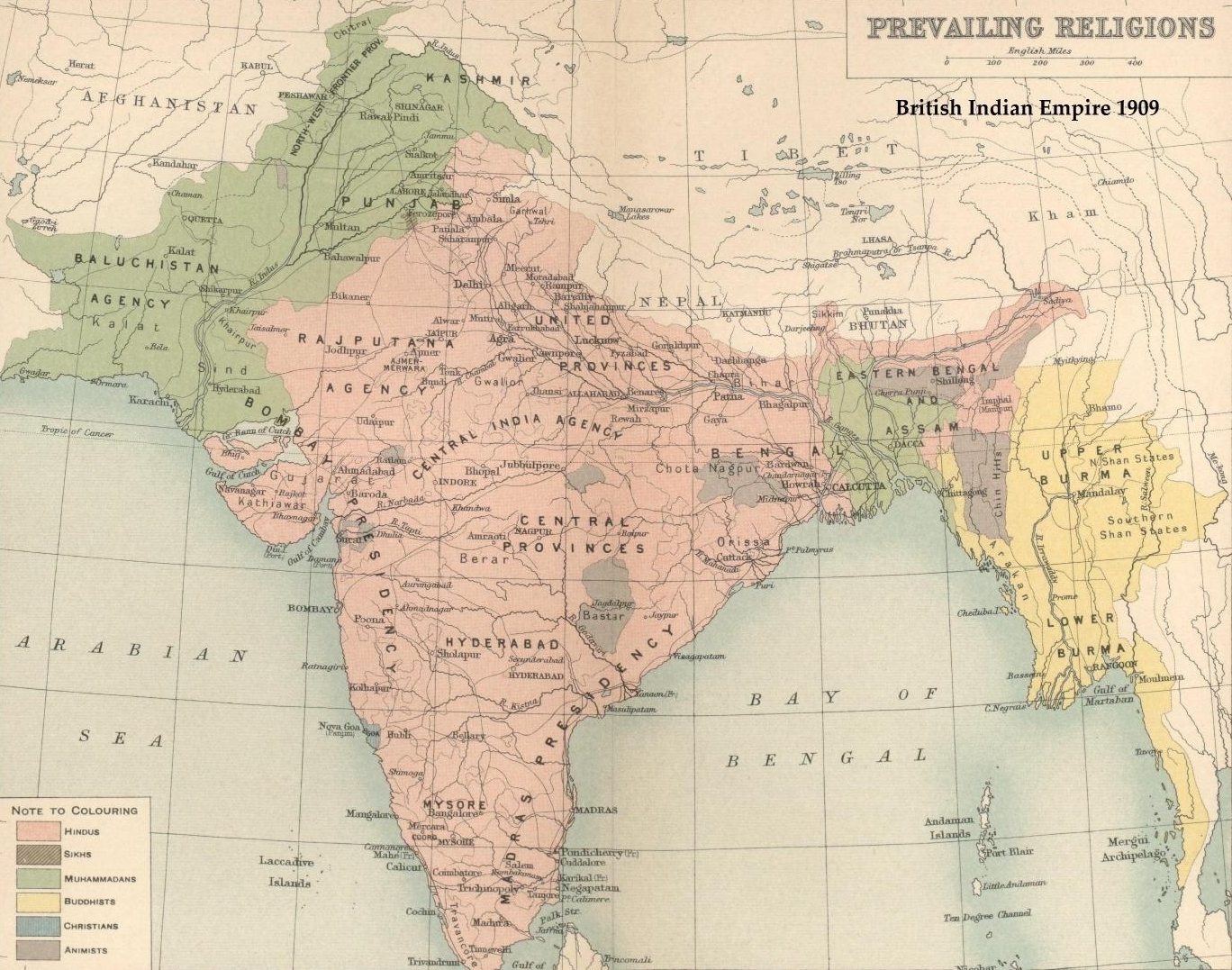
As of 2011, Hindus were the leading religious majority in India, at 80%, with Muslims at 14% an increase from 9% from 1951 while the Hindu population of Pakistan has remained at 2% and that of Bangladesh fallen to 8%. In the 1951 census, West Pakistan (now Pakistan) had 1.3% Hindu population, while East Pakistan (now Bangladesh) had 22.05%.
Marriage traditions and customs
India has a long tradition of arranged marriages, wherein the bride and groom do not choose their partners. Through the 2000s and 2010s, India witnessed a rise in love marriages; however, tensions continue around interfaith marriages, along with other traditionally discouraged unions. In 2012, The Hindu reported that illegal intimidation against consenting couples engaging in such discouraged unions, including inter-religious marriage, had surged. That year, Uttar Pradesh saw the proposal of an amendment to remove the requirement to declare religion from the marriage law in hopes of encouraging those who were hiding their interfaith marriage due to social norms to register.
One of the tensions surrounding interfaith marriage relates to concerns of required, even forced, marital conversion. Marriage in Islam is a legal contract with requirements around the religions of the participants. While Muslim women are only permitted within the contract to marry Muslim men, Muslim men may marry "People of the Book", interpreted by most to include Jews and Christians, with the inclusion of Hindus disputed. According to a 2014 article in the Mumbai Mirror, some non-Muslim brides in Muslim-Hindu marriages convert, while other couples choose a civil marriage under the Special Marriage Act of 1954. Marriage between Muslim women and Hindu men (including Sikh, Jaina, and Buddhist) is legal civil marriage under The Special Marriage Act of 1954.
Hindutva and right-wing politics
Love jihad in politics has been closely tied to Hindutva, a Hindu nationalist movement, which is associated with the BJP Prime Minister of India, Narendra Modi. The anti-Islamic stances of many right wing Hindutva groups like Vishva Hindu Parishad (VHP) are usually hostile to inter-religious marriage and religious pluralism, which can sometimes result in mob violence motivated by allegations of love jihad.
Timeline
Early origins and beginnings
Similar controversies over inter religious marriage were relatively common in India from the 1920s until independence in 1947, when allegations of forced marriage were typically called "abductions". They were more common in religiously diverse areas, including campaigns against both Muslims and Christians, and were tied to fears over religious demographics and political power in the newly emerging Indian nation. Fears of women converting was also a catalyst of the violence against women that occurred during that period. However, allegations of Love Jihad first rose to national awareness in September 2009.
According to the Kerala Catholic Bishops Council, by October 2009 up to 4,500 girls in Kerala had been targeted, whereas Hindu Janajagruti Samiti claimed that 30,000 girls had been converted in Karnataka alone. Sree Narayana Dharma Paripalana general secretary Vellapally Natesan said that there had been reports in Narayaneeya communities of "Love Jihad" attempts. Following the controversy's initial flare-up in 2009, it flared again in 2010, 2011 and 2014. On 25 June 2014, Kerala Chief Minister Oommen Chandy informed the state legislature that 2,667 young women converted to Islam in the state between 2006 and 2014. However, he stated that there was no evidence for any of them being forced to convert, and that fears of Love Jihad were "baseless". Muslim organizations such as the Popular Front of India and the Campus Front have been accused of promoting this activity. In Kerala, some movies have been accused of promoting Love Jihad, a charge which has been denied by the filmmakers. Bollywood films PK and Bajrangi Bhaijaan were accused of promoting Love jihad by Hindu outfits. The actors and directors denied that their films promoted Love jihad.
Around the same time that the conspiracy theory was beginning to spread, accounts of Love Jihad also began becoming prevalent in Myanmar. Wirathu, the leader of 969 Movement, has said that Muslim men pretend to be Buddhists and then the Buddhist women are lured into Islam in Myanmar. He has urged to "protect our Buddhist women from the Muslim love-jihad" by introducing further legislation. Reports of similar activities also began emerging from the United Kingdom's Sikh diaspora. In 2014, The Sikh Council alleged that it had received reports that girls from British Sikh families were becoming victims of Love Jihad. Furthermore, these reports alleged that these girls were being exploited by their husbands, some of whom afterwards abandoned them in Pakistan. According to the Takht Jathedar, he alleged that "The Sikh council has rescued some of the victims (girls) and brought them back to their parents".
Congress Party era (2009–2014)
The initial formations of the conspiracy theory were solidified when various organisations began joining. Christian groups, such as the Christian Association for Social Action, and the Vishva Hindu Parishad (VHP) banded against it, with the VHP establishing the "Hindu Helpline" that it started answered 1,500 calls in three months related to "Love Jihad". The Union of Catholic Asian News (UCAN) has reported that the Catholic Church was concerned about this alleged phenomenon. In September, posters of right-wing group Shri Ram Sena warning against "Love Jihad" appeared in Thiruvananthapuram, Kerala. The group announced in December that it would launch a nationwide "Save our daughters, save India" campaign to combat "Love Jihad". Muslim organizations in Kerala called it a malicious misinformation campaign. Popular Front of India (PFI) committee-member Naseeruddin Elamaram denied that the PFI was involved in any "Love Jihad", stating that people convert to Hinduism and Christianity as well and that religious conversion is not a crime. Members of the Muslim Central Committee of Dakshina Kannada and Udupi districts responded by claiming that Hindus and Christians have fabricated these claims to undermine Muslims.
In July 2010, the "Love Jihad" controversy resurfaced in the press when Kerala Chief Minister V. S. Achuthanandan referenced the alleged matrimonial conversion of non-Muslim girls as part of an effort to make Kerala a Muslim majority state. PFI dismissed his statements due to the findings of the Kerala probe, but the president of the BJP Mahila Morcha, the women's wing of the conservative Bharatiya Janata Party, called for an NIA investigation, alleging that the Kerala state probe was closed prematurely due to a tacit understanding with PFI. The Congress Party in Kerala responded strongly to the Chief Minister's comments, which they described as deplorable and dangerous.
In December 2011, the controversy erupted again in Karnataka legislative assembly, when member Mallika Prasad of the Bharatiya Janata Party asserted that the problem was ongoing and unaddressed with, according to her, 69 of 84 Hindu girls who had gone missing between January and November of that year confessing after their recovery that "they'd been lured by Muslim youths who professed love". According to The Times of India, response was divided, with Deputy Speaker N. Yogish Bhat and House Leader S. Suresh Kumar supporting governmental intervention, while Congress members B. Ramanath Rai and Abhayachandra Jain argued that "the issue was being raised to disrupt communal harmony in the district".
Bharatiya Janata Party era (2014–present)
During the resurgence of the controversy in 2014, protests turned violent at growing concern, even though, according to Reuters, the concept was considered "an absurd conspiracy theory by mainstream, moderate Indians". Then BJP MP Yogi Adityanath alleged that Love Jihad was an international conspiracy targeting India, announcing on television that the Muslims "can't do what they want by force in India, so they are using the love jihad method here". Conservative Hindu activists cautioned women in Uttar Pradesh to avoid Muslims and not to befriend them. In Uttar Pradesh, the influential committee Akhil Bharitiya Vaishya Ekta Parishad announced their intention to push to restrict the use of cell phones among young women to prevent their being vulnerable to such activities.
Following this announcement, The Times of India reported that the Senior Superintendent of Police in UP, Shalabh Mathur, "said the term 'love jihad' had been coined only to create fear and divide society along communal lines". Muslim leaders referred to the 2014 rhetoric around the alleged conspiracy as a campaign of hate. Feminists voiced concerns that efforts to protect women against the alleged activities would negatively impact women's rights, depriving them of free choice and agency.
In September 2014, BJP MP Sakshi Maharaj claimed that Muslim boys in madrasas are being motivated for Love Jihad with proposals of rewards of "Rs 11 lakh for an 'affair' with a Sikh girl, Rs 10 lakh for a Hindu girl and Rs 7 lakh for a Jain girl". He claimed to know this through reports to him by Muslims and by the experiences of men in his service who had converted for access. Abdul Razzaq Khan, the vice-president of Jamiat Ulama Hind, responded by denying such activities, labeling the comments "part of conspiracy aimed at disturbing the peace of the nation" and demanding action against Maharaj. Uttar Pradesh minister Mohd Azam Khan indicated the statement was "trying to break the country". In January, Vishwa Hindu Parishad's women's wing, Durga Vahini used actor Kareena Kapoor's morphed picture half covered with burqa issue of their magazine, on the theme of Love Jihad. The caption underneath read: "conversion of nationality through religious conversion". In June 2018, Jharkhand High Court granted a divorce in an alleged love jihad case in which the accused lied about his religion and forcing the victim to convert to Islam after marriage.
2017 Hadiya court case
Main article: Hadiya case
In May 2017, the Kerala High Court annulled a marriage of a converted Hindu woman Akhila alias Hadiya to a Muslim man Shafeen Jahan on the grounds that the bride's parents were not present, nor gave consent for the marriage, after allegations by her father of conversion and marriage at the behest of the Islamic State of Iraq and Syria (ISIS).
The decision of the court was challenged by Shafeen in the Supreme Court of India in July 2017. The Supreme Court sought the response from the National Investigating Agency (NIA) and the Kerala government, ordering an NIA probe headed by former SC Judge R. V. Raveendran on 16 August. The NIA had earlier submitted that the woman's conversion and marriage was not "isolated" and it had detected a pattern emerging in the state.
The Supreme Court on 8 March 2018 overturned the annulment of Hadiya's marriage by the Kerala High Court and held that the she had married of her own free will. However, it allowed NIA to continue investigation into the allegations of a terror dimension. The NIA examined 11 interfaith marriages in Kerala and completed its investigation in October 2018, concluding that "the agency has not found any evidence to suggest that in any of these cases either the man or the woman was coerced to convert".
2020 legislation and outcomes
Despite drawing severe criticisms, the Syro Malabar Church continued to repeat its stand on "love jihad". According to the church, Christian women are being targeted, recruited to terrorist outfit Islamic State, making them sex slaves and even killed. Detailing this, a circular, issued by Church chief Cardinal Mar George Alencherry, was read out in many parishes at the Sunday mass. In the circular (dated 15 January 2020) that was read out in churches on Sunday, it is stated that Christian women are being targeted under a conspiracy through inter-religious relationships, which often grow as a threat to religious harmony. "Christian women from Kerala are even being recruited to Islamic State through this", the circular read. Further, Kerala Catholic Bishops Conference's (KCBC) Commission for Social Harmony and Vigilance, claimed that there were 4,000 instances of "love jihad" between 2005 and 2012.
On 27 September 2020, protests occurred after a young Muslim man attempted to kidnap a 21-year-old Hindu woman near her college campus, and fatally shot her when she resisted. Her family said that he had tried to force her to convert to Islam and marry him.
Many BJP-ruled states, such as Uttar Pradesh, Madhya Pradesh, Haryana and Karnataka, then began mulling over laws designed to prevent "forcible conversions" through marriage, commonly referred to as "love jihad" laws. In September 2020, Uttar Pradesh Chief Minister Yogi Adityanath asked his government to come up with a strategy to prevent "religious conversions in the name of love". On 31 October, he announced that a law to curb "love jihad" would be passed by his government. The law in Uttar Pradesh, which also includes provisions against "unlawful religious conversion", declares a marriage null and void if the sole intention was to "change a girl's religion" and both it and the one in Madhya Pradesh imposed sentences of up to 10 years in prison for those who broke the law. The ordinance came into effect on 28 November 2020 as the Prohibition of Unlawful Religious Conversion Ordinance. In December 2020, Madhya Pradesh approved an anti-conversion law similar to the Uttar Pradesh one. As of 25 November 2020, Haryana and Karnataka were still in discussion over similar ordinances. In April 2021, the Gujarat Assembly amended the Freedom of Religion Act, 2003, bringing in stringent provisions against forcible conversion through marriage or allurement, with the intention of targeting "love jihad". The Karnataka state cabinet also approved an anti-conversion ‘love jihad’ bill, making it a law in December 2021. The Congress-led government scrapped the law in June 2023.
While campaigning for the 2021 Kerala Legislative Assembly election and the 2021 Assam Legislative Assembly election, the BJP promised that if it won the elections, it would enact a law that would ban "love jihad" in these states.
Reliance on tropes
The conspiracy theory has been noted for its similarities to other historic hate campaigns and Western Islamophobia. It features Orientalist portrayals of Muslims as barbaric and hypersexual, and carries the paternalistic and patriarchal notions that Hindu women are passive and victimised, while "any possibility of women exercising their legitimate right to love and their right to choice is ignored". It has consequently been the cause of vigilante assaults, murders, and other violent incidents, including the 2013 Muzaffarnagar riots.
Official investigations
India
In August 2017, the National Investigation Agency (NIA) stated that it had found a common "mentor" in some love jihad cases, "a woman associated with the radical group Popular Front of India", in August 2017. According to a later article in The Economist, "Repeated police investigations have failed to find evidence of any organised plan of conversion. Reporters have repeatedly exposed claims of 'love jihad' as at best fevered fantasies and at worst, deliberate election-time inventions". According to the same report, the common theme regarding many claims of "love jihad" has been the frenzied objection to an interfaith marriage while "Indian law erects no barriers to marriages between faiths, or against conversion by willing and informed consent. Yet the idea still sticks, even when the supposed 'victims' dismiss it as nonsense".
In 2022, the Observer Research Foundation and Indian government stated that no more than 100-200 Indians had joined Islamic State, a figure so low that one researcher remarked that "academics and experts often ask the question ‘What had prevented Indian Muslims from joining the Islamic State?'".
Karnataka
In October 2009, the Karnataka government announced its intention to counter "love jihad", which "appeared to be a serious issue". A week after the announcement, the government ordered a probe into the situation by the CID to determine if an organised effort existed to convert these girls and, if so, by whom it was being funded. One woman, whose conversion to Islam came under scrutiny as a result of the probe, was temporarily ordered to the custody of her parents, but eventually was permitted to return to her new husband after she appeared in court, denying pressure to convert. In April 2010, police used the term to characterize the alleged kidnapping, forced conversion and marriage of a 17-year-old college girl in Mysore.
In late 2009, The Karnataka CID (Criminal Investigation Department) reported that although it was continuing to investigate, it had found no evidence that a "love jihad" existed.{{Cite news |access-date=26 June 2013 |archive-date=3 November 2013 |archive-url=https://web.archive.org/web/20131103130212/http://www.thehindu.com/news/article47922.ece |url-status=live
Kerala
Following the launching of a poster campaign in Thiruvananthapuram, Kerala, purportedly by the organisation Shri Ram Sena, state police began investigating the presence of that organisation in the area. In late October 2009, police addressed the question of "love jihad" itself, indicating that while they had not located an organisation called "Love Jihad", "there are reasons to suspect 'concentrated attempts' to persuade girls to convert to Islam after they fall in love with Muslim boys".
In November 2009, Director general of police Jacob Punnoose stated there was no organisation whose members lured girls in Kerala by feigning love with the intention of converting. He told the Kerala High Court that three out of 18 reports he received questioned the tendency. However, in absence of solid proof, the investigations were still continuing. In December 2009, Justice K.T. Sankaran, who had refused to accept Punnoose's report, concluded from a case diary that there were indications of forceful conversions and stated it was clear from police reports there was a "concerted effort" to convert women with "blessings of some outfits". The court, while hearing the bail plea of two individuals accused in "love jihad" cases, stated that there had been 3,000-4,000 such conversions in the past four years. The Kerala High Court in December 2009 stayed investigations in the case, granting relief to the two accused, though it criticised the police investigation. The investigation was closed by Justice M. Sasidharan Nambiar following Punnoose's statements that no conclusive evidence could be found for the existence of "love jihad".
On 9 December 2009, Justice K T Sankaran for the Kerala High Court weighed in on the matter while hearing bail for a Muslim youth arrested for allegedly forcibly converting two female students. According to Sankaran, police reports revealed the "blessings of some outfits" for a "concerted" effort for religious conversions, some 3,000 to 4,000 incidences of which had taken place after love affairs within a four-year period. Sankaran "found indications of 'forceful' religious conversions under the garb of 'love'", suggesting that "such 'deceptive' acts" might require legislative intervention to prevent them.
In January 2012, Kerala police declared that "love jihad" was "[a] campaign with no substance", bringing legal proceedings instead against the website hindujagruti.org for "spreading religious hatred and false propaganda". In 2012, after two years of investigation into the alleged "love jihad", Kerala Police declared it as a "campaign with no substance". Subsequently, a case was initiated against the hindujagruti website, where counterfeit posters of Muslim organisations offering money to Muslim youths for luring and trapping women were found.
In 2017, after the Kerala High Court had ruled that a marriage of a Hindu woman to a Muslim man was invalid on the basis of"'love jihad", and an appeal was filed in the Supreme Court of India by the Muslim husband. The court, based on the "unbiased and independent" evidence requested by the court from the NIA, instructed the NIA to investigate all similar cases to establish whether there was any "love jihad". It allowed the NIA to explore all similar suspicious cases to find whether banned organisations, such as SIMI, were preying on vulnerable Hindu women to recruit them as terrorists. The NIA had earlier submitted before the court that the case was not an "isolated" incident and it had detected a pattern emerging in the state, stating that another case involved the same individuals who had previously acted as instigators. In 2018, the NIA concluded its probe, after investigating 11 interfaith marriages in Kerala without finding proof of coercion, and an NIA official concluded that "we didn't find any prosecutable evidence to bring formal charges against these persons under any of the scheduled offences of the NIA", adding that "Conversion is not a crime in Kerala and also helping these men and women convert is also within the ambit of the constitution of the country".
In 2021, Kerala Chief Minister Pinarayi Vijayan stated that "no complaints or clear information were received regarding forced conversion", and that, of the data available to the ministry, "none of the figures validate the propaganda that girls are being lured into conversion and terrorist organizations".
Uttar Pradesh
In September 2014, following the resurgence of national attention, Reuters reported that police in Uttar Pradesh had found no credence in the five or six recent allegations of "love jihad" that had been brought before them, with state police chief A.L. Banerjee stating that, "In most cases we found that a Hindu girl and Muslim boy were in love and had married against their parents' will". The police stated that occasional cases of trickery by dishonest men are not evidence of a broader conspiracy.
That same month, the Allahabad High Court gave the government and election commission of Uttar Pradesh ten days to respond to a petition to restrain the use of the word "love jihad" and to take action against Yogi Adityanath.
United Kingdom
In 2018, a report by the fundamentalist Sikh activist organisation, Sikh Youth UK, entitled "The Religiously Aggravated Sexual Exploitation of Young Sikh Women Across the UK" (RASE report) made similar allegations of Muslim men targeting Sikh girls for the purposes of conversion. The report was severely criticised in 2019 by academic researchers and an official British government report, led by two Sikh academics, for false and misleading information. It noted: "The RASE report lacks solid data, methodological transparency and rigour. It is filled instead with sweeping generalisations and poorly substantiated claims around the nature and scale of abuse of Sikh girls and causal factors driving it. It appealed heavily to historical tensions between Sikhs and Muslims and narratives of honour in a way that seemed designed to whip up fear and hate".
Previously, in 2011, Sikh academic Katy Sian had conducted research into the matter, exploring how "forced conversion narratives" arose within the Sikh diaspora in the United Kingdom and why they became so widespread. Sian, who reports that claims of conversion through courtship on campuses are widespread in the UK, says that rather than relying on actual evidence, the Sikh community primarily rest their beliefs on the word of "a friend of a friend" or personal anecdotes. According to Sian, the narrative is similar to 19th-century antisemitic accusations of "white slavery" made in the West against Jews, mirroring the Islamophobia displayed by the modern narrative. Sian expanded on these views in her 2013 book, Mistaken Identities, Forced Conversions, and Postcolonial Formations.
In response to a flurry of sensational news stories on the subject, ten Hindu academics in the UK signed an open letter wherein they argued that claims of British Hindu and Sikh girls being forcefully converted were "part of an arsenal of myths propagated by right-wing Hindu supremacist organisations in India". The Muslim Council of Britain issued a press release pointing out there was a lack of evidence of any forced conversions, and suggested it was an underhanded attempt to smear the British Muslim population.
"Reverse" love jihad
In response to the purported conspiracy of love jihad, affiliates of the Rashtriya Swayamsevak Sangh have stated that they have launched a Reverse Love Jihad campaign to marry Hindu men with Muslim women. Cases related to the campaign were reported from various parts of Uttar Pradesh (U.P.), where rape and abduction of Muslim women have taken place. The perpetrators of these incidents are alleged to be the members of these affiliates who are being rewarded by the affiliates for their activities. Between 2014 and October 2016, 389 cases of underage girls missing or kidnapped were registered by the police in Kushinagar district, and a similar trend was found in a number of districts in eastern Uttar Pradesh, in areas with high communal tensions.
The term Reverse Love Jihad has also been used by the Bajrang Dal to refer to the Love Jihad conspiracy theory where the purported victim is a Hindu man being "lured" to Islam with the prospects of a job and marriage to a Muslim woman.
The Bhagwa Love Trap conspiracy theory, which alleges that Hindu men lure Muslim women into relationships with the intention of converting them to Hinduism, has been popularised on social media.
Notes
References
References
- Khatun, Nadira. (14 December 2018). "'Love-Jihad' and Bollywood: Constructing Muslims as 'Other'". University of Nebraska Omaha.
- Gupta, Charu. (2009). "Hindu Women, Muslim Men: Love Jihad and Conversions". Economic and Political Weekly.
- Rao, Mohan. (1 October 2011). "Love Jihad and Demographic Fears". Indian Journal of Gender Studies.
- Khalid, Saif. (24 August 2017). "The Hadiya case and the myth of 'Love Jihad' in India". Al Jazeera.
- (2019). "Religious Freedom and Mass Conversion in India". University of Pennsylvania Press.
- (1 April 2020). "Afrazul's murder: Law and love jihad". Springer.
- (18 May 2020). "Hindu Nation and its Queers: Caste, Islamophobia, and De/coloniality in India". Routledge.
- (2018). "Handbook of Conspiracy Theory and Contemporary Religion". Brill.
- Farokhi, Zeinab. (2020). "Affective Politics of Digital Media: Propaganda by Other Means". Routledge.
- Strohl, David James. (11 October 2018). "Love jihad in India's moral imaginaries: religion, kinship, and citizenship in late liberalism". Routledge.
- (6 May 2019). "Intersectional Consciousness in Collective Victim Beliefs: Perceived Intragroup Differences Among Disadvantaged Groups". Wiley.
- George, Cherian. (2016). "Hate Spin: The Manufacture of Religious Offense and Its Threat to Democracy". MIT Press.
- George, Cherian. (2020). "Fake News: Understanding Media and Misinformation in the Digital Age". MIT Press.
- Anand, Dibyesh. (2011). "Hindu Nationalism in India and the Politics of Fear". Palgrave Macmillan.
- (3 April 2017). "Journalism's crisis of reason". Routledge.
- (11 September 2019). ""Millennial India": Global Digital Politics in Context". SAGE.
- (1 September 2018). "The Case for Collecting Hate Crimes Data in India". [[O. P. Jindal Global University]].
- (3 September 2020). "Indian Matchmaking: a show about arranged marriages can't ignore the political reality in India". The Conversation UK.
- (13 October 2013). "Hindutva vigilantes target Hindu-Muslim couples". The Hindu.
- Sarkar, Tanika. (1 July 2018). "Is Love without Borders Possible?". Feminist Review.
- Waikar, Prashant. (2018). "Reading Islamophobia in Hindutva: An Analysis of Narendra Modi's Political Discourse". Islamophobia Studies Journal.
- Kazmin, Amy. (4 December 2020). "Hindu nationalists raise spectre of 'love jihad' with marriage law". Financial Times.
- Grewal, Inderpal. (7 October 2014). "Narendra Modi's BJP: Fake Feminism and 'Love Jihad' Rumors". Huffington Post.
- Banaji, Shakuntala. (2 October 2018). "Vigilante Publics: Orientalism, Modernity and Hindutva Fascism in India". Taylor & Francis.
- Ramachandran, Sudha. (2020). "Hindutva Violence in India: Trends and Implications". Counter Terrorist Trends and Analyses.
- Ravindran, Gopalan. (2020). "Deleuzian and Guattarian Approaches to Contemporary Communication Cultures in India". Springer.
- Chacko, Priya. (March 2019). "Marketizing Hindutva: The state, society, and markets in Hindu nationalism". Modern Asian Studies.
- Punwani, Jyoti. (2014). "Myths and Prejudices about 'Love Jihad'". Economic and Political Weekly.
- Jayal, Niraja Gopal. (2 January 2019). "Reconfiguring Citizenship in Contemporary India". Taylor & Francis.
- (15 February 2019). "Demographic Fever Dreams: Fragile Masculinity and Population Politics in the Rise of the Global Right". University of Chicago Press.
- Maiorano, Diego. (3 April 2015). "Early Trends and Prospects for Modi's Prime Ministership". Taylor & Francis.
- (2 January 2020). "Love-Jihad (Muslim Sexual Seduction) and ched-chad (sexual harassment): Hindu nationalist discourses and the Ideal/deviant urban citizen in India". Taylor & Francis.
- Anand, Dibyesh. (2011). "Hindu Nationalism in India and the Politics of Fear". Palgrave Macmillan.
- Biswas, Soutik. (8 December 2020). "Love jihad: The Indian law threatening interfaith love". BBC News.
- Kingston, Jeff. (2019). "The Politics of Religion, Nationalism, and Identity in Asia". Rowman & Littlefield.
- Jenkins, Laura Dudley. (2019). "Religious Freedom and Mass Conversion in India". University of Pennsylvania Press.
- (2021-09-09). "Young Christians being targeted through 'love and narcotics jihad': Catholic Bishop in Kerala".
- Bhavnani, Nandita. (29 July 2014). "The Making of Exile: Sindhi Hindus and the Partition of India". Westland.
- (30 April 2015). "Children and Global Conflict". Cambridge University Press.
- Mandhana, Niharika. (4 September 2014). "Hindu Activists in India Warn Women to Beware of 'Love Jihad'". The Wall Street Journal.
- (2 March 2007). "Hindus feel the heat in Pakistan".
- (26 May 2018). "Headcount finalised sans third-party audit".
- "Area, Population, Density and Urban/Rural Proportion by Administrative Units". Statistics Division, Ministry of Economic Affairs and Statistics, Government of Pakistan.
- "Census of Bangladesh". Banbeis.gov.bd.
- (12 August 2002). "Indian Laws, Culture Boost Inter-Faith Marriages". Voice of America.
- (31 August 2014). "Jihad in the time of love". [[Mumbai Mirror]].
- Dhar, Aarti. (24 January 2012). "Law Commission's new draft wants khap panchayats on marriages declared illegal". The Hindu.
- "Two booked for forcing wives to embrace Islam in Madhya Pradesh". The Times of India.
- Cornell, Vincent J.. (2007). "Voices of Islam: Voices of life : family, home, and society". Greenwood Publishing Group.
- Banerjee, Chandrima. "Ram Sene coined 'love jihad', but first 'case' goes back a century". Times of India.
- (6 September 2011). "'Love jihad' piqued US interest". The Times of India.
- (14 October 2009). "Is 'Love Jihad' terror's new mantra?". Rediff.
- (14 October 2009). "Mangalore: Eight Hindu Organisations to Protest Against 'Love Jehad'". Daijiworld.com.
- (19 October 2009). "SNDP to campaign against Love Jihad: Vellappally". [[Asianet (TV channel).
- (19 October 2009). "SNDP to join fight against 'Love Jihad'". The New Indian Express.
- (27 July 2010). "Kerala CM criticised for speaking out against 'love jihad'". [[The Economic Times]].
- (17 December 2011). "Love jihad sparks hate". The Times of India.
- (4 September 2012). "Over 2500 women converted to Islam in Kerala since 2006, says Oommen Chandy". India Today.
- Nelson, Dean. (13 October 2009). "Handsome Muslim men accused of waging 'love jihad' in India". [[The Daily Telegraph]].
- Raj, Rohit. (27 July 2012). "Filmmakers protest Love Jihad slur in social media". [[Deccan Chronicle]].
- (24 December 2014). "'PK' supports 'Love Jihad', Hindu outfit seeks a ban". Deccan Herald.
- (29 November 2014). "Bajrangi Bhaijaan is not about Love Jihad". Daily News and Analysis.
- (2 January 2015). "Bollywood film fans fall in love with PK despite Hindu nationalist protests". the Guardian.
- (December 26, 2014). "Aamir Khan defends PK: Not targetting any particular religion".
- (December 1, 2014). "Bajrangi Bhaijaan is a masala film, not about love jihad: Kabir Khan".
- Marius Timmann Mjaaland. (2019). "Formatting Religion: Across Politics, Education, Media, and Law". Taylor & Francis.
- Kesavan Mukul. "South Asia: Murderous majorities".
- Iselin Frydenlund. (2018). "Buddhist Islamophobia: Actors, Tropes, Contexts". Academia.
- (2014). "Buddhist backlash against fear of 'love-jihad'". [[Bangkok Post]].
- Yudhvir Rana. (10 January 2011). "'Not just White girls, Pak Muslim men sexually target Hindu and Sikh girls as well". The Times of India.
- (22 February 2007). "Police protect girls forced to convert to Islam". [[Evening Standard.
- (27 January 2014). "'Love jihad': UK Sikh girls' exploitation worries Takht". Hindustan Times.
- Ananthakrishnan G. (13 October 2009). "'Love Jihad' racket: VHP, Christian groups find common cause". The Times of India.
- (13 October 2009). "Church, state concerned about ´love jihad´". Union of Catholic Asian News.
- Babu Thomas. (26 September 2009). "Poster campaign against 'Love Jihad'". The New Indian Express.
- (31 October 2009). "'Rama Sene to launch 'Save our daughters Save India'". The Times of India.
- (2 November 2009). "'Love Jihad' a misinformation campaign: Kerala Muslim outfits". The Times of India.
- (23 October 2009). "'Anti Muslim forces phrase 'Love Jihad'". Sahilonline.org.
- (26 July 2010). "Kerala CM reignites 'love jihad' theory". The Times of India.
- (25 July 2010). "Love jihad cases: Mahila Morcha for NIA probe". New Indian Express.
- (5 September 2014). "'Love Jihad' and religious conversion polarise in Modi's India". Reuters.
- Mishra, Ishita. (2 September 2014). "In UP, community bans mobiles for girls to fight 'love jihad'". The Times of India.
- Saha, Abhishek. (1 September 2014). "Amid rage over 'Love Jihad' what about what women want?". Hindustan Times.
- Aravind, Indulekha. (6 September 2014). "Love Jihad campaign treats women as if they are foolish: Charu Gupta". Business Standard.
- Akram, Maria. (29 August 2014). "Netas using love jihad as a tool for polarization". The Times of India.
- (15 September 2014). "BJP Unnao MP Sakshi Maharaj claims madrasas offering cash rewards for love jihad". The Indian Express.
- (17 September 2014). "Muslim Cleric Blasts Sakshi Maharaj for Jihad Factory Remark". The Times of India.
- (17 September 2014). "Azam slams Sakshi Maharaj on madarssa issue, calls him "rapist"". India TV News.
- (7 January 2015). "Star Power Kareena Used As Warning Against Love Jihad". Hindustan Times.
- (8 January 2015). "Kareena Kapoor is now the face of VHP's love jihad campaign". India Today.
- (27 June 2018). "Jharkhand love jihad case: Former national shooter Tara Shahdeo granted divorce from Raqibul Hassan". Daily News and Analysis.
- (25 May 2017). "Kerala High Court nullifies woman's marriage with Muslim man after bride's father raises Islamic State angle". India Today.
- (6 July 2017). "Kerala Muslim man challenges HC decision to nullify marriage with Hindu woman over ISIS link". India Today.
- (9 July 2017). "Voluntary marriage not love jihad: man's plea against Kerala HC ruling". The Hindu.
- (4 August 2017). "Supreme Court hears its 1st 'love jihad' case, demands proof from NIA". The Times of India.
- (4 August 2017). "Supreme Court Hears Case Of 'Love Jihad', Seeks Response From The NIA". Huffington Post.
- (16 August 2017). "Supreme Court orders NIA probe into Kerala woman's conversion and marriage case". The Hindu.
- (4 December 2017). "Hadiya's 'husband' was in touch with IS men before their marriage: NIA". The Times of India.
- (8 March 2018). "Hadiya's marriage restored, Supreme Court says no love jihad". India Today.
- (18 October 2018). "NIA ends Kerala probe, says there's love but no jihad". Hindustan Times.
- Raghunathan, Arjun. (15 January 2020). "Kerala Church says Love Jihad is real, claims Christian women being lured into IS trap". Deccan Herald.
- (16 January 2020). "Love Jihad making Kerala girls sex slaves: Church". The Times of India.
- (19 January 2020). "Kerala Catholic churches read out 'love jihad' circular". [[The News Minute]].
- (15 January 2020). "Christian girls targeted and killed in name of love jihad: Kerala's Syro-Malabar church". The Week.
- (27 October 2020). "'Love jihad' protests erupt in India after video shows Hindu woman gunned down outside college". The Independent.
- Joseph, Alphonse. (27 October 2020). "Faridabad: Family members of deceased woman claims she was 'forced to convert, marry accused'". One India.
- (18 September 2020). "Adityanath govt mulls ordinance against 'love jihad'". [[The Economic Times]].
- (18 September 2020). "Adityanath govt. mulls ordinance against 'love jihad' -IN". The Hindu.
- (24 November 2020). "Adityanath Cabinet Approves Ordinance Against 'Love Jihad'". The Wire.
- (26 November 2020). "'Love jihad': Madhya Pradesh proposes 10-year jail term in draft bill". [[Scroll.in]].
- (26 November 2020). "UP clears 'love jihad' law: 10-year jail, cancelling marriage if for conversion". The Indian Express.
- (24 November 2020). "Jail term, fine for 'illegal' conversions in Uttar Pradesh -IN". The Hindu.
- (28 November 2020). "UP Governor Anandiben Patel gives assent to ordinance on 'unlawful conversion'". Mint.
- (27 December 2020). "MP 'love jihad' Bill tougher, but limits who can file FIR". The Indian Express.
- (27 December 2020). "MP approves 'love Jihad' law; up to 10 years of jail, Rs 1 lakh fine for forced conversion".
- (26 December 2020). "India's Madhya Pradesh state now plans 'love jihad' law". Al Jazeera.
- (28 December 2020). "Madhya Pradesh to take ordinance route to enforce anti-conversion law". Deccan Herald.
- "'Love jihad': Madhya Pradesh Cabinet approves anti-conversion bill". [[Scroll.in]].
- (27 December 2020). "Madhya Pradesh to enforce 'love jihad' ordinance". Hindustan Times.
- (25 November 2020). "India's Most Populous State Brings Law to Fight 'Love Jihad'". Bloomberg News.
- (18 November 2020). "After MP, Haryana Says a Committee Will Draft Anti-'Love Jihad' Law". The Wire.
- Langa, Mahesh. (2021-04-01). "Gujarat Assembly passes 'love jihad' law -IN". The Hindu.
- (2021-04-02). "Gujarat passes Bill to stop 'love jihad'". The Indian Express.
- (20 December 2021). "Karnataka state cabinet approves anti-conversion 'love jihad' bill". [[The Siasat Daily]].
- (22 December 2021). "Like UP law, Karnataka anti-conversion Bill addresses right wing demands on 'love jihad'". The Indian Express.
- "Karnataka Cabinet decides to repeal anti-conversion law introduced by BJP".
- (March 2021). "BJP's 'Love Jihad' Card in the Upcoming Kerala Polls". The Diplomat.
- (2021-02-27). "Will bring in law to prevent 'love jihad' in Kerala if voted to power: BJP". The Indian Express.
- (2021-03-27). "BJP will tackle 'love jihad', 'land jihad': Amit Shah in Assam". The Indian Express.
- (2021-03-24). "BJP pledges to enact laws on 'Love Jihad' and 'Land Jihad' in Assam". The News Mill -US.
- "We are not against love but 'jihad', says Narottam Mishra; bats for 'love jihad' law in WB if BJP forms govt". Times Now.
- (2021-03-08). "Video: 'Will Bring 'Love Jihad' Law if BJP forms govt in Bengal' says Narottam Mishra". India TV News.
- (2021-03-02). "TMC 'Ram-Drohi', BJP Will Bring Law Against Love Jihad Once in Power: Yogi Adityanath at Bengal Rally". News18.
- Leidig, Eviane. (26 May 2020). "Hindutva as a variant of right-wing extremism". Taylor & Francis.
- Ravindran, Gopalan. (2020). "Deleuzian and Guattarian Approaches to Contemporary Communication Cultures in India". [[Springer Publishing]].
- Basu, Amrita. (2 October 2018). "Whither Democracy, Secularism, and Minority Rights in India?". The Review of Faith & International Affairs.
- (12 September 2013). "Muzaffarnagar: 'Love jihad', beef bogey sparked riot flames". Hindustan Times.
- (28 August 2017). "NIA finds a common mentor in Kerala 'love jihad' cases". The Times of India.
- (30 September 2017). "India is working itself into a frenzy about interfaith marriages". [[The Economist]].
- (2022-11-08). "'32000 Kerala women in ISIS': Misquotes, flawed math, imaginary figures behind filmmaker's claim".
- (22 October 2009). "Karnataka to take steps to counter 'Love Jihad' movement". Deccan Herald.
- (27 October 2009). "Govt directs CID to probe 'love jihad'". The Times of India.
- (22 October 2009). "Love jihad: HC orders thorough probe by DGP". The Times of India.
- (13 November 2009). "Woman denies 'love jihad', court lets her to go with lover". Thaindian News.
- (6 April 2010). "Love Jihad: girl rescued". The Times of India.
- (11 November 2009). "Kerala police have no proof on 'Love Jihad'". Deccan Herald.
- (23 April 2010). "No love jihad movement in State'". The Hindu.
- (10 December 2009). "HC calls for law to check 'love jehad'". The Indian Express.
- Padanna, Ashraf. (4 January 2012). "Kerala police probe crack 'love jihad' myth". [[The Gulf Today]].
- (23 December 2009). "Kerala cops fail to establish 'love jihad' conspiracy". CNN-IBN.
- (21 May 2013). "No 'Love Jihad' in Kerala". Deccan Herald.
- "Kerala HC wants probe into 'love jihad'". The Indian Express.
- [http://www.dnaindia.com/india/report-love-jihad-kerala-high-court-stays-police-investigation-1324828 'Love jihad': Kerala high court stays police investigation] {{Webarchive. link. (26 December 2017 DNA News)
- (10 December 2009). "Kerala HC asks govt to frame laws to stop 'love jihad'". [[The Economic Times]].
- [http://www.ndtv.com/india-news/supreme-court-asks-nia-to-examine-kerala-love-jihad-cites-blue-whale-1738417 "Top Counter-Terror Agency, NIA, To Probe Kerala 'Love Jihad' Marriage."] {{Webarchive. link. (4 September 2019 , [[NDTV]], 16 August 2017.)
- [http://economictimes.indiatimes.com/articleshow/60089937.cms "NIA probe on 'love jihad' may cover all suspicious cases."] {{Webarchive. link. (16 April 2019 , [[The Economic Times]], 16 August 2017.)
- [https://in.news.yahoo.com/kerala-apos-love-jihad-apos-100217357.html "Kerala 'Love Jihad' Case: NIA to Assess Ramifications on National Security."] {{Webarchive. link. (16 August 2017, CNN News18, 10 August 2017.)
- "100 Malayalis joined ISIS, all except six born into Muslim community, says CM Vijayan". Kaumudi.
- Mahanta, Siddhartha. (5 September 2014). "India's Fake 'Love Jihad'". [[Foreign Policy]].
- PTI. (4 September 2014). "Love Jihad: High Court asks UP govt, EC to file response". India TV.
- (4 September 2014). "'Love-jihad' row: Allahabad High Court issues notice to Centre, Uttar Pradesh government". Daily News and Analysis.
- Layton, Josh. (2018-12-03). "Sikh girls 'abused by grooming gangs for decades'". BirminghamLive.
- (2020). "Failing victims, fuelling hate: Challenging the harms of the 'Muslim grooming gangs' narrative". Race & Class.
- Jagbir Jhutti-Johal; Sunny Hundal (August 2019). ''[https://assets.publishing.service.gov.uk/government/uploads/system/uploads/attachment_data/file/841033/the-changing-nature-of-activism-among-sikhs-in-the-uk-today-221019.pdf The changing nature of activism among Sikhs in the UK today]''. The Commission For Countering Extremism. University of Birmingham. p. 15. ''[https://web.archive.org/web/20200217022921/https://assets.publishing.service.gov.uk/government/uploads/system/uploads/attachment_data/file/841033/the-changing-nature-of-activism-among-sikhs-in-the-uk-today-221019.pdf WayBackMachine Link]''. Retrieved 17 February 2020.
- Sian, Katy P.. (6 July 2011). "'Forced' conversions in the British Sikh diaspora". South Asian Popular Culture.
- Katy P. Sian. (4 April 2013). "Unsettling Sikh and Muslim Conflict: Mistaken Identities, Forced Conversions, and Postcolonial Formations". Rowman & Littlefield.
- Hundal, Sunny. (13 March 2007). "Where is the Hindu Forum's evidence?". Pickled Politics.
- "MCB Calls For Evidence Of Alleged 'Forced Conversions'".
- "RSS affiliate plans to marry 2,100 Muslim women to Hindu men from next week". [[Scroll.in]] -US.
- Desai, Shweta. (2017-01-09). "Reverse love jihad surfaces in UP". DNA India.
- Malik, Shahnawaz Ahmed. (2020-03-01). "Love Jihad: Victimization of Women through Media; Violation of their Basic Human Rights". SSRN.
- Rana, Uday Singh. (2018-04-26). "In Poll-bound Kairana, Bajrang Dal Peddles New Theory – 'Reverse Love Jihad'". News18.
- Khan, Fatima. (31 May 2023). "Muslim Women Seen with Hindu Men Harassed, Doxed - All In the Name of 'Bhagwa Love Trap'".
This article was imported from Wikipedia and is available under the Creative Commons Attribution-ShareAlike 4.0 License. Content has been adapted to SurfDoc format. Original contributors can be found on the article history page.
Ask Mako anything about Love jihad conspiracy theory — get instant answers, deeper analysis, and related topics.
Research with MakoFree with your Surf account
Create a free account to save articles, ask Mako questions, and organize your research.
Sign up freeThis content may have been generated or modified by AI. CloudSurf Software LLC is not responsible for the accuracy, completeness, or reliability of AI-generated content. Always verify important information from primary sources.
Report