From Surf Wiki (app.surf) — the open knowledge base
Jaguar XJR-8
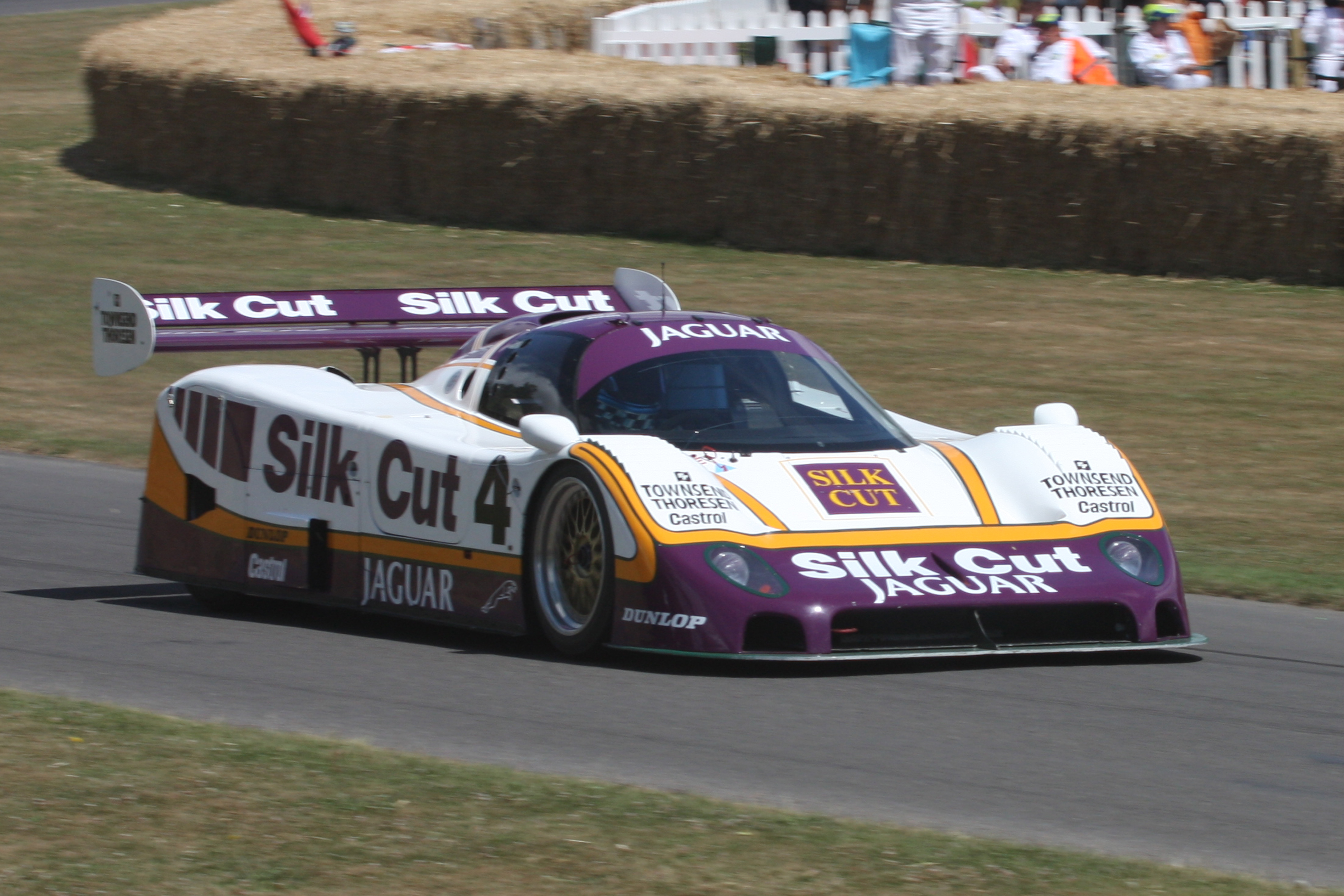
| Field | Value |
|---|---|
| name | Jaguar XJR-8 |
| image | 1987 Jaguar XJR-8 at Beaulieu Motor Museum.jpg |
| caption | 1987 Jaguar XJR-8 at Beaulieu Motor Museum |
| manufacturer | Jaguar |
| production | 1987 |
| assembly | Kidlington, Oxfordshire |
| designer | Tony Southgate for TWR |
| class | Racing car |
| body_style | 2-door Coupé |
| layout | RMR layout |
| related | Jaguar XJR sportscars |
| engine | 7.0 L 60 degree Jaguar V12 |
| wheelbase | 2780 mm |
| length | 4800 mm |
| width | 2000 mm |
| height | 1100 mm |
| weight | 900 kg |
| predecessor | Jaguar XJR-6 |
| successor | Jaguar XJR-9 |
| sp | uk |
The XJR-8 was a race car built by Jaguar for campaigning in the World Sportscar Championship and the 24 Hours of Le Mans as part of Group C. It was used during the 1987 season.
History
In the 1980s racing expert Tom Walkinshaw and designer Tony Southgate, with support from the Jaguar company and a sponsor, Silk Cut, designed a car based on the Jaguar V12 to compete in the ultra-high performance Le Mans Group C class and the North American-based IMSA GT Championship in competition with Porsche and Mercedes. In all, sixty-four changes to the XJR-6 were made to create the XJR-8. Six cars were produced(three plus three converted XJR-6s).
Performance
The XJR-8 was similar to most of the previous XJR racers with one exception, the engine. Though it was what people believed to be a standard Jaguar V12 the displacement was increased to 7 litres and the power was cranked up to 720 hp. Maximum speed was once recorded at over 220 mph on the Mulsanne Straight at Circuit De La Sarthe. Its higher-pitched exhaust sound made it distinguishable from the lion-type roar of Porsche. It first appeared at the 1987 World Sports Prototype Championship. The XJR-8 won at Silverstone, Nürburgring, and Spa-Francorchamps, as well as taking 2nd place at Fuji. Jaguar won both the driver's title and the overall championship (8 total victories in 10 races) with Porsche and its vaunted 962 finishing 2nd. Three cars were prepared for competition at Le Mans, each with a low-drag configuration. Two out of the three cars failed to finish. The surviving car, which was in 2nd place at one point after 18 hours of racing, experienced gearbox trouble and finished 5th.
The XJR-8 raced for one year, that being 1987. In its only year of racing, it won Autosport Racing Car of the Year. Its design was advanced to produce the XJR-9, which was identical to its predecessor, in the following year. One of the surviving vehicles is on display at the Beaulieu Motor Museum.
References
References
- Melissen, Wouter. (2018-04-23). "1987 Jaguar XJR-8 - Images, Specifications and Information".
- [http://www.autocar.co.uk/car-news/goodwood-festival-speed/jaguar-le-mans-racer-fastest-goodwood Jaguar Le Mans racer fastest at Goodwood. Autocar]
- Melissen, Wouter [http://www.ultimatecarpage.com/car/1440/Jaguar-XJR-8.html "1987 Jaguar XJR-8"] ''Ultimate Car Page''.
- Malcevic, Marijan. (2017-01-14). "How Powerful it Felt to Drive a Jaguar XJR-8 Back in 1987?".
- [http://www.autoconcept-reviews.com/cars_reviews/jaguar/jaguar-xjr12-lm-1990/cars_reviews-jaguar-xjr12-lm-1990.html "Jaguar XJR-6 to XJR-12 1985 1990"]. ''Auto Concept Reviews''.
- Stucker, Michael. [http://www.motorsport.com/history/news/history-this-week-in-racing-history-september-11-17-/ "This Week in Racing History"] {{Webarchive. link. (4 March 2016 . ''Motor Sport''.)
- Moore, Jonathan [http://www.speedhunters.com/2011/12/car_spotlight_gt_gt_jaguar_xjr_8/ "Speedhunter Spotlight - Jaguar XJR-8"]
- Knapman, Chris. (2013-07-14). "Jaguar XJR8/9 takes Goodwood victory".
This article was imported from Wikipedia and is available under the Creative Commons Attribution-ShareAlike 4.0 License. Content has been adapted to SurfDoc format. Original contributors can be found on the article history page.
Ask Mako anything about Jaguar XJR-8 — get instant answers, deeper analysis, and related topics.
Research with MakoFree with your Surf account
Create a free account to save articles, ask Mako questions, and organize your research.
Sign up freeThis content may have been generated or modified by AI. CloudSurf Software LLC is not responsible for the accuracy, completeness, or reliability of AI-generated content. Always verify important information from primary sources.
Report