From Surf Wiki (app.surf) — the open knowledge base
Ishinomaki
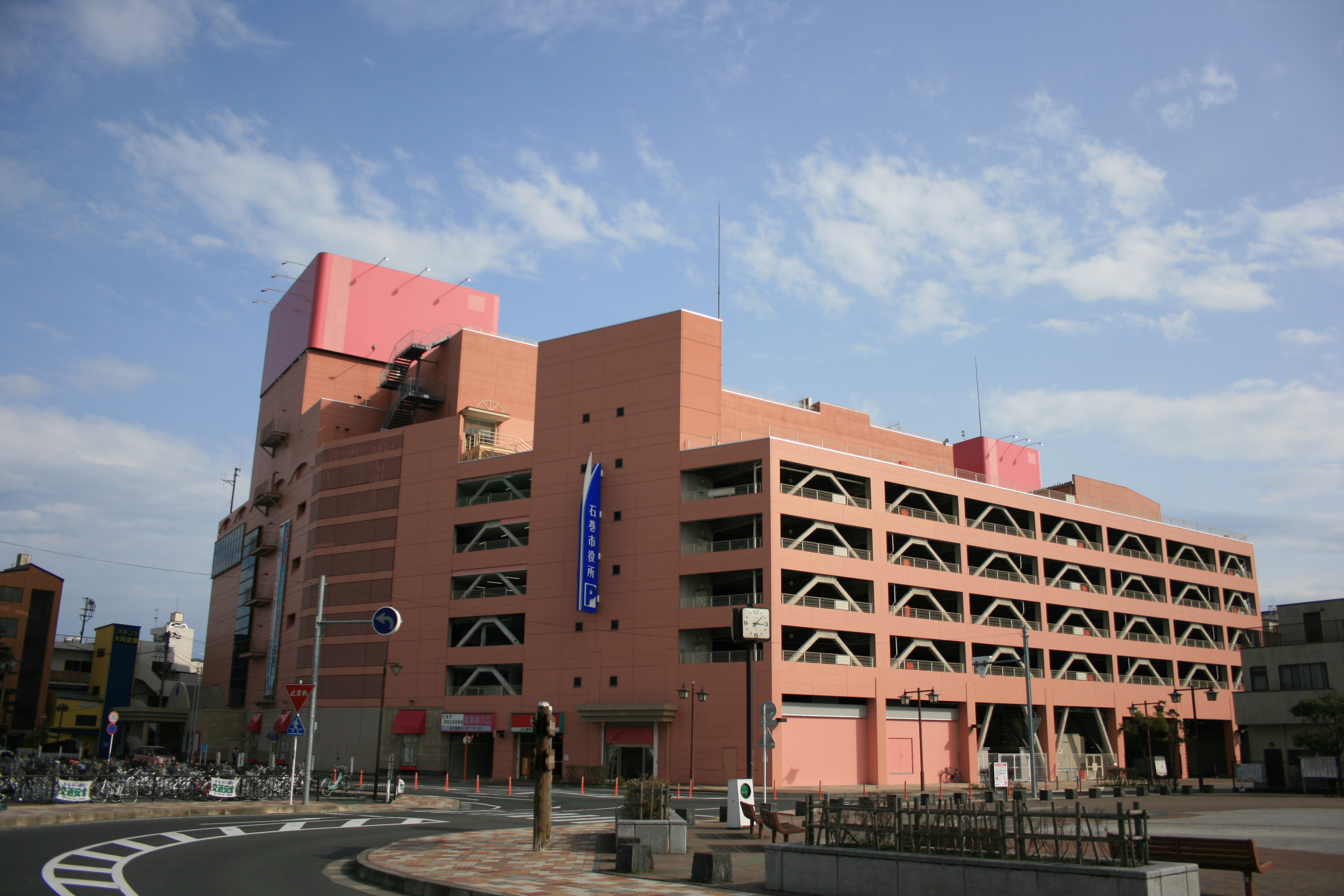
| Field | Value | |
|---|---|---|
| name | Ishinomaki | |
| native_name | 石巻市 | |
| native_name_lang | ja | |
| settlement_type | City | |
| image_skyline | {{Multiple image | |
| border | infobox | |
| total_width | 290 | |
| image_style | border:1; | |
| perrow | 1/2/2 | |
| image1 | Nakaze Ishinomaki.jpg | |
| image2 | MangattanMuseum002.jpg | |
| image3 | Kinkazan.jpg | |
| image4 | Hiyoriyama_koen_isinomaki_city.JPG | |
| image5 | Sanjuanbautista.jpg | |
| image_caption | ||
| style | "width:280px; margin:2px auto; border-collapse:collapse" | |
| colspan | "2" Kitakami river | |
| style | "width:50%; vertical-align:middle"Mangattan museum | |
| image_flag | Flag of Ishinomaki, Miyagi.svg | |
| image_seal | Emblem of Ishinomaki, Miyagi.svg | |
| image_map | Ishinomaki in Miyagi Prefecture Ja.svg | |
| map_caption | Location of Ishinomaki in Miyagi Prefecture | |
| pushpin_map | Japan | |
| pushpin_label_position | ||
| pushpin_map_caption | ||
| coordinates | ||
| coor_pinpoint | ||
| coordinates_footnotes | tags -- | |
| subdivision_type | Country | |
| subdivision_name | Japan | |
| subdivision_type1 | Region | |
| subdivision_name1 | Tōhoku | |
| subdivision_type2 | Prefecture | |
| subdivision_name2 | Miyagi | |
| established_title | First official recorded | |
| established_date | 367 AD | |
| established_title2 | City Settled | |
| established_date2 | April 1. 1933 | |
| seat_type | ||
| government_footnotes | tags -- | |
| leader_title | Mayor | |
| leader_name | Masami Saito | |
| leader_name1 | ||
| total_type | ||
| unit_pref | ||
| area_magnitude | ||
| area_footnotes | tags -- | |
| area_total_km2 | 554.55 | |
| elevation_footnotes | tags -- | |
| population_footnotes | tags -- | |
| population_total | 131,189 | |
| population_as_of | May 30, 2025 | |
| population_density_km2 | auto | |
| population_demonym | ||
| timezone1 | Japan Standard Time | |
| utc_offset1 | +09:00 | |
| area_code_type | ||
| blank_name_sec1 | Phone number | |
| blank_info_sec1 | 0225-95-1111 | |
| blank1_name_sec1 | Address | |
| blank1_info_sec1 | 14-1 Kokucho, Ishinomaki-shi, Miyagi-ken 986-8501 | |
| blank_name_sec2 | Climate | |
| blank_info_sec2 | Cfa | |
| website | ||
| module | {{Infobox region symbols | embedded=yes |
| tree | Japanese Black Pine | |
| flower | Azalea |
style="width:280px; margin:2px auto; border-collapse:collapse" colspan="2" Kitakami river style="width:50%; vertical-align:middle"Mangattan museum Mount Kinka from Oshika Peninsula Hiyoriyama parkSan Juan Bautista
Ishinomaki is a city located in Miyagi Prefecture, Japan. , the city has an estimated population of 131,189, and a population density of 250 persons per km2 in 62,546 households. The total area of the city is 554.55 sqkm.
Geography
Ishinomaki is in northeastern Miyagi Prefecture. The city borders on Ishinomaki Bay to the south and Minamisanriku city to the north, with the Kitakami Mountains to the west. Its coastline forms part of the Sanriku Fukkō National Park, which stretches north to Aomori Prefecture. Ishinomaki includes Tashirojima (also known as "Cat Island"), Ajishima, and Kinkasan, three islands off the south coast of Oshika Peninsula.
Neighboring municipalities
Miyagi Prefecture
- Higashimatsushima
- Minamisanriku
- Misato
- Onagawa
- Tome
- Wakuya
Climate
Ishinomaki has a humid climate (Köppen climate classification Cfa) characterized by mild summers and cold winters. The average annual temperature in Ishinomaki is 11.9 C. The average annual rainfall is 1091.3 mm with September as the wettest month. The temperatures are highest on average in August, at around 23.6 C, and lowest in January, at around 1.0 C. Its record high is 36.8 C, reached on 15 August 2007, and its record low is -14.6 C, reached on 6 January 1919.
|Jan record high C = 15.2 |Feb record high C = 19.2 |Mar record high C = 20.7 |Apr record high C = 28.4 |May record high C = 30.7 |Jun record high C = 32.0 |Jul record high C = 35.6 |Aug record high C = 36.8 |Sep record high C = 34.0 |Oct record high C = 28.5 |Nov record high C = 23.7 |Dec record high C = 21.9 |Jan record low C = -14.6 |Feb record low C = -13.1 |Mar record low C = -10.3 |Apr record low C = -5.0 |May record low C = -0.1 |Jun record low C = 5.7 |Jul record low C = 8.3 |Aug record low C = 11.5 |Sep record low C = 6.2 |Oct record low C = -0.7 |Nov record low C = -4.6 |Dec record low C = -10.5 |script-title=ja:観測史上1~10位の値(年間を通じての値) | access-date = March 23, 2022}}{{cite web |script-title=ja:気象庁 / 平年値(年・月ごとの値) | access-date = March 23, 2022}}}} |Jan record high C = 11.9 |Feb record high C = 17.8 |Mar record high C = 23.4 |Apr record high C = 29.6 |May record high C = 32.1 |Jun record high C = 31.9 |Jul record high C = 35.3 |Aug record high C = 37.2 |Sep record high C = 34.1 |Oct record high C = 29.1 |Nov record high C = 22.0 |Dec record high C = 17.7 |Jan record low C = -15.8 |Feb record low C = -17.2 |Mar record low C = -6.6 |Apr record low C = -3.1 |May record low C = 3.9 |Jun record low C = 8.0 |Jul record low C = 13.3 |Aug record low C = 12.9 |Sep record low C = 6.8 |Oct record low C = 0.4 |Nov record low C = -5.3 |Dec record low C = -10.6 |script-title=ja:観測史上1~10位の値(年間を通じての値) | access-date = March 23, 2022}}{{cite web |script-title=ja:気象庁 / 平年値(年・月ごとの値) | access-date = March 23, 2022}}}}
Demographics
Per Japanese census data, the population of Ishinomaki has declined over the past 40 years.
| 1920 | 102,953 | 1930 | 122,589 | 1940 | 137,327 | 1950 | 177,015 | 1960 | 180,012 | 1970 | 177,597 | 1980 | 186,094 | 1990 | 182,911 | 2000 | 174,778 | 2010 | 160,826 | 2020 | 140,151
History

The area of present-day Ishinomaki was part of ancient Mutsu Province. During the Sengoku period, the area was contested by various samurai clans before the area came under the control of the Date clan of Sendai Domain during the Edo period. The town prospered as a major port and transshipment center for coastal shipping between Edo and northern Japan. The town of Ishinomaki was established within Oshika District on June 1, 1889, with the establishment of the modern municipalities system.
The city was founded on April 1, 1933. On April 1, 2005, Ishinomaki absorbed the neighboring towns of Kahoku, Kanan, Kitakami, Monou and Ogatsu, and the town of Oshika to more than quadruple its area and add nearly 60,000 people to its population.
The town of Ogatsu is regionally famous for its inkstones and has an annual scallop festival in the summer. Ayukawa, a town in Oshika, was formerly a base for several ships in Japan's whaling fleet.
2011 earthquake, tsunami, and subsidence
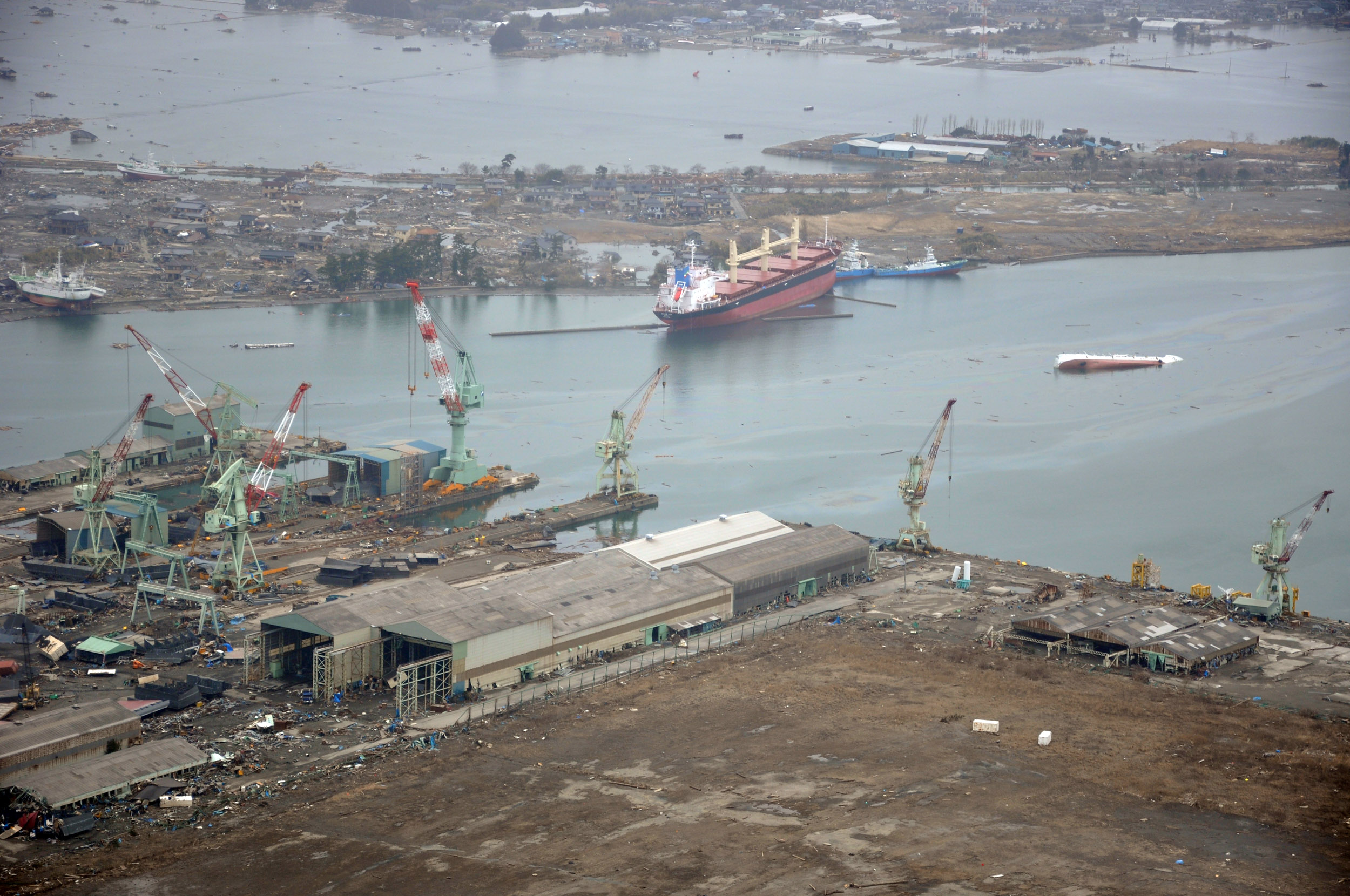
Ishinomaki was among the municipalities most seriously affected by the 2011 Tōhoku earthquake and tsunami. Several tsunamis, up to about 10 m high, traveled inland up to 5 km from the coast. The tsunami destroyed around 80% of the 700 houses in the coastal port of Ayukawa, and the Kadonowaki neighborhood was largely leveled. Approximately 46% of the city was inundated by the tsunami. Following the tsunami, a Kamen Rider statue was found completely intact despite damage to the surrounding area; a writer for Tokyo Sports hoped that it would symbolically give hope to the survivors of the disaster.
Many public schools were completely destroyed, including Ishinomaki Okawa Elementary School, which lost 70 of 108 students and nine of 13 teachers and staff. There is still anger among some of the parents of the dead students because the teachers had wasted precious time in debating whether to evacuate to higher ground. And when the decision was finally made, the teachers had decided to get to higher ground further away from the school which necessitated crossing a nearby river bridge. It was here while crossing the bridge that both the teachers and students were swept away by the tsunami. This decision is deemed unreasonable by many of the parents because there is a hill right behind the school, which they could have reached quickly. One of the teachers had tried to persuade the other teachers to bring the students to safety uphill soon after the earthquake; when he was unsuccessful, he evacuated himself, managing to persuade one of the students to go with him - both survived. One of the teachers who survived the tsunami at the bridge later committed suicide.
Ishinomaki is the Japanese municipality with the highest confirmed death count. , a total of 3,097 deaths had been confirmed in Ishinomaki due to the tsunami, with 2,770 unaccounted for. Approximately 29,000 city residents lost their homes.
Ishinomaki employs several foreigners to teach English in all of its elementary and junior high schools, as well as the two municipal high schools. American teacher Taylor Anderson was killed by the tsunami. Since her death, her family has been active in supporting the Ishinomaki school district, and has set up programs to further English education.
The earthquake shifted the city southeast and downward, lowering it by as much as 1.2 m in some areas and causing it to flood twice daily at high tide. A once sandy beach in the Kadonowaki area completely disappeared and tides reached the wall that once separated the beach from the road. Near the Mangakan Island, a walkway with benches was partially submerged in the river.
Rebuilding
Since 2011, Ishinomaki and other municipalities have been focusing on rebuilding and attracting residents back into the area. In 2019, eight years after the tragedy, Okawa Elementary School remains in ruins, as a memorial to those that were lost in the tsunami. Numerous parents who lost children due to staff errors sued the school and won in 2016.
Ishinomaki and other neighboring cities started construction on levees and large walls along the coast to protect against future tsunamis.
Government
Ishinomaki has a mayor-council form of government with a directly elected mayor and a unicameral city legislature of 30 members. Ishinomaki, together with the town of Onagawa, contributes five seats to the Miyagi Prefectural legislature. In terms of national politics, the city is part of Miyagi 5th district of the lower house of the Diet of Japan.
Economy
Ishinomaki traditionally has been a center for commercial fishing, especially for the cultivation of oysters.
Education
- Ishinomaki Senshu University
- Ishinomaki has 36 public elementary schools, 20 public junior high schools and one public high school operated by the city government, and seven public high schools operated by the Miyagi Prefectural Board of Education. The prefectural also operates one special education school for the handicapped. A private university, the Ishinomaki Senshu University, is also located in the city.
Transportation
Railway
JR East
Main article: East Japan Railway Company
- Ishinomaki Line
- Senseki Line(Senseki-Tōhoku Line)
- Kesennuma Line
-
Intercity bus
Daily scheduled intercity buses bound for the following cities, through the Sanriku Expressway, are being served from Ishinomaki Station.
- Sendai via Aeon Ishinomaki Shopping Center (Mall), by Miyakou Bus Co. Ltd., a subsidiary of Miyagi Transportation (Miyagi Kotsu) Co., Ltd.
- Shinjuku, Tokyo via Shibuya (overnight): via Sendai, operated by Miyagi Transportation (Miyagi Kotsu) Co., Ltd. and Keio Dentetsu Bus Corporation

Highways
- (Ishinomaki-kanan, Kahoku, Monou-toyosato and Monou-tsuyama interchanges)
Seaport
- Port of Ishinomaki
Local attractions
- Ishii lock
- Ishinomaki Saint John the Apostle Orthodox Church
- Ishinomori Manga Museum along with Manga Road celebrating Shotaro Ishinomori's manga legacy.
- The reed fields at the mouth of the Kitakami River at Ishinomaki is listed as one of the 100 Soundscapes of Japan by the Ministry of the Environment
- Numazu Shell Midden, a Jōmon period National Historic Site
- Saitō Garden
- , replica of a ship commissioned in 1613 by Date Masamune to transport an embassy to the Pope in Rome.
Sister cities
Ishinomaki is twinned with:
- JPN Hitachinaka, Japan
Friendship cities
- ITA Civitavecchia, Italy
- JPN Hagi, Japan
- JPN Kahoku, Japan
- CHN Wenzhou, China
Noted people from Ishinomaki
- Kasugafuji Akihiro, sumo wrestler
- Jun Azumi, politician
- Tatsuji Fuse, lawyer, social activist
- Sukekiyo Kameyama, voice actor
- Isamu Kosugi, actor, movie director
- Mai Mukaida, make-up artist and businesswoman
- Naoya Shiga, author
- Keiko Suzuka, actress
- Mayo Suzukaze, actress
References
References
- (2025-06-03). "人口・世帯数(最新版)". Ishinomaki City.
- [https://www.citypopulation.de/php/japan-iwate.php Ichinomaki population statistics]
- (13 March 2011). "Satellite Photos of Japan Before and After the Quake and Tsunami". [[New York Times]].
- Kyodo News. (14 March 2011). "Death toll may surpass 10,000 in Miyagi". [[The Japan Times]].
- Kyodo News. (18 March 2011). "Miyagi coastal whaling port pulverized, little more than memory". [[The Japan Times]].
- Gilhooly, Rob. (20 March 2011). "'Nothing can prepare you to witness this'". [[The Japan Times]].
- [[NHK]], "Tsunami flooded 100 square kilometers of city land", 29 March 2011.
- (18 March 2011). "仮面ライダー無事だった". [[Tokyo Sports]].
- Lah, Kyung. (23 March 2011). "In Japan, parents try to go on: 'My child should come home to me'". [[CNN]].
- Gilhooly, Rob. (11 March 2012). "Time has stopped for parents of dead and missing children". [[The Japan Times]].
- Gilhooly, Rob. (13 October 2011). "Parents unable to let go continue search for missing kids". The Japan Times Ltd..
- (19 April 2011). "Loss-staggered school reopens". The Japan Times Ltd..
- Kyodo News. (22 April 2011). "Loss-hit Ishinomaki school opens". [[The Japan Times]].
- Kyodo News. (17 June 2011). "Ishinomaki can't tally March 11 missing". [[The Japan Times]].
- Robson, Seth. (30 August 2011). "Ishinomaki residents rebuild their lives as they rebuild their town". [[Stars and Stripes (newspaper).
- "Live Your Dream. The Taylor Anderson Story".
- Alabaster, Jay. (9 May 2011). "Quake shifted Japan; towns now flood at high tide". Contra Costa Times/Associated Press.
- "New principals in Miyagi meet with relatives of kids lost to tsunami".
- INC, SANKEI DIGITAL. "大川小津波訴訟、市と県に14億円賠償命令 仙台地裁".
- Ambalina, Limarc. (2019-08-13). "The Town That Was Washed Away: 8 Years After The Great Tohoku Earthquake (a photo essay)".
- "100 Soundscapes of Japan". [[Ministry of the Environment (Japan).
- "沼津貝塚". Agency for Cultural Affairs.
- "姉妹都市・友好都市". Ishinomaki.
- "". link
This article was imported from Wikipedia and is available under the Creative Commons Attribution-ShareAlike 4.0 License. Content has been adapted to SurfDoc format. Original contributors can be found on the article history page.
Ask Mako anything about Ishinomaki — get instant answers, deeper analysis, and related topics.
Research with MakoFree with your Surf account
Create a free account to save articles, ask Mako questions, and organize your research.
Sign up freeThis content may have been generated or modified by AI. CloudSurf Software LLC is not responsible for the accuracy, completeness, or reliability of AI-generated content. Always verify important information from primary sources.
Report