From Surf Wiki (app.surf) — the open knowledge base
Gilles Villeneuve
Canadian racing driver (1950–1982)
Canadian racing driver (1950–1982)
| Field | Value |
|---|---|
| name | Gilles Villeneuve |
| image | Gilles Villeneuve 1979 Portrait.jpg |
| caption | Villeneuve in 1979 |
| birth_name | Joseph Gilles Henri Villeneuve |
| birth_date | |
| birth_place | Saint-Jean-sur-Richelieu, Quebec, Canada |
| death_date | |
| death_place | Leuven, Flanders, Belgium |
| death_cause | Injuries sustained at the 1982 Belgian Grand Prix |
| spouse | |
| children | 2, including Jacques |
| relatives | Jacques-Joseph Villeneuve (brother) |
| signature | Tanda Tangan Gilles Villeneuve.png |
| signature_alt | G Villeneuve |
| module | {{Infobox F1 driver |
| embed | yes |
| nationality | CAN Canadian |
| years | – |
| teams | McLaren, Ferrari |
| races | 68 (67 starts) |
| championships | 0 |
| wins | 6 |
| podiums | 13 |
| points | 101 (107) |
| poles | 2 |
| fastest_laps | 8 |
| first_race | |
| first_win | |
| last_win | |
| last_race |
Joseph Gilles Henri Villeneuve (; 18 January 1950 – 8 May 1982) was a Canadian racing driver, who competed in Formula One from to . Villeneuve was runner-up in the Formula One World Drivers' Championship in with Ferrari, and won six Grands Prix across six seasons.
A racing enthusiast from an early age, Villeneuve started his career in snowmobile racing across his native province of Quebec. He soon progressed to open-wheel racing, winning the regional Formula Ford championship in 1973 before graduating to Formula Atlantic, where he won two Canadian Championships in 1976 and 1977, and the American Championship in 1976. Villeneuve made his Formula One debut with McLaren at the 1977 British Grand Prix, impressing Enzo Ferrari, who signed him with Ferrari for . He made an early debut for the team at the after the departure of World Champion Niki Lauda, and was involved in a collision with Ronnie Peterson which killed two bystanders at the season-ending . Amidst struggles with Michelin's radial tyres the following year, Villeneuve took his maiden podium in Austria before winning his home Grand Prix in Canada. He won three races in , ultimately finishing the championship runner-up to teammate Jody Scheckter by four points. Villeneuve earned widespread acclaim for his performances, including his duel with René Arnoux at the . After a winless season for Ferrari with the 312T5 in , Villeneuve took back-to-back wins at the Monaco and Spanish Grands Prix in , earning further acclaim for his defensive tactics at the latter.
During qualifying for the 1982 Belgian Grand Prix at Zolder, Villeneuve died as the result of a collision with Jochen Mass. He achieved six wins, two pole positions, eight fastest laps, and 13 podiums in Formula One. At the time of his death, Villeneuve was widely popular in the motorsport community and has since become an iconic figure in the history of the sport. The Circuit Île Notre-Dame in Montreal—home of the Canadian Grand Prix since his 1978 victory—was renamed the Circuit Gilles Villeneuve upon his death. His son, Jacques, became the first World Drivers' Champion from Canada in . Alongside Jacques, Villeneuve is an inductee of the Canadian Motor Sports Hall of Fame and Canada's Sports Hall of Fame.
Personal and early life
Villeneuve was born January 18, 1950, to piano-tuner Seville Villeneuve (1926–1987) and his wife Georgette (née Coupal; 1925–2008) at Saint-Jean-sur-Richelieu in the province of Quebec, Canada and grew up in Berthierville. In 1970 he married Joann Barthe, with whom he had two children, Jacques and Mélanie. During his early career Villeneuve took his family on the road with him in a motorhome during the racing season, a habit which he continued to some extent during his Formula One career. At the time of his death Gilles was reportedly considering divorce from Joann: he had long been having an extramarital affair with a Torontonian woman.
Villeneuve often claimed to have been born in 1952. By the time he made his debut in Formula One, he was already 27 years old and subtracted two years from his age to avoid being considered too old to find success at the highest level of motorsport. His younger brother Jacques also had a successful racing career in Formula Atlantic, Can-Am and CART. Gilles' son, also named Jacques, won the Indianapolis 500 and CART championships in 1995 and became Formula One World Champion in 1997.
Early career
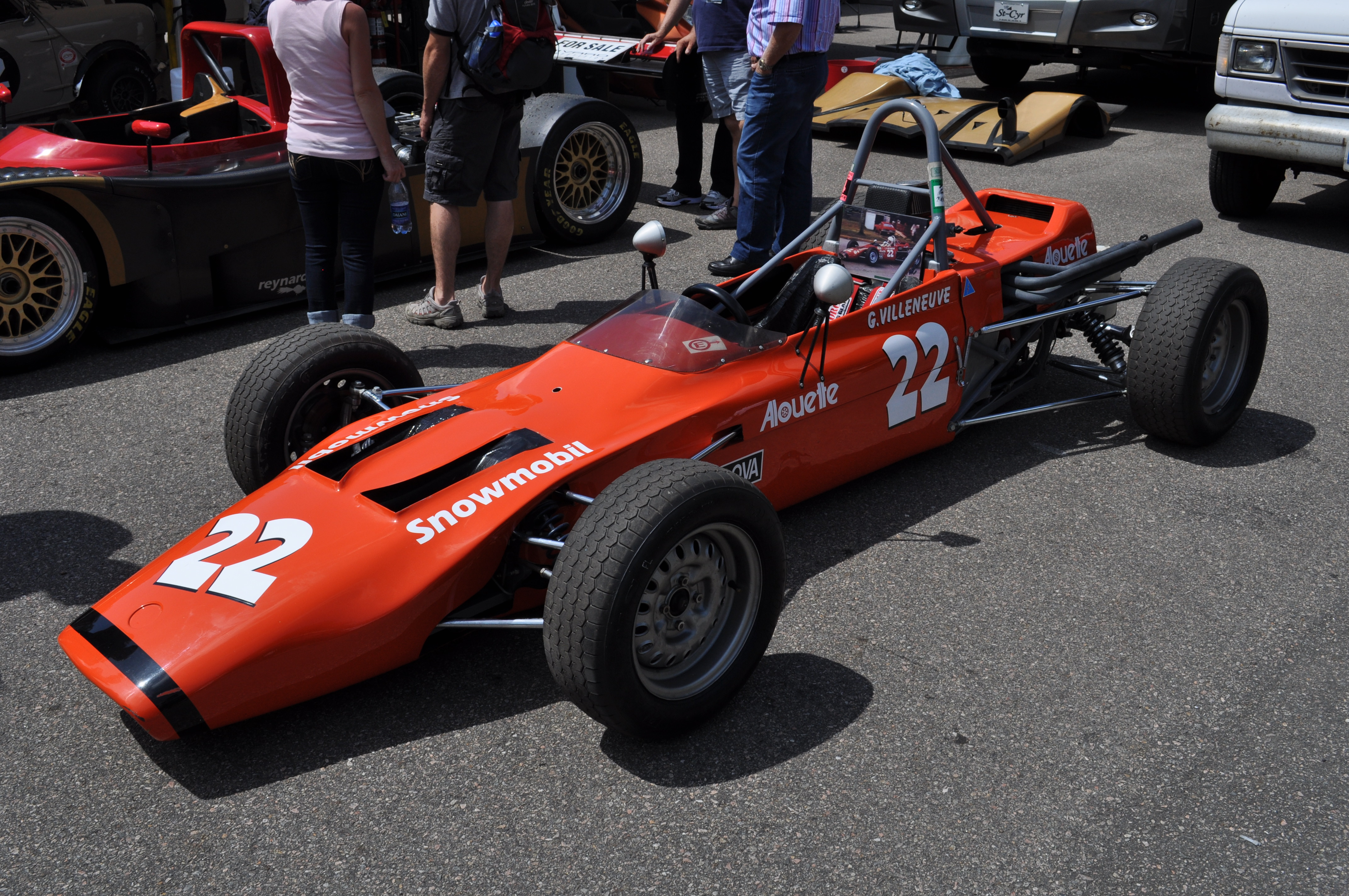
Villeneuve started competitive driving in local drag-racing events, entering his road car, a modified 1967 Ford Mustang. He soon became bored by this and entered the Jim Russell Racing School at Circuit Mont-Tremblant to gain a racing licence. He then had a very successful season in Quebec regional Formula Ford, running his own two-year-old car and winning seven of the ten races he entered. The next year he progressed to Formula Atlantic, where he would compete for four seasons, running his own car again for one of those seasons. He won his first Atlantic race in 1975 at Gimli Motorsport Park in heavy rain. In 1976, teamed with Chris Harrison's Ecurie Canada and factory March race engineer Ray Wardell, he dominated the season by winning all but one of the races and taking the US and Canadian titles. He won the Canadian championship again in 1977.
Money was an issue in Villeneuve's early career. He was a professional racing driver from his late teens, with no other income. In the first few years the bulk of his income in fact came from snowmobile racing, where he was extremely successful. He could demand appearance money as well as race money, especially after winning the 1974 World Championship Snowmobile Derby. His second season in Formula Atlantic was part-sponsored by his snowmobile manufacturer, Skiroule. He credited some of his success to his snowmobiling days: Every winter, you would reckon on three or four big spills — and I'm talking about being thrown on to the ice at 100 miles per hour. Those things used to slide a lot, which taught me a great deal about control. And the visibility was terrible! Unless you were leading, you could see nothing, with all the snow blowing about. Good for the reactions — and it stopped me having any worries about racing in the rain.
Formula One career
After Villeneuve impressed James Hunt by beating him and several other Grand Prix stars in a non-championship Formula Atlantic race at Trois-Rivières in 1976, Hunt's McLaren team offered Villeneuve a Formula One deal for up to five races in a third car during the 1977 season. Villeneuve made his debut at the 1977 British Grand Prix, where he qualified 9th in McLaren's old M23, separating the regular drivers Hunt and Jochen Mass who were driving newer M26s. In the race he set fifth fastest lap and finished 11th after being delayed for two laps by a faulty temperature gauge. The British press coverage of Villeneuve's performance was generally complimentary, including John Blunsden's comment in The Times that "Anyone seeking a future World Champion need look no further than this quietly assured young man."
Despite this, shortly after the British race McLaren's experienced team manager Teddy Mayer decided not to continue with Villeneuve for the following year. His explanation was that Villeneuve "was looking as though he might be a bit expensive" and that Patrick Tambay, the team's eventual choice for 1978, was showing similar promise. Villeneuve was left with no solid options for 1978, although Canadian Walter Wolf, for whom Villeneuve had driven in Can-Am racing, considered giving him a drive at Wolf Racing. Rumours circulated that Villeneuve was one of several drivers in whom Ferrari's team was interested, and in August 1977 he flew to Italy to meet Enzo Ferrari, who was immediately reminded of Tazio Nuvolari, the pre-war European champion. "When they presented me with this 'piccolo Canadese' (little Canadian), this minuscule bundle of nerves, I immediately recognised in him the physique of Nuvolari and said to myself, let's give him a try." Ferrari was satisfied with Villeneuve's promise after a session at Ferrari's Fiorano test track, despite the Canadian making many mistakes and setting relatively slow times, and Villeneuve signed to drive for Ferrari in the last two races of 1977, as well as the full 1978 season. Villeneuve later remarked that: "If someone said to me that you can have three wishes, my first would have been to get into racing, my second to be in Formula 1, my third to drive for Ferrari..."
Villeneuve's arrival was prompted by Ferrari driver Niki Lauda quitting the team at the penultimate race of the 1977 season, the at Mosport Park near Toronto, having already clinched his second championship with the Italian team. Villeneuve retired from his home race after sliding off the track on another competitor's oil. He also raced in the last race of that season, the at the Mount Fuji Speedway near Tokyo but retired on lap five when he tried to outbrake the Tyrrell P34 of Ronnie Peterson. The pair banged wheels causing Villeneuve's Ferrari to become airborne. It landed on a group of spectators watching the race from a prohibited area, killing one spectator and a race marshal and injuring seven people. After an investigation into the incident no blame was apportioned and, although he was "terribly sad" at the deaths, Villeneuve did not feel responsible for them.
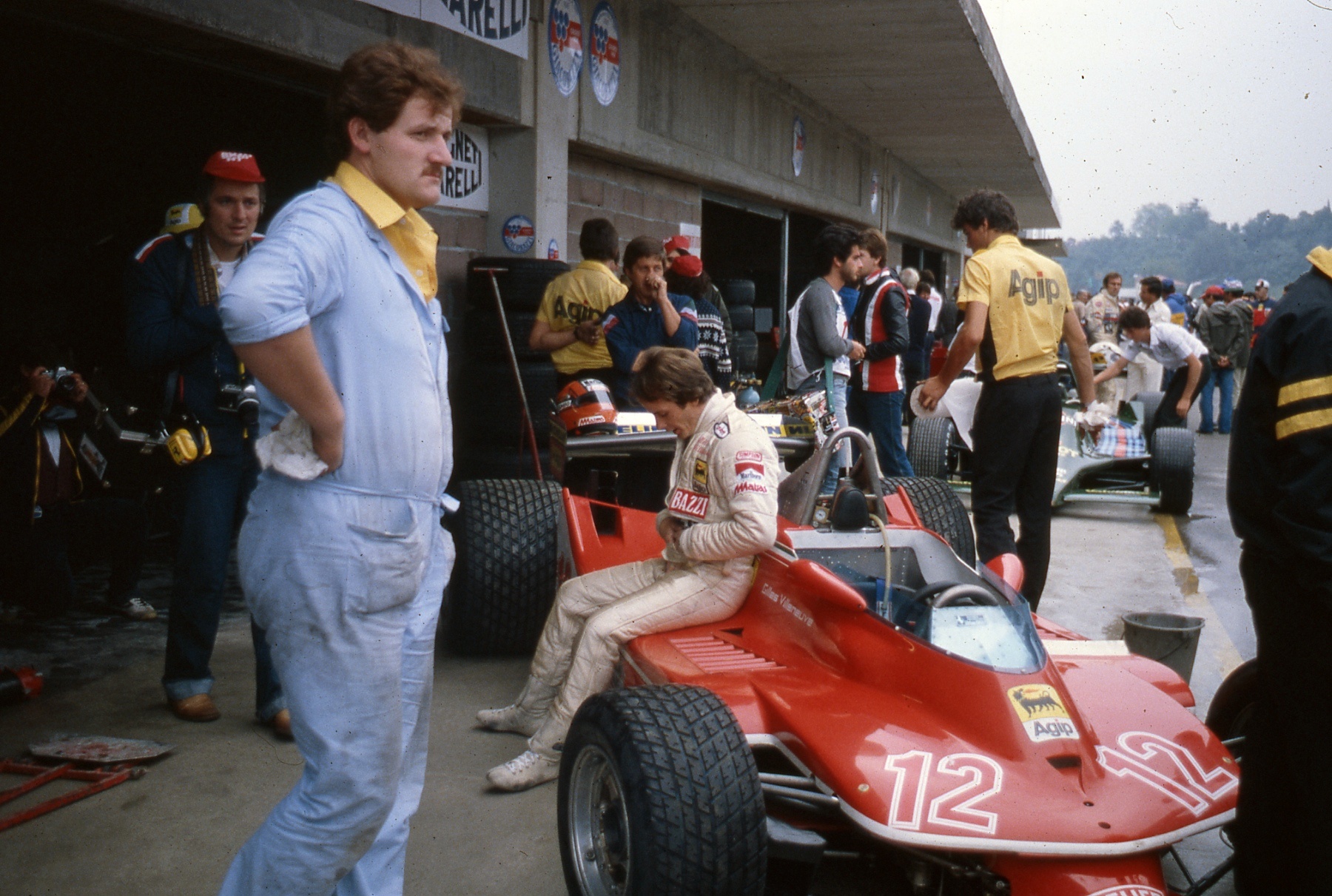
The 1978 season saw a succession of retirements for Villeneuve, often after problems with the new Michelin radial tyres. Early in the season, he started on the front row at the United States Grand Prix West in Long Beach, but crashed out of the lead on lap 39. Despite calls in the Italian press for him to be replaced, Ferrari persisted with him. Towards the end of the season, Villeneuve's results improved. He finished second on the road at the , although he was penalised a minute for jumping the start, and ran second at the before his engine failed. Finally at the season-ending , this time at the Circuit Notre Dame Island in Montreal (a circuit that was eventually named after him) Villeneuve scored his first Grand Prix win after Jean-Pierre Jarier's Lotus stopped with engine trouble. To date, he remains the only Canadian to win the Canadian Grand Prix.

Villeneuve was joined by Jody Scheckter in 1979 after Carlos Reutemann moved to Lotus. Villeneuve won three races during the year and even briefly led the championship after winning back to back races in Long Beach and Kyalami. However, the season is mostly remembered for Villeneuve's wheel-banging duel with René Arnoux in the last laps of the 1979 French Grand Prix. Arnoux passed Villeneuve for second place with three laps to go, but Villeneuve re-passed him on the next lap. On the final lap Arnoux attempted to pass Villeneuve again, and the pair ran side by side through the first few corners of the lap, making contact several times. Arnoux took the position but Villeneuve attempted an outside pass one corner later. The cars bumped hard, Villeneuve slid wide but then passed Arnoux on the inside at a hairpin turn and held him off for the last half of the lap to secure second place. Villeneuve commented afterwards, "I tell you, that was really fun! I thought for sure we were going to get on our heads, you know, because when you start interlocking wheels it's very easy for one car to climb over another." At the a slow puncture collapsed Villeneuve's left rear tyre and put him off the track. He returned to the circuit and limped back to the pit lane on three wheels, losing the damaged wheel on the way. On his return to the pit lane Villeneuve insisted that the team replace the missing wheel, and had to be persuaded that the car was beyond repair. Villeneuve might have won the World Championship by ignoring team orders to beat Scheckter at the , but chose to finish behind him, ending his own championship challenge. The pair finished first and second in the championship, with Scheckter beating Villeneuve by just four points. During the extremely wet Friday practice session for the season-ending , Villeneuve set a time variously reported to be either nine or 11 seconds faster than any other driver. His teammate Jody Scheckter, who was second fastest, recalled that "I scared myself rigid that day. I thought I had to be quickest. Then I saw Gilles's time and — I still don't really understand how it was possible. Eleven seconds!"
The 1980 season was sub-par for Ferrari. Villeneuve had been considered favourite for the Drivers' Championship by bookmakers in the United Kingdom, though he only scored six points in the whole campaign in the 312T5 which had only partial ground effects. Scheckter scored only two points and retired at the end of the season.
For the 1981 season, Ferrari introduced their first turbocharged engined F1 car, the 126C, which produced tremendous power but was let down by its poor handling. Villeneuve was partnered with Didier Pironi who noted that Villeneuve "had a little family [at Ferrari] but he made me welcome and made me feel at home overnight ... [He] treated me as an equal in every way." Villeneuve won two races during the season. At the Villeneuve kept five quicker cars behind him for most of the race using the superior straight-line speed of his car. After an hour and 46 minutes of racing, Villeneuve led second-placed Jacques Laffite by only 0.22 seconds. Fifth-placed Elio de Angelis was only just over a second further back. Harvey Postlethwaite, who was hired by Ferrari to design the follow-on and much more successful 126C2 that won the Constructors' Championship in 1982, later commented on the 126C: "That car...had literally one quarter of the downforce that, say Williams or Brabham had. It had a power advantage over the Cosworths for sure, but it also had massive throttle lag at that time. In terms of sheer ability I think Gilles was on a different plane to the other drivers. To win those races, the 1981 GPs at Monaco and Jarama — on tight circuits — was quite out of this world. I know how bad that car was." At the 1981 Canadian Grand Prix Villeneuve damaged the front wing of his Ferrari and drove for most of the race in heavy rain with the wing obscuring his view ahead. There was a risk of being disqualified but eventually the wing detached and Villeneuve drove on to finish third with the nose section of his car missing.
Villeneuve was offered a deal by team owner Ron Dennis to rejoin McLaren in 1982, which he rejected because he was nervous over ending his contract with Ferrari but optimistic that the Italian team would be competitive. The first few races of the 1982 season saw Villeneuve leading in Brazil in the new 126C2, before spinning into retirement, and finishing third at the United States Grand Prix West before being disqualified for a technical infringement. The Ferraris were handed an unexpected advantage at the as an escalation of the FISA–FOCA war saw the FOCA teams boycott the race, effectively leaving Renault as Ferrari's only serious opposition. With Renault driver Prost retiring from fourth place on lap 7 followed by his teammate Arnoux on the 44th lap, Ferrari seemed to have the win guaranteed. In order to conserve fuel and ensure the cars finished, the Ferrari team ordered both drivers to slow down. Villeneuve believed that the order also meant that the drivers were to maintain position but Pironi passed Villeneuve. A few laps later Villeneuve re-passed Pironi and slowed down again, believing that Pironi was simply trying to entertain the Italian crowd. On the last lap Pironi passed and aggressively chopped across the front of Gilles in Villeneuve corner and took the win. Villeneuve was irate as he believed that Pironi had disobeyed the order to hold position. Meanwhile, Pironi claimed that he had done nothing wrong as the team had only ordered the cars to slow down, not maintain position. Villeneuve stated after the race "I think it is well known that if I want someone to stay behind me and I am faster, then he stays behind me." Feeling betrayed and angry Villeneuve vowed never to speak to Pironi again.
In 2007, John Hogan, the retired Vice President of Marketing at Ferrari sponsor Phillip Morris and later Jaguar Racing team principal who was at the sponsor during Villeneuve's career, disputed the claim that Pironi had gone back on a prior arrangement with Villeneuve. He said: "Neither of them would ever have agreed to what effectively was throwing a race. I think Gilles was stunned somebody had out-driven him and that it just caught him so much by surprise." A comparison of the lap times of the two drivers showed that Villeneuve lapped far slower when he was in the lead, suggesting that he had indeed been trying to save fuel.
Death
On May 8, 1982, Villeneuve died after an accident during the final qualifying session for the at Zolder. At the time of the crash, Pironi had set a time one-tenth of a second faster than Villeneuve for sixth place. Villeneuve was using his final set of qualifying tyres; some say he was attempting to improve his time on his final lap, while others suggest he was specifically aiming to beat Pironi. However, Villeneuve's biographer Gerald Donaldson quotes Ferrari race engineer Mauro Forghieri as saying that the Canadian, although pressing on in his usual fashion, was returning to the pit lane when the accident occurred. If so, he would not have set a time on that lap.
With eight minutes of the session left, Villeneuve came over the rise after the first chicane and caught Jochen Mass travelling much more slowly through Butte, the left-handed bend before the Terlamenbocht double right-hand section. Mass saw Villeneuve approaching at high speed and moved to the right to let him through on the racing line. At the same instant Villeneuve also moved right to pass the slower car. The Ferrari hit the back of Mass' car and was launched into the air at a speed estimated to be 200-225 km/h. It was airborne for more than 100 m before nosediving into the ground and breaking apart as it somersaulted along the edge of the track. Villeneuve, still strapped to his seat, but now without his helmet, was thrown a further 50 m from the wreckage into the catch fencing on the outside edge of the Terlamenbocht corner.
Several drivers stopped and rushed to the scene. John Watson and Derek Warwick pulled Villeneuve, his face blue, from the catch fence. The first doctor arrived within 35 seconds to find that Villeneuve was not breathing, although with a pulse; he was intubated and ventilated before being transferred to the circuit medical centre and subsequently by helicopter to University St Raphael Hospital in Leuven where a fatal fracture of the neck was diagnosed. Villeneuve was kept alive on life support while his wife travelled to the hospital and the doctors consulted specialists worldwide. He died at 21:12 CEST (UTC+2). which concluded that an error from Villeneuve caused him to strike Mass' car and exonerated the latter of any responsibility for the accident.
Helmet

Villeneuve's helmet had a base colour of black, with a stylised 'V' in red on either side—an effect he devised with his wife Joann. Gilles' son, Jacques, started racing equipped with his father's old helmet and boots. British driver Perry McCarthy also used this design and colour scheme on his helmet, but with the design in reverse.
Ferrari driver Charles Leclerc wore a one-off tribute helmet to Villeneuve at the 2023 Canadian Grand Prix, using a similar design.
Legacy
In total, Villeneuve competed in 67 Grands Prix, winning six of them and achieving thirteen podium finishes. At his funeral in Berthierville, former teammate Jody Scheckter delivered the eulogy: "For me, firstly, Gilles was the most genuine person I ever knew. Secondly, he was the fastest racing driver that history has ever known. He went doing something that he loved, but he hasn't left us, because the world will remember what he has given to motor racing." In Villeneuve's entry in The Canadian Encyclopedia, Bob Ferguson and Michael Gee wrote that retrospective comments were complimentary of his driving, and said he was approachable and spoke informally to the media and fans. Niki Lauda said of him: "He was the craziest devil I ever came across in Formula 1... The fact that, for all this, he was a sensitive and lovable character rather than an out-and-out hell-raiser made him such a unique human being".
Villeneuve is still remembered at Grand Prix races, especially those in Italy. At the Autodromo Enzo e Dino Ferrari, the venue of the San Marino Grand Prix and Emilia Romagna Grand Prix, a corner was named after him and a Canadian flag is painted on the third slot on the starting grid, from which he started his last race. A bronze bust of Villeneuve stands at the entrance to the Ferrari test track at Fiorano. At Zolder the corner where Villeneuve died has been turned into a chicane and named after him.
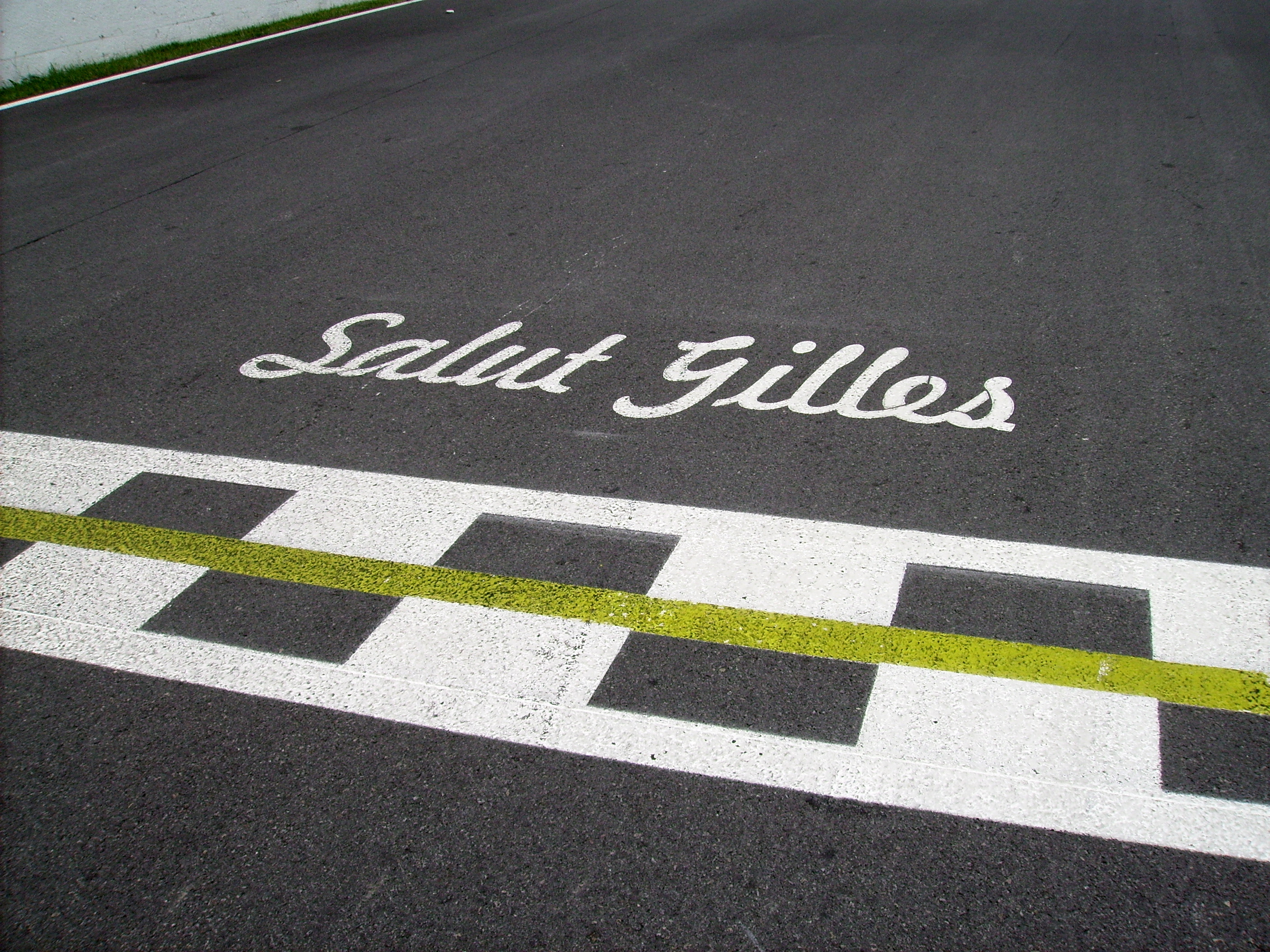
The racetrack on Notre Dame Island in Montreal, host to the Formula One Canadian Grand Prix, was named Circuit Gilles Villeneuve in his honour at the 1982 Canadian Grand Prix and a sign reading “Salut Gilles” was painted at the start/finish line. His home country has continued to honour him: in Berthierville a museum was opened in 1992 and a lifelike statue stands in a nearby park which was also named in his honour. He was also inducted into Canada's Sports Hall of Fame in 1983. In June 1997 Canada issued a postage stamp in his honour.
There is still a huge demand for Villeneuve memorabilia at the race-track shops and several books have been written about him. The number 27, the number of his Ferrari in 1981 and 1982, is still closely associated with him by fans. Villeneuve's son, Jacques, drove the No. 27 during his IndyCar and Indianapolis 500 winning season with Team Green, and has also used the number for occasional drives in NASCAR and the Speedcar Series. Canadian driver Andrew Ranger used number 27 in the 2005 and 2006 Champ Car seasons, and continued using the number at NASCAR Canadian Tire Series since 2007. Canadian driver and 2011 IndyCar Rookie of the Year James Hinchcliffe adopted the number 27 for the 2012 season when he joined Andretti Autosport (former Andretti Green Racing).
In popular culture
A film based on the biography by Gerald Donaldson was announced in 2005, to be produced by Capri Films Inc, and with Christian Duguay named as the director; the film has yet to materialise. A new film, to be directed by Daniel Roby, was announced as entering production in 2023.
The popular French comics series Michel Vaillant by Jean Graton is set in the world of motor racing and, although largely fictional, often includes real-life figures including drivers, officials and journalists. Villeneuve appears in a number of stories, and in Steve Warson contre Michel Vaillant (fr: "Steve Warson versus Michel Vaillant") becomes the 1980 World Champion (though in the 1981 season, covered in Rififi en F1 ["Trouble in F1"], Graton acknowledges Alan Jones as the real Champion) and Quebec progressive rock and pop band The Box based their 1984 song "Live on TV" inspired by Villeneuve's televised death. In 2017, Italian rock band, The Rock Alchemist wrote the song, "27" for their Elements album as a tribute to Gilles Villeneuve's #27 Ferrari F1 car.
Racing record
Career summary
| Season | Series | Team | Races | Wins | Poles | F/Laps | Podiums | Points | Position | 1975 | 1976 | 1977 | 1978 | 1979 | 1980 | 1981 | 1982 | |
|---|---|---|---|---|---|---|---|---|---|---|---|---|---|---|---|---|---|---|
| CASC Formula Atlantic | Skiroule Snowmobile | 8 | 1 | ? | ? | 2 | 69 | 5th | ||||||||||
| CASC Formula Atlantic | Ecurie Canada | 6 | 5 | ? | ? | 5 | 120 | 1st | ||||||||||
| IMSA Formula Atlantic | 4 | 4 | ? | ? | 4 | 80 | 1st | |||||||||||
| European Formula Two | Project Four Racing | 1 | 0 | 0 | 0 | 0 | 0 | NC | ||||||||||
| CASC Formula Atlantic | Ecurie Canada | 7 | 4 | ? | ? | 5 | 114 | 1st | ||||||||||
| Formula One | Marlboro Team McLaren | 1 | 0 | 0 | 0 | 0 | 0 | NC | ||||||||||
| SEFAC Ferrari | 2 | 0 | 0 | 0 | 0 | |||||||||||||
| nowrap | World Championship for Makes | BMW Alpina | 1 | 0 | 0 | 0 | 1 | 0 | NC | |||||||||
| Formula One | SEFAC Ferrari | 16 | 1 | 0 | 1 | 2 | 17 | 9th | ||||||||||
| Formula One | SEFAC Ferrari | 15 | 3 | 1 | 6 | 7 | 53 | 2nd | ||||||||||
| Formula One | SEFAC Ferrari | 14 | 0 | 0 | 0 | 0 | 6 | 12th | ||||||||||
| Formula One | Ferrari | 15 | 2 | 1 | 1 | 3 | 25 | 7th | ||||||||||
| Formula One | Ferrari | 5 | 0 | 0 | 0 | 1 | 6 | 15th |
Complete Formula One results
(key) (Races in bold indicate pole position; races in italics indicate fastest lap)
| Year | Entrant | Chassis | Engine | 1 | 2 | 3 | 4 | 5 | 6 | 7 | 8 | 9 | 10 | 11 | 12 | 13 | 14 | 15 | 16 | 17 | WDC | Pts. | nowrap | Marlboro Team McLaren | nowrap | McLaren M23E | nowrap | Ford Cosworth DFV 3.0 V8 | NC | 0 | nowrap | SEFAC Ferrari | nowrap | Ferrari 312T2 | nowrap | Ferrari 015 3.0 F12 | SEFAC Ferrari | nowrap | Ferrari 312T2 | nowrap | Ferrari 015 3.0 F12 | 9th | 17 | nowrap | Ferrari 312T3 | nowrap | Ferrari 015 3.0 F12 | SEFAC Ferrari | Ferrari 312T3 | Ferrari 015 3.0 F12 | nowrap | Ferrari 312T4 | nowrap | Ferrari 015 3.0 F12 | nowrap | SEFAC Ferrari | nowrap | Ferrari 312T5 | nowrap | Ferrari 015 3.0 F12 | 12th | 6 | nowrap | Ferrari | nowrap | Ferrari 126CK | nowrap | Ferrari 021 1.5 V6 t | 7th | 25 | nowrap | Ferrari | nowrap | Ferrari 126C2 | nowrap | Ferrari 021 1.5 V6 t | 15th | 6 |
|---|---|---|---|---|---|---|---|---|---|---|---|---|---|---|---|---|---|---|---|---|---|---|---|---|---|---|---|---|---|---|---|---|---|---|---|---|---|---|---|---|---|---|---|---|---|---|---|---|---|---|---|---|---|---|---|---|---|---|---|---|---|---|---|---|---|---|---|---|---|---|---|---|---|---|---|---|---|---|
| ARG | BRA | RSA | USW | ESP | MON | BEL | SWE | FRA | GBR | |||||||||||||||||||||||||||||||||||||||||||||||||||||||||||||||||||||
| 11 | GER | AUT | NED | ITA | USA | |||||||||||||||||||||||||||||||||||||||||||||||||||||||||||||||||||||||||
| CAN | ||||||||||||||||||||||||||||||||||||||||||||||||||||||||||||||||||||||||||||||
| 12 | JPN | |||||||||||||||||||||||||||||||||||||||||||||||||||||||||||||||||||||||||||||
| Ret | ||||||||||||||||||||||||||||||||||||||||||||||||||||||||||||||||||||||||||||||
| ARG | ||||||||||||||||||||||||||||||||||||||||||||||||||||||||||||||||||||||||||||||
| 8 | BRA | |||||||||||||||||||||||||||||||||||||||||||||||||||||||||||||||||||||||||||||
| Ret | ||||||||||||||||||||||||||||||||||||||||||||||||||||||||||||||||||||||||||||||
| RSA | ||||||||||||||||||||||||||||||||||||||||||||||||||||||||||||||||||||||||||||||
| Ret | USW | |||||||||||||||||||||||||||||||||||||||||||||||||||||||||||||||||||||||||||||
| Ret | MON | |||||||||||||||||||||||||||||||||||||||||||||||||||||||||||||||||||||||||||||
| Ret | BEL | |||||||||||||||||||||||||||||||||||||||||||||||||||||||||||||||||||||||||||||
| 4 | ESP | |||||||||||||||||||||||||||||||||||||||||||||||||||||||||||||||||||||||||||||
| 10 | SWE | |||||||||||||||||||||||||||||||||||||||||||||||||||||||||||||||||||||||||||||
| 9 | FRA | |||||||||||||||||||||||||||||||||||||||||||||||||||||||||||||||||||||||||||||
| 12 | GBR | |||||||||||||||||||||||||||||||||||||||||||||||||||||||||||||||||||||||||||||
| Ret | GER | |||||||||||||||||||||||||||||||||||||||||||||||||||||||||||||||||||||||||||||
| 8 | AUT | |||||||||||||||||||||||||||||||||||||||||||||||||||||||||||||||||||||||||||||
| 3 | NED | |||||||||||||||||||||||||||||||||||||||||||||||||||||||||||||||||||||||||||||
| 6 | ITA | |||||||||||||||||||||||||||||||||||||||||||||||||||||||||||||||||||||||||||||
| 7 | USA | |||||||||||||||||||||||||||||||||||||||||||||||||||||||||||||||||||||||||||||
| Ret | CAN | |||||||||||||||||||||||||||||||||||||||||||||||||||||||||||||||||||||||||||||
| 1 | ||||||||||||||||||||||||||||||||||||||||||||||||||||||||||||||||||||||||||||||
| ARG | ||||||||||||||||||||||||||||||||||||||||||||||||||||||||||||||||||||||||||||||
| Ret | BRA | |||||||||||||||||||||||||||||||||||||||||||||||||||||||||||||||||||||||||||||
| 5 | 2nd | 47 (53) | ||||||||||||||||||||||||||||||||||||||||||||||||||||||||||||||||||||||||||||
| RSA | ||||||||||||||||||||||||||||||||||||||||||||||||||||||||||||||||||||||||||||||
| 1 | *USW* | |||||||||||||||||||||||||||||||||||||||||||||||||||||||||||||||||||||||||||||
| 1 | ESP | |||||||||||||||||||||||||||||||||||||||||||||||||||||||||||||||||||||||||||||
| 7 | BEL | |||||||||||||||||||||||||||||||||||||||||||||||||||||||||||||||||||||||||||||
| 7 | MON | |||||||||||||||||||||||||||||||||||||||||||||||||||||||||||||||||||||||||||||
| Ret | FRA | |||||||||||||||||||||||||||||||||||||||||||||||||||||||||||||||||||||||||||||
| 2 | GBR | |||||||||||||||||||||||||||||||||||||||||||||||||||||||||||||||||||||||||||||
| 14† | GER | |||||||||||||||||||||||||||||||||||||||||||||||||||||||||||||||||||||||||||||
| 8 | AUT | |||||||||||||||||||||||||||||||||||||||||||||||||||||||||||||||||||||||||||||
| 2 | NED | |||||||||||||||||||||||||||||||||||||||||||||||||||||||||||||||||||||||||||||
| Ret | ITA | |||||||||||||||||||||||||||||||||||||||||||||||||||||||||||||||||||||||||||||
| 2 | CAN | |||||||||||||||||||||||||||||||||||||||||||||||||||||||||||||||||||||||||||||
| 2 | USA | |||||||||||||||||||||||||||||||||||||||||||||||||||||||||||||||||||||||||||||
| 1 | ||||||||||||||||||||||||||||||||||||||||||||||||||||||||||||||||||||||||||||||
| ARG | ||||||||||||||||||||||||||||||||||||||||||||||||||||||||||||||||||||||||||||||
| Ret | BRA | |||||||||||||||||||||||||||||||||||||||||||||||||||||||||||||||||||||||||||||
| 16† | RSA | |||||||||||||||||||||||||||||||||||||||||||||||||||||||||||||||||||||||||||||
| Ret | USW | |||||||||||||||||||||||||||||||||||||||||||||||||||||||||||||||||||||||||||||
| Ret | BEL | |||||||||||||||||||||||||||||||||||||||||||||||||||||||||||||||||||||||||||||
| 6 | MON | |||||||||||||||||||||||||||||||||||||||||||||||||||||||||||||||||||||||||||||
| 5 | FRA | |||||||||||||||||||||||||||||||||||||||||||||||||||||||||||||||||||||||||||||
| 8 | GBR | |||||||||||||||||||||||||||||||||||||||||||||||||||||||||||||||||||||||||||||
| Ret | GER | |||||||||||||||||||||||||||||||||||||||||||||||||||||||||||||||||||||||||||||
| 6 | AUT | |||||||||||||||||||||||||||||||||||||||||||||||||||||||||||||||||||||||||||||
| 8 | NED | |||||||||||||||||||||||||||||||||||||||||||||||||||||||||||||||||||||||||||||
| 7 | ITA | |||||||||||||||||||||||||||||||||||||||||||||||||||||||||||||||||||||||||||||
| Ret | CAN | |||||||||||||||||||||||||||||||||||||||||||||||||||||||||||||||||||||||||||||
| 5 | USA | |||||||||||||||||||||||||||||||||||||||||||||||||||||||||||||||||||||||||||||
| Ret | ||||||||||||||||||||||||||||||||||||||||||||||||||||||||||||||||||||||||||||||
| USW | ||||||||||||||||||||||||||||||||||||||||||||||||||||||||||||||||||||||||||||||
| Ret | BRA | |||||||||||||||||||||||||||||||||||||||||||||||||||||||||||||||||||||||||||||
| Ret | ARG | |||||||||||||||||||||||||||||||||||||||||||||||||||||||||||||||||||||||||||||
| Ret | *SMR* | |||||||||||||||||||||||||||||||||||||||||||||||||||||||||||||||||||||||||||||
| 7 | BEL | |||||||||||||||||||||||||||||||||||||||||||||||||||||||||||||||||||||||||||||
| 4 | MON | |||||||||||||||||||||||||||||||||||||||||||||||||||||||||||||||||||||||||||||
| 1 | ESP | |||||||||||||||||||||||||||||||||||||||||||||||||||||||||||||||||||||||||||||
| 1 | FRA | |||||||||||||||||||||||||||||||||||||||||||||||||||||||||||||||||||||||||||||
| Ret | GBR | |||||||||||||||||||||||||||||||||||||||||||||||||||||||||||||||||||||||||||||
| Ret | GER | |||||||||||||||||||||||||||||||||||||||||||||||||||||||||||||||||||||||||||||
| 10 | AUT | |||||||||||||||||||||||||||||||||||||||||||||||||||||||||||||||||||||||||||||
| Ret | NED | |||||||||||||||||||||||||||||||||||||||||||||||||||||||||||||||||||||||||||||
| Ret | ITA | |||||||||||||||||||||||||||||||||||||||||||||||||||||||||||||||||||||||||||||
| Ret | CAN | |||||||||||||||||||||||||||||||||||||||||||||||||||||||||||||||||||||||||||||
| 3 | CPL | |||||||||||||||||||||||||||||||||||||||||||||||||||||||||||||||||||||||||||||
| DSQ | ||||||||||||||||||||||||||||||||||||||||||||||||||||||||||||||||||||||||||||||
| RSA | ||||||||||||||||||||||||||||||||||||||||||||||||||||||||||||||||||||||||||||||
| Ret | BRA | |||||||||||||||||||||||||||||||||||||||||||||||||||||||||||||||||||||||||||||
| Ret | USW | |||||||||||||||||||||||||||||||||||||||||||||||||||||||||||||||||||||||||||||
| DSQ | SMR | |||||||||||||||||||||||||||||||||||||||||||||||||||||||||||||||||||||||||||||
| 2 | BEL | |||||||||||||||||||||||||||||||||||||||||||||||||||||||||||||||||||||||||||||
| DNS | MON | DET | CAN | NED | GBR | FRA | GER | AUT | SUI | ITA | CPL |
† - Villeneuve retired from the race but was classified as he had completed more than 90% of the race distance.
Notes
References
Books
- Villeneuve 1982 - Allan de la Plante
- Villeneuve a Racing Legend 1995 - Allan de la Plante
Magazines
References
- Diepraam, Mattijs. (January 18, 2019). "World Championship points systems". 8W.
- Donaldson (2003) pp.11–13
- Donaldson (2003) pp.27–29
- Donaldson (2003) pp.50–51, 114
- Myles, Stephanie. (May 12, 2007). "Villeneuves' rags-to-riches story". Montreal Gazette.
- Donaldson (2003) p.11
- "Jacques Villeneuve (Senior) injured". Inside F1, Inc.
- Donaldson, Gerald. "Hall of Fame: Jacques Villeneuve". Formula One Administration Ltd..
- Donaldson (2003) p.21
- Donaldson (2003) p.30–31
- Kirby, Gordon. (May 2012). "Trans-Atlantic Roots". Motor Sport.
- Donaldson (2003) p.41
- Roebuck (1986) p.211
- Donaldson (2003) pp.63–67
- Donaldson (2003) p.88. [[Denis Jenkinson]] noted "the smooth, confident way that he had driven" and [[Nigel Roebuck]] said that he had "demonstrated enormous natural talent."
- Donaldson (2003) pp.90–91
- Donaldson (2003) pp.107–108
- Donaldson (2003) pp.95–104
- Donaldson (2003) p.111
- Donaldson (2003) pp.120–122
- Fearnley (August 2006)
- Beacon, Bill. (June 7, 2018). "Gilles Villeneuve's 1978 winning car to get show drive by son at Canada GP". National Post.
- Donaldson (2003) p.184–187
- Donaldson (2003) p.187
- Donaldson (2003) pp.194–196
- Roebuck (1986) p.208 gives the gap as 11 seconds. Walker (January 1980) reports the gap to be 9 seconds. Autosport (October 11, 1979 p. 17) reports Villeneuve's lap to be 2:01.437 and second placed Scheckter's 2:11.089, a gap being 9.652 sec
- Donaldson (2003) p.223
- Donaldson (2003) p.240
- Donaldson (2003) pp.253–256
- Roebuck (1986) p.214
- Fagnan, René. (May 19, 2017). "1981 Canadian Grand Prix – Gilles Villeneuve never surrenders". motorsport.com.
- Hughes, Mark. (May 2012). "What if ...? When Gilles Villeneuve died 30 years ago, the world lost the chance to see the fastest driver in F1 history fulfill his potential in a car worthy of his talents. And it would have happened ...". [[Racer (magazine).
- Roebuck (1999) p.182
- Donaldson (2003) p.289
- (2007). "Doubt over facts of Villeneuve-Pironi row". F1Fanatic.co.uk.
- Bamsey (1983) p.50, Lang (1992) pp.96–97, Watkins (1997) p.98 and Fearnley (May 2007) all write that Villeneuve was attempting to beat Pironi. Jenkinson (June 1982) writes only that he "was in the middle of a last desperate bid to improve his grid position."
- Donaldson (2003) pp.296–298
- Lang (1992) p.97
- Fearnley (May 2007)
- Watkins (1997) pp.96–98
- (May 28, 1982). "Sports People; Auto Racer Cleared". The New York Times.
- Donaldson, Gerald (1989, 2003) ''Gilles Villeneuve'' p.95 Virgin Books {{ISBN. 0-7535-0747-1
- Garcia, Álex. (June 9, 2015). "Cascos históricos: Gilles Villeneuve". Diario Motor.
- (16 June 2023). "Leclerc honours Gilles Villeneuve with Canadian GP helmet tribute".
- (December 18, 2006). "Gilles Villeneuve".
- Jody Scheckter at Gilles Villeneuve's Funeral. https://www.youtube.com/watch?v=jww4exylILs
- (February 19, 2001). "Legends claimed by the track". BBC Sport.
- Donaldson (2003) pp.305–306
- "Zolder". Inside F1, inc.
- "Gilles Villeneuve". Canadian Motorsport Hall of Fame.
- Brazeau, Jonathan. (May 8, 2012). "Fan Fuel: Remembering Gilles Villeneuve". Sportsnet.
- (October 8, 2014). "Villeneuve won six Formula One races". Canadian Stamp News.
- McDonald, Norris. (September 4, 2007). "Burlington racer to be Villeneuve's NASCAR engineer". Toronto Star.
- (April 4, 2007). "A few memories of Andrew Ranger in Champ Car". Auto123.com.
- Pappone, Jeff. (January 13, 2012). "Car No. 27 is special for Hinchcliffe". The Globe and Mail.
- (February 26, 2005). "Production team named for Villeneuve movie. (archived version)". crash.net, inc.
- Charles-Henri Ramond, [https://www.filmsquebec.com/remi-goulet-rosalie-bonenfant-biopic-villeneuve/ "Rémi Goulet et Rosalie Bonenfant dans le biopic Villeneuve"]. ''Films du Québec'', May 11, 2023.
- [http://pal-degome.bleublog.lematin.ch/archive/2008/06/03/dossiers-michel-vaillant-gilles-villeneuve.html Dossiers Michel Vaillant 'Gilles Villeneuve'] {{webarchive. link. (August 1, 2009 - review of a book on Villeneuve, published under the ''Michel Vaillant'' banner)
- "The Rock Alchemist".
- "Elements".
- "The Rock Alchemist - Elements - Lion Music Record Label Profile".
- "1975 CASC Formula Atlantic". Autocourse.
- "Gilles Villeneuve". Motor Sport.
- "1976 CASC Player's Challenge Series". Champ Car Stats.
- "1977 CASC Formula Atlantic". Autocourse.
- "All championship race entries, by Gilles Villeneuve". Chicane F1.
- Donaldson (2003) pp.310–315
This article was imported from Wikipedia and is available under the Creative Commons Attribution-ShareAlike 4.0 License. Content has been adapted to SurfDoc format. Original contributors can be found on the article history page.
Ask Mako anything about Gilles Villeneuve — get instant answers, deeper analysis, and related topics.
Research with MakoFree with your Surf account
Create a free account to save articles, ask Mako questions, and organize your research.
Sign up freeThis content may have been generated or modified by AI. CloudSurf Software LLC is not responsible for the accuracy, completeness, or reliability of AI-generated content. Always verify important information from primary sources.
Report