From Surf Wiki (app.surf) — the open knowledge base
Electronic voting in India
Component of Indian electoral system
Component of Indian electoral system
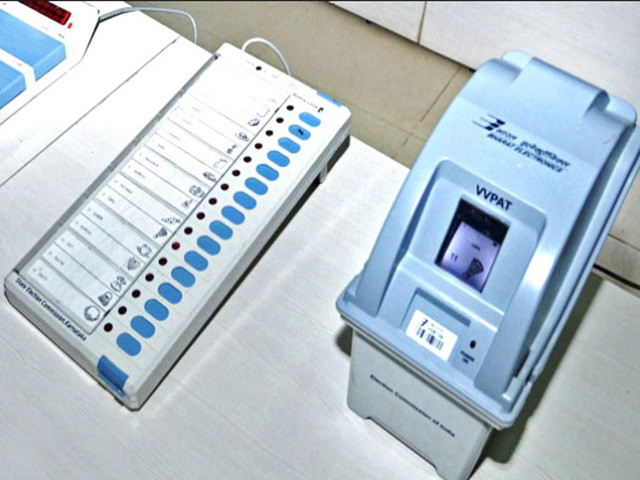
Electronic voting is the standard means of conducting elections using Electronic Voting Machines (EVMs) in India. The system was developed for the Election Commission of India by state-owned Electronics Corporation of India and Bharat Electronics. Starting in the late 1990s, they were introduced in Indian elections in a phased manner.
Prior to the introduction of electronic voting, paper ballots were used and manual counting was done. The printed paper ballots were expensive, required substantial post-voting resources and time to count individual ballots and were prone to fraudulent voting with pre-filled fake ballots. Introduction of EVMs have brought down the costs significantly, reduces the time of counting to enable faster announcement of results and eliminated fraudulent practices due to safety features such as security locking, limits to rate of voting per minute and verification of thumb impressions. EVMs are stand-alone machines that use write once read many memory. They are self-contained, battery-powered and do not need any networking capability. They do not have any wireless or wired components that connect to the internet.
Various opposition parties at times have alleged faulty EVMs after they failed to defeat the incumbent. In 2013, the Supreme Court of India directed the Election Commission to include a paper trail to help confirm the reliable operation of EVMs. The Election Commission developed EVMs with voter-verified paper audit trail (VVPAT) which was trialed in the 2014 Indian general election. After the 2019 ruling by the Supreme Court, EVMs with accompanying VVPAT are used in all the elections with a small percentage (2%) of the VVPATs verified to ensure the reliability before certifying the final results.
The Election Commission of India has also claimed that the machines, system checks, safeguard procedures, and election protocols are tamper-proof. To mitigate any doubts regarding the hardware, prior to the election day, a sample number of votes for each political party nominee are entered into each machine, in the presence of polling agents and at the end of this sample trial run, the votes counted and matched with the entered sample votes, to ensure that the machine's hardware has not been tampered with, it is operating reliably and that there were no hidden votes pre-recorded in each machine.
Background
Paper ballots were exclusively used during elections till the 1990s. With the paper ballots, substantial resources were required for printing, transportation, storage and counting of individual ballots. Paper ballots were prone to fraudulent voting and booth capturing, where party loyalists captured booths and stuffed them with pre-filled fake ballots. Since the late 1950s, there were multiple documented cases of such activities being reported and the problem grew between the 1950s and 1980s, becoming a serious and large scale problem in certain states and regions often accompanied with violence. In the late 1970s, Election Commission of India sought a solution for the issues which resulted in the development of electronic voting machines (EVM).
History
Design and introduction
The idea of using an Electronic Voting Machine (EVM) was proposed in 1977 and Electronics Corporation of India (ECIL) was tasked with the development of the same. A working model was evolved in 1979 and was showcased to various political parties in August 1980. Bharat Electronics (BEL) and ECIL were tasked with manufacturing EVMs. The EVMs were first trialed in May 1982 in the by-election to Paravur assembly constituency in Kerala in a limited number of polling stations. In a ruling on a case filed against the usage of EVMs in the by-election, the Supreme Court of India ruled that the Representation of People Act, 1951 and the Conduct of Election Rules, 1961 specified the usage of paper ballots and forbade the use of any new methods including electronic voting. The court stated the manner in which the orders were issued for the use of EVMs was unconstitutional and the usage of any alternate means would require to be specified under the law. By the time of the verdict, EVMs had been used in several other elections and the court did not rule on the results of those elections.
Wider adoption
Post the court ruling, as there was no provision explicitly permitting the usage of EVMs, it was not deployed immediately. An amendment to the Representation of the People Act, 1951 which allowed the usage of EVMs, was passed by the Parliament of India in December 1988 and came into force in March 1989. In March 1992, changes were made to the Conduction of Election Rules, 1961 by the Government of India to permit the usage of electronic voting. The deployment was delayed as general consensus could not be reached with the political parties and other stakeholders on the usage of EVMs. In 1998, the machines were used on an experimental basis across 25 state assembly constituencies during the assembly elections in Rajasthan, Madhya Pradesh and Delhi. In May 2001, EVMs were used in all constituencies for the state assembly elections in Tamil Nadu, Kerala, Puducherry and West Bengal. In 2004, in the General Election, the EVMs were used in all 543 Parliamentary Constituencies for the first time. Since the time, all state assembly and parliamentary elections are held using the EVMs.
Further improvements
As it was possible to know how many people from a polling station exactly voted for a candidate, there was a probability that a winning candidate might show favoritism or hold a grudge on specific areas depending on the votes received. In order to mitigate the issue, a totaliser was developed in 2008, which was connected to several EVM units and displayed only the overall results instead of votes from individual machines.
After a consultation with the political parties in 2010, the Election Commission appointed an expert technical committee to study the feasibility of a voter-verified paper audit trail (VVPAT) in EVMs as a measure of transparency. The committee was tasked with examining the possibility of displaying a printed paper to a voter which consisted of the symbol of the party to which the vote was cast. Based on the recommendation of the committee, a VVPAT system was developed and was put on field trials in 2011. In July 2011, trials were conducted at 175 polling booths in Ladakh, Thiruvananthapuram, Cherrapunjee, East Delhi and Jaisalmer to test the performance of the VVPAT system under various weather conditions.
VVPAT was further introduced on a trial basis in a by-poll at Noksen in Nagaland in September 2013. It was later used in various legislative elections and in eight Lok Sabha constituencies in 2014 Indian general election. Following a directive of the Supreme Court on 8 October 2013, the Election Commission of India introduced VVPATs along with EVMs in a phased manner. In 2019, the Supreme Court further directed that a small percentage (2%) of the VVPATs to be verified to ensure the reliability before the final results were certified.
Design and technology
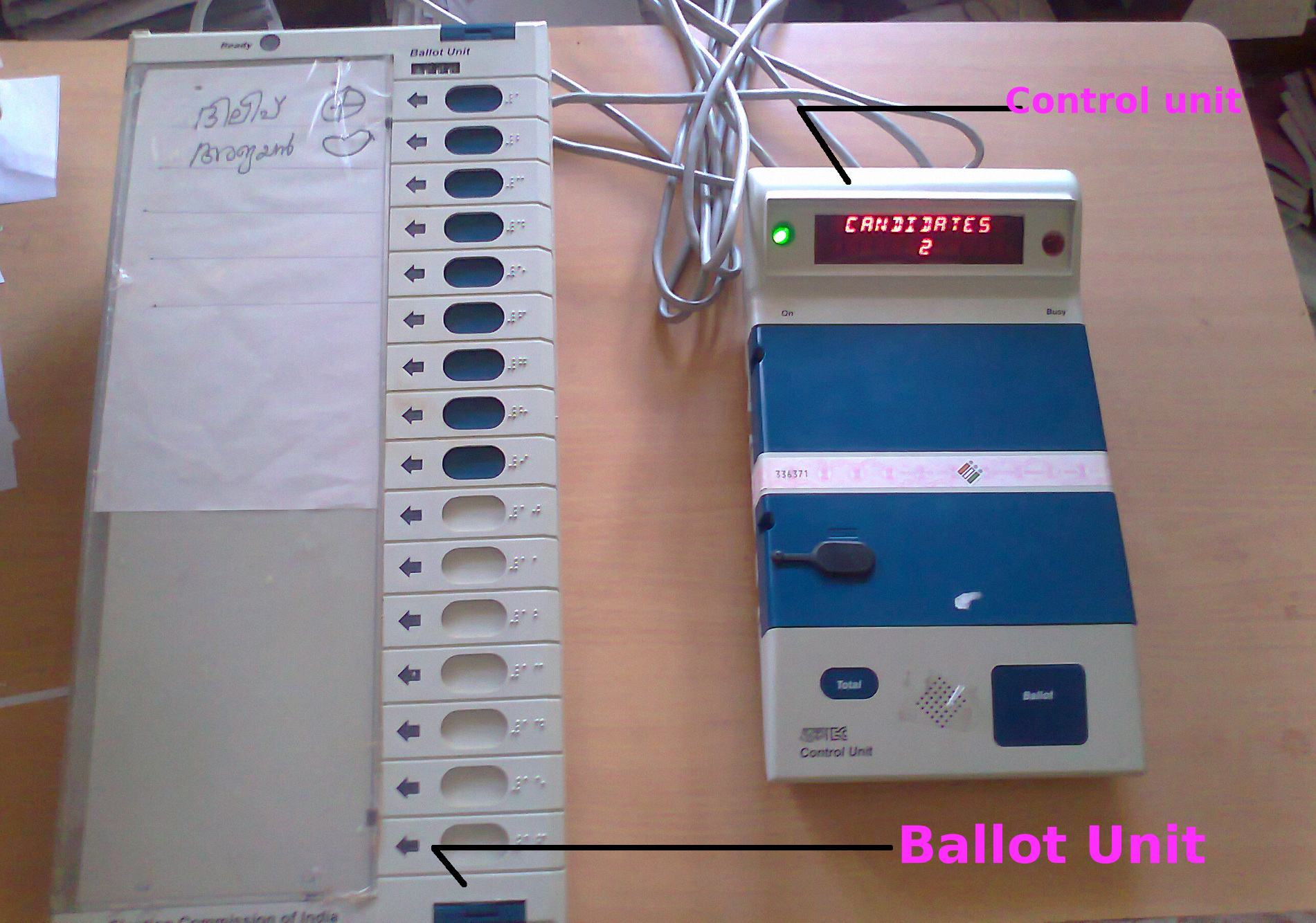
The EVM was designed by a team led by A.G. Rao and Ravi Poovaiah, professors at IIT Bombay. An EVM consists of two units, a control unit, and the ballot unit which are connected by a cable. The ballot unit facilitates the actual voting by a voter and consists of a ballot paper screen with the names of candidates and their symbols alongside labeled buttons, indicator lights and Braille signage. The control unit is responsible for the operational control of the ballot units, stores the vote counts and displays the results on LED displays. The control unit is pre-programmed at the time of manufacturing and cannot be altered later.
The machines are powered by a 7.5 volt battery inserted into the control unit. The designers intentionally opted for battery power, to prevent the possibility of power cables interfering with the functioning and the EVMs can function without a secondary power source. The two units work in tandem and cannot work independently. The EVMs do not have any communication components or internet interface. The ballot unit has an internal clock and a pre-programmed protocol by which it records every input-output event with a timestamp provided it is powered.
A single ballot unit can list a maximum of 16 candidates and as a part of the initial design, up to four ballot units could be connected in parallel to a single control unit to cater to a maximum of 64 candidates. After an upgrade in 2013, 24 ballot units can now be connected to a single unit so that it can cater to a maximum of 384 candidates. A single machine can record a maximum of 2000 votes. The devices were designed to prevent fraud by limiting the number of new votes can be entered into the machine in a given time frame. In a minute, the EVMs can register a maximum of five votes. The later version of the EVMs are all equipped with VVPAT capability. VVPAT system which was an upgrade of the EVMs had modified software that allowed a printer to be attached to the machine. In June 2018, a built-in-hood was added to protect the printer and other devices from excess light and heat in VVPAT systems.
Usage
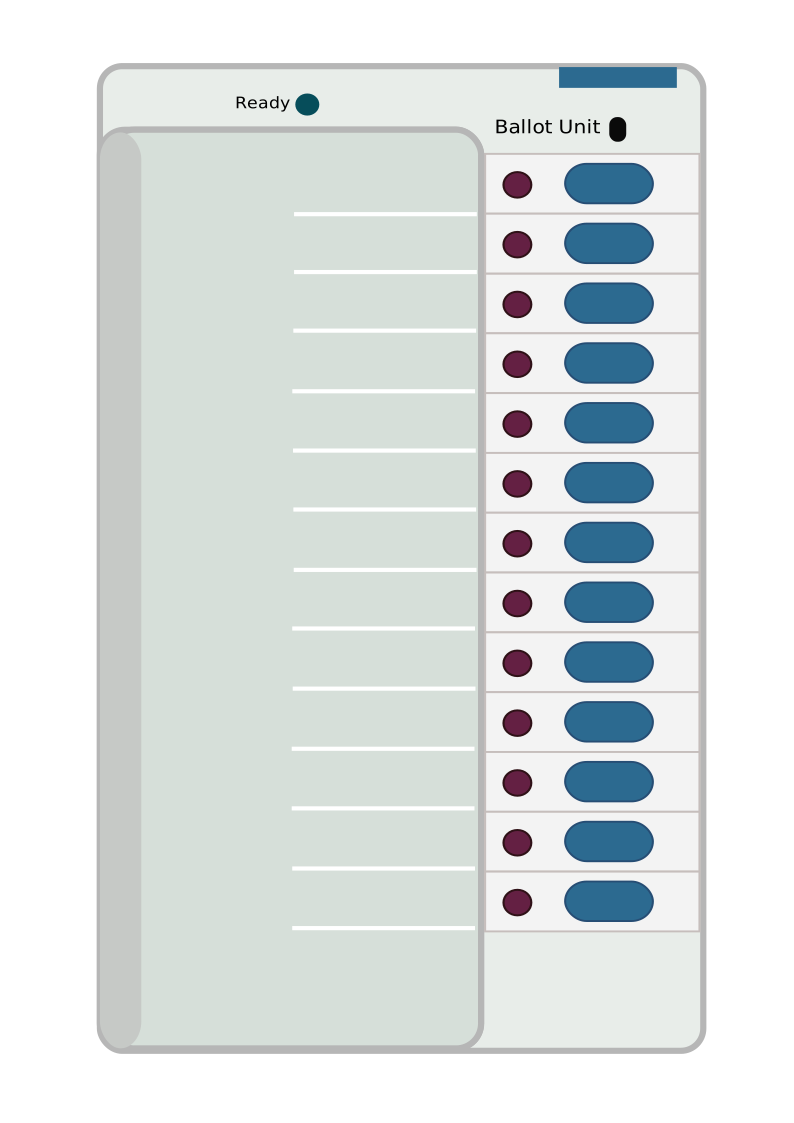
The EVMs are inventoried and stored at secure locations when not in use. They are tracked by the Election Commission of India on a real-time basis and distributed randomly to the polling booths. In 2017, the Election Commission decided to replace all first generation machines and most of the machines in use in 2024 belong to the third generation. Prior to the elections, the machines are randomly allocated to polling booths and sample checks are carried out to ensure working condition. Ballot papers are inserted into the displays in the ballot unit and test votes for each nominee is entered into the machine in the presence of polling agents and counted to match with the entered sample votes.
Before the voting, the control units are sealed. The control unit is operated by the polling booth officer, while the ballot unit is operated by the voter in privacy. The officer confirms the voter's identification before electronically activating the ballot unit to accept a new vote. Once the voter enters the vote, the ballot unit displays the vote to the voter and records it in its memory. Post the voting, the polling officer presses the close button and the control unit registers the polled votes. The units are identified by unique identifier numbers and the a particular control unit is designed to work with a specific ballot unit. Once the polling process is completed, the votes are recorded in the device's memory on the same order of polling and the device's ability to accept additional votes is disabled. The control unit can store the vote in its memory for more than ten years. With the VVPAT system, when a vote is cast, it is recorded in its memory and simultaneously a serial number and vote data is printed out for the voter to verify the same. The Election Commission maintains a database of thumb impressions and signatures of the voters along with identification, which is matched in order to identify the eligibility of a voter and ensure that a voter cannot cast a ballot more than once.
After a poll closes on an election day, the Presiding officer will hand over an account of votes recorded in each machine to the polling agents of the political parties. The units are separated and the control units moved and stored separately in locked and guarded premises. At the time of counting of votes, the results are displayed on the control unit on pressing the "Result" button. The button cannot be pressed before the polling is closed by the polling officer-in-charge. It is usually hidden and is exposed only at the counting center in the presence of the designated officer. The total displayed will also be tallied with the count given on the polling day.
Cost and efficiency
The manufacturing cost per EVM was for the first batch of machines that were purchased in 1989–90. The cost of the production of later models was estimated to be in 2006. The cost was estimated to be per unit based on an additional order placed in 2014. Though the design, production and procurement was capital intensive, it has helped reduce the cost incurred on the printing of ballot papers, their transportation and storage and the counting staff and the remuneration paid to them. EVMs are easier to transport compared to ballot boxes as they are lighter, more portable, and come with polypropylene carrying cases. As there are reduced probability of malfeasance and rejection of votes, it eliminates the requirement of re-polling due to these issues. An independent study had also indicated that the voting by the economically weaker section have increased due to the ease of usage with EVMs. The shelf life of an EVM is estimated to be 15 years.
Reliability

The use of EVMs and questions of their reliability have been raised by academics and politicians. In February 2010, an international conference held under the chairmanship of Subramanian Swamy blamed the Election Commission for shirking from its responsibility on proving the transparency of EVMs. In April 2010, an independent security analysis undertaken by Hari K. Prasad, Rop Gonggrijp, and Alex Halderman, found that the machines could be manipulated by people who have physical access to the machines. While manufacturing, people with access could insert malicious hardware and people with physical access between voting and counting could change vote totals or learn about the results earlier. It suggested moving to a voting system that provides greater transparency such as paper ballots, precinct count optical scan, or a voter verified paper audit trail for skeptical voters to observe the physical counting process to gain confidence that the outcome is fair. In August 2010, one of the authors of the research was charged with suspected EVM theft. A research from The Hindu shared similar concerns that the EVMs could be manipulated during manufacturing, storage during the non-election periods and service of the machines by authorised technicians. It further suggested the usage of paper trail for verification and the use of authentication units to check the devices for counterfeit or tampered units.
In August 2017, EVMs from multiple countries were hacked by programmers at the EVM Hacking village at the 25th DEF CON conference held at Las Vegas. Indian made EVMs however, were not included as part of the event. In the same year, the Election Commission organized an open hackathon encouraging people to attempt hacking of EVMs used by the commission in various Indian elections. While the Commission announced that no attempts were made to demonstrate any vulnerabilities in the event, the registered participants claimed that the Commission made only a few select machines available and imposed additional conditions. In January 2019, a self proclaimed cyber expert based in London claimed that the results can be manipulated by using low frequency signals. The Election Commission however dismissed the allegations since the machines did not use wireless frequencies to communicate with other devices and no proof was provided by the expert to demonstrate the hacking of the devices.
The Election Commission and the manufacturers of the EVMs have consistently rejected the possibility of EVM tampering. They have maintained that the machines are tamper-proof as the programming is done at a secure manufacturing facility. They have also contended that there is no connecting or transmission devices attached to the machines and the machines are securely stored with a real-time logging system in the machine detecting any access or attempts to change. Concerns have also been raised on the software which could be tampered with during initial programming and could be programmed to register a particular button. The Commission responded that the buttons are interchangeable and the order of candidates is randomly selected.
There have been multiple cases against the usage of EVMs before the state high courts and the Supreme Court of India. The courts have often dismissed these cases and ruled in the favor of the Election Commission and the Supreme Court has declared that the use of EVMs is constitutionally valid. A PIL was filed in the Supreme Court in 2011 for directing the Election Commission to modify the EVMs to give a slip printed with the symbol of the party in whose favor the voter cast. On 17 January 2012, Delhi High Court in its ruling on Subramanian Swamy's writ petition challenging the use of EVMs in the present form asked the Election Commission to hold wider consultations with the executive, political parties and other stakeholders on the matter. Following further petitions in the Supreme Court and the subsequent ruling in 2013 led to the use of VVPATs.
Export to other countries
Nepal, Bhutan, Namibia and Kenya have acquired India-manufactured EVMs. In 2013, the Election Commission of Namibia acquired 1700 control units and 3500 ballot units from Bharat Electronics Limited and these units were used in the regional and presidential elections in 2014. Several other Asian and African countries have also expressed interested in using the Indian made EVMs.
References
References
- (21 November 2022). "From Paper Ballots Then to EVMs & NOTA Now". [[News18]].
- Verma, Arvind. (2005). "Policing Elections in India". India Review.
- (10 April 2024). "Difference between Electronic Voting Machines and Ballot Papers". [[India Today]].
- Somanathan, Madhavan. (2019). "India's electoral democracy: How EVMs curb electoral fraud". Brookings Institution.
- (2017). "The Impact of Electronic Voting Machines on Electoral Frauds, Democracy, and Development".
- Vaishnav, Milan. (2017). "When Crime Pays: Money and Muscle in Indian Politics". [[Yale University Press]].
- Saksena, N. S.. (1993). "India, Towards Anarchy, 1967–1992". Abhinav Publications.
- Verma, Arvind. (2009). "Situational Prevention and Elections in India". International Journal of Criminal Justice Sciences.
- "History of EVM". [[Election Commission of India]].
- (17 March 2023). "EVMs, VVPATS designed, manufactured indigenously by 2 PSUs: Government". Business Standard.
- Shukla, Alok. (2018). "EVM Electronic Voting Machines". Leadstart.
- "A brief history of EVMs in India". [[The Hindu]].
- (November 2022). "Legal history of EVMs". [[Election Commission of India]].
- (29 February 2024). "Ballot boxes to EVMs: Incredible journey of Election Commission indelibly inked in history". [[The Economic Times]].
- (4 December 2008). "New counting method for Assembly polls". [[India Today]].
- "Know Your Electronic Voting Machine". [[Press Information Bureau]].
- (24 April 2024). "EVM-VVPAT case: Why were VVPATs introduced? What is the controversy?". [[First Post]].
- Ranjan, Rakesh. (15 December 2011). "Delhi HC to decide on EVMs". The Pioneer.
- (9 April 2024). "Why VVPAT was brought in, why Opposition wants all slips verified". [[The Indian Express]].
- (21 June 2011). "Election Commission to introduce EVM and VVPAT system for more transparent electronic voting". [[The Economic Times]].
- (28 July 2011). "New voting machines found perfect: Election Commission". Kolkata News.
- (28 July 2011). "New Voting Machines Found Perfect: EC".
- (4 September 2014). "Nagaland first to use VVPAT device for voting". [[Business Standard]].
- Singh, Bikash. (4 September 2013). "VVPAT used or the first time in Noksen bypolls". [[The Economic Times]].
- (19 December 2013). "India devises flawless ballot mechanism". [[The News International]].
- (29 April 2014). "LS polls: Voters to get 'automated-receipts' at Gandhinagar". [[Business Standard]].
- (4 April 2014). "VVPAT machine to be on demonstration for 10 days". [[The Hindu]].
- "Civil Appeal No.9093 of 2013". [[Supreme Court of India]].
- (8 October 2013). "Supreme Court asks Election Commission to introduce paper trail in EVMs". [[India Today]].
- (8 October 2013). "Elections 2014: SC directive to EC for paper trail in EVMs". [[The Hindu]].
- (10 March 2019). "EC announces Lok Sabha election dates: VVPATs, to be used in all polling stations, help bring more accuracy in voting". [[Firstpost]].
- (23 May 2019). "EVM-VVPAT pass test in Lok Sabha polls". [[The Economic Times]].
- (7 April 2024). "Meet the team members who conceptualised the EVM".
- "Electronic Voting Machine". [[Bharat Electronics Limited]].
- (February 2007). "User manual". [[Election Commission of India]].
- (12 March 2024). "Can EVMs Work Without Electricity? Let's Find Out". ABP News.
- (20 March 2024). "Lok Sabha elections 2024 FAQs: What is an EVM and how does it work?". [[Deccan Herald]].
- (15 March 2019). "Lok Sabha elections 2019: Check FAQs related to EVMS". [[India Today]].
- (16 April 2024). "All you need to know about electronic voting machines". [[The Hindu]] [[Business Line]].
- (11 May 2017). "All Questions About EVMs Are Answered Here". [[News18]].
- (19 January 2012). "New EVMs to have paper trail: BEL". [[Firstpost]].
- Vishnoi, Anubhuti. (11 June 2018). "All VVPATs in 2019 to come with hood to keep light at bay". [[The Economic Times]].
- "EVM operating manual". [[Election Commission of India]].
- "EVM Management System". [[Election Commission of India]].
- (3 April 2017). "Amid tampering row, Election Commission to replace 9 lakh EVMs before 2019". [[India Today]].
- (23 May 2024). "Top Experts From IIT Who Helped Design India's Most Tamper-Proof EVMs". [[NDTV]].
- (10 March 2019). "A look inside the electronic voting machine". [[The Hindu]].
- (30 August 2018). "Making Electronic Voting Machines Tamper-proof: Some Administrative and Technical Suggestions". [[The Hindu.
- (26 April 2024). "After EC's reply to SC queries, verdict on EVM-VVPAT case likely today". [[Business Standard]].
- (4 October 2010). "Proceedings of the 17th ACM conference on Computer and communications security". ACM.
- (23 April 2024). "What is an electronic voting machine? All FAQs about EVM". [[India Today]].
- (14 April 2024). "How SC pushed the VVPAT transparency envelope so far". [[The New Indian Express]].
- (23 May 2019). "Election results 2019: What time will counting start, how are EVM votes counted?". [[Business Today (India).
- "Zero Complaints Came Up After Lok Sabha Polls, Claims Expert Behind EVMs". [[NDTV]].
- (3 June 2024). "How EVM Votes Are Counted, Why EC Changed Rule On Postal Ballots In 2019, What's Opposition's Concern?". [[News18]].
- "FAQs on EVMs". Chief Electoral Officer.
- (7 March 2014). "Electronics Corp, Bharat Electronics get EVM contracts". [[The Indian Express]].
- (29 March 2021). "All you need to know about electronic voting". [[First Post]].
- (6 December 2019). "How electronic voting machines have improved India's democracy". [[Brookings Institution]].
- (25 October 2015). "Shelf-life of 50% EVMs ending, have to buy 14 lakh for 2019: EC". [[The Indian Express]].
- "Swamy for expert panel on secure EVMs". [[The Hindu]].
- (23 August 2010). "Electronic voting machine stolen, this man blamed". [[NDTV]].
- (22 August 2018). "Kids at hacking conference show how easily US elections could be sabotaged". [[The Guardian]].
- (3 August 2017). "DEFCON Hackers Found Many Holes in Voting Machines and Poll Systems". [[IEEE]].
- Sircar, Sushovan. (24 January 2019). "'EVM Hack Still Possible': Engineer Who Demonstrated It In 2010". The Quint.
- Shetty, K. Ashok Vardhan. (30 August 2018). "Making Electronic Voting Machines Tamper-proof: Some Administrative and Technical Suggestions". [[The Hindu]].
- (3 June 2017). "Parties fail to take EVM hackathon challenge". [[Deccan Herald]].
- Prabhu, Sunil. (3 June 2017). "The EVM (Vote Machine) 'Hackathons' That Weren't: 10 Points". [[NDTV]].
- Vishnoi, Anubhuti. (23 January 2019). "EC, its technical expert committee member & ECIL tear into Syed Shuja's claims". [[The Economic Times]].
- (22 January 2019). "EVM hacking claim: Election Commission of India writes to Delhi Police seeking filing of FIR against self-proclaimed cyber expert". [[The Hindu]].
- (21 January 2019). "Motivated slugfest: Election Commission slams man claiming EVMs can be hacked". [[India Today]].
- Ramani, Srinivasan. (18 December 2017). "It takes a heck of a lot to hack an EVM". [[The Hindu]].
- (7 August 2009). "EVMs cannot be tampered: K J Rao". [[Indian Express]].
- Zia, Hasan. (28 March 2023). "Complete Guide on How to Vote in India". One World News.
- (24 April 2024). "SC says EVM microcontrollers are 'agnostic', do not recognise parties or candidates, only buttons". [[The Hindu]].
- Nandan Nilekani. (2012). "Imagining India: Ideas for the New Century". Penguin.
- (25 July 2011). "SC order on EVM".
- (25 July 2011). "SC seeks EC reply on EVM modification". [[The Assam Tribune]].
- (25 July 2011). "Do EVMs need modification? SC asks EC to decide in 3 weeks". [[Indian Express]].
- (18 January 2012). "EVMs not tamper-proof: Delhi HC". [[The Pioneer (India).
- (8 October 2013). "Supreme Court asks Election Commission to introduce paper trail in EVMs".
- (27 September 2012). "Field trial of new EVMs with paper trail under way: ECI informs SC". Law.
- "Supreme Court hearing in Special Leave to Appeal (Civil) No(s).13735/2012". Supreme Court of India.
- (January 2012). "India – A Lead Market for Frugal Innovations? Extending the Lead Market Theory to Emerging Economies". [[Hamburg University of Technology]].
- (5 July 2013). "ECN unveils 'tamper-free' voting machines". [[Namibian Sun]].
- (29 January 2019). "EVMs may be under a cloud in India but more than 20 nations use them". [[Mint (newspaper).
This article was imported from Wikipedia and is available under the Creative Commons Attribution-ShareAlike 4.0 License. Content has been adapted to SurfDoc format. Original contributors can be found on the article history page.
Ask Mako anything about Electronic voting in India — get instant answers, deeper analysis, and related topics.
Research with MakoFree with your Surf account
Create a free account to save articles, ask Mako questions, and organize your research.
Sign up freeThis content may have been generated or modified by AI. CloudSurf Software LLC is not responsible for the accuracy, completeness, or reliability of AI-generated content. Always verify important information from primary sources.
Report