From Surf Wiki (app.surf) — the open knowledge base
Djemal Pasha
Ottoman military leader (1872–1922)

Ottoman military leader (1872–1922)
| Field | Value | |
|---|---|---|
| name | Ahmed Djemal | |
| office2 | Minister of the Navy of the Ottoman Empire | |
| image | Djemal Pasha2.png | |
| image_size | 220 | |
| children | 5 | |
| birth_date | ||
| death_date | ||
| birth_place | Midilli, Vilayet of the Archipelago, Ottoman Empire | |
| death_place | Tbilisi, Georgian SSR | |
| allegiance | Ottoman Empire | |
| Emirate of Afghanistan (1920–1922) | ||
| serviceyears | 1893–1918 | |
| rank | [[File:Ottoman-Army-OF-9.svg | 63x63px]] General |
| commands | Fourth Army | |
| battles | ||
| monarch2 | Mehmed V | |
| Mehmed VI | ||
| predecessor2 | Çürüksulu Mahmud Pasha | |
| successor2 | Hüseyin Rauf Pasha | |
| termend2 | 14 October 1918 | |
| termstart2 | 10 March 1914 | |
| honorific_suffix | Pasha | |
| relations | Hasan Cemal (grandson) | |
| 1blankname2 | Grand Vizier | |
| 1namedata2 | Mehmed Said Halim Pasha | |
| Mehmed Talaat Pasha | ||
| office | Minister of Public Works of the Ottoman Empire | |
| monarch | Mehmed V | |
| predecessor | Osman Nizami Pasha | |
| successor | Çürüksulu Mahmud Pasha | |
| term_end | 10 March 1914 | |
| term_start | 17 December 1913 | |
| 1blankname | Grand Vizier | |
| 1namedata | Mehmed Said Halim Pasha |
Emirate of Afghanistan (1920–1922)
- Macedonian Struggle
- 31 March Incident
- Balkan Wars
- First Balkan War
- Second Balkan War
- World War I
- Sinai and Palestine Campaign
- Suez Canal
- Megiddo
- First Battle of Gaza
- Capture of Jericho
- Second Battle of Gaza
- Charge at Irbid
- Mesopotamia Campaign
- Arab Revolt
- Battle of Wadi Musa
- Tafas massacre Mehmed VI Mehmed Talaat Pasha
- Sinai and Palestine Campaign
Ahmed Djemal Pasha (; ; 6 May 1872 – 21 July 1922) was an Ottoman general and statesman. Along with Talaat and Enver, he was one of the Three Pashas that ruled the Ottoman Empire during World War I.
As an officer of the II Corps, he was stationed in Salonica, where he developed political sympathies for the Committee of Union and Progress (CUP), a secret reformist party. He was initially praised by Christian missionaries and provided support to the Armenian victims of the Adana massacres.
In the course of his army career Djemal developed a rivalry with Mustafa Kemal (later known as Atatürk), served in Salonica on the frontlines of the Balkan Wars and was given command of Constantinople after the Raid on the Sublime Porte. Djemal's authoritarian three-year rule in Syria alienated the local population who opposed Turkish nationalism. His role in the Armenian genocide has been controversial as his policies were not as deadly as other CUP leaders; Djemal favored the forced assimilation of Armenians.
After the Armistice of Mudros and the fall of the CUP government in 1918, Djemal fled the Ottoman Empire and was sentenced to death in absentia by the Special Military Tribunal. He was assassinated four years later in Tbilisi by members of the Armenian Revolutionary Federation.
Early life and career
Ahmed Djemal was born in a Circassian-origin Turkish family in Mytilene, Lesbos, to Mehmed Nesib Bey, a military pharmacist. Djemal graduated from Kuleli Military High School in 1890 and completed his studies at the Military Academy (ota), the staff college in Istanbul, in 1893. He was posted to serve with the 1st Department of the Imperial General Staff (ota), and then he worked at the Kirkkilise Fortification Construction Department bound to Second Army. Djemal was assigned to the II Army Corps in 1896. Two years later, he was appointed staff commander of the Novice Division, stationed on the Salonica frontier.
Meanwhile, he began to sympathize with the Committee of Union and Progress (CUP), and joined the organization in 1898. It was in 1905 that Djemal was promoted to major and designated Inspector of Rumelia Railways. The following year he signaled his democratic credentials and joined the Ottoman Freedom Society. He became influential in the department of military issues of the Committee of Union and Progress. He was elected to the board of the III Army Corps in 1907. Following the Young Turk Revolution in 1908 he became a member of the central committee (ota) of the CUP and later was deployed as a Kaymakam to Üsküdar, Constantinople.
Djemal served as the governor of the Adana Vilayet between August 1909 and April 1911. In Adana, he was involved in providing support for the Armenian victims of the Adana massacres, and was praised by Christian missionaries in the region as a competent administrator. He was also military governor of Istanbul in 1909, 1910, 1912, and 1913. In the III Army Corps, he worked with future Turkish statesmen Major Fethi (Okyar) and Mustafa Kemal (Atatürk), although Atatürk soon developed a rivalry with Djemal Pasha and his colleagues over their policies after they seized power in 1913.
Balkan Wars
World War I
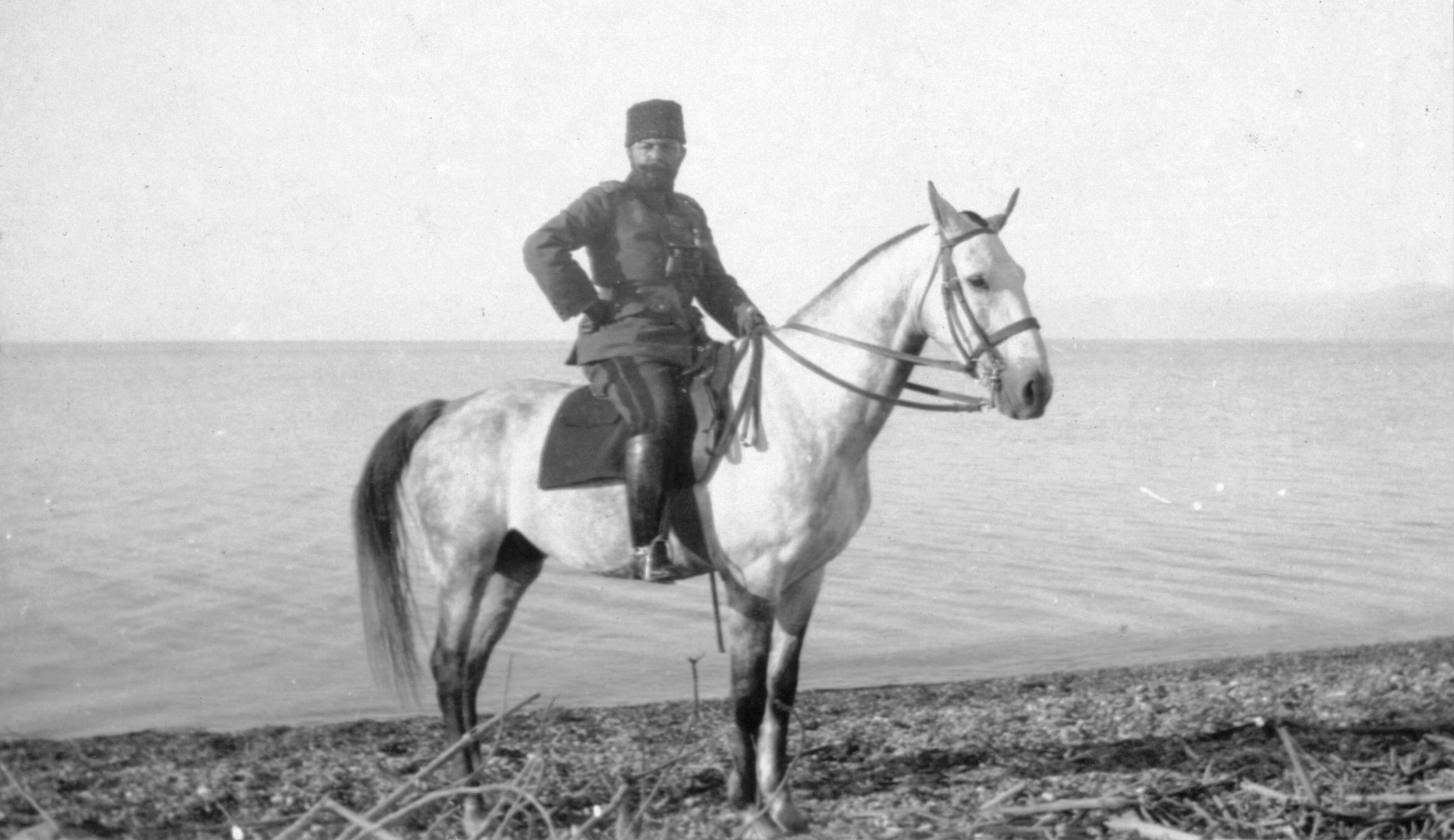
When Europe was divided into two blocs before the First World War, he supported an alliance with France. He went to France to negotiate an alliance with the French, but failed and then sided with Enver and Talaat, who favoured the German side. Djemal, along with Enver and Talaat, took control of the Ottoman government in 1913. The Three Pashas effectively ruled the Ottoman Empire for the duration of World War I.

Previously snubbed by the Allies, Djemal switched his attention to an alliance with the Central Powers, although he had at first been opposed to a full alliance with Germany. Nevertheless, he agreed in early October 1914 to use his ministerial powers to authorise Admiral Souchon to launch a pre-emptive strike in the Black Sea, which led to Russia, Britain and France declaring war on the Ottoman Empire a few days later. After the entry of the Ottoman Empire into the war, Enver Pasha nominated Djemal Pasha to lead the Ottoman army against British forces in Egypt, and Djemal accepted the position. In late 1914, he was assigned to the governorship and military command for the southern provinces of the Ottoman Empire.
Rule in Syria
Main article: Sinai and Palestine Campaign

Djemal Pasha was appointed with full powers in military and civilian affairs in Syria in 1915. A provisional law granted him emergency powers in May of that year. All cabinet decrees from Constantinople concerning Syria became subject to his approval. Both his first and second attacks on the Suez Canal failed. Coupled with the wartime exigencies and natural disasters that afflicted the region during these years, this alienated the population from the Ottoman government, and led to the Arab Revolt. In the meantime, the Ottoman army usually commanded by Colonel Kress von Kressenstein pushed towards and occupied Sinai. The two men had a thinly disguised contempt for each other, which weakened the command.
He was known among the local Arab inhabitants as as-Saffāḥ (), being responsible for the hanging of many Lebanese and Syrian Arab nationalists, including Sunni Muslims, Shia Muslims and Christians, wrongly accused of treason on 6 May 1916 in Damascus and Beirut. In total between 1915 and 1916, Djemal had 34 Syrian and Lebanese politicians and nationalists executed.
Jamal Pasha was praised for his good deeds by some Arab inhabitants of Aleppo, such as the water pipeline he built, which saved Aleppo's population from a severe drought in the summer of 1917. His popularity among some Arab inhabitants of Aleppo can be attributed to the city's orientation toward the Ottoman Empire.
In his political memoirs, the leader of the "Beirut Reform Movement" Salim Ali Salam recalls the following: Jamal Pasha resumed his campaign of vengeance; he began to imprison most Arab personalities, charging them with treason against the State. His real intent was to cut off the thoughtful heads, so that, as he put it, the Arabs would never again emerge as a force, and no one would be left to claim for them their rights … After returning to Beirut [from Istanbul], I was summoned … to Damascus to greet Jamal Pasha … I took the train … and upon reaching Aley we found that the whole train was reserved for the prisoners there to take them to Damascus … When I saw them, I realized that they were taking them to Damascus to put them to death. So … I said to myself: how shall I be able to meet with this butcher on the day on which he will be slaughtering the notables of the country? And how will I be able to converse with him? … Upon arriving in Damascus, I tried hard to see him that same evening, before anything happened, but was not successful. The next morning all was over, and the … notables who had been brought over from Aley were strung up on the gallows. At the end of 1915, Djemal with viceregal powers is said to have started secret negotiations with the Allies for ending the war; he proposed to take over the Ottoman administration himself as an independent king of Syria. These secret negotiations came to nothing, in part because the Allies reportedly could not agree on the future territory of the Ottoman Empire; France objected strongly, and Britain was unwilling to fund the imperial operations.
.jpg)
His most successful military exploit was against the British Mesopotamian Expeditionary Force, which had arrived in early 1915 from India. 35,000 British troops marched north on Baghdad, hoping to take the citadel with relatively few casualties. Djemal Pasha was appointed to command and marshaled a vast army, ultimately led by Halil Kut Pasha, which by the time of the siege of Kut al-Amara numbered 200,000 Turks and Arab auxiliaries. The British could only evacuate their wounded with Djemal's consent and attempted to send emissaries requesting permission to evacuate while the city was encircled on three sides. Djemal refused to compromise his advantageous position, and strafed enemy attempts by the Tigris Corps to take relief boats up river. They had underestimated Djemal's considerable administrative capabilities and will to resist the Allied armies. The Ottoman troops fought hard at the Battle of Ctesiphon, but the subsequent fate of POWs and civilians later enhanced Djemal Pasha's wartime reputation as a capricious and cruel general. Nonetheless, the successes impressed T. E. Lawrence to write a significant account of their diplomatic encounters when finally Kut fell in April 1916, which provides for "a colourful character". The ever-present threat of Arab Revolt fomented by British intelligence was rising throughout 1916 and 1917. Djemal instituted strict control over Syria Province against Syrian opponents. Djemal's forces also fought against the Arab nationalists and Syrian nationalists from 1916 onwards.{{cite book
Commander of Fourth Army

Gaza's head of garrison, Major Tiller, had 7 infantry battalions, a cavalry squadron, and some camel troops. The British under Colonel Chetwode already had 2,000 troops in front of the city. Reluctantly, Djemal marched with the 33rd Division to relieve Gaza. Kressenstein was delighted to have repelled the British assault and wanted to mobilise aggressively by driving into Shellal, Wadi Ghazze, and Khan Yunis, but Djemal absolutely forbade it. The British had a whole division in retreat, so Djemal apprehended that a two-battalion sortie would have been annihilated. One of Djemal's associates in Iraq was engineer Colonel Heinrich August Meissner who had built both the Hejaz and Baghdad railways and who was employed on an ambitious project to construct a railway to the Suez canal at Bir Gifgafa. By October 1915, the Central Powers had already built 100 miles of track as far as the oasis of Beersheba. Djemal insisted that an extended railway would be needed to attack British Egypt.
Djemal was completely committed to the Turco-German military machine, which he saw as necessary to resist the new wave of offensives launched by the British High Command. Mustafa Kemal Pasha and Djemal Pasha became increasingly skeptical of German capabilities, but Djemal was not yet prepared to openly back the German allies. He insisted on the possibility of a planned allied assault behind the Yıldırım Army, as the Seventh Army gathered at the Turco-German Aleppo Conference. In the shake-up that followed, Djemal was demoted to a command of the Fourth Army under General Erich von Falkenhayn. They now adopted a plan similar to the Kress Plan for Gaza and sent the Yıldırım Army to Baghdad. It was not until October 1917 that the Seventh Army could march south to face the growing threat from Edmund Allenby, hampered by the limitations of the single-gauge railway, which was built away from the coastline to avoid Royal Navy salvos. During this time, Djemal presided over the 1917 Jaffa deportation in which he was accused of allowing the Jewish population of Jaffa to be robbed, assaulted, starved and killed.
On 7 November, the British captured Gaza, but Djemal had long since been forced to evacuate. Although chased, he managed to retreat at speed. In December, the Turks were driven out of Jaffa, Djemal's army still in retreat, and the city fell without a fight. Falkenhayn had ordered an evacuation on 14th, and the British had begun to enter the same day. But now the Turkish Eighth formed a much stronger line of entrenchment; Djemal's organized defence of Gaza had been amply anticipated by the British. His army delayed them further at the vital Junction railway station. But the British were probably unaware of its importance.
The fighting in the hills was all but over by 1 December. On 6 December, Djemal Pasha was in Beirut to make a speech publicizing the allied deal to 'carve up' Syria-Palestine into partitioned spheres of influence in the Sykes-Picot agreement. At the end of 1917, Djemal ruled from his post in Damascus as a near-independent ruler of his portion of the Empire. On 9 April and then 19 April 1918, Djemal ordered the evacuation of civilians from Jaffa and Jerusalem. The Germans were furious and rescinded the order, revealing the chaos in the Ottoman Empire. Djemal's ambiguous attitude to the subject populations of the Ottoman Empire proved beneficial to the British colonial authorities. The Turkish line was solidified in readiness for the final onslaught at Nebi Samwell and Nahr-el-Auja. To the south of Nebi Samwell were the defences of Beit Iksa; the Heart and Liver Redoubts before Lifa; and Deir Yassin, two systems behind Ain Karim. In all, there were 4 miles of fortifications. Djemal Pasha was recalled to Istanbul in June 1918. He was sent back to the southern Syrian provinces in August 1918 to defend the Ottoman lines there however the Ottoman Army was forced to retreat and in an act of revenge, Djemal Pasha's forces committed the Tafas massacre against the local Arab population for allying with the advancing British forces. After the defeat of Ottoman forces in World War I, he once again returned to Istanbul.
Role in the Armenian Genocide
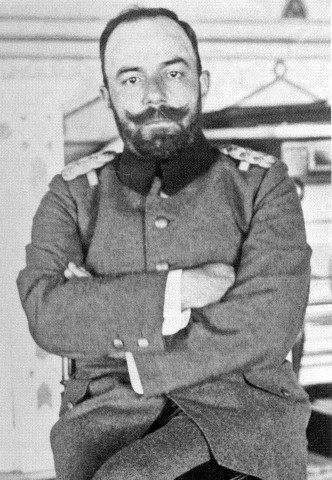
Djemal's role in the Armenian genocide has been contested by historians. His policies allowed some Armenians to survive in the territories under his control. German historian Wolfgang Gust states, "while preserving the lives of perhaps 150,000 Armenians—in terrible conditions—he helped kill another 150,000". In December 1915, he offered to the Entente powers that he would march to Constantinople, overthrow the CUP government, and end the genocide in exchange for the guarantee of the Ottoman Empire's territorial integrity in its pre-World War I borders. Historian Ümit Kurt argues that "The most fundamental difference between Djemal and the other two leaders [Talat and Enver] was the methods he wanted to employ to decrease the number of Armenians to a level that would no longer pose a threat to the Ottoman state." Instead of killing Armenians, he favored their forced conversion and assimilation to neutralize the perceived Armenian threat. Kurt furthermore argues: "Saving the lives of some fortunate Armenians does not exempt Djemal from the label 'génocidaire', for he was fully committed to the disappearance of Armenians from Ottoman soil."[[File:Ahmed Djemal at desk, 1915.jpg|thumb|right|150px|Attending naval matters]] In the CUP's penultimate congress held in 1917, Djemal was elected to the Board of Central Administration.
Military trial
Main article: Turkish courts-martial of 1919–20
With the defeat of the empire in October 1918 and the resignation of Talaat Pasha's cabinet on 2 November 1918, Djemal fled with seven other leaders of the CUP to Germany, and then Switzerland.
A military court in Turkey accused Djemal of massacring Arab subjects of the Ottoman Empire and sentenced him to death in absentia. Later in 1920, Djemal went to Central Asia, where he worked as a military advisor, charged with modernising the Afghan Royal Army.
Assassination

Due to the success of the Bolshevik Revolution, Djemal traveled to Tiflis to act as a military liaison officer to negotiate over Afghanistan with the Communist Party of the Soviet Union. He also negotiated for the Soviets to send support to Mustafa Kemal Pasha in his Turkish War of Independence. Together with his secretary, Djemal was assassinated on 21 July 1922 by Armenian Revolutionary Federation members Stepan Dzaghigian, Artashes Gevorgyan, and Petros Ter Poghosyan, as part of Operation Nemesis, a global plan by Armenians to track down and assassinate the surviving chief perpetrators of the Armenian genocide. Djemal's remains were brought to Erzurum and buried there.
Personal life
Djemal Pasha married twice.{{cite web|title=Cemal Paşa|publisher=Biyografi|access-date=2 May 2023|language=tr
Honours
- Golden Liakat Medal
- Golden Imtiyaz Medal
- Osmanieh Medal, (4th-Class); 16 August 1907
- First Class Knight Order of the Medjidie, (4th-Class); 22 July 1901
- First Class Knight Order of the Medjidie, (1st-Class); 14 February 1914
- Osmanieh Medal, (1st-Class); 26 April 1915
- Order of Murassa Osmanieh, 18 June 1917
- :
- National Order of the Legion of Honour, (2nd-Class); 14 July 1914
- Austrian EmpireKingdom of Hungary Austria-Hungary:
- Gold Military Merit Medal; 28 February 1915|colwidth=17em}}
Legacy
Djemal Pasha is known as Jamal Basha as-Saffah () in Lebanon and Syria for his treatment of the local population during WWI. Djemal Pasha named a street in Damascus after himself, but the name was later changed to "al-Nasr Street".
In Syria and Lebanon, 6 May is Martyrs' Day, a national holiday that commemorates the execution of seven Syrians in Damascus and 14 in Beirut by Djemal Pasha for their collaboration with the British and French at the height of WWI. The French and British had promised arms and financing for some Syrians and Lebanese actors with the ultimate independence and statehood status, provided they revolt and sabotage the Ottoman war effort. The squares in which the executions occurred in Damascus and in Beirut were renamed "Martyrs' Square" ().
References
Bibliography
References
- Maksudian, Nazan. (2012). ""L'ivresse de la liberté": La révolution de 1908 dans l'Empire ottoman". Peeters.
- Kurt, Ümit. (2019). "The End of the Ottomans: The Genocide of 1915 and the Politics of Turkish Nationalism". Bloomsbury Academic.
- Maksudian, Nazan (2012). Georgeon, François (ed.). p. 142
- Maksudian, Nazan (2012). Georgeon, François (ed.). p. 169
- Maksudian, Nazan (2012). Georgeon, François (ed.). pp. 142–149
- (2001). ["Turkey in World Politics: An Emerging Multiregional Power"]({{Google books). Lynne Rienner Publishers.
- Muammer Kaylan. (2005). ["The Kemalists: Islamic Revival and the Fate of Secular Turkey"]({{Google books). Prometheus Books, Publishers.
- Tucker, Spencer C.. (2014). "World War I: The Definitive Encyclopedia and Document Collection [5 volumes]: The Definitive Encyclopedia and Document Collection". ABC-CLIO.
- Kurt, Ümit (2019), p. 222
- Djemal, ''Memories''; Kress, ''Zwischen Kaukasus und Sinai''; ''RUSI'' journal 6, pp. 503–113; Grainger, ''Battle for Palestine'', p. 17
- Cleveland, William: ''A History of the Modern Middle East''. Boulder: Westview Press, 2004. "World War I and the End of the Ottoman Order", 146–167.
- Elie Kedourie, England and the Middle East, pp. 62–64
- Cyrus Schayegh, ''The Middle East and the Making of the Modern World'' (Harvard University Press, 2017), p. 141.
- Salibi, K. (1976). "Beirut under the Young Turks: As Depicted in the Political Memoirs of Salim Ali Salam (1868–1938)," In J. Berque, & D. Chevalier, ''Les Arabes par leurs archives: XVIe–XXe siecles''. Paris: Centre National de la Recherche Scientifique.
- [[David Fromkin. Fromkin, David]], ''[[A Peace to End All Peace: The Fall of the Ottoman Empire and the Creation of the Modern Middle East]]''. New York: Avon Books, 1989, p. 214.
- Lawrence, ''Seven Pillars of Wisdom''
- Grainger, p. 35
- Fromkin, ''[[A Peace to End All Peace]]'', pp. 214–215; P G Weber, Eagles on the Crescent, pp. 107, 153–154; Grainger, pp. 69–70
- Djemal, pp. 183–184
- (3 June 1917). "Cruelties to Jews in Jaffa; Alexandria Consul Says They Were Robbed, Assaulted, and Some Were Slain. Population was Starved Tale That Same Fate Awaits All Jews in Palestine – Djemal Pasha Blamed.". The New York Times.
- Official History, 2.1.75; Grainger, p. 149
- Grainger, pp. 173–175
- Kedourie, The Middle East, p.
- Grainger, p. 202
- Grainger, pp. 202–223
- (2012). "The Question of an Armenian Revolution and the Radicalization of the Committee of Union and Progress toward the Armenian Genocide". Genocide Studies and Prevention.
- (2019). "The End of the Ottomans: The Genocide of 1915 and the Politics of Turkish Nationalism". Bloomsbury Publishing.
- Findley, Carter Vaughn. (2010). "Turkey, Islam, Nationalism, and Modernity". Yale University Press.
- Adamec, Ludwig W. (1974). ''Afghanistan's Foreign Affairs to the Mid-Twentieth Century: Relations with the USSR, Germany, and Britain''. Tucson: University of Arizona Press. p. 70. {{ISBN. 0-81650-459-8.
- "Ahmed Jemal Pasha and the Armenian Genocide".
- (22 July 2002). "Cemal Paşa'ya yanlış kitabe".
- (4 March 1955). "Bahriye Nazırı Cemal Paşa'nın eşi anlatıyor".
This article was imported from Wikipedia and is available under the Creative Commons Attribution-ShareAlike 4.0 License. Content has been adapted to SurfDoc format. Original contributors can be found on the article history page.
Ask Mako anything about Djemal Pasha — get instant answers, deeper analysis, and related topics.
Research with MakoFree with your Surf account
Create a free account to save articles, ask Mako questions, and organize your research.
Sign up freeThis content may have been generated or modified by AI. CloudSurf Software LLC is not responsible for the accuracy, completeness, or reliability of AI-generated content. Always verify important information from primary sources.
Report