From Surf Wiki (app.surf) — the open knowledge base
1917 Jaffa deportation
Expulsion of 10,000 Jewish and Arab residents from Jaffa and Tel Aviv in 1917

Expulsion of 10,000 Jewish and Arab residents from Jaffa and Tel Aviv in 1917
| Field | Value |
|---|---|
| title | Tel Aviv and Jaffa deportation |
| date | |
| location | Jaffa, Tel Aviv, Ottoman Palestine |
| type | Deportation |
| cause | Ottoman suspicion of Jewish collaboration with the British |
| perpetrator | Ottoman Empire |
| reported deaths | 1,500 |
| displaced | 10,000 (including 8,000 Jews) |
Tel Aviv and Jaffa deportation was the expulsion on April 6, 1917, of 10,000 people from Jaffa and Tel Aviv by the authorities of the Ottoman Empire in Palestine. The evicted civilians were not allowed to carry off their belongings, and the deportation was accompanied by severe violence, starvation, theft, persecution and abuse. It is thought that about 1,500 of the evicted people died as a result of the deportation. Shortly after the deportation, the Muslims affected were able to return to their homes, but the Jewish population was not able to return until the summer of 1918.
Prior events
In November 1914, the Ottoman Empire entered World War I on the side of the Central Powers. Many people who were citizens of opposing Allied countries lived in Palestine, and its Turkish officials considered them a threat to military security.
Shortly after entering the war, the Ottomans abolished the Capitulations which allowed foreigners to live within the empire without taking citizenship. They were resettled in Alexandria, Egypt. The Ottoman Empire issued forcible draft of its population into the army, demanding non-citizens (including Jews) to either take Ottoman citizenship before 15 May 1915 or be expelled from the region. Following the devastating effect of the Lebanese famine, situation worsened. Aaron Aaronsohn described the situation,
"Meanwhile, people are literally starving. Horrified sights have seen our eyes: old women and children wandering, hunger and nightmare-madness in their dying eyes, no food falling under them and dying."
An unnamed eyewitness stated,
"Even wealthy people in Jerusalem are becoming recipients (of alms) and even courting the remaining."
The evacuations
By January 1917, British forces had crossed the Sinai Desert and were about to invade Palestine, which alarmed the Turkish authorities. The Ottoman Empire began to become skeptical of the residents in the region, mostly Jews, as the Ottomans disdained them for alleged collaboration with the British following the discovery of the Nili spy ring.
At the start of March, all the inhabitants of Gaza were expelled, a town of 35,000–40,000 people, mostly Arabs. They had 48 hours to leave "even if crawling on their knees". Many of the men were conscripted and the rest scattered around Palestine and Syria, first to nearby villages and then further afield as those villages were also evacuated. Death from exposure or starvation was widespread. Gaza did not recover its pre-war population until the 1940s.
On 28 March 1917, Djemal Pasha ordered the evacuation of the inhabitants of Jaffa.
Isaiah Friedman holds that the treatment of Jews was worse than for non-Jews, because Djemal Pasha was against the Zionist project in Palestine. Sheffy regards that it is more reflective of cultural and behavioral differences: the Arabs had no central organization, and with their experience of how government decrees were enforced, just remained nearby until the storm had passed, whereas the Jews obeyed the evacuation decree as a group. In any case, when New Zealand troops entered Jaffa in November 1917, only an estimated 8,000 of the previous population of 40,000 was present.
Jewish population
Response

The Jews of Jaffa and Tel Aviv organized a migration committee, headed by Meir Dizengoff and Rabbi Menachem Itzhak Kelioner. The committee arranged the transportation of the Jewish deportees to safety, with the assistance of Jews from the Galilee, who arrived in Tel Aviv with carts. The exiles were driven to Jerusalem, to cities in central Palestine (such as Petah Tikva and Kfar Saba) and to the north of Palestine, where they were scattered among the different Jewish settlements in the Lower Galilee, in Zichron Yaacov, Tiberias, and Safed. Up to 16,000 deportees were evacuated from Tel Aviv, which was left with almost no residents.
The homes and property of the Jews of Jaffa and Tel Aviv were kept in the possession of the Ottoman authorities, and they were guarded by a handful of Jewish guards. Djemal Pasha also released two Jewish doctors to join the deportees. Nonetheless, many deportees had perished during the harsh winter of 1917–1918 from hunger and contagious diseases due to negligence by the Ottoman authorities: 224 deportees are buried in Kfar Saba, 15 in Haifa, 321 in Tiberias, 104 in Safed, and 75 in Damascus.
Destination
Many Jewish deportees ended up in Zichron Yaacov, Hadera, Petah Tikva and Kfar Saba, with few choosing to go to Jerusalem despite being forbidden by the Ottoman authorities. Sympathizing with the situation, some members of the population decided to provide needed medical and financial support. But when winter 1917–1918 arrived, the situation worsened for many deportees and many died by hunger, famine, starvation and maltreatment, as several Yishuvs didn't receive them and thought they could be Ottoman spies. Deterioration of condition had prompted many Jews to flee and several of them had migrated to Egypt, or Europe and the United States.
Aftermath and memorials
The deportation and subsequent deaths of so many Jewish deportees were not properly documented.
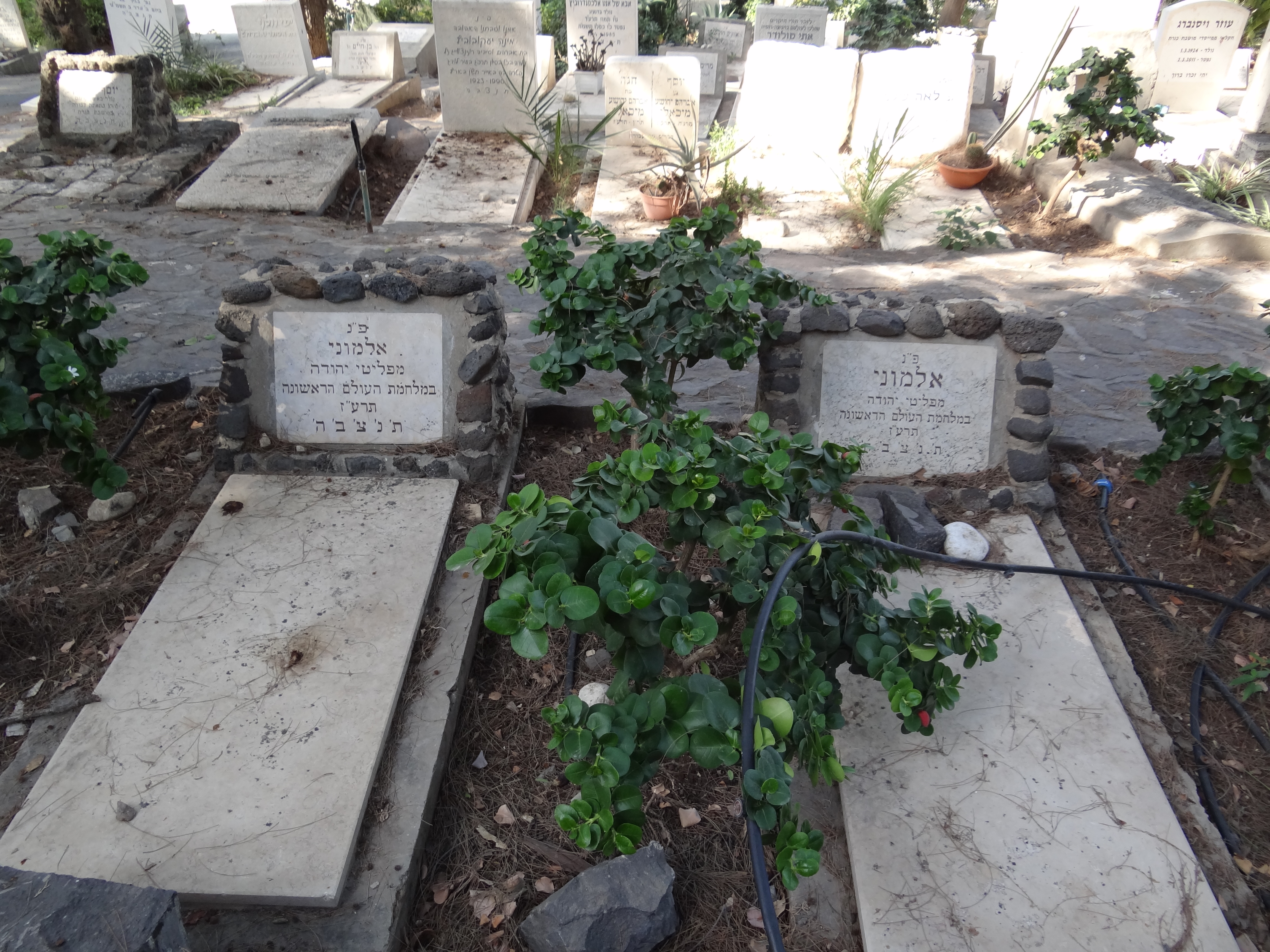
After Shragai's address, the Kfar Saba City Council voted to change the name "Pilots Street" in the city to "Tel Aviv-Jaffa" Street in October 2009 to commemorate the victims of the deportation. The Tel Aviv Founders' Families Association has been working for years with a burial society to establish a gilad in the Trumpeldor Cemetery in Tel Aviv in memory of those who perished among the deportees from Tel Aviv.
In literature
Deborah Barun's book, "The Exiles", published in 1970 after her death, centered around the deportation.
Two of Nahum Guttman's books mentioned the deportation, both when it began and after the deportation.
Israeli writer Yosef Chaim Brenner, who was deported and survived, wrote "The Origin" about the deportation which he experienced.
References
References
- [https://www.haaretz.com/1.5032267 When Tel Aviv was a wilderness] {{Webarchive. link. (2019-06-24 , [[Haaretz]])
- Alroey, Gur. (2016-09-06). "The Expulsion of the Jews from Tel Aviv-Jaffa to the Lower Galilee, 1917-1918".
- (May 4, 1917). "THREATENS MASSACRE OF JEWS IN PALESTINE; Turkish Governor Said to Have Declared for Slaughter Like That in Armenia.". [[New York Times]].
- (May 8, 1917). "CRUEL TO PALESTINE JEWS.; Turks Loot and Slay Victims Deported as a "Military Measure."". [[New York Times]].
- (May 19, 1917). "TURKS KILLING JEWS WHO RESIST PILLAGE; Washington Gets Confirmation of Reports of Atrocities in Palestine.". [[New York Times]].
- (June 3, 1917). "CRUELTIES TO JEWS DEPORTED IN JAFFA; Alexandria Consul Says They Were Robbed, Assaulted, and Some Were Slain. POPULATION WAS STARVED Tale That Same Fate Awaits All Jews In Palestine--Djemal Pasha Blamed.". [[New York Times]].
- "The Banality of Indifference: Zionism and the Armenian Genocide".
- "1917: Ottoman Authority Orders Jews to Evacuate Tel Aviv". Haaretz.
- Abramson, Glenda. (2022-08-19). "The 1914 deportation of the Jaffa Jews: 'a little footnote of war'?". Informa UK Limited.
- Mary McCune. (July 2005). "The Whole Wide World, Without Limits: International relief, gender politics, and American Jewish women, 1893–1930". Wayne State University Press.
- Jonathan R. Adelman. (2008). "The Rise of Israel: A history of a revolutionary state". Routledge.
- (5 January 2012). "Israeli history photo of the week: The locusts of 1915".
- "מרדכי בן הלל הכהן, "גיוס בני הארץ לצבא הטורקי", בתוך: במצור ובמצוק, עורך: מ. אליאב, ירושלים, 1991, עמ' 444".
- Doton Halevy. (2015). "The rear side of the front: Gaza and its people in World War I". Journal of Levantine Studies.
- Gur Alroey. (2006). "גולים באתם? פרשת מגורשי תל־אביב ויפו בגליל התחתון, 1918-1917 (Exiles in their country? The Case of the Deportees of Tel Aviv and Jaffa in the Lower Galilee, 1917–1918)". Cathedra.
- Hasson, Nir. "The 1917 Expulsion of Tel Aviv's Jews, Seen Through Turkish Eyes". [[Haaretz]].
- Friedman, Isaiah. (1971). "German Intervention on Behalf of the Yishuv, 1917". Indiana University Press.
- Yigal Sheffy. (2009). "Fighting at the entrances of Jaffa and the Yarkon victory : 8th Annual conference of the WW1 Heritage Association in Israel".
- "A Beginning Expulsion of Jews from Tel Aviv by the Turks in 1917 | Institute on the Holocaust & Genocide in Jerusalem".
- Nadav Shragai. (September 12, 2007). link
- "חולי וכולרה בטבריה במלחמת העולם הראשונה".
- "זה את הפרק "היישוב הישן וההתיישבות החדשה" בתוך [[יהושע קניאל]], '''המשך ותמורה: היישוב הישן והיישוב החדש בתקופת העלייה הראשונה והשנייה''', עמודים 102 – 128".
- "Archived copy".
- "חנות הספרים של איתמר".
- "עיר קטנה ואנשים בה מעט - נחום גוטמן".
- "שביל קליפות התפוזים".
- "The origin".
This article was imported from Wikipedia and is available under the Creative Commons Attribution-ShareAlike 4.0 License. Content has been adapted to SurfDoc format. Original contributors can be found on the article history page.
Ask Mako anything about 1917 Jaffa deportation — get instant answers, deeper analysis, and related topics.
Research with MakoFree with your Surf account
Create a free account to save articles, ask Mako questions, and organize your research.
Sign up freeThis content may have been generated or modified by AI. CloudSurf Software LLC is not responsible for the accuracy, completeness, or reliability of AI-generated content. Always verify important information from primary sources.
Report