From Surf Wiki (app.surf) — the open knowledge base
Croatian Parliament
Unicameral legislature of Croatia

Unicameral legislature of Croatia
| Field | Value | |||
|---|---|---|---|---|
| name | Croatian Parliament | |||
| native_name | Hrvatski sabor | |||
| legislature | 11th Sabor | |||
| coa_pic | [[File:Hrvatski sabor logo.svg | 125px]] | ||
| coa_caption | Seal of the Croatian Parliament | |||
| foundation | 1273 (first documented session) | |||
| 1990 (contemporary) | ||||
| house_type | Unicameral | |||
| leader1_type | Speaker | |||
| leader1 | Gordan Jandroković | |||
| party1 | HDZ | |||
| election1 | 5 May 2017 | |||
| leader2_type | Deputy Speakers | |||
| leader2 | ||||
| election2 | 16 May 2024 | |||
| members | 151 | |||
| structure1 | Croatian parliament distribution of seats 2024.png | |||
| structure1_res | 300px | |||
| structure1_alt | Distribution of seats in the Parliament for each political group | |||
| political_groups1 | Government (65) | |||
| *{{Color box | #295BA5 | border | silver}} HDZ (57){{efn | |
| *{{Color box | #295BA5 | border | silver}} HDZ (55) | |
| *{{Color box | #0F75BC | border | silver}} HDS (1) | |
| *{{Color box | #DDDDDD | border | silver}} Independent Marijana Petir (1)}} | |
| *{{Color box | #7C767C | border | silver}} DP (8) | |
| *{{Color box | #FFE01A | border | silver}} HSLS & ind. (3){{efn | |
| *{{Color box | #FFE01A | border | silver}} HSLS (2) | |
| *{{Color box | #DDDDDD | border | silver}} Independent Vladimir Bilek (Czech and Slovak minority representative) (1)}} | |
| *{{Color box | #FF9900 | border | silver}} HNS & ind. (3){{efn | |
| *{{Color box | #FF9900 | border | silver}} HNS (1) | |
| *{{Color box | #DDDDDD | border | silver}} Independents (2) | |
| *{{Color box | #124E6B | border | silver}} Nezavisni & HSU (3){{efn | |
| *{{Color box | #124E6B | border | silver}} Nezavisni (1) | |
| *{{Color box | #2E3192 | border | silver}} HSU (1) | |
| *{{Color box | #DDDDDD | border | silver}} Independent Vesna Vučemilović (1)}} | |
| *{{Color box | #DDDDDD | border | silver}} Independent (1){{efn | |
| *{{Color box | #0CB14B | border | silver}} IDS (1){{efn | |
| *{{Color box | #DDDDDD | border | silver}} Independent Furio Radin (Italian minority representative)}} | |
| *{{Color box | #ED1C24 | border | silver}} SDP (36) | |
| * | border | silver}} We Can! (10) | ||
| *{{Color box | #E85726 | border | silver}} The Bridge (8){{efn | |
| *{{Color box | #E85726 | border | silver}} The Bridge (7) | |
| *{{Color box | #DDDDDD | border | silver}} Independent Josip Jurčević}} | |
| *{{Color box | #4D85C4 | border | silver}} Centre-NPS (4){{efn | |
| *{{Color box | #4D85C4 | border | silver}} Centre (2) | |
| *{{Color box | #2C9180 | border | silver}} NPS (2)}} | |
| *{{Color box | #000000 | border | silver}} DOMiNO-HS (4){{efn | |
| *{{Color box | #000000 | border | silver}} DOMiNO (3) | |
| *{{Color box | #004177 | border | silver}} HS (1)}} | |
| *{{Color box | #D01961 | border | silver}} HSS-GLAS-DO i SIP (3){{efn | |
| *{{Color box | #02B14B | border | silver}} HSS (1) | |
| * | border | silver}} GLAS (1) | ||
| * | border | silver}} DO i SIP (1)}} | ||
| *{{Color box | #DDDDDD | border | silver}} Independents' club (3){{efn | |
| * | border | silver}} SDSS (3) | ||
| *{{Color box | #0CB14B | border | silver}} IDS (2){{efn | |
| *{{Color box | #0CB14B | border | silver}} IDS (2)}} | |
| *{{Color box | #DDDDDD | border | silver}} Independent (1){{efn | |
| *{{Color box | #FFFFFF | border | silver}} Vacant seat (1){{efn | |
| voting_system1 | Open party-list proportional representation | |||
| last_election1 | 17 April 2024 | |||
| next_election1 | By 30 April 2028 | |||
| session_room | Sabor-pročelje.jpg | |||
| session_res | 260px | |||
| session_alt | Building with columns in front | |||
| meeting_place | Parliament Palace, Zagreb | |||
| website |
1990 (contemporary)
- HDZ (57){{efn|
- HDZ (55)
- HDS (1)
- Independent Marijana Petir (1)}}
- DP (8) Supported by (11)
- HSLS & ind. (3){{efn|
- HSLS (2)
- Independent Vladimir Bilek (Czech and Slovak minority representative) (1)}}
- HNS & ind. (3){{efn|
- HNS (1)
- Independents (2)
- Armin Hodžić (Albanian, Bosniak, Montenegrin, Macedonian and Slovenian minority representative)
- Veljko Kajtazi (Roma, Austrian, Bulgarian, German, Polish, Romanian, Ruthenian, Russian, Turkish, Ukrainian, Vlach and Jewish minority representative)}}
- Nezavisni & HSU (3){{efn|
- Nezavisni (1)
- HSU (1)
- Independent Vesna Vučemilović (1)}}
- Independent (1){{efn|
- Robert Jankovics (Hungarian minority representative)}}
- IDS (1){{efn|
- Independent Furio Radin (Italian minority representative)}} Opposition (74)
- SDP (36)
- We Can! (10)
- The Bridge (8){{efn|
- The Bridge (7)
- Independent Josip Jurčević}}
- Centre-NPS (4){{efn|
- Centre (2)
- NPS (2)}}
- DOMiNO-HS (4){{efn|
- DOMiNO (3)
- HS (1)}}
- HSS-GLAS-DO i SIP (3){{efn|
- HSS (1)
- GLAS (1)
- DO i SIP (1)}}
- Independents' club (3){{efn|
- Nino Raspudić
- Marija Selak Raspudić
- Dario Zurovec}}
- SDSS (3)
- IDS (2){{efn|
- IDS (2)}}
- Independent (1){{efn|
- Boška Ban}} Vacant (1)
- Vacant seat (1){{efn| Belongs to Law and Justice party}}
The Sabor's powers are defined by the Constitution and they include: defining economic, legal and political relations in Croatia, preservation and use of its heritage and entering into alliances. The Sabor has the right to deploy the Croatian Armed Forces abroad, and it may restrict some constitutional rights and liberties in wartime or in cases of imminent war or following natural disasters. The Sabor amends the borders of Croatia or the Constitution, enacts legislation, passes the state budget, declares war and decides on cessation of hostilities, adopts parliamentary resolutions and bylaws, adopts long-term national security and defence strategies, implements civil supervision of the armed forces and security services, calls referendums, performs elections and appointments conforming to the constitution and applicable legislation, supervises operations of the Government and other civil services responsible to the parliament, grants amnesty for criminal offences and performs other duties defined by the constitution.
The oldest Sabor with extant records was held in Zagreb on 19 April 1273. This was the Sabor of Slavonia, and not of Croatia and Dalmatia. The earliest recorded Sabor of the Kingdom of Croatia and Dalmatia dates to 1350 in Podgrađe near Benkovac. The Parliament session held in 1527 in Cetin affirmed the House of Habsburg as Croatian rulers. After this, the Sabor became a regular gathering of the nobility, and its official title gradually stabilised by 1558 as the Parliament of the Kingdom of Croatia and Slavonia. Since 1681, it has been formally called the Diet of the Kingdom of Croatia, Dalmatia and Slavonia. In 1712, the Sabor once again invoked its prerogative to select the ruler, supporting what later became the Pragmatic Sanction of 1713. Since the mid-1800s, the Sabor has regularly met and its members have been regularly elected. Exercising its sovereignty once again on 29 October 1918, the Sabor decided on independence from Austria-Hungary and formation of the State of Slovenes, Croats and Serbs which later joined the Kingdom of Serbs, Croats and Slovenes. The Sabor did not meet between 1918 and 1945, except for an unelected Sabor convened in 1942. The Sabor initially reconvened as an assembly of State Anti-fascist Council for the National Liberation of Croatia (ZAVNOH) in 1943 and evolved since through various structures following the November 1945 elections and several changes of the constitution. After the first multi-party elections since Communist rule and the adoption of the 1990 constitution, the Sabor was bicameral (Chamber of Representatives and Chamber of Counties) until 2001, when constitutional amendments changed it to the unicameral form currently used.
Historical background
The Sabor, in its various forms, has represented the identity and opinions of Croats from the diets of the medieval nobility to the modern parliament. The oldest Sabor whose records are preserved was held in Zagreb on 19 April 1273 as the Congregatio Regni totius Sclavonie generalis or Universitas nobilium Regni Sclavoniae (General diet of the entire kingdom of Slavonia or Community of the nobility of the kingdom of Slavonia). Its decisions had legislative power. The 1527 Parliament decision was a decisive event of fundamental importance for the extension and confirmation of Croatian statehood, as described by the Constitution of Croatia. The parliament freely chose Ferdinand I of the House of Habsburg as the new ruler of Croatia, after centuries of Croatian personal union with Hungary. Following the entry into the Habsburg Monarchy, the Sabor became a regular noble diet, and its official title gradually stabilised by 1558 to the Parliament of the Kingdom of Croatia and Slavonia. Since 1681 it has been formally styled as the Congregatio Regnorum Croatiae, Dalmatiae et Slavoniae or Generalis Congregatio dominorum statuum et ordinum Regni (Diet of the Kingdom of Croatia, Dalmatia and Slavonia or General Diet of the Estates of the Realm). In 1712, the Sabor once again invoked its prerogative to select the ruler, supporting what later became the Pragmatic Sanction of 1713 and electing Maria Theresa of Austria as monarch. This event is also specified by the Constitution of Croatia as a part of the foundation of unbroken Croatian statehood from the Middle Ages to the present.[[File:Dragutin Weingärtner, Hrvatski sabor 1848. god.jpg|thumb|left|Ban [[Josip Jelačić]] at the opening of the first modern Croatian Parliament (Sabor), June 5, [[1848]]. The tricolour flag can be seen in the background.]]
In 1848, first modern Diet with the elected representatives was summoned (even high nobility and high dignitaries of the Catholic and Orthodox church remained ex officio members). The Sabor operated as the legislative authority during the existence of the Kingdom of Croatia-Slavonia (1848/1868 – 1918). The events of 1848 in Europe and in the Austrian Empire represent a watershed in Croatian society and politics, given their linkage to the Croatian national revival that strongly influenced and significantly shaped political and social events in Croatia from that point onwards to the end of the 20th century. At the time, the Sabor advocated the implicit severance of ties with the Kingdom of Hungary, emphasizing links to other South Slavic lands within the empire. A period of neo-absolutism was followed by the Austro-Hungarian Compromise of 1867 and Croatian–Hungarian Settlement, recognizing the limited independence of Croatia, together with reinvigorated claims of uninterrupted Croatian statehood. Two political parties that evolved in the 1860s and contributed significantly to this sentiment were the Party of Rights (1861–1929) and the People's Party. They were opposed by the National Constitutional Party that was in power for most of the period between the 1860s and 1918, which advocated closer ties between Croatia and Hungary. Another significant party formed in this era was the Serb People's Independent Party, which would later form the Croat-Serb Coalition with the Party of Rights and other Croat and Serb parties. This Coalition ruled Croatia between 1903 and 1918. The Croatian Peasant Party (HSS), established in 1904 and led by Stjepan Radić, advocated Croatian autonomy but achieved only moderate gains by 1918. In the Kingdom of Dalmatia, two major parties were the People's Party, a branch of the People's Party active in the Kingdom of Croatia-Slavonia, and the Autonomist Party, which advocated maintaining the autonomy of Dalmatia, opposing the People's Party's demands for unifying Croatia-Slavonia and Dalmatia. The Autonomist Party was also linked to Italian irredentism.

By the 1900s, the Party of Rights also made electoral gains in Dalmatia. In Dalmatia, the Autonomists won the first three elections held there in 1861, 1864 and 1867, while those from 1870 to 1908 were won by the People's Party. In 1861–1918, there were 17 elections in Croatia-Slavonia and 10 in Dalmatia.
Exercising its sovereignty once again on 29 October 1918, the Sabor decided on independence from Austria-Hungary and formation of the State of Slovenes, Croats and Serbs. The council of the newly established state voted to form the Kingdom of Serbs, Croats and Slovenes; however, the Sabor never confirmed that decision. The 1921 constitution defining the new kingdom as a unitary state, and the abolition of historical administrative divisions, effectively ended Croatian autonomy for the time and the Sabor did not convene until the 1940s. The Cvetković–Maček Agreement of August 1939 established the autonomous Province of Croatia, or Banovina of Croatia, in which the Yugoslav government retained control of defence, internal security, foreign affairs, trade, and transport, while other matters were left to the Croatian Sabor and a crown-appointed ban (Viceroy or governor). Before any elections were held, the establishment was made obsolete with the beginning of World War II and the establishment of the Independent State of Croatia which banned all political opposition. In 1942, three sessions of an unelected Sabor were held in the Independent State of Croatia; these were held between 23 February and 28 December 1942, when it was formally dissolved. The assembly had no real power as the state was under the direct rule of (the fascist) Ante Pavelić.
The post-World War II Sabor developed from the National Anti-fascist Council of the People's Liberation of Croatia (ZAVNOH), formed in 1943. In 1945, ZAVNOH transformed itself into the National Sabor of Croatia, preserving the continuity of Croatian sovereignty in the new Federal State of Croatia of a federal Yugoslavia. After the war, the Communists ran unopposed in the 1945 elections; all opposition parties boycotted the elections due to coercion and intimidation by the OZNA secret police and the Communist Party, aimed at eliminating electoral dissent. Once in power, the Communists introduced a single-party political system, with the Communist Party of Yugoslavia (from 1952 the League of Communists of Yugoslavia) as the ruling party and the Communist Party of Croatia (from 1952 the League of Communists of Croatia) as a branch party. In January 1990, the Communist Party fragmented along national lines, with the Croatian faction demanding a looser federation.

During Communist rule, the Sabor went from a unicameral parliament as specified by the 1947 constitution, to bicameral in 1953, changing again in 1963 to as many as five chambers and then to three in 1974. The constitutional amendments of 1971 established the Presidency of the Sabor, and one of its functions became representing Croatia, as the Yugoslav constituent republics were essentially viewed as nation-states generally surrendering only their foreign and defence policies to the federation; the federal bodies were no longer independent of, but instead formed by, the republics (after 1974 constitution, this role was taken by newly formed Presidency of the Republic elected by the Sabor).
The first political party founded in Croatia since the beginning of the Communist rule was the Croatian Social Liberal Party (HSLS), established on 20 May 1989, followed by the Croatian Democratic Union (HDZ) on 17 June 1989. In December, Ivica Račan became the head of the reformed Communist party. At this time, the Communist party decided to cancel political trials, release political prisoners and endorse a multi-party political system. The Civil Organisations Act was formally amended to allow multiple political parties on 11 January 1990, legalising the new parties. By the time of the first round of the first multi-party elections, held on 22 April 1990, there were 33 registered parties. There were single-seat constituencies for half of the seats and a single nationwide constituency (through election lists) for the remaining seats. Still, the most relevant parties and coalitions were the renamed Communist party (the League of Communists of Croatia — Party of Democratic Changes), the HDZ and the Coalition of People's Accord (KNS), which included the HSLS, led by Dražen Budiša, and the HSS, which resumed operating in Croatia in December 1989. The runoff election, open to any candidate receiving at least 7% of the vote, was held on 6 May 1990. The HDZ led by Franjo Tuđman won ahead of the reformed Communists and the KNS. The KNS, led by the former leaders of the Croatian Spring (Savka Dabčević-Kučar and Miko Tripalo), soon splintered into individual parties. On 8 October 1991, Croatia's declaration of independence took effect. The HDZ maintained a parliamentary majority until the 2000 parliamentary elections when it was defeated by the SDP led by Račan. The HDZ returned to power in the 2003 elections, while the SDP remained the largest opposition party.

Parliamentary powers
The Parliament represents the citizens of the Republic of Croatia; it acts as the country's legislature. It convenes regularly in two sessions each year, from 15 January to 15 July and from 15 September to 15 December; however, extraordinary sessions may be called by the President of Croatia, the government of Croatia or a majority of the parliamentary members. The sessions are open to the public. The parliament decides through simple majority votes, except in issues pertaining to (constitutionally recognised) ethnic minorities in Croatia, the constitution, electoral legislation, the scope and operational methods of governmental bodies and local government; in these cases, decisions are made by two-thirds majority votes. The parliament may authorise the government to enact regulations dealing with matters normally covered by parliamentary acts. Such regulations expire one year after the authorisation is issued. The authorisation does not apply to matters that must be decided upon by a parliamentary two-thirds vote. Legislation enacted by the parliament is either endorsed by the President of Croatia within eight days or referred to the Constitutional Court of the Republic of Croatia.
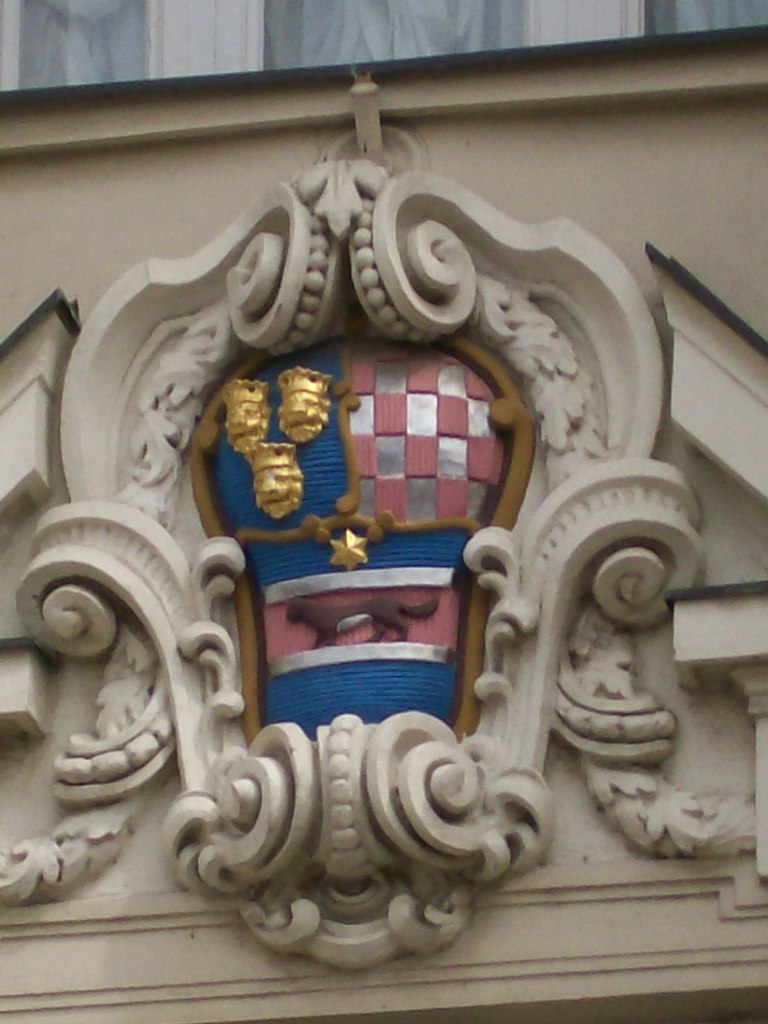
The members are granted parliamentary immunity; their criminal prosecution is possible only after parliamentary consent, except for crimes with five or more years of imprisonment mandated. The parliament may appoint investigative commissions for any matter of public interest.
The Croatian parliament's powers are defined by the Constitution of Croatia. These include: defining economic, legal and political relations in the Republic of Croatia; preservation of Croatia's natural and cultural heritage and its utilisation; and forming alliances with other states. The parliament has the right to deploy Croatian Armed Forces abroad. It may also restrict constitutional rights and liberties in wartime or in cases of imminent war or following natural disasters, although that constitutional provision is limited to specific rights—right to life, prohibition of torture, cruel or denigrating conduct or punishment, upholding of habeas corpus and freedoms of thought, conscience and religious views. In addition, in those circumstances parliamentary members' terms may be extended. (As these rights are defined by the constitution, the decision would require a two-thirds majority. Since Croatia never declared a state of war during the breakup of Yugoslavia, this option has not been exercised in practice.) The parliament reserves the right to amend the borders of Croatia. The parliament decides on constitutional amendments, enacts legislation, passes the state budget, declares war and decides on the cessation of hostilities, adopts declarations of policy of the parliament, adopts national defence strategy, representing a long-term defence resource planning document, and national defence strategy, which defines bases for establishment and implementation of institutions, measures and activities in response to general security issues and specific challenges and threats to Croatia, implements civil supervision of the armed forces and security services, calls referendums, performs elections and appointments conforming to the constitution and applicable legislation, supervises operations of the government (headed by the Prime Minister of Croatia) and other civil services responsible to the parliament, grants amnesty for criminal offences and performs various other duties defined by the constitution. Becoming the Prime Minister of Croatia requires majority support in the parliament.
The Government is responsible to the parliament; some other institutions, such as the Croatian National Bank and the State Audit Office, also report directly to the parliament. The parliament appoints an ombudsman to promote and protect human rights and liberties established by the constitution, parliamentary legislation and treaties adopted by Croatia. The ombudsman is appointed for an eight-year term; the ombudsman's work is independent. The ombudsman, as well as all other persons authorised to act on behalf of the parliament, is granted parliamentary immunity equal to that enjoyed by parliamentary members.
Working bodies
The table below lists all 29 of the main committees in the 11th Sabor.
| Committee | Chair(s) | Term | Refs | 1 | Committee on the Constitution, Rules of Procedure and Political System | 2 | Legislation Committee | 3 | European Affairs Committee | 4 | Foreign Affairs Committee | 5 | Domestic Policy and National Security Committee | 6 | Defence Committee | 7 | Finance and Central Budget Committee | 8 | Committee on the Economy | 9 | Tourism Committee | 10 | Committee on Human and National Minority Rights | 11 | Judiciary Committee | 12 | Labour, Retirement System and Social Partnership Committee | 13 | Health and Social Policy Committee | 14 | Committee on the Family, Youth and Sports | 15 | Committee on Croats outside the Republic of Croatia | 16 | War veterans Committee | 17 | Physical Planning and Construction Committee | 18 | Environment and Nature Conservation Committee | 19 | Education, Science and Culture Committee | 20 | Agriculture Committee | 21 | Committee on Regional Development and European Union Funds | 22 | Committee on Maritime Affairs, Transportation and Infrastructure | 23 | Elections, Appointments and Administration Committee | 24 | Petitions and Appeals Committee | 25 | Interparliamentary Co-operation Committee | 26 | Committee on Information, Computerisation and the Media | 27 | Gender Equality Committee | 28 | Local and Regional Self-government Committee | 29 | Mandate-Immunity Commission (MIP) | |
|---|---|---|---|---|---|---|---|---|---|---|---|---|---|---|---|---|---|---|---|---|---|---|---|---|---|---|---|---|---|---|---|---|---|---|---|---|---|---|---|---|---|---|---|---|---|---|---|---|---|---|---|---|---|---|---|---|---|---|---|---|---|---|
| Croatian Democratic Union}};" | Ivan Malenica (HDZ) | 2024– | ||||||||||||||||||||||||||||||||||||||||||||||||||||||||||||
| Croatian Democratic Union}};" | Krunoslav Katičić (HDZ) | 2024– | ||||||||||||||||||||||||||||||||||||||||||||||||||||||||||||
| We can! (Croatia)}};" | Jelena Miloš (M!) | 2024– | ||||||||||||||||||||||||||||||||||||||||||||||||||||||||||||
| Croatian Democratic Union}};" | Andro Krstulović Opara (HDZ) | 2024– | ||||||||||||||||||||||||||||||||||||||||||||||||||||||||||||
| Social Democratic Party of Croatia}};" | Ranko Ostojić (SDP) | 2024– | ||||||||||||||||||||||||||||||||||||||||||||||||||||||||||||
| Social Democratic Party of Croatia}};" | Arsen Bauk (SDP) | 2024– | ||||||||||||||||||||||||||||||||||||||||||||||||||||||||||||
| Social Democratic Party of Croatia}};" | Boris Lalovac (SDP) | 2024– | ||||||||||||||||||||||||||||||||||||||||||||||||||||||||||||
| Homeland Movement (Croatia)}};" | Igor Peternel (DP) | 2024– | ||||||||||||||||||||||||||||||||||||||||||||||||||||||||||||
| Social Democratic Party of Croatia}};" | Sanja Radolović (SDP) | 2024– | ||||||||||||||||||||||||||||||||||||||||||||||||||||||||||||
| Independent Democratic Serb Party}};" | Milorad Pupovac (SDSS) | 2024– | ||||||||||||||||||||||||||||||||||||||||||||||||||||||||||||
| The Bridge (Croatia)}};" | Nikola Grmoja (MOST) | 2024– | ||||||||||||||||||||||||||||||||||||||||||||||||||||||||||||
| Social Democratic Party of Croatia}};" | Mišo Krstičević (SDP) | 2024– | ||||||||||||||||||||||||||||||||||||||||||||||||||||||||||||
| We can! (Croatia)}};" | Ivana Kekin (M!) | 2024– | ||||||||||||||||||||||||||||||||||||||||||||||||||||||||||||
| Independent}};" | Vesna Vučemilović (Ind.) | 2024– | ||||||||||||||||||||||||||||||||||||||||||||||||||||||||||||
| Croatian Democratic Union}};" | Zdravka Bušić (HDZ) | 2024– | ||||||||||||||||||||||||||||||||||||||||||||||||||||||||||||
| Croatian Democratic Union}};" | Josip Đakić (HDZ) | 2024– | ||||||||||||||||||||||||||||||||||||||||||||||||||||||||||||
| Croatian People's Party - Liberal Democrats}};" | Predrag Štromar (HNS) | 2024– | ||||||||||||||||||||||||||||||||||||||||||||||||||||||||||||
| We can! (Croatia)}};" | Dušica Radojčić (M!) | 2024– | ||||||||||||||||||||||||||||||||||||||||||||||||||||||||||||
| Croatian Democratic Union}};" | Vesna Bedeković (HDZ) | 2024– | ||||||||||||||||||||||||||||||||||||||||||||||||||||||||||||
| Independent}};" | Marijana Petir (Ind.) | 2024– | ||||||||||||||||||||||||||||||||||||||||||||||||||||||||||||
| Homeland Movement (Croatia)}};" | Ivana Mujkić (DP) | 2024– | ||||||||||||||||||||||||||||||||||||||||||||||||||||||||||||
| Homeland Movement (Croatia)}};" | Stipo Mlinarić (DP) | 2024– | ||||||||||||||||||||||||||||||||||||||||||||||||||||||||||||
| Croatian Democratic Union}};" | Pero Ćosić (HDZ) | 2024– | ||||||||||||||||||||||||||||||||||||||||||||||||||||||||||||
| Social Democratic Party of Croatia}};" | Željko Jovanović (SDP) | 2024– | ||||||||||||||||||||||||||||||||||||||||||||||||||||||||||||
| Social Democratic Party of Croatia}};" | Kristina Ikić Baniček (SDP) | 2024– | ||||||||||||||||||||||||||||||||||||||||||||||||||||||||||||
| Croatian Democratic Union}};" | Josip Borić (HDZ) | 2024– | ||||||||||||||||||||||||||||||||||||||||||||||||||||||||||||
| Social Democratic Party of Croatia}};" | Marija Lugarić (SDP) | 2024– | ||||||||||||||||||||||||||||||||||||||||||||||||||||||||||||
| The Bridge (Croatia)}};" | Miro Bulj (MOST) | 2024– | ||||||||||||||||||||||||||||||||||||||||||||||||||||||||||||
| Independent}};" | Robert Jankovics (Ind.) | 2024– |
The members of Sabor can be members of one or more of its committees. The working body has a president, vice-president and members of the working body from the ranks of representatives, unless otherwise specified in the Rules of Procedure. The composition of the working body generally corresponds to the party composition of the Parliament.
The parliamentary committees debate and discuss initiatives and motions ahead of the enactment of laws, other regulations and other matters within the authority of the Sabor. Prior to the debate on any bill proposed by the government or deputies at the Sabor session, the chairperson of the competent working body and the Legislation Committee are obligated to place that bill on the agenda of the session of the working body and conduct a debate on it. Furthermore, the Committees hold hearings on the petitions and proposals submitted to Sabor by citizens.
Members of the Croatian Parliament engage in various inter-parliamentary activities. Deputies form permanent delegations to inter-parliamentary organizations, such as the Parliamentary Assembly of the Council of Europe and NATO Parliamentary Assembly.
Speaker of the Parliament
.jpg)
The members of the parliament elect the Speaker of the Parliament and one or more deputy speakers by a simple majority vote.
Since the first multi-party elections held after the start of Communist rule, there have been eight speakers of the parliament; the first five, executing the office until constitutional amendments in March 2001, were also speakers of the Chamber of Deputies (since the parliament was bicameral at the time). As of 16 May 2024, Gordan Jandroković (HDZ) is the 12th Speaker of the Sabor. There are five deputy speakers in the current parliament: Željko Reiner (HDZ), Ivan Penava (DP) and Furio Radin (Ind.), Sabina Glasovac (SDP) and Siniša Hajdaš Dončić (SDP).
The speaker of the parliament becomes the acting President of the Republic in the event of the death, resignation or incapacitationIncapacitation is determined by the Constitutional Court of Croatia upon a request by the government; the constitution itself does not specify exactly what is incapacitation. of the President of Croatia, as specified by the constitution. This situation occurred after the death of Franjo Tuđman in 1999, when Vlatko Pavletić became the acting president. After the 2000 parliamentary elections, the role was transferred to Zlatko Tomčić, who filled the office until Stjepan Mesić was elected President of Croatia in 2000.
| Name | From | To | Party |
|---|---|---|---|
| Žarko Domljan | 30 May 1990 | 7 September 1992 | |
| Stjepan Mesić | 7 September 1992 | 24 May 1994 | |
| Nedjeljko Mihanović | 24 May 1994 | 28 November 1995 | |
| Vlatko Pavletić | 28 November 1995 | 2 February 2000 | |
| Zlatko Tomčić | 2 February 2000 | 22 December 2003 | |
| Vladimir Šeks | 22 December 2003 | 11 January 2008 | |
| Luka Bebić | 11 January 2008 | 22 December 2011 | |
| Boris Šprem | 22 December 2011 | 30 September 2012 | |
| Josip Leko | 10 October 2012 | 28 December 2015 | |
| Željko Reiner | 28 December 2015 | 14 October 2016 | |
| Božo Petrov | 14 October 2016 | 4 May 2017 | |
| Gordan Jandroković | 5 May 2017 | Incumbent | |
| Source: Former Speakers of the Parliament |
.jpg)
Composition
Main article: Elections in Croatia#Parliamentary elections
The Constitution of Croatia mandates that the parliament consists of at least 100 members and no more than 160 members, elected by a direct secret ballot for four-year terms. Parliamentary elections are held within 60 days following the term's expiration or parliamentary dissolution (the latter takes place with a parliamentary no-confidence vote or if the parliament fails to approve a state budget within 120 days after the government submits one for approval), and a new parliament must convene within 20 days after the elections.
As specified by the current electoral legislation in Croatia, 140 members of the Parliament are elected in multi-seat constituencies, up to 3 members are chosen by proportional representation to represent Croatian citizens residing abroad and 8 members represent ethnic and national communities or minorities (including "undeclared", "unknown", or otherwise other than constitutionally recognized groups).
The model of parliamentary elections is based on the Christmas Constitution (1990), but has been significantly modified four times since then, most recently in 1999. The most recent substantial revision of the election law came in February 2015, and was partially upheld by the Constitutional Court in September 2015. An element of preferential voting was introduced by letting voters choose not only for a list of candidates, but also a single member of the same list. If the percentage of votes for a candidate exceeds 10%, they are elected as if it was an open list system. The list ranking is maintained for those candidates that do not meet this quota.
Previous parliamentary elections
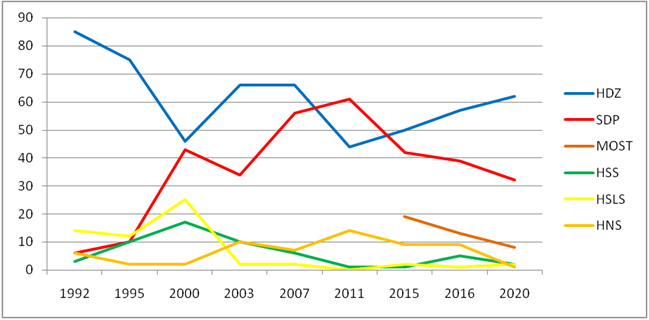
Since 1990, seven parliamentary elections have been held in Croatia. The elections held in 1990 were the first multi-party elections following 45 years of Communist rule. The Parliament had three chambers at the time; the candidates ran for all 80 seats in the Social-Political Council of Croatia, all 116 seats to the Municipalities Council of Croatia and all 160 seats to the Associated Labour Council of Croatia. The first round of the election saw a turnout of 85.5%; the turnout for the runoff election was 74.8%. In this election, the Croatian Democratic Union (HDZ) won 205 seats and the Social Democratic Party of Croatia won 107. Between then and 2007, five parliamentary elections were held for the Chamber of Deputies () of the parliament or the unicameral parliament since (in 1992, 1995, 2000, 2003 and 2007). Starting with the 1992 elections, the number of seats first in the Chamber of Deputies, and then in the unicameral parliament, were significantly variable: ranging from 127 in 1995 to 153 in 2007. In the Croatian parliamentary elections held since 1992, when the number of seats in the parliament was limited to below 160, only 5 parties have won 10 seats or more in any one parliamentary election. These were the HDZ, the Croatian Peasant Party (HSS), the Croatian People's Party – Liberal Democrats (HNS), the Croatian Social Liberal Party (HSLS) and the SDP.
Several political parties, besides the HDZ, HSS, HNS, HSLS and SDP, have won parliamentary seats in the elections since 1990. These have been (in alphabetical order): the Alliance of Primorje-Gorski Kotar (previously named Rijeka Democratic Alliance), the Croatian Christian Democratic Union, the Croatian Citizen Party, the Croatian Democratic Alliance of Slavonia and Baranja, the Croatian Democratic Peasant Party, the Croatian Independent Democrats, the Croatian Party of Pensioners, the Croatian Party of Rights, the Croatian Party of Rights dr. Ante Starčević, the Dalmatian Action party, the Democratic Centre party, the Istrian Democratic Assembly, the Liberal Party, the Party of Liberal Democrats, the Serb Democratic Party, the Slavonia-Baranja Croatian Party, and the Social Democratic Action of Croatia party. The following parties have won special seats reserved for representatives elected byThe representatives themselves are not required to be minorities, but are historically very likely to be. minorities (also in alphabetical order): the Bosnian Democratic Party of Croatia, the Democratic Union of Hungarians of Croatia, the German People's Union – National Association of Danube Swabians in Croatia, the Independent Democratic Serb Party, the Party of Democratic Action of Croatia, and the Serb People's Party.
In addition, some independents have won seats through party lists by being elected as an independent running on a party's list, and Ivan Grubišić's list of non-partisan candidates has won seats as well. Since individuals (not parties) possess parliamentary seats once won, there also can be (and have been) instances where seat-holders became independent or switched to another political party.
| Parliamentary elections overview since 1990 (Tricameral parliament (1990), Chamber of Representatives (Lower house 1990–2001), unicameral parliament (2001–present)) | Election | Turnout | Results | Cabinet(s) | Source: State Election Commission | |||
|---|---|---|---|---|---|---|---|---|
| 1990 | * | 1st assembly | ||||||
| 1992 | 75.6% | 2nd assembly | ||||||
| 1995 | 68.8% | 3rd assembly | ||||||
| 2000 | 70.5% | 4th assembly | ||||||
| 2003 | 61.7% | 5th assembly | ||||||
| 2007 | 59.5% | 6th assembly | ||||||
| 2011 | 54.3% | 7th assembly | ||||||
| 2015 | 60.8% | 8th assembly | ||||||
| 2016 | 52.6% | 9th assembly | ||||||
| 2020 | 46.4% | 10th assembly | ||||||
| 2024 | 61.89% | 11th assembly |
(*)In the first multi-party elections in 1990 three parliamentary chambers were elected in a two-round majoritarian system: the Social-Political Council, the Council of Municipalities and the Council of Associated Labour. Turnout for the election each chamber varied. It was as follows: Social-Political council (84.5% in first round in all constituencies, 74.82% in second round in 51 of 80 constituencies), Council of Municipalities (84.1% in first round, 74.6% in second round) and Council of Associated Labour (76.5% in first round in all constituencies, 66% in second round in 103 of 160 constituencies).
| Seats won in parliamentary elections (since 1990, Chamber of Deputies or unicameral parliament) | Party | 1990 | 1992 | 1995 | 2000 | 2003 | 2007 | 2011 | 2015 | 2016 | 2020 | 2024 | Source: State Election Commission | |||||||||||
|---|---|---|---|---|---|---|---|---|---|---|---|---|---|---|---|---|---|---|---|---|---|---|---|---|
| Alliance of Primorje-Gorski Kotar | 1 | |||||||||||||||||||||||
| Bloc for Croatia | ||||||||||||||||||||||||
| Bloc of Pensioners - Together | ||||||||||||||||||||||||
| Bosniak Democratic Party of Croatia | ||||||||||||||||||||||||
| Bridge of Independent Lists | ||||||||||||||||||||||||
| Civic Liberal Alliance | ||||||||||||||||||||||||
| Coalition of People's Accord | 3 | |||||||||||||||||||||||
| Croatian Christian Democratic Union | ||||||||||||||||||||||||
| Croatian Civic Party | ||||||||||||||||||||||||
| Croatian Democratic Alliance of Slavonia and Baranja | ||||||||||||||||||||||||
| Croatian Democratic Peasant Party | ||||||||||||||||||||||||
| Croatian Democratic Union | 55 | 85 | ||||||||||||||||||||||
| Croatian Growth | ||||||||||||||||||||||||
| Croatian Labourists – Labour Party | ||||||||||||||||||||||||
| Croatian Party of Pensioners | ||||||||||||||||||||||||
| Croatian Party of Rights | 5 | |||||||||||||||||||||||
| Croatian Party of Rights dr. Ante Starčević | ||||||||||||||||||||||||
| Croatian Peasant Party | 3 | |||||||||||||||||||||||
| Croatian People's Party – Liberal Democrats | 6 | |||||||||||||||||||||||
| Croatian Social Liberal Party | 14 | |||||||||||||||||||||||
| Croatian Sovereignists | ||||||||||||||||||||||||
| Dalmatian Action | 1 | |||||||||||||||||||||||
| Democratic Centre | ||||||||||||||||||||||||
| Democratic Union of Hungarians of Croatia | ||||||||||||||||||||||||
| Focus | ||||||||||||||||||||||||
| German People's Union | ||||||||||||||||||||||||
| Homeland Movement | ||||||||||||||||||||||||
| Human Blockade | ||||||||||||||||||||||||
| Independent Democratic Serb Party | ||||||||||||||||||||||||
| Independent Platform of the North | ||||||||||||||||||||||||
| Istrian Democratic Assembly | 4 | |||||||||||||||||||||||
| Law and Justice | ||||||||||||||||||||||||
| Liberal Party | ||||||||||||||||||||||||
| Milan Bandić 365 - The Party of Labour and Solidarity | ||||||||||||||||||||||||
| New Left | ||||||||||||||||||||||||
| Party of Democratic Action of Croatia | ||||||||||||||||||||||||
| People's Party - Reformists | ||||||||||||||||||||||||
| Party of Liberal Democrats | ||||||||||||||||||||||||
| Party with a First and Last Name / DO i SIP | ||||||||||||||||||||||||
| Serb Democratic Party | 1 | |||||||||||||||||||||||
| Serb People's Party | 3 | |||||||||||||||||||||||
| Slavonia-Baranja Croatian Party | ||||||||||||||||||||||||
| Pametno / Centre | ||||||||||||||||||||||||
| Social Democratic Action of Croatia | ||||||||||||||||||||||||
| Social Democratic Party of Croatia | 20 | 6 | ||||||||||||||||||||||
| We can! | ||||||||||||||||||||||||
| Workers' Front | ||||||||||||||||||||||||
| Independent | 1 | 4 |
Chamber of Counties
Under the Constitution of Croatia adopted in 1990, the parliament became bicameral. The Chamber of Deputies had been elected a few months earlier; its members enacted legislation creating a new territorial organisation of Croatia. This reorganisation included counties that were to be represented by the new Chamber of Counties (). The first election of members of the chamber was on 7 February 1993, with each of the counties acting as a three-seat constituency using proportional representation. In addition, as per Article 71 of the 1990 constitution, the President of Croatia was given the option of appointing up to 5 additional members of the Chamber of Counties; it could have as many as 68 members. The second and last election for the Chamber of Counties of the parliament was on 13 April 1997. The Chamber of Counties was abolished by a 2001 constitutional amendment.
| Speakers of the Chamber of Counties | Name | Start | End | Party |
|---|---|---|---|---|
| Josip Manolić | 22 March 1993 | 23 May 1994 | HDZ | |
| Katica Ivanišević | 23 May 1994 | 28 March 2001 | HDZ |
| Seats won in parliamentary elections by individual parties | ||||||
|---|---|---|---|---|---|---|
| Chamber of Counties elections 1993–1997 | Party | 1993 | 1997 | Source: State Election Commission | ||
| Croatian Democratic Union | 39 | 42 | ||||
| Croatian Party of Rights | – | 2 | ||||
| Croatian Peasant Party | 5 | 9 | ||||
| Croatian People's Party | 1 | – | ||||
| Croatian Social Liberal Party | 16 | 7 | ||||
| Istrian Democratic Assembly | 3 | 2 | ||||
| Social Democratic Party of Croatia | 1 | 4 | ||||
| Independent | 3 | 2 |
Publication of proceedings
The Croatian Parliament publishes all its decisions in Narodne Novine, the official gazette of the Republic of Croatia. Article 90 of the constitution requires publication of all acts and other regulations in the gazette before they are legally binding. Narodne Novine is available through a paid subscription as print, or for free online. Parliamentary debates and other proceedings are the subject of news coverage by media of Croatia, and Saborska televizija was set up in 2007 in addition as an IPTV channel broadcasting all plenary sessions of the parliament. Finally, the Parliament's Public Relations Department publishes a news bulletin available to all institutions and citizens of Croatia through a print paid subscription, and online for free.
Parliamentary location
Main article: Sabor Palace
_(2).jpg)
The Sabor has convened in Zagreb since the 13th century, but there was no special building for this until the 18th century. Previously, sessions of the Sabor had been held in private houses, in royal estates in Gradec and at the bishop's residence. During the Croatian-Ottoman Wars, which severely disrupted the functioning of the Croatian kingdom, the Sabor's sessions became so impractical that the 1685 session decided to have the ban appoint a six-member committee to do the work of the Sabor when sessions were not possible. This body became operational in 1689 and had its mandate extended through the entire 18th and into the 19th century. This Conferentia Regnorum Croatiae, Dalmatiae et Slavoniae consisted of the ban, two high clerics and three or four noblemen, and it would bring forward numerous acts; it met in various places, usually Zagreb or Varaždin, but also in Čiče, Ludbreg, Kerestinec, Vienna, Želin, Bratislava, Klenovnik, Slunj, Glina, Petrinja, Rasinja, Ptuj and Budim.
In 1731, the government purchased houses at the site of the present building and construction of a new building started the next year. The Sabor first met in the new building on 6 May 1737. The building was originally designed to accommodate archives, the court and the office of the ban; however, the government of Zagreb County moved in as well in 1765. The ban's office, the court and the archives moved out of the building in 1807, when a building across St. Mark's Square was bought to accommodate them. Subsequently, the newly purchased building was named Banski dvori after its new primary purpose of housing the ban and his office. The Zagreb County government purchased buildings adjacent to the parliament in 1839 and commissioned a new building at the site. It was completed in 1849; in the meantime, the Sabor had to convene elsewhere; it met in a theatre building located on a corner of the square. The theatre building later became the Zagreb City Hall.
In 1907, the government of the Kingdom of Croatia-Slavonia bought the parliament building and adjacent structures, starting construction of the present parliament building. At the same time, the Zagreb County government moved its headquarters elsewhere, leaving the Sabor as the sole user. The present parliament building was completed in 1911 using the design of Lav Kalda and Karlo Susan.
Due to the renovation works on the Sabor Palace following the events of the 2020 Zagreb earthquake, in 2024 the parliament has decided to temporarily relocate to the Črnomerec district, in the Petar Zrinski Barracks, the site of the . The exact date of the relocation and of the beginning of the reconstruction are not yet known.
Notes
References
References
- (15 September 2009). "Hrvatski sabor obilježava Međunarodni dan demokracije". Sabor.
- (2015-11-06). "Knife-Edge Result Likely in Croatian Elections".
- "Zasjedanje prvog Općeg sabora Kraljevine Dalmacije i Hrvatske 1350. godine".
- Croatian Encyclopaedia. (2013). "sabor".
- Croatian Encyclopaedia. (2013). "Slavonija".
- "Povijest saborovanja". [[Sabor]].
- Richard C. Frucht. (2005). "Eastern Europe: An Introduction to the People, Lands, and Culture". ABC-CLIO.
- Stjepan Matković. (April 2011). "Croatian-Slovenian relations in politics, 1848–1914: examples of mutual ties". Croatian Institute of History.
- Šime Peričić. (September 2003). "O broju Talijana/talijanaša u Dalmaciji XIX. stoljeća". [[Croatian Academy of Sciences and Arts]].
- (November 2003). "Parlamentarni izbori u Brodskom kotaru 1923. godine". Croatian Institute of History – Slavonia, Syrmium and Baranya history branch.
- (2004). "The former Yugoslavia's diverse peoples: a reference sourcebook". [[ABC-CLIO]].
- R.J.B. Bosworth. (2009). "The Oxford handbook of fascism". [[Oxford University Press]].
- "Važniji datumi iz povijesti saborovanja". [[Sabor]].
- (June 2009). "Jugoslavija: unitarna država ili federacija povijesne težnje srpskoga i hrvatskog naroda – jedan od uzroka raspada Jugoslavije". [[University of Split]], Faculty of Law.
- Andrew Hammond. (2004). "The Balkans and the West: constructing the European other, 1945–2003". Ashgate Publishing.
- Marina Štambuk-Škalić. (April 2003). "Prilog poznavanju institucija: Sabor Narodne Republike Hrvatske, saziv 1953–1963.". Croatian State Archive.
- Davor Pauković. (1 June 2008). "Posljednji kongres Saveza komunista Jugoslavije: uzroci, tijek i posljedice raspada". Centar za politološka istraživanja.
- Dejan Jović. (2009). "Yugoslavia: a state that withered away". Purdue University Press.
- Robert Podolnjak. (September 2008). "Hrvatsko izborno zakonodavstvo: moguće i nužne promjene". University of Split, Faculty of Law.
- (19 December 2009). "Statut". [[Croatian Peasant Party]].
- Šime Dunatov. (December 2010). "Začetci višestranačja u Hrvatskoj 1989. godine". Croatian Academy of Sciences and Arts.
- (7 October 2004). "Ceremonial session of the Croatian Parliament on the occasion of the Day of Independence of the Republic of Croatia". Sabor.
- "Prethodne vlade RH". Croatian Government.
- (9 July 2010). "Ustav Republike Hrvatske". Narodne Novine.
- Eduard Šoštarić. (11 December 2006). "Višak generala HV-u prepreka za NATO". [[Nacional (weekly)]].
- "Stragegija obrane (NN 33/02)". [[Ministry of Defence (Croatia)]].
- "Stragegija nactionalne sigurnosti Republike Hrvatske (NN 33/02)". [[Ministry of Defence (Croatia)]].
- Ivanka Toma. (22 December 2011). "Novi članovi Banskih dvora – Milanovićevih 21". [[Večernji list]].
- "Committees of Croatian Parliament". Croatian Parliament.
- "Odbor za Ustav, Poslovnik i politički sustav". Croatian Parliament.
- "Odbor za zakonodavstvo". Croatian Parliament.
- "Odbor za europske poslove". Croatian Parliament.
- "Odbor za vanjske poslove". Croatian Parliament.
- "Odbor za unutarnju politiku i nacionalnu sigurnost". Croatian Parliament.
- "Odbor za obranu". Croatian Parliament.
- "Odbor za financije i državni proračun". Croatian Parliament.
- "Odbor za gospodarstvo". Croatian Parliament.
- "Odbor za turizam". Croatian Parliament.
- "Odbor za ljudska prava i prava nacionalnih manjina". Croatian Parliament.
- "Odbor za pravosuđe". Croatian Parliament.
- "Odbor za rad, mirovinski sustav i socijalno partnerstvo". Croatian Parliament.
- "Odbor za zdravstvo i socijalnu politiku". Croatian Parliament.
- "Odbor za obitelj, mlade i sport". Croatian Parliament.
- "Odbor za Hrvate izvan Republike Hrvatske". Croatian Parliament.
- "Odbor za ratne veterane". Croatian Parliament.
- "Radna tijela". Croatian Parliament.
- "POSLOVNIK HRVATSKOGA SABORA (PROČIŠĆENI TEKST)". Croatian Parliament.
- "Permanent delegations". Croatian Parliament.
- "Prethodni predsjednici Sabora". Sabor.
- "Akademik Vlatko Pavletić, predsjednik Sabora od 1995. do 2000. godine". Sabor.
- "Zlatko Tomčić, predsjednik Sabora od 2000. do 2003. godine". Sabor.
- "About the Parliament". Sabor.
- (2008). "Izborni modeli za parlamentarne izbore". State Election Committee (Državno izborno povjerenstvo).
- (2015-02-26). "Croatian parliament backs changes to electoral law". europeanvoice.com.
- "Arhiva izbora". State Election Commission.
- (September 1999). "Strukturna dinamika hrvatskog parlamenta". [[University of Zagreb]], Faculty of Political Science.
- "Ustav Republike Hrvatske (NN 056/1990)". HIDRA.
- "Rezultati izbora za županijski dom Sabora Republike Hrvatske 1997. godine". State Election Commission.
- "History of Croatian Constitutional Judicature". [[Croatian Constitutional Court]].
- "Poštovani pretplatnici!". [[Narodne Novine]].
- "Službeni dio". [[Narodne Novine]].
- (25 January 2007). "Saborska televizija dostupna i na Internetu". [[Nova TV (Croatia)]].
- "Sjednice sabora". Sabor.
- "Public Relations Department". Sabor.
- "Izvješća Hrvatskoga sabora – tjedni pregled". Sabor.
- "Hrvatska kraljevinska konferencija iz 1729. donijela prvi proračun hrvatskoga kraljevstva". Croatian Parliament.
- "Povijest saborske palače". Sabor.
- ""Objavljeni svi detalji o preseljenju Sabora: u zgrade na Črnomercu uložit će se oko dva milijuna eura"". Telegram.hr.
This article was imported from Wikipedia and is available under the Creative Commons Attribution-ShareAlike 4.0 License. Content has been adapted to SurfDoc format. Original contributors can be found on the article history page.
Ask Mako anything about Croatian Parliament — get instant answers, deeper analysis, and related topics.
Research with MakoFree with your Surf account
Create a free account to save articles, ask Mako questions, and organize your research.
Sign up freeThis content may have been generated or modified by AI. CloudSurf Software LLC is not responsible for the accuracy, completeness, or reliability of AI-generated content. Always verify important information from primary sources.
Report