From Surf Wiki (app.surf) — the open knowledge base
Communist Party of India
Political party in India

Political party in India
| Field | Value | |||||||
|---|---|---|---|---|---|---|---|---|
| party_name | Communist Party of India | |||||||
| abbreviation | CPI | |||||||
| party_flag | CPI-banner.svg | |||||||
| party_logo | Hammer and sickle red on transparent.svg | |||||||
| logo_size | 150px | |||||||
| colorcode | ||||||||
| general_secretary | D. Raja | |||||||
| loksabha_leader | K. Subbarayan | |||||||
| rajyasabha_leader | P. Santhosh Kumar | |||||||
| foundation | ||||||||
| founder | M. N. Roy | |||||||
| publication | {{collapsible list | title=Newspapers | ||||||
| headquarters | Ajoy Bhavan | |||||||
| 15, Indrajit Gupta Marg, New Delhi, Delhi, India | ||||||||
| eci | State Party | |||||||
| alliance | {{collapsible list | title=Alliances | {{bulleted list | I.N.D.I.A. (National) | ||||
| loksabha_seats | ||||||||
| rajyasabha_seats | ||||||||
| ideology | ||||||||
| *Marxism–Leninism<ref name | "Mishra2021" | |||||||
| position | Left-wing* | |||||||
| * {{cite news | url | https://www.washingtonpost.com/politics/2019/05/31/indias-election-results-were-more-than-modi-wave/ | title=India's election results were more than a 'Modi wave' | newspaper=The Washington Post | access-date=31 May 2019 | archive-date=31 May 2019 | archive-url=https://web.archive.org/web/20190531123638/https://www.washingtonpost.com/politics/2019/05/31/indias-election-results-were-more-than-modi-wave/ | url-status=live }} |
| * {{cite book | editor | Klaus Voll, Doreen Beierlein | title=Rising India – Europe's Partner?: Foreign and Security Policy, Politics, Economics, Human Rights and Social Issues, Media, Civil Society and Intercultural Dimensions | location=University of Michigan | publisher=Mosaic Books | date=2006 | page=387 | isbn= 978-3-899-98098-1 }} |
| women | National Federation of Indian Women | |||||||
| labour | All India Trade Union Congress, Bharatiya Khet Mazdoor Union | |||||||
| peasants | All India Kisan Sabha | |||||||
| website | ||||||||
| membership | 650,000 (2022) | |||||||
| colours | Red | |||||||
| state2_seats_name | State legislatures | |||||||
| state2_seats | (Total) | |||||||
| style | text-align:center; | |||||||
| {{Composition bar | 17 | 140 | hex | }} (Kerala) | ||||
| {{Composition bar | 2 | 234 | hex | }} (Tamil Nadu) | ||||
| {{Composition bar | 1 | 119 | hex | }} (Telangana) | ||||
| state_seats_name | State Legislative Councils | |||||||
| state_seats | (Bihar) (Telangana) | |||||||
| no_states | ||||||||
| international | IMCWP | |||||||
| electoral_symbol | [[File:CPI symbol.svgclass=skin-invert | 130px]] |
- New Age
- Mukti Sangharsh
- Janayugom
- Navayugom
- Kalantar
- Visalaandhra
- Jana Sakthi
- Praja Paksham
- Nawan Zamana
- Nua Dunia
- Janashakti
- Kembavuta
- Yugantar
- Kholao Thakhai
- Tripurar Katha}} 15, Indrajit Gupta Marg, New Delhi, Delhi, India Secular Progressive Alliance (Tamil Nadu, Puducherry)|Secular Democratic Alliance (West Bengal)|Left Front (Tripura)|Left Front (West Bengal)|Left Democratic Front (Kerala)|Mahagathbandhan (Bihar)|Left Democratic Front (Maharashtra)|Maha Vikas Aghadi (Maharashtra)|MPSA (Manipur)|INC + (Telangana)}}}}
- Communism
- Marxism–Leninism
|State Legislatures (Kerala) (Tamil Nadu) (Telangana)
The Communist Party of India (CPI) is a political party in India. The CPI considers the 26 December 1925 Cawnpore (Kanpur) conference as its foundation date. Between 1946 and 1951, the CPI led militant struggles such as the peasant revolt in Telangana, organising guerrilla warfare against feudal lords. The CPI was the main opposition party in India during the 1950s to 1960s. In 1964, a split in the CPI led to the formation of the Communist Party of India (Marxist), which eventually emerged as the larger of the two parties. CPI supported the rule of Indira Gandhi, but later changed course and embraced left unity. CPI was part of the ruling United Front government from 1996 to 1998 and had two ministers under the Devegowda and Gujral ministries.
, the CPI has two members in the Lok Sabha and two members in the Rajya Sabha. In addition, it has 20 MLAs across three states and one each in the MLCs of Bihar and Telangana. It is designated a state party by the Election Commission of India in Tamil Nadu, Kerala, and Manipur. As of December 2023, the CPI is part of the Left Democratic Front coalition that forms the state government in Kerala. The CPI have four Cabinet Ministers and a Deputy Speaker in Kerala. In Tamil Nadu, it is in power as part of the Dravida Munnetra Kazhagam-led Secular Progressive Alliance coalition.
Name
The CPI is officially known in Hindi as the hi (भारतीय साम्यवादी पार्टी), or hi (भाकपा).
History
Formation
The Communist Party of India (CPI) was formed on 26 December 1925 at the first Party Conference in Kanpur, which was then known as Cawnpore. S. V. Ghate was the first General Secretary of the CPI. There were many communist groups formed by Indians with the help of foreigners in different parts of the world, a group formed in Tashkent, Uzbekistan made contacts with the Anushilan and Jugantar groups in Bengal, and small communist groups were formed in Bombay (led by Shripad Amrit Dange), Madras (led by Singaravelar), the United Provinces (led by Shaukat Usmani), Punjab, Sindh (led by Ghulam Hussain), Orissa (led by Bhagabati Charan Panigrahi) and Bengal (led by Muzaffar Ahmad).
The CPI's year of formation is disputed. The Communist Party of India (Marxist) (CPI(M)), which split from the CPI in 1964, considers 17 October 1920 to be the CPI's founding day. On that day, M. N. Roy, Evelyn Trent-Roy, Abani Mukherji, Rosa Fitingov, Mohd. Ali, Mohamad Shafiq, and M. P. T. Acharya met in Tashkent to form the communist movement in India. Neither the 1920 nor 1925 dates are considered significant by the Communist International, because the CPI did not adopt a party constitution on either occasion, which was one of the main prerequisites for membership in the international.
Involvement in independence struggle
During the 1920s and the early 1930s the party was poorly organised, and in practice there were several communist groups working with limited national co-ordination. The government banned all communist activity, which made the task of building a united party difficult. Between 1921 and 1924, there were three conspiracy trials against the communist movement: the Peshawar Conspiracy Cases, the Meerut Conspiracy Case, and the Kanpur Bolshevik Conspiracy Case. In the first three cases, Russian-trained muhajir communists were put on trial. However, the Kanpur trial had more political impact. On 17 March 1924, Dange, M. N. Roy, Ahmad, Nalini Gupta, Shaukat Usmani, Malayapuram Singaravelu, Ghulam Hussain, and R. C. Sharma were charged, in the Kanpur case. The specific pip charge was that they as communists were seeking "to deprive the King Emperor of his sovereignty of British India, by complete separation of India from Britain by a violent revolution." Pages of newspapers daily splashed sensational communist plans and people for the first time learned, on such a large scale, about communism and its doctrines and the aims of the Communist International in India.
Singaravelu Chettiar was released on account of illness. M. N. Roy was in Germany and R. C. Sharma in French Pondichéry, and therefore could not be arrested. Ghulam Hussain confessed that he had received money from the Russians in Kabul and was pardoned. Muzaffar Ahmad, Nalini Gupta, Shaukat Usmani and Dange were sentenced for various terms of imprisonment. This case was responsible for actively introducing communism to a larger Indian audience. Dange was released from prison in 1927. Rahul Dev Pal was a prominent communist leader.
On 26 December 1925, a communist conference was organised in Kanpur. Government authorities estimated that 500 persons took part in the conference. The conference was convened by a man called Satya Bhakta. At the conference Satyabhakta argued for a national communism and against subordination under the Comintern. Being outvoted by the other delegates, Satyabhakta left the conference venue in protest. The conference adopted the name 'Communist Party of India'. Groups such as Labour Kisan Party of Hindustan (LKPH) dissolved into the CPI. The émigré CPI, which probably had little organic character anyway, was effectively substituted by the organisation now operating inside India.
Soon after the 1926 conference of the Workers and Peasants Party (WPP) of Bengal, the underground CPI directed its members to join the provincial WPPs. All open communist activities were carried out through Workers and Peasants parties.
The sixth congress of the Communist International met in 1928. In 1927 the Kuomintang had turned on the Chinese communists, which led to a review of the policy on forming alliances with the national bourgeoisie in the colonial countries. The Colonial theses of the sixth Comintern congress called upon the Indian communists to combat the "national-reformist leaders" and to "unmask the national reformism of the Indian National Congress and oppose all phrases of the Swarajists, Gandhists, etc. about passive resistance". The congress did however differentiate between the character of the Chinese Kuomintang and the Indian Swaraj Party, considering the latter as neither a reliable ally nor a direct enemy. The congress called on the Indian communists to use the contradictions between the national bourgeoisie and the British imperialists. The congress also denounced the WPP. The Tenth Plenum of the executive committee of the Communist International, 3–19 July 1929, directed the Indian communists to break with WPP. When the communists deserted it, the WPP fell apart.
On 20 March 1929, arrests against the WPP, CPI and other labour leaders were made in several parts of India, in what became known as the Meerut Conspiracy Case. The communist leadership was now put behind bars. The trial proceedings were to last for four years.
As of 1934, the main centres of activity of CPI were Bombay, Calcutta and Punjab. The party had also begun extending its activities to Madras. A group of Andhra and Tamil students, amongst them Puchalapalli Sundarayya, were recruited to the CPI by Amir Hyder Khan. The party was reorganised in 1933, after the communist leaders from the Meerut trials were released. A central committee of the party was set up. In 1934, the party was accepted as the Indian section of the Communist International.
When Indian left-wing elements formed the Congress Socialist Party in 1934, the CPI branded it as social fascist.
The League Against Gandhism, initially known as the Gandhi Boycott Committee, was a political organisation in Calcutta, founded by the underground Communist Party of India and others to launch militant anti-Imperialist activities. The group took the name League Against Gandhism in 1934.
In connection with the change of policy of the Comintern toward popular front politics, the Indian communists changed their relation to the Indian National Congress. The communists joined the Congress Socialist Party, which worked as the left-wing of Congress. Through joining CSP, the CPI accepted the CSP demand for a Constituent Assembly, which it had denounced two years before. The CPI however analysed that the demand for a Constituent Assembly would not be a substitute for soviets.
In July 1937, a clandestine meeting was held at Calicut. Five persons were present at the meeting, P. Krishna Pillai, K. Damodaran, E. M. S. Namboodiripad, N. C. Sekhar and S.V. Ghate. The first four were members of the CSP in Kerala. The CPI in Kerala was formed on 31 December 1939 with the Pinarayi Conference. The latter, Ghate, was a CPI Central Committee member, who had arrived from Madras. Contacts between the CSP in Kerala and the CPI had begun in 1935, when P. Sundarayya (CC member of CPI, based in Madras at the time) met with E. M. S. Namboodiripad and Krishna Pillai. Sundarayya and Ghate visited Kerala at several times and met with the CSP leaders there. The contacts were facilitated through the national meetings of the Congress, CSP and All India Kisan Sabha.
In 1936–1937, the co-operation between socialists and communists reached its peak. At the 2nd congress of the CSP, held in Meerut in January 1936, a thesis was adopted which declared that there was a need to build 'a united Indian Socialist Party based on Marxism-Leninism'. At the 3rd CSP congress, held in Faizpur, several communists were included into the CSP National Executive Committee.
Two communists, E. M. S. Namboodiripad and Z. A. Ahmed, became All India joint secretaries of CSP. The CPI also had two other members inside the CSP executive.
On the occasion of the 1940 Ramgarh Congress Conference, CPI released a declaration called Proletarian Path, which sought to use the weakened state of the British Empire in the time of war and gave a call for general strike, no-tax, no-rent policies and mobilising for an armed revolutionary uprising. The National Executive of the CSP assembled at Ramgarh took a decision that all communists were expelled from CSP.
In July 1942, the CPI was legalised, as a result of Britain and the Soviet Union becoming allies against Nazi Germany. Communists strengthened their control over the All India Trade Union Congress. At the same time, communists were politically cornered for their opposition to the Quit India Movement.
CPI contested the Provincial Legislative Assembly elections of 1946 on its own. It had candidates in 108 out of 1585 seats, winning in eight seats. In total, the CPI vote counted 666,723, which should be seen with the backdrop that 86% of the adult population of India lacked voting rights. The party had contested three seats in Bengal, and won all of them. One CPI candidate, Somnath Lahiri, was elected to the Constituent Assembly.
The Communist Party of India opposed the partition of India and did not participate in the Independence Day celebrations of 15 August 1947 in protest at the division of the country.
After independence


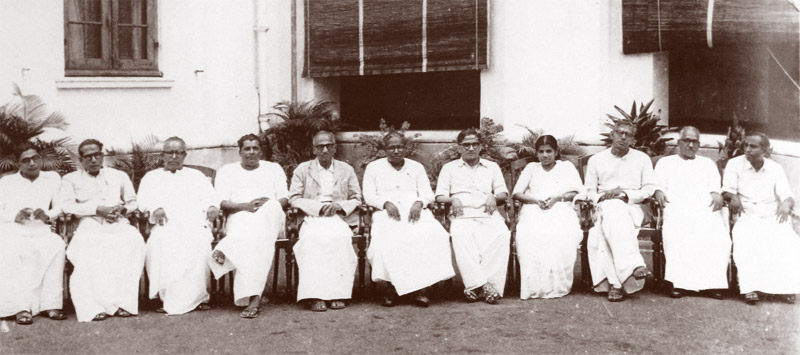
During the period around and directly following Independence in 1947, the internal situation in the party was chaotic. The party shifted rapidly between left-wing and right-wing positions. In February 1948, at the 2nd Party Congress in Calcutta, B. T. Ranadive (BTR) was elected General Secretary of the party. The conference adopted the "Programme of Democratic Revolution", which included the first mention of struggle against caste injustice in a CPI document.
In several areas the party led armed struggles against a series of local monarchs that were reluctant to give up their power. Such insurgencies took place in Tripura, Telangana and Kerala. The most important rebellion took place in Telangana, against the Nizam of Hyderabad. The communists built up a people's army and militia and controlled an area with a population of three million. The rebellion was brutally crushed and the party abandoned the policy of armed struggle. BTR was deposed and denounced as a left adventurist.
In Manipur, the party became a force to reckon with through the agrarian struggles led by Jananeta Irawat Singh. Singh had joined CPI in 1946. At the 1951 party congress, the main slogan was changed from People's Democracy to National Democracy.
A Communist Party was founded in Bihar in 1939. Post independence, the Communist Party achieved success in Bihar (Bihar and Jharkhand). The Communist Party conducted movements for land reform, and the trade union movement was at its peak in Bihar in the 1960s–1980s. The achievements of communists in Bihar placed the communists in the forefront of the left movement in India. Bihar produced some of the most well-known leaders like Kishan leaders Sahajanand Saraswati and Karyanand Sharma, intellectuals like Jagannath Sarkar, Yogendra Sharma, and Indradeep Sinha, mass leaders like Chandrasekhar Singh and Sunil Mukherjee, trade union leaders like Kedar Das and others. In the Mithila region of Bihar, Bhogendra Jha led the fight against the Mahants and Zamindars. He later went on the win Parliamentary elections and was MP for seven terms.
In the early 1950s, young communist leadership was uniting textile workers, bank employees and unorganised sector workers to ensure mass support in north India. National leaders like Shripad Amrit Dange, Chandra Rajeswara Rao, and P. K. Vasudevan Nair were encouraging them and supporting the idea despite their differences on the execution. Firebrand Communist leaders like Homi F. Daji, Guru Radha Kishan, H. L. Parwana, Sarjoo Pandey, Darshan Singh Canadian and Avtaar Singh Malhotra were emerging between the masses and the working class in particular. This was the first leadership of communists that was very close to the masses and people consider them champions of the cause of the workers and the poor.
In 1952, CPI became the first leading opposition party in the first Lok Sabha, while the Indian National Congress was in power.
In the 1952 Travancore-Cochin Legislative Assembly election, the Communist Party was banned, so it couldn't take part in the election process. In the general elections in 1957, the CPI emerged as the largest opposition party. In 1957, the CPI won the state elections in Kerala. This was the first time that an opposition party won control over an Indian state. E. M. S. Namboodiripad became Chief Minister. At the 1957 international meeting of Communist parties in Moscow, the Chinese Communist Party directed criticism at the CPI for having formed a ministry in Kerala.
The CPI was involved in the Liberation of Dadra and Nagar Haveli. Along with its units in Bombay, Maharashtra, and Gujarat, the party decided to begin armed operations in the area in July 1954. Both Dadra and Nagar Haveli were liberated by the beginning of August. Communist leaders like Narayan Palekar, Parulekar, Vaz, Rodriguez, Cunha, and others emerged as the Communist leaders of the movement. Thereafter, the struggle to liberate Daman and Diu was begun by the Communist Party in Gujarat and other forces.
The countrywide Goa Satyagraha movement of 1955–1956 is a significant event in the history of the Indian freedom struggle, in which the communists played a major role. The CPI sent groups of satyahrahis from mid-1955 onward to the borders of and into Goa. Many were killed, and many more were arrested and sent to jails inside Goa and inhumanely treated. Many others were even sent to jails in Portugal and brutally tortured. The satyagraha movement was led and conducted by a joint committee known as Goa Vimochan Sahayak Samiti. Dange, Senapati Bapat, S. G. Sardesai, Nana Patil and several others were among the leaders of the committee. Satyagraha began on 10 May 1955, and soon became a countrywide movement.
Ideological differences led to the split in the party in 1964 when two different party conferences were held, one of CPI and one of the Communist Party of India (Marxist). The impacts of the Sino-Soviet split contributed to this party split.
During the period between 1970 and 1977, the CPI was allied with the Congress party. In Kerala, they formed a government together with Congress as part of a coalition known as the United Front, with the CPI-leader C. Achutha Menon as Chief Minister. This government continued governing throughout the emergency period and was responsible for the many acts of repression throughout the period carried out against political opponents in the guise of fighting naxals, manifesting most infamously in the Rajan case. The United Front government also used this opportunity to pursue class struggle by punishing those from the managerial classes, money lenders, bosses with anti-labour stances, ration shopkeepers and truckers engaged in black marketing, under stringent provisions of MISA and DIR.
In the 1980s, the CPI opposed the Khalistan movement at Punjab.
In 1986, the CPI's leader in Punjab and MLA in the Punjabi legislature Darshan Singh Canadian was assassinated by Sikh extremists. Altogether about 200 communist leaders out of which most were Sikhs were killed by Sikh extremists in Punjab.
Present situation

]]
.JPG)
The CPI was recognised by the Election Commission of India as a national party. Until 2022, CPI happened to be the only national political party from India to have contested all the general elections using the same electoral symbol. Owing to a massive defeat in 2019 Indian general election where the party saw its tally reduced to two MPs, the Election Commission of India sent a letter to CPI asking for reasons why its national party status should not be revoked. Due to repeated poor performances in elections, the Election Commission of India withdrew its national party status on 10 April 2023.
On the national level, they supported the Indian National Congress-led United Progressive Alliance government along with other parliamentary Left parties, but without taking part in it. Upon attaining power in May 2004, the United Progressive Alliance formulated a programme of action known as the Common Minimum Programme. The Left bases its support to the UPA on strict adherence to it. Provisions of the CMP mentioned to discontinue disinvestment, massive social sector outlays and an independent foreign policy.
On 8 July 2008, the General Secretary of the CPI(M), Prakash Karat, announced that the Left was withdrawing its support over the decision by the government to go ahead with the United States-India Peaceful Atomic Energy Cooperation Act. The Left parties combination had been a staunch advocate of not proceeding with this deal citing national interests.
In West Bengal, the CPI participates in the Left Front. It also participated in the state government in Manipur. In Kerala, the party is part of Left Democratic Front. In Tripura the party is a partner of the Left Front, which governed the state until 2018. In Tamil Nadu it is part of the Secular Progressive Alliance and in Bihar it is the part of Mahagathbandhan. It is involved in the Left Democratic Front in Maharashtra. In February 2022, CPI and Congress formed an alliance in Manipur named Manipur Progressive Secular Alliance. The current general secretary of CPI is D. Raja.
Presence in states
As of 2020, the CPI is a part of the state government in Kerala. Pinarayi Vijayan is Chief Minister of Kerala. CPI have four Cabinet Ministers in Kerala. In Tamil Nadu, it is part of the Secular Progressive Alliance coalition led by M. K. Stalin. The Left Front governed West Bengal for 34 years (1977–2011) and Tripura for 25 years (1993–2018)
State governments
| S.No | State/ | Govt Since | Chief Minister | Alliance | Coalition Seats in Assembly | Last election | Portrait | Name | Party | Seats | Since | 1 | |||
|---|---|---|---|---|---|---|---|---|---|---|---|---|---|---|---|
| Kerala | 26 May 2016 | [[File:Pinarayi.JPG | frameless | 150x150px]] | Pinarayi Vijayan | Communist Party of India (Marxist)}}" | CPI(M) | 62 | 26 May 2016 | Left Democratic Front | [](kerala-legislative-assembly) | 6 April 2021 |
| State legislative assembly | Last election | Contested | ||||
|---|---|---|---|---|---|---|
| seats | Seats won | Alliance | Result | Bihar Legislative Council | ||
| 2020 | 1 | Mahagathbandhan |
List of members of parliament
List of Rajya Sabha (Upper House) members
Main article: List of Rajya Sabha members
| No. | Name | State | Date of appointment | Date of retirement | 1 | 2 |
|---|---|---|---|---|---|---|
| P. P. Suneer | Kerala | |||||
| P. Sandosh Kumar | Kerala |
List of Lok Sabha (Lower House) members
Main article: List of members of the 18th Lok Sabha
| No. | Name | Constituency | State | 1 | 2 |
|---|---|---|---|---|---|
| K. Subbarayan | Tiruppur | Tamil Nadu | |||
| Selvaraj V | Nagapattinam | Tamil Nadu |
Leadership
The 24th Party Congress of the Communist Party of India was held from 2025 September 21 to 25 in Chandigarh
General Secretary
- D. Raja
National Secretariat
| Communist Party of India}}; color:white" | Name | Communist Party of India}}; color:white" | Photo |
|---|---|---|---|
| D. Raja | [[File:D. RAJA DSC 0637.resized.JPG | 50px]] | |
| Amarjeet Kaur | [[File:Amarjeet Kaur at Workers' Mahapadav in 2017.png | 50px]] | |
| Bhalchandra Kango | |||
| Rama Krushna Panda | |||
| Annie Raja | [[File:Annie Raja DSC 0654.JPG | 50px]] | |
| Girish Chandra Sharma | |||
| K. Prakash Babu | |||
| P. Santhosh Kumar | [[File:P. Sandosh Kumar.jpg | 50px]] | |
| Palla Venkata Reddy | [[File:Palla Venkata Reddy.jpg | 50px]] | |
| Sanjay Kumar |
K. Ramakrishna will be an invitee to the national secretariat. Pallab Sengupta, President of the World Peace Council and in charge of the CPI International Department for several years, will be a permanent invitee to all higher bodies of the party.
State Secretaries
| Communist Party of India}}; color:white" | State | Communist Party of India}}; color:white" | State Secretary |
|---|---|---|---|
| Andaman and Nicobar Islands | TBD | ||
| Andhra Pradesh | Gujjula Eshwarayya | ||
| Assam | Kanak Gogoi | ||
| Bihar | Ram Naresh Pandey | ||
| Delhi | Dinesh Varshney | ||
| Chhattisgarh | K. Saji | ||
| Goa | Christopher Fonseca | ||
| Gujarat | Ramsagar Singh Parihar | ||
| Haryana | Dariyav Singh Kashyap | ||
| Himachal Pradesh | Bhag Singh Chaudhary | ||
| Jammu and Kashmir | G. M. Mizrab | ||
| Jharkhand | Mahendra Pathak | ||
| Karnataka | Saathi Sundaresh | ||
| Kerala | Binoy Viswam | ||
| Madhya Pradesh | Shailendra Shaili | ||
| Maharashtra | Subhash Lande | ||
| Manipur | Naba Chandra | ||
| Meghalaya | Samudra Gupta | ||
| Nagaland | M. M. Thromwa Konyak | ||
| Odisha | Prasanta Mishra | ||
| Punjab | Bant Singh Brar | ||
| Puducherry | A. M. Saleem | ||
| Rajasthan | Narendra Acharya | ||
| Tamil Nadu | M. Veerapandian | ||
| Telangana | Kunamneni Sambasiva Rao | ||
| Tripura | Milan Baidya | ||
| Uttarakhand | Jagdish Kuliyal | ||
| Uttar Pradesh | Arvind Raj Swarup | ||
| West Bengal | Swapan Banerjee |
List of general secretaries and chairperson
Article XXXII of the party constitution says:
"The tenure of the General Secretary and Deputy General Secretary, if any, and State Secretaries is limited to two consecutive terms—a term being of not less than two years. In exceptional cases, the unit concerned may decide by three-fourth majority through secret ballot to allow two more terms. In case such a motion is adopted that comrade also can contest in the election along with other candidates. As regards the tenure of the office-bearers at district and lower levels, the state councils will frame rules where necessary."
| Number | Photo | Name | Tenure | 1st | 2nd | 3rd | 4th | 5th | 6th | Chairperson | 7th | (-) | 8th | 9th | 10th | 11th | |
|---|---|---|---|---|---|---|---|---|---|---|---|---|---|---|---|---|---|
| Sachchidanand Vishnu Ghate | 1925–1933 | ||||||||||||||||
| [[File:Gangadhar Adhikary.jpg | 75px]] | Gangadhar Adhikari | 1933–1935 | ||||||||||||||
| [[File:PC Joshi 1937.jpg | 75px]] | Puran Chand Joshi | 1936–1948 | ||||||||||||||
| [[File:B.T.Ranadive.jpg | 75px]] | B. T. Ranadive | 1948–1950 | ||||||||||||||
| Chandra Rajeswara Rao | 1950–1951 | ||||||||||||||||
| Ajoy Ghosh | 1951–1962 | ||||||||||||||||
| [[File:S.A. Dange.jpg | 75px]] | Shripad Amrit Dange | 1962–1981 | ||||||||||||||
| [[File:E. M. S. Namboodiripad.jpg | 75px]] | E. M. S. Namboodiripad | 1962–1964 | ||||||||||||||
| Chandra Rajeswara Rao | 1964–1990 | ||||||||||||||||
| Indrajit Gupta | 1990–1996 | ||||||||||||||||
| [[File:Bardan.JPG | 75px]] | Ardhendu Bhushan Bardhan | 1996–2012 | ||||||||||||||
| [[File:SUDAKAR REDDY DSC 0686.JPG | 75px]] | Suravaram Sudhakar Reddy | 2012–2019 | ||||||||||||||
| [[File:D.Raja M.P.JPG | 75px]] | D. Raja | Since 2019(incumbent) |
Party congress
| Party congress | Year | Place | Founding conference | 1st | 2nd | 3rd | 4th | 5th | 6th | 7th | 8th | 9th | 10th | 11th | 12th | 13th | 14th | 15th | 16th | 17th | 18th | 19th | 20th | 21st | 22nd | 23rd | 24th | 25th |
|---|---|---|---|---|---|---|---|---|---|---|---|---|---|---|---|---|---|---|---|---|---|---|---|---|---|---|---|---|
| 1925 December 25–28 | Cawnpore (Kanpur) | |||||||||||||||||||||||||||
| 23 May – 1 June 1943 | Bombay | |||||||||||||||||||||||||||
| 28 February – 6 March 1948 | Calcutta (Kolkata) | |||||||||||||||||||||||||||
| 27 December 1953 – 4 January 1954 | Madurai | |||||||||||||||||||||||||||
| 19–29 April 1956 | Palghat | |||||||||||||||||||||||||||
| 6–13 April 1958 | Amritsar | |||||||||||||||||||||||||||
| 7–16 April 1961 | Vijayawada | |||||||||||||||||||||||||||
| 13–23 December 1964 | Bombay | |||||||||||||||||||||||||||
| 7–15 February 1968 | Patna | |||||||||||||||||||||||||||
| 3–10 October 1971 | Cochin (Kochi) | |||||||||||||||||||||||||||
| 27 January – 2 February 1975 | Vijayawada | |||||||||||||||||||||||||||
| 31 March – 7 April 1978 | Bathinda | |||||||||||||||||||||||||||
| 22–28 March 1982 | Varanasi | |||||||||||||||||||||||||||
| 2–17 March 1986 | Patna | |||||||||||||||||||||||||||
| 6–12 March 1989 | Calcutta | |||||||||||||||||||||||||||
| 10–16 April 1992 | Hyderabad | |||||||||||||||||||||||||||
| 7–11 October 1995 | Delhi | |||||||||||||||||||||||||||
| 14–19 September 1998 | Chennai | |||||||||||||||||||||||||||
| 26–31 March 2002 | Thiruvananthapuram | |||||||||||||||||||||||||||
| 29 March – 3 April 2005 | Chandigarh | |||||||||||||||||||||||||||
| 23–27 March 2008 | Hyderabad | |||||||||||||||||||||||||||
| 27–31 March 2012 | Patna | |||||||||||||||||||||||||||
| 25–29 March 2015 | Puducherry | |||||||||||||||||||||||||||
| 25–29 April 2018 | Kollam | |||||||||||||||||||||||||||
| 14–18 October 2022 | Vijayawada | |||||||||||||||||||||||||||
| 21–25 September 2025 | Chandigarh |
Principal mass organisations
- All India Trade Union Congress (AITUC)
- All India Students Federation (AISF)
- All India Youth Federation (AIYF)
- National Federation of Indian Women (NFIW)
- All India Kisan Sabha (AIKS)peasants' organisation
- Bharatiya Khet Mazdoor Union (BKMU)agricultural workers organisation
- Indian People's Theatre Association (IPTA)cultural wing
- All India State Government Employees Confederation (state government employees)
- Indian Society for Cultural Co-operation and Friendship (ISCUF)
- All India Peace and Solidarity Organisation (AIPSO)
- Progressive Writers' Association (PWA)
- All India Adivasi Mahasabha (tribal wing)
- All India Dalit Rights Movement (AIDRM)
- Tamil Nadu Oppressed People's Movement
- People's Service Corps
- Ganamukti Parishad In Tripura, the Ganamukti Parishad is a mass organisation amongst the state's Tripuri people.
List of chief ministers
| Photo | Name | Tenure | State | |
|---|---|---|---|---|
| [[File:E. M. S. Namboodiripad.jpg | 75px]] | E. M. S. Namboodiripad | 19571959 | Kerala |
| [[File:C. Achutha Menon.jpg | 75px]] | C. Achutha Menon | 19691970; 19701977 | |
| [[File:P.K. Vasudevan Nair.jpg | 75px]] | P. K. Vasudevan Nair | 19781979 |
Notable leaders
-
Abdul Sattar Ranjoor – Founding state secretary of the CPI in Jammu and Kashmir
-
Ajoy Ghosh – Former general secretary of CPI, freedom fighter
-
Amarjeet Kaur – General Secretary of the AITUC and CPI National Secretary
-
Annabhau Sathe – Samyukta Maharashtra movement leader
-
Annie Raja – General Secretary of NFIW and National Executive Member of CPI
-
Ardhendu Bhushan Bardhan – Former general secretary
-
Aruna Asaf Ali – Freedom fighter
-
Binoy Viswam – Former Member of Rajya Sabha, former minister in the Government of Kerala and current State Secretary of CPI Kerala State Committee
-
Bhan Singh Bhaura – Parliamentarian from Punjab and Founding President of Khet Mazdoor Sabha
-
Bhargavi Thankappan – Parliamentarian
-
Bhupesh Gupta – Parliamentarian
-
C. Achutha Menon – Finance minister in first Kerala ministry and former chief minister of Kerala
-
Chandra Rajeswara Rao – former general secretary, Telangana freedom fighter
-
Chaturanan Mishraparliamentarian and former Central Minister of India
-
C. K. Chandrappan – Parliamentarian and former CPI Kerala State Secretary
-
Dhanwantri – Founding member of the CPI in Jammu and Kashmir
-
Darshan Singh Canadian – Trade unionist, fight against Khalistan movement
-
D. Pandian – Parliamentarian and former Tamil Nadu state secretary
-
D. Raja – Parliamentarian and General secretary of the party
-
E. Chandrasekharan Nair – Senior leader and former Minister in the Government of Kerala
-
Geeta Mukherjee – Parliamentarian and Former Vice President of National Federation of Indian Women
-
Govind Pansare – Prominent activist and lawyer
-
Gurudas Dasgupta – Parliamentarian and former General Secretary of the AITUC and BKMU
-
Hajrah Begum – Former general secretary of NFIW
-
Hasrat Mohani – Founding member
-
Hijam Irabot – Founding leader of CPI in Manipur
-
Hirendranath MukherjeeParliamentarian, was awarded the Padma Bhushan in 1990 and Padma Vibhushan in 1991 by the President of India for his lifelong services
-
Ila Mitra – Peasant movement leader from West Bengal
-
Indrajit Gupta – Parliamentarian, former general secretary and a former central minister
-
Jagannath Sarkar – former national secretary, freedom fighter, builder of communist movement in Bihar and Jharkhand
-
Junu Das – Prominent leader of CPI
-
Kalpana Datta – freedom fighter
-
Kalyan Roy – Parliamentarian
-
Kanam Rajendran – Former Kerala state secretary of the party
-
K.N. Joglekar – founding member of CPI
-
Kunwar Mohammad Ashraf – Marxist historian
-
Meghraj Tawar – Former Rajasthan MLA and leader of the CPI
-
M. Kalyanasundaram – Parliamentarian
-
M. N. Govindan Nair – Kerala state secretary during the first communist ministry and a freedom fighter
-
Mohit Banerji – Prominent Leader
-
Nallakannu – former Tamil Nadu state secretary of the party
-
N. E. Balaram – Founding leader of the communist movement in Kerala, India
-
Parvathi Krishnan – Parliamentarian
-
P. Krishna Pillai – Founder and First secretary of CPI in Kerala
-
P. K. Vasudevan Nair – Former Chief minister of Kerala, Former AISF general secretary, Former AIYF general secretary
-
Puran Chand Joshi – first general secretary of the Communist Party of India
-
Ramendra Kumar – Former Parliamentarian, national executive member, national president AITUC
-
Rosamma Punnoose – Freedom Fighter
-
R. Sugathan – Prominent trade unionist, mass leader and member of Kerala Legislative Assembly
-
Sachchidanand Vishnu Ghate – First general secretary of CPI, freedom fighter
-
Satyapal DangFormer legislator of Punjab Legislative Assembly, representing the CPI for four terms, and a minister of Food and Civil Supplies in the United Front ministry led by Justice Gurnam Singh, and a Padma Bhushan awardee.
-
S. S. Mirajkar – Trade unionist, freedom fighter
-
Suhasini Chattopadhyay – founding CPI member
-
Suravaram Sudhakar Reddy – former general secretary of the party and parliamentarian
-
Shripad Amrit Dange – Freedom fighter and former chairman of the party
-
Thoppil Bhasi – Writer, film director and parliamentarian
-
T. V. Thomas – Minister in the first Kerala ministry
-
Veliyam Bharghavan – Parliamentarian and former CPI Kerala state secretary
-
Vidya Munshi – Journalist
-
Vimla Dang – leader of CPI
-
V. V. Raghavan – CPI Central Secretariat Member, two-time Lok Sabha member from Thrissur, Rajya Sabha member, former Agriculture Minister of Kerala
General election results
Main article: Electoral history of the Communist Party of India
- : 12 seats in Assam and 1 in Meghalaya did not vote.
| State | Candidates 2019 | Elected 2019 | Candidates 2014 | Elected 2014 | Candidates 2009 | Elected 2009 | Total seats | Union Territories: | |||||||
|---|---|---|---|---|---|---|---|---|---|---|---|---|---|---|---|
| Andhra Pradesh | 2 | ||||||||||||||
| Arunachal Pradesh | 0 | ||||||||||||||
| Assam | 2 | ||||||||||||||
| Bihar | 2 | ||||||||||||||
| Chhattisgarh | 1 | ||||||||||||||
| Goa | 0 | ||||||||||||||
| Gujarat | 1 | ||||||||||||||
| Haryana | 1 | ||||||||||||||
| Himachal Pradesh | 0 | ||||||||||||||
| Jammu and Kashmir | 0 | ||||||||||||||
| Jharkhand | 3 | ||||||||||||||
| Karnataka | 1 | ||||||||||||||
| Kerala | 4 | ||||||||||||||
| Madhya Pradesh | 4 | ||||||||||||||
| Maharashtra | 2 | ||||||||||||||
| Manipur | 1 | ||||||||||||||
| Meghalaya | 0 | ||||||||||||||
| Mizoram | 0 | ||||||||||||||
| Nagaland | 0 | ||||||||||||||
| Odisha | 1 | ||||||||||||||
| Punjab | 2 | ||||||||||||||
| Rajasthan | 3 | ||||||||||||||
| Sikkim | 0 | ||||||||||||||
| Tamil Nadu | 2 | ||||||||||||||
| Tripura | 0 | ||||||||||||||
| Telangana | 2 | ||||||||||||||
| Uttar Pradesh | 12 | ||||||||||||||
| Uttarakhand | 0 | ||||||||||||||
| West Bengal | 3 | ||||||||||||||
| Andaman and Nicobar Islands | 0 | ||||||||||||||
| Chandigarh | 0 | ||||||||||||||
| Dadra and Nagar Haveli | 0 | ||||||||||||||
| Daman and Diu | 0 | ||||||||||||||
| Delhi | 0 | ||||||||||||||
| Lakshadweep | 1 | ||||||||||||||
| Puducherry | 0 | ||||||||||||||
| Total | 50 |
Footnotes
References
- (2013). "NCP, TMC and CPI lose national party status, AAP earns coveted tag Dated 10.04.2023". India Today.
- Anil Kumar Mishra/ Sudhir Kumar Mishra. (19 January 2021). "Dictionary of Social Sciences". Prabhat Prakashan.
- "സിപിഐ തളർച്ചയിൽ; താങ്ങ് കേരളം, തമിഴ്നാട്; ബംഗാളിലും ത്രിപുരയിലും പടുകുഴിയിൽ".
- (17 July 2022). "Cpi continue to congress alliance".
- "Brief History of CPI – CPI".
- "Foundation of the Communist Party of India (CPI) in 1925: product of (...) – Mainstream".
- Noorani, A. G.. (17 May 2012). "Origins of Indian communism".
- (1 September 2020). "One Hundred Years of the Communist Movement in India".
- (25 December 2023). "Communist Party Of India Formation Day: Decoding The Decline Of Principal Opposition Party Of 1957".
- (10 April 2023). "NCP, TMC and CPI lose national party status, AAP earns coveted tag".
- "Formation of CPI in Tashkent".
- (2019). "100 Years of the Communist Party". Communist Party of India (Marxist).
- Ralhan, O. P. (ed.) ''Encyclopedia of Political Parties'' New Delhi: Anmol Publications p. 336, Rao. pp. 89–91.
- "Historical Moments in Kanpur".
- M. V. S. Koteswara Rao. ''Communist Parties and United Front – Experience in Kerala and West Bengal''. [[Hyderabad, India. Hyderabad]]: Prajasakti Book House, 2003. p. 92-93
- M. V. S. Koteshwar Rao. ''Communist Parties and United Front – Experience in Kerala and West Bengal''. [[Hyderabad, India. Hyderabad]]: Prajasakti Book House, 2003. p. 111
- Saha, Murari Mohan (ed.), ''Documents of the Revolutionary Socialist Party: Volume One 1938–1947''. Agartala: Lokayata Chetana Bikash Society, 2001. p. 21-25
- M. V. S. Koteswara Rao. ''Communist Parties and United Front – Experience in Kerala and West Bengal''. [[Hyderabad, India. Hyderabad]]: Prajasakti Book House, 2003. p. 47-48
- M. V. S. Koteswara Rao. ''Communist Parties and United Front – Experience in Kerala and West Bengal''. [[Hyderabad, India. Hyderabad]]: Prajasakti Book House, 2003. p. 97-98, 111–112
- Ralhan, O.P. (ed.). ''Encyclopaedia of Political Parties – India – Pakistan – Bangladesh – National -Regional – Local. Vol. 23. Revolutionary Movements (1930–1946)''. New Delhi: Anmol Publications, 2002. p. 689-691
- M. V. S. Koteswara Rao. ''Communist Parties and United Front – Experience in Kerala and West Bengal''. [[Hyderabad, India. Hyderabad]]: Prajasakti Book House, 2003. p. 96
- E. M. S. Namboodiripad. ''The Communist Party in Kerala – Six Decades of Struggle and Advance''. New Delhi: National Book Centre, 1994. p. 7
- [[Harkishan Singh Surjeet. Surjeet, Harkishan Surjeet]]. ''March of the Communist Movement in India – An Introduction to the Documents of the History of the Communist Movement in India''. [[Calcutta]]: National Book Agency, 1998. p. 25
- Roy Subodh, Communism in India – Unpublished Documents 1925–1934. [[Calcutta]]: National Book Agency, 1998. p. 338-339, 359–360
- Roy, Samaren. ''M. N. Roy: A Political Biography''. [[Hyderabad, India. Hyderabad]]: Orient Longman, 1998. p. 113, 115
- Thiruvananthapuram, R. KRISHNAKUMAR in. (26 August 2004). "A man and a movement".
- "Founders".
- E. M. S. Namboodiripad. ''The Communist Party in Kerala – Six Decades of Struggle and Advance''. New Delhi: National Book Centre, 1994. p. 6
- E. M. S. Namboodiripad. ''The Communist Party in Kerala – Six Decades of Struggle and Advance''. New Delhi: National Book Centre, 1994. p. 44
- E. M. S. Namboodiripad. ''The Communist Party in Kerala – Six Decades of Struggle and Advance''. New Delhi: National Book Centre, 1994. p. 45
- Ralhan, O. P. (ed.). ''Encyclopedia of Political Parties – India – Pakistan – Bangladesh – National -Regional – Local. Vol. 24. Socialist Movement in India''. New Delhi: Anmol Publications, 1997. p. 82
- [[Harkishan Singh Surjeet. Surjeet, Harkishan Surjeet]]. ''March of the Communist Movement in India – An Introduction to the Documents of the History of the Communist Movement in India''. [[Calcutta]]: National Book Agency, 1998. p. 55
- (15 August 2020). "Where Were Communists During India's Freedom Struggle?". NewsClick.
- (14 April 2012). "CPI and the Quit India Movement".
- M. V. S. Koteswara Rao. ''Communist Parties and United Front – Experience in Kerala and West Bengal''. [[Hyderabad, India. Hyderabad]]: Prajasakti Book House, 2003. p. 207.
- (2009). "Decolonization in South Asia: Meanings of Freedom in Post-independence West Bengal, 1947–52". Routledge.
- Chandra, Bipan & others (2000). ''India after Independence 1947–2000'', New Delhi:Penguin, {{ISBN. 0-14-027825-7, p. 204
- "Page d'accueil – Sciences Po CERI".
- (23 May 1973). "Telangana People's Armed Struggle, 1946–1951. Part One: Historical Setting". Social Scientist.
- "The Telegraph – Calcutta : Northeast".
- E. M. S. Namboodiripad. ''The Communist Party in Kerala – Six Decades of Struggle and Advance''. New Delhi: National Book Centre, 1994. p. 273
- (23 May 2024). "Peasant Movement and Communist Mobilization in Bihar: A Case Study of Darbhanga (1950–70)". Proceedings of the Indian History Congress.
- "Indian Communist Party".
- (29 March 2019). "Kanhaiya Kumar's ticket to stardom or oblivion?".
- (22 January 2009). "Bhogendra Jha passes away". The Hindu.
- "COURSE-420. UNIT-3 BY Dr. ALEYA MOUSAMI SULTANA DEPT. OF POLITICAL SCIENCE, CPBU. LEFT PARTIES IN INDIA".
- "How Communist Party of India Emerged as Largest Opposition to Congress in 1951–52".
- "History of Kerala Legislature". Government of Kerala.
- Basu, Pradip. Towards Naxalbari (1953–1967) – An Account of Inner-Party Ideological Struggle. [[Calcutta]]: Progressive Publishers, 2000. p. 32.
- (18 December 2020). "Revisiting Goa's Liberation Story on its 59th Independence Day". NewsClick.
- "Goa — the Liberators and the Lesson – Mainstream".
- "What's the difference between CPI and CPI(M)?".
- Chakrabarti, Sreemanti. (2013). "Mao's Little Red Book: A Global History". [[Cambridge University Press]].
- Jaffrelot, Christophe. (2021). "India's first dictatorship : the emergency, 1975 -1977".
- (31 October 1986). "Punjab: Red Targets". India Today.
- "Spokane Chronicle – Google News Archive Search".
- (31 October 1986). "Killing of communist leaders in Punjab makes Left parties more firm in opposing terrorism".
- (9 June 2013). "Gurpreet Singh: Khalistani separatists' killings leave a legacy of sorrow in Canada and the U.S.".
- Singh, Bhupinder. "Punjab Politics: Retrospect and Prospect". Readworthy.
- "ਧੂਤ ਦੇ ਕਤਲ ਦੀ ਜ਼ਿੰਮੇਵਾਰੀ ਜਿੰਦਾ ਨੇ ਲਈ-ਪੁਲਸ ਨੂੰ ਸਖਤ ਤਾੜਨਾ". Ajit.
- "BSP, CPI, NCP get to retain national status, for now – Times of India". The Times of India.
- "CPM may lose national party status – Times of India". The Times of India.
- (11 August 2014). "BSP, NCP and CPI may lose national party status". hindustantimes.com/.
- (23 August 2016). "Reprieve for BSP, CPI as EC amends rules". The Hindu.
- "EC might strip national party status from BSP, NCP, CPI". oneindia.com.
- "The Hindu : National : UPA Government to adhere to six basic principles of governance".
- (3 April 2005). "Prime Minister's Office archived by Wayback machine".
- (1 August 2008). "The Hindu News Update Service".
- (28 January 2022). "Manipur: Congress forms pre-poll alliance with Left-wing political parties".
- (27 January 2022). "In run-up to Manipur polls, Congress announces pre-poll alliance with 5 parties".
- "LDF shatters Kerala's 40-year record, Pinarayi Vijayan now the Marxist Helmsman". The Economic Times.
- "Members".
- "LDF shatters Kerala's 40-year record, Pinarayi Vijayan now the Marxist Helmsman". The Economic Times.
- "Detailed Result, Tamil Nadu Assembly Election 2021".
- Kurmanath, K. V.. (2023-12-03). "Congress clinches Telangana; KCR defeated at Kamareddy".
- https://highlandpost.com/veteran-communist-leader-passes-away
- https://www.thesangaiexpress.com/Encyc/2022/8/26/IMPHAL-Aug-25The-Nagaland-State-Committee-Communist-Party-of-India-was-formed-yesterday-at-an-ev.html
- (2025-09-14). "Veerapandian elected as CPI state secretary".
- (5 September 2018). "Communist Party of India".
- "20th Party Congress, Hyderabad".
- "Sudhakar Reddy steps into Bardhan's shoes as CPI general secretary".
- "Sudhakar Reddy is CPI general secretary again".
- "Sudhakar Reddy unanimously re-elected CPI general secretary".
- (21 July 2019). "D. Raja takes over as CPI general secretary". The Hindu.
- "Kanpur in History | Genie For Kanpur".
- "The First Party Congress – 1943 | Peoples Democracy".
- Balakrishna, Sandeep. (22 October 2019). "The Calcutta Line of the Communist Party of India and the Train of its Continuing Treachery".
- "Third Party Congress – An Attempt towards Course Correction | Peoples Democracy".
- "The Fourth Congress: Inner-party Struggle Begins | Peoples Democracy".
- "Party Congress".
- "Seventh Congress of the CPI".
- "CPI attacks Govt on economic policies".
- (23 March 2008). "CPI to discuss UPA policies at its 20th National Congress in Hyderabad".
- (29 March 2012). "CPI party congress calls for Left unity | Patna News – Times of India".
- "Hyderabad to Patna – XXI CONGRESS".
- Sivaraman, R.. (13 October 2014). "CPI to hold congress in Puducherry". The Hindu.
- (17 October 2017). "CPI party congress in Kollam". The Hindu.
- (9 August 2022). "Andhra Pradesh: Vijayawada to host CPI All India Congress from October 14 to 18". The Hindu.
- (2 October 2022). "CPI will formulate alternative economic programmes at party congress, says D. Raja". The Hindu.
- "Kerala Niyamasabha EMS Namboodiripad".
- (11 November 2016). "60 years of Kerala model: Boon and bane of remittances".
- "Veteran CPI leader 'PKV' passes on".
- "Ali Akbar K.: Ali Akbar K. CPI from LAKSHADWEEP in Lok Sabha Elections | Ali Akbar K. News, images and videos".
- "Lok Sabha Elections 2009".
- "Lok Sabha Elections 2014".
- (11 October 2019). "6. State Wise Candidate data Summary".
- (14 March 2014). "Seventh Lok Sabha elections (1980)". Indian Express.
This article was imported from Wikipedia and is available under the Creative Commons Attribution-ShareAlike 4.0 License. Content has been adapted to SurfDoc format. Original contributors can be found on the article history page.
Ask Mako anything about Communist Party of India — get instant answers, deeper analysis, and related topics.
Research with MakoFree with your Surf account
Create a free account to save articles, ask Mako questions, and organize your research.
Sign up freeThis content may have been generated or modified by AI. CloudSurf Software LLC is not responsible for the accuracy, completeness, or reliability of AI-generated content. Always verify important information from primary sources.
Report