From Surf Wiki (app.surf) — the open knowledge base
Antonio Latini
Italian steward, cardinal-nephew, and chef (1642–1692)
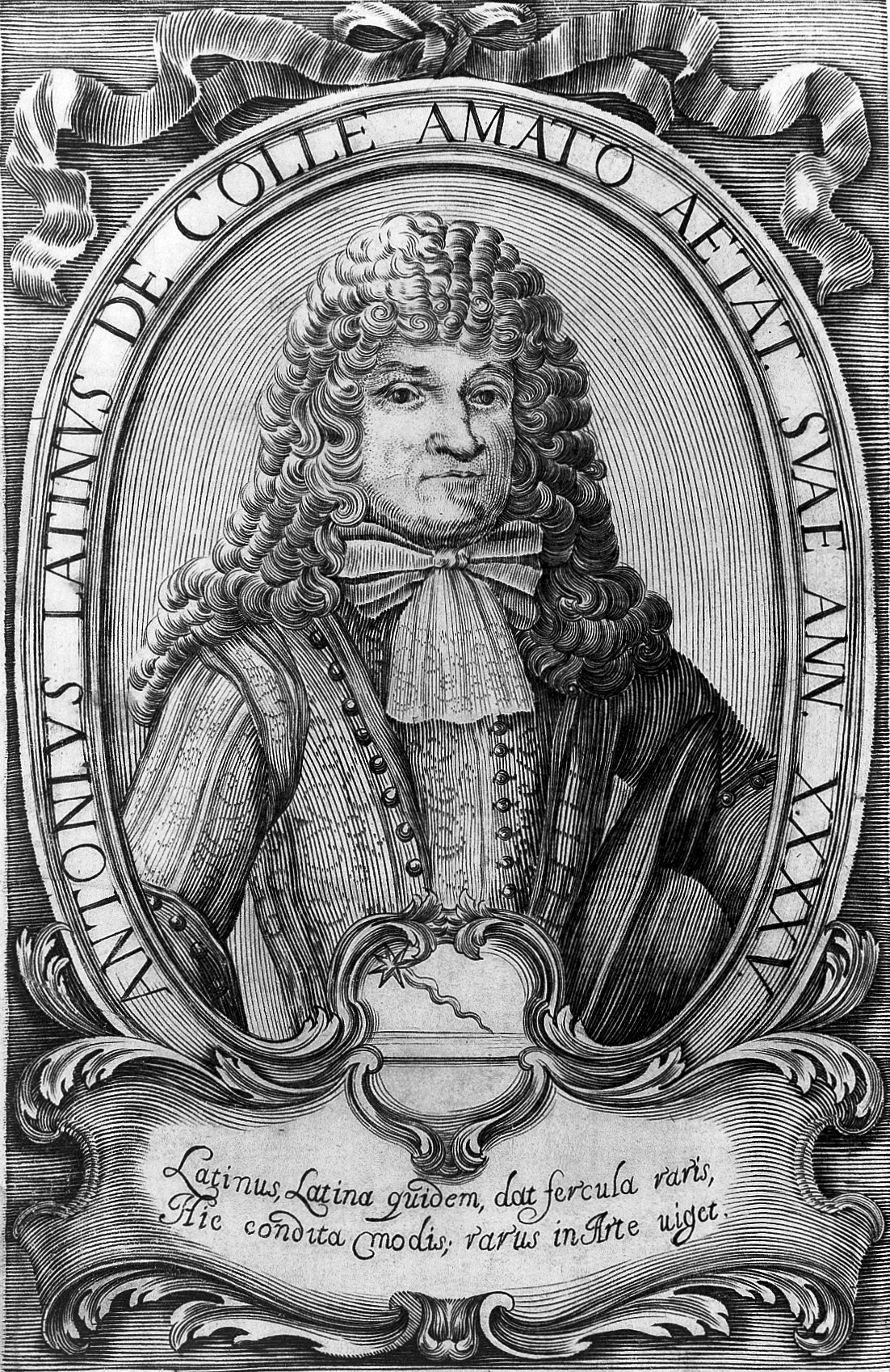
Italian steward, cardinal-nephew, and chef (1642–1692)
Antonio Latini (1642–1692) was a steward of Cardinal Antonio Barberini, cardinal-nephew of Pope Urban VIII in Rome and subsequently to Don Stefano Carillo Salcedo, first minister to the Spanish viceroy of Naples. He is also credited to be the one that made the first "official" ice cream.
Biography
Latini was born in Collamato, now a frazione of the town of Fabriano, in the province of Ancona, but at the time in the Papal States. His cookbook, Lo scalco alla moderna "the Modern Steward", (Naples, vol. I 1692, vol. II 1694), contains in its first volume the (surprisingly late) earliest surviving recipes for tomato sauce, though he did not suggest serving it over pasta. One of his tomato recipes is for sauce alla spagnuola, "in the Spanish style". In his second volume Latini gives early recipes for sorbetti.
Latini had gone to Rome at the age of sixteen, and worked his way up in the familia or household of Cardinal Barberini. By turns assistant cook, waiter and wardrobe attendant, he learned the theatrical carving skills expected of a maître d'hôtel and swordsmanship as well. Mastering the arts of successively important stewardship positions, he was made a Roman conte, a "Knight of the Golden Spur" for his service. After working in Rome and at courts in Macerata, Mirandola and Faenza, Latini went to serve as scalco, or household steward, to Carillo Salcedo in 1682.
In Naples Latini cast his net widely for the best products of the Kingdom of Naples for Don Stefano's table. In Lo scalco alla moderna a brief description of the Regno listed fruits and local specialties in melons and game, oil and olives, vegetables and salads of "rare quality", drawn from Latini's professional experience from 25 locales, none of them as far afield as Sicily, in fact mostly within a days journey of Naples: Poggio Reale, Chiaja, Posillipo hills, Pozzuoli, Procida, Ischia, Capri, Sorrento, Vico, Castell'a mare di Stabbia, Torre del Greco, Granatiello, Monte di Somma, Orta, Nola, Aversa, Cardito, Arienzo, Acerra, Giugliano, Capua, Gaeta, Venafro, Sora, Isola di Sora.
Latini's manuscript autobiography, not included in Lo scalco alla moderna, brings his personal career to light by sharing details of a kitchen career that had hitherto been unheard-of when they were first described in print by French gastronomist Marie-Antoine Carême. A transcription that was made in 1690 was discovered in the city library of Fabriano and published by Furio Liccichenti.
Notes
Bibliography
References
- Alberto Capatti, Massimo Montanari, Áine O'Healy, ''Italian cuisine: a cultural history'', 2003;Jeri Quinzio, ''Of Sugar and Snow: A History of Ice Cream Making'', ch. "Early Ices and Ice Cream".
- ''Lo scalco alla moderna'' was reprinted in the series Bibliotheca culinaria in 1993.
- Alan Davidson, "Europeans' Wary Encounter with Tomatoes, Potatoes, and Other New World Foods" in ''Chilies to Chocolate: Food the Americas Gave the World'', (University of Arizona Press) 1992.
- [[Elizabeth David]], ''Italian Food'' (1954, 1999), p 319, and John Dickie, ''Delizia! The Epic History of the Italians and Their Food'', 2008, p. 162.
- Compare [[Espagnole sauce. sauce espanole]] of French cuisine.
- David 1999.
- Jeri Quinzio, ''Of Sugar and Snow: A History of Ice Cream Making'', ch. " "Early Ices and Ice Cream".
- "Breve descrizione del regno di Napoli In ordine alle cose comestibili di frutti, e d'altro, che si producono specialmente, e di rara qualità, in diversi luoghi del medesimo Regno, secondo che riferiscono diversi autori, e che viene comprobato dall'uso e dall'isperienza" noted by culinary historian Alberto Capatti in ''I Prodotti tipici nella definizione storica Italiana e nelle denominazioni europee'' ([http://users.unimi.it/~mriva/tipico/sem1_testo.rtf on-line text]).
- Noted in Capatti et al. 2003 pp 213-15.
This article was imported from Wikipedia and is available under the Creative Commons Attribution-ShareAlike 4.0 License. Content has been adapted to SurfDoc format. Original contributors can be found on the article history page.
Ask Mako anything about Antonio Latini — get instant answers, deeper analysis, and related topics.
Research with MakoFree with your Surf account
Create a free account to save articles, ask Mako questions, and organize your research.
Sign up freeThis content may have been generated or modified by AI. CloudSurf Software LLC is not responsible for the accuracy, completeness, or reliability of AI-generated content. Always verify important information from primary sources.
Report