From Surf Wiki (app.surf) — the open knowledge base
Zydis
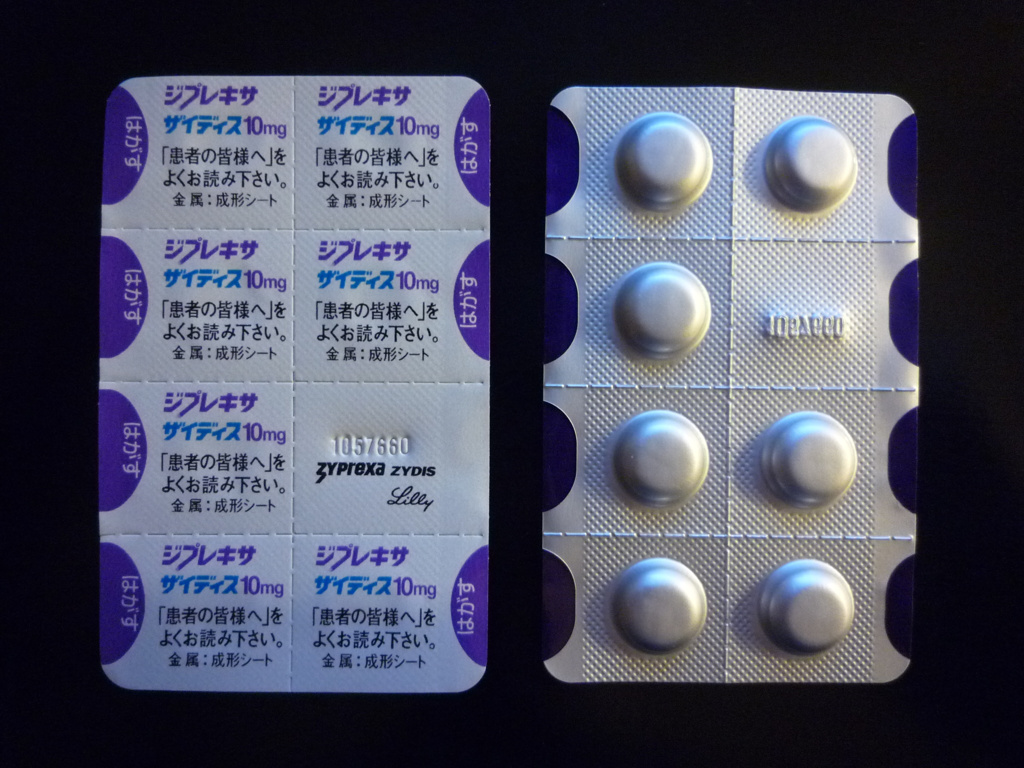
Zydis is a technology used to manufacture orally disintegrating tablets developed by R.P. Scherer Corporation. Zydis tablets dissolve in the mouth within 3 seconds.
History
Zydis technology was developed by R.P. Scherer Corporation (currently owned by Catalent Pharma Solutions) in 1986. The technology's first commercial application was in August, 1993, when a new dosage form of Pepcidine (famotidine) from Merck & Co. was launched in Sweden.
In November 1993 Imodium Lingual (loperamide) from Janssen Pharmaceutica was released in Germany with Zydis technology.
In December, 1996, the Food and Drug Administration approved Claritin (loratadine) RediTabs from Schering-Plough, the first prescription drug with Zydis technology sold in the U.S.
Technology
A Zydis tablet is produced by lyophilizing or freeze-drying the drug in a matrix usually consisting of gelatin. The resulting product is very lightweight and fragile, and must be dispensed in a special blister pack.
Amipara et al., in their article "Oral disintirating tablet of antihypertensive drug" explain the technology's limitations:
The Zydis formulations consist of a drug physically trapped in a water-soluble matrix (saccharine mixture and polymer), which is freeze dried to produce a product that dissolves rapidly when placed in mouth. The ideal candidate for Zydis technology should be chemically stable and insoluble and particle size preferably less than 50 micron. Water soluble drugs might form eutectic mixtures and not freeze adequately, so dose is limited to 60 mg and the maximum drug limit is 400 mg for water insoluble drug as large particle sizes might present sedimentation problems during manufacture.
Advantages and disadvantages
Advantages
Main article: Orally disintegrating tablet#Advantages of ODTs
Zydis tablets:
- are convenient for the patients who have difficulty in swallowing (children, old people, bed-ridden and psychiatric patients);
- are fast to absorb;
- don't require water to consume;
- have good taste (mouth feel);
- don't provoke choking or suffocation;
- have high microbial resistance ("due to the low moisture content in the final product, the Zydis formulation does not allow microbial growth").
Disadvantages
Main article: Orally disintegrating tablet#Disadvantages of ODTs
Disadvantages include:
- increased price due to cost-intensive production;
- sensitivity to moisture (tablets can degrade at higher humidity);
- poor physical resistance (easy to break);
- limited ability to incorporate higher concentrations of active drug.
Fast dissolving drugs with Zydis technology
| Trade name | Active formula | Manufacturer | Indication |
|---|---|---|---|
| Ativan | Lorazepam | Valeant Pharmaceuticals | Anxiety disorders |
| Claritin RediTab | Loratadine | Schering-Plough | Allergy |
| Imodium | Loperamide | Johnson & Johnson | Diarrhea |
| Feldene melt | Piroxicam | Pfizer | Pain relief |
| Maxalt MLT | Rizatriptan | Merck & Co. | Headache |
| Motilium | Domperidone | Johnson & Johnson | Nausea and vomiting |
| Zelapar | Selegiline | Valeant Pharmaceuticals | Parkinson's disease, depression |
| Pepcid RPD | Famotidine | Johnson & Johnson | Peptic ulcer disease (PUD), gastroesophageal reflux disease (GERD/GORD) |
| Zyprexa | Olanzapine | Eli Lilly and Company | Schizophrenia, bipolar disorder |
| Zofran ODT | Ondansetron | GlaxoSmithKline | Nausea and vomiting |
| Nurtec ODT | Rimegepant | Pfizer | Migraine |
Data from "Fast Disintegrating Drug Delivery Systems: A Review with Special Emphasis on Fast Disintegrating Tablets" (2013).
References
References
- (2002). "Modified-Release Drug Delivery Technology". CRC Press.
- (1993-08-23). "Pepcidine launch in Sweden". [[The Pharma Letter]].
- (1993-11-09). "Scherer announces launch of another product utilizing its Zydis technology". PR Newswire Association LLC.
- (1996-12-23). "Scherer Announces U.S. Marketing Clearance for the First Prescription Product Using Zydis(R) Technology". PR Newswire Association LLC.
- Amipara. (2013). "Oral disintirating tablet of antihypertensive drug". Journal of Drug Delivery & Therapeutics; 2013, 3(1).
- Ved Parkash. (2011). "Fast disintegrating tablets: Opportunity in drug delivery system". Journal of Advanced Pharmaceutical Technology & Research.
- Allen, Lloyd. (2014). "Ansel's Pharmaceutical Dosage Forms and Drug Delivery Systems". Lippincott Williams & Wilkins.
- (2011). "Oral Controlled Release Formulation Design and Drug Delivery: Theory to Practice". John Wiley & Sons.
- (2009). "Delivery Technologies for Biopharmaceuticals: Peptides, Proteins, Nucleic Acids and Vaccines". John Wiley & Sons.
- Rajendra Awasthi. (2013). "Fast Disintegrating Drug Delivery Systems: A Review with Special Emphasis on Fast Disintegrating Tablets". Journal of Chemotherapy and Drug Delivery, 05/2013.
This article was imported from Wikipedia and is available under the Creative Commons Attribution-ShareAlike 4.0 License. Content has been adapted to SurfDoc format. Original contributors can be found on the article history page.
Ask Mako anything about Zydis — get instant answers, deeper analysis, and related topics.
Research with MakoFree with your Surf account
Create a free account to save articles, ask Mako questions, and organize your research.
Sign up freeThis content may have been generated or modified by AI. CloudSurf Software LLC is not responsible for the accuracy, completeness, or reliability of AI-generated content. Always verify important information from primary sources.
Report