From Surf Wiki (app.surf) — the open knowledge base
Zograf Monastery
Eastern Orthodox monastery, Mount Athos

Eastern Orthodox monastery, Mount Athos
| Field | Value |
|---|---|
| name | Zografou Monastery |
| native_name | Ζωγράφου |
| native_name_lang | el |
| image | Zograf Monastery.jpg |
| caption | External view of the monastery |
| full | Holy Monastery of Zografou |
| denomination | Bulgarian Orthodox Church |
| order | Ecumenical Patriarchate of Constantinople |
| established | Late 9th or early 10th century, 919 in some sources |
| dedication | Saint George |
| diocese | Mount Athos |
| founder | Moses, Aaron and John (all from Ohrid) |
| status | Monastery |
| functional_status | Active |
| location | Mount Athos, North Aegean, Greece |
| map_type | Greece |
| map_size | 240px |
| map_relief | 1 |
| mapframe | yes |
| coordinates | |
| public_access | Men only |
| website |
The Saint George the Zograf Monastery or Zograf Monastery (, Moní Zográphou; ) is one of the twenty Eastern Orthodox monasteries in Mount Athos (the "Holy Mountain") in the North Aegean region of Greece. It was founded in the late 9th or early 10th century by three Bulgarians from Ohrid and is regarded as the historical Bulgarian monastery on Mount Athos, and is traditionally inhabited by Bulgarian Orthodox monks.
The monastery is named after the 13th or 14th century icon of Saint George, known as Saint George the Zograf (Светѝ Гео̀рги Зогра̀ф). The name of the latter comes from the belief that the icon mysteriously painted itself on the prepared board (zograf(os) in Greek means "painter" (from zoe="life" and graphos="scribe").
History
The earliest written evidence of the monastery's existence dates from 980. During the Middle Ages, the monastery was generously supported by the Bulgarian rulers, such as Ivan Asen II and Ivan Alexander, since it was a matter of pride for the Bulgarian Orthodox Church to maintain a monastery on Athos. The Zograf Monastery has also received land endowments by Byzantine (the first donor being Leo VI the Wise) and Serbian rulers.
The Zograf Monastery was plundered and burnt down by Crusaders, working under orders from the Byzantine emperor Michael VIII Palaiologos, in 1275, resulting in the death of 26 monks. These included the igumen (abbot) Thomas, as well as the monks Barsanuphius, Cyril, Micah, Simon, Hilarion, James, Job, Cyprian, Sabbas, James, Martinian, Cosmas, Sergius, Paul, Menas, Ioasaph, Ioanicius, Anthony, Euthymius, Dometian, Parthenius, and four laymen.
The reason for this attack was the opposition of the Athonite monks to the Union of Lyons, which the Emperor had supported for political reasons. Having hanged the Protos (the elected president of Mount Athos), and having killed many monks in Vatopedi, Iveron and other monasteries, the Latins attacked Zographou. Their martyrdom is commemorated annually on October 10 (October 23 on the Gregorian Calendar) throughout the Eastern Orthodox Church.
Mercenaries of the Catalan Grand Company raided the Holy Mountain for two years (1307–9), sacking many monasteries, plundering the treasures of Christendom, and terrorising the monks. Of the 300 monasteries on Athos at the beginning of the 14th century, only 35 were left by the end.{{Citation |contribution=Athos in the ancient Greek period |year=2000 |title=The History of Mount Athos |publisher=Macedonian Heritage |url=http://www.macedonian-heritage.gr/Athos/General/AthosHistory.html |access-date=2007-10-24 |url-status=dead |archive-url=https://web.archive.org/web/20101021081733/http://www.macedonian-heritage.gr/Athos/General/AthosHistory.html |archive-date=October 21, 2010 }} But the monastery recovered quickly with the help of grants and support from the Palaeologue Emperors and the princes of the Moldavian and Wallachian Principalities. The buildings were reconstructed in the late 13th century with the financial aid of Byzantine Emperor Andronicus II Palaeologus. The monastery was also given numerous metochia (properties) in parts of Romania, Bulgaria, Russia, and modern-day Turkey, but retains today only those in Greece.
The monastery exists in its modern appearance since the 16th century, while its present-day buildings date from the middle 18th century. The south wing was built in 1750, the east in 1758, the small church was erected in 1764 and the large one in 1801. The north and west wing are from the second half of the 19th century and large-scale construction ended in 1896 with the Saints Cyril and Methodius Church and the raising of the bell tower.
Among the numerous relics and other holy objects treasured at the monastery is the Wonderworking Icon of the Theotokos "Of the Akathist," the feast day of which is celebrated on October 10. Since Mount Athos uses the traditional Julian Calendar, the day they celebrate as October 10 currently falls on October 23 of the modern Gregorian Calendar. Today the Monastery has 15 monks.
Library
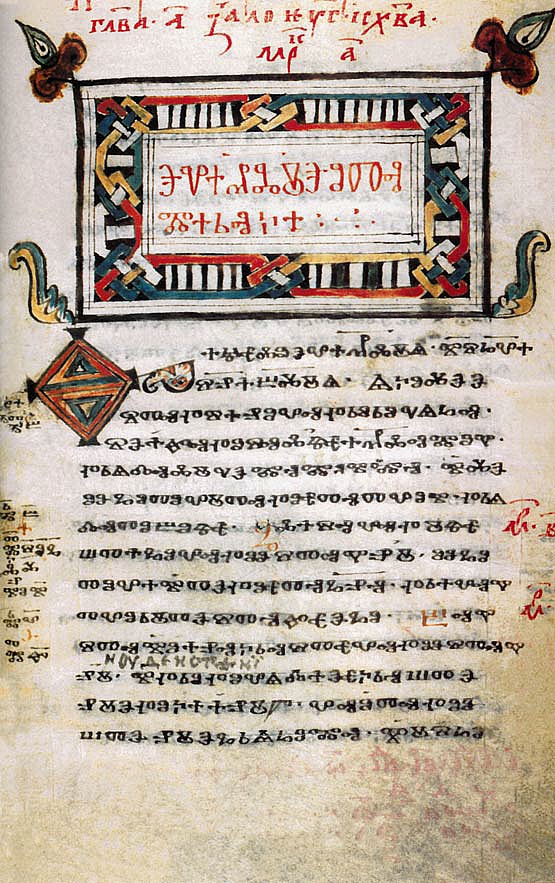
The Zograf Monastery houses a library of major significance to Bulgarian culture, preserving medieval manuscripts such as a 15th-century copy of the passional of Saint Naum of Ohrid, the 14th-century passional of Saint Paraskevi, the original draft of Paisius of Hilendar's Istoriya Slavyanobolgarskaya, and the History of Zograf. The monastic library contains 388 manuscripts in Church Slavonic and 126 in Greek, as well as about 10,000 printed books altogether. Two medieval Bulgarian royal charters, the Zograf Charter and the Rila Charter, were discovered in the monastery's library.
Honours
Zograf Peak on Livingston Island in the South Shetland Islands, Antarctica is named after the Zograf Monastery.
The monastery and its seal are depicted on the obverse of the Bulgarian 2 levs banknote, issued in 1999 and 2005.
On March 21, 2011, the Bulgarian National Bank issued a commemorative silver coin with nominal value of 10 levs featuring the monastery.
Gallery
Zograf1853.png|Photo of 1853 171 6 repas de la mission française au Zographe.jpg|French mission in the monastery, 1917, during WWI Zograf main entrance.jpg|Main entrance ZografouFromTheBellTower.jpg|View from the bell tower Zograf monastery.jpg|Exterior view Zografou3.jpg|The inner court Пристанище Зограф.jpg|The anchorage of the monastery
References
References
- "The Holy Monastery of Zografou {{!}} Mount Athos Monasteries".
- "26 Monastic Martyrs of Zographou Monastery on Mount Athos".
- (14 March 2016). "Zographou".
- [http://www.bnb.bg Bulgarian National Bank]. Notes and Coins in Circulation: [http://www.bnb.bg/bnb/notes_coins.nsf/vNotesCoins/CA9CED4AF282A1D5C2256B51003606F1?OpenDocument&EN 2 levs] (1999 issue) & [http://www.bnb.bg/bnb/notes_coins.nsf/vNotesCoins/50629E4972248ABBC22570CF0032A992?OpenDocument&EN 2 levs] (2005 issue). – Retrieved on 26 March 2009.
- [http://news.coinupdate.com/zograf-monastery-silver-commemorative-coin-0744/ Coin Update News] Zograf Monastery Silver Commemorative Coin
This article was imported from Wikipedia and is available under the Creative Commons Attribution-ShareAlike 4.0 License. Content has been adapted to SurfDoc format. Original contributors can be found on the article history page.
Ask Mako anything about Zograf Monastery — get instant answers, deeper analysis, and related topics.
Research with MakoFree with your Surf account
Create a free account to save articles, ask Mako questions, and organize your research.
Sign up freeThis content may have been generated or modified by AI. CloudSurf Software LLC is not responsible for the accuracy, completeness, or reliability of AI-generated content. Always verify important information from primary sources.
Report