From Surf Wiki (app.surf) — the open knowledge base
Zion Square
Public square in Jerusalem
._matpc.20999.jpg)
Public square in Jerusalem
| Field | Value | |
|---|---|---|
| name | Zion Square | |
| image_place | הרברט סמואל ירושלים.jpg | |
| other_names | Kikar Zion | |
| pushpin_map | ||
| pushpin_map_caption | ||
| location | Intersection of Jaffa Road, Ben Yehuda Street, Herbert Samuel Street, and Yoel Moshe Salomon Street | |
| address2 | Jerusalem | |
| place_type | Public square | |
| coordinates | ||
| construction | 1924 | |
| native_name | {{Nobold | |
| native_name_lang | he}} |
Zion Square () is a public square in Jerusalem, located at the intersection of Jaffa Road, Ben Yehuda Street, Herbert Samuel Street, and Yoel Moshe Salomon Street.
The square is one of the vertices of the Downtown Triangle commercial district. Since the British Mandate era, Zion Square has been the focal point of the cultural life of downtown Jerusalem. The square is busy day and night with tourists, elderly immigrants, overseas students, local youth, street performers, and religious activists. In recent decades, the square has become a hangout for disaffected and homeless youth.
From the 1930s to 2011, the square was a popular site for mass protests and demonstrations.
Name
The square, originally called Zion Circus, was named for the Zion Cinema
History


The land on which Zion Square and the Downtown Triangle lies was purchased by the Jewish Colonization Association from the Greek Orthodox Patriarchate, which began selling off some of its holdings in Jerusalem after World War I. Mandate officials developed the field into a triangular district bordered by Jaffa Road, Ben Yehuda Street (constructed by the British in 1922) and King George Street (constructed by the British in 1924). Zion Square was also designed by the British as a roundabout.
The popularity of the films, operas, plays, concerts and lectures presented at the Zion Cinema turned Zion Square into the “center of cultural life in Jerusalem” in the 1920s and 1930s. Movie- and theater-goers gravitated between the cinema and the many cafes and coffee houses in the Downtown Triangle; two of the popular cafes were located in Zion Square itself: the Vienna Cafe and the Europa Cafe.
Political demonstrations
Zion Square became a rallying point for political demonstrations and social protests beginning in the 1930s, when young Zionists held rallies here. Several demonstrations turned violent, such as a 1971 protest by the Israeli Black Panthers in which Prime Minister Golda Meir was burned in effigy, and a 1995 protest against Prime Minister Yitzhak Rabin and the signing of the Taba Agreement (Oslo II), after which thousands of protesters continued on to the Knesset, destroying property en route. The largest demonstrations in the square included a May 2000 protest decrying the handover of Arab settlements adjacent to the Mount of Olives, a November 2000 protest against Ehud Barak's "policy of restraint" at the beginning of the Second Intifada, and a 2006 protest against the policies of acting prime minister Ehud Olmert,{{cite web |url=http://crownheights.info/general/1488/anti-olmert-rally-brings-100000-to-zion-square/|title=Anti-Olmert Rally Brings 100,000 to Zion Square
With the opening of the Jerusalem Light Rail on Jaffa Road in August 2011, Jerusalem police stopped issuing permits for demonstrations in Zion Square to avoid the disruption of light-rail operations.
Terrorist attacks
The Zion Cinema was the site of two attempted bombings, one in 1951 and the other in 1967. In both cases, an incendiary device was planted under the theater seats and was discovered before it detonated.
On July 4, 1975, a refrigerator loaded with 5 kg of explosives detonated in Zion Square, killing 15 and wounding 77. At the time, the attack was the deadliest ever against Israeli citizens by a booby-trapped bomb. On March 24, 1979, a bomb exploded in a garbage can in Zion Square, killing one and wounding 13.
On November 13, 1975, an explosive charge went off near Cafe Naveh on Jaffa Road, near the pedestrian mall. Six people were killed and 40 injured. 48
On the night of August 16–17, 2012, dozens of Jewish teens chased four Palestinian teens in Zion Square and beat one of them unconscious, in what Israeli police and witnesses described as an attempted lynching.
Decline and redevelopment
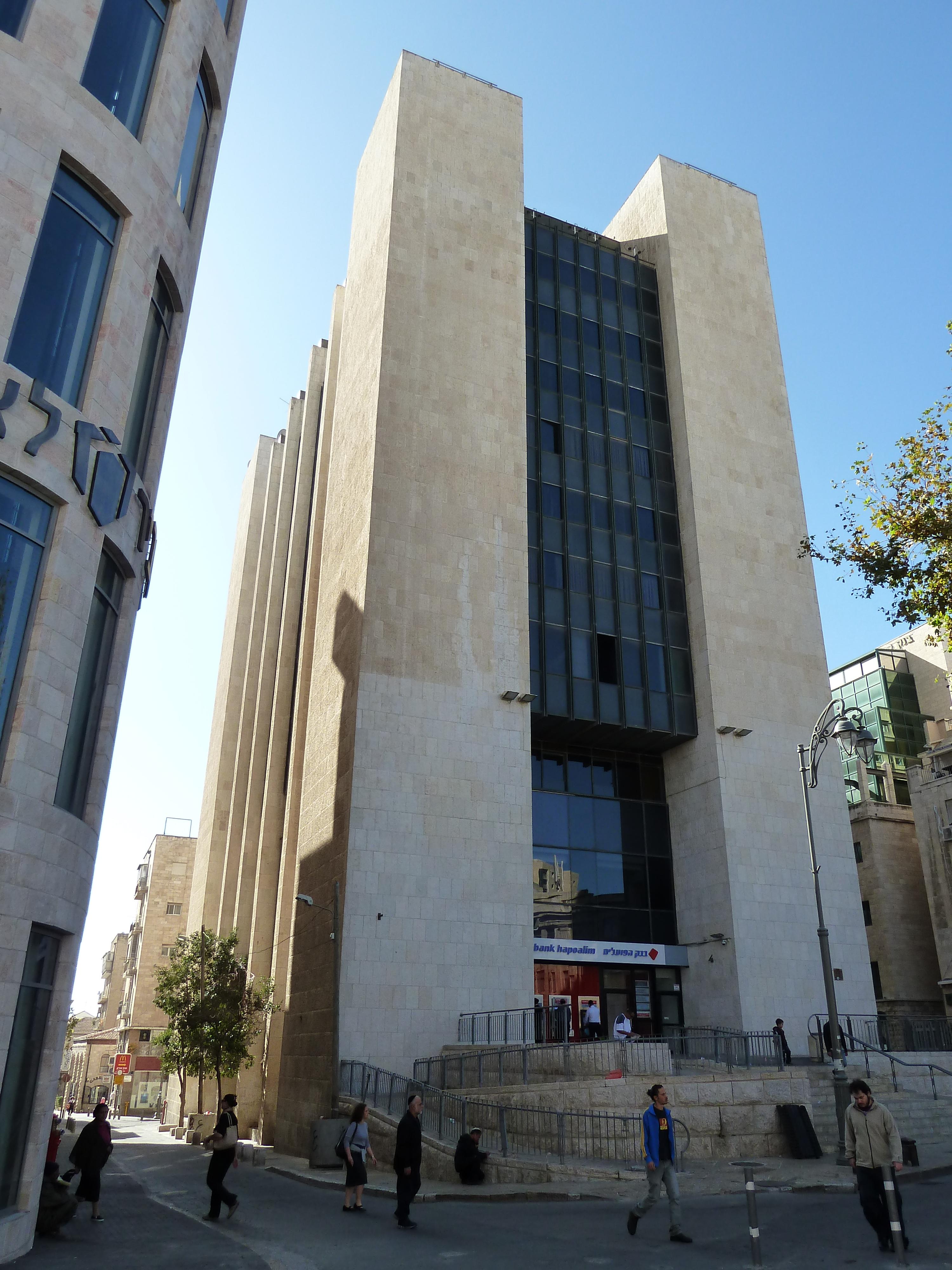
Following the reunification of Jerusalem in 1967, the city embarked on significant expansion. Large commercial centers were opened in the new, outlying neighborhoods of Talpiot, Givat Shaul, and Malha, weaning customers away from the city center. Government offices began moving out as well, precipitating the economic decline of the Downtown Triangle in the 1970s. The advent of television precipitated the closure of most of the Triangle's cinemas. The Zion Cinema closed in 1972 and was demolished. In its place, a high-rise building containing the Kikar Zion Hotel (on the upper floors) and a branch of Bank Hapoalim (on the lower floors) was erected.
In 1983 Zion Square was converted into a pedestrian promenade along with Ben Yehuda Street and other streets in the Downtown Triangle in a successful effort to revitalize the downtown district.
In 2006 the Jerusalem Foundation floated a secret proposal to rename the square Rapaport Plaza, after a Waco, Texas philanthropist who pledged $2 million toward the square's renovation. The plan, which was not reported to the public, was spotted on the Jerusalem Foundation website and brought to public attention by Lemallah, a grassroots citizens watch group, which launched a successful public protest against the name change and the sculpture. At the same time, Lemallah produced its own counterproposal for a round, six-sided, steel "peace dome" to span the square and Jaffa Road. That idea, too, did not come to fruition.
In early 2016, a contest was held to redesign the square and on September 13, 2016, the Jerusalem Municipality announced that its panel had chosen a design by Maya Atidia and Tamir Manzur-Carmel called "Urban Forest Clearing" as the winner. Redevelopment work began in 2018, with the installation of a stage, public seating, and trees of the plane, carob, Mediterranean hackberry, and pear varieties.
Street scene
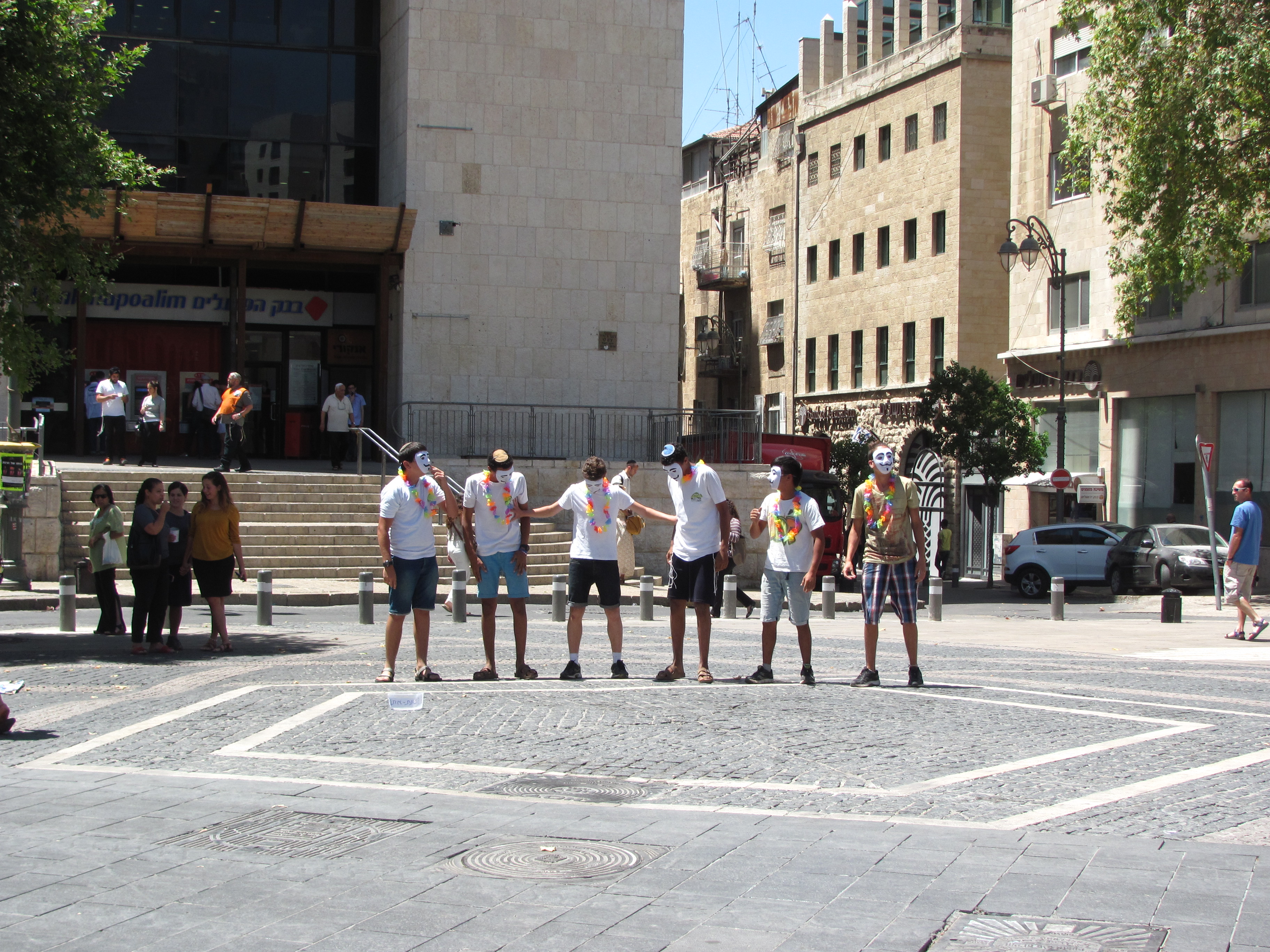
Zion Square is busy day and night as a meeting place and hangout for people from all walks of life, including tourists, elderly immigrants, seminary students, street performers, and Chabad and Breslov activists. Zion Square has been described as "always crowded, always crazy".
The square is a hangout for drug users. An estimated 70 percent of teenagers who hang out in the square take drugs. The open, street-level basement of the Kikar Zion Hotel is a well-known haunt for both drug dealers and prostitutes.
School dropouts, disaffected religious immigrant teens, and homeless youth are also fixtures in the square. Street workers have identified large groups of Russian immigrant youth hanging out in the square and drinking vodka purchased with money panhandled off tourists. To reach out to at-risk and disaffected "square dwellers", several drop-in centers operate in the vicinity of Zion Square, including Crossroads, Hameshulash, Hezroni's Squat, and The Zone. The ELEM – Youth Distress in Israel organization brings a mobile unit to Zion Square on weeknights to engage street youth in art projects.
Landmarks

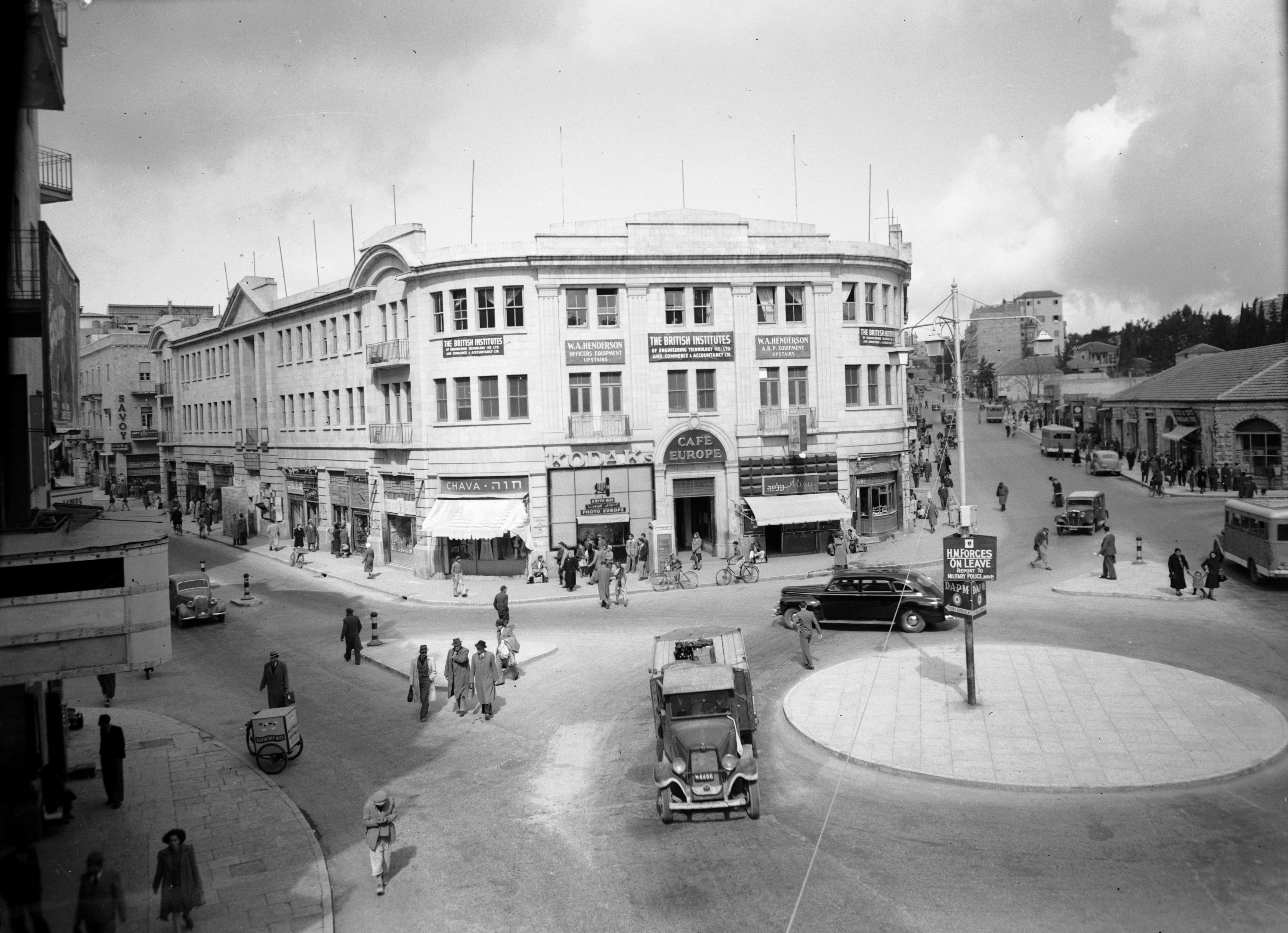
Zion Cinema was the central landmark of Zion Square from the 1920s until its closure in 1972. Located on the south side of Zion Square, it was originally a 400-seat silent-movie hut and, after snowfall destroyed the structure, was rebuilt into a 600-seat theatre which is renovating the property for reopening as the Herbert Samuel Hotel. The hotel will have 137 rooms and suites, and a kosher rooftop restaurant with a 360-degree panoramic view.
Hamashbir Lazarchan, a seven-story, 5000 sqm department store that opened on the east side of Zion Square in 2011, is the largest department store in Israel and the flagship store of the 38-store chain.
On the north side of Zion Square stands the Jerusalem Hostel. This lodging opened as the Tel Aviv Hotel in 1926 and later became known as the Ron Hotel. Menachem Begin stood on one of the hotel's balconies on August 3, 1948, to announce the dissolution of the Irgun and the sign-up of his soldiers with the Israel Defense Forces.
On the west side of Zion Square stands the Sansur Building, erected in 1929. This three-story office and commercial building sports an "eclectic", neo-Renaissance and classical design. The building was commissioned by and named for a Christian Arab merchant from Bethlehem and originally housed Cafe Europe, a popular coffeehouse patronized by Jews, Arabs, and British in the 1930s and 1940s. In 1947-48 it housed the Jerusalem Emergency Committee.
References
Notes
48 Terence Smith (14 November 1975). "6 killed, 40 hurt by bomb in Israel". The New York Times.
Sources
References
- {{sfn. Barrett. 1999. link. allaboutjerusalem.com. (2014)
- Eisenstadt, David. (May 1997). "The British Mandate". Ingeborg Rennert Center for Jerusalem Studies.
- (5 July 2013). "The Jerusalem Triangle". Jerusalem.com.
- (24 August 2013). "Haman's Hat: Life in the Jerusalem Triangle". [[Times of Israel]].
- From the 1950s to the 2000s, primarily [[Right-wing politics. link. [[Ynetnews]]. Michal. Ben Ari. (7 December 2007)
- (16 May 2000). "Right-Wing Demonstration at Zion Square". Israel Wire.
- (6 February 2006). "Anti-Olmert Rally Brings 100,000 to Jerusalem's Zion Square". [[Arutz Sheva.
- Lidman, Melanie. (30 May 2012). "J'lem police deny social protesters Zion Square". [[The Jerusalem Post]].
- Hasson, Nir. (29 May 2012). "Jerusalem protesters stopped in their tracks by light rail as Zion Square declared off limits". [[Haaretz]].
- Sheleg, Yair. (3 December 2001). "A Short History of Terror". Haaretz.
- Davidson, Amy. (21 August 2012). "An Attack in Zion Square".
- Kershner, Isabel. (20 August 2012). "Young Israelis Held in Attack on Arabs". [[The New York Times]].
- (2011). "Downtown Jerusalem: The story of Jerusalem's city center and its regeneration". [[Jerusalem Institute for Israel Studies]].
- link. Hailit. Kreusa-Israel. (12 September 2011). [[Maariv (newspaper). Maariv]]
- "Zion Square 2006". [[Ron Arad (industrial designer).
- Zohar, Gil. (2 March 2012). "Kikar Zion saved". The Jerusalem Post.
- Zazon, Eli. (2016-09-13). "Zion Square".
- Nardi, Guy. (2 April 2018). "Jerusalem's Zion Square to undergo major facelift". [[Globes (newspaper).
- (2008). "Welcome to Zion Square". gojerusalem.com.
- Heumann, Gerard. (28 September 2012). "There's no 'there' at Jerusalem's Zion Square". Haaretz.
- Bedein, Sara. (Fall 2002). "Kikaristim Come Home". Jewish Action.
- Ha'Ivri, David. (15 October 2006). "The Jerusalem You Do Not Want to Know". [[Arutz Sheva.
- Berman, Daphna. (21 November 2003). "Zion Square's West Side Story". Haaretz.
- Ivri, Yael. (6 December 2007). "Square-Dwelling Youths". [[Ynetnews]].
- (2013). "At-Risk Youth Project". [[Israel Museum]].
- "מלון הרברט סמואל ירושלים". herbertsamuel.com.
- Dvir, Noam. (16 September 2011). "A New Consumer Shrine?". Haaretz.
- Cashman, Greer Fay. (2 November 2011). "J'lem: Landmark Hamashbir dept. store gets new location". The Jerusalem Post.
- MacKinnon, Mark. (2008). "Israel at 60, a state of shock". [[The Globe and Mail]].
- "Sansur Building". [[Israel Land Development Company]].
This article was imported from Wikipedia and is available under the Creative Commons Attribution-ShareAlike 4.0 License. Content has been adapted to SurfDoc format. Original contributors can be found on the article history page.
Ask Mako anything about Zion Square — get instant answers, deeper analysis, and related topics.
Research with MakoFree with your Surf account
Create a free account to save articles, ask Mako questions, and organize your research.
Sign up freeThis content may have been generated or modified by AI. CloudSurf Software LLC is not responsible for the accuracy, completeness, or reliability of AI-generated content. Always verify important information from primary sources.
Report