From Surf Wiki (app.surf) — the open knowledge base
Zhang Aiping
Chinese general (1908–2003)
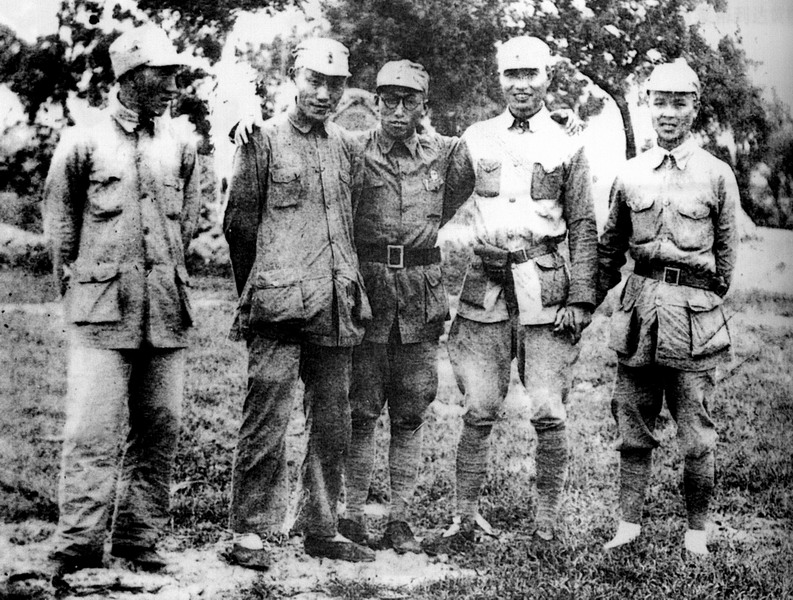
Chinese general (1908–2003)
| Field | Value | |
|---|---|---|
| name | Zhang Aiping | |
| native_name | 张爱萍 | |
| native_name_lang | zh | |
| office | State Councilor of China | |
| premier | Zhao Ziyang | |
| Li Peng | ||
| term_start | 19 November 1982 | |
| term_end | 12 April 1988 | |
| office1 | 6th Minister of National Defense | |
| premier1 | Zhao Ziyang | |
| Li Peng | ||
| predecessor1 | Geng Biao | |
| successor1 | Qin Jiwei | |
| term_start1 | 19 November 1982 | |
| term_end1 | 12 April 1988 | |
| office2 | Vice Premier of the People's Republic of China | |
| premier2 | Zhao Ziyang | |
| term_start2 | September 1980 | |
| term_end2 | September 1982 | |
| birth_name | Zhang Duanxu (张端绪) | |
| birth_date | ||
| death_date | ||
| birth_place | Da County, Sichuan, Qing Dynasty | |
| (now Dachuan District, Sichuan, China) | ||
| death_place | Beijing, China | |
| image | Zhang Aiping.jpg | |
| alma_mater | Counter-Japanese Military and Political University | |
| allegiance | ||
| serviceyears | 1929–1987 | |
| branch | ||
| rank | General | |
| battles | * Chinese Civil War | |
| awards | {{plainlist | |
| party | Chinese Communist Party |
| honorific-prefix = Li Peng Li Peng (now Dachuan District, Sichuan, China)
- Second Sino-Japanese War
- [[File:中国人民解放军一级八一勋章的略章.png|50px]] Order of Bayi (First Class Medal)
- [[File:中国人民解放军一级独立自由勋章的略章.png|50px]] Order of Independence and Freedom (First Class Medal)
- [[File:中国人民解放军一级解放勋章的略章.PNG|50px]] Order of Liberation (First Class Medal)
- [[File:Noribbon.svg|50px]] Red Star Meritorious Medal of the Chinese People's Liberation Army (First Class Medal) Zhang Aiping (; January 9, 1910 – July 5, 2003) was a Chinese military leader.
Biography

Zhang joined the Chinese Communist Party in 1928 after taking part in a communist-led rural uprising. He participated in the Long March and served as a field commander in the Chinese Red Army, first fighting against Chiang Kai-shek's Kuomintang forces, and later the Imperial Japanese Army in the Second Sino-Japanese War. During World War II Zhang commanded a guerrilla band sent to rescue U.S. flight crews who crash landed in China following the April 1942 Tokyo bombing raid led by Lieutenant Colonel Jimmy Doolittle.
After 1949, Zhang was an important builder of the Chinese military forces. He commanded the first People's Liberation Army naval force and served as an army corps commander in the Korean War. Upon his return home he served in a series of significant military and political posts. He was made a General in 1955.
Zhang supervised the Two Bombs, One Satellite project and successfully directed the development of China's nuclear deterrent. However, he was accused of counterrevolutionary crimes and dismissed from all positions during the Cultural Revolution, when many veteran communists were attacked by Red Guards inspired by Mao Zedong's vision of continuous revolution, and one of his legs was broken as a result. Later, Zhang would comment: "The only thing the Cultural Revolution succeeded in was giving me a cane."
He reappeared in 1973 and chaired the Defense Technology Commission of the People's Liberation Army. During this time he attempted to rein in poor quality from armament factories by reestablishing government oversight over facilities which had been taken over by unsupervised workers. A biography of him by his son, PLA senior colonel Zhang Sheng, recorded the first of such incidents, when Zhang went to investigate the rocket gyroscope manufacturer Factory 230 which had become infamous for poor quality, which caused abnormally high accident rates in launch tests and notably two reconnaissance satellites being lost:
Chen Baoding said: “No need to speak further about the research facilities. One workshop had 70% deficient micrometers, how can they produce? Everyone is divided into two factions and rebelling and counter-rebelling. The factions are also internally organized, and criticize everyone who don't agree with them. Specialist Yao Tongbin who returned from Germany died after a brawl broke out. Others are cleaning toilets and such.”
Qiu Jinchun who went with father said: “In one room thick cobwebs hung from the walls to the door. The dust was so thick on the ground that footprints were visible. Machine tools were sealed and rusting. According to the workers, these machines hadn’t been used since the Cultural Revolution began.”
The basement was an airtight constant temperature and humidity cleanroom workshop. We went in and were immediately greeted by a huge icicle more than a meter tall. The commander said: “What a sight! This is a precision instrument factory and there are stalactites in it!” The roof was leaking, and someone brought a straw hat for the commander. He said “What a great solution, how about let everyone wear straw hats to work in the future!”... Trash was in piles, cars entering and exiting drove all over them. The road was blocked by digging, and once they were repaired they were severed again. They said they were taking the air conditioner to a pigsty, because their pigs needed to be warm. The bathroom’s water flowed from the fifth floor to the first, and no one in charge or responsible could be found.|Zhang Sheng, From the War - Dialogue between Two Generations of Soldiers}}
Zhang submitted a report on the conditions of the factory to the state council, which called a meeting on the subject. During the meeting, Zhang further described the status of the workers:
Deng Xiaoping interjected: What does that mean?
Zhang Aiping: This is what the workers say. 8923, means working from 8-9 am to 2-3 pm. Later they didn’t work at all and only came at 8 am and 2 pm, and left after signing in. A female worker said to me: “These years we are eating socialism!” They are taking paychecks from the country and taking public property at will, how can this be acceptable? Isn’t this eating socialism?
Deng Xiaoping: Eating socialism?
Shen Bingchen (member of the committee) interjected: The workers said, only two institutions are left: the cafeteria and paychecks. Everything else is gone.|Zhang Sheng, From the War - Dialogue between Two Generations of Soldiers}}
Zhang was able to regain control of the factory by threatening to remove anyone participating in political factionalism. He was given the support of Mao Zedong and Deng Xiaoping.
He later served as defense minister from 1982 until 1988. He served as deputy chief of the PLA general staff, vice premier, and chaired a key commission that sought to modernize the PLA. He advocated for China to develop solid-fueled missiles, land-based mobile launch capability, and further develop its nuclear weapon capabilities.
During the 1989 Tiananmen Square protests and massacre, Zhang Aiping signed a letter opposing the enforcement of martial law by the Army in Beijing.
Zhang Aiping died in Beijing at the age of 93.
References
References
- (July 9, 2003). "Zhang Aiping, 93; Headed China's Military, Nuclear Bomb Program". [[Los Angeles Times]].
- 中国新闻网. (2009-01-12). "1975年的张爱萍:毛泽东送"石头" 华国锋解围(2)".
- 中国新闻网. (2009-01-12). "1975年的张爱萍:毛泽东送"石头" 华国锋解围(2)".
- 中国新闻网. (2009-01-12). "1975年的张爱萍:毛泽东送"石头" 华国锋解围(2)".
- Cunningham, Fiona S.. (2025). "Under the Nuclear Shadow: China's Information-Age Weapons in International Security". [[Princeton University Press]].
- (2005-04-02). "鲜明对照:中外媒体谈赵紫阳葬礼". 美国之音.
- (2021-06-04). "六四事件:七上将上书反对戒严始末".
This article was imported from Wikipedia and is available under the Creative Commons Attribution-ShareAlike 4.0 License. Content has been adapted to SurfDoc format. Original contributors can be found on the article history page.
Ask Mako anything about Zhang Aiping — get instant answers, deeper analysis, and related topics.
Research with MakoFree with your Surf account
Create a free account to save articles, ask Mako questions, and organize your research.
Sign up freeThis content may have been generated or modified by AI. CloudSurf Software LLC is not responsible for the accuracy, completeness, or reliability of AI-generated content. Always verify important information from primary sources.
Report