From Surf Wiki (app.surf) — the open knowledge base
Ze (Cyrillic)
Letter of the Cyrillic script

Letter of the Cyrillic script
| Field | Value |
|---|---|
| letter | З з |
| script | Cyrillic |
| type | Alphabet |
| typedesc | ic |
| name | Ze () |
| image | File:Cyrillic letter Ze - uppercase and lowercase.svg |
| imageclass | skin-invert-image |
| phonemes | [], [] (if followed by е, и, ё, or ь, ю ,я) |
| number | 7 (Cyrillic numerals) |
| fam1 | Ζ ζ |
| equivalents | Z z |
| variations | Ꙁ ꙁ |
| language | Old Church Slavonic |
| unicode | U+0417, U+0437, U+A640, U+A641 |
| alphanumber | 8 |
Ze (З з; italics: З з or З з; italics: З з) is a letter of the Cyrillic script.
It commonly represents the voiced alveolar fricative , like the pronunciation of in "zulu".
Ze is romanized using the Latin letter .
The shape of Ze is very similar to the Arabic numeral three , and should not be confused with the Cyrillic letter E .
History and shape
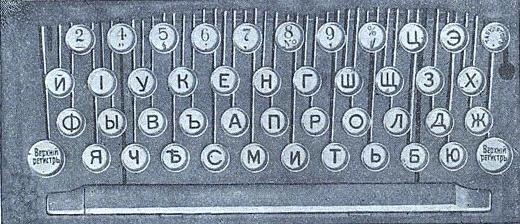
Ze is derived from the Greek letter Zeta (Ζ ζ).
In the Early Cyrillic alphabet its name was (zemlja), meaning "earth". The shape of the letter originally looked similar to a Greek letter Ζ or Latin letter Z with a tail on the bottom (). Though a majuscule form of this variant () is encoded in Unicode, historically it was only used as caseless or lowercase.
In the Cyrillic numeral system, Zemlja had a value of 7.
Medieval Cyrillic manuscripts and Church Slavonic printed books have two variant forms of the letter Zemlja: з and . Only the form was used in the oldest ustav (uncial) writing style; з appeared in the later poluustav (half-uncial) manuscripts and typescripts, where the two variants are found at proportions of about 1:1. Some early grammars tried to give a phonetic distinction to these forms (like palatalized vs. nonpalatalized sound), but the system had no further development. Ukrainian scribes and typographers began to regularly use З/з in an initial position, and otherwise (a system in use till the end of the 19th century). Russian scribes and typographers largely abandoned the widespread use of the variant in favor of з in the wake of Patriarch Nikon's reforms. They still used the older form mostly in the case of two З's in row: (the system in use till the mid-18th century).
The civil (Petrine) script knows only one shape of the letter: З/з. This shape is therefore confusing with the number 3, given that the two shapes are very similar to it. However, shapes similar to Z/z can be used in certain stylish typefaces.
In calligraphy and in general handwritten text, lowercase з can be written either fully over the baseline (similar to the printed form) or with the lower half under the baseline and with the loop (for the Russian language, a standard shape since the middle of the 20th century).
Usage
The letter Ze may represent:
- , the voiced alveolar sibilant (Macedonian, Bulgarian, Bosnian, Serbian, Montenegrin, Russian, Ukrainian, Rusyn and Belarusian);
- , if followed by or any of the palatalizing vowels, as in Russian зеркало ("mirror");
- , the voiceless alveolar sibilant (in final position or before voiceless consonants);
- , if followed by in final position or before voiceless consonants;
- or (Iron dialect of Ossetian, but in Digoron and Kudairag);
- clusters and are pronounced in Russian as if they were and , respectively (even if is the last letter of a preposition, like in Russian без жены "without wife" or из школы "from school");
- cluster (sometimes also ) is pronounced in Russian as if it was (рассказчик "narrator", звёздчатый "stellar, star-shaped", без чая "without tea");
- cluster can be pronounced (mostly in Ukrainian, Rusyn and Belarusian) as the voiced alveolar affricate (Ukrainian дзеркало "mirror") or its palatalized form (Belarusian гадзіннік "clock"), but if and belong to different morphemes, then they are pronounced separately. In the standard Iron dialect of Ossetian, this cluster simply stands for ; other dialects treat it as the affricate .
- , the voiceless alveolar affricate in Mongolian, similar to German z.
Computing codes
|0417|name1=Cyrillic Capital Letter Ze |0437|name2=Cyrillic Small Letter Ze |A640|name3=Cyrillic Capital Letter Zemlya |A641|name4=Cyrillic Small Letter Zemlya
References
References
- Ponomar Project. ''The Complete Character Range for Slavonic Script in Unicode.''
This article was imported from Wikipedia and is available under the Creative Commons Attribution-ShareAlike 4.0 License. Content has been adapted to SurfDoc format. Original contributors can be found on the article history page.
Ask Mako anything about Ze (Cyrillic) — get instant answers, deeper analysis, and related topics.
Research with MakoFree with your Surf account
Create a free account to save articles, ask Mako questions, and organize your research.
Sign up freeThis content may have been generated or modified by AI. CloudSurf Software LLC is not responsible for the accuracy, completeness, or reliability of AI-generated content. Always verify important information from primary sources.
Report