From Surf Wiki (app.surf) — the open knowledge base
Zamenhof-Esperanto object
Object or place linked to Esperanto or its creator, Ludwik Zamenhof

Object or place linked to Esperanto or its creator, Ludwik Zamenhof


_corr.jpg)
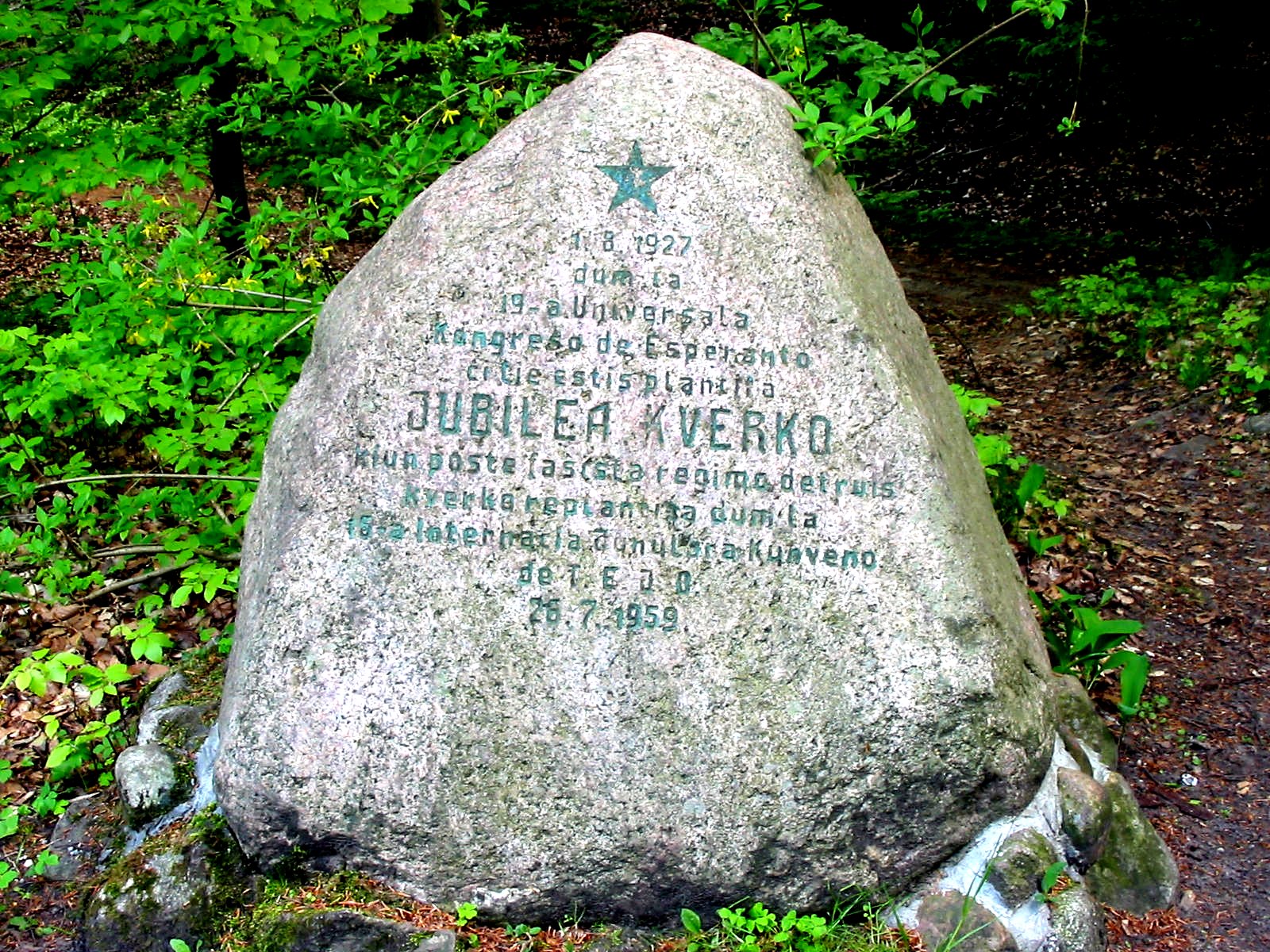
A Zamenhof-Esperanto object (, ZEO) is a monument or place linked to L. L. Zamenhof, to the constructed language Esperanto that he created and first published in 1887, or to the community of Esperanto speakers which has been using the language since.
History of Zamenhof-Esperanto objects and their registration
The first Zamenhof-Esperanto object was the ship Esperanto, constructed and launched in Spain in 1896, nine years after the language's birth. The 1934 Encyclopedia of Esperanto listed approximately 50 towns and cities in which Esperanto or Zamenhof have been honored. In 1997, a German Esperantist, Hugo Röllinger, published a book titled Monumente pri Esperanto – ilustrita dokumentaro pri 1044 Zamenhof/Esperanto-objektoj en 54 landoj ("Monumentally about Esperanto – an illustrated documentary of 1,044 Zamenhof-Esperanto objects in 54 countries") and until his death in 2001 he listed a total of 1,260 such objects. It is he who coined the acronym ZEO. Currently, Robert Kamiński of Poland is the person charged with the registration of ZEOs by the Universal Esperanto Association.
Notable Zamenhof-Esperanto objects
- Tallest
- At 12 meters, the Zamenhof monument in Sabadell, Spain, dating from 1989
- Longest
- At 4 kilometers, Esperanto Street in São Sebastião do Caí, Brazil
- Northernmost
- A monument to Esperanto in Narvik, Norway, at 68°25' N
- Esperanto Creek in Alaska, United States, at 63°27' N
- Cape Esperanto, Svalbard, Norway, at 78°37' N
- Southernmost
- Esperanto tree in Tasmania, Australia, at 42° S
- Zamenhof monument and Esperanto Street in Mar del Plata, Argentina
- Zamenhof street in Gqeberha (formerly Port Elizabeth), South Africa
- Esperanto Island, Antarctica, at 62°25'43" S
- Most remote
- The asteroids 1462 Zamenhof and 1421 Esperanto
- An inscription in Esperanto carried by the Voyager 1 and Voyager 2 spacecraft on their journey out of the Solar System
References
References
- "Gazetaraj Komunikoj N-ro 140 (2001-11-22): Raymond Boré daŭrigas la laboron de Röllinger". Universal Esperanto Association.
- "Zamenhof/Esperanto-objektoj (ZEO-j)". Universala Esperanto Asocio.
This article was imported from Wikipedia and is available under the Creative Commons Attribution-ShareAlike 4.0 License. Content has been adapted to SurfDoc format. Original contributors can be found on the article history page.
Ask Mako anything about Zamenhof-Esperanto object — get instant answers, deeper analysis, and related topics.
Research with MakoFree with your Surf account
Create a free account to save articles, ask Mako questions, and organize your research.
Sign up freeThis content may have been generated or modified by AI. CloudSurf Software LLC is not responsible for the accuracy, completeness, or reliability of AI-generated content. Always verify important information from primary sources.
Report