From Surf Wiki (app.surf) — the open knowledge base
Yuri Levitan
Soviet radio announcer (1914–1983)
Soviet radio announcer (1914–1983)
| Field | Value |
|---|---|
| name | Yuri Levitan |
| native_name | Юрий Левитан |
| native_name_lang | ru |
| image | File:Yuri Borisovich Levitan.jpg |
| caption | Levitan in 1944 |
| birth_date | |
| birth_place | Vladimir, Russia |
| death_date | |
| death_place | Bessonovka, Belgorod Oblast, Soviet Union |
| occupation | Radio announcer |
| post-nominals =
Yuri Borisovich Levitan (; 2 October 1914 – 4 August 1983) was the primary Soviet radio announcer during and after World War II. He announced on Radio Moscow all major international events in the 1940s–60s including the German attack on the Soviet Union on 22 June 1941, the surrender of Germany on 9 May 1945, the death of Joseph Stalin on 5 March 1953, and the first manned spaceflight on 12 April 1961.
Biography
Born in a Jewish family in Vladimir to a tailor and a housewife, Levitan traveled to Moscow in the early 1930s, hoping to become an actor, and was rejected because of his provincial accent. He secured a position on a Moscow radio station owing to his characteristic deep voice. In January 1934, after hearing Levitan broadcasting, Joseph Stalin called up the radio station and requested that from then on Levitan read his announcements. Consequently, Levitan became the personal announcer for Stalin and the leading Soviet radio personality.
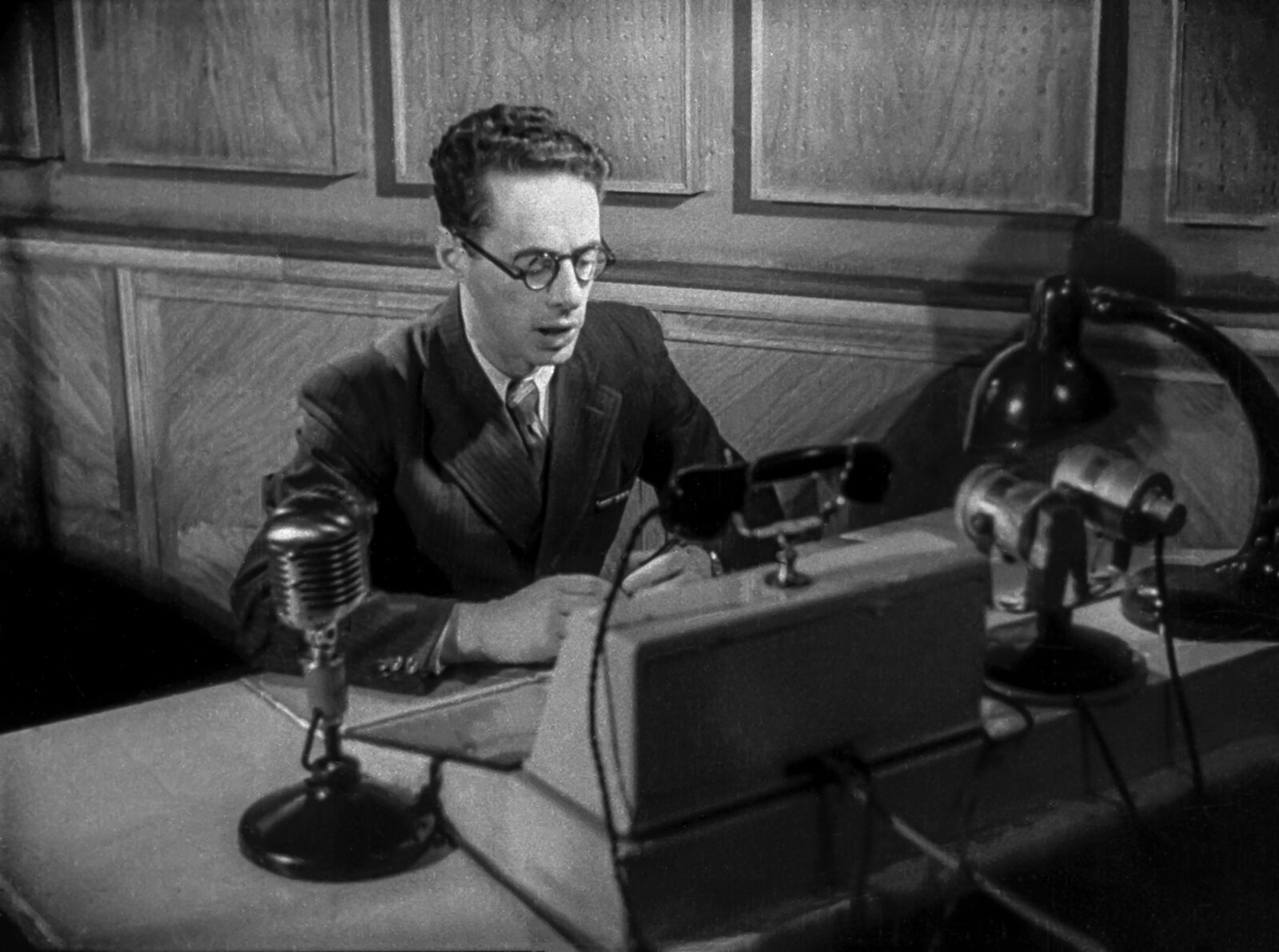
Levitan reading out Germany's unconditional surrender, May 9, 1945]] After the German invasion (22 June 1941) Levitan was evacuated (autumn 1941) to Sverdlovsk, as Moscow radio stations were taken down to avoid German bombardment. At the time he lived in a secret location due to his importance as the nation's foremost radio personality. In March 1943 he was secretly transported to Kuybyshev, where the Soviet radio committee met.
During his years away from Moscow, his reports began with his trademark "Attention, this is Moscow speaking!" () Levitan made some 2000 radio announcements during the war; he recorded recreations of many of them in the 1950s, when he reproduced them in studio for archiving purposes.
After the war Levitan reported events in the Red Square and state proclamations. Between 1978 and 1983 he announced the annual "Minute of Silence" to commemorate Victory Day in the Soviet Union. In 1980 he was awarded the title of People's Artist of the USSR. He died from a heart attack in 1983, and was buried in Novodevichy Cemetery in Moscow.
Legacy
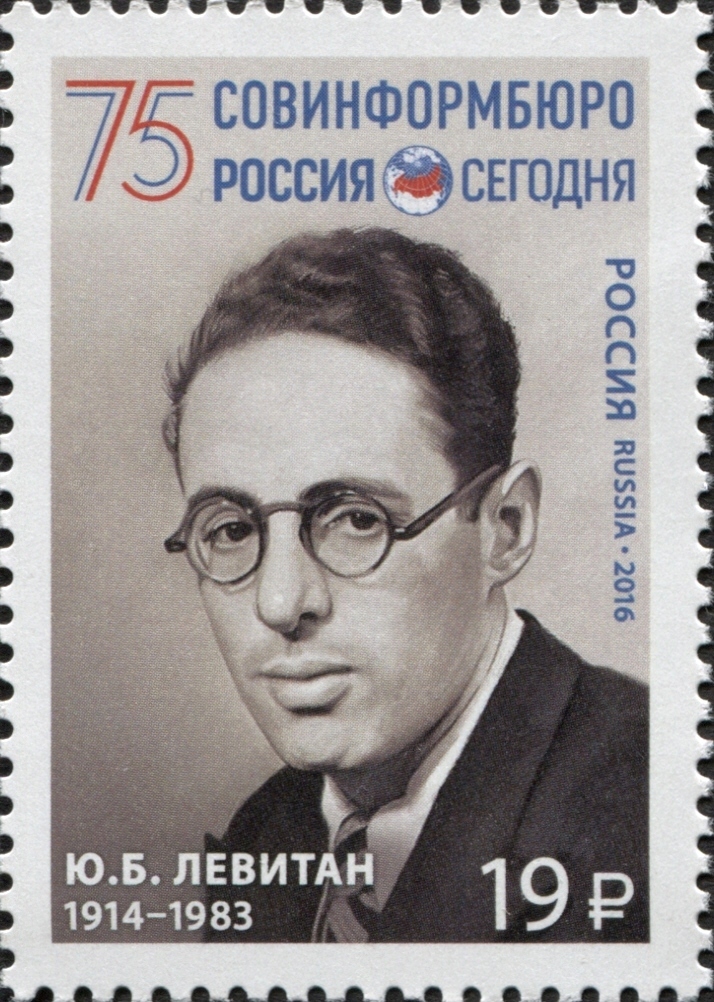
In Vladimir, the birth town of Levitan, there is a street named after him and a monument of Levitan. His monuments were also erected at his grave in Moscow, and in Volgograd, and streets were named after him in Almaty, Dnipro, Odesa, Orsk, Tver and Ufa. An Aeroflot passenger plane and a container cargo ship carry his name.
Notes
References
References
- Belenitskaya, Olga. (16 April 2015). "Moscow is speaking: The voice that brought hope to a nation".
- [https://www.vesti.ru/article/1807069 Голос истории: диктору Левитану хотят поставить народный памятник]. ''Vesti''. 9 July 2014
- [https://xn----7sbbe6addecj3bpgj0a0fvd.xn--p1ai/news/item/8506 Голос Левитана]. ''Uralskii Rabochii'' . 9 October 2014
- [https://govoritmoskva.ru/news/146720/ В «Аэрофлоте» разъяснили ситуацию с «левитановским» самолётом]. ''Govorit Moskva''. 4 January 2018.
- [http://www.shipspotting.com/gallery/photo.php?lid=803746 CONTAZ PIONEER – IMO 8313532]. shipspotting.com
This article was imported from Wikipedia and is available under the Creative Commons Attribution-ShareAlike 4.0 License. Content has been adapted to SurfDoc format. Original contributors can be found on the article history page.
Ask Mako anything about Yuri Levitan — get instant answers, deeper analysis, and related topics.
Research with MakoFree with your Surf account
Create a free account to save articles, ask Mako questions, and organize your research.
Sign up freeThis content may have been generated or modified by AI. CloudSurf Software LLC is not responsible for the accuracy, completeness, or reliability of AI-generated content. Always verify important information from primary sources.
Report