From Surf Wiki (app.surf) — the open knowledge base
Yonkoma
Comic strip format
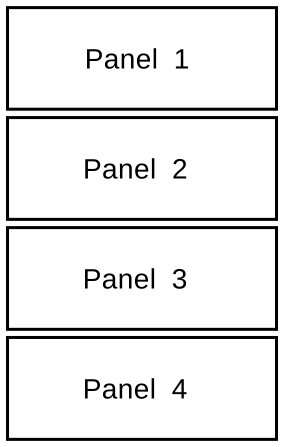
Comic strip format
Yonkoma manga is a comic strip format that generally consists of gag comic strips within four panels of equal size, following a structure known as kishōtenketsu.
Origin
Rakuten Kitazawa (who wrote under the name Yasuji Kitazawa) produced the first yonkoma in 1902. Entitled Jiji Manga, it is thought to have been influenced by the works of Frank Arthur Nankivell and of Frederick Burr Opper.
Structure
Traditionally, yonkoma follow a structure known as kishōtenketsu. This word is a compound formed from the following Japanese kanji characters:
- Ki (起): The first panel forms the basis of the story; it sets the scene.
- Shō (承): The second panel develops upon the foundation of the story laid down in the first panel.
- Ten (転): The third panel is the climax, in which an unforeseen development occurs.
- Ketsu (結): The fourth panel is the conclusion, in which the effects of the third panel are seen.
Yonkoma most commonly consists of gag comic strips within four panels of equal size ordered from top to bottom. They also sometimes run right-to-left horizontally or use a hybrid 2×2 style, depending on the layout requirements of the publication in which they appear.
Uses
These comic strips appear in almost all types of publications in Japan, including manga magazines, graphic novels, the comics section of newspapers, game magazines, cooking magazines, and so forth. The plot often ends within the four panels; although some serial development may pass on to future installments, creating a more continuous story. Some yonkoma also tackle serious topics, though most do so with humor. Some manga occasionally use yonkoma, usually at the end of a chapter or bound volume, as a non-canon joke to complement the story.
References
References
- Fischer, Carolin. "Yonkoma Manga".
- Walker, Brian. (2002). "The Comics: Since 1945". Harry N. Abrams, Inc..
This article was imported from Wikipedia and is available under the Creative Commons Attribution-ShareAlike 4.0 License. Content has been adapted to SurfDoc format. Original contributors can be found on the article history page.
Ask Mako anything about Yonkoma — get instant answers, deeper analysis, and related topics.
Research with MakoFree with your Surf account
Create a free account to save articles, ask Mako questions, and organize your research.
Sign up freeThis content may have been generated or modified by AI. CloudSurf Software LLC is not responsible for the accuracy, completeness, or reliability of AI-generated content. Always verify important information from primary sources.
Report