From Surf Wiki (app.surf) — the open knowledge base
Yoga for children
Form of yoga as exercise

Form of yoga as exercise
Yoga for children is a form of yoga as exercise designed for children. It includes poses to increase strength, flexibility, and coordination. Classes are intended to be fun and may include age-appropriate games, animal sounds and creative names for poses.
Approach
Montessori and Kundalini Yoga teacher and teacher trainer Shakta Khalsa began to teach yoga to children in the 1970s, in a Kundalini community. She states that the approach is not "just a scaled-down version of yoga for adults—it's a whole different animal." She taught asanas using simple descriptions: Downward Dog pose by getting the class to make the shape of a mountain, and Virabhadrasana by asking them to be "fearless warriors". She led children into pranayama with breath-awareness exercises like blowing on a feather and noticing the different feelings that came when you blew hard or gently. She discovered that the teacher had to avoid even basic terms like "inhale" and "exhale" if the children didn't know those words. In 1998 she published an early guide to children's yoga, Fly Like a Butterfly.
Marsha Wenig, founder of YogaKids International, has developed yoga sessions with videos suitable for children aged 3 to 6. She agrees that the teaching methods are necessarily quite different from those used to teach adults. The benefits may be "stillness, balance, flexibility, focus, peace, grace, connection, health, and well-being" but the challenge for the teacher is to hold the class's attention. She encourages children to "bark in the dog pose, hiss in the cobra, and meow in cat stretch." Her experiences led to a 2003 book describing the methods that she developed.
Health benefits

The benefits for children are similar to those for adults. Emotional benefits include greater optimism and a less reactive nature. Mental benefits including increased focus, concentration and improvements in the quality of sleep have been reported.
Academic performance improves, along with confidence in physical abilities. Yoga is used for the treatment of children with special needs, and to aid conventional medical treatment. Yoga practice helps to protect boys from increases in negative behavior.
Physical benefits include increased flexibility, improved coordination and balance, and increased core and body strength. Mental benefits include stronger mind–body connection, increased self-esteem, better focus and concentration, and increased ability to relax and cope with stressful situations. Social and emotional benefits include more awareness of self and others, and increased skill in problem solving and conflict resolution.
Issues
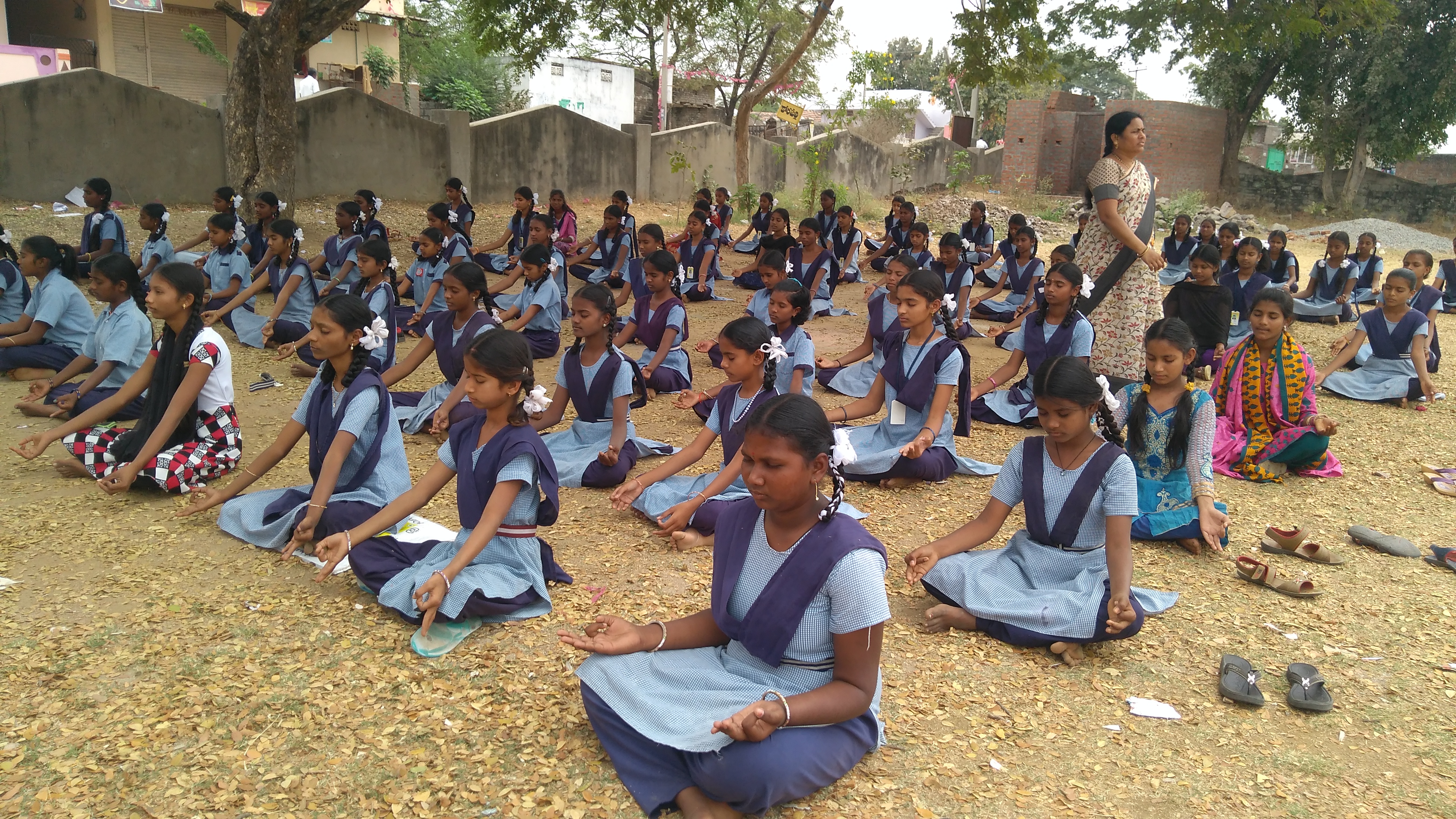
Some parents are worried by yoga's religious associations, believing that yoga is an offshoot of Hinduism.
References
Sources
References
- "The ABCs of Yoga". [[Kripalu]].
- "Marsha Wenig". Gaia.
- Wenig, Marsha. (5 April 2017). "Discover Why Kids Need Yoga as Much as We Do". [[Yoga Journal]].
- LoRusso, Amanda. (17 July 2013). "Yoga and the Science of Sleep". [[Huffington Post]].
- D'Arezzo, Darlene. "Special yoga for special kids".
- "Yoga for special kids".
- Kokinakis, Leah. "Yoga and Adolescents: What do we know?". [[University of Michigan]].
- Fabian, K. (2014, October 29). 7 Ways Kids Benefit From Yoga. Retrieved May 29, 2017, from https://www.mindbodygreen.com/0-15075/7-ways-kids-benefit-from-yoga.html
- Tilak, V.. (29 September 2015). "The Benefits of Yoga for Kids".
- Hyde, Andrea. (2012). "The Yoga in Schools Movement: Using Standards for Educating the Whole Child and Making Space for Teacher Self-Care". Counterpoints.
- "Andrea Hyde". [[Kripalu]].
This article was imported from Wikipedia and is available under the Creative Commons Attribution-ShareAlike 4.0 License. Content has been adapted to SurfDoc format. Original contributors can be found on the article history page.
Ask Mako anything about Yoga for children — get instant answers, deeper analysis, and related topics.
Research with MakoFree with your Surf account
Create a free account to save articles, ask Mako questions, and organize your research.
Sign up freeThis content may have been generated or modified by AI. CloudSurf Software LLC is not responsible for the accuracy, completeness, or reliability of AI-generated content. Always verify important information from primary sources.
Report