From Surf Wiki (app.surf) — the open knowledge base
Yemin Moshe
Neighborhood of Jerusalem in Jerusalem District, Jerusalem

Neighborhood of Jerusalem in Jerusalem District, Jerusalem
| Field | Value |
|---|---|
| name | Yemin Moshe |
| native_name | |
| settlement_type | Neighborhood of Jerusalem |
| image_skyline | ירושלים - Jerusalem (4228647829).jpg |
| imagesize | 300px |
| image_caption | View of Yemin Moshe |
| subdivision_type | Country |
| subdivision_name | Israel |
| subdivision_type1 | District |
| subdivision_name1 | Jerusalem District |
| subdivision_type2 | City |
| subdivision_name2 | Jerusalem |
| established_title | Founded |
| established_date | 1892–1894 |
| founder | Montefiore Welfare Fund |
| area_code_type | Area code |
Yemin Moshe ( "Moses Memorial") is a historic neighborhood in Jerusalem, overlooking the Old City.
History

Yemin Moshe was established in 1892–1894 by the Montefiore Welfare Fund. Located outside Jerusalem's Old City, it was conceived as a solution to the overcrowding and unsanitary conditions inside the walls. The Fund was continuing the work done by British Jewish banker Moses Montefiore and the new project was meant to mark the seventh year after the philanthropist's death. The name commemorates Montefiore's first name and a verse from the Book of Isaiah (Isaiah 63:11–12).
The land was bought in 1855 by Montefiore with money from the estate of Judah Touro and came to be known as Kerem Moshe VeYehudit, Moses and Judith Vineyard, after Montefiore and his wife.
Windmill
Main article: Montefiore Windmill
Montefiore left an indelible mark on the Jerusalem landscape by building in 1857 the windmill in what later became the Yemin Moshe neighbourhood. The windmill became operational in 1860.
Mishkenot Sha'ananim
Main article: Mishkenot Sha'ananim
The first housing project, Mishkenot Sha'ananim, consisted of two rows of buildings. Its first houses were completed by 1860 and contained 28 apartments of one-and-a-half rooms. The compound also had a water cistern with an iron pump imported from England, a mikveh and a communal oven. Few people were prepared to live there at the time due to its location outside the city walls, in an area open to Bedouin marauders. Only the poor took up the offer, despite the more hygienic and relatively spacious flats, and the foundation even resorted to paying people in order to persuade them. A wall was built around the houses and the access gate was locked at night. The second row of houses of Mishkenot Sha'ananim was built in 1866 when a cholera epidemic was at its height in the Old City. Some people had taken up residence in the new neighborhood during daytime hours, but had so far refused to stay there at night, however now they fully moved in as illness proved to be a greater menace than night robbers.
Yemin Moshe

Other facilities and projects

In addition to the windmill, which was built to allow poor Jews to grind their own flour, Montefiore built a printing press and textile factory, and helped to finance several agricultural colonies. He also attempted to acquire arable land for Jewish cultivation, but was hampered by Ottoman restrictions on land sale to non-Muslims.
A historical building, now named Confederation House after the World Confederation of United Zionists (see Kalman Sultanik article), standing at the back of the King David Hotel and immediately adjacent to Yemin Moshe proper, houses since 1984 a center for ethnic music and poetry.
Today
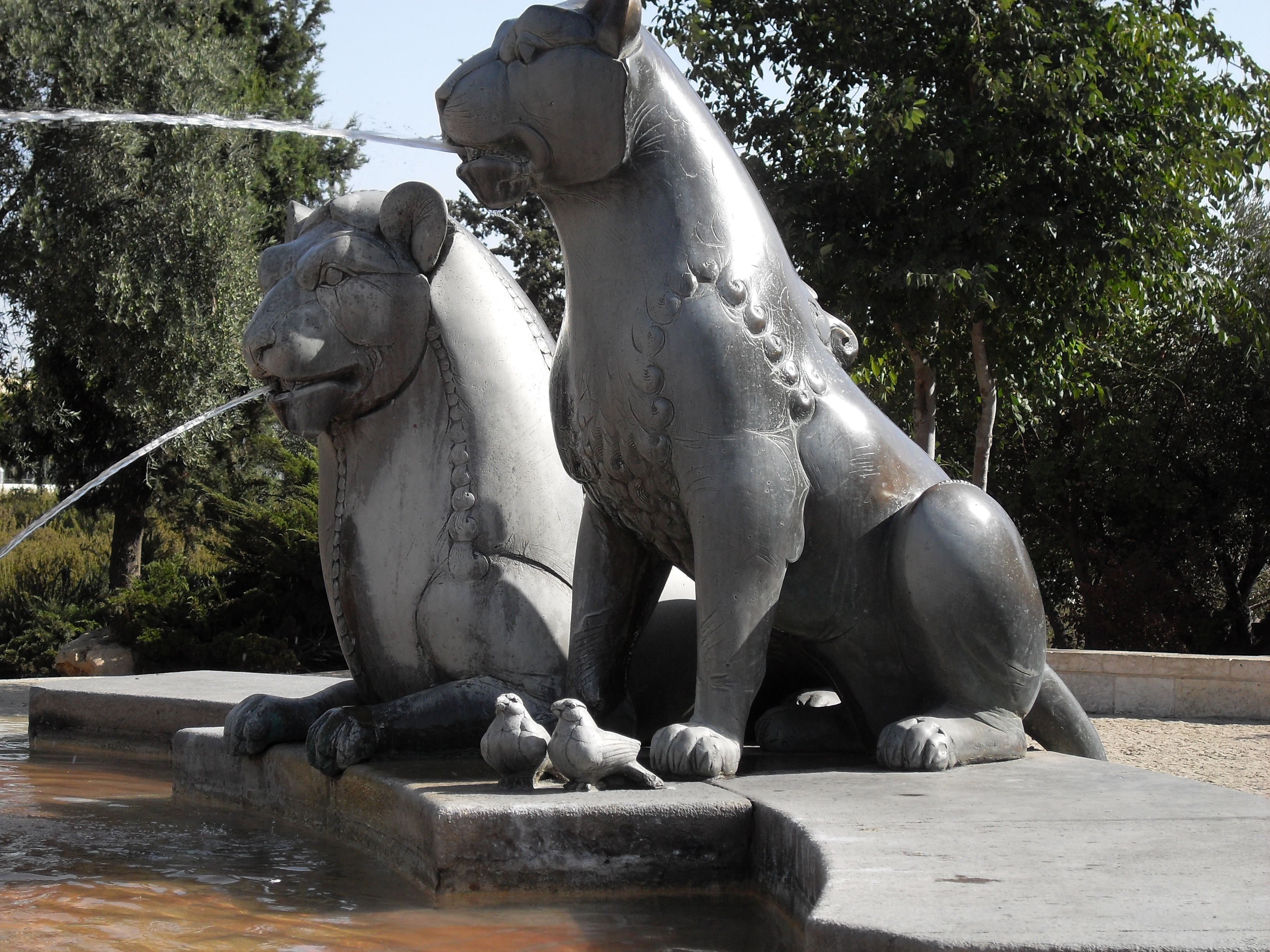
Yemin Moshe is an upscale neighborhood surrounded by gardens with a panoramic view of the Old City walls. The Mishkenot Sha'ananim buildings were turned into a cultural center and guesthouse for writers, intellectuals and musicians.
Notable residents
- Daniella Kertesz (born 1989), actress
References
References
- Eliyahu Wager. (1988). "Illustrated guide to Jerusalem". The Jerusalem Publishing House.
- (1946-07-22). "Jerusalem - Beyond the Old City Walls". Jewishvirtuallibrary.org.
- "Yemin Moshe and Mishkenot Sha'ananim". Pinhas Baraq for [[The Jewish Agency for Israel]]'s Department for Jewish Zionist Education.
- "Photograph of Ben-Hinnom Valley and Mishkenot Sha'ananim, End of Nineteenth Century". [[National Library of Israel]].
- "Timeline".
- [http://www.confederationhouse.org/en/About Confederation House: About Us]. Retrieved 28 March 2022.
- [https://www.jpost.com/Business/Real-Estate/Foreigners-guide-to-property-market-Yemin-Moshe "Foreigners guide to property market: Yemin Moshe"], Lyle Plocher for ''The Jerusalem Post'', 18 December 2011. Re-accessed 23 August 2021.
This article was imported from Wikipedia and is available under the Creative Commons Attribution-ShareAlike 4.0 License. Content has been adapted to SurfDoc format. Original contributors can be found on the article history page.
Ask Mako anything about Yemin Moshe — get instant answers, deeper analysis, and related topics.
Research with MakoFree with your Surf account
Create a free account to save articles, ask Mako questions, and organize your research.
Sign up freeThis content may have been generated or modified by AI. CloudSurf Software LLC is not responsible for the accuracy, completeness, or reliability of AI-generated content. Always verify important information from primary sources.
Report