From Surf Wiki (app.surf) — the open knowledge base
Yakult
Sweetened probiotic milk beverage

Sweetened probiotic milk beverage
| Field | Value |
|---|---|
| logo | Yakult-logo.svg |
| name | Yakult |
| image | Yakult drink.jpg |
| caption | A single serving of Yakult |
| type | Drink |
| manufacturer | Yakult Honsha |
| distributor | Yakult Honsha |
| origin | Japan |
| introduced | 1935 |
| colour | Light peach |
| ingredients | Water, skimmed milk, glucose-fructose syrup, sucrose, citrus, live Lacticaseibacillus casei Shirota |
the beverage
Yakult is a Japanese sweetened probiotic milk beverage fermented with the bacteria strain Lacticaseibacillus casei Shirota. It is sold by Yakult Honsha based in Tokyo. The name "Yakult" was coined from jahurto, an Esperanto word meaning "yogurt".
Ingredients
Yakult's ingredients are water, skimmed milk, glucose-fructose syrup, sucrose, natural flavours (citrus), and live Lacticaseibacillus casei Shirota bacteria. The strain was originally classified as being Lactobacillus casei.
Yakult is prepared by adding glucose to skimmed milk and heating the mixture at 90 to 95 °C for about 30 minutes. After letting it cool down to 45 °C, the mixture is inoculated with the lactobacillus and incubated for 6 to 7 days at 37 to 38 °C. After fermentation, water, sugar, gums, and lactic acid are added.
Health claims
In 2006, a panel appointed by the Netherlands Nutrition Center (Voedingscentrum) to evaluate a marketing request by Yakult found sufficient evidence to justify claims that drinking at least one bottle of Yakult per day might help improve bowel movements for people who tend to be constipated and might help maintain a healthy population of gut flora. However, these claims are not approved as health claims under EU regulations, which require authorization by the European Food Safety Authority (EFSA). The Netherlands Nutrition Center does not endorse specific probiotic products like Yakult, as only one probiotic health claim is authorized in the EU: that live bacteria in yogurt or fermented milk improve lactose digestion in individuals with lactose maldigestion. This claim is exclusive to yogurt and fermented milk containing specific strains (Lactobacillus delbrueckii subsp. bulgaricus and Streptococcus thermophilus). EFSA has rejected most probiotic health claims, including those for strains not in yogurt/fermented milk.
In 2010, a EFSA panel decided that the company was not allowed to make the health claim that the product defends the upper respiratory tract against pathogens (and thus protect against diseases like the common cold), finding that this not supported by evidence.
In 2013, the UK Advertising Standards Authority disallowed an advertisement for Yakult in response to a complaint. It found that while there was sufficient evidence for the claim that "significant numbers of viable [Lactobacillus] survived transit to the gut [after consumption of Yakult]", the advertisement had made claims of general health benefits without providing a specific, referenced claim, as required.
Marketing history
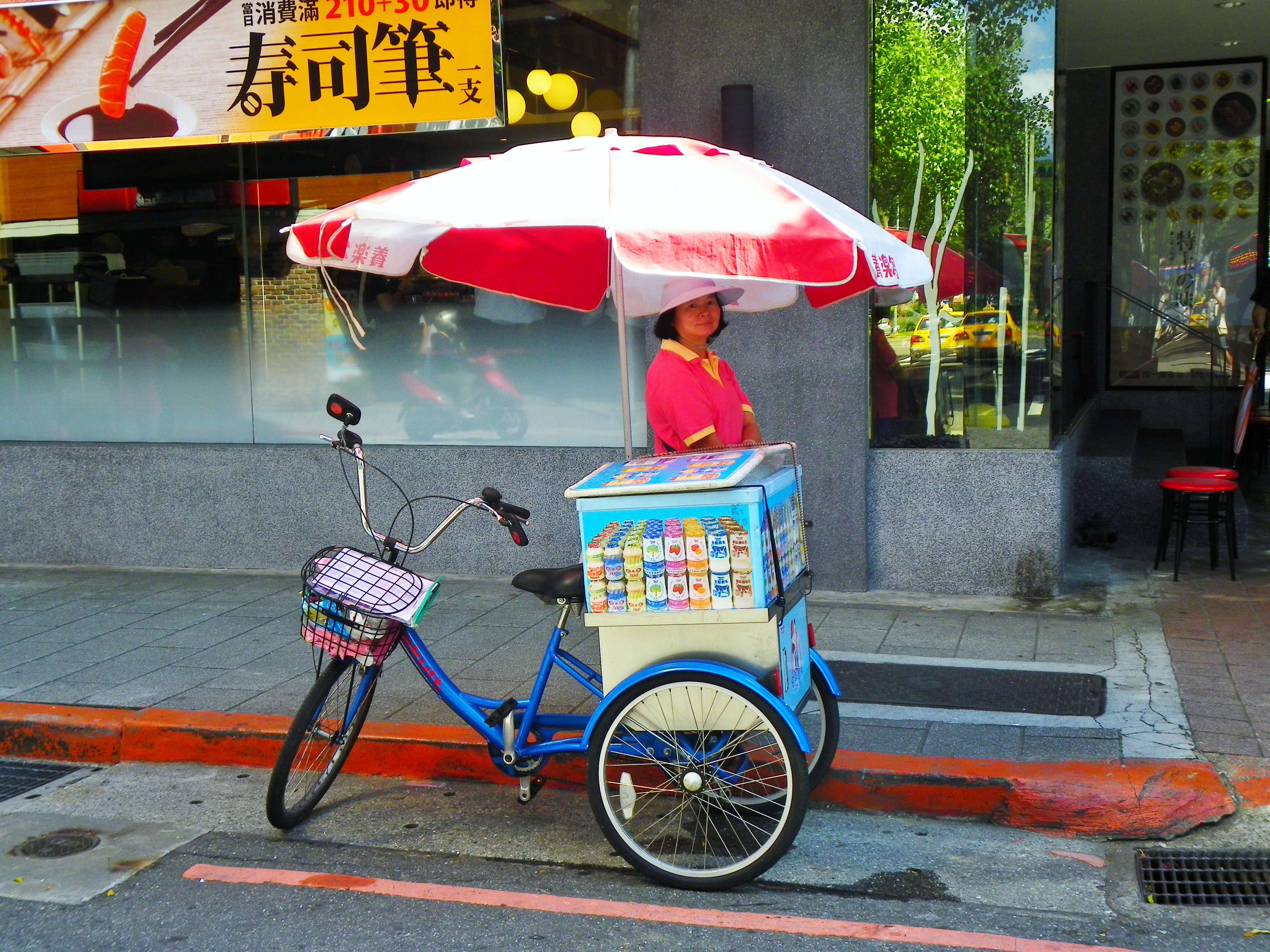

Yakult was invented in 1935 in Japan by Minoru Shirota, who helped found the company Yakult Honsha for the purpose of commercializing it. Although Yakult is sold in Japan in supermarkets and convenience stores, it is also sold door-to-door in Japan, Asia, and Latin America in convenience stores.
History
In 1930, scientist Minoru Shirota strengthened and cultured the Lactobacillus casei Shirota strain. Five years later, in 1935, Yakult began production in Japan. The company continued to expand, and in 1955, Yakult Honsha was established.
In 1963, Yakult introduced a home delivery service, employing "Yakult ladies" to distribute the product directly to consumers. The following year, Yakult expanded internationally, beginning sales in Taiwan. In 1968, the company opened its first factory outside Japan in São Bernardo do Campo, Brazil. This international growth continued in 1969 with the establishment of the Hong Kong Yakult Co Ltd and the founding of Korea Yakult in South Korea.
By 1981, Yakult had entered the Mexican market, opening a factory in the city of Ixtapaluca under the direction of Carlos Kasuga. Further expansion took place in 1994, with the product becoming available in Australia, Great Britain, and the United States.
In 2004, Yakult launched sales in New Zealand through its Australian operations. That same year, Yakult LIGHT was introduced in Australia, offering a lower-sugar alternative. In 2017, the company reformulated Yakult LIGHT to further reduce sugar and energy content, replacing sugar with Stevia.
In 2014, the company opened its first manufacturing facility in the United States, located in Fountain Valley, California.
Relationship with Danone
In February 2018, it was reported that Danone planned to sell US$1.9 billion of its Yakult investment, reducing its stake from 21% to 7%. The plan was followed by a decline in Yakult's share value. Danone had first bought shares in Yakult in April 2000.
In mass media
In September 2018, it was reported that the appearance of unlabelled Yakult bottles in the 2018 film To All the Boys I've Loved Before led to a rise in the drink's sales that coincided with a 2.8% increase in share price following the film's release on 17 August.
In January 2020, professional sumo wrestler Takakeishō Takanobu appeared in a television commercial advertising Yakult 1000.
References
References
- (5 September 2018). "The cult of Yakult: the surprising reason the world's gone wild for the probiotic drink". The Guardian.
- (19 December 2015). "Yakult product information and nutrition facts". Yakult U.S.A. Inc..
- (2007). "Ullmann's Encyclopedia of Industrial Chemistry".
- (10 November 2006). "Assessment Report: Yakult". Netherlands Nutrition Centre.
- (2010). "Scientific Opinion on the substantiation of health claims related to live yoghurt cultures and improved lactose digestion (ID 1143, 2976)". EFSA Journal.
- [http://www.voedingscentrum.nl/encyclopedie/probiotica.aspx Voedingscentrum over probiotica]
- (2013). "Scientific Opinion on the substantiation of a health claim related to a combination of ''Bifidobacterium longum'' LA 101, ''Lactobacillus helveticus'' LA 102, ''Lactococcus lactis'' LA 103 and ''Streptococcus thermophillus'' LA 104 and reducing intestinal discomfort pursuant to Article 13(5) of Regulation (EC) No 1924/2006 (example, search EFSA for other opinion reports on probiotics". EFSA Journal.
- (October 2010). "Scientific Opinion on the substantiation of a health claim related to Lactobacillus casei strain Shirota and maintenance of the upper respiratory tract defence against pathogens by maintaining immune defences pursuant to Article 13(5) of Regulation (EC) N". The Telegraph.
- (15 May 2013). "ASA Adjudication on Yakult UK Ltd".
- (2011). "Probiotic Bacteria and Enteric Infections Cytoprotection by Probiotic Bacteria". Springer Science & Business Media.
- (8 March 2021). "Yakult Probiotic Drink: Bottled Gut Health Magic".
- Ryall, Julian. (11 November 2018). "The Yakult story: Japanese health drink that conquered world with beneficial bacteria and beaming ladies". [[The Star (Malaysia).
- "Origem - Yakult Brasil".
- "Hong Kong Yakult Co Ltd".
- (30 September 2018). "야쿠르트 - 윤덕병".
- Bretón, Ángeles. (21 May 2022). "Yakult: cuatro décadas de arraigo en Puebla". El Universal Puebla.
- "FAQ".
- (20 May 2014). "Yakult opens probiotic drink factory in California".
- (14 February 2018). "Danone to sell $1.9 billion Yakult stake in quest to boost shareholder returns". Reuters.
- (14 February 2018). "Danone to Sell Stake in Japan's Yakult for $1.9 Billion". Bloomberg.
- (14 February 2018). "Yakult Declines After Danone's $1.9 Billion Share Sale Plan". Bloomberg.
- (28 March 2018). "Danone completes 1.3bn euro sale of its 14% stake in Yakult". FoodBev Media.
- (4 September 2018). "Yakult shares increase following release of Netflix's 'To All the Boys I've Loved Before'". The Independent.
- (19 December 2019). "貴景勝「熱いお風呂ダメ」ダチョウ倶楽部の勧誘断る - 大相撲 : 日刊スポーツ". Nikkan Sports.
- (17 January 2020). "貴景勝 関がテレビCM初出演!!「Yakult(ヤクルト)1000」の新CMがスタート!!". Yakult Honsha.
This article was imported from Wikipedia and is available under the Creative Commons Attribution-ShareAlike 4.0 License. Content has been adapted to SurfDoc format. Original contributors can be found on the article history page.
Ask Mako anything about Yakult — get instant answers, deeper analysis, and related topics.
Research with MakoFree with your Surf account
Create a free account to save articles, ask Mako questions, and organize your research.
Sign up freeThis content may have been generated or modified by AI. CloudSurf Software LLC is not responsible for the accuracy, completeness, or reliability of AI-generated content. Always verify important information from primary sources.
Report