From Surf Wiki (app.surf) — the open knowledge base
Xiangyang
._Hubei_Province,_China,_1874_WDL2101.png)
| Field | Value | |
|---|---|---|
| name | Xiangyang | |
| other_name | Siangyang, Siang-yang | |
| native_name | 襄阳市 | |
| native_name_lang | zh-Hans | |
| settlement_type | Prefecture-level city | |
| image_skyline | Xiangyang, Hubei, China.jpg | |
| imagesize | 280px | |
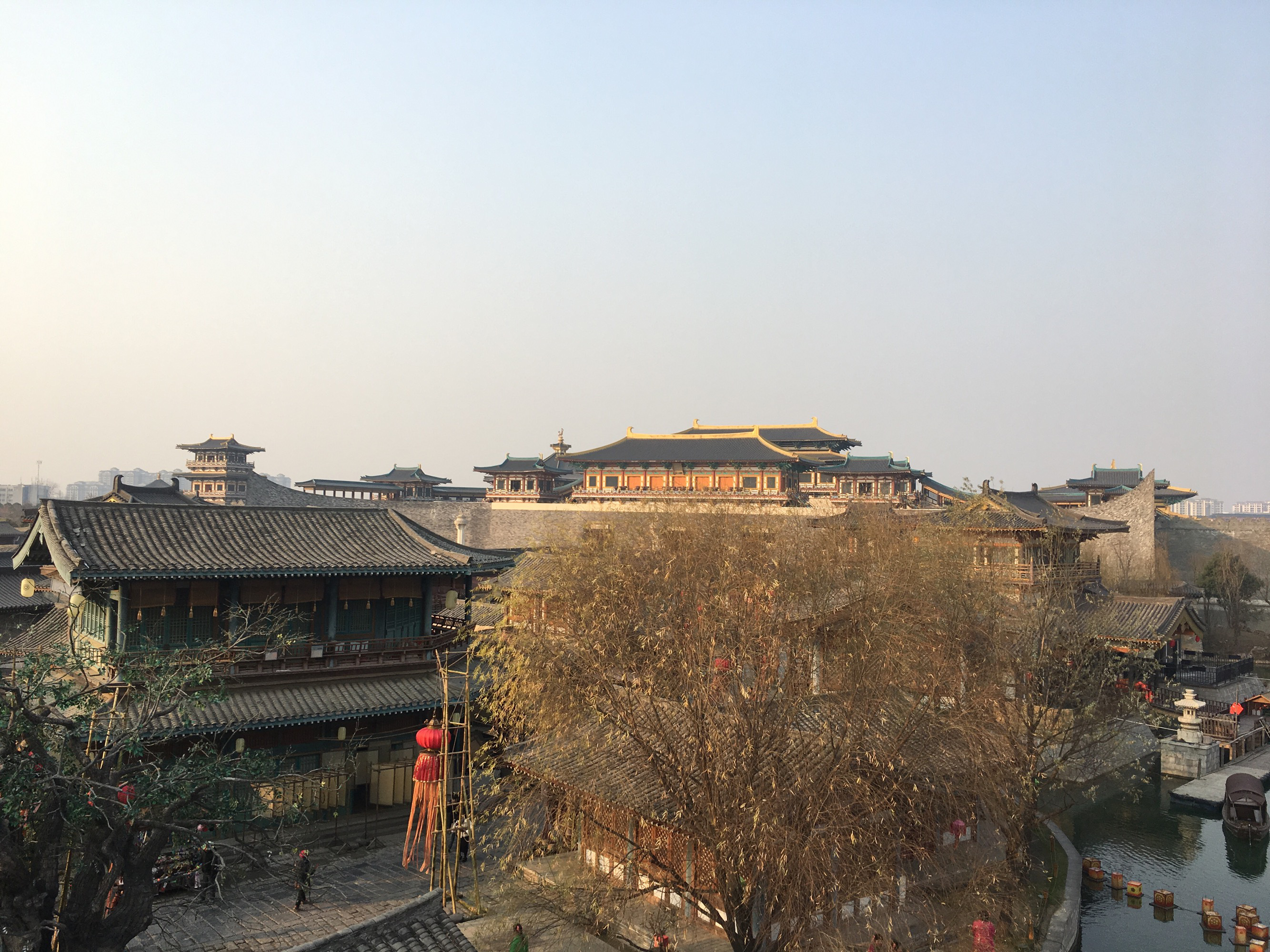
| image_caption | Overlooking Fancheng District from Xiangcheng District on the other side of the Han River. | |
| image_map | Location of Xiangfan Prefecture within Hubei (China).png | |
| map_caption | Location of Xiangyang City jurisdiction in Hubei | |
| dot_x | dot_y = | |
| pushpin_map | Hubei | |
| pushpin_map_caption | Location of the city centre in Hubei | |
| subdivision_type | Country | |
| subdivision_name | People's Republic of China | |
| subdivision_type1 | Province | |
| subdivision_name1 | Hubei | |
| subdivision_type2 | County-level divisions | |
| subdivision_name2 | 8 | |
| subdivision_type3 | Township-level divisions | |
| subdivision_name3 | 159 | |
| seat_type | Municipal seat | |
| seat | Xiangcheng District | |
| parts_style | ||
| parts | ||
| p2 | ||
| leader_title | Mayor | |
| leader_name | Qie Yingcai | |
| leader_title1 | ||
| established_title | ||
| established_title1 | ||
| established_title2 | ||
| area_magnitude | ||
| unit_pref | ||
| area_total_km2 | 19724.41 | |
| area_land_km2 | ||
| area_metro_km2 | 3672.9 | |
| area_urban_km2 | 3672.9 | |
| elevation_footnotes | ||
| elevation_m | 71 | |
| elevation_ft | 232 | |
| population_as_of | 2020 census | |
| population_footnotes | ||
| population_total | 5260951 | |
| population_density_km2 | auto | |
| population_metro | 2319640 | |
| population_density_metro_km2 | auto | |
| population_urban | 2319640 | |
| population_density_urban_km2 | auto | |
| demographics_type2 | GDP | |
| demographics2_title1 | Prefecture-level city | |
| demographics2_info1 | CN¥ 338.2 billion | |
| US$ 54.3 billion | ||
| demographics2_title2 | Per capita | |
| demographics2_info2 | CN¥ 60,319 | |
| US$ 9,684 | ||
| timezone | China Standard | |
| utc_offset | +8 | |
| coor_pinpoint | Xiangyang municipal government | |
| coordinates | ||
| postal_code_type | ||
| postal_code | 441000 | |
| area_code | 710 | |
| iso_code | CN-HB-06 | |
| blank2_name | License Plate Prefix | |
| blank2_info | 鄂F | |
| blank3_name | ||
| website |
Default is list if up to 5 items, coll if more than 5-- US$ 54.3 billion US$ 9,684
Xiangyang is the second-largest prefecture-level city by population in northwestern Hubei province, China. It was known as Xiangfan from 1950 to 2010.{{cite web | script-title = zh:湖北省襄樊市更名为襄阳市(图) | access-date = 2010-12-03 | archive-date = 2015-01-10 | archive-url = https://web.archive.org/web/20150110023626/http://news.163.com/10/1202/17/6MTQ6F9V00014JB5.html | url-status = live
History
Xiangyang is located at a strategic site on the middle reaches of the Han River, and has witnessed several significant battles in Chinese history. Xiangyang County was first established at the location of modern Xiangcheng in the early Western Han dynasty and the name had been used continuously for more than 2,000 years until the 20th century.
In the final years of the Eastern Han dynasty, Xiangyang became the capital of Jing Province (ancient Jingzhou). The warlord Liu Biao governed his territory from here. Under Liu's rule, Xiangyang became a major destination of the northern elite fleeing warfare in the Central Plain. In the Battle of Xiangyang in 191 AD, Sun Jian, a rival warlord and the father of Sun Quan, founder of Eastern Wu, was defeated and killed. The area passed to Liu Bei after Liu Biao's death. Two decades later, Battle of Fancheng, one of the most important battles in late Han-Three Kingdoms period, was fought here, resulting in Liu Bei's loss of Jingzhou.
During the early years of the Jin dynasty, Xiangyang was on the frontier between Jin and Eastern Wu. Yang Hu, the commander in Xiangyang, was remembered for his policy of "border peace". Cross-border commerce was allowed, and the pressure on the Jin army was greatly relieved. Eventually, Xiangyang accumulated sufficient supplies for 10 years, which played a key role in Jin's conquest of Wu.

In the Southern Song dynasty, after the Treaty of Shaoxing, Xiangyang became a garrison city on the northern frontier of Song. During Mongol conquest of the Song dynasty, Xiangyang together with Fancheng formed one of the greatest obstacles against the expansion of Mongol Empire. They were able to resist for six years before finally surrendering in the Siege of Xiangyang.
In 1796, Xiangyang was one of the centers of the White Lotus Rebellion against the Qing dynasty. Here, rebel leader Wang Cong'er successfully organized a rebel army of 50,000 and joined the main rebel forces in Sichuan. The revolt lasted for nearly 10 years and marked a turning point in the history of Qing dynasty.
In 1950, Xiangyang and Fancheng were merged to form Xiangfan City. In later 20th century, it became a major transport hub as Handan, Jiaoliu, and Xiangyu railways intersect in Fancheng. The city's current boundaries were established in 1983 when Xiangyang Prefecture was incorporated into Xiangfan City. The city was renamed to Xiangyang in 2010.
Geography
Xiangyang has a latitude range of 31° 14'−32° 37' N, or 154 km, and longitude range of 110° 45'−113° 43' E, or 220 km, and is located on the middle reaches of the Hanshui, a major tributary of the Yangtze River. The urban area, however, has a latitude range of 31° 54'−32° 10' N, or 29 km, and longitude range of 112° 00'−112° 14' E, or 21 km. It borders Suizhou to the east, Jingmen and Yichang to the south, Shennongjia and Shiyan to the west, and Nanyang (Henan) to the north. Its administrative border has a total length of 1332.8 km.
Climate
Xiangyang has a monsoon-influenced, four season humid subtropical climate (Köppen Cfa), with cold, damp (but comparatively dry), winters, and hot, humid summers.
| Jan record high C = 21.8 | Jan record low C = -8.8 | Feb record high C = 23.6 | Feb record low C = -7.9 | Mar record high C = 32.8 | Mar record low C = -2.7 | Apr record high C = 34.0 | Apr record low C = -0.1 | May record high C = 37.4 | May record low C = 8.4 | Jun record high C = 38.0 | Jun record low C = 12.6 | Jul record high C = 39.6 | Jul record low C = 17.2 | Aug record high C = 39.0 | Aug record low C = 14.9 | Sep record high C = 39.3 | Sep record low C = 10.5 | Oct record high C = 37.7 | Oct record low C = 0.0 | Nov record high C = 27.7 | Nov record low C = -3.4 | Dec record high C = 21.7 | Dec record low C = -6.8
Administration
The prefecture-level city of Xiangyang administers 9 county-level divisions, including 3 districts, 3 county-level cities and 3 counties.
- Xiangcheng District ({{linktext|襄城|区}})
- Xiangzhou District ({{linktext|襄州|区}})
- Fancheng District ({{linktext|樊城|区}})
- Zaoyang City ({{linktext|枣阳|市}})
- Yicheng City ({{linktext|宜城|市}})
- Laohekou City ({{linktext|老河口|市}})
- Nanzhang County ({{linktext|南漳|县}})
- Gucheng County ({{linktext|谷城|县}})
- Baokang County ({{linktext|保康|县}})
These are further divided into 159 township-level divisions, including 106 towns, 29 townships and 24 subdistricts.
| Map |
|---|
Population
According to the Sixth National Population Census in 2010, as of November 1, Xiangyang had a resident population of 5,500,307. Males accounted for 50.61% and females 49.39%, with a sex ratio of 102.46 males per 100 females. By age, 0–14 years old made up 15.00%, 15–64 years old 76.51%, and 65 and above 8.49%. The city had 1,572,191 households with a total household population of 5,134,811.
According to the Seventh National Population Census in 2020 (data as of November 1, 2020), Xiangyang had a resident population of 5,260,951, a decrease of 239,356 from the Sixth Census in 2010, a decline of 4.35%. Males accounted for 50.59% and females 49.41%, with a sex ratio of 102.41. People aged 0–14 made up 17.43%, 15–59 years 61.87%, and 60 years and above 20.70%. The city had 1,810,009 households and 70,559 collective households, with 4,903,729 people in households and 357,222 in collective households. The urbanization rate was 61.66%, the population living separately from their household registration was 1,424,500, and the floating population was 822,900.
Economy
Xiangyang possesses large water energy resources whilst its mineral deposits include rutile, ilmenite, phosphorus, barite, coal, iron, aluminum, gold, manganese, nitre, and rock salt. The reserves of rutile and ilmenite rank highly in China. Textile production is the mainstay industry of Xiangyang followed by machinery manufacture, chemical processing, electronics, and manufacture of construction materials. Agricultural resources are significant with Xiangyang's chief farm products including grain, cotton, vegetable oil crops, tobacco, tea and fruit. As the home of Dongfeng Motors, Xiangyang is a well known automobile hub and partners with foreign manufacturers to produce Nissan and Infiniti models for domestic sales. In addition, there are a number of chemical fibre enterprises in the city including Birla Jingwei Fibres, a member of the Aditya Birla Group. The city has also invested in many industrial, technology and clean energy parks.
Intelligent and Connected Vehicle Demonstration Zone
Xiangyang has established an Intelligent and Connected Vehicle (ICV) demonstration zone in the Xiangzhou District. This zone provides a testing ground for autonomous driving technologies, covering various road scenarios including highways, urban streets, and rural roads. It is a key project in the city's strategy to integrate into the "" intelligent connected vehicle industry corridor.
Hubei Free Trade Zone at Xiangyang
With a total planned area of 21.99 square km, Hubei Free Trade Zone at Xiangyang is one of the three Hubei Free Trade Pilot Zones, a national opening-up platform and a new height of leading opening-up, enjoying preferential policies of free trade zone and national high-tech zone and giving priority to high-end equipment manufacturing, new energy autos, big data, cloud computing, business logistics, inspection and testing.
Transportation
Xiangyang is a railway junction for the Xiangyang-Chongqing (Xiangyu), Hankou-Danjiangkou (Handan), and Jiaozuo-Liuzhou (Jiaoliu) Railways. Xiangyang East railway station opened in 2019 and is connected to multiple high-speed lines. Three National Highways including Route 207 pass through the city. The Han River and four other rivers are open to commercial transport year-round. The Xiangyang Liuji Airport has commercial airline services to major cities throughout China including Beijing, Shanghai, and Guangzhou.
With Xiangyang-Ningbo Port International Sea-railway Combined Transportation, "Xiangyang-Wuhan-Europe" Central Europe Freight Trains, three-dimensional international logistics channels have been established. Economic ties with countries and areas along the "Belt and Road" are getting closer and closer.
Culture
Cuisine
Xiangyang food culture represents the northern style of Hubei cuisine, blending flavors from north and south China, emphasizing fresh spiciness, braising or steaming, and the use of finishing oil. Among daily foods, Xiangyang beef noodles are the most iconic, featuring alkaline noodles served with rich beef and offal broth, braised beef, and red oil, often paired with local yellow wine, reflecting the region’s flavor and culinary heritage. Street snacks and festival foods also convey local traditions and culture.
Art
Xiangyang Huagu Opera is a nationally recognized intangible cultural heritage performing art popular in the middle and upper reaches of the Han River in Hubei, as well as parts of southern Shaanxi and Henan. Listed in 2011 as a national-level intangible cultural heritage, it traces its origins to the Daoguang period of the Qing dynasty, evolving from local folk songs, dances, and storytelling performances. The opera features diverse vocal styles, including Taoqiang, Hanq iang, Siping, and Caiqiang, with the core accompanied by luogu (gong and drum) and later by stringed instruments such as gaohu and erhu. Known for its expressive singing, clear diction, and lively performance, Xiangyang Huagu Opera incorporates both comedic and serious roles. Traditional repertoire includes short urban plays like Selling White Cloth, Repairing a Jar, and Spring Outing, while modern works such as The Legend of Song Yu continue its evolution. The art form preserves the folk traditions of the Han River region and provides insight into the fusion of northern and southern Chinese operatic music.
Gallery
_at_night.jpg)
_at_night.jpg)
_passing_Han_river_(汉江)_during_day.jpg)
References
References
- "China: Húbĕi (Prefectures, Cities, Districts and Counties) - Population Statistics, Charts and Map".
- 湖北省统计局、国家统计局湖北调查总队. (August 2016). "《湖北统计年鉴-2016》". [[China Statistics Press]].
- link. [[China Meteorological Administration]]
- "Experience Template". [[China Meteorological Administration]].
- "In Xiangyang, Hubei, the temperature dropped from 37.7 ℃ to 6.6 ℃ in 2 days. The record of the highest temperature in the first ten days of October was also broken on the 2nd, and the record of the lowest temperature was approached on the 4th.".
- link. XZQH.org. (2 December 2010). zh-hans. 行政区划调整后,襄阳市辖襄城、樊城、襄州3个市辖区以及南漳、谷城、保康3个县,代管老河口、枣阳、宜城3个县级市。
- link. [[National Bureau of Statistics of the People's Republic of China]]. (2017). zh-hans. 统计用区划代码 名称 420601000000 市辖区 420602000000 襄城区 420606000000 樊城区 420607000000 襄州区 420624000000 南漳县 420625000000 谷城县 420626000000 保康县 420682000000 老河口市 420683000000 枣阳市 420684000000 宜城市
- 道客巴巴. "湖北省襄阳市2010年第六次全国人口普查主要数据公报".
- "襄阳市第七次全国人口普查主要数据发布- 襄阳本地宝".
- "襄阳市经信局关于智能网联汽车测试示范区的公告".
- (July 2025). "中国(湖北)自由贸易试验区襄阳片区简介".
- "襄阳牛肉面:“热辣滚烫”显“侠义”-中新网".
- "花鼓戏(襄阳花鼓戏) - 中国非物质文化遗产网·中国非物质文化遗产数字博物馆".
This article was imported from Wikipedia and is available under the Creative Commons Attribution-ShareAlike 4.0 License. Content has been adapted to SurfDoc format. Original contributors can be found on the article history page.
Ask Mako anything about Xiangyang — get instant answers, deeper analysis, and related topics.
Research with MakoFree with your Surf account
Create a free account to save articles, ask Mako questions, and organize your research.
Sign up freeThis content may have been generated or modified by AI. CloudSurf Software LLC is not responsible for the accuracy, completeness, or reliability of AI-generated content. Always verify important information from primary sources.
Report