From Surf Wiki (app.surf) — the open knowledge base
X-chair
Medieval and Renaissance chair with an X-shaped frame
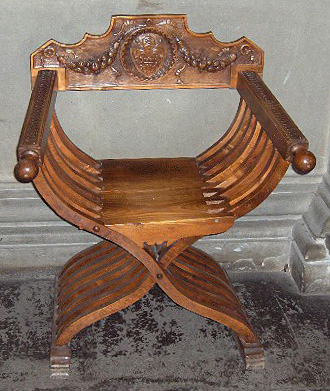
Medieval and Renaissance chair with an X-shaped frame
An X-chair (also scissors chair, Dante chair or Savonarola chair) is a chair with an X-shaped frame. It was known to have been used in Ancient Egypt, Rome, and Greece. The Christian faldstool is a type of X-chair.
History
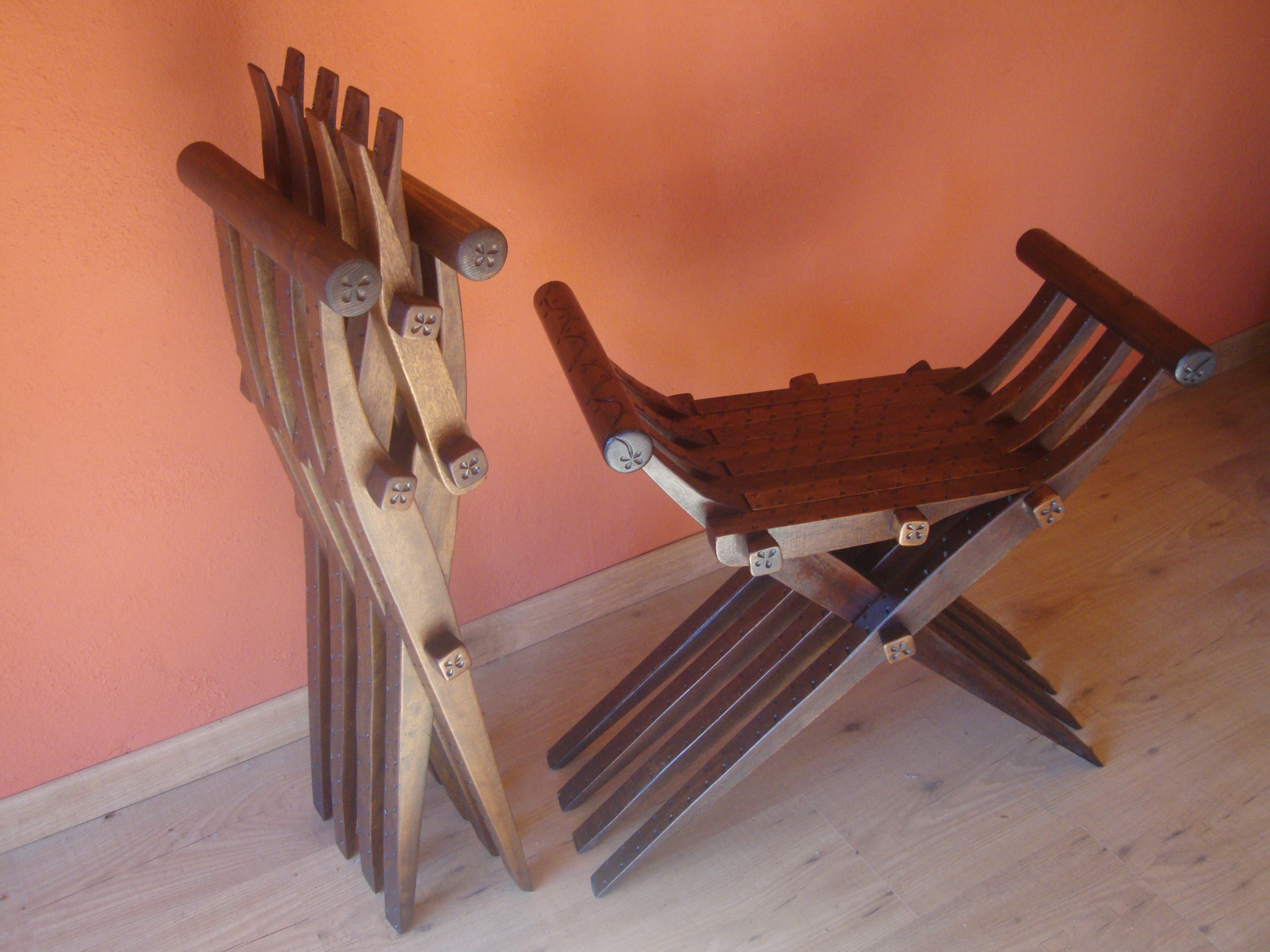
X-chairs have been found in ancient Egyptian tombs, often featuring carvings in the shape of animals or animal-skin draperies. Roman X-chairs are believed to have been used by magistrates and nobles.
A type of folding chair with a frame like an X viewed from the front or the side originated in medieval Italy. Also known as a Savonarola or Dante chair in Italy, or a Luther chair in Germany, the X-chair was a light and practical form that spread through Renaissance Europe. In England, the Glastonbury chair made an X-shape by crossing the front and back legs, while in Spain X-chairs were inlaid with ivory and metals in the Moorish designs.
The use of the name Savonarola chair comes from a nineteenth-century trade term evoking Girolamo Savonarola, which is a folding armchair of the type standardized during the Italian Renaissance.
The chair in the illustration consists of a wooden flat-arched back rail carved with a coat-of-arms in low relief and connected to the back of the straight arms of the chair and a seat made of narrowly fitted wooden slats. The wood used in the construction of the chair is the typical walnut, as in other gothic and renaissance furniture.
Design
_(one_of_a_pair)_MET_DP102689.jpg)
The woodwork was nearly always completely covered with silk or velvet, and the seat was made up of loose cushions resting on the webbing between the side rails of the frames. The form was revived in the Neo-classical period (began c. 1760). It features in Thomas Sheraton's 1803 Cabinet Directory. It continued through the 19th century as a folding portable chair for use during campaigns or other outdoor pursuits.
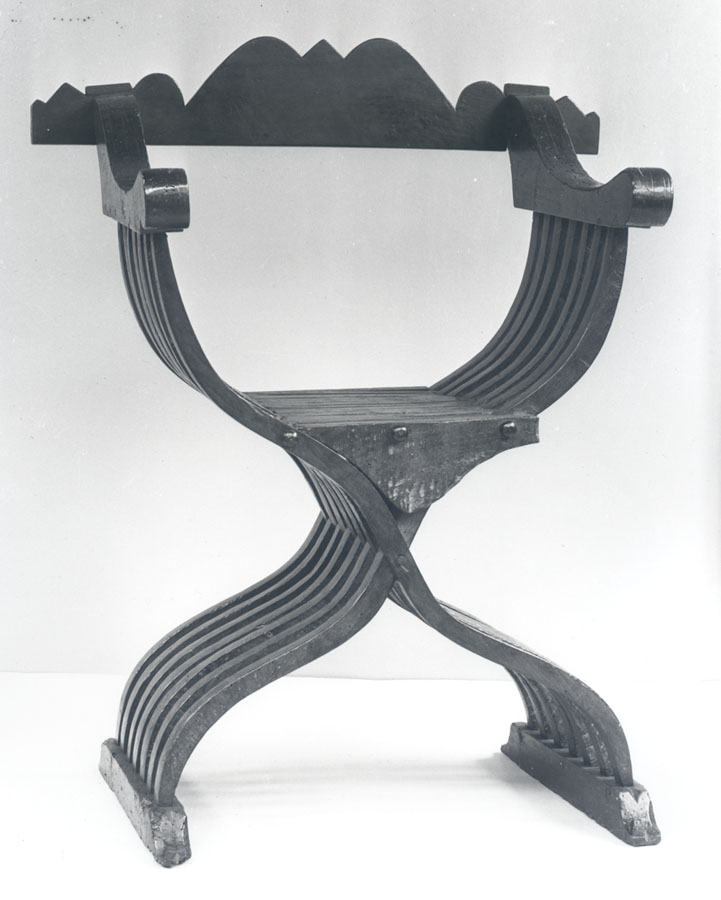
Dantesca
Dantesca is a type of chair used during the Italian Renaissance. The arms end in scrolls and continue all the way up to the back support. It is made to look like it can fold, but in reality, it cannot. It always has a leather seat and back support. It also has a boss where the legs intersect.
References
References
- (1965). "The Encyclopedia of Furniture". Clarkson Potter/Ten Speed.
- (9 June 2011). "Design Glossary: Savonarola and Dante Chairs".
This article was imported from Wikipedia and is available under the Creative Commons Attribution-ShareAlike 4.0 License. Content has been adapted to SurfDoc format. Original contributors can be found on the article history page.
Ask Mako anything about X-chair — get instant answers, deeper analysis, and related topics.
Research with MakoFree with your Surf account
Create a free account to save articles, ask Mako questions, and organize your research.
Sign up freeThis content may have been generated or modified by AI. CloudSurf Software LLC is not responsible for the accuracy, completeness, or reliability of AI-generated content. Always verify important information from primary sources.
Report