From Surf Wiki (app.surf) — the open knowledge base
Wright omega function
Mathematical function
Mathematical function
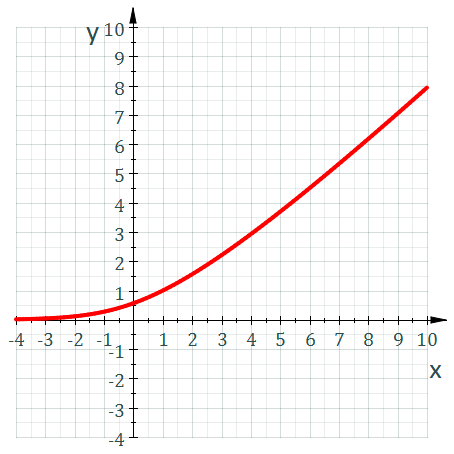
In mathematics, the Wright omega function or Wright function,Not to be confused with the Fox–Wright function, also known as Wright function. denoted ω, is defined in terms of the Lambert W function as:
: \omega(z) = W_{\big \lceil \frac{\mathrm{Im}(z) - \pi}{2 \pi} \big \rceil}(e^z).
It is simpler to be defined by its inverse function
: z (\omega) = \ln(\omega)+\omega
Uses
One of the main applications of this function is in the resolution of the equation z = ln(z), as the only solution is given by z = e−ω(π i).
y = ω(z) is the unique solution, when z \neq x \pm i \pi for x ≤ −1, of the equation y + ln(y) = z. Except for those two values, the Wright omega function is continuous, even analytic.
Properties
The Wright omega function satisfies the relation W_k(z) = \omega(\ln(z) + 2 \pi i k).
It also satisfies the differential equation
: \frac{d\omega}{dz} = \frac{\omega}{1 + \omega}
wherever ω is analytic (as can be seen by performing separation of variables and recovering the equation \ln(\omega)+\omega = z, and as a consequence its integral can be expressed as:
: \int \omega^n , dz = \begin{cases} \frac{\omega^{n+1} -1 }{n+1} + \frac{\omega^n}{n} & \mbox{if } n \neq -1, \ \ln(\omega) - \frac{1}{\omega} & \mbox{if } n = -1. \end{cases}
Its Taylor series around the point a = \omega_a + \ln(\omega_a) takes the form :
: \omega(z) = \sum_{n=0}^{+\infty} \frac{q_n(\omega_a)}{(1+\omega_a)^{2n-1}}\frac{(z-a)^n}{n!}
where
: q_n(w) = \sum_{k=0}^{n-1} \bigg \langle ! ! \bigg \langle \begin{matrix} n+1 \ k \end{matrix} \bigg \rangle ! ! \bigg \rangle (-1)^k w^{k+1}
in which
: \bigg \langle ! ! \bigg \langle \begin{matrix} n \ k \end{matrix} \bigg \rangle ! ! \bigg \rangle
is a second-order Eulerian number.
Values
: \begin{array}{lll} \omega(0) &= W_0(1) &\approx 0.56714 \ \omega(1) &= 1 & \ \omega(-1 \pm i \pi) &= -1 & \ \omega(-\frac{1}{3} + \ln \left ( \frac{1}{3} \right ) + i \pi ) &= -\frac{1}{3} & \ \omega(-\frac{1}{3} + \ln \left ( \frac{1}{3} \right ) - i \pi ) &= W_{-1} \left ( -\frac{1}{3} e^{-\frac{1}{3}} \right ) &\approx -2.237147028 \ \end{array}
Plots
Image:Wright omega function - real.png|\Re{\omega(z)} Image:Wright omega - imaginary.png|\Im{\omega(z)} Image:Wright omega - magnitude.png||\omega(z)|
Notes
References
This article was imported from Wikipedia and is available under the Creative Commons Attribution-ShareAlike 4.0 License. Content has been adapted to SurfDoc format. Original contributors can be found on the article history page.
Ask Mako anything about Wright omega function — get instant answers, deeper analysis, and related topics.
Research with MakoFree with your Surf account
Create a free account to save articles, ask Mako questions, and organize your research.
Sign up freeThis content may have been generated or modified by AI. CloudSurf Software LLC is not responsible for the accuracy, completeness, or reliability of AI-generated content. Always verify important information from primary sources.
Report