From Surf Wiki (app.surf) — the open knowledge base
Wokingham
Market town in Berkshire, England

Market town in Berkshire, England
| Field | Value |
|---|---|
| type | Market town and civil parish |
| country | England |
| official_name | Wokingham |
| static_image_name | {{multiple images |
| image1 | Wokingham Town Hall - geograph.org.uk - 2432464.jpg |
| image2 | St Pauls Church Wokingham Berkshire UK.JPG |
| image3 | Denmark Street, Wokingham - geograph.org.uk - 4087475.jpg |
| image4 | All Saints Parish Church, Wokingham - geograph.org.uk - 5213726.jpg |
| image5 | Rose Street, Wokingham (1).jpg |
| align | center |
| total_width | 280 |
| perrow | 1 2 |
| pushpin_map | England |
| coordinates | |
| static_image_caption | Clockwise from top: Wokingham town hall, Denmark Street, Rose Street, All Saint's & St Paul's churches |
| population_ref | 38,284 (Parish, 2021) |
| 50,325 (Built up area, 2021) | |
| parts_type | Areas of the town |
| p1 | Barkham (Village) |
| p2 | Crowthorne (Village) |
| p3 | Eastheath |
| p4 | Finchampstead (Village) |
| p5 | Gardener's Green (Village) |
| p6 | Holme Green (Village) |
| p7 | Sindlesham (Village) |
| p8 | Town Centre |
| p9 | Wick Hill (Village) |
| p10 | Winnersh (Village) (part) |
| p11 | Wixenford (Village) |
| p12 | Woosehill |
| civil_parish | Wokingham |
| unitary_england | Wokingham |
| lieutenancy_england | Berkshire |
| region | South East England |
| constituency_westminster | Wokingham |
| post_town | WOKINGHAM |
| postcode_district | RG40, RG41 |
| postcode_area | RG |
| dial_code | 0118 |
| os_grid_reference | SU8068 |
| london_distance_mi | 39 |
| london_direction | ENE |
| area_total_sq_mi | 0.9 |
| website |
the town
50,325 (Built up area, 2021) Wokingham ( ) is a market town and civil parish in Berkshire, England. It is the main administrative centre of the wider Borough of Wokingham. At the 2021 census the parish had a population of 38,284 and the wider built-up area had a population of 50,325.
History
.JPG)

Wokingham means 'Wocca's people's home'. Wocca was apparently a Saxon chieftain who may also have owned lands at Wokefield in Berkshire and Woking in Surrey. The courts of Windsor Forest were held at Wokingham and the town had the right to hold a market from 1219.
From the 14th to the 16th centuries, Wokingham was well known for its bell foundry which supplied many churches across the South of England. Some of the houses involved in these cottage industries are still to be seen in Rose Street. In the years 1643–44 Wokingham was regularly raided by both sides in the Civil War. These raids would involve the looting of livestock and trading goods, and over thirty buildings were burnt down, accounting for nearly 20% of buildings in the town at that time. It was not until the early 18th century that Wokingham had fully recovered.
Wokingham was once famous for its bull-baiting. In 1661 George Staverton left a bequest in his will giving two bulls to be tethered in the Market Place and baited by dogs on St. Thomas' Day (21 December) each year. The bulls were paraded around the town a day or two before the event and then locked in the yard of the original Rose Inn which was situated on the site of the present-day Superdrug store. People travelled from miles around to see the dangerous spectacle. A number of dogs would be maimed or killed during the event and the bulls were eventually destroyed. The meat and leather were distributed amongst the poor people of the town. Some of the spectators also sustained fatal injuries. In 1794 on the morning after the bull-baiting Elizabeth North was found dead and covered with bruises. In 1808, 55-year-old Martha May died after being hurt by fighters in the crowd. The cruel 'sport' was prohibited by the Corporation in 1821 but bulls were still provided at Christmas and the meat distributed to the poor. Bull-baiting was banned by Act of Parliament in 1833.
In 1723, the 'Black Act' was passed in Parliament to make it an offence to black one's face to commit criminal acts. It was named after an infamous band of ruffians, known as the 'Wokingham Blacks', who terrorised the local area until 29 of them were arrested after fighting a pitched battle with Grenadier Guards in Bracknell. The formerly important industry of brick-making has given way to software development, light engineering and service industries, and the population has greatly increased.
Governance
There are two tiers of local government covering Wokingham, at civil parish (town) and unitary authority level: Wokingham Town Council and Wokingham Borough Council. The town council is based at Wokingham Town Hall in the Market Place, which was built in 1860 on the site of an earlier guildhall. The borough council is also based in the town, having its headquarters at Shute End.
Wokingham forms part of the wider Wokingham constituency. Its MP is Clive Jones, a Liberal Democrat, who won the seat at the 2024 general election.
Administrative history
Wokingham was historically part of the ancient parish of Sonning. Wokingham became a chapelry in the Middle Ages; its church of All Saints was built in the 14th century, probably on the site of a 12th-century chapel. The chapelry of Wokingham was a separate civil parish from an early date, but remained part the ecclesiastical parish of Sonning until 1812.
The town was also an ancient borough. Its date of becoming a borough is unknown, but it may have followed the grant of rights to hold a market at Wokingham to the Bishop of Salisbury (as lord of the manor of Sonning) in 1219.
By the 1830s, the borough extended beyond the Wokingham township to cover most of the parish. The borough was left unreformed when most ancient boroughs were converted into municipal boroughs in 1836. The borough corporation continued to exist, but as Wokingham was not a municipal borough, local government functions were gradually given instead to the board of guardians of the Wokingham poor law union. The Municipal Corporations Act 1883 directed that unreformed boroughs such as Wokingham were either to be converted into municipal boroughs under a new charter by 1886, or would be abolished. Wokingham then secured a new charter converting it into a municipal borough in 1885. A new borough boundary was drawn, covering the built up area as it then was and some immediately adjoining areas.
Under the Local Government Act 1894, parishes were no longer allowed to straddle borough boundaries. The parish of Wokingham was therefore split into a 'Wokingham Within' parish covering the same area as the borough, and a Wokingham Without parish covering the parts of the old parish outside the borough boundary.
The municipal borough of Wokingham was abolished in 1974 under the Local Government Act 1972, with the area merging with the surrounding Wokingham Rural District to become a new non-metropolitan district called Wokingham. District-level functions formerly performed by the borough council passed to the new Wokingham District Council. A successor parish called Wokingham covering the area of the former borough was created in 1974, with its council taking the name Wokingham Town Council. Wokingham District Council became a unitary authority in 1998 when it took over county-level functions from the abolished Berkshire County Council.
Geography
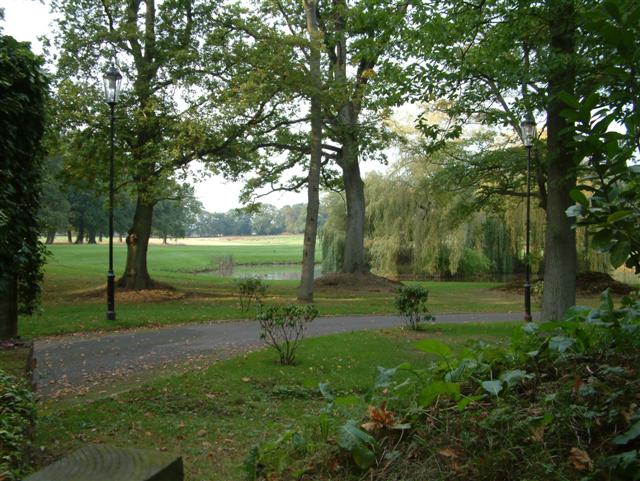
Wokingham is on the Emm Brook in the Loddon Valley in central Berkshire situated 39 mi west of central London. It sits between the larger towns of Reading and Bracknell and was originally in a band of agricultural land on the western edge of Windsor Forest. The soil is a rich loam with a subsoil of sand and gravel. Wokingham has a town centre, with main residential areas radiating in all directions. These include Woosehill to the west, Emmbrook to the northwest, Dowlesgreen, Norreys, Keephatch and Bean Oak to the east, and to the south Wescott and Eastheath. Older names include Woodcray and Luckley Green.
Wokingham has grown extensively since the mid-20th century. Woosehill and Dowlesgreen were built on farmland in the late 1960s and early 1970s, along with Bean Oak. Keephatch was built in the early 1990s. The Norreys Estate was built in the 1960s; however, Norreys Avenue is the oldest residential road in that area, having been built in the late 1940s as emergency housing following the Second World War. Norreys Avenue has a horseshoe shape and occupies the site of the demolished Norreys Manor. Much of the road contains 1940s-style prefabricated houses, although there are some brick houses along with three blocks of 1950s police houses.
In 2010, the council set up WEL (Wokingham Enterprise Limited) to manage a £100m regeneration project to redevelop the town centre with new retail, leisure and residential facilities, parking, roads and open spaces. Several major expansion projects around the town are planned over the next decade, including a major redevelopment of the town centre, new north and south relief roads and at the former military base at nearby Arborfield Garrison. As of 2015, the redevelopment of the railway station and surrounding area is complete, and large scale housing construction is underway to the north-east and south-east of the town.
The Wokingham built up area now extends beyond the parish boundary. Following the 2021 census, the Office for National Statistics has defined a Wokingham built up area which covers most of the parish of Wokingham and parts of neighbouring parishes, notably Finchampstead to the south and Barkham to the south-west.
Transport
The A329(M) motorway, accessible from the east of town, connects Wokingham to Reading and the rest of the motorway network at junction 10 of the M4. The Wokingham junction is where the A329(M) ends and becomes the A322, for Bracknell and the M3.
Wokingham railway station is at the junction of the Waterloo to Reading line with the North Downs Line. South Western Railway manages the station and provides services, along with Great Western Railway.
Most local bus services are provided by Thames Valley Buses, but the services from Wokingham to Reading and Bracknell are operated by Reading Buses, after First Berkshire & The Thames Valley closed their Bracknell depot in the summer of 2015. There is also a football bus run on Reading FC match days by Stagecoach South to the Madejski Stadium.
Institutions
Charities
- The redundant Lucas Hospital, almshouses founded in 1663 for sixteen elderly men from the surrounding parishes
- Wokingham United Charities providing grants to people living within the Wokingham area relieving poverty, hardship, and distress; as well as providing sheltered accommodation.
Churches
- All Saints' Church (CofE). Now a Grade 2* listed historic building. Founded in 1180 as a chapel-of-ease from Sonning. Extensively re-built in the late 15th century and restored and expanded in the mid-19th century.
- Corpus Christi Catholic Church
- St. Paul's Church (CofE), built by John Walter III in 1864
- Wokingham Baptist Church
- Wokingham Methodist Church
- Christ Church Wokingham (CofE). Officially The Church at the White House, Christ Church is not a church building but an extra-parochial congregation currently meeting temporarily in hired premises.
- Woosehill Community Church
- Norreys Church
- Kings Church Wokingham
Manors
- Evendon's Manor
- Ashridge Manor (now in Hurst, Berkshire)
- Beche's Manor (burnt down 1953)
- Buckhurst Manor (now St. Anne's Manor)
- Norreys' Manor (demolished long ago, now Norreys Avenue)
Other buildings of note
- Keep Hatch House (Built 1871–74, demolished late 1990s due to dereliction to make way for the Keephatch housing estate)
Education
Secondary schools
Wokingham is served by four state secondary schools.
- The Emmbrook School is a mixed-sex comprehensive school,
- St Crispin's School is a mixed-sex comprehensive school
- The Forest School is a mixed-sex comprehensive school in the neighbouring village of Winnersh
- The Holt School is a girls' school (founded in 1931 in the Dower House of Beche's Manor)
Private schools
- Holme Grange School founded in 1945 for Girls and Boys aged 3–16 years
- Luckley House School founded at Luckley House in 1918 for girls aged 11–18, now a boarding and day school for boys and girls
- White House Preparatory School, for girls aged 2–11, now closed
Junior School
Westende Junior School is a co-educational junior school established in 1974. The school caters for children from the ages of seven to eleven. The school is near the town centre in Seaford Road and is bordered by St Crispin's School and the King George V playing field. The majority of children at Westende come from the nearby Wescott Infant School, and the two schools share a joint Parent Teachers' Association. In September 1995 the school opened 'The Acorns', the first junior school resource in Berkshire for pupils with a diagnosis of Special Educational Need for autism spectrum disorders (ASD).
Media
The town's local newspapers include Wokingham Today which is also online.
Literature
In the 18th century, the Ballad of Molly Mogg was written in Wokingham. Molly was the barmaid daughter of the publican of the old Rose Inn (not on the site of the present one). She was well known to local Binfield man, Alexander Pope, who, during a storm, found himself stranded at the inn with his friends, Gay, Swift and Arbuthnot. They wrote the ballad extolling her virtues to pass the time. Wokingham is the setting of Lars Iyer's 2019 novel Nietzsche and the Burbs. The character of Tom the chimney sweep in Charles Kingsley's classic childhood story The Water Babies was based on the life and times of a Wokingham boy called James Seaward, who was a boy sweep in Victorian times. In his later years, Seaward swept the chimneys at Charles Kingsley's home at the Rectory in Eversley, Hampshire. Seaward was elected Alderman of Wokingham from 1909 until his death in 1921. He had 12 children. The Water Babies are the subject of Wokingham's first public sculpture, installed in 1999, which graces the upper-level entrance to Wokingham Library.
Film
The 1971 film See No Evil, also released under the title Blind Terror, was filmed in and around Wokingham, with scenes shot at the since-redeveloped Wokingham railway station. Scenes for ITV series Primeval were filmed at Wokingham's Red Lion pub.
Sport and leisure
- There are public parks at Barkham Road Recreation Ground, Langborough Recreation Ground, Cantley Park, Chestnut Park, Heron Park, Elizabeth Road Recreation Ground, Elms Field, Riverside Walk, and Waverley Park.
- There is a local nature reserve called Holt Copse & Joel Park.
- The council provides a number of leisure facilities such as the Carnival Hub, St. Crispin's Sports Centre and the Pinewood Leisure Centre. Pinewood is the base for over 20 clubs and associations. There is a King George V Playing Field behind St. Crispin's in memory of King George V.
- The local football team is Wokingham Town F.C.
- The Wokingham Half Marathon is held each February and starts and finishes at Cantley Park.
- Wokingham Library is now located in the Carnival Hub leisure centre having relocated from Denmark Street in September 2022.
- Wokingham Cricket Club (founded 1825) played at their ground on Wellington Road before relocating to a new, bigger ground in Sindlesham in 2012.
- Wokingham Music, Food & Drink Festival is held every August. Showcasing local musicians, local food producers and also wines, beers, and ciders from Berkshire and surrounding breweries.
- Wokingham Open Air Cinema. For its second year, three films were shown the weekend before the Wokingham Festival.
Twin towns
Wokingham is twinned with:
- Erftstadt in Germany
- Viry-Châtillon in France
Notable people
- Matt Allwright, TV presenter
- Luke Bedford, composer
- Thomas Bradley, chaplain to King Charles I
- Sir Richard Browne, 1st Baronet, of London, born in Wokingham sometime prior to 1616
- Kate Bryan, arts broadcaster
- The Cooper Temple Clause, post-hardcore punk band
- Isaac Deutscher, Polish historian and political activist, lived in Wokingham from the late 1950s to 1963.
- Claude Duval, highwayman, supposedly owned a house in the town
- Dick Francis, writer
- Thomas Godwin, Bishop of Bath and Wells, born and died in Wokingham
- Nicholas Hoult, actor and model.
- Daniel Howell, YouTuber, author and former BBC Radio 1 presenter
- Stephen Hughes, footballer, born in Wokingham
- Diane Kendal, makeup artist
- Steven Lewington, professional wrestler formerly known as "The British Babe", now wrestling as "DJ Gabriel" with WWE
- Frederick Lucas, founder of The Tablet
- Henry Lucas, founder of the Lucasian Professorship of Mathematics at the University of Cambridge
- Leslie Sears, cricketer
- Russell Slade, football manager
- Anne Snelgrove, MP
- Bill Stone, veteran of both World Wars; lived in Sindlesham
- William Talman, architect and landscape designer
- Mark Tildesley, murdered in Wokingham, on 1 June 1984, at the age of seven
- John Walter III, local benefactor and proprietor of The Times newspaper
- Anna Watkins, gold medallist at the 2012 London Olympics and bronze medallist at the Beijing Olympics in 2008 in the women's double sculls
- Jason Watkins, actor
- Will Young, singer and Pop Idols Series 1 (2002) winner
References
Bibliography
- Goatley, K. Wokingham: The Town of my Life. Reading: Conservatree Print and Design, 2004. .
- The Wokingham Society. Wokingham: A Chronology, 1978.
- Wyatt, B. Wokingham in Old Photographs. Stroud, Gloucestershire: Budding Books, 1999. .
- Harison, J. Living Heritage – 300 years of bells, ringing and bellringers at All Saints Wokingham, 2009. .
- Bell, J. "Memories of Wokingham Town Hall 1860 to 1946"
- Bell, J. "Wokingham and the Royal Jubilees"
- Bell, J. "Former Mayors of Wokingham 1885 to 1946"
- Bell, J. "Former Mayors of Wokingham 1947 to 1979"
- Bell, J. "A Stroll Through St. Paul´s Churchyard"
- Bell, J. "St. Paul´s Wokingham – Early 20th Century Parish Magazine Extracts"
- Bell, J. "St. Paul´s Parish Wokingham at War 1939-1945"
- Bell, J. "the Memorials Inside All Saints' Parish Church"
- Bell, J. "the Story of H.M.S. Garth"
- Bell, J. "St. Paul´s Parish Church, Wokingham"
- Bell, J. "Miss Winifred Spooner, Aviatrix"
- Bell, J. "Wokingham Remembers the Second World War"
- Bell, J. "High Stewards of Wokingham"
- Bell, J. "Five Wokingham Families"
- Bell, J. "Former Town Clerks of Wokingham"
References
- "Wokingham parish".
- "Towns and cities, characteristics of built-up areas, England and Wales: Census 2021". Office for National Statistics.
- Ford, David Nash. (2020). "Mid-Berkshire Town and Village Histories". Nash Ford Publishing.
- Irving, A.. (1885-02-01). "General Section of the Bagshot Strata, from Aldershot to Wokingham". Quarterly Journal of the Geological Society.
- Warner, Frank. (1921). "The silk industry of the United Kingdom : its origin and development". Drane's.
- {{NHLE
- "Finding us". Wokingham Town Council.
- (9 May 2024). "Find the help you need". Wokingham Borough Council.
- (1979). "Guide to the Local Administrative Units of England". Royal Historical Society.
- (1923). "A History of the County of Berkshire: Volume 3". Victoria County History.
- "Six-inch map: Berkshire sheet 38, 1883". Ordnance Survey.
- (1834). "Reports from Commissioners on Municipal Corporations in England and Wales: Reports from places not in any district".
- (10 October 1885). "Wokingham New Charter of Incorporation". Reading Mercury.
- "Wokingham Municipal Borough". GB Historical GIS / University of Portsmouth.
- (1895). "Annual Report of the Local Government Board". Her Majesty's Stationery Office.
- {{cite legislation UK. (1972)
- "The Local Government (Successor Parishes) Order 1973". [[legislation.gov.uk]].
- {{cite legislation UK. (1996)
- (April 2017)
- "Wokingham Station". National Rail.
- Ford, David Nash. (2020). "Mid-Berkshire Town and Village Histories". Nash Ford Publishing.
- {{NHLE
- Ford, David Nash. (2020). "Mid-Berkshire Town and Village Histories". Nash Ford Publishing.
- Ford, David Nash. (2020). "Mid-Berkshire Town and Village Histories". Nash Ford Publishing.
- Ford, David Nash. (2020). "Mid-Berkshire Town and Village Histories". Nash Ford Publishing.
- Ford, David Nash. (2020). "Mid-Berkshire Town and Village Histories". Nash Ford Publishing.
- "Head's Welcome {{!}} Independent School Berkshire {{!}} Luckley House".
- [http://www.csie.org.uk/news/archive/1995.shtml ''Bracknell News''], 9 November 1995.
- "Wokingham.Today".
- Millson, Cecilia. (1986). "Old Berkshire Tales". Countryside Books.
- "Reelstreets {{!}} See No Evil".
- (26 August 2008). "Primeval filming in Wokingham".
- "Magic Map Application". Magic.defra.gov.uk.
- "Beer | Wokingham Food & Drink Festival". Wokinghamfestival.co.uk.
- "Wokingham Open Air Festival – 2015".
- Ford, David Nash. (2020). "Mid-Berkshire Town and Village Histories". Nash Ford Publishing.
- (21 November 2023). "Latest Wokingham news for the town and borough – getreading".
This article was imported from Wikipedia and is available under the Creative Commons Attribution-ShareAlike 4.0 License. Content has been adapted to SurfDoc format. Original contributors can be found on the article history page.
Ask Mako anything about Wokingham — get instant answers, deeper analysis, and related topics.
Research with MakoFree with your Surf account
Create a free account to save articles, ask Mako questions, and organize your research.
Sign up freeThis content may have been generated or modified by AI. CloudSurf Software LLC is not responsible for the accuracy, completeness, or reliability of AI-generated content. Always verify important information from primary sources.
Report