From Surf Wiki (app.surf) — the open knowledge base
Witchetty grub
Common name for a moth larva
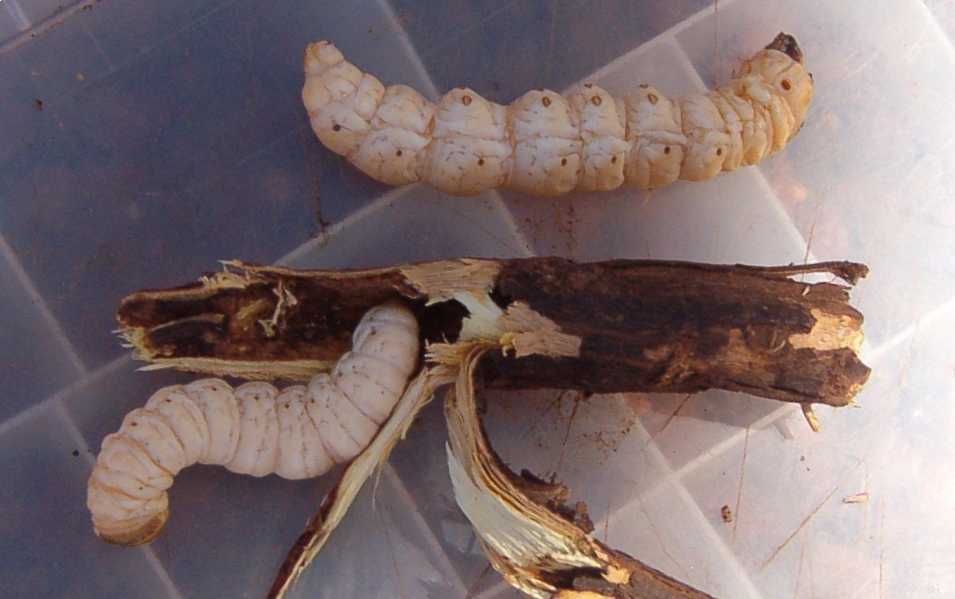
Common name for a moth larva

The witchetty grub (also spelled witchety grub or witjuti grub) is a term used in Australia for the large, white, wood-eating larvae of several moths. In particular, it applies to the larvae of the cossid moth Endoxyla leucomochla, which feeds on the roots of the witchetty bush (after which the grubs are named) that is widespread throughout the Northern Territory and also typically found in parts of Western Australia and South Australia, although it is also found elsewhere throughout Australia.
The term can also apply to larvae of other cossid moths, ghost moths (Hepialidae), and longhorn beetles (Cerambycidae). The term is used mainly when the larvae are being considered as food. The grub is the most important insect food of the desert and has historically been a staple in the diets of Aboriginal Australians.
Terminology
The Arabana term for the grub is mako witjuti (with emphasis on initial syllables); mako means grub, and witjuti refers to the shrub, not the grub itself. Similarly, Ngalea peoples called the insect "mako wardaruka", meaning grubs of the wardaruka (Acacia ligulata) shrub. The Pitjantjatjara name is "maku". It has been suggested that the word "witchetty" comes from the Adynyamathanha word wityu, meaning "hooked stick", and vartu, meaning "grub".
Description
The different larvae are said to taste similar. Edible either raw or lightly cooked in hot ashes, they are sought as a high-protein food by Aboriginal Australians. The raw witchetty grub tastes similar to almonds; however, when cooked, the skin becomes crisp like roast chicken, while the inside becomes light yellow, like a fried egg, and the taste has been anecdotally described variously as like scrambled egg, chicken, or a "prawn with peanut sauce".
These grubs live in trees. They can also be found in black wattle trees, and are considered to be the reason why wattles die within 10 to 15 years. The roots of the Acacia kempeana shrub are another source of the grubs.
When held, as a defence mechanism, the grubs will secrete a brown liquid.
Cultural significance
Witchetty grubs feature as Dreamings in many Aboriginal paintings.
Witchetty grubs have also been imitated in confectionary and were a common Australian lolly.
References
References
- "CSIRO - Witjuti grub".
- Marshall Cavendish Corporation. (2003). "Insects and Spiders of the World". Marshall Cavendish.
- Isaacs, Jennifer. (2002). "Bush Food: Aboriginal Food and Herbal Medicine". New Holland Publishers (Australia).
- (1952). "On some Australian Cossidae including the moth of the witjuti (witchety) grub". Transactions of the Royal Society of South Australia.
- Thurman, Jessa H.. (June 2022). "Beyond the pest: Life history, ecology and ethnoentomology of the giant wood moth ( Endoxyla cinereus )". Austral Ecology.
- "Mimili".
- (6 July 2013). "Inevitable insectivores? Not so fast". New Scientist.
- (2016-08-05). "Spotlight On Witchetty Grub An Australian Bush Tucker Food".
- "Witchetty Grub Is the High-Protein Larvae You May Actually Find Delicious".
- (2022-02-01). "Taste of the Outback: Witchetty Grub – PILOT GUIDES".
- "Witchetty grubs".
- (2013-01-29). "Nostalgia alert: our favourite lollies".
This article was imported from Wikipedia and is available under the Creative Commons Attribution-ShareAlike 4.0 License. Content has been adapted to SurfDoc format. Original contributors can be found on the article history page.
Ask Mako anything about Witchetty grub — get instant answers, deeper analysis, and related topics.
Research with MakoFree with your Surf account
Create a free account to save articles, ask Mako questions, and organize your research.
Sign up freeThis content may have been generated or modified by AI. CloudSurf Software LLC is not responsible for the accuracy, completeness, or reliability of AI-generated content. Always verify important information from primary sources.
Report