From Surf Wiki (app.surf) — the open knowledge base
Witch's broom
Type of deformity in a woody plant
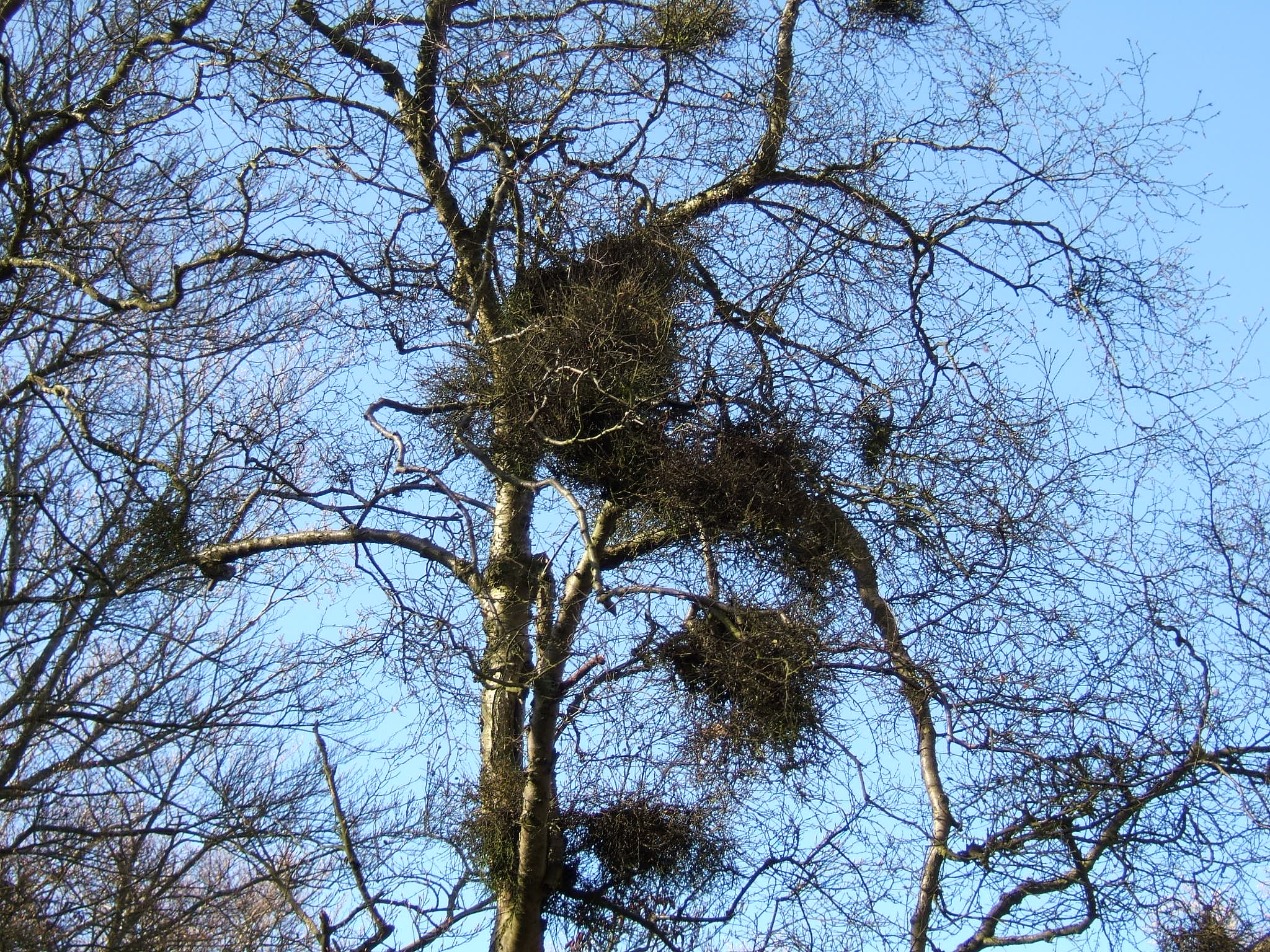
Type of deformity in a woody plant

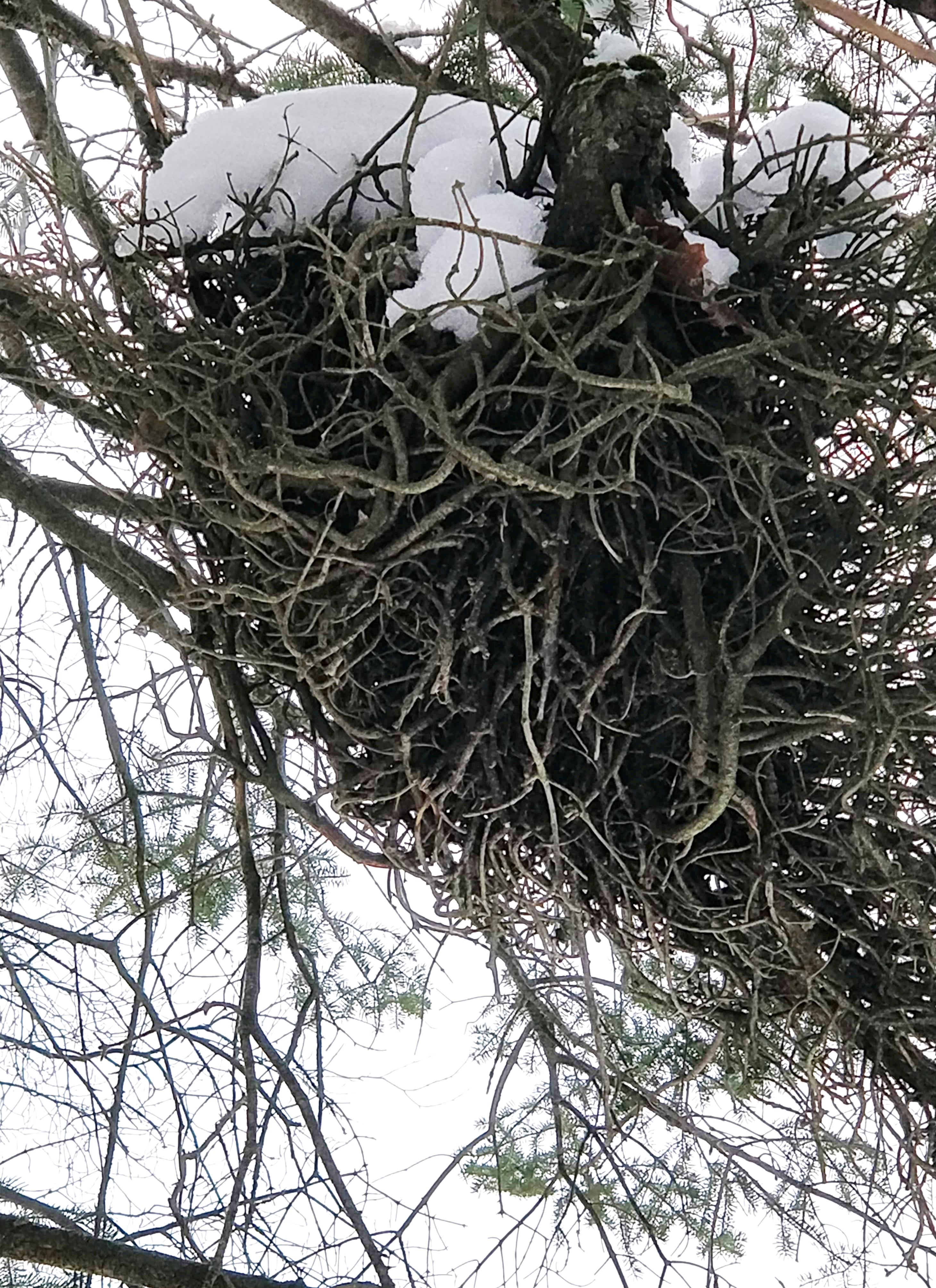
Witch's broom or witches' broom is a deformity in a woody plant, typically a tree, where the natural structure of the plant is changed. A dense mass of shoots grows from a single point, with the resulting structure resembling a broom or a bird's nest. It is sometimes caused by pathogens.
Diseases with symptoms of witches' broom, caused by phytoplasmas or basidiomycetes, are economically important in a number of crop plants, including the cocoa tree Theobroma cacao, jujube (Ziziphus jujuba) and the timber tree Melia azedarach.
Causes
A tree's characteristic shape, or habit, is in part the product of auxins, hormones which control the growth of secondary apices. The growth of an offshoot is limited by the auxin, while that of the parent branch is not. In cases of witch's broom, the normal hierarchy of buds is interrupted, and apices grow indiscriminately. This can be caused by cytokinin, a phytohormone which interferes with growth regulation. The phenomenon can also be caused by other organisms, including fungi, oomycetes, insects, mites, nematodes, phytoplasmas, and viruses. The broom growths may last for many years, typically for the life of the host plant. If twigs of witch's brooms are grafted onto normal rootstocks, freak trees result, showing that the attacking organism has changed the inherited growth pattern of the twigs. Hemiparasitism by the dwarf mistletoes species in genus Arceuthobium are noted to induce witch's broom formation in parasitized branches of pines and cypresses.
Ecological role
Witches' brooms provide nesting habitat for birds and mammals, such as the northern flying squirrel, which nests in them.
References
References
- (1996). "Status Of Cacao Witches' Broom: Biology, Epidemiology, and Management". Annual Review of Phytopathology.
- (2001). "Advances in Tissue Culture and Eliminating of the Pathogeny of Witch Broom Disease(MLO) of Chinese Jujube". Journal of Fruit Science.
- (1996). "Purification of the Phytoplasma Associated with China-tree (''Melia azedarach'' L.) Decline and the Production of a Polyclonal Antiserum for its Detection". Journal of Phytopathology.
- ''Book of the British Countryside''. Pub. London : Drive Publications, (1973). p. 519.
- (2017). "Diverse early dwarf mistletoes (''Arceuthobium''), ecological keystones of the Eocene Baltic amber biota". American Journal of Botany.
- (2008). "Northern Flying Squirrel".
- (2020). "Maintaining wildlife habitat in the boreal forest of Alaska".
This article was imported from Wikipedia and is available under the Creative Commons Attribution-ShareAlike 4.0 License. Content has been adapted to SurfDoc format. Original contributors can be found on the article history page.
Ask Mako anything about Witch's broom — get instant answers, deeper analysis, and related topics.
Research with MakoFree with your Surf account
Create a free account to save articles, ask Mako questions, and organize your research.
Sign up freeThis content may have been generated or modified by AI. CloudSurf Software LLC is not responsible for the accuracy, completeness, or reliability of AI-generated content. Always verify important information from primary sources.
Report