From Surf Wiki (app.surf) — the open knowledge base
Wimbledon F.C.
English football club (1889–2004)

English football club (1889–2004)
| Field | Value | ||||||||||
|---|---|---|---|---|---|---|---|---|---|---|---|
| clubname | Wimbledon | ||||||||||
| image | Wimbledon FC crest.svg | ||||||||||
| image_size | 150px | ||||||||||
| fullname | Wimbledon Football Club | ||||||||||
| nickname | The Dons, The Wombles, The Crazy Gang | ||||||||||
| founded | 1889 (as Wimbledon Old Centrals) | ||||||||||
| dissolved | 21 June 2004{{#tag:ref | In terms of its footballing assets and place in the English football league structure, Milton Keynes Dons F.C. is the continuation of Wimbledon F.C., which was formed in south London in 1889 and relocated to Milton Keynes in 2003. The club was brought out of administration in 2004 as a new company, Milton Keynes Dons Ltd, which purchased the assets of The Wimbledon Football Club Ltd and received the team's place in Football League One.{{cite news | title=Dons out of administration | date=1 July 2004 | url=http://www.espnfc.com/story/304402/dons-out-of-administration | publisher=ESPN | access-date=17 February 2015 | quote=A club statement read: 'InterMK are pleased to announce that the Football League have today issued their final approval of the voluntary arrangement (CVA) and confirmed the transfer of the Wimbledon FC League share to Milton Keynes Dons Ltd, bringing certainty to a future for the football club in Milton Keynes.' | url-status=dead | archive-url=https://web.archive.org/web/20150217123255/http://www.espnfc.com/story/304402/dons-out-of-administration | archive-date=17 February 2015 |
| }}</ref> The Wimbledon Football Club Ltd legally endured until 2009.<ref>{{cite web | title | WebCHeck | url=http://wck2.companieshouse.gov.uk//companysearch?disp=1&frfsh=1424163830&#result | location=London | publisher=Companies House | access-date=17 February 2015 | url-status=dead | ||||
| archive-url | https://web.archive.org/web/20081229053844/http://wck2.companieshouse.gov.uk/ | archive-date=29 December 2008}} Since 2006 Milton Keynes Dons has officially considered itself a new club, formed in 2004—it no longer claims any history before then, despite retaining Wimbledon F.C.'s "Dons" nickname.; {{cite news | title=MK Dons agree to return Wimbledon trophies to Merton—and sanction amendments to football statistics | url=http://www.mkdsa.co.uk/documents/archive/2007FSF%20statement%20lifting%20boycott%20of%20MK%20Dons.pdf | |||||||
| publisher | Football Supporters' Federation | location=Sunderland | date=29 June 2007 | access-date=17 February 2015 | quote=And, on behalf of both clubs, the FSF respectfully requests that, with immediate effect, our media colleagues now refer to MK Dons in relation ONLY to matches played since their first Football League fixture was fulfilled against Barnsley on August 7, 2004.}} | group="n" | name="founded"}} | ||||
| ground | Plough Lane (1912–1991) | ||||||||||
| Selhurst Park (1991–2003) | |||||||||||
| National Hockey Stadium (2003–04) | |||||||||||
| season | 2003–04 | ||||||||||
| position | First Division, 24th of 24 (Relegated) |
the club that existed under this name until 2004
|archive-url=https://web.archive.org/web/20081229053844/http://wck2.companieshouse.gov.uk/ |archive-date=29 December 2008}} Since 2006 Milton Keynes Dons has officially considered itself a new club, formed in 2004—it no longer claims any history before then, despite retaining Wimbledon F.C.'s "Dons" nickname.; {{cite news|title=MK Dons agree to return Wimbledon trophies to Merton—and sanction amendments to football statistics|url=http://www.mkdsa.co.uk/documents/archive/2007FSF%20statement%20lifting%20boycott%20of%20MK%20Dons.pdf Selhurst Park (1991–2003) National Hockey Stadium (2003–04) Wimbledon Football Club was an English football club formed in Wimbledon, southwest London, in 1889 and based at Plough Lane from 1912 to 1991. Founded as Wimbledon Old Centrals, the club were a non-League team for most of their history. Nicknamed "the Dons" and latterly also "the Wombles", they won eight Isthmian League titles, the FA Amateur Cup in 1963 and three successive Southern League championships between 1975 and 1977, and were then elected to the Football League. The team rose quickly from obscurity during the 1980s and were promoted to the then top-flight First Division in 1986, just four seasons after being in the Fourth Division.
Wimbledon's "Crazy Gang"—so-called because of the boisterous, eccentric behaviour of the players—won the FA Cup in 1988, beating that season's League champions Liverpool, and thereby became one of only three clubs to have won both the FA Cup and its amateur counterpart. In 1991, following the publication of the Taylor Report recommending all-seater grounds for top-flight clubs, Wimbledon left Plough Lane to groundshare with nearby Crystal Palace at Selhurst Park—an originally temporary arrangement that ended up lasting over a decade. The team remained in the First Division and its successor ,the FA Premier League, until they were relegated in 2000.
In 2001, after rejecting a variety of possible local sites and others further afield, the club announced its intention to move 46 mi north to Milton Keynes in Buckinghamshire. The idea of Wimbledon leaving south London was deeply unpopular, both with the bulk of the club's established fanbase and with football supporters generally, but an independent commission appointed by the Football Association granted permission in May 2002. A group of supporters, appalled by the decision, responded by forming a new club, AFC Wimbledon, to which the majority of Wimbledon FC fans switched allegiance. The move went ahead and Wimbledon FC played home games in Milton Keynes in the 2003-2004 season; Milton Keynes Dons F.C. would compete in the Football League from 2004 onwards.
History
Non-League beginnings
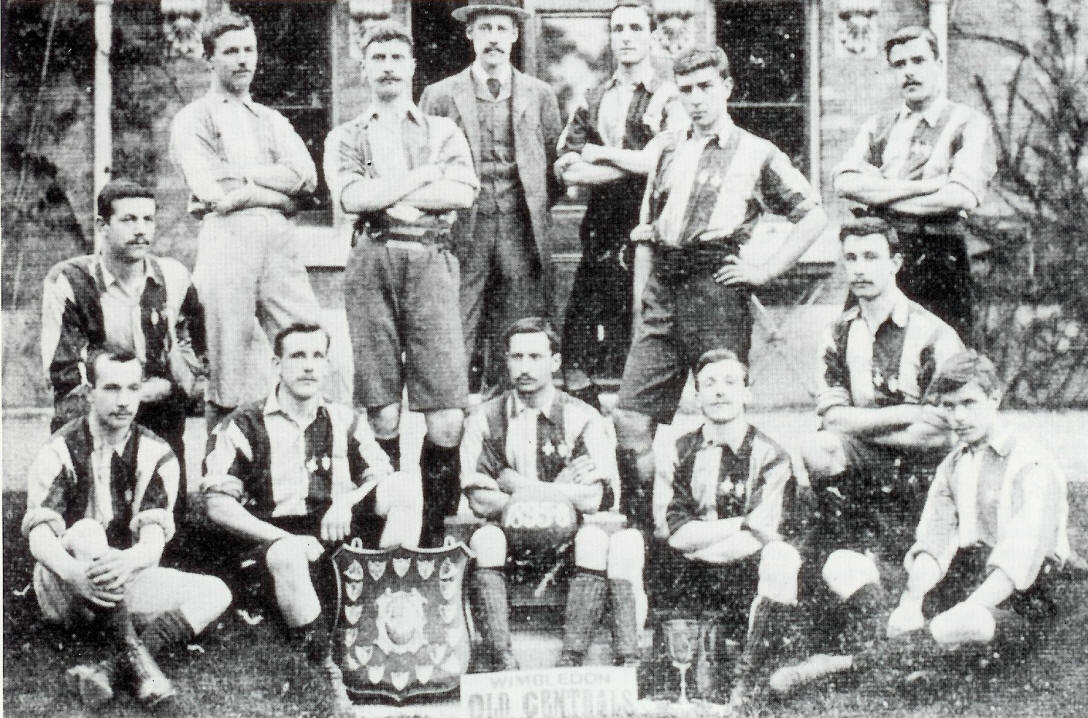
Wimbledon Old Central Football Club formed in 1889, taking its name from the Old Central School on Wimbledon Common where players had been pupils. The club's first match was a 10 victory over Westminster, and it took only seven years for success to come to Wimbledon as they won both the Clapham League and the Herald League in 189596. Wimbledon won the Clapham League again in 190001, as well as two minor trophies. At a meeting convened on 1 May 1905, the decision was taken to drop "Old Central" from the club's name, and under its new name Wimbledon Football Club won the South London Charity Cup the same year; however, excessive debts caused the club to fold in 1910. A year later, the club was restarted under the name Wimbledon Borough, though 'Borough' was dropped from the team's name after barely a year. They continued to play on Wimbledon Common and at various other locations in the Wimbledon area until 1912, when the side settled at Plough Lane. Wimbledon joined the Athenian League for 191920, and finished as runners-up in their second season in the new division. The club then joined the Isthmian League and began to prosper, winning four Isthmian League titles during the 1930s and reaching the FA Amateur Cup final in 193435. The club reached another FA Amateur Cup final in 194647 and twice finished as runners-up in the league over the next few seasons.
Wimbledon won the Isthmian League for the fifth time in 195859 before starting a period of domination that saw three successive championships: 196162, 196263 and 196364. Wimbledon also lifted the FA Amateur Cup in 196263, beating Sutton United 42; the club's all-time top goalscorer, Eddie Reynolds, scored all four Wimbledon goals with his head, and in doing so became the only player to have headed in all four of his side's goals in a Wembley match – as of 2025, still a unique feat.{{cite web |access-date=21 November 2010 |archive-date=1 December 2010 |archive-url=https://web.archive.org/web/20101201004204/http://www.thefa.com/Leagues/TheBarber/NewsAndFeatures/2010/TheBarber_181010 |url-status=dead |access-date=6 June 2009 |archive-date=21 March 2019 |archive-url=https://web.archive.org/web/20190321101036/http://www.fchd.info/WIMBLEDO.HTM |url-status=live
The Football League

The 1977–78 season was a satisfactory Football League debut for Wimbledon, who finished 13th in the Fourth Division. Allen Batsford had resigned as manager on 2 January 1978 to be succeeded by Dario Gradi, who guided the club to promotion in 197879. Wimbledon's first stay in the Third Division was not a successful one. The team struggled, and were relegated in bottom place, winning just 10 league games all season. Following relegation, relocation to Milton Keynes was considered – chairman Ron Noades entered talks with the Milton Keynes Development Corporation about the possibility of moving the club to the new town, but the plan was never executed.{{cite news | access-date = 30 May 2009 | archive-date = 19 October 2014 | archive-url = https://web.archive.org/web/20141019222018/http://news.bbc.co.uk/olmedia/1100000/audio/_1101075_noades_dons.ram | url-status = live
Still in south London, 1980–81 saw Wimbledon regain Third Division status at the first attempt, at the end of an eventful season which saw chairman Ron Noades walk out of the club to take over Crystal Palace, taking manager Dario Gradi to Selhurst Park with him. Wimbledon once again regained Third Division status at the first time of asking, triumphing as Fourth Division champions in 198283, and in the next season the Wimbledon players continued to excel as they achieved a second promotion to the Second Division after finishing runners-up with 97 league goals.
1984–85 was Wimbledon's first season in the Second Division, and everyone at the club was prepared for long and hard struggle to preserve this status. A 12th-place finish was more than satisfactory for a club that was playing at this level for the first time. The next year started well for Wimbledon as Middlesbrough were defeated 30 on the opening day of the season – the team was soon looking like a contender for promotion. Promotion in third place was sealed on the final day of the season with an away victory at Huddersfield Town. Thus, Wimbledon had reached the First Division, only four years after playing in the Fourth Division and nine years after being elected into The Football League.
First Division football and an FA Cup triumph
Many observers tipped Wimbledon to go straight back down in 198687, but after losing the first game of the season away at Manchester City, Wimbledon won the next four games to perch atop the league table on 1 September. Wimbledon eventually finished sixth, before Dave Bassett moved on to Watford. The only downside of this triumph was that the club would not be able to compete in the European Cup Winners' Cup, as the ban on English teams from European competition following the Heysel Stadium Disaster was still in operation at this time. Wimbledon also finished seventh in the league this season.

Just days after the FA Cup triumph, Wimbledon directors announced plans to build a new all-seater stadium in the club's home borough of Merton. In the season following the FA Cup triumph, Gould steered Wimbledon to a secure 12th-place finish in the First Division, and in 198990 the side finished eighth. Despite these successes, Bobby Gould was replaced in the summer of 1990 by Ray Harford, who in the same year as Wimbledon's FA Cup triumph had guided Luton Town to victory in the League Cup. Under Harford's management, defender Warren Barton was purchased for £300,000 while Wimbledon had another strong season in 199091, finishing seventh.
Nothing came of the plans for a new ground and at the end of 199091 the club's board decided that Plough Lane was beyond redevelopment to meet with new legislation from the Taylor Report, requiring all-seater stadiums.{{cite news |access-date=4 June 2009 |archive-date=13 January 2016 |archive-url=https://web.archive.org/web/20160113022126/http://news.bbc.co.uk/1/hi/uk/318497.stm |url-status=live
During Wimbledon’s first six seasons in the top flight, they had not only managed to survive among the elite and win the FA Cup, but had also managed to finish above the likes of Everton, Manchester United and Tottenham Hotspur.
The early Premier League seasons
1992–93 began as a struggle for Wimbledon – the club were third from bottom on Boxing Day. However, the team recovered well in the new year and finished 12th. The next season was an even greater success as the side finished sixth in the FA Premier League - two places above Liverpool - and reached the quarter-finals of the League Cup. Wimbledon remained hard to beat in 199495, finishing ninth in the league. During the close season the Dons made their first and only appearance in a UEFA European competition, being required by the FA to enter the Intertoto Cup. However, after fielding an under-strength side containing reserves, youth team players and unsigned trialists in their group stage games, the club – along with Tottenham Hotspur – were banned from European competition for the following season.{{cite news |access-date=26 January 2010 |archive-date=1 August 2017 |archive-url=https://web.archive.org/web/20170801001130/http://www.independent.co.uk/sport/premier-league-vetoes-the-intertoto-cup-1324474.html |url-status=live
Relegation and relocation
|access-date=7 August 2008 |archive-date=13 January 2016 |archive-url=https://web.archive.org/web/20160113022127/http://news.bbc.co.uk/1/hi/sport/football/fa_carling_premiership/256117.stm |url-status=live
The 1997–98 season looked highly promising for Wimbledon as late on as Christmas, as the team were regularly in the top five. However, the side's form in the second half of the season was less impressive, and the club dipped to 15th place in the final table – the lowest finish yet for Wimbledon in the top flight. A similar pattern followed in 199899 – a good start followed by a slump. As late on as mid-March, the team were on the fringe of a UEFA Cup place. The club record signing of West Ham United striker John Hartson boosted hopes of success for Wimbledon, but a terrible run of form in the final weeks of the season saw the side dip to 16th in the final table. Wimbledon again reached the League Cup semi-finals that season – losing to eventual winners Tottenham Hotspur.
Joe Kinnear stepped down as manager in June 1999 due to ill health, and was succeeded by Norwegian coach Egil Olsen. Wimbledon reached the quarter-finals of the League Cup, but the team's league form slowly deteriorated during the second half of the season. Olsen left in early May with the club threatened by relegation. Long-serving coach Terry Burton took over, but on 14 May 2000, 12 years to the day after the FA Cup win, the side was relegated from the top flight after 14 years after a 20 defeat at Southampton and a 10 win for Bradford City over Liverpool. Burton remained manager of Wimbledon for two seasons in the second tier before he was sacked at the end of 200102 after the club had narrowly missed out on the promotion play-offs two seasons in a row.
Relocation, renaming, and foundation of AFC Wimbledon
Main article: Relocation of Wimbledon F.C. to Milton Keynes, AFC Wimbledon, Milton Keynes Dons F.C.
In August 2001, the club announced its intent to relocate to Milton Keynes.{{cite news | access-date = 31 August 2009 | archive-date = 9 July 2004 | archive-url = https://web.archive.org/web/20040709120438/http://news.bbc.co.uk/sport1/hi/football/teams/w/wimbledon/1483683.stm | url-status = live | access-date = 31 August 2009 | archive-date = 7 June 2004 | archive-url = https://web.archive.org/web/20040607152445/http://news.bbc.co.uk/sport1/hi/football/teams/w/wimbledon/2012312.stm | url-status = live |access-date = 5 June 2009 |url-status = dead |archive-url = https://web.archive.org/web/20041119013644/http://www.wisa.org.uk/cgi/l/files/20020530_fa.pdf |archive-date = 19 November 2004 | access-date = 4 June 2009 | archive-date = 6 March 2016 | archive-url = https://web.archive.org/web/20160306021845/http://www.theguardian.com/football/2002/sep/01/sport.comment7 | url-status = live | access-date = 4 June 2009 | archive-date = 14 March 2016 | archive-url = https://web.archive.org/web/20160314214030/http://www.theguardian.com/football/2002/aug/26/match.sport1 | url-status = live | access-date = 5 June 2009 | archive-date = 10 May 2017 | archive-url = https://web.archive.org/web/20170510111132/https://www.theguardian.com/football/2003/jan/11/clubsincrisis.sport | url-status = live gates at the new club were over 3,500, compared with 2,500 or less for the relocated club.
Goalkeeping coach Stuart Murdoch was promoted to manager, and as attendances plummeted,{{cite news | access-date = 4 June 2009 | archive-date = 5 March 2016 | archive-url = https://web.archive.org/web/20160305210845/http://www.theguardian.com/football/2002/oct/31/newsstory.sport3 | url-status = live | access-date = 5 June 2009 | archive-date = 3 November 2019 | archive-url = https://web.archive.org/web/20191103182949/https://www.telegraph.co.uk/sport/2405494/Wimbledon-go-into-administration.html | url-status = live | access-date = 4 June 2009 | archive-date = 4 December 2017 | archive-url = https://web.archive.org/web/20171204222853/https://www.theguardian.com/football/2003/sep/29/match.burnley | url-status = live | access-date = 4 June 2009 | archive-date = 5 March 2016 | archive-url = https://web.archive.org/web/20160305104826/http://www.theguardian.com/football/2004/apr/07/match.sunderland | url-status = live
The club were brought out of administration at the end of the 200304 season,{{cite news | access-date = 5 June 2009 | archive-date = 30 April 2009 | archive-url = https://web.archive.org/web/20090430165716/http://news.bbc.co.uk/sport1/hi/football/teams/w/wimbledon/3825865.stm | url-status = live | access-date = 4 June 2009 | archive-date = 2 February 2017 | archive-url = https://web.archive.org/web/20170202125748/https://www.theguardian.com/football/2004/jun/21/newsstory.mkdons | url-status = live
Club identity
align = left | pattern_la=|pattern_b=_yellowshoulders|pattern_ra=| pattern_sh = _yellowsides| pattern_so = | leftarm = 0000ff | body = 0000ff | rightarm = 0000ff | shorts = 0000ff | socks = 0000ff | title = The kit worn in the 1988 FA Cup Final The club's nickname was the Dons, though the club were also often referred to in the media as the Wombles from the mid-1970s onwards. Following the FA Cup victory in 1988, the term Crazy Gang also started to be applied; originally to the players, though over time to the club as a whole. The club introduced a character mascot in 2000, a Womble named Wandle the Womble. However, following the relocation of the club in 2003, the owners of the Wombles brand refused to renew the licensing agreement in protest at the move. Three years later, a deal was agreed that saw a similar character named Haydon the Womble appear at AFC Wimbledon.{{cite web | access-date = 3 June 2009 | archive-date = 5 May 2010 | archive-url = https://web.archive.org/web/20100505235114/http://www.tidybag.co.uk/memorabilia/wombles-football-mascots/ | url-status = live
The colours most associated with the club were blue and yellow. The club's first colours were navy blue and white, though the kit changed several times soon after the club's foundation, between combinations of: brown and blue striped shirts with navy blue shorts; green and white striped shirts with navy blue shorts; green shirts and black shorts; white shirts with navy blue shorts, and finally green and black striped shirts with black shorts. Royal blue shirts with navy blue shorts and socks were finally settled upon in 1918, initially bearing a "W" (for Wimbledon) in the centre of the chest. Wimbledon players then regularly wore royal blue shirts with black shorts and socks until a shift in the 1950s saw the shorts change from black to white. A combination of blue shirts, blue shorts and white socks was introduced in 1966, before being abandoned a year later in favour of an all-blue outfit. The white socks returned in 1970. A blue and yellow combination was first used in 1975, but was replaced after a year with an all-white outfit trimmed with blue, and this was the kit in which the club played its first season in the Football League. In 1978, Yellow shirts, blue shorts and yellow socks were adopted, before the club made the change to an all-blue strip with yellow markings in 1981. The kit underwent only minor changes until 1993, when a darker, deep navy blue replaced the royal blue shade that had been used for the previous twelve years. Wimbledon wore these colours for the remainder of their history. As for change colours, a red kit, with black trim, was a frequent choice in the 1990s. The club had a green away kit for the 200001 season.{{cite web | access-date = 3 June 2009 | archive-date = 23 July 2009 | archive-url = https://web.archive.org/web/20090723071050/http://www.historicalkits.co.uk/Wimbledon/Wimbledon.htm | url-status = live
.png)
The first crest the club wore was the emblem of the Municipal Borough of Wimbledon. This emblem appeared on Wimbledon shirts from the late 1920s until the mid-1950s, when no badge was worn. Despite being officially adopted in April 2003, the logo's use was inconsistent: the club officially announced that it would be used "on all club kit, merchandise and literature from the start of [the 200304] season", but this never occurred; both the home and away colours from 2002 to 2003 were retained for the following year with the municipal arms still present. Moreover, the old crest continued to appear on official club statements and literature towards the end of the 200304 season, making the status of the new badge ambiguous at best.
Mascot
From 2000 to June 2003, the original Wimbledon F.C. had used a Womble mascot named "Wandle", named after the local River Wandle, as a club mascot. However, in light of the controversy over the moving of the club to Milton Keynes, the legal licence to use the character was withdrawn by the Wombles' creator, Elisabeth Beresford, in protest at the nature of the club's relocation.
Stadium
Main article: Plough Lane (1912–98), Selhurst Park, National Hockey Stadium (Milton Keynes)

Wimbledon originally played on Wimbledon Common, using the Fox and Grapes public house in Camp Road as the team's headquarters and changing room. The club moved to Plough Lane in September 1912. During the 1930s and 1940s, crowds of between 7,000 and 10,000 were not uncommon at the ground. Wimbledon's highest attendance at the ground came on 2 March 1935, when 18,080 people were attracted to an FA Amateur Cup tie against HMS Victory. Floodlights were first used on 3 October 1960 in a London Charity Cup match against Arsenal.
The Plough Lane ground remained comparatively basic, and by the time the club had risen to the First Division the stadium had not changed greatly from Wimbledon's recent non-league days. At the time of the club's acceptance into the Football League in 1977, applicants had only to meet minimal stadium criteria, and once in the League these same criteria sufficed regardless of whether the club subsequently found itself in the Fourth or First Division. However, following the Hillsborough disaster and the subsequent Taylor Report, the football authorities introduced far stricter safety rules, which gave top-flight clubs specific deadlines by which to redevelop terraced grounds or to build new all-seater stadiums. The board of the club decided that Plough Lane could not be made to comply with these new requirements economically and, in 1990, they announced plans to temporarily groundshare with Crystal Palace at their Selhurst Park stadium.
Given the location of the Plough Lane ground, at the junction of two major roads and beside the River Wandle, major redevelopment of the site as a modern all-seater stadium might have been difficult, though not impossible. The club's board of directors maintained that it had "searched exhaustively with Merton Council" for a site in or around Merton on which to build a new stadium, looking at "14 different sites over a period of five years", in addition to commissioning feasibility studies for redeveloping both Plough Lane and the neighbouring site at Wimbledon Stadium. Despite this, nothing ever became of the board's continual promises to redevelop the site or to build a new ground within the borough, and the club remained as tenants at Selhurst Park for twelve years.{{cite news |access-date = 5 June 2009 |archive-url = https://web.archive.org/web/20080223122730/http://www.mkweb.co.uk/mkdons/DisplayArticle.asp?ID=12192 |archive-date = 23 February 2008 |url-status = dead
Wimbledon's first match at the National Hockey Stadium in Milton Keynes was played on 27 September 2003. The club remained there for the rest of its final season, and the ground became the first home of Milton Keynes Dons.
| Period | Stadium | Borough/Town |
|---|---|---|
| 1889–1912 | Wimbledon Common | Merton |
| 1912–1991 | Plough Lane | Merton |
| 1991–2003 | Selhurst Park | Croydon |
| 2003–2004 | National Hockey Stadium | Milton Keynes |
Supporters
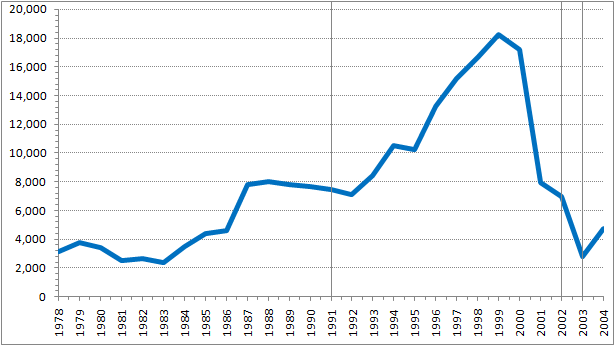
Due to Plough Lane's modest capacity and Wimbledon's unprecedented rise from non-League football to the First Division in under ten years, the club had a much lower level of support than its top-flight rivals. During Wimbledon's first season in the Football League, Wimbledon's average attendance was only 3,135 – however, by the club's appearance in the top flight nine years later the average attendance had risen by 149% to 7,811. Attendances did not immediately change much following the move to Selhurst Park in 1991 – however, the larger capacity gradually started to be used. Average crowds peaked at 18,235 in 199899, and during the next season, the team's final year in the FA Premier League, home crowds averaged 17,157. With relegation, attendances dropped to an average of only 7,897 during 200001 as organized supporter boycotts of matches in protest at the proposed relocation took effect. Wimbledon averaged 6,961 during the final season before the club's relocation to Milton Keynes was confirmed.{{cite web |access-date = 4 June 2009 |archive-url = https://web.archive.org/web/20090227154121/http://www.european-football-statistics.co.uk/attnclub/wimb.htm |archive-date = 27 February 2009 |url-status = dead
Following the sanctioning of the move, most of the team's support left in specific protest at the club's relocation, to follow AFC Wimbledon, the new club founded by Wimbledon supporters. During the 200203 season, AFC Wimbledon's first and Wimbledon's last full season in south London, average crowds at the new club were actually higher than those at the original club. Attendances during the 200304 season, Wimbledon's last, were higher than those at AFC Wimbledon: Wimbledon averaged 4,751 at the National Hockey Stadium, compared to AFC Wimbledon's 2,606.
The club had two main supporters organisations– the long established official Wimbledon F.C. Supporters Club, which was tied to the club, and the more radical Wimbledon Independent Supporters Association (WISA) which was founded in 1995. The WISA was instrumental in the organisation of the supporter boycotts at Selhurst Park, and in the formation of The Dons Trust in March 2002. This trust, created in part to oppose the relocation to Milton Keynes, helped the WISA to found AFC Wimbledon months after its own establishment. Both the WISA and The Dons Trust from this point became affiliated to AFC Wimbledon, while the official Wimbledon F.C Supporters Club became defunct following the relocation.{{cite web |archive-url = https://archive.today/20121224140821/http://www.wisa.org.uk/history/index.html |url-status = dead |archive-date = 24 December 2012 |access-date = 23 August 2009 |access-date = 23 August 2009 |archive-url = https://web.archive.org/web/20090925140100/http://www.afcwimbledon.co.uk/aboutthetrust.php?Psection_id=10 |archive-date = 25 September 2009 |url-status = dead
Rivalries
Main article: South London derby
During much of Wimbledon's amateur and later semi-professional history, a strong local rivalry existed with neighbouring Tooting & Mitcham United F.C.
From the mid 1980s, the club's main rivals were considered by fans to be fellow south London club Crystal Palace (who were their landlord from 1991 to 2003) and west London-based Chelsea; however, neither of these rivalries was seriously reciprocated. Wimbledon were in the same division as Palace for a total of 11 seasons between 1984 and 2004, and in the same division as Chelsea for all but one season between 1986 and 2000.
Records and statistics

The record for most appearances for Wimbledon was held by Roy Law, who turned out for the club 644 times between 1958 and 1972;{{cite web |access-date = 8 October 2009 |archive-url = https://web.archive.org/web/20110723000459/http://afcw.foto.co.uk/players?ID=Roy%20Law&uid=0 |archive-date = 23 July 2011 |url-status = dead |access-date = 8 October 2009 |archive-url = https://web.archive.org/web/20110723000523/http://afcw.foto.co.uk/players?ID=Eddie%20Reynolds&uid=0 |archive-date = 23 July 2011 |url-status = dead |access-date = 8 October 2009 |archive-url = https://web.archive.org/web/20110723000410/http://afcw.foto.co.uk/players?ID=Ian%20Cooke&uid=0 |archive-date = 23 July 2011 |url-status = dead
The records for most appearances and goals for Wimbledon in the Football League were both held by Alan Cork. Cork scored 145 league goals for the club in 430 matches. Cork also held the record for most Football League goals in a season, with 29 during 198384.{{cite web | access-date = 4 June 2009 | archive-date = 1 September 2021 | archive-url = https://web.archive.org/web/20210901091337/https://www.sporting-heroes.net/common/not-found.aspx?aspxerrorpath=/scriptresource.axd | url-status = live |access-date=4 June 2009 |archive-date=8 March 2016 |archive-url=https://web.archive.org/web/20160308225812/http://www.theguardian.com/football/1999/jan/15/newsstory.sport9 |url-status=live |access-date = 4 June 2009 |archive-url = https://web.archive.org/web/20090803211427/http://www.soccerbase.com/team_records.sd?teamid=2812 |archive-date = 3 August 2009 |url-status = dead |access-date=4 June 2009
Wimbledon's best win was a 6–0 league victory over Newport County on 3 September 1983, while the worst defeat was an 80 League Cup defeat at Everton on 29 August 1978. Wimbledon's longest unbeaten league run was 22 matches between 15 January and 14 May 1984; the longest league run without a win, 14, was set between 19 March and 28 August 2000. Wimbledon's longest run of league wins was seven, set between 9 April and 7 May 1983 and matched from 4 September to 19 October 1996. Wimbledon's longest run of league defeats was the eleven matches lost in a row from 10 January to 27 March 2004.{{cite web |access-date = 4 June 2009 |archive-url = https://web.archive.org/web/20110116101629/http://www.statto.com/football/teams/wimbledon/records |archive-date = 16 January 2011 |url-status = live
Wimbledon's highest attendance, 30,115, was set on 9 May 1993 for the FA Premier League match against Manchester United at Selhurst Park but their official home attendance record is 18,080 vs HMS Victory in an FA Amateur Cup tie on 9 March 1935 at Plough Lane due to Selhurst Park being borrowed from Crystal Palace FC.
European record
| Season | Competition | Round | Club | Home | Away |
|---|---|---|---|---|---|
| 1995 | Intertoto Cup | Group stage | TUR Bursaspor | 0–41 | |
| SVK Košice | 1–1 | ||||
| ISR Beitar Jerusalem | 0–01 | ||||
| BEL Charleroi | 0–3 |
1Both home matches in this competition were played at Brighton and Hove Albion Goldstone Ground, as Selhurst Park was unavailable.{{cite news |access-date=26 January 2010 |archive-date=22 November 2009 |archive-url=https://web.archive.org/web/20091122205124/http://www.independent.co.uk/sport/no-picnic-for-english-clubs-by-the-sea-1588438.html |url-status=live
Players
First team squad
:The squad given here is made up of the players registered to the club on the date of Wimbledon F.C.'s final league match (Wimbledon 10 Derby County, 9May 2004). Updated 9May 2004.{{cite web |access-date=25 August 2009 |archive-url=https://web.archive.org/web/20040412000945/http://www.wimbledon-fc.premiumtv.co.uk/page/Home/0,,10420,00.html |archive-date=12 April 2004}} :a Denotes players who stayed on to play for Milton Keynes Dons :b Denotes players who later played for AFC Wimbledon :c Sourced to Soccerbase .
Notable former players
Managers
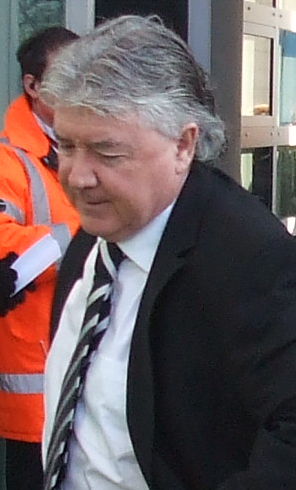
Prior to the appointment of H. R. Watts as first team manager in 1930, a committee would deal with first team affairs, such as choosing the team on a matchday.{{Cite web |access-date = 4 June 2009 |url-status = dead |archive-url = https://web.archive.org/web/20080921103440/http://historicaldons.com/1930.htm |archive-date = 21 September 2008 |access-date = 4 June 2009 |url-status = dead |archive-url = https://web.archive.org/web/20080311210052/http://historicaldons.com/1960.htm |archive-date = 11 March 2008 |access-date = 4 June 2009 |url-status = dead |archive-url = https://web.archive.org/web/20110930110421/http://historicaldons.com/1980.htm |archive-date = 30 September 2011 |access-date = 4 June 2009 |archive-url = https://web.archive.org/web/20090803210346/http://www.soccerbase.com/manager_history.sd?teamid=2812 |archive-date = 3 August 2009 |url-status = dead
:Statistics apply to competitive league and cup matches only. Wartime matches excluded.
| Name | Nationality | From | To | Matches | Won | Drawn | Lost | Win % | Notes | ||||
|---|---|---|---|---|---|---|---|---|---|---|---|---|---|
| England English | {{dts | format=dmy | 1930 | }} | {{dts | format=dmy | 1946 | }} | |||||
| England English | {{dts | format=dmy | 1946 | }} | |||||||||
| England English | {{Cite web | ||||||||||||
| England English | |||||||||||||
| England English | |||||||||||||
| England English | |||||||||||||
| England English | |||||||||||||
| England English | |||||||||||||
| England English | |||||||||||||
| England English | |||||||||||||
| England English | |||||||||||||
| Ireland Irish | |||||||||||||
| Norway Norwegian | |||||||||||||
| England English | {{cite news | ||||||||||||
| England English | {{cite news |
Managers from Dowden until Batsford sourced to: {{cite web |access-date = 5 November 2009 |url-status = dead |archive-url = https://web.archive.org/web/20090423014457/http://afcw.foto.co.uk/ |archive-date = 23 April 2009
Managers after Batsford sourced to: {{Cite web |access-date = 4 June 2009 |archive-url = https://web.archive.org/web/20090803210346/http://www.soccerbase.com/manager_history.sd?teamid=2812 |archive-date = 3 August 2009 |url-status = dead
Honours
Wimbledon were a successful club even before election to the Football League, winning eight Isthmian League titles (including three in a row from 1962 to 1964) and three successive Southern League titles (from 1975 to 1977). Having also won the FA Amateur Cup in 1963, the run of Southern League titles prompted Football League election in 1977.
Even at the higher level, Wimbledon continued to collect honours; the most notable being the FA Cup victory in 1988, which made Wimbledon only the third club to have won both the FA Cup and its amateur equivalent. Despite swift success in The Football League, the club's rapid ascent combined with short spells in the Second and Third Divisions meant that the team only won a solitary divisional championship within the League – the Fourth Division title of 198283.
League
- Second Division (level 2)
- Promoted: 1985–86
- Third Division (level 3)
- Promoted: 1983–84
- Fourth Division (level 4)
- Southern Football League
- Isthmian League
- Athenian League
- Runners-up: 1920–21
Cup
References
- (27 December 2013). "MK Dons: A decade of football in Milton Keynes". BBC Sport.
- "Dave Clement". England Football Online.
- (24 April 1989). "World Notes Britain".
- (15 April 2003). "New Wimbledon Football Club Logo". Wimbledon F.C. (transferred to mkdons.com).
- (29 May 2003). "New Second Strip". Wimbledon F.C. (transferred to mkdons.com).
- (27 May 2004). "Club Statement". Wimbledon F.C. (transferred to mkdons.com).
- (21 June 2004). "Official Statement". Wimbledon F.C. (transferred to mkdons.com).
- Plummer, David. (13 May 2003). "Even the Wombles refuse to follow Wimbledon to Milton Keynes". [[The Guardian]].
- (December 2003). "Rivalry uncovered". Football Fans Census.
This article was imported from Wikipedia and is available under the Creative Commons Attribution-ShareAlike 4.0 License. Content has been adapted to SurfDoc format. Original contributors can be found on the article history page.
Ask Mako anything about Wimbledon F.C. — get instant answers, deeper analysis, and related topics.
Research with MakoFree with your Surf account
Create a free account to save articles, ask Mako questions, and organize your research.
Sign up freeThis content may have been generated or modified by AI. CloudSurf Software LLC is not responsible for the accuracy, completeness, or reliability of AI-generated content. Always verify important information from primary sources.
Report