From Surf Wiki (app.surf) — the open knowledge base
William Birdwood
British Army officer (1865–1951)

British Army officer (1865–1951)
| Field | Value |
|---|---|
| honorific_prefix | Field Marshal The Right Honourable |
| name | The Lord Birdwood |
| honorific_suffix | |
| image | William Birdwood.jpg |
| caption | Photographic portrait of Birdwood by Elliott & Fry |
| nickname | Birdy/Birdie |
| birth_date | |
| birth_place | Kirkee, Bombay Presidency, British India |
| death_date | |
| death_place | Hampton Court Palace, England |
| allegiance | United Kingdom |
| branch | British Indian Army |
| serviceyears | 1883–1930 |
| rank | Field Marshal |
| commands | Commander-in-Chief, India |
| Northern Command, India | |
| Fifth Army | |
| Australian Corps | |
| I ANZAC Corps | |
| II ANZAC Corps | |
| Australian Imperial Force | |
| Australian and New Zealand Army Corps | |
| Kohat Brigade | |
| battles | |
| awards | Knight Grand Cross of the Order of the Bath |
| Knight Grand Commander of the Order of the Star of India | |
| Knight Grand Cross of the Order of St Michael and St George | |
| Knight Grand Cross of the Royal Victorian Order | |
| Companion of the Order of the Indian Empire | |
| Distinguished Service Order | |
| Croix de Guerre (France) | |
| Grand Officer of the Order of the Crown (Belgium) | |
| Croix de Guerre (Belgium) | |
| Distinguished Service Medal (United States) | |
| Grand Cross of the Order of the Tower and Sword (Portugal) | |
| Grand Cordon of the Order of the Rising Sun (Japan) | |
| module | {{Infobox officeholder |
| embed | yes |
| office1 | Member of the House of Lords |
| status1 | Lord Temporal |
| term_start1 | 25 January 1938 |
| predecessor1 | Peerage created |
| term_end1 | 17 May 1951 |
| successor1 | The 2nd Baron Birdwood |
Northern Command, India Fifth Army Australian Corps I ANZAC Corps II ANZAC Corps Australian Imperial Force Australian and New Zealand Army Corps Kohat Brigade
- North-West Frontier
- Tirah campaign
- Second Boer War
- First World War
- Gallipoli campaign
- Western Front Knight Grand Commander of the Order of the Star of India Knight Grand Cross of the Order of St Michael and St George Knight Grand Cross of the Royal Victorian Order Companion of the Order of the Indian Empire Distinguished Service Order Croix de Guerre (France) Grand Officer of the Order of the Crown (Belgium) Croix de Guerre (Belgium) Distinguished Service Medal (United States) Grand Cross of the Order of the Tower and Sword (Portugal) Grand Cordon of the Order of the Rising Sun (Japan) Field Marshal William Riddell Birdwood, 1st Baron Birdwood (13 September 1865 – 17 May 1951) was a highly decorated and distinguished British Indian Army officer. He saw active service in the Second Boer War on the staff of Lord Kitchener. Birdwood saw action again in the First World War, initially as commander of the Australian and New Zealand Army Corps during the Gallipoli campaign in 1915, leading the landings on the peninsula and then the evacuation later in the year, before becoming commander-in-chief of the Fifth Army on the Western Front during the closing stages of the war. He then went on to be general officer commanding the Northern Army in India in 1920 and Commander-in-Chief, India, in 1925, and retired as a field marshal.
Early life
William Riddell Birdwood was born on 13 September 1865 in Kirkee, India. His father, Herbert Mills Birdwood, born in Bombay and educated in the UK, had returned to India in 1859 after passing the Indian Civil Service examination. In 1861, Herbert Birdwood married Edith Marion Sidonie, the eldest daughter of Surgeon-Major Elijah George Halhed Impey of the Bombay Horse Artillery and postmaster-general of the Bombay Presidency. They had five sons and a daughter; William was their second son. At the time of William's birth, his father held positions in the Bombay legislative council, and went on to become a Bombay high court judge. William Birdwood was educated at Clifton College.
Military career
After securing a militia commission in the 4th Battalion Royal Scots Fusiliers in 1883, which he resigned in March 1885, Birdwood then trained at the Royal Military College, Sandhurst, from which he was commissioned early, owing to the Russian war scare of 1885, becoming a lieutenant in the 12th (Prince of Wales's) Royal Lancers on 9 May 1885. He joined his regiment in India and then transferred from the 12th Royal Lancers to the Bengal Staff Corps on 20 December 1886. He subsequently transferred to the 11th Bengal Lancers in 1887, seeing action on the North-West Frontier in 1891.
He later became adjutant of the Viceroy's Bodyguard in 1893. He was promoted to captain on 9 May 1896 and "served in the Tirah campaign 1897–1898, at Chagru Kotal, Dargai, (18 October 1897); Saran Sar (9 November 1897); the Warran Valley (16 November 1897) and Dwatoi (24 November 1897). He was mentioned in despatches for this campaign and went on leave to England in 1899".
Birdwood served in the Second Boer War, which began in October 1899, initially as a brigade major with a mounted brigade in Natal from 10 January 1900 and then as deputy assistant adjutant general on the staff of Major General Lord Kitchener from 15 October 1900. Promoted to brevet major on 20 November 1901 and local lieutenant colonel in October 1901, he became military secretary to Lord Kitchener on 5 June 1902, and followed him on his return to the United Kingdom on board the SS Orotava, which arrived in Southampton on 12 July 1902. He received a brevet promotion to lieutenant colonel in the South African Honours list published on 26 June 1902. In a despatch from June 1902, Lord Kitchener wrote the following about his work in South Africa: :This young officer has held a difficult position as Assistant Adjutant-General, Mounted Troops, and responsible adviser as to the distribution of remounts. In carrying out these duties he has proved himself to possess exceptional ability, and he has shown, moreover, remarkable tact in dealing with and conciliating the various interests which he had to take into consideration.
When Kitchener went to India as commander-in-chief in November 1902, Birdwood joined him there as assistant military secretary and interpreter. He was promoted to the substantive rank of major on 9 May 1903 and appointed military secretary to Lord Kitchener with the rank of full colonel on 26 June 1905. Having been appointed an aide-de-camp to the King on 14 February 1906, he was given command of the Kohat Brigade on the North West Frontier in 1908 and promoted to temporary brigadier general on 28 June 1909.
Promoted to the rank of major general on 3 October 1911, Birdwood became quartermaster-general in India and a member of the Viceroy's Legislative Council in 1912 and then Secretary of the Indian Army Department in 1913.
Gallipoli

In November 1914 Birdwood was instructed by Kitchener to form an army corps from the Australian and New Zealand troops that were training in Egypt. He was promoted to temporary lieutenant general on 12 December 1914 and given command of the Australian and New Zealand Army Corps. Kitchener instructed General Sir Ian Hamilton, commander-in-chief of the Mediterranean Expeditionary Force, to carry out an operation to capture the Gallipoli peninsula and placed Birdwood's ANZAC Corps under Hamilton's command. Nevertheless, Hamilton ordered them to hold fast.


Birdwood took effective command of the First Australian Imperial Force in May 1915 while still commanding Allied troops on the ground at Gallipoli. and given command of the newly formed Dardanelles Army: the one outstanding success of the campaign was the evacuation led by Birdwood, which took place in December 1915 and January 1916, when the entire force was withdrawn before any Ottoman reaction.
Western Front
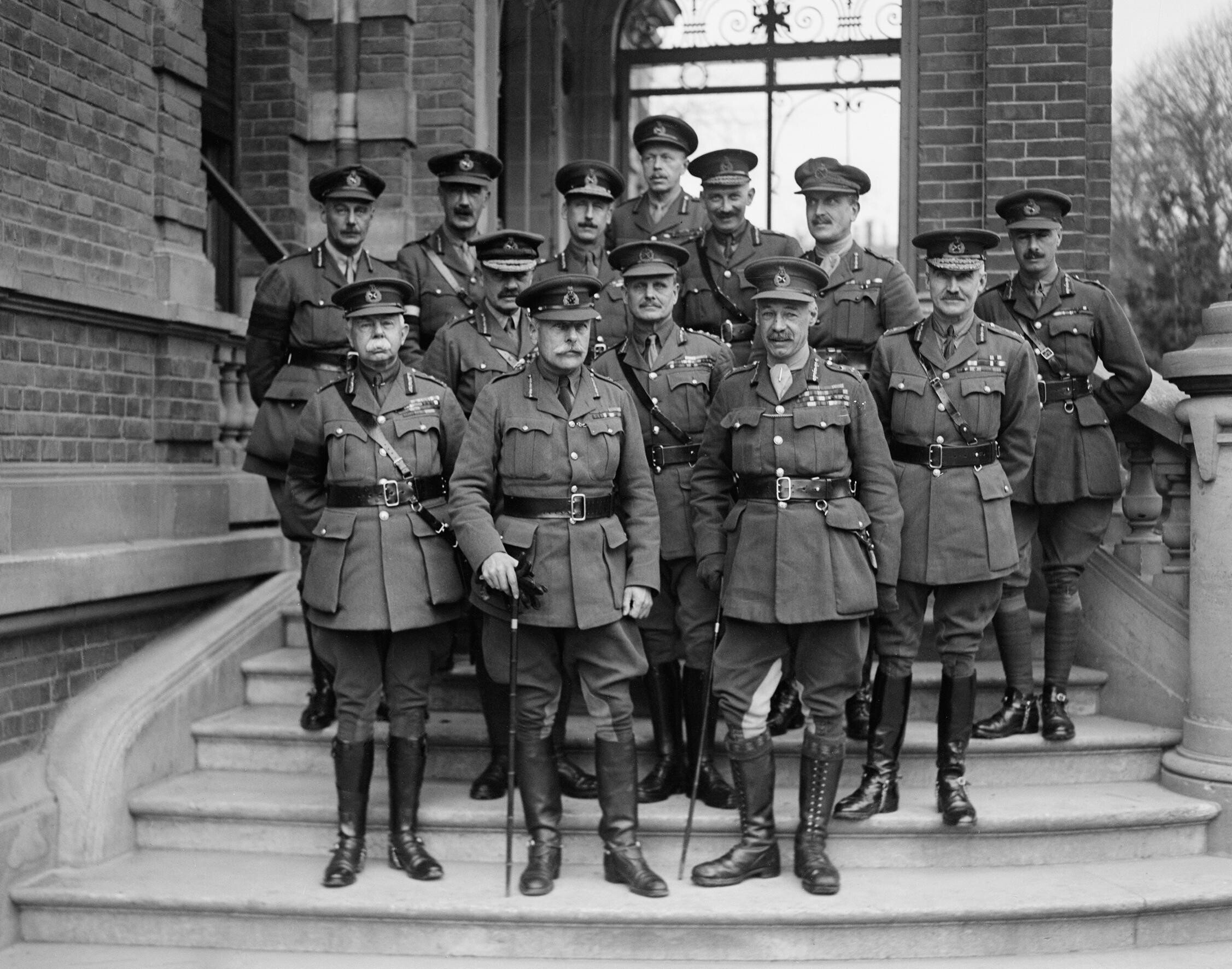
In February 1916 the Australian and New Zealand contingents, back in Egypt, underwent reorganisation to incorporate the new units and reinforcements that had accumulated during 1915: the Australian and New Zealand Army Corps was replaced by two corps, I ANZAC Corps and II ANZAC Corps, and Birdwood reverted to the command of II ANZAC Corps. When I ANZAC Corps became the first to depart for France, Birdwood, as senior corps commander, took over command. During early 1916 Birdwood advocated for the formation of an Australian and New Zealand Army or a Dominion Army also including Canadian forces under his command, but this did not occur.
Birdwood was promoted to the permanent rank of full general on 23 October 1917 with command of a formation then known as the Australian Corps in November 1917. He was also appointed aide-de-camp general to the King on 2 November 1917 and given command of the British Fifth Army on 31 May 1918 and led the Army at the liberation of Lille in October 1918 and at the liberation of Tournai in November 1918.
After the war
Birdwood was made a Baronet, of Anzac and of Totnes, in the County of Devon, on 29 December 1919. He toured Australia to great acclaim in 1920 and then became general officer commanding the Northern Army in India in October of that year. He was promoted to field marshal (with the corresponding honorary rank in the Australian Military Forces) on 20 March 1925 and, having been appointed a Member of the Executive Council of the Governor-General of India in July 1925, he went on to be Commander-in-Chief, India, in August 1925.
After leaving the service in 1930, Birdwood made a bid to become Governor-General of Australia. He had the backing of the King and the British government. However, the Australian Prime Minister James Scullin insisted that his Australian nominee Sir Isaac Isaacs be appointed. and Captain of Deal Castle in 1934. In 1935 he wrote for the Western Australian distance education magazine Our Rural Magazine, saying that he had two granddaughters making good use of distance educational courses. In May 1936, he returned to Gallipoli aboard RMS Lancastria and visited war memorials on the peninsula. He retired from academic work in 1938.
In retirement Birdwood was colonel of the 12th Royal Lancers (1920–1951), the 6th Gurkha Rifles (1926–1951), and the Royal Horse Guards from 1933 along with the 75th (Home Counties) (Cinque Ports) Heavy Anti-Aircraft Regiment, Royal Artillery (1939–1951). In January 1936 he attended the funeral of King George V and in May 1937 he was present for the coronation of King George VI. He was raised to the peerage as Baron Birdwood, of Anzac and of Totnes in the County of Devon, on 25 January 1938, in recognition of his wartime service.
His autobiography Khaki and Gown (1941) was followed by In my time: recollections and anecdotes (1946). Lord Birdwood died at Hampton Court Palace, where he lived in grace-and-favour apartments, on 17 May 1951, at the age of 85. He was buried at Twickenham Cemetery with full military honours;
Honours and awards
.jpg)
British
- Knight Grand Cross of the Order of the Bath (GCB) – 1 January 1923 (KCB: 4 June 1917; CB: 19 June 1911)
- Knight Grand Commander of the Order of the Star of India (GCSI) – 1 January 1930 (KCSI: 1 January 1915; CSI: 1 January 1910)
- Knight Grand Cross of the Order of St Michael and St George (GCMG) – 1 January 1919 (KCMG: 3 June 1915)
- Knight Grand Cross of the Royal Victorian Order (GCVO) – 11 May 1937
- Companion of the Order of the Indian Empire (CIE) – 1 January 1908
- Companion of the Distinguished Service Order (DSO) – 14 August 1908
- Knight of Grace of the Venerable Order of St. John (KStJ) – 21 June 1927
Foreign
- Croix de Guerre (France), 22 February 1916 and 11 March 1919 (with Palm)
- Grand Officer of the Order of the Crown (Belgium) – 2 November 1916
- Croix de Guerre (Belgium) – 11 March 1918
- Distinguished Service Medal (United States) – 12 July 1919
- Grand Cross of the Order of the Tower and Sword (Portugal) – 21 August 1919
- Grand Cordon of the Order of the Rising Sun (Japan) – 21 January 1921
Field Marshal Birdwood's Ribbon bar as it may have appeared in 1937




_Ribbon.svg)




Family
In 1893 Birdwood married Janetta Bromhead, daughter of Sir Benjamin Bromhead; they had a son and two daughters. His wife died in 1947. Their son, Christopher Birdwood (1899–1962), succeeded him as 2nd Baron Birdwood. The elder daughter was Constance 'Nancy' Birdwood, and the younger daughter was Judith Birdwood. Other members of the Birdwood family include Labour minister and peer Christopher Birdwood Thomson (1875–1930), Anglo-Indian naturalist Sir George Birdwood (1832–1917), and far-right political activist Jane Birdwood (1913–2000), the second wife of William Birdwood's son.
Legacy
The town of Blumberg, South Australia, changed its German name to Birdwood in 1918, and the soldier settlement of Birdwoodton, Victoria, was named after Birdwood in 1920. Mount Birdwood in Alberta, Canada, also bears his name.
Birdwood House in Geraldton, Western Australia, which was built in 1935 for the Geraldton RSL and named after Birdwood, has served as the centre of ANZAC Day commemorations in Geraldton since 1936. William Birdwood visited Birdwood House in Geraldton 1937 where he was presented with a gold key and Freedom of Birdwood House. Birdwood House became Heritage Registered in 2016.
Many streets and public spaces in Australia and New Zealand are named or commonly believed to be named after Birdwood, including Birdwood Park in Newcastle West in 1920 and a street in New Lambton in 1919.
Coat of arms
Notes
References
Sources
References
- James, Robert Rhodes. (2009). "Birdwood, William Riddell".
- Brown, F. H.. (2012). "Birdwood, Herbert Mills".
- "Clifton College Register" Muirhead, J.A.O. p. 70: Bristol; J. W. Arrowsmith for Old Cliftonian Society; April 1948 [[Bristol]]
- Hill, A. J.. (1979). "William Riddell (Baron Birdwood) Birdwood (1865–1951)".
- {{London Gazette. (13 March 1885)
- {{London Gazette. (8 May 1885)
- {{London Gazette. (1 April 1887)
- {{London Gazette. (1 May 1888)
- {{London Gazette. (14 August 1896)
- {{London Gazette. (3 December 1901)
- {{London Gazette. (27 September 1901)
- {{London Gazette. (6 December 1901)
- {{London Gazette. (1 August 1902)
- (26 June 1902). "The Army in South Africa – Troops returning home".
- (14 July 1902). "Lord Kitchener′s return".
- {{London Gazette. (26 June 1902)
- {{London Gazette. (29 July 1902)
- (27 August 1902). "Naval & Military intelligence – Lord Kitchener´s staff".
- {{London Gazette. (21 July 1903)
- {{London Gazette. (7 November 1905)
- {{London Gazette. (13 February 1906)
- Tucker; Roberts, p.388
- {{London Gazette. (14 September 1909)
- {{London Gazette. (13 February 1912)
- {{London Gazette. (29 March 1915)
- Hamilton ordered Birdwood to carry out a [[landing at Anzac Cove. landing]] on 25 April 1915 north of [[Kabatepe]] at a site now known as [[ANZAC Cove]].{{sfn. Heathcote. 1999. William Bridges]] and Major-General [[Alexander Godley]], the divisional commanders, were both of the view that the Allied forces, dealing with stiffer-than-expected resistance, should be evacuated ahead of an expected attack by the [[Ottoman Army (1861–1922)
- Bean, 1981, pp. 460–461
- {{London Gazette. (12 November 1917)
- {{London Gazette. (2 November 1917)
- {{London Gazette. (30 December 1919)
- {{London Gazette. (11 March 1921)
- {{London Gazette. (20 March 1925)
- (14 January 1926). "Australian Military Forces". [[Commonwealth of Australia Gazette]].
- {{London Gazette. (24 July 1925)
- {{London Gazette. (8 March 1935)
- "Captains of Deal Castle". East Kent freeuk.
- (18 October 1934). "Our rural magazine". The West Australian (Perth, WA : 1879–1954).
- (27 May 1936). "Gallipoli Pilgrimage". The West Australian.
- (15 June 1936). "Personalities". The Listening Post.
- {{London Gazette. (4 May 1920)
- {{London Gazette. (12 March 1926)
- {{London Gazette. (14 March 1933)
- ''Army List'', May 1939.
- {{London Gazette. (29 April 1936)
- {{London Gazette. (10 November 1937)
- {{London Gazette. (28 January 1938)
- {{London Gazette. (1 January 1938)
- {{London Gazette. (5 January 1923)
- {{London Gazette. (4 June 1917)
- {{London Gazette. (19 June 1911)
- {{London Gazette. (7 January 1930)
- {{London Gazette. (1 January 1915)
- {{London Gazette. (1 January 1910)
- {{London Gazette. (1 January 1919)
- {{London Gazette. (23 June 1915)
- {{London Gazette. (11 May 1937)
- {{London Gazette. (1 January 1908)
- {{London Gazette. (14 August 1908)
- {{London Gazette. (28 June 1927)
- {{London Gazette. (11 March 1919)
- {{London Gazette. (16 February 1917)
- {{London Gazette. (11 March 1918)
- {{London Gazette. (12 July 1919)
- {{London Gazette. (21 August 1919)
- {{London Gazette. (25 January 1921)
- "Companion of the Most Eminent Order of the Indian Empire: Colonel W R Birdwood, British Army".
- "Works | NGV | View Work".
- Schmidt, Nicholas. (14 February 2011). "For Valentine's Day – The airman who married the general's daughter". Australian War Memorial.
- (29 June 2000). "The Dowager Lady Birdwood". The Telegraph.
- "Place Names of South Australia – B {{!}} Blumberg". [[State Library of South Australia]].
- (2015). "Birdwoodton and Cabarita". [[Monash University]] and the [[University of Queensland]].
- (1928). "Place-names of Alberta". Geographic Board of Canada.
- "Geraldton City RSL Sub Branch".
- "WA State Heritage Register - supporting document".
- (9 September 2016). "Iconic RSL building Birdwood House is latest addition to WA heritage register". ABC.
- "State Heritage Office - Birdwood House, Geraldton".
- Wetherall, Lachlan. "Birdwood Park {{!}} A bit of this, a bit of that".
This article was imported from Wikipedia and is available under the Creative Commons Attribution-ShareAlike 4.0 License. Content has been adapted to SurfDoc format. Original contributors can be found on the article history page.
Ask Mako anything about William Birdwood — get instant answers, deeper analysis, and related topics.
Research with MakoFree with your Surf account
Create a free account to save articles, ask Mako questions, and organize your research.
Sign up freeThis content may have been generated or modified by AI. CloudSurf Software LLC is not responsible for the accuracy, completeness, or reliability of AI-generated content. Always verify important information from primary sources.
Report