From Surf Wiki (app.surf) — the open knowledge base
Wilkinson County, Mississippi
County in the United States

County in the United States
| Field | Value |
|---|---|
| county | Wilkinson County |
| state | Mississippi |
| founded | 1802 |
| seat wl | Woodville |
| largest city wl | Centreville |
| city type | town |
| area_total_sq_mi | 688 |
| area_land_sq_mi | 678 |
| area_water_sq_mi | 9.7 |
| area percentage | 1.4 |
| population_as_of | 2020 |
| population_total | 8587 |
| population_density_sq_mi | auto |
| web | http://www.wilkinson.co.ms.gov |
| ex image | {{multiple image |
| border | infobox |
| total_width | 300 |
| image_style | border:1; |
| perrow | 2 |
| image1 | Clark creek natural area ms.jpg |
| image2 | Wikinson County Mississippi Courthouse.jpg |
| ex image cap | Left to right: Clark Creek and Wilkinson County Courthouse |
| district | 2nd |
| time zone | Central |
| named for | James Wilkinson |
Wilkinson County is a county located in the southwest corner of the U.S. state of Mississippi. As of 2020, its population was 8,587. Its county seat is Woodville. Bordered by the Mississippi River on the west, the county is named for James Wilkinson, a Revolutionary War military leader and first governor of the Louisiana Territory after its acquisition by the United States in 1803.
History
After Indian Removal in the 19th century, European-American settlers rapidly developed cotton plantations along the Mississippi River, which forms the western border. The intensive cultivation depended on the labor of numerous enslaved African Americans; in the early 19th century, more than a million slaves were relocated to the Deep South from the Upper South in a major forced migration. The population of this county quickly became majority black as enslaved workers were brought in to develop plantations. Much of the bottomlands and interior were undeveloped frontier until after the American Civil War.
The West Feliciana Railroad was later built to help get the cotton commodity crop to market. Some planters got wealthy during the antebellum years and built fine mansions in the county seat of Woodville, Mississippi. Jane and Samuel Emory Davis moved here in 1812 with their several children, and lived at a plantation near Woodville. Their youngest son, Jefferson Davis, attended the Wilkinson Academy in Woodville for two years before going to Kentucky to another school.
After the Civil War, freedmen and planters negotiated new working arrangements. Sharecropping became widespread. Although cotton continued as the commodity crop, a long agricultural depression kept prices low.
Following Reconstruction, white violence against blacks increased through the later decades of the 19th century and into the early 20th century. According to 2017 data compiled in Lynching in America (2015-2017), some nine lynchings of African Americans were recorded in Wilkinson County.
The peak of population in the county was reached in 1900, after which many blacks left in the Great Migration to the North and Midwest. The county has continued to have a black majority population.
In the early 20th century the boll weevil infestation destroyed much of the cotton crops, and mechanization caused a further loss of agricultural jobs. The exit of many African Americans from the state did not change the state's exclusion of African Americans from politics. They were not enabled to vote until after passage of the federal Voting Rights Act in 1965 and its enforcement. Cotton cultivation was revived, but it is produced on a highly mechanized, industrial scale.
Southwest Mississippi was an area of continuing white violence against blacks during the Civil Rights Movement. In February 1964, the White Knights of the Ku Klux Klan officially formed. Clifton Walker, 37, a married father of five and employee of International Paper Company in Natchez, who was not politically active, was killed in an ambush on Poor House Road near his home. The evidence showed there had been a crowd of shooters on both sides of the road. This lynching cold case has never been solved, although it was among numerous ones that the FBI was investigating since 2007, before the Donald Trump administration ended the effort in 2018.
Timber has been harvested and processed in the county as a new commodity crop. The population of the rural county has continued to decline because of lack of jobs. It is still majority African American. Towns have started to develop heritage tourism to attract more visitors.
Geography
According to the U.S. Census Bureau, the county has a total area of 688 sqmi, of which 678 sqmi is land and 9.7 sqmi (1.4%) is water.
Major highways
- [[Image:US 61.svg|20px]] U.S. Highway 61
- [[Image:Circle sign 24.svg|20px]] Mississippi Highway 24
- [[Image:Circle sign 33.svg|20px]] Mississippi Highway 33
Adjacent counties
- Adams County (north)
- Franklin County (northeast)
- Amite County (east)
- East Feliciana Parish, Louisiana (southeast)
- West Feliciana Parish, Louisiana (south)
- Concordia Parish, Louisiana (west)
National protected area
- Homochitto National Forest (part)
State protected area
- Clark Creek Natural Area
Demographics
|align-fn=center 1790-1960 1900-1990 1990-2000 2010-2013
Racial and ethnic composition
| Race/ethnicity | Num. | Perc. |
|---|---|---|
| White | 2,525 | 29.4% |
| Black or African American | 5,764 | 67.12% |
| Native American | 16 | 0.19% |
| Asian | 8 | 0.09% |
| Other/Mixed | 204 | 2.38% |
| Hispanic or Latino | 70 | 0.82% |
According to the U.S. Census Bureau, Wilkinson County's racial and ethnic makeup was predominantly Black or African American in 2020. The total racial and ethnic composition at the 2020 census was approximately 67.4% Black or African American, 29.5% White, 0.2% American Indian and Alaska Native, 0.2% Asian, less than 0.1% Native Hawaiian and Pacific Islander, 0.2% some other race, and 2.6% two or more races. Hispanic or Latino residents of any race comprised 0.8% of the population.
2020 census
As of the 2020 census, the county had a population of 8,587. The median age was 41.3 years. 19.9% of residents were under the age of 18 and 19.1% of residents were 65 years of age or older. For every 100 females there were 115.2 males, and for every 100 females age 18 and over there were 116.7 males age 18 and over.
The racial makeup of the county was 29.5% White, 67.4% Black or African American, 0.2% American Indian and Alaska Native, 0.2% Asian,
There were 3,313 households in the county, of which 28.0% had children under the age of 18 living in them. Of all households, 30.8% were married-couple households, 24.1% were households with a male householder and no spouse or partner present, and 40.5% were households with a female householder and no spouse or partner present. About 37.9% of all households were made up of individuals and 17.0% had someone living alone who was 65 years of age or older.
There were 4,554 housing units, of which 27.3% were vacant. Among occupied housing units, 76.8% were owner-occupied and 23.2% were renter-occupied. The homeowner vacancy rate was 1.2% and the rental vacancy rate was 10.5%.
Income
In 2010, the American Community Survey estimated the county had a median household income of $28,066. At the 2020 American Community Survey, its median household income increased to $30,760; the median monthly housing costs were $419. In 2020, the county had a mean income of $46,538, and married-couple families had a median income of $50,227 while non-family households averaged $27,468.
Education
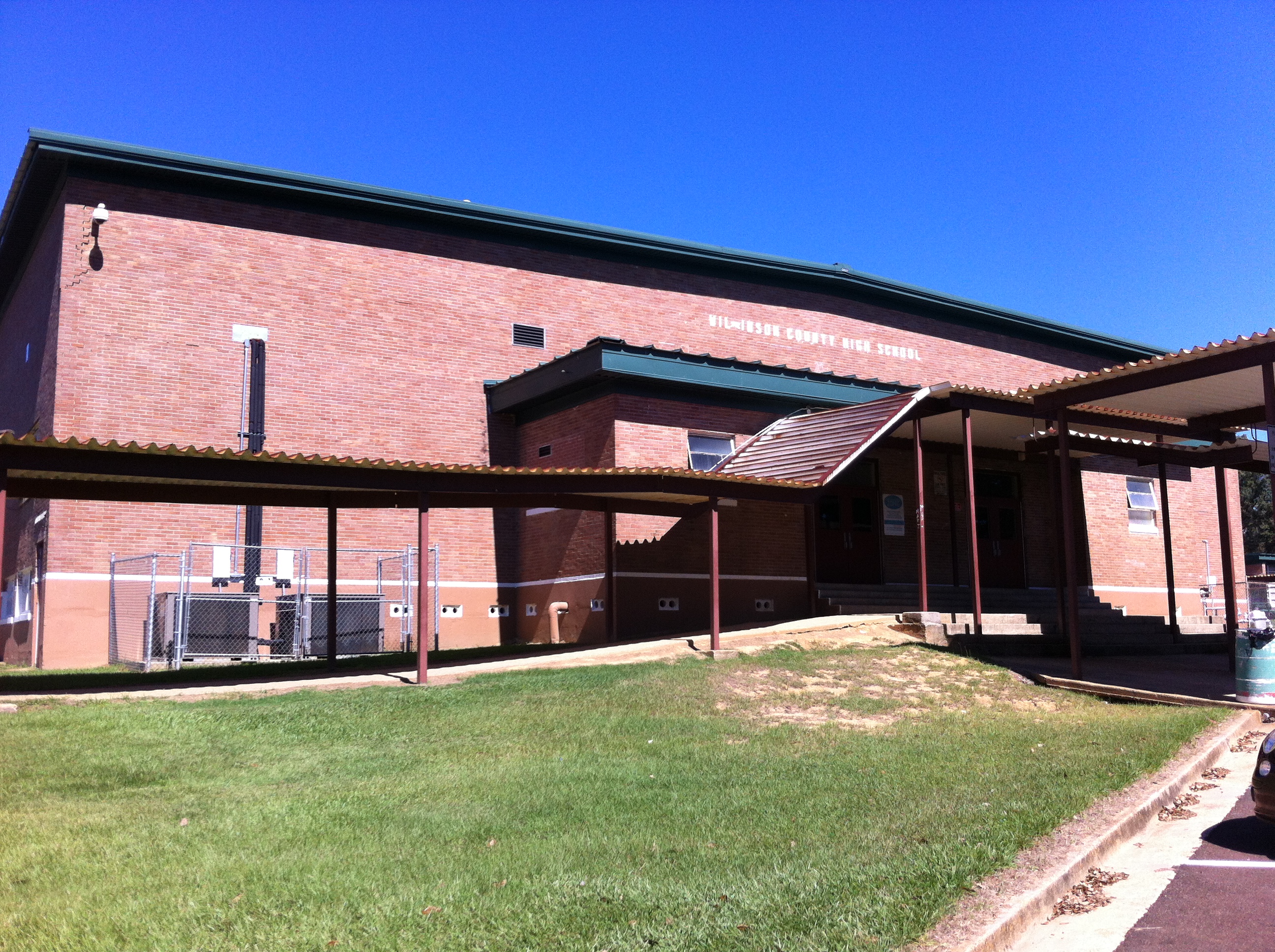
Wilkinson County School District serves the county.{{cite web|url=https://www2.census.gov/geo/maps/DC2020/PL20/st28_ms/schooldistrict_maps/c28157_wilkinson/DC20SD_C28157.pdf |archive-url=https://web.archive.org/web/20221202162213/https://www2.census.gov/geo/maps/DC2020/PL20/st28_ms/schooldistrict_maps/c28157_wilkinson/DC20SD_C28157.pdf |archive-date=December 2, 2022 |url-status=live|title=2020 CENSUS - SCHOOL DISTRICT REFERENCE MAP: Wilkinson County, MS
Wilkinson County is in the district of Southwest Mississippi Community College.
Communities
Towns
- Centreville (partly in Amite County)
- Crosby (partly in Amite County)
- Woodville (county seat)
Unincorporated communities
- Doloroso
- Fort Adams
- Pinckneyville
- Possum Corner
- Rosetta
- Wilkinson
Ghost towns
- Artonish
- Clarksville
- Loch Leven
Notable people
- Regina Barrow (born 1966), Louisiana state senator from Baton Rouge, Louisiana, since 2016; former state representative from 2005 to 2016; native of Wilkinson County
- Jefferson Davis, President of the Confederate States of America; grew up at Rosemont plantation just east of Woodville
- Anne Moody (1940-2015), civil rights activist and author
- Edward Grady Partin (1924–1990), Teamsters Union business agent in Baton Rouge, native of Woodville
- William Grant Still, African-American classical composer and Mississippi Musicians Hall of Fame inductee was born in Woodville in 1895
Politics
Wilkinson County has been a Democratic stronghold for decades. It has not voted for a Republican presidential candidate since the 1972 national landslide election, and since then no Republican has managed to get even 40% of the county's vote.
References
References
- "Find a County". National Association of Counties.
- Strode, Hudson (1955). ''Jefferson Davis, Volume I: American Patriot''. New York: Harcourt, Brace & Company, pp. 11-27
- "''Lynching in America'', Supplement: Lynching by County, 3rd edition, 2017, p.7; accessed 07 June 2018".
- [http://www.hannapub.com/concordiasentinel/frank_morris_murder/cold-case-ambush-on-poor-house-road-the-murder-of/article_5e19f828-472c-11e3-a484-0019bb30f31a.html Frank Morris, "Cold Case: Ambush on Poor House Road: The 1964 murder of Clifton Walker"], ''Concordia Sentinel'', July 22, 2012; accessed June 7, 2018
- (August 22, 2012). "2010 Census Gazetteer Files". United States Census Bureau.
- "Clark Creek".
- "County Population Totals and Components of Change: 2020-2024". United States Census Bureau.
- "U.S. Decennial Census". United States Census Bureau.
- "Historical Census Browser". University of Virginia Library.
- "Population of Counties by Decennial Census: 1900 to 1990". United States Census Bureau.
- "Census 2000 PHC-T-4. Ranking Tables for Counties: 1990 and 2000". United States Census Bureau.
- "State & County QuickFacts". United States Census Bureau.
- "2020 Race and Population Totals".
- (2021). "2020 Decennial Census Redistricting Data (Public Law 94-171)".
- (2021). "2020 Decennial Census Demographic Profile (DP1)".
- (2023). "2020 Decennial Census Demographic and Housing Characteristics (DHC)".
- "2010 Income Estimates".
- "2020 Income Estimates".
- "Mapping Race, School Segregation, and Black Identities in Woodville, Mississippi: A Case Study of a Rural Community". Journal of Rural Community Psychology - Mapping Race.
- (January 6, 1970). "School desegregation in Woodville, Mississippi". Globe-Gazette.
- (January 6, 1970). "Integration in Woodville Schools cont". Globe-Gazette.
- (January 12, 1970). "A new day ends public segregated schools in Mississippi". New York Times.
- "Welcome from the President". [[Southwest Mississippi Community College]].
- "Regina Ashford Barrow". [[Project Vote Smart]].
- Leip, David. "Dave Leip's Atlas of U.S. Presidential Elections".
This article was imported from Wikipedia and is available under the Creative Commons Attribution-ShareAlike 4.0 License. Content has been adapted to SurfDoc format. Original contributors can be found on the article history page.
Ask Mako anything about Wilkinson County, Mississippi — get instant answers, deeper analysis, and related topics.
Research with MakoFree with your Surf account
Create a free account to save articles, ask Mako questions, and organize your research.
Sign up freeThis content may have been generated or modified by AI. CloudSurf Software LLC is not responsible for the accuracy, completeness, or reliability of AI-generated content. Always verify important information from primary sources.
Report