From Surf Wiki (app.surf) — the open knowledge base
Wildfire
Uncontrolled fires in forests or open spaces

Uncontrolled fires in forests or open spaces
A wildfire, forest fire, or a bushfire is an unplanned and uncontrolled fire in an area of combustible vegetation.{{cite book |url=http://dictionary.cambridge.org/define.asp?key=90587&dict=CALD |title=Cambridge Advanced Learner's Dictionary |date=2008 |publisher=Cambridge University Press f page 5 -- |isbn=978-0-521-85804-5 |edition=3rd|archive-url=https://web.archive.org/web/20090813154617/http://dictionary.cambridge.org/define.asp?key=90587&dict=CALD |archive-date=13 August 2009 |url-status=live }} Some natural forest ecosystems depend on wildfire. Modern forest management often engages in prescribed burns to mitigate fire risk and promote natural forest cycles. However, controlled burns can turn into wildfires by mistake.
Wildfires can be classified by cause of ignition, physical properties, combustible material present, and the effect of weather on the fire. Wildfire severity results from a combination of factors such as available fuels, physical setting, and weather. Climatic cycles with wet periods that create substantial fuels, followed by drought and heat, often precede severe wildfires. These cycles have been intensified by climate change, and can be exacerbated by curtailment of mitigation measures (such as budget or equipment funding), or sheer enormity of the event.
Wildfires are a common type of disaster in some regions, including Siberia (Russia); California, Washington, Oregon, Texas, Florida (United States); British Columbia (Canada); and Australia. Areas with Mediterranean climates or in the taiga biome are particularly susceptible. Wildfires can severely impact humans and their settlements. Effects include for example the direct health impacts of smoke and fire, as well as destruction of property (especially in wildland–urban interfaces), and economic losses. There is also the potential for contamination of water and soil.
At a global level, human practices have made the impacts of wildfire worse, with a doubling in land area burned by wildfires compared to natural levels. Humans have impacted wildfire through climate change (e.g. more intense heat waves and droughts), land-use change, and wildfire suppression. The carbon released from wildfires can add to carbon dioxide concentrations in the atmosphere and thus contribute to the greenhouse effect. This creates a climate change feedback.
Naturally occurring wildfires can have beneficial effects on those ecosystems that have evolved with fire. In fact, many plant species depend on the effects of fire for growth and reproduction.
Ignition

Natural causes
Natural occurrences that can ignite wildfires without the involvement of humans include lightning, volcanic eruptions, sparks from rock falls, and spontaneous combustions.
Human activity
Sources of human-caused fire may include arson, accidental ignition, or the uncontrolled use of fire in land-clearing and agriculture such as the slash-and-burn farming. In the tropics, farmers often practice the slash-and-burn method of clearing fields during the dry season.
In middle latitudes, the most common human causes of wildfires are equipment generating sparks (chainsaws, grinders, mowers, etc.), overhead power lines, and arson.{{cite web | access-date =25 November 2020 | archive-date =19 June 2023 | archive-url =https://web.archive.org/web/20230619094218/https://www.latimes.com/environment/story/2020-01-05/human-caused-ignitions-spark-california-worst-wildfires | url-status =live
Arson may account for over 20% of human caused fires, although human activities, including campfires, power line failures, and equipment use, are responsible for approximately 85% of wildfires. The combination of these ignition sources with dry conditions leads to more frequent and severe fires. However, in the 2019–20 Australian bushfire season "an independent study found online bots and trolls exaggerating the role of arson in the fires." In the 2023 Canadian wildfires false claims of arson gained traction on social media; however, arson is generally not the main cause of wildfires in Canada. In California, generally 6–10% of wildfires annually are arson.
Coal seam fires burn in the thousands around the world, such as those in Burning Mountain, New South Wales; Centralia, Pennsylvania; and several coal-sustained fires in China. They can also flare up unexpectedly and ignite nearby flammable material.
Spread


The spread of wildfires varies based on the flammable material present, its vertical arrangement and moisture content, and weather conditions. Fuel arrangement and density is governed in part by topography, as land shape determines factors such as available sunlight and water for plant growth. Overall, fire types can be generally characterized by their fuels as follows:
- Ground fires are fed by subterranean roots, duff on the forest floor, and other buried organic matter. Ground fires typically burn by smoldering, and can burn slowly for days to months, such as peat fires in Kalimantan and Eastern Sumatra, Indonesia, which resulted from a riceland creation project that unintentionally drained and dried the peat.
- Crawling or surface fires are fueled by low-lying vegetative matter on the forest floor such as leaf and timber litter, debris, grass, and low-lying shrubbery. This kind of fire often burns at a relatively lower temperature than crown fires (less than 400 C) and may spread at slow rate, though steep slopes and wind can accelerate the rate of spread. This fuel type is especially susceptible to ignition due to spotting .
- Ladder fires consume material between low-level vegetation and tree canopies, such as small trees, downed logs, and vines. Kudzu, Old World climbing fern, and other invasive plants that scale trees may also encourage ladder fires.
- Crown, canopy, or aerial fires burn suspended material at the canopy level, such as tall trees, vines, and mosses. The ignition of a crown fire, termed crowning, is dependent on the density of the suspended material, canopy height, canopy continuity, sufficient surface and ladder fires, vegetation moisture content, and weather conditions during the blaze. Stand-replacing fires lit by humans can spread into the Amazon rain forest, damaging ecosystems not particularly suited for heat or arid conditions.
Physical properties

Wildfires occur when all the necessary elements of a fire triangle come together in a susceptible area: an ignition source is brought into contact with a combustible material such as vegetation that is subjected to enough heat and has an adequate supply of oxygen from the ambient air. A high moisture content usually prevents ignition and slows propagation, because higher temperatures are needed to evaporate any water in the material and heat the material to its fire point.
Dense forests usually provide more shade, resulting in lower ambient temperatures and greater humidity, and are therefore less susceptible to wildfires. Less dense material such as grasses and leaves are easier to ignite because they contain less water than denser material such as branches and trunks. Plants continuously lose water by evapotranspiration, but water loss is usually balanced by water absorbed from the soil, humidity, or rain. When this balance is not maintained, often as a consequence of droughts, plants dry out and are therefore more flammable.
A wildfire front is the portion sustaining continuous flaming combustion, where unburned material meets active flames, or the smoldering transition between unburned and burned material. As the front approaches, the fire heats both the surrounding air and woody material through convection and thermal radiation. First, wood is dried as water is vaporized at a temperature of 100 C. Next, the pyrolysis of wood at 230 C releases flammable gases. Finally, wood can smolder at 380 C or, when heated sufficiently, ignite at 590 C. Even before the flames of a wildfire arrive at a particular location, heat transfer from the wildfire front warms the air to 800 C, which pre-heats and dries flammable materials, causing materials to ignite faster and allowing the fire to spread faster. High-temperature and long-duration surface wildfires may encourage flashover or torching: the drying of tree canopies and their subsequent ignition from below.
Spot Wildfires have a rapid forward rate of spread (FROS) when burning through dense uninterrupted fuels. They can move as fast as 10.8 km/h in forests and 22 km/h in grasslands. Wildfires can advance tangentially to the main front to form a flanking front, or burn in the opposite direction of the main front by backing. They may also spread by jumping or spotting as winds and vertical convection columns carry firebrands (hot wood embers) and other burning materials through the air over roads, rivers, and other barriers that may otherwise act as firebreaks. Torching and fires in tree canopies encourage spotting, and dry ground fuels around a wildfire are especially vulnerable to ignition from firebrands. Spotting can create spot fires as hot embers and firebrands ignite fuels downwind from the fire. In Australian bushfires, spot fires are known to occur as far as 20 km from the fire front.{{cite book |chapter-url = http://www.royalcommission.vic.gov.au/commission-reports/final-report/volume-1/chapters/the-kilmore-east-fire |access-date = 26 October 2013 |archive-url = https://web.archive.org/web/20131029190327/http://www.royalcommission.vic.gov.au/commission-reports/final-report/volume-1/chapters/the-kilmore-east-fire |archive-date = 29 October 2013
Especially large wildfires may affect air currents in their immediate vicinities by the stack effect: air rises as it is heated, and large wildfires create powerful updrafts that will draw in new, cooler air from surrounding areas in thermal columns. Great vertical differences in temperature and humidity encourage pyrocumulus clouds, strong winds, and fire whirls with the force of tornadoes at speeds of more than 80 km/h. Rapid rates of spread, prolific crowning or spotting, the presence of fire whirls, and strong convection columns signify extreme conditions.
Intensity variations during day and night
.jpg)
Climate change effects

Increasing risks due to climate change
Climate change promotes the type of weather that makes wildfires more likely. In some areas, an increase of wildfires has been attributed directly to climate change. Evidence from Earth's past also shows more fire in warmer periods. Climate change increases potential evapotranspiration. This can cause vegetation and soils to dry out when potential evaporation exceeds precipitation and available moisture from the given ecosystem. The vapor pressure deficit also contributes to increasing wildfire risk and has been worsening in the warming climate. When a fire starts in an area with very dry vegetation, it can spread rapidly. Higher temperatures can also lengthen the fire season. This is the time of year in which severe wildfires are most likely, particularly in regions where snow is disappearing.
Weather conditions are raising the risks of wildfires. But the total area burnt by wildfires has decreased. This is mostly because savanna has been converted to cropland, so there are fewer trees to burn.
Climate variability including heat waves, droughts, and El Niño, and regional weather patterns, such as high-pressure ridges, can increase the risk and alter the behavior of wildfires dramatically. Years of high precipitation can produce rapid vegetation growth, which when followed by warmer periods can encourage more widespread fires and longer fire seasons. High temperatures dry out the fuel loads and make them more flammable, increasing tree mortality and posing significant risks to global forest health. Since the mid-1980s, in the Western US, earlier snowmelt and associated warming have also been associated with an increase in length and severity of the wildfire season, or the most fire-prone time of the year. A 2019 study indicates that the increase in fire risk in California may be partially attributable to human-induced climate change.
In the summer of 1974–1975 (southern hemisphere), Australia suffered its worst recorded wildfire, when 15% of Australia's land mass suffered "extensive fire damage". Fires that summer burned up an estimated 117 e6ha. In Australia, the annual number of hot days (above 35 C) and very hot days (above 40 C) has increased significantly in many areas of the country since 1950. The country has always had bushfires but in 2019, the extent and ferocity of these fires increased dramatically. For the first time catastrophic bushfire conditions were declared for Greater Sydney. New South Wales and Queensland declared a state of emergency but fires were also burning in South Australia and Western Australia.
In 2019, extreme heat and dryness caused massive wildfires in Siberia, Alaska, Canary Islands, Australia, and in the Amazon rainforest. The fires in the latter were caused mainly by illegal logging. The smoke from the fires expanded over a huge territory including major cities, dramatically reducing air quality.
As of August 2020, the wildfires in that year were 13% worse than in 2019 due primarily to climate change, deforestation and agricultural burning. The Amazon rainforest's existence is threatened by fires. Record-breaking wildfires in 2021 occurred in Turkey, Greece and Russia, thought to be linked to climate change.[[File:UC Irvine scientist James Randerson discusses new research linking ocean temperatures and fire seasons severity.ogv|thumb|Video to explain how increasing [[ocean temperature]]s are linked to fire-season severity.]]
Carbon dioxide and other emissions from fires
The carbon released from wildfires can add to greenhouse gas concentrations. Climate models do not yet fully reflect this feedback.
Wildfires release large amounts of carbon dioxide, black and brown carbon particles, and ozone precursors such as volatile organic compounds and nitrogen oxides (NOx) into the atmosphere. These emissions affect radiation, clouds, and climate on regional and even global scales.[[File:The_Rim_Fire_in_the_Stanislaus_National_Forest_near_in_California_began_on_Aug._17,_2013-0004.jpg|thumb|Wildfire near [[Yosemite National Park]], United States, in 2013. The [[Rim Fire]] burned more than 250,000 acres of forest.]]The health effects of wildfire smoke, such as worsening cardiovascular and respiratory conditions, extend beyond immediate exposure, contributing to nearly 16,000 annual deaths, a number expected to rise to 30,000 by 2050. The economic impact is also significant, with projected costs reaching $240 billion annually by 2050, surpassing other climate-related damages.
Over the past century, wildfires have accounted for 20–25% of global carbon emissions, the remainder from human activities. Global carbon emissions from wildfires through August 2020 equaled the average annual emissions of the European Union. In 2020, the carbon released by California's wildfires was significantly larger than the state's other carbon emissions.
Forest fires in Indonesia in 1997 were estimated to have released between 0.81 and 2.57 gigatonnes (0.89 and 2.83 billion short tons) of CO2 into the atmosphere, which is between 13–40% of the annual global carbon dioxide emissions from burning fossil fuels.
In June and July 2019, fires in the Arctic emitted more than 140 megatons of carbon dioxide, according to an analysis by CAMS. To put that into perspective this amounts to the same amount of carbon emitted by 36 million cars in a year. The recent wildfires and their massive CO2 emissions mean that it will be important to take them into consideration when implementing measures for reaching greenhouse gas reduction targets accorded with the Paris climate agreement. Due to the complex oxidative chemistry occurring during the transport of wildfire smoke in the atmosphere, the toxicity of emissions was indicated to increase over time.
Atmospheric models suggest that these concentrations of sooty particles could increase absorption of incoming solar radiation during winter months by as much as 15%. The Amazon is estimated to hold around 90 billion tons of carbon. As of 2019, the earth's atmosphere has 415 parts per million of carbon, and the destruction of the Amazon would add about 38 parts per million.
Some research has shown wildfire smoke can have a cooling effect.
Research in 2007 stated that black carbon in snow changed temperature three times more than atmospheric carbon dioxide. As much as 94 percent of Arctic warming may be caused by dark carbon on snow that initiates melting. The dark carbon comes from fossil fuels burning, wood and other biofuels, and forest fires. Melting can occur even at low concentrations of dark carbon (below five parts per billion).
Prevention and mitigation
Wildfire prevention refers to the preemptive methods aimed at reducing the risk of fires as well as lessening its severity and spread. Prevention techniques aim to manage air quality, maintain ecological balances, protect resources, and to affect future fires. Prevention policies must consider the role that humans play in wildfires, since, for example, 95% of forest fires in Europe are related to human involvement.
Wildfire prevention programs around the world may employ techniques such as wildland fire use (WFU) and prescribed or controlled burns. Wildland fire use refers to any fire of natural causes that is monitored but allowed to burn. Controlled burns are fires ignited by government agencies under less dangerous weather conditions. Other objectives can include maintenance of healthy forests, rangelands, and wetlands, and support of ecosystem diversity.

Strategies for wildfire prevention, detection, control and suppression have varied over the years. One common and inexpensive technique to reduce the risk of uncontrolled wildfires is controlled burning: intentionally igniting smaller less-intense fires to minimize the amount of flammable material available for a potential wildfire. Vegetation may be burned periodically to limit the accumulation of plants and other debris that may serve as fuel, while also maintaining high species diversity. While other people claim that controlled burns and a policy of allowing some wildfires to burn is the cheapest method and an ecologically appropriate policy for many forests, they tend not to take into account the economic value of resources that are consumed by the fire, especially merchantable timber. Some studies conclude that while fuels may also be removed by logging, such thinning treatments may not be effective at reducing fire severity under extreme weather conditions.
Building codes in fire-prone areas typically require that structures be built of flame-resistant materials and a defensible space be maintained by clearing flammable materials within a prescribed distance from the structure. Communities in the Philippines also maintain fire lines 5 to wide between the forest and their village, and patrol these lines during summer months or seasons of dry weather. Continued residential development in fire-prone areas and rebuilding structures destroyed by fires has been met with criticism. The ecological benefits of fire are often overridden by the economic and safety benefits of protecting structures and human life.
Goat grazing programs
As climate change drives more frequent and more intense wildfires, more effort is being given to mitigation of fire potential by active measures such as managing fire fuels (ground cover, weeds, small shrubs, coyote brush, etc). In Northern California, for example, goat herds have been used in many communities to reduce the amount of fire fuels on the outskirts of some communities. It is estimated that 60 to 80,000 goats were thus employed by 2024.
Detection
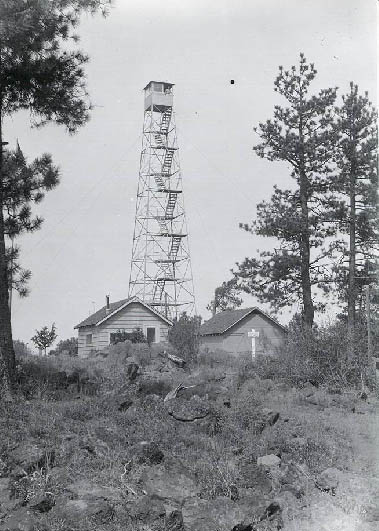
The demand for timely, high-quality fire information has increased in recent years. Fast and effective detection is a key factor in wildfire fighting. Early detection efforts were focused on early response, accurate results in both daytime and nighttime, and the ability to prioritize fire danger. Fire lookout towers were used in the United States in the early 20th century and fires were reported using telephones, carrier pigeons, and heliographs. Aerial and land photography using instant cameras were used in the 1950s until infrared scanning was developed for fire detection in the 1960s. However, information analysis and delivery was often delayed by limitations in communication technology. Early satellite-derived fire analyses were hand-drawn on maps at a remote site and sent via overnight mail to the fire manager. During the Yellowstone fires of 1988, a data station was established in West Yellowstone, permitting the delivery of satellite-based fire information in approximately four hours.
Public hotlines, fire lookouts in towers, and ground and aerial patrols can be used as a means of early detection of forest fires. However, accurate human observation may be limited by operator fatigue, time of day, time of year, and geographic location. Electronic systems have gained popularity in recent years as a possible resolution to human operator error. These systems may be semi- or fully automated and employ systems based on the risk area and degree of human presence, as suggested by GIS data analyses. An integrated approach of multiple systems can be used to merge satellite data, aerial imagery, and personnel position via Global Positioning System (GPS) into a collective whole for near-realtime use by wireless Incident Command Centers.
Local sensor networks
A small, high risk area that features thick vegetation, a strong human presence, or is close to a critical urban area can be monitored using a local sensor network. Detection systems may include wireless sensor networks that act as automated weather systems: detecting temperature, humidity, and smoke. These may be battery-powered, solar-powered, or tree-rechargeable: able to recharge their battery systems using the small electrical currents in plant material. Larger, medium-risk areas can be monitored by scanning towers that incorporate fixed cameras and sensors to detect smoke or additional factors such as the infrared signature of carbon dioxide produced by fires. Additional capabilities such as night vision, brightness detection, and color change detection may also be incorporated into sensor arrays.
The Department of Natural Resources signed a contract with PanoAI for the installation of 360 degree 'rapid detection' cameras around the Pacific northwest, which are mounted on cell towers and are capable of continuous monitoring of a 15 mi radius. Additionally, Sensaio Tech, based in Brazil and Toronto, has released a sensor device that continuously monitors 14 different variables common in forests, ranging from soil temperature to salinity. This information is connected live back to clients through dashboard visualizations, while mobile notifications are provided regarding dangerous levels.
Satellite and aerial monitoring

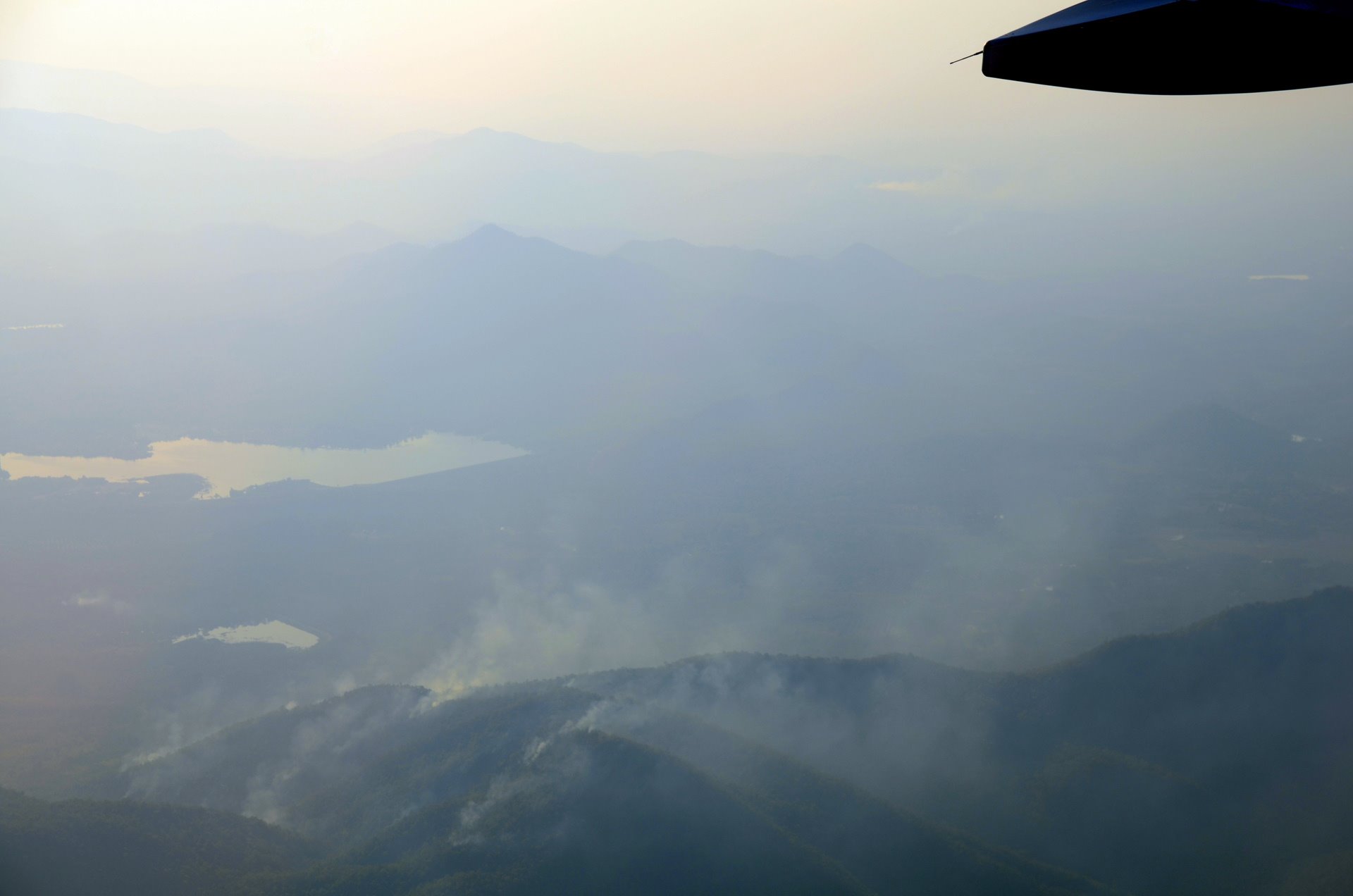
Satellite and aerial monitoring through the use of planes, helicopter, or UAVs can provide a wider view and may be sufficient to monitor very large, low risk areas. These more sophisticated systems employ GPS and aircraft-mounted infrared or high-resolution visible cameras to identify and target wildfires. Satellite-mounted sensors such as Envisat's Advanced Along Track Scanning Radiometer and European Remote-Sensing Satellite's Along-Track Scanning Radiometer can measure infrared radiation emitted by fires, identifying hot spots greater than 39 C. The National Oceanic and Atmospheric Administration's Hazard Mapping System combines remote-sensing data from satellite sources such as Geostationary Operational Environmental Satellite (GOES), Moderate-Resolution Imaging Spectroradiometer (MODIS), and Advanced Very High Resolution Radiometer (AVHRR) for detection of fire and smoke plume locations. However, satellite detection is prone to offset errors, anywhere from 2 to for MODIS and AVHRR data and up to 12 km for GOES data. Satellites in geostationary orbits may become disabled, and satellites in polar orbits are often limited by their short window of observation time. Cloud cover and image resolution may also limit the effectiveness of satellite imagery. Global Forest Watch provides detailed daily updates on fire alerts.
In 2015 a new fire detection tool is in operation at the U.S. Department of Agriculture (USDA) Forest Service (USFS) which uses data from the Suomi National Polar-orbiting Partnership (NPP) satellite to detect smaller fires in more detail than previous space-based products. The high-resolution data is used with a computer model to predict how a fire will change direction based on weather and land conditions.
In 2014, an international campaign was organized in South Africa's Kruger National Park to validate fire detection products including the new VIIRS active fire data. In advance of that campaign, the Meraka Institute of the Council for Scientific and Industrial Research in Pretoria, South Africa, an early adopter of the VIIRS 375 m fire product, put it to use during several large wildfires in Kruger.
Since 2021 NASA has provided active fire locations in near real-time via the Fire Information for Resource Management System (FIRMS).
The increased prevalence of wildfires has led to proposals deploy technologies based on artificial intelligence for early detection, prevention, and prediction of wildfires.
Suppression
Main article: Wildfire suppression
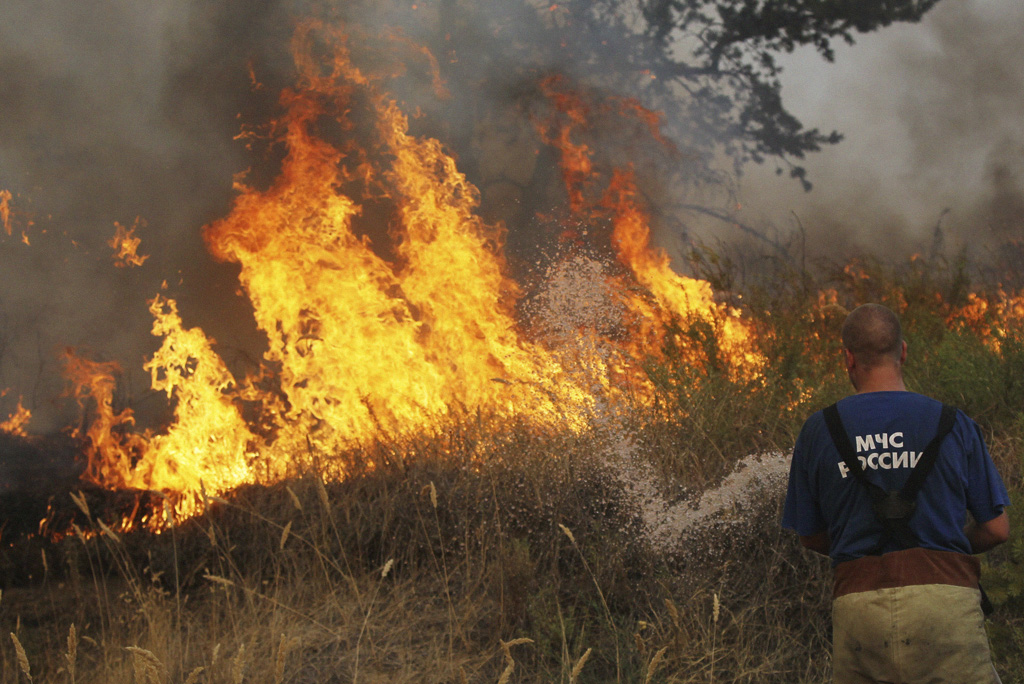
Wildfire suppression depends on the technologies available in the area in which the wildfire occurs. In less developed nations the techniques used can be as simple as throwing sand or beating the fire with sticks or palm fronds. In more advanced nations, the suppression methods vary due to increased technological capacity. Silver iodide can be used to encourage snow fall, while fire retardants and water can be dropped onto fires by unmanned aerial vehicles, planes, and helicopters. Complete fire suppression is no longer an expectation, but the majority of wildfires are often extinguished before they grow out of control. While more than 99% of the 10,000 new wildfires each year are contained, escaped wildfires under extreme weather conditions are difficult to suppress without a change in the weather. Wildfires in Canada and the US burn an average of 54500 km2 per year.
Above all, fighting wildfires can become deadly. A wildfire's burning front may also change direction unexpectedly and jump across fire breaks. Intense heat and smoke can lead to disorientation and loss of appreciation of the direction of the fire, which can make fires particularly dangerous. For example, during the 1949 Mann Gulch fire in Montana, United States, thirteen smokejumpers died when they lost their communication links, became disoriented, and were overtaken by the fire. In the Australian February 2009 Victorian bushfires, at least 173 people died and over 2,029 homes and 3,500 structures were lost when they became engulfed by wildfire.
Costs of wildfire suppression
The suppression of wild fires takes up a large amount of a country's gross domestic product which directly affects the country's economy. While costs vary wildly from year to year, depending on the severity of each fire season, in the United States, local, state, federal and tribal agencies collectively spend tens of billions of dollars annually to suppress wildfires. In the United States, it was reported that approximately $6 billion was spent between 2004–2008 to suppress wildfires in the country. In California, the U.S. Forest Service spends about $200 million per year to suppress 98% of wildfires and up to $1 billion to suppress the other 2% of fires that escape initial attack and become large.
Wildland firefighting safety

Wildland fire fighters face several life-threatening hazards including heat stress, fatigue, smoke and dust, as well as the risk of other injuries such as burns, cuts and scrapes, animal bites, and even rhabdomyolysis. Between 2000 and 2016, more than 350 wildland firefighters died on-duty.
Especially in hot weather conditions, fires present the risk of heat stress, which can entail feeling heat, fatigue, weakness, vertigo, headache, or nausea. Heat stress can progress into heat strain, which entails physiological changes such as increased heart rate and core body temperature. This can lead to heat-related illnesses, such as heat rash, cramps, exhaustion or heat stroke. Various factors can contribute to the risks posed by heat stress, including strenuous work, personal risk factors such as age and fitness, dehydration, sleep deprivation, and burdensome personal protective equipment. Rest, cool water, and occasional breaks are crucial to mitigating the effects of heat stress.
Smoke, ash, and debris can also pose serious respiratory hazards for wildland firefighters. The smoke and dust from wildfires can contain gases such as carbon monoxide, sulfur dioxide and formaldehyde, as well as particulates such as ash and silica. To reduce smoke exposure, wildfire fighting crews should, whenever possible, rotate firefighters through areas of heavy smoke, avoid downwind firefighting, use equipment rather than people in holding areas, and minimize mop-up. Camps and command posts should also be located upwind of wildfires. Protective clothing and equipment can also help minimize exposure to smoke and ash.
Firefighters are also at risk of cardiac events including strokes and heart attacks. Firefighters should maintain good physical fitness. Fitness programs, medical screening and examination programs which include stress tests can minimize the risks of firefighting cardiac problems. Other injury hazards wildland firefighters face include slips, trips, falls, burns, scrapes, and cuts from tools and equipment, being struck by trees, vehicles, or other objects, plant hazards such as thorns and poison ivy, snake and animal bites, vehicle crashes, electrocution from power lines or lightning storms, and unstable building structures.
Fire retardants
Main article: Fire retardant
Fire retardants are used to slow wildfires by inhibiting combustion. They are aqueous solutions of ammonium phosphates and ammonium sulfates, as well as thickening agents. The decision to apply retardant depends on the magnitude, location and intensity of the wildfire. In certain instances, fire retardant may also be applied as a precautionary fire defense measure.
Typical fire retardants contain the same agents as fertilizers. Fire retardants may also affect water quality through leaching, eutrophication, or misapplication. Fire retardant's effects on drinking water remain inconclusive. Dilution factors, including water body size, rainfall, and water flow rates lessen the concentration and potency of fire retardant. Wildfire debris (ash and sediment) clog rivers and reservoirs increasing the risk for floods and erosion that ultimately slow and/or damage water treatment systems. There is continued concern of fire retardant effects on land, water, wildlife habitats, and watershed quality, additional research is needed. However, on the positive side, fire retardant (specifically its nitrogen and phosphorus components) has been shown to have a fertilizing effect on nutrient-deprived soils and thus creates a temporary increase in vegetation.
Modeling
.svg)

Impacts on the natural environment
On the atmosphere

Most of Earth's weather and air pollution resides in the troposphere, the part of the atmosphere that extends from the surface of the planet to a height of about 10 km. The vertical lift of a severe thunderstorm or pyrocumulonimbus can be enhanced in the area of a large wildfire, which can propel smoke, soot (black carbon), and other particulate matter as high as the lower stratosphere. Previously, prevailing scientific theory held that most particles in the stratosphere came from volcanoes, but smoke and other wildfire emissions have been detected from the lower stratosphere. Pyrocumulus clouds can reach 6100 m over wildfires. Satellite observation of smoke plumes from wildfires revealed that the plumes could be traced intact for distances exceeding 1600 km. Computer-aided models such as CALPUFF may help predict the size and direction of wildfire-generated smoke plumes by using atmospheric dispersion modeling.
Wildfires can affect local atmospheric pollution, and release carbon in the form of carbon dioxide. Wildfire emissions contain fine particulate matter which can cause cardiovascular and respiratory problems. Increased fire byproducts in the troposphere can increase ozone concentrations beyond safe levels.
On ecosystems
Main article: Fire ecology
Wildfires are common in climates that are sufficiently moist to allow the growth of vegetation but feature extended dry, hot periods. Such places include the vegetated areas of Australia and Southeast Asia, the veld in southern Africa, the fynbos in the Western Cape of South Africa, the forested areas of the United States and Canada, and the Mediterranean Basin.
Some ecosystems are adapted to low-severity fires, where trees can survive but underbrush is cleared. Human suppression of lightning-caused fires in areas like Canada and the United States has created a buildup of fuel compared to more frequent fires before the 20th century. This has resulted in fewer but higher-severity fires which can kill mature trees.
High-severity wildfire creates complex early seral forest habitat (also called "snag forest habitat"), which often has higher species richness and diversity than unburned old forest. Plant and animal species in most types of North American forests evolved with fire, and many of these species depend on wildfires, and particularly high-severity fires, to reproduce and grow. Fire helps to return nutrients from plant matter back to the soil. The heat from fire is necessary to the germination of certain types of seeds, and the snags (dead trees) and early successional forests created by high-severity fire create habitat conditions that are beneficial to wildlife. Early successional forests created by high-severity fire support some of the highest levels of native biodiversity found in temperate conifer forests. Post-fire logging has no ecological benefits and many negative impacts; the same is often true for post-fire seeding. The exclusion of wildfires can contribute to vegetation regime shifts, such as woody plant encroachment.
Although some ecosystems rely on naturally occurring fires to regulate growth, some ecosystems suffer from too much fire, such as the chaparral in southern California and lower-elevation deserts in the American Southwest. The increased fire frequency in these ordinarily fire-dependent areas has upset natural cycles, damaged native plant communities, and encouraged the growth of non-native weeds. Invasive species, such as Lygodium microphyllum and Bromus tectorum, can grow rapidly in areas that were damaged by fires. Because they are highly flammable, they can increase the future risk of fire, creating a positive feedback loop that increases fire frequency and further alters native vegetation communities.
In the Amazon rainforest, drought, logging, cattle ranching practices, and slash-and-burn agriculture damage fire-resistant forests and promote the growth of flammable brush, creating a cycle that encourages more burning. Fires in the rainforest threaten its collection of diverse species and produce large amounts of CO2. Also, fires in the rainforest, along with drought and human involvement, could damage or destroy more than half of the Amazon rainforest by 2030. Wildfires generate ash, reduce the availability of organic nutrients, and cause an increase in water runoff, eroding other nutrients and creating flash flood conditions. A 2003 wildfire in the North Yorkshire Moors burned off 2.5 km2 of heather and the underlying peat layers. Afterwards, wind erosion stripped the ash and the exposed soil, revealing archaeological remains dating to 10,000 BC. Wildfires can also have an effect on climate change, increasing the amount of carbon released into the atmosphere and inhibiting vegetation growth, which affects overall carbon uptake by plants. Burn severity can be measured by satellites to calculate the Normalized Burn Ratio.
On waterways
Debris and chemical runoff into waterways after wildfires can make drinking water sources unsafe. Though it is challenging to quantify the impacts of wildfires on surface water quality, research suggests that the concentration of many pollutants increases post-fire. The impacts occur during active burning and up to years later. Increases in nutrients and total suspended sediments can happen within a year while heavy metal concentrations may peak 1–2 years after a wildfire.
Benzene is one of many chemicals that have been found in drinking water systems after wildfires. Benzene can permeate certain plastic pipes and thus require long times to be removed from the water distribution infrastructure. Researchers estimated that, in worst case scenarios, more than 286 days of constant flushing of a contaminated HDPE service line were needed to reduce benzene below safe drinking water limits. Temperature increases caused by fires, including wildfires, can cause plastic water pipes to generate toxic chemicals such as benzene.
On plant and animals

Impacts on humans
Wildfire risk is the chance that a wildfire will start in or reach a particular area and the potential loss of human values if it does. Risk is dependent on variable factors such as human activities, weather patterns, availability of wildfire fuels, and the availability or lack of resources to suppress a fire. Wildfires have continually been a threat to human populations. However, human-induced geographic and climatic changes are exposing populations more frequently to wildfires and increasing wildfire risk. It is speculated that the increase in wildfires arises from a century of wildfire suppression coupled with the rapid expansion of human developments into fire-prone wildlands. Wildfires are naturally occurring events that aid in promoting forest health. Global warming and climate changes are causing an increase in temperatures and more droughts nationwide which contributes to an increase in wildfire risk.
Airborne hazards
The most noticeable adverse effect of wildfires is the destruction of property. However, hazardous chemicals released also significantly impact human health.
Wildfire smoke is composed primarily of carbon dioxide and water vapor. Other common components present in lower concentrations are carbon monoxide, formaldehyde, acrolein, polyaromatic hydrocarbons, and benzene. Small airborne particulates (in solid form or liquid droplets) are also present in smoke and ash debris. 80–90% of wildfire smoke, by mass, is within the fine particle size class of 2.5 micrometers in diameter or smaller.
Carbon dioxide in smoke poses a low health risk due to its low toxicity. Rather, carbon monoxide and fine particulate matter, particularly 2.5 μm in diameter and smaller, have been identified as the major health threats. High levels of heavy metals, including lead, arsenic, cadmium, and copper were found in the ash debris following the 2007 Californian wildfires. A national clean-up campaign was organised in fear of the health effects from exposure. In the devastating California Camp Fire (2018) that killed 85 people, lead levels increased by around 50 times in the hours following the fire at a site nearby (Chico). Zinc concentration also increased significantly in Modesto, 150 mi away. Heavy metals such as manganese and calcium were found in numerous California fires as well. Other chemicals are considered to be significant hazards but are found in concentrations that are too low to cause detectable health effects.
The degree of wildfire smoke exposure to an individual is dependent on the length, severity, duration, and proximity of the fire. People are exposed directly to smoke via the respiratory tract through inhalation of air pollutants. Indirectly, communities are exposed to wildfire debris that can contaminate soil and water supplies.
The U.S. Environmental Protection Agency (EPA) developed the air quality index (AQI), a public resource that provides national air quality standard concentrations for common air pollutants. The public can use it to determine their exposure to hazardous air pollutants based on visibility range.
Health effects

Wildfire smoke contains particulates that may have adverse effects upon the human respiratory system. Evidence of the health effects should be relayed to the public so that exposure may be limited. The evidence can also be used to influence policy to promote positive health outcomes.
Inhalation of smoke from a wildfire can be a health hazard. Wildfire smoke is composed of combustion products i.e. carbon dioxide, carbon monoxide, water vapor, particulate matter, organic chemicals, nitrogen oxides and other compounds. The principal health concern is the inhalation of particulate matter and carbon monoxide.
Particulate matter (PM) is a type of air pollution made up of particles of dust and liquid droplets. They are characterized into three categories based on particle diameter: coarse PM, fine PM, and ultrafine PM. Coarse particles are between 2.5 micrometers and 10 micrometers, fine particles measure 0.1 to 2.5 micrometers, and ultrafine particle are less than 0.1 micrometer. lmpact on the body upon inhalation varies by size. Coarse PM is filtered by the upper airways and can accumulate and cause pulmonary inflammation. This can result in eye and sinus irritation as well as sore throat and coughing. Coarse PM is often composed of heavier and more toxic materials that lead to short-term effects with stronger impact.
Smaller PM moves further into the respiratory system creating issues deep into the lungs and the bloodstream. In asthma patients, PM2.5 causes inflammation but also increases oxidative stress in the epithelial cells. These particulates also cause apoptosis and autophagy in lung epithelial cells. Both processes damage the cells and impact cell function. This damage impacts those with respiratory conditions such as asthma where the lung tissues and function are already compromised. Particulates less than 0.1 micrometer are called ultrafine particle (UFP). It is a major component of wildfire smoke. UFP can enter the bloodstream like PM2.5–0.1 however studies show that it works into the blood much quicker. The inflammation and epithelial damage done by UFP has also shown to be much more severe. PM2.5 is of the largest concern in regards to wildfire. This is particularly hazardous to the very young, elderly and those with chronic conditions such as asthma, chronic obstructive pulmonary disease (COPD), cystic fibrosis and cardiovascular conditions. The illnesses most commonly associated with exposure to fine PM from wildfire smoke are bronchitis, exacerbation of asthma or COPD, and pneumonia. Symptoms of these complications include wheezing and shortness of breath and cardiovascular symptoms include chest pain, rapid heart rate and fatigue.
Asthma exacerbation
Several epidemiological studies have demonstrated a close association between air pollution and respiratory allergic diseases such as bronchial asthma.
An observational study of smoke exposure related to the 2007 San Diego wildfires revealed an increase both in healthcare utilization and respiratory diagnoses, especially asthma among the group sampled. Projected climate scenarios of wildfire occurrences predict significant increases in respiratory conditions among young children. PM triggers a series of biological processes including inflammatory immune response, oxidative stress, which are associated with harmful changes in allergic respiratory diseases.
Although some studies demonstrated no significant acute changes in lung function among people with asthma related to PM from wildfires, a possible explanation for these counterintuitive findings is the increased use of quick-relief medications, such as inhalers, in response to elevated levels of smoke among those already diagnosed with asthma.
There is consistent evidence between wildfire smoke and the exacerbation of asthma.
Asthma is one of the most common chronic disease among children in the United States, affecting an estimated 6.2 million children. Research on asthma risk focuses specifically on the risk of air pollution during the gestational period. Several pathophysiology processes are involved in this. Considerable airway development occurs during the 2nd and 3rd trimesters and continues until 3 years of age. It is hypothesized that exposure to these toxins during this period could have consequential effects, as the epithelium of the lungs during this time could have increased permeability to toxins. Exposure to air pollution during parental and pre-natal stage could induce epigenetic changes which are responsible for the development of asthma. Studies have found significant association between PM2.5, NO2 and development of asthma during childhood despite heterogeneity among studies. Furthermore, maternal exposure to chronic stressors is most likely present in distressed communities, and as this can be correlated with childhood asthma, it may further explain links between early childhood exposure to air pollution, neighborhood poverty, and childhood risk.
Carbon monoxide danger
Main article: Carbon monoxide poisoning
Carbon monoxide (CO) is a colorless, odorless gas that can be found at the highest concentration at close proximity to a smoldering fire. Thus, it is a serious threat to the health of wildfire firefighters. CO in smoke can be inhaled into the lungs where it is absorbed into the bloodstream and reduces oxygen delivery to the body's vital organs. At high concentrations, it can cause headaches, weakness, dizziness, confusion, nausea, disorientation, visual impairment, coma, and even death. Even at lower concentrations, such as those found at wildfires, individuals with cardiovascular disease may experience chest pain and cardiac arrhythmia. A recent study tracking the number and cause of wildfire firefighter deaths from 1990 to 2006 found that 21.9% of the deaths occurred from heart attacks.
Another important and somewhat less obvious health effect of wildfires is psychiatric diseases and disorders. Both adults and children from various countries who were directly and indirectly affected by wildfires were found to demonstrate different mental conditions linked to their experience with the wildfires. These include post-traumatic stress disorder (PTSD), depression, anxiety, and phobias.
Epidemiology
The Western US has seen an increase in both the frequency and intensity of wildfires over the last several decades. This has been attributed to the arid climate of there and the effects of global warming. An estimated 46 million people were exposed to wildfire smoke from 2004 to 2009 in the Western US. Evidence has demonstrated that wildfire smoke can increase levels of airborne particulate.
The EPA has defined acceptable concentrations of PM in the air, through the National Ambient Air Quality Standards and monitoring of ambient air quality has been mandated. Due to these monitoring programs and the incidence of several large wildfires near populated areas, epidemiological studies have been conducted and demonstrate an association between human health effects and an increase in fine particulate matter due to wildfire smoke.
An increase in PM smoke emitted from the Hayman fire in Colorado in June 2002, was associated with an increase in respiratory symptoms in patients with COPD. Looking at the wildfires in Southern California in 2003, investigators have shown an increase in hospital admissions due to asthma symptoms while being exposed to peak concentrations of PM in smoke. Another epidemiological study found a 7.2% (95% confidence interval: 0.25%, 15%) increase in risk of respiratory related hospital admissions during smoke wave days with high wildfire-specific particulate matter 2.5 compared to matched non-smoke-wave days.
Children participating in the Children's Health Study were also found to have an increase in eye and respiratory symptoms, medication use and physician visits. Mothers who were pregnant during the fires gave birth to babies with a slightly reduced average birth weight compared to those who were not exposed. Suggesting that pregnant women may also be at greater risk to adverse effects from wildfire. Worldwide, it is estimated that 339,000 people die due to the effects of wildfire smoke each year.
Besides the size of PM, their chemical composition should also be considered. Antecedent studies have demonstrated that the chemical composition of PM2.5 from wildfire smoke can yield different estimates of human health outcomes as compared to other sources of smoke such as solid fuels.[[File:Sediment off the Yucatan Peninsula.jpg|thumb|Sediment off the Yucatán Peninsula]]
Post-fire risks

After a wildfire, hazards remain. Residents returning to their homes may be at risk from falling fire-weakened trees. Humans and pets may also be harmed by falling into ash pits. The Intergovernmental Panel on Climate Change (IPCC) also reports that wildfires cause significant damage to electric systems, especially in dry regions.
Chemically contaminated drinking water, at levels of hazardous waste concern, is a growing problem. In particular, hazardous waste scale chemical contamination of buried water systems was first discovered in the U.S. in 2017, and has since been increasingly documented in Hawaii, Colorado, and Oregon after wildfires. In 2021, Canadian authorities adapted their post-fire public safety investigation approaches in British Columbia to screen for this risk, but have not found it as of 2023. Another challenge is that private drinking wells and the plumbing within a building can also become chemically contaminated and unsafe. Households experience a wide-variety of significant economic and health impacts related to this contaminated water. Evidence-based guidance on how to inspect and test wildfire impacted wells and building water systems was developed for the first time in 2020. In Paradise, California, for example, the 2018 Camp Fire caused more than $150 million worth of damage. This required almost a year of time to decontaminate and repair the municipal drinking water system from wildfire damage.
The source of this contamination was first proposed after the 2018 Camp Fire in California as originating from thermally degraded plastics in water systems, smoke and vapors entering depressurized plumbing, and contaminated water in buildings being sucked into the municipal water system. In 2020, it was first shown that thermal degradation of plastic drinking water materials was one potential contamination source. In 2023, the second theory was confirmed where contamination could be sucked into pipes that lost water pressure.
Other post-fire risks, can increase if other extreme weather follows. For example, wildfires make soil less able to absorb precipitation, so heavy rainfall can result in more severe flooding and damages like mud slides.
At-risk groups
Firefighters
Main article: Firefighting
Firefighters are at greatest risk for acute and chronic health effects resulting from wildfire smoke exposure. Some of the most common health conditions that firefighters acquire from prolonged smoke inhalation include cardiovascular and respiratory diseases. For example, wildland firefighters can become hypoxic as a result of oxygen deprivation. Due to firefighters' occupational duties, they are frequently exposed to hazardous chemicals at close proximity for longer periods of time. A case study on the exposure of wildfire smoke among wildland firefighters shows that firefighters are exposed to significant levels of carbon monoxide and respiratory irritants above OSHA-permissible exposure limits (PEL) and ACGIH threshold limit values (TLV). 5–10% are overexposed.
Between 2001 and 2012, over 200 fatalities occurred among wildland firefighters. In addition to heat and chemical hazards, firefighters are also at risk for electrocution from power lines; injuries from equipment; slips, trips, and falls; injuries from vehicle rollovers; heat-related illness; insect bites and stings; stress; and rhabdomyolysis. Wildfires that reach urban environments create additional toxic fumes and carcinogenic particles from burning metals, plastics, electronics, paints, and other common materials.
Residents

Residents in communities surrounding wildfires are exposed to lower concentrations of chemicals, but they are at a greater risk for indirect exposure through water or soil contamination. Exposure to residents is greatly dependent on individual susceptibility. Vulnerable persons such as children (ages 0–4), the elderly (ages 65 and older), smokers, and pregnant women are at an increased risk due to their already compromised body systems, even when the exposures are present at low chemical concentrations and for relatively short exposure periods.{{Cite journal
Wildfires affect large numbers of people in Western Canada and the United States. In California alone, more than 350,000 people live in towns and cities in "very high fire hazard severity zones".
Direct risks to building residents in fire-prone areas can be moderated through design choices such as choosing fire-resistant vegetation, maintaining landscaping to avoid debris accumulation and to create firebreaks, and by selecting fire-retardant roofing materials.{{Cite journal | doi-broken-date = 5 July 2025
History

The first evidence of wildfires is fossils of the giant fungi Prototaxites preserved as charcoal, discovered in South Wales and Poland, dating to the Silurian period (about ). Smoldering surface fires started to occur sometime before the Early Devonian period . Low atmospheric oxygen during the Middle and Late Devonian was accompanied by a decrease in charcoal abundance. Additional charcoal evidence suggests that fires continued through the Carboniferous period. Later, the overall increase of atmospheric oxygen from 13% in the Late Devonian to 30–31% by the Late Permian was accompanied by a more widespread distribution of wildfires. Later, a decrease in wildfire-related charcoal deposits from the late Permian to the Triassic periods is explained by a decrease in oxygen levels.
Wildfires during the Paleozoic and Mesozoic periods followed patterns similar to fires that occur in modern times. Surface fires driven by dry seasons are evident in Devonian and Carboniferous progymnosperm forests. Lepidodendron forests dating to the Carboniferous period have charred peaks, evidence of crown fires. In Jurassic gymnosperm forests, there is evidence of high frequency, light surface fires. The increase of fire activity in the late Tertiary is possibly due to the increase of C4-type grasses. As these grasses shifted to more mesic habitats, their high flammability increased fire frequency, promoting grasslands over woodlands. However, fire-prone habitats may have contributed to the prominence of trees such as those of the genera Eucalyptus, Pinus and Sequoia, which have thick bark to withstand fires and employ pyriscence.
Human involvement
The human use of fire for agricultural and hunting purposes during the Paleolithic and Mesolithic ages altered pre-existing landscapes and fire regimes. Woodlands were gradually replaced by smaller vegetation that facilitated travel, hunting, seed-gathering and planting. In recorded human history, minor allusions to wildfires were mentioned in the Bible and by classical writers such as Homer. However, while ancient Hebrew, Greek, and Roman writers were aware of fires, they were not very interested in the uncultivated lands where wildfires occurred. Wildfires were used in battles throughout human history as early thermal weapons. From the Middle Ages, accounts were written of occupational burning as well as customs and laws that governed the use of fire. In Germany, regular burning was documented in 1290 in the Odenwald and in 1344 in the Black Forest. In the 14th century Sardinia, firebreaks were used for wildfire protection. In Spain during the 1550s, sheep husbandry was discouraged in certain provinces by Philip II due to the harmful effects of fires used in transhumance. As early as the 17th century, Native Americans were observed using fire for many purposes including cultivation, signaling, and warfare. Scottish botanist David Douglas noted the native use of fire for tobacco cultivation, to encourage deer into smaller areas for hunting purposes, and to improve foraging for honey and grasshoppers. Charcoal found in sedimentary deposits off the Pacific coast of Central America suggests that more burning occurred in the 50 years before the Spanish colonization of the Americas than after the colonization. In the post-World War II Baltic region, socio-economic changes led more stringent air quality standards and bans on fires that eliminated traditional burning practices. In the mid-19th century, explorers from observed Aboriginal Australians using fire for ground clearing, hunting, and regeneration of plant food in a method later named fire-stick farming. Such careful use of fire has been employed for centuries in lands protected by Kakadu National Park to encourage biodiversity.
Wildfires typically occur during periods of increased temperature and drought. An increase in fire-related debris flow in alluvial fans of northeastern Yellowstone National Park was linked to the period between AD 1050 and 1200, coinciding with the Medieval Warm Period. However, human influence caused an increase in fire frequency. Dendrochronological fire scar data and charcoal layer data in Finland suggests that, while many fires occurred during severe drought conditions, an increase in the number of fires during 850 BC and 1660 AD can be attributed to human influence. Charcoal evidence from the Americas suggested a general decrease in wildfires between 1 AD and 1750 compared to previous years. However, a period of increased fire frequency between 1750 and 1870 was suggested by charcoal data from North America and Asia, attributed to human population growth and influences such as land clearing practices. This period was followed by an overall decrease in burning in the 20th century, linked to the expansion of agriculture, increased livestock grazing, and fire prevention efforts. A meta-analysis found that 17 times more land burned annually in California before 1800 compared to recent decades (1,800,000 hectares/year compared to 102,000 hectares/year).
According to a paper published in the journal Science, the number of natural and human-caused fires decreased by 24.3% between 1998 and 2015. Researchers explain this as a transition from nomadism to settled lifestyle and intensification of agriculture that lead to a drop in the use of fire for land clearing.
Increases of certain tree species (i.e. conifers) over others (i.e. deciduous trees) can increase wildfire risk, especially if these trees are also planted in monocultures. Some invasive species, moved in by humans (i.e., for the pulp and paper industry) have in some cases also increased the intensity of wildfires. Examples include species such as Eucalyptus in California and gamba grass in Australia.
Society and culture
Wildfires have a place in many cultures. "To spread like wildfire" is a common idiom in English, meaning something that "quickly affects or becomes known by more and more people".
Wildfire activity has been attributed as a major factor in the development of Ancient Greece. In modern Greece, as in many other regions, it is the most common disaster caused by a natural hazard and figures prominently in the social and economic lives of its people.
In 1937, U.S. President Franklin D. Roosevelt initiated a nationwide fire prevention campaign, highlighting the role of human carelessness in forest fires. Later posters of the program featured Uncle Sam, characters from the Disney movie Bambi, and the official mascot of the U.S. Forest Service, Smokey Bear. The Smokey Bear fire prevention campaign has yielded one of the most popular characters in the United States; for many years there was a living Smokey Bear mascot, and it has been commemorated on postage stamps.
There are also significant indirect or second-order societal impacts from wildfire, such as demands on utilities to prevent power transmission equipment from becoming ignition sources, and the cancelation or nonrenewal of homeowners insurance for residents living in wildfire-prone areas.
References
Sources ===
- (HTML version )
- {{cite journal | title = Science Basis for Changing Forest Structure to Modify Wildfire Behavior and Severity | format = 2.79 MB PDF | url = http://www.fs.fed.us/rm/pubs/rmrs_gtr120.pdf | last1 = Graham | first1 = Russell | last2 = McCaffrey | first2 = Sarah | last3 = Jain | first3 = Theresa B | journal = General Technical Report RMRS-GTR-120 |date = April 2004| place = Fort Collins, CO: United States Department of Agriculture, Forest Service, Rocky Mountain Research Station | access-date = 6 February 2009
- {{cite book |last1=Grove|first1=A.T.|last2=Rackham|first2=Oliver|author-link2 = Oliver Rackham |title=The Nature of Mediterranean Europe: An Ecological History|url=https://books.google.com/books?id=trcsOyzKvRwC&q=The+nature+of+Mediterranean+Europe:+An+ecological+history|access-date=17 July 2009|publisher=Yale University Press|place=New Haven, CT|year=2001 |isbn=978-0-300-10055-6
- {{cite web | title = Community Involvement in and Management of Forest Fires in South East Asia | url = http://www.fao.org/forestry/11241-0-0.pdf | archive-url = https://web.archive.org/web/20070730211840/http://www.asiaforests.org/doc/resources/fire/pffsea/Report_Community.pdf | archive-date = 30 July 2007 | year = 2002 | publisher = Project FireFight South East Asia | last = Karki | first = Sameer | access-date = 13 February 2009
- {{cite web |access-date=21 December 2008 |archive-url=https://web.archive.org/web/20090514200510/http://www.nifc.gov/fire_policy/pdf/strategy.pdf |archive-date=14 May 2009
- {{cite web |last=Nepstad|first=Daniel C |url=http://www.worldwildlife.org/climate/Publications/WWFBinaryitem7658.pdf |title=The Amazon's Vicious Cycles: Drought and Fire in the Greenhouse |publisher=World Wide Fund for Nature (WWF International)| year=2007|access-date=9 July 2009
- (HTML version)
- {{cite journal |last1=Pitkänen |first1=Aki |last2=Huttunen |first2=Pertti |last3=Jungner |first3=Högne |last4=Meriläinen |first4=Jouko |last5=Tolonen |first5=Kimmo |title=Holocene fire history of middle boreal pine forest sites in eastern Finland|url=http://www.sekj.org/PDF/anbf40/anbf40-015.pdf|journal=Annales Botanici Fennici| pages=15–33|volume=40|issn=0003-3847|date=28 February 2003
- {{cite report |first1= M. |last1= Plucinski |first2= J. |last2= Gould |first3= G. |last3= McCarthy |first4= J. |last4= Hollis |date = June 2007|title = The Effectiveness and Efficiency of Aerial Firefighting in Australia: Part 1 |url = http://www.bushfirecrc.com/research/downloads/Aerial-Suppression-Report-Final-web.pdf | publisher = Bushfire Cooperative Research Centre |isbn= 978-0-643-06534-5 |access-date= 4 March 2009
- {{cite web | url=https://crsreports.congress.gov/product/pdf/IF/IF10244 |title=Wildfire Statistics |publisher=Congressional Research Service| year=2022|access-date=19 October 2022
Attribution
References
- "CIFFC Canadian Wildland Fire Management Glossary". BBC Earth.
- "Drought, Tree Mortality, and Wildfire in Forests Adapted to Frequent Fire".
- (July 2006). "Forest Fires and Climate Change in the 21ST Century". Mitigation and Adaptation Strategies for Global Change.
- Graham, ''et al.'', 12, 36
- ''National Wildfire Coordinating Group Communicator's Guide For Wildland Fire Management'', 4–6.
- (April 2006). "National Wildfire Coordinating Group Fireline Handbook, Appendix B: Fire Behavior". National Wildfire Coordinating Group.
- (6 March 2017). "On the key role of droughts in the dynamics of summer fires in Mediterranean Europe". Scientific Reports.
- (18 August 2006). "Warming and Earlier Spring Increase Western U.S. Forest Wildfire Activity". Science.
- (21 May 2023 }}. In: [https://www.ipcc.ch/report/ar6/wg2/ Climate Change 2022: Impacts, Adaptation and Vulnerability. Contribution of Working Group II to the Sixth Assessment Report of the Intergovernmental Panel on Climate Change] {{Webarchive). "Climate Change 2022 – Impacts, Adaptation and Vulnerability".
- (10 January 2019). "Main Types of Disasters and Associated Trends". [[Legislative Analyst's Office]].
- Machemer, Theresa. (9 July 2020). "The Far-Reaching Consequences of Siberia's Climate-Change-Driven Wildfires".
- Australia, Government Geoscience. (25 July 2017). "Bushfire".
- "B.C. wildfires: State of emergency declared in Kelowna, evacuations underway".
- (27 May 2022). "Contrasting Stratospheric Smoke Mass and Lifetime From 2017 Canadian and 2019/2020 Australian Megafires: Global Simulations and Satellite Observations". Journal of Geophysical Research: Atmospheres.
- (August 2021). "Effects of Climate Change on Natural-Caused Fire Activity in Western U.S. National Forests". Atmosphere.
- (2015). "The Ecological Importance of Mixed-Severity Fires". [[Elsevier]].
- Hutto, Richard L.. (1 December 2008). "The Ecological Importance of Severe Wildfires: Some Like It Hot". Ecological Applications.
- Stephen J. Pyne. "How Plants Use Fire (And Are Used By It)". NOVA online.
- (March 1998). "Wildfire Prevention Strategies". National Wildfire Coordinating Group.
- Scott, A.. (2000). "The Pre-Quaternary history of fire". Palaeogeography, Palaeoclimatology, Palaeoecology.
- Karki, 7, 11–19.
- (June 2012). "Spatial patterns and drivers of fire occurrence and its future trend under climate change in a boreal forest of Northeast China". Global Change Biology.
- (2017). "Forest fire danger extremes in Europe under climate change: variability and uncertainty". Publication Office of the European Union.
- Krock, Lexi. (June 2002). "The World on Fire". NOVA online – Public Broadcasting System (PBS).
- (2017). "Human-started wildfires expand the fire niche across the United States". Proceedings of the National Academy of Sciences.
- "Wildfire Investigation".
- 1p21.admin. (2025-05-29). "California Counties Most At-Risk Of Wildfires In 2026".
- (8 January 2020). "How Rupert Murdoch Is Influencing Australia's Bushfire Debate". The New York Times.
- Kaminski, Isabella. (12 June 2023). "Did climate change cause Canada's wildfires?". [[BBC News]].
- (15 June 2023). "Who's fuelling the wild theories about Canada's wildfires". [[CBC News]].
- (15 October 2021). "How Arson factors into California's Wildfires".
- Krajick, Kevin. (May 2005). "Fire in the hole". Smithsonian Magazine.
- Graham, ''et al''., iv.
- Graham, ''et al''., 9, 13
- Rincon, Paul. (9 March 2005). "Asian peat fires add to warming". British Broadcasting Corporation (BBC) News.
- Hamers, Laurel. (29 July 2019). "When bogs burn, the environment takes a hit".
- Graham, ''et al'' ., iv, 10, 14
- Andrew C. Scott. (2014). "Fire on earth: an introduction". Wiley.
- "Global Fire Initiative: Fire and Invasives". The Nature Conservancy.
- Graham, ''et al''., iv, 8, 11, 15.
- Butler, Rhett. (19 June 2008). "Global Commodities Boom Fuels New Assault on Amazon". Yale School of Forestry & Environmental Studies.
- "The Science of Wildland fire". National Interagency Fire Center.
- Graham, ''et al''., 12.
- ''National Wildfire Coordinating Group Communicator's Guide For Wildland Fire Management'', 3.
- (15 November 2008). "Ashes cover areas hit by Southern Calif. fires". NBC News.
- (November 2003). "Influence of Forest Structure on Wildfire Behavior and the Severity of Its Effects". US Forest Service.
- "Prepare for a Wildfire". Federal Emergency Management Agency (FEMA).
- ''Glossary of Wildland Fire Terminology'', 74.
- de Sousa Costa and Sandberg, 229–230.
- (October 2005). "Archimedes Death Ray: Idea Feasibility Testing". Massachusetts Institute of Technology (MIT).
- (27 July 2004). "Satellites are tracing Europe's forest fire scars". European Space Agency.
- Graham, ''et al''., 10–11.
- "Protecting Your Home From Wildfire Damage". Florida Alliance for Safe Homes (FLASH).
- Billing, 5–6
- Graham, ''et al''., 12
- Shea, Neil. (July 2008). "Under Fire".
- Graham, ''et al''., 16.
- Graham, ''et al''., 9, 16.
- ''National Wildfire Coordinating Group Communicator's Guide For Wildland Fire Management'', 4.
- Graham, ''et al''., 16–17.
- Olson, ''et al.'', 2
- (March 2003). "The New Generation Fire Shelter". National Wildfire Coordinating Group.
- ''Glossary of Wildland Fire Terminology'', 69.
- de Souza Costa and Sandberg, 228
- ''National Wildfire Coordinating Group Communicator's Guide For Wildland Fire Management'', 5.
- San-Miguel-Ayanz, ''et al.'', 364.
- ''Glossary of Wildland Fire Terminology'', 73.
- (19 August 2021). "Mapping wildfires around the world". Al Jazeera.
- (October 2023). "Fire Statistics". Canadian Interagency Forest Fire Centre (CIFFC).
- (21 July 2025). "Unprecedentedly high global forest disturbance due to fire in 2023 and 2024". Proceedings of the National Academy of Sciences.
- "Climate Change Increases the Risk of Wildfires".
- (June 2015). "Climatology, Variability, and Trends in the U.S. Vapor Pressure Deficit, an Important Fire-Related Meteorological Quantity". Journal of Applied Meteorology and Climatology.
- Dunne, Daisy. (14 July 2020). "Explainer: How climate change is affecting wildfires around the world".
- "Chronological List of U.S. Billion Dollar Events". National Oceanic and Atmospheric Administration (NOAA) Satellite and Information Service.
- McKenzie, ''et al.'', 893
- (2 October 2018). "Exacerbated fires in Mediterranean Europe due to anthropogenic warming projected with non-stationary climate-fire models". Nature Communications.
- Graham, ''et al''., 2
- (20 May 2022). "Climate Change Risks to Global Forest Health: Emergence of Unexpected Events of Elevated Tree Mortality Worldwide". Annual Review of Plant Biology.
- (30 May 2019). "Droughts, Wildfires, and Forest Carbon Cycling: A Pantropical Synthesis". Annual Review of Earth and Planetary Sciences.
- Anuprash. (28 January 2022). "What Causes Wildfires? Understand The Science Here".
- . ["Fire Terminology"](https://www.fs.fed.us/nwacfire/home/terminology.html#S).
- (2019). "Observed Impacts of Anthropogenic Climate Change on Wildfire in California". Earth's Future.
- Cheney, N.P.. (1 January 1995). "Bushfires – An Integral Part of Australia's Environment". [[Australian Bureau of Statistics]].
- "New South Wales, December 1974 Bushfire – New South Wales". Government of Australia.
- (7 January 2020). "What Caused the Wildfires in Australia? Amid Worst Blazes for a Decade, 24 People are Charged with Arson". [[Newsweek]].
- [https://time.com/5735660/sydney-bushfires/ As Smoke From Bushfires Chokes Sydney, Australian Prime Minister Dodges on Climate Change] {{Webarchive. link. (2 December 2019, Time 21 November 2019.)
- [https://www.climatecouncil.org.au/not-normal-climate-change-bushfire-web/ The facts about bushfires and climate change] {{Webarchive. link. (16 December 2019, Climate Council, 13 November 2019)
- (21 August 2019). "Wildfires are burning around the world. The most alarming is in the Amazon rainforest.".
- Benson, Michael. (28 December 2020). "Opinion: Watching Earth Burn – For 10 days in September, satellites in orbit sent tragic evidence of climate change's destructive power.". The New York Times.
- Vargas, Ana Paula. (10 December 2020). "Resisting Another Record-Breaking Year of Deforestation and Destruction in the Brazilian Amazon – While Brazilian authorities deny the impact of the criminal arson, Amazon Watch and our allies exposed and challenged the growing fires and deforestation in the Amazon". Amazon Watch.
- (1 June 2020). "Offensive against the Amazon: An incontrollable pandemic (commentary)".
- Dom Phillips. (2 January 2019). "Jair Bolsonaro launches assault on Amazon rainforest protections – Executive order transfers regulation and creation of indigenous reserves to agriculture ministry controlled by agribusiness lobby". [[The Guardian]].
- (11 August 2021). "Wildfires: How are they linked to climate change?". BBC News.
- (11 August 2021 }}. In: [https://www.ipcc.ch/report/ar6/wg1/ Climate Change 2021: The Physical Science Basis. Contribution of Working Group I to the Sixth Assessment Report of the Intergovernmental Panel on Climate Change] {{Webarchive). "Climate Change 2021 – the Physical Science Basis".
- (2007). "Wildfires drive interannual variability of organic carbon aerosol in the western U.S. in summer". Geophysical Research Letters.
- (30 October 1992). "Atmospheric chemistry in the Arctic and subarctic: Influence of natural fires, industrial emissions, and stratospheric inputs". Journal of Geophysical Research: Atmospheres.
- "The Impact of Wildfires on Climate and Air Quality".
- Borunda, Alejandra. (18 April 2024). "Wildfire smoke contributes to thousands of deaths each year in the U.S.".
- (10 February 2020). "Measuring the Carbon-Dioxide Cost of Last Year's Worldwide Wildfires". [[Bloomberg L.P..
- (27 August 2020). "Global fires are up 13% from 2019's record-breaking numbers".
- Alberts, Elizabeth Claire. (18 September 2020). "'Off the chart': CO2 from California fires dwarf state's fossil fuel emissions". Mongabay.
- Page, Susan E.. (11 July 2002). "The amount of carbon released from peat and forest fires in Indonesia during 1997". Nature.
- Tacconi, Luca. (February 2003). "Fires in Indonesia: Causes, Costs, and Policy Implications (CIFOR Occasional Paper No. 38)". Center for International Forestry Research.
- Bassetti, Francesco. (31 August 2019). "The Effects of Wildfires on a Zero Carbon Future". Foresight.
- (22 October 2020). "Oxidation of Phenolic Aldehydes by Ozone and Hydroxyl Radicals at the Air–Water Interface". The Journal of Physical Chemistry A.
- (15 October 2020). "Wildfire Smoke Toxicity Increases Over Time, Poses Public Health Risk, According to UK Chemist".
- "As smoke from forest fires ages in the atmosphere its toxicity increases".
- Baumgardner, D.. (2003). "Warming of the Arctic lower stratosphere by light absorbing particles".
- Mufson, Steven. "What you need to know about the Amazon rainforest fires". Washington post.
- (2018). "Wildfire smoke cools summer river and stream water temperatures". Water Resources Research.
- (6 August 2021). "How Extreme Weather can Cool the Planet".
- (2022). "Significant Effective Radiative Forcing of Stratospheric Wildfire Smoke". Geophysical Research Letters.
- Biello, David. (8 June 2007). "Impure as the Driven Snow".
- Karki, 6.
- van Wagtendonk (2007), 14.
- van Wagtendonk (1996), 1156.
- San-Miguel-Ayanz, ''et al.'', 361.
- "Backburn". MSN Encarta.
- (January 1998). "UK: The Role of Fire in the Ecology of Heathland in Southern Britain". International Forest Fire News.
- "Prescribed Fires". SmokeyBear.com.
- "Fire Management: Wildland Fire Use". U.S. Fish & Wildlife Service.
- (24 June 2009). "International Experts Study Ways to Fight Wildfires". Voice of America (VOA) News.
- ''Interagency Strategy for the Implementation of the Federal Wildland Fire Policy'', entire text
- ''National Wildfire Coordinating Group Communicator's Guide For Wildland Fire Management'', entire text
- ''Fire. The Australian Experience'', 5–6.
- Graham, ''et al''., 15.
- (1 November 2006). "Managing fire-prone forests in the western United States". Frontiers in Ecology and the Environment.
- (15 September 2014). "Severity of an uncharacteristically large wildfire, the Rim Fire, in forests with relatively restored frequent fire regimes". Forest Ecology and Management.
- (May 2007). "California's Fire Hazard Severity Zone Update and Building Standards Revision". CAL FIRE.
- (27 September 2008). "California Senate Bill No. 1595, Chapter 366". State of California.
- Karki, 14.
- Manning, Richard. (1 December 2007). "Our Trial by Fire". onearth.org.
- "Extreme Events: Wild & Forest Fire". National Oceanic and Atmospheric Administration (NOAA).
- (16 May 2025). "Meet the firefighting goats of California (podcast)". Canadian Broadcasting Corporation.
- San-Miguel-Ayanz, ''et al.'', 362.
- (October 1998). "An Integration of Remote Sensing, GIS, and Information Distribution for Wildfire Detection and Management". Photogrammetric Engineering and Remote Sensing.
- (21 August 1957). "Radio communication keeps rangers in touch". Canadian Broadcasting Corporation (CBC) Digital Archives.
- "Wildfire Detection and Control". Alabama Forestry Commission.
- Fok, Chien-Liang. (29 November 2004). "Mobile Agent Middleware for Sensor Networks: An Application Case Study". Washington University in St. Louis.
- Chaczko, Z.. (July 2005). "Third International Conference on Information Technology and Applications (ICITA'05)".
- "Wireless Weather Sensor Networks for Fire Management". University of Montana – Missoula.
- Solobera, Javier. (9 April 2010). "Detecting Forest Fires using Wireless Sensor Networks with Waspmote". Libelium Comunicaciones Distribuidas S.L..
- Thomson, Elizabeth A.. (23 September 2008). "Preventing forest fires with tree power". Massachusetts Institute of Technology (MIT) News.
- "Evaluation of three wildfire smoke detection systems", 6
- (23 June 2005). "SDSU Tests New Wildfire-Detection Technology". San Diego State University.
- San-Miguel-Ayanz, ''et al.'', 366–369, 373–375.
- burgos, matthew. (1 August 2023). "is artificial intelligence the future of wildfire prevention?".
- (3 August 2023). "Devastating wildfires spur new detection systems". BBC News.
- Rochester Institute of Technology. (4 October 2003). "New Wildfire-detection Research Will Pinpoint Small Fires From 10,000 feet".
- (11 October 2006). "Airborne campaign tests new instrumentation for wildfire detection". European Space Agency.
- (24 May 2006). "World fire maps now available online in near-real time". European Space Agency.
- (11 March 2006). "Earth from Space: California's 'Esperanza' fire". European Space Agency.
- "Hazard Mapping System Fire and Smoke Product". National Oceanic and Atmospheric Administration (NOAA) Satellite and Information Service.
- Ramachandran, Chandrasekar. (9 June 2008). "A probabilistic zonal approach for swarm-inspired wildfire detection using sensor networks". Int. J. Commun. Syst..
- Miller, Jerry. "Automated Wildfire Detection Through Artificial Neural Networks". NASA.
- Zhang, Junguo. (September 2008). "Forest fire detection system based on a ZigBee wireless sensor network". Frontiers of Forestry in China.
- Vizzuality. "Forest Fires & Climate Change {{!}} Effects of Deforestation on Wildfires {{!}} GFW".
- Earth Science Data Systems, NASA. (28 January 2016). "VIIRS I-Band 375 m Active Fire Data".
- "NASA-FIRMS".
- "NASA VIIRS Land Products".
- London, King's College. "Faster satellite detection of extreme wildfires imminent".
- (9 August 2023). "Wildfire startup puts AI-powered eyes in the forest to watch for new blazes and provide rapid alerts".
- (August 2023). "Transport Canada SFOC Granted to Support Wildfire Suppression".
- Karki, 16
- (18 May 2006). "China Makes Snow to Extinguish Forest Fire". FOXNews.com.
- Ambrosia, Vincent G.. (2003). "Disaster Management Applications – Fire". NASA-Ames Research Center.
- Plucinski, ''et al.'', 6
- (17 June 2009). "Fighting fire in the forest". CBS News.
- (11 December 2008). "Climate of 2008 Wildfire Season Summary". National Climatic Data Center.
- Rothermel, Richard C.. (May 1993). "General Technical Report INT-GTR-299 – Mann Gulch Fire: A Race That Couldn't Be Won". United States Department of Agriculture, Forest Service, Intermountain Research Station.
- (13 March 2009). "Victorian Bushfires". New South Wales Government.
- Ellison, A. (2012). "Forest service spending on large wildfires in the West". Ecosystem Workforce Program.
- "Region 5 – Land & Resource Management".
- Campbell, Corey. (13 July 2012). "Wildland Fire Fighting Safety and Health". National Institute of Occupational Safety and Health.
- "Wildland Fire Fighting: Hot Tips to Stay Safe and Healthy". National Institute for Occupational Safety and Health.
- (31 May 2018). "CDC – Fighting Wildfires – NIOSH Workplace Safety and Health Topic". [[National Institute for Occupational Safety and Health]].
- A. Agueda. (2008). "Different scales for studying the effectiveness of long-term forest fire retardants". Progress in Energy and Combustion Science.
- Magill, B.. "Officials: Fire slurry poses little threat". Coloradoan.com.
- Boerner, C.. (2012). "Impact of wildfire in Clear Creek Watershed of the city of Golden's drinking water supply". Colorado School of Mines.
- Eichenseher, T.. (2012). "Colorado Wildfires Threaten Water Supplies". National Geographic Daily News.
- Wang, P.K.. (2003). "The physical mechanism of injecting biomass burning materials into the stratosphere during fire-induced thunderstorms". American Geophysical Union fall meeting.
- Fromm, M.. "Smoke in the Stratosphere: What Wildfires have Taught Us About Nuclear Winter; abstract #U14A-04".
- Graham, ''et al''., 17
- John R. Scala. "Meteorological Conditions Associated with the Rapid Transport of Canadian Wildfire Products into the Northeast during 5–8 July 2002". American Meteorological Society.
- (December 1996). "User Assessment of Smoke-Dispersion Models for Wildland Biomass Burning". US Forest Service.
- Bravo, A.H.. (2002). "Impact of wildfires on the air quality of Mexico City, 1992–1999". Environmental Pollution.
- (1 April 2010). "Carbon and water fluxes from ponderosa pine forests disturbed by wildfire and thinning". Ecological Applications.
- Douglass, R.. (2008). "Quantification of the health impacts associated with fine particulate matter due to wildfires. MS Thesis". Nicholas School of the Environment and Earth Sciences of Duke University.
- National Center for Atmospheric Research. (13 October 2008). "Wildfires Cause Ozone Pollution to Violate Health Standards". Geophysical Research Letters.
- University of Colorado at Boulder. (February 16, 2025). "Fewer forest fires burn in North America today than in the past--and that's a bad thing". ScienceDaily.
- (2025-02-21). "Incendios forestales y variables geográficas en la zona de amortiguamiento del Parque Internacional La Amistad, Costa Rica". UNED Research Journal.
- (2015). "The Ecological Importance of Mixed-Severity Fires".
- Hutto, Richard L.. (1 December 2008). "The Ecological Importance of Severe Wildfires: Some Like It Hot". Ecological Applications.
- (1 January 2009). "Vegetation response to a short interval between high-severity wildfires in a mixed-evergreen forest". Journal of Ecology.
- (4 May 2014). "Bush encroachment in southern Africa: changes and causes". African Journal of Range & Forage Science.
- (28 June 2022). "Quantifying the environmental limits to fire spread in grassy ecosystems". Proceedings of the National Academy of Sciences.
- ''Interagency Strategy for the Implementation of the Federal Wildland Fire Policy'', 3, 37.
- Graham, ''et al''., 3.
- Keeley, J.E.. (1995). "Future of California floristics and systematics: wildfire threats to the California flora". Madroño.
- Zedler, P.H.. (1995). "Fire frequency in southern California shrublands: biological effects and management options". International Association of Wildland Fire.
- Nepstad, 4, 8–11
- Lindsey, Rebecca. (5 March 2008). "Amazon fires on the rise". Earth Observatory (NASA).
- Nepstad, 4
- "Bushfire and Catchments: Effects of Fire on Soils and Erosion". eWater Cooperative Research Center's.
- Refern, Neil. "Fylingdales Moor a lost landscape rises from the ashes". Current Archaeology.
- Running, S.W.. (2008). "Ecosystem Disturbance, Carbon and Climate". Science.
- "Normalized Burn Ratio (NBR) {{!}} UN-SPIDER Knowledge Portal".
- (2020). "Wildfire caused widespread drinking water distribution network contamination". AWWA Water Science.
- "Wildfires and Water Quality {{!}} U.S. Geological Survey".
- (15 January 2023). "Wildfire impacts on surface water quality parameters: Cause of data variability and reporting needs". Environmental Pollution.
- (18 March 2019). "Considerations for Decontaminating HDPE Service Lines by Flushing".
- (2019). "Numerical Model for Decontamination of Organic Contaminants in Polyethylene Drinking Water Pipes in Premise Plumbing by Flushing". Journal of Environmental Engineering.
- (2021). "Drinking water contamination from the thermal degradation of plastics: Implications for wildfire and structure fire response". Environmental Science: Water Research & Technology.
- (28 December 2020). "Plastic pipes are polluting drinking water systems after wildfires".
- "About Oregon wildfire risk". Oregon State University.
- (2016). "Global trends in wildfire and its impacts: perceptions versus realities in a changing world". [[Philosophical Transactions of the Royal Society B.
- "The National Wildfire Mitigation Programs Database: State, County, and Local Efforts to Reduce Wildfire Risk". US Forest Service.
- (1 August 2013). "Extreme wildfires may be fueled by climate change". Michigan State University.
- Rajamanickam Antonimuthu. (5 August 2014). "White House explains the link between Climate Change and Wild Fires". YouTube.
- (5 February 2019). "How Have Forest Fires Affected Air Quality in California?".
- Office of Environmental Health Hazard Assessment. (2008). "Wildfire smoke: A guide for public health officials".
- National Wildlife Coordination Group. (2001). "Smoke management guide for prescribed and wildland fire". National Interagency Fire Center.
- (November 2012). "Health impacts of wildfires". PLOS Currents.
- (21 July 2021). "Wildfire smoke can increase hazardous toxic metals in air, study finds".
- U.S. Environmental Protection Agency. (2009). "Air quality index: A guide to air quality and health".
- (January 2017). "Wildfire-specific Fine Particulate Matter and Risk of Hospital Admissions in Urban and Rural Counties". Epidemiology.
- (11 March 2019). "Side Effects of Wildfire Smoke Inhalation".
- (2025-09-18). "Wildfire smoke exposure and mortality burden in the US under climate change". Nature.
- (2024). "Long-term exposure to wildland fire smoke PM2.5 and mortality in the contiguous United States". Proceedings of the National Academy of Sciences.
- "1 Wildfire Smoke A Guide for Public Health Officials". US Environmental Protection Agency.
- (2012). "Wildfire Smoke Exposure: A Guide for the Nurse Practitioner". [[The Journal for Nurse Practitioners]].
- (June 2018). "Effects of particulate matter on allergic respiratory diseases". Chronic Diseases and Translational Medicine.
- (February 2021). "Health effects of wildfire smoke in children and public health tools: a narrative review". J Expo Sci Environ Epidemiol.
- (10 July 2018). "The San Diego 2007 wildfires and Medi-Cal emergency department presentations, inpatient hospitalizations, and outpatient visits: An observational study of smoke exposure periods and a bidirectional case-crossover analysis". PLOS Medicine.
- (8 June 2018). "Effects of particulate matter on allergic respiratory diseases". Chronic Diseases and Translational Medicine.
- (15 April 2016). "Critical Review of Health Impacts of Wildfire Smoke Exposure". Environmental Health Perspectives.
- (19 October 2018). "American Lung Association and Asthma Fact sheet".
- (August 2013). "Early-Life Air Pollution and Asthma Risk in Minority Children. The GALA II and SAGE II Studies". American Journal of Respiratory and Critical Care Medicine.
- (1 November 2015). "Prenatal Particulate Air Pollution and Asthma Onset in Urban Children. Identifying Sensitive Windows and Sex Differences". American Journal of Respiratory and Critical Care Medicine.
- (November 2017). "The impact of prenatal exposure to air pollution on childhood wheezing and asthma: A systematic review". Environmental Research.
- (August 2006). "The Environmental 'Riskscape' and Social Inequality: Implicationsfor Explaining Maternal and Child Health Disparities". Environmental Health Perspectives.
- National Wildfire Coordinating Group. (June 2007). "Wildland firefighter fatalities in the United States 1990–2006". NWCG Safety and Health Working Team.
- (2011). "Psychological distress following wildfires disaster in a rural part of Greece: A case-control population-based study". International Journal of Emergency Mental Health.
- (2009). "Locus of control and psychopathology in relation to levels of trauma and loss: Self-reports of Peloponnesian wildfire survivors". Journal of Traumatic Stress.
- (2007). "Psychiatric Disorders Among Adults Seeking Emergency Disaster Assistance After a Wildland-Urban Interface Fire". Psychiatric Services.
- (March 2005). "Posttraumatic Stress Disorder and General Psychopathology in Children and Adolescents following a Wildfire Disaster". The Canadian Journal of Psychiatry.
- (2002). "Psychological impact of fire disaster on children and their parents". Behavior Modification.
- (24 April 2016). "Particulate Matter (PM) Standards". EPA.
- (2005). "Wildfire smoke and respiratory symptoms in patients with chronic obstructive pulmonary disease". Journal of Allergy and Clinical Immunology.
- (2009). "The relationship of respiratory and cardiovascular hospital admissions to the southern California wildfires of 2003". Occupational and Environmental Medicine.
- (2006). "Health Effects of the 2003 Southern California Wildfires on Children". American Journal of Respiratory and Critical Care Medicine.
- (2012). "Birth Weight Following Pregnancy During the 2003 Southern California Wildfires". Environmental Health Perspectives.
- (May 2012). "Estimated Global Mortality Attributable to Smoke from Landscape Fires". Environmental Health Perspectives.
- "IPCC Sixth Assessment Report 2022".
- (2020). "Wildfire caused widespread drinking water distribution network contamination". AWWA Water Science.
- (2023). "The Marshall Fire: Scientific and policy needs for water system disaster response". AWWA Water Science.
- (2023). "Wildfire damage and contamination to private drinking water wells". AWWA Water Science.
- (3 May 2021). "Water safety attitudes, risk perception, experiences, and education for households impacted by the 2018 Camp Fire, California". Natural Hazards.
- (16 May 2021). "After a Wildfire: Water Safety Considerations for Private Wells". Purdue University.
- (16 May 2021). "After a Wildfire: Water Safety Considerations Inside Buildings". Purdue University.
- (12 December 2023). "Fire Destroyed This California Town's Water System. But That Didn't Slow the Effort to Rebuild".
- (2021). "Drinking water contamination from the thermal degradation of plastics: Implications for wildfire and structure fire response". Environmental Science: Water Research & Technology.
- (2023). "Pilot Study on Fire Effluent Condensate from Full Scale Residential Fires". Fire Technology.
- (2020). "Geo-Congress 2020".
- Palmer, Jane. (12 January 2022). "The devastating mudslides that follow forest fires". Nature.
- (December 8, 2024). "Clearing the air: evaluating institutions' social media health message on wildfire and smoke risks in the US Pacific Northwest". BMC Public Health.
- Broyles, George. (October 2013). "Wildland Firefighter Smoke Exposure".
- (May 2004). "A Screening-Level Assessment of the Health Risks of Chronic Smoke Exposure for Wildland Firefighters". Journal of Occupational and Environmental Hygiene.
- (2013). "CDC – NIOSH Publications and Products – Wildland Fire Fighting: Hot Tips to Stay Safe and Healthy (2013–158)".
- Wittenberg, Ariel. (2025-01-13). "Los Angeles Firefighters Risk Cancer from Urban Smoke".
- "Living under a time bomb". [[The Washington Post]].
- "A real life gamble: California races to predict which town could be the next victim". Reno Gazette Journal.
- "Design Discussion Primer – Wildfires". BC Housing.
- (27 June 2022). "Earliest evidence of wildfire found in Wales".
- (2004). "Charcoal in the Silurian as evidence for the earliest wildfire". Geology.
- (April 2004). "Anatomical Evidence in the Detection of the Earliest Wildfires". PALAIOS.
- (Jul 2006). "The diversification of Paleozoic fire systems and fluctuations in atmospheric oxygen concentration". Proceedings of the National Academy of Sciences of the United States of America.
- Pausas and Keeley, 594
- Historically, the [[Cenozoic]] has been divided up into the [[Quaternary]] and [[Tertiary (period). Tertiary]] sub-eras, as well as the [[Neogene]] and [[Paleogene]] periods. The [http://www.stratigraphy.org/upload/ISChart2009.pdf 2009 version of the ICS time chart] {{webarchive. link. (29 December 2009 recognizes a slightly extended Quaternary as well as the Paleogene and a truncated Neogene, the Tertiary having been demoted to informal status.)
- Pausas and Keeley, 595
- Pausas and Keeley, 596
- [http://www.shannontech.com/ParkVision/Redwood/Redwood2.html "Redwood Trees"] {{webarchive. link. (1 September 2015.)
- Pausas and Keeley, 597
- Rackham, Oliver. (November–December 2003). "Fire in the European Mediterranean: History". AridLands Newsletter.
- Rackham, 229–230
- Goldammer, Johann G.. (5–9 May 1998). "History of Fire in Land-Use Systems of the Baltic Region: Implications on the Use of Prescribed Fire in Forestry, Nature Conservation and Landscape Management". Global Fire Monitoring Center (GFMC).
- (Summer 2000). "Wildland fire – An American legacy|". Fire Management Today.
- ''Fire. The Australian Experience'', 7.
- Karki, 27.
- (1995). "Fire and alluvial chronology in Yellowstone National Park: Climatic and intrinsic controls on Holocene geomorphic processes". GSA Bulletin.
- Pitkänen, ''et al.'', 15–16 and 27–30
- J.R. Marlon. (2008). "Climate and human influences on global biomass burning over the past two millennia". Nature Geoscience.
- (2007). "Prehistoric fire area and emissions from California's forests, woodlands, shrublands, and grasslands". Forest Ecology and Management.
- . (30 June 2017). ["Researchers Detect a Global Drop in Fires"](https://earthobservatory.nasa.gov/IOTD/view.php?id=90493).
- (30 June 2017). "A human-driven decline in global burned area". [[Science (journal).
- "Fires spark biodiversity criticism of Sweden's forest industry".
- "The Great Lie: Monoculture Trees as Forests | News & Views | UNRISD".
- "Plant flammability list".
- "Fire-prone plant list".
- "Spread Like Wildfire".
- (2005). "Fire and Society: A Comparative Analysis of Wildfire in Greece and the United States.". Human Ecology Review.
- "Smokey's Journey". Smokeybear.com.
- Kathryn Sosbe. (7 August 2014). "Smokey Bear, Iconic Symbol of Wildfire Prevention, Still Going Strong at 70".
- (18 July 2022). "Income and Insurability as Factors in Wildfire Risk". Forests.
This article was imported from Wikipedia and is available under the Creative Commons Attribution-ShareAlike 4.0 License. Content has been adapted to SurfDoc format. Original contributors can be found on the article history page.
Ask Mako anything about Wildfire — get instant answers, deeper analysis, and related topics.
Research with MakoFree with your Surf account
Create a free account to save articles, ask Mako questions, and organize your research.
Sign up freeThis content may have been generated or modified by AI. CloudSurf Software LLC is not responsible for the accuracy, completeness, or reliability of AI-generated content. Always verify important information from primary sources.
Report