From Surf Wiki (app.surf) — the open knowledge base
Wide Field Camera 3
Astronomical camera on the Hubble Space Telescope

Astronomical camera on the Hubble Space Telescope
The Wide Field Camera 3 (WFC3) is the Hubble Space Telescope's last and most technologically advanced instrument to take images in the visible spectrum. It was installed as a replacement for the Wide Field and Planetary Camera 2 during the first spacewalk of Space Shuttle mission STS-125 (Hubble Space Telescope Servicing Mission 4) on May 14, 2009.
, WFC3 was still operating.
Specifications

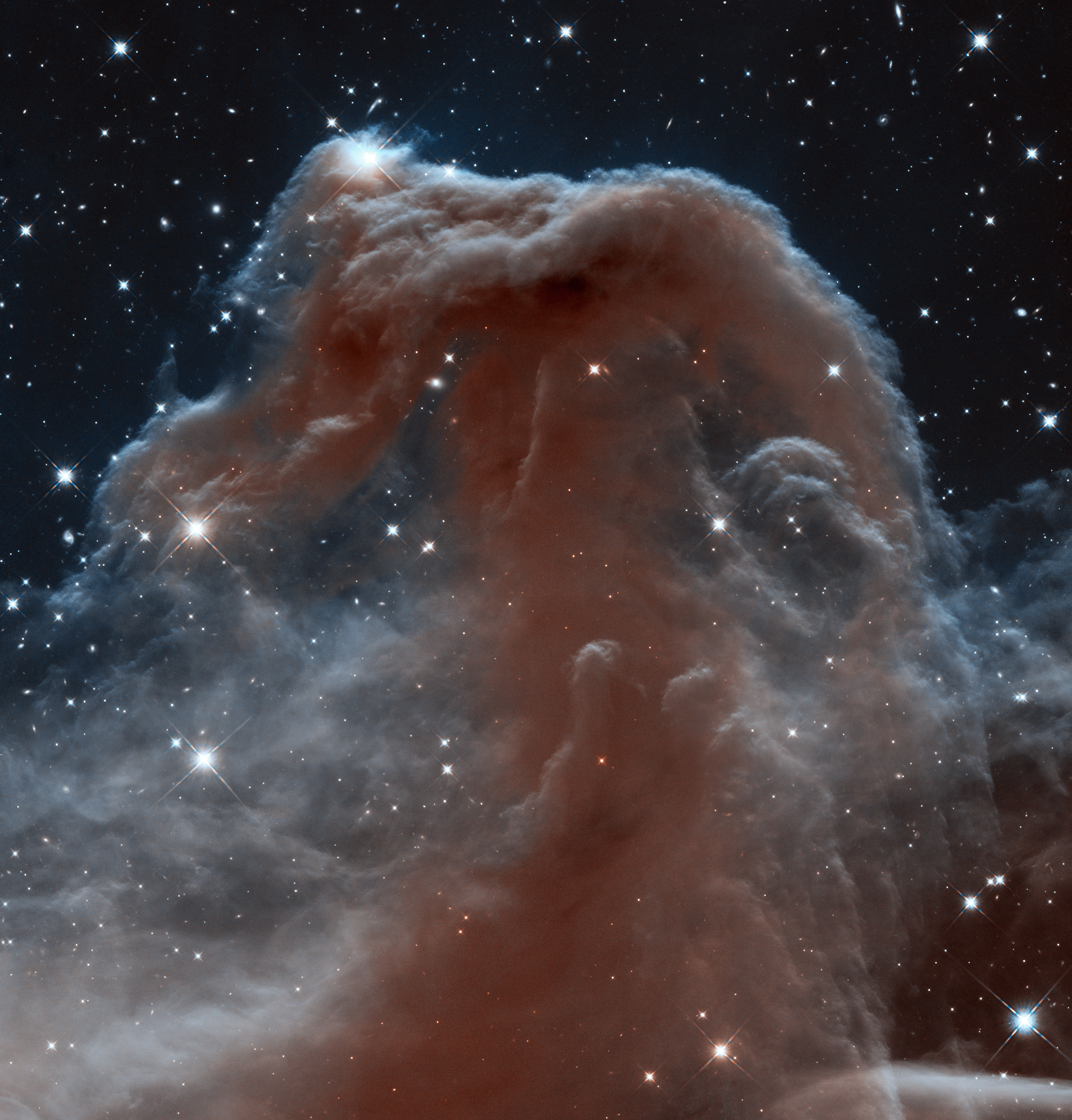
The instrument is designed to be a versatile camera capable of imaging astronomical targets over a very wide wavelength range and with a large field of view. It is a fourth-generation instrument for Hubble.
The instrument has two independent light paths: a UV and optical channel that uses a pair of charge-coupled devices (CCD) to record images from 200 to 1000 nm; and a near infrared detector array that covers the wavelength range from 800 to 1700 nm.
The UV/optical channel has two CCDs, each 2048×4096 pixels, while the IR detector is 1024×1024.
Both channels have a variety of broad and narrow-band filters, as well as prisms and grisms, which enable wide-field, very-low-resolution spectroscopy that is useful for surveys. The optical channel covers the visible spectrum (380 nm to 780 nm) with high efficiency, and is also able to see into the near ultraviolet (down to 200 nm).
The IR channel is designed to lack sensitivity beyond 1700 nm (as compared with the 2500 nm limit for NICMOS) to avoid being swamped by thermal background coming from the relatively warm HST structure. This allows WFC3 to be cooled using a thermoelectric cooler instead of carrying a consumable cryogen to cool the instrument.
The camera makes use of returned space hardware as the structure is built from the original Wide Field and Planetary Camera as well as the filter assembly. These were switched for the Wide Field and Planetary Camera 2 by the servicing mission STS-61 in December 1993.
WFC3 was originally conceived as an optical channel only; the near infrared channel was added later. WFC3 is intended to ensure that Hubble retains a powerful imaging capability through to the end of its lifetime.
History
WFC3 had been in the planning since the Spring of 1998. It was built by a team of highly experienced Hubble engineers and scientists drawn from many organizations, with leadership at Goddard Space Flight Center in Maryland. WFC3 was constructed mostly at Goddard Space Flight Center and Ball Aerospace in Colorado.
The instrument was scheduled by NASA to launch with STS-125 on 14 October 2008, but the mission was postponed due to additional repairs that were required. The mission launched on 11 May 2009 and the WFC3 was installed on 14 May. by astronauts John M. Grunsfeld and Andrew J. Feustel.
WFC3 Pillars of Creation
In celebration of the 25th anniversary since the launch of the Hubble Space Telescope, astronomers assembled a larger and higher-resolution photograph of the Pillars of Creation, which was unveiled in January 2015 at the American Astronomical Society meeting in Seattle. The image was photographed by the Hubble Telescope's Wide Field Camera 3, installed in 2009, and produced using near-infrared and visible light exposure.
The 1995 version of this picture of part of the Eagle nebula was taken with WFPC2.
2015 onwards
On January 8, 2019, the instrument experienced a suspected hardware problem and the onboard computer suspended operations with the WFC3 while other instruments continued operation. NASA later stated that the issue was software related and brought the instrument to normal status on January 17, 2019.
Gallery
File:HH 901 and HH 902 in the Carina nebula (captured by the Hubble Space Telescope).jpg|WFC3 view of Mystic Mountain in the Carina Nebula File:Pillars of creation 2014 HST WFC3-UVIS full-res denoised.jpg|A higher-resolution HST image of the Pillars of Creation in the Eagle Nebula, taken in 2014 as a tribute to the original photograph File:Jupiter on 2010-06-07 (captured by the Hubble Space Telescope).jpg|Jupiter in 2010, by WFC3
References
References
- (November 2007). "Wide Field Camera 3 Fact Sheet". [[NASA]].
- (January 2003). "Status of the HST Wide Field Camera 3". American Astronomical Society poster session.
- (January 2014). "Wide Field Camera 3 Instrument Handbook for Cycle 23". Space Telescope Science Institute.
- John W. MacKenty. (2002). "Wide Field Camera 3: Design, Status, and Calibration Plans". Space Telescope Science Institute.
- (May 14, 2009). "Space Telescope Operations Control Center — Flight Day 4". NASA.
- (2015-01-05). "Hubble Goes High-Definition to Revisit Iconic 'Pillars of Creation'". [[NASA]].
- (2019-01-08). "Wide Field Camera 3 Anomaly on Hubble Space Telescope". NASA.
This article was imported from Wikipedia and is available under the Creative Commons Attribution-ShareAlike 4.0 License. Content has been adapted to SurfDoc format. Original contributors can be found on the article history page.
Ask Mako anything about Wide Field Camera 3 — get instant answers, deeper analysis, and related topics.
Research with MakoFree with your Surf account
Create a free account to save articles, ask Mako questions, and organize your research.
Sign up freeThis content may have been generated or modified by AI. CloudSurf Software LLC is not responsible for the accuracy, completeness, or reliability of AI-generated content. Always verify important information from primary sources.
Report