From Surf Wiki (app.surf) — the open knowledge base
Whole number rule
Rule of thumb in chemistry

Rule of thumb in chemistry
In chemistry, the whole number rule states that the masses of the isotopes are whole number multiples of the mass of the hydrogen atom. The rule is a modified version of Prout's hypothesis proposed in 1815, to the effect that atomic weights are multiples of the weight of the hydrogen atom. It is also known as the Aston whole number rule after Francis W. Aston who was awarded the Nobel Prize in Chemistry in 1922 "for his discovery, by means of his mass spectrograph, of isotopes, in a large number of non-radioactive elements, and for his enunciation of the whole-number rule".
Law of definite proportions

The law of definite proportions was formulated by Joseph Proust around 1800 and states that all samples of a chemical compound will have the same elemental composition by mass. The atomic theory of John Dalton expanded this concept and explained matter as consisting of discrete atoms with one kind of atom for each element combined in fixed proportions to form compounds.
Prout's hypothesis
In 1815, William Prout reported on his observation that the atomic masses of the elements were whole multiples of the atomic mass of hydrogen. He then hypothesized that the hydrogen atom was the fundamental object and that the other elements were a combination of different numbers of hydrogen atoms.
Aston's discovery of isotopes
In 1920, Francis W. Aston demonstrated through the use of a mass spectrometer that apparent deviations from Prout's hypothesis are predominantly due to the existence of isotopes. For example, Aston discovered that neon has two isotopes with masses very close to 20 and 22 as per the whole number rule, and proposed that the non-integer value 20.2 for the atomic weight of neon is due to the fact that natural neon is a mixture of about 90% neon-20 and 10% neon-22). A secondary cause of deviations is the binding energy or mass defect of the individual isotopes.
Discovery of the neutron
Main article: Discovery of the neutron
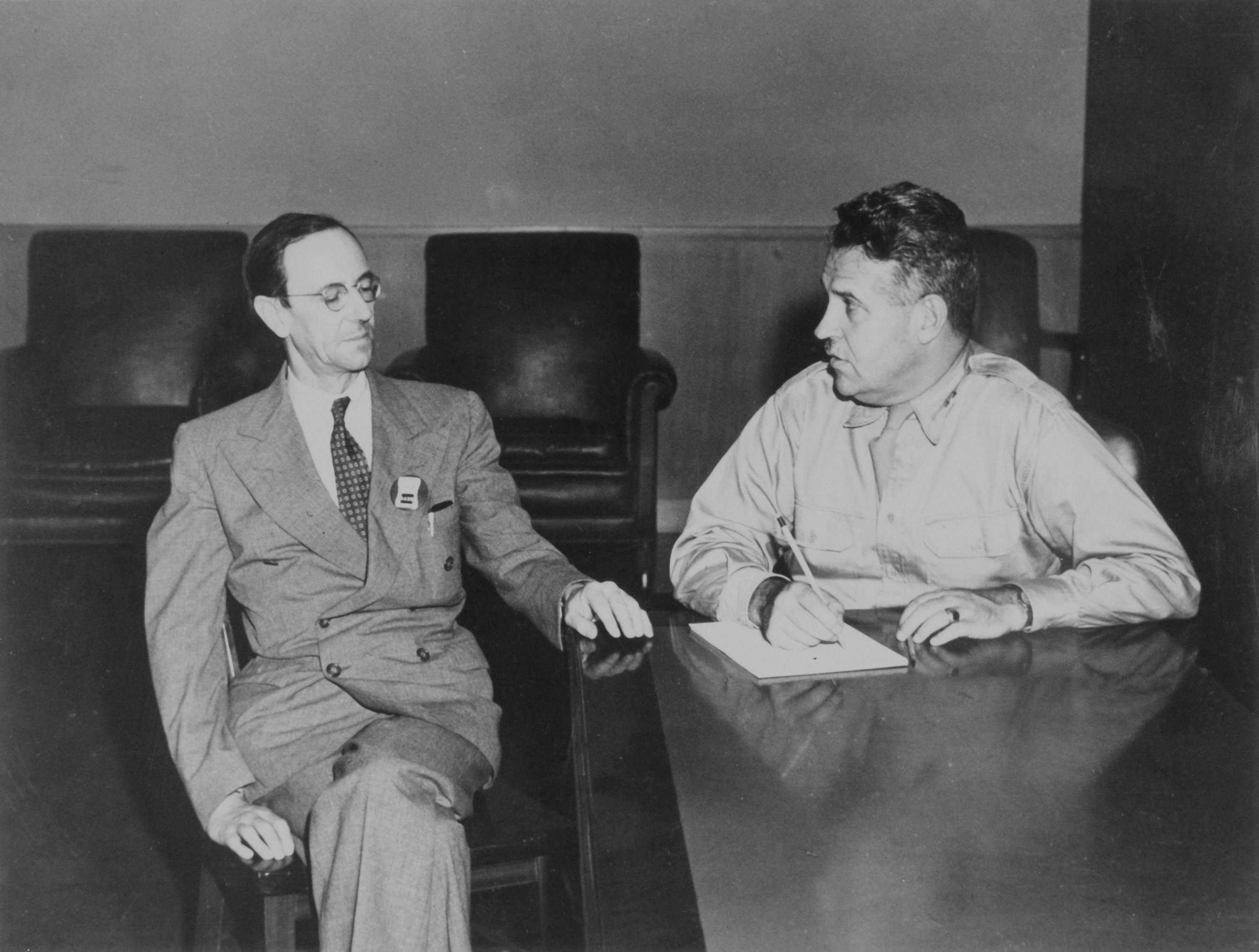
During the 1920s, it was thought that the atomic nucleus was made of protons and electrons, which would account for the disparity between the atomic number of an atom and its atomic mass. In 1932, James Chadwick discovered an uncharged particle of approximately the mass as the proton, which he called the neutron. The fact that the atomic nucleus is composed of protons and neutrons was rapidly accepted and Chadwick was awarded the Nobel Prize in Physics in 1935 for his discovery.
The modern form of the whole number rule is that the atomic mass of a given elemental isotope is approximately the mass number (number of protons plus neutrons) times a dalton (approximate mass of a proton, neutron, or hydrogen-1 atom). This rule predicts the atomic mass of nuclides and isotopes with an error of at most 1%, with most of the error explained by the mass deficit caused by nuclear binding energy.
References
References
- Budzikiewicz H, Grigsby RD. (2006). "Mass spectrometry and isotopes: a century of research and discussion". Mass Spectrometry Reviews.
- Prout, William. (1815). "On the relation between the specific gravities of bodies in their gaseous state and the weights of their atoms.". [[Annals of Philosophy]].
- Christopher G. Morris. (1992). "Academic Press Dictionary of Science and Technology". Gulf Professional Publishing.
- (1922). "The Nobel Prize in Chemistry 1922". The [[Nobel Foundation]].
- Proust, J.-L. (1799). Researches on copper, ''Ann. chim.'', '''32''':26-54. [http://web.lemoyne.edu/~giunta/proust.html Excerpt], in Henry M. Leicester and Herbert S. Klickstein, ''A Source Book in Chemistry, 1400–1900'', Cambridge, MA: Harvard, 1952. Accessed 2008-05-08.
- Dalton, J. (1808). ''A New System of Chemical Philosophy, volume 1'', Manchester. [http://web.lemoyne.edu/~giunta/dalton.html Excerpt]. Accessed 2008-05-08.
- William Prout (1815). On the relation between the specific gravities of bodies in their gaseous state and the weights of their atoms. ''[[Annals of Philosophy]]'', 6: 321–330. [http://web.lemoyne.edu/~giunta/PROUT.HTML Online reprint]
- William Prout (1816). Correction of a mistake in the essay on the relation between the specific gravities of bodies in their gaseous state and the weights of their atoms. ''Annals of Philosophy'', 7: 111–13. [http://web.lemoyne.edu/~giunta/PROUT.HTML#prout2 Online reprint]
- Lederman, Leon. (1993). "The God Particle". Delta.
- Aston, Francis W.. (1920). "The constitution of atmospheric neon". Philosophical Magazine.
- (1978). "The idea of the neutrino". Physics Today.
- Friedlander G., Kennedy J.W. and Miller J.M. (1964) ''Nuclear and Radiochemistry'' (2nd edition), Wiley, pp. 22–23 and 38–39
- Chadwick, James. (1932). "Possible Existence of a Neutron". [[Nature (journal).
- "James Chadwick – Biography". [[The Nobel Foundation]].
This article was imported from Wikipedia and is available under the Creative Commons Attribution-ShareAlike 4.0 License. Content has been adapted to SurfDoc format. Original contributors can be found on the article history page.
Ask Mako anything about Whole number rule — get instant answers, deeper analysis, and related topics.
Research with MakoFree with your Surf account
Create a free account to save articles, ask Mako questions, and organize your research.
Sign up freeThis content may have been generated or modified by AI. CloudSurf Software LLC is not responsible for the accuracy, completeness, or reliability of AI-generated content. Always verify important information from primary sources.
Report