From Surf Wiki (app.surf) — the open knowledge base
White torture
Torture by sensory deprivation
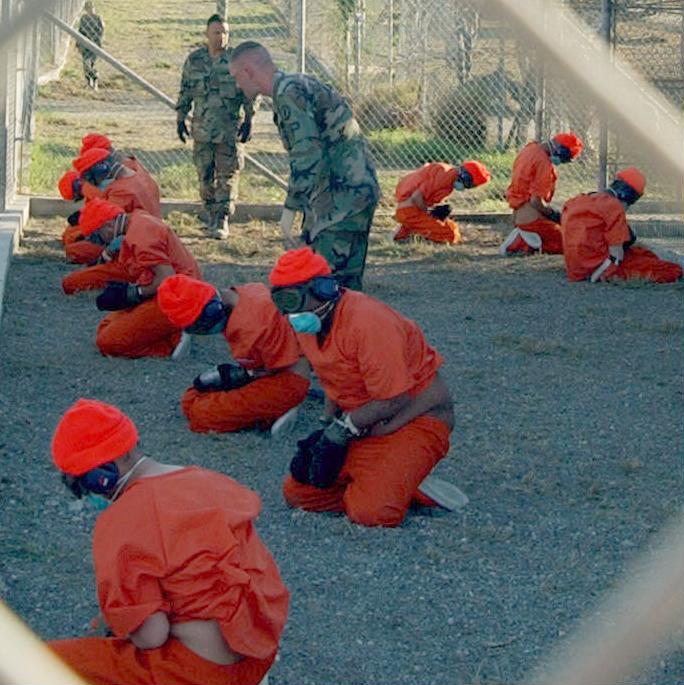
Torture by sensory deprivation
White torture, often referred to as white room torture, is a type of psychological torture technique aimed at complete sensory deprivation and isolation. A prisoner is held in a cell that is devoid of any color besides white, this method of torture is designed to deprive the prisoner of all senses and identity.
It is particularly used in Iran; however, there is also evidence of its use by intelligence services in the United States and Venezuela.
Methodology
Typically, prisoners will become depersonalized by losing personal identity for extended periods of isolation. Other effects can include hallucinations or psychosis.
Allegations of use
Iran
In Iran, white torture () has been practiced on political prisoners by the Islamic republic regime. Most political prisoners who experience this type of torture are journalists held in the Evin prison. According to Hadi Ghaemi, such tortures in Evin are not necessarily authorized directly by the Iranian government.
It can include prolonged periods of solitary confinement, the use of continual illumination to deprive sleep (listed in the Geneva Convention on Basic Human Rights, 1949) often in detention centers outside the control of the prison authorities, including Section 209 of Evin Prison.
Ahmed Shaheed, the United Nations special human rights reporter in Iran, mentioned in a statement that human rights activist Vahid Asghari was psychologically tortured by means of long-term detention in solitary confinement and with threats to arrest, torture or rape his family members. He was also reportedly tortured with severe beatings for the purpose of eliciting confessions.
A 2004 Amnesty International report documented the use of white torture on Amir Fakhravar by the Revolutionary Guards, the first known example of white torture in Iran. It states that "his cells had no windows, and the walls and his clothes were white. His meals consisted of white rice on white plates. To use the toilet, he had to put a white piece of paper under the door. He was forbidden to speak, and the guards reportedly wore shoes that muffled sound".
In a telephone call to the Human Rights Watch in 2004, the Iranian journalist Ebrahim Nabavi said:
Since I left Evin, I have not been able to sleep without sleeping pills. It is terrible. The loneliness never leaves you, long after you are "free". Every door that is closed on you ... This is why we call it "white torture". They get what they want without having to hit you. They know enough about you to control the information that you get: they can make you believe that the president has resigned, that they have your wife, that someone you trust has told them lies about you. You begin to break. And once you break, they have control. And then you begin to confess.
United States
The United States has held Guantanamo Bay detention camp prisoners under sensory deprivation, with their ears and eyes covered, hands and feet tied, hands in thick gloves, and held in cages without any privacy, always observed under a light that is on day and night. The organization of European Democratic Lawyers (EDL) said that this constitutes white torture and has accused the United States of violating prisoners' fundamental rights. Prisoners are also held in "extreme isolation", confined to windowless cells, going days "without seeing daylight" suffering what Amnesty International and other international human rights organizations have said are torture techniques approved by the George W. Bush administration under the euphemism "enhanced interrogation". Rainer Mausfeld, a researcher in the field of psychology and cognitive science, has criticized the practice.
Venezuela
According to human rights organizations and other NGOs, the Bolivarian Intelligence Service (SEBIN) of the Venezuelan government holds political prisoners in the lower levels of SEBIN's headquarters, which has been deemed by government officials La Tumba "The Tomb". The cells are 2 by with a cement bed, white walls, and security barriers between one another so that there is no interaction between prisoners. Such conditions have caused prisoners to become very ill, but they are denied medical treatment. Bright lights in the cells are kept on so prisoners lose their sense of time and the temperature is below freezing, with the only sounds heard being from the nearby Caracas Metro trains. Reports of torture in La Tumba, specifically white torture, are also common, with some prisoners attempting to commit suicide. Such conditions according to the NGO Justice and Process are to make prisoners plead guilty to the crimes that they are accused of.
In media
- German artist Gregor Schneider based his room design of "weiße Folter" () on this idea.
- The Brave (TV series) Episode 10 "Desperate Measures" January 8, 2018. A team member is held in an Iranian black site for interrogation. The room is all white, as is her clothing and the guards' clothing and the minimal furniture. The interrogator explains it is intended to cause sensory deprivation, and that bits of color will be added as she begins to cooperate.
- In the 2022 Indian film, Rorschach, the protagonist Luke Antony is subjected to white room torture in Dubai Prison.
References
References
- Cesereanu, Ruxandra. (Summer 2006). "An Overview of Political Torture in the Twentieth Century". Journal for the Study of Religions and Ideologies.
- Canadian Centre for Victims of Torture (CCVT). (2004). "In Our Midst: Educational Aids to Work with Survivors of Torture and Organized Violence".
- (31 March 2004). "Helping to break the Silence: Urgent Actions on Iran". [[Amnesty International]].
- Beehner, Lionel. (9 August 2006). "Iran's Waning Human Rights". [[Council on Foreign Relations]] (CFR).
- (10 February 2015). ""La tumba", siete celdas de tortura en el corazón de Caracas".
- (July 2004). "European Democratic Lawyers (EDL) statement on Guantanamo Bay and other detention centres".
- (April 2023)
- Vick, Karl. (June 7, 2004). "Report Cites 'Climate of Fear' in Iran". [[The Washington Post]].
- (March 15, 2005). "UN human rights commission urged to sanction Iran". [[Reporters Without Borders]].
- (January 10, 2007). "Iran:... Kianoosh Sanjari". Amnesty International.
- Saunders, Doug. (February 19, 2007). "Few know who is held behind the tiled walls of Tehran's Evin prison". [[The Globe and Mail]].
- "Vahid Asghari was beaten to make confess". Human Rights Group in US.
- "United Nations Report".
- Baxter, Sarah. (May 21, 2006). "Fugitive pleads with US to 'liberate' Iran". [[The Sunday Times (UK).
- (March 6, 2007). "Country Reports on Human Rights Practices - Iran in 2006". Bureau of Democracy, Human Rights, and Labor; [[United States Department of State]].
- McCann, Cathy. (March 17, 2004). "Student/Journalist Ill-treated in Jail". NEAR International.
- Lake, Eli. (May 9, 2006). "Iranian Dissident to Seek Support For Opposition". [[The New York Sun]].
- (June 2004). "Like the Dead...Crushing of dissidents in Iran". [[Human Rights Watch]].
- (July 2004). "European Democratic Lawyers (EDL) statement on Guantanamo Bay and other detention centres".
- [http://news.bbc.co.uk/2/hi/americas/6526589.stm Guantanemo conditions 'worsening'] [[BBC News]] April 4, 2007
- [http://hrw.org/english/docs/2004/12/21/usint9925.htm US: Did President Bush Order Torture] Human Rights Watch, Dec. 21, 2004
- "These Are The 13 'Enhanced Interrogation Techniques' The CIA Used On Detainees". Business Insider.
- Mausfeld, Rainer. (2009). "Psychologie, 'weiße Folter' und die Verantwortlichkeit von Wissenschaftlern". Psychologische Rundschau.
- (2015). "Un calabozo macabro".
- "Statement of Santiago A. Canton Executive Director, RFK Partners for Human Rights Robert F. Kennedy Human Rights".
- (25 July 2015). "Political protesters are left to rot in Venezuela's secretive underground prison".
- (2013-12-02). "Visual Arts - Exhibitions and Artist Portraits - Goethe-Institut".
- ARTSGATE, [http://www.artsgate.net/us/actu.asp News] {{Webarchive. link. (2007-02-02 , March 17, 2007.)
- "Twitter".
- (15 January 2018). "The Brave – Desperate Measures".
This article was imported from Wikipedia and is available under the Creative Commons Attribution-ShareAlike 4.0 License. Content has been adapted to SurfDoc format. Original contributors can be found on the article history page.
Ask Mako anything about White torture — get instant answers, deeper analysis, and related topics.
Research with MakoFree with your Surf account
Create a free account to save articles, ask Mako questions, and organize your research.
Sign up freeThis content may have been generated or modified by AI. CloudSurf Software LLC is not responsible for the accuracy, completeness, or reliability of AI-generated content. Always verify important information from primary sources.
Report