From Surf Wiki (app.surf) — the open knowledge base
White Terror (Taiwan)
Period of martial law and political repression in Taiwan

Period of martial law and political repression in Taiwan
| Field | Value |
|---|---|
| title | White Terror (Taiwan) |
| partof | Chinese Civil War, retreat of the government of the Republic of China to Taiwan, and Cold War |
| image | 228 by Li Jun.jpg |
| image_size | 300px |
| caption | The Horrifying Inspection by Chinese printmaker Huang Rong-can. It describes the hostile environment in Taiwan shortly after the 28 February incident, which marked the start of the White Terror period. |
| location | Taiwan and other ROC-controlled islands |
| target | Political dissidents, including leftists, liberals, independence activists, and intellectuals |
| date | 1947–1987 |
| type | Politicide, mass murder, political repression, police state |
| fatalities | At least 3,000 to 4,000 executed, not including the 228 incident (18,000 to 28,000 killed) or extrajudicial executions |
| victims | At least 140,000 imprisoned |
| perps | Government of the Republic of China (Taiwan) under the Kuomintang (KMT) |
| motive | Consolidate rule over Taiwan after retreat from mainland China |
The White Terror () was the political repression of Taiwanese civilians and political dissenters under the government ruled by the Kuomintang (KMT). The period of White Terror is generally considered to have begun when martial law was declared in Taiwan on 19 May 1949, which was enabled by the 1948 Temporary Provisions against the Communist Rebellion, and ended on 21 September 1992 with the repeal of Article 100 of the Criminal Code, allowing for the prosecution of "anti-state" activities. The Temporary Provisions had been repealed a year earlier on 22 April 1991. Martial law had been lifted on 15 July 1987.
Two years after the 28 February incident, the KMT retreated from mainland China to Taiwan during the closing stages of the Chinese Civil War in 1949. Wanting to consolidate its rule on its remaining territories, the KMT imposed harsh political suppression measures, which included enacting martial law, executing suspected leftists or those they suspected to be sympathetic toward the communists. Others targeted included Taiwanese locals and indigenous peoples who participated in the 28 February incident, such as Uyongʉ Yata'uyungana, and those accused of dissidence for criticizing the government.
The KMT carried out persecutions against those who criticized or opposed the government, accusing them of attempting to subvert the regime, while dramatically expanding the scope of punishment throughout this period. It made use of the Taiwan Garrison Command (TGC), a secret police, as well as other intelligence units by enacting special criminal laws as tools for the government to purge dissidents. Basic human rights and the right to privacy were disregarded, with mass pervasive monitoring of the people, filings of sham criminal cases against anyone suspected of being a dissident, as well as labelling any individuals who did not conform to a pro-regime stance as being communist spies, often without merit. Others were labeled as Taiwanese separatists and prosecuted for treason. It is estimated that about 3,000 to 4,000 civilians were executed by the government during the White Terror.{{Cite news | access-date=13 November 2011 | archive-date=20 December 2019 | archive-url=https://web.archive.org/web/20191220145619/http://www.taipeitimes.com/News/taiwan/archives/2005/05/20/2003255840 | url-status=live
Time period
The White Terror is generally considered to have begun with the declaration of martial law on 19 May 1949. For its ending date, some sources cite the lifting of martial law on 15 July 1987, following the Lieyu Massacre, while others cite the repeal of Article 100 of the Criminal Code on 21 September 1992, which allowed for the persecution of people for "anti-state" activities. Martial law officially lasted for 38 years and 57 days, which was the longest period of martial law in the world at the time it was lifted. It is now the second longest, after Syria's 48-year period of martial law which lasted from 1963 to 2011.
Most prosecutions took place between the first two decades as the KMT wanted to consolidate its rule on the island. Most of those prosecuted were labeled by the Kuomintang (KMT) as "bandit spies", meaning communist spies, and punished as such, often with execution. Chiang Kai-shek once said that he would rather "mistakenly kill 1,000 innocent people than allow one communist to escape".
The KMT mostly imprisoned Taiwan's intellectuals and social elites out of fear that they might resist KMT rule or sympathize with communism and separatism.
Many mainlander victims of White Terror, such as Bo Yang, Lei Chen, and Li Ao, moved on to promote Taiwan's democratization and the reform of the Kuomintang. In 1969, future president Lee Teng-hui was detained and interrogated for more than a week by the Taiwan Garrison Command, which demanded to know about his "communist activities" and told him "killing you at this moment is as easy as crushing an ant to death." Three years later he was invited to join the cabinet of Chiang Ching-kuo.
Fear of discussing the White Terror and the 28 February Incident gradually decreased with the lifting of martial law after the 1987 Lieyu massacre, culminating in the establishment of an official public memorial and an apology by President Lee Teng-hui in 1995. In 2008, President Ma Ying-jeou addressed a memorial service for the White Terror in Taipei. Ma apologized to the victims and their family members on behalf of the government and expressed the hope that Taiwan would never again experience a similar tragedy.
Controversy
In 2009, former Presidential Policy Advisor Hsieh Tsung-min (who, along with Peng Ming-min and Wei Ting-chao, was sentenced to 10 years in prison for drafting the "Taiwanese People's Self-Salvation Declaration" in 1964 and was falsely imprisoned for 15 years for the 1971 Bank of America bombing in Taipei) and a group of political victims of the White Terror claimed that the martial law order issued by the Taiwan Provincial Garrison Headquarters that year had not been properly reported to Acting President Li Zongren, who then submitted it to the Legislative Yuan for ratification, and was therefore legally invalid. The Kuomintang government violated the personal freedom and property rights of some individuals by using the invalid martial law order, but the Judicial Yuan's Grand Justices refused to accept the constitutional interpretation. They demanded that the Control Yuan impeach the Grand Justices for dereliction of duty.
In 2010, Supervisory Committee member Huang Huangxiong and others submitted an investigation report pointing out that there were three martial law orders between 1948 and 1949. It is impossible to verify whether the second martial law order issued on May 20, 1949, was submitted to the Legislative Yuan for ratification in accordance with Article 3 of the Martial Law Act. If the third martial law order issued on November 22, 1949, was not issued by the President (Acting President Li Zongren was not in the territory of the Republic of China at the time and could not have signed the announcement, which was not in compliance with Article 39 of the Constitution), the formal requirements were incomplete and the legal procedures were flawed. The martial law order was invalid due to lack of formal legal effect, and the military court's jurisdiction was flawed. The property confiscated due to cases during the martial law period "may need to be re-examined", and of course there will be subsequent relief issues. However, the final legal determination of the relevant laws is made by the Judicial Yuan Grand Justices Conference.
Xie Congmin and others were excited about the results of the Control Yuan's investigation. They said that they were imprisoned because they were tried by military court during the martial law period. If the Control Yuan found that the martial law order was flawed, then the trial at that time would be untenable. They would apply to the Grand Justices for constitutional interpretation based on this investigation report, and seek redress and compensation for wrongful imprisonment. Democratic Progressive Party legislator Guan Biling said that the implementation of martial law without following constitutional procedures was illegal and unlawful. "After the illegal martial law order was implemented, so many people's lives, freedom, and property were deprived and they were tried by military court. What should we do about this? We should carefully consider the national remedial system!" Tsai Tong-jung, a blacklisted legislator, also said: "Taiwanese people are innocent". The implementation of martial law has caused great harm to fellow Taiwanese people at home and abroad. He has been unable to return home for 30 years in the United States. He asked the government to investigate the relevant legal responsibilities and provide compensation. In 2013, direct relatives of victims of the White Terror (Communist Spy Case) overseas came forward to demand redress and compensation for the ten-year prison sentence, but were rejected by the Republic of China government. The "Compensation Foundation for Unfair Rebellion and Spy Trials during the Martial Law Period" was facing closure on June 30, 2013. The victims and their families in these more than 30 unresolved cases had petitioned President Ma Ying-jeou to request an extension, but their petitions were all forwarded by the Presidential Office to the "Compensation Foundation for Unfair Rebellion and Spy Trials during the Martial Law Period," and thus were left unresolved. In addition, in early 2013, direct relatives of Chinese victims in the United States petitioned Legislator Lin Yu-fang overseas to request assistance for an extension, but Lin's office rejected the request on the grounds that "the organization has been closed and there is nothing else to do." In stark contrast, when more than 30 cases related to the February 28 Incident emerged in 2013 and applications were delayed due to overdue deadlines, DPP legislators immediately proposed to amend the law. As a result, the February 28 Incident Memorial Foundation has now been amended by the Legislative Yuan and its application for compensation has been postponed for another four years.
Regarding why the victims of the White Terror have not been rehabilitated, White Terror victim Lin Shuyang stated that: "Ideological issues are the most difficult to resolve... For the Kuomintang, they still believe that the anti-communist national policy of that year is unquestionable. Sympathizing with communists is like a kind of original sin... The Kuomintang only reviewed the "law enforcement procedures" of that year, but never wanted to make a public apology similar to the February 28 Incident."
Rehabilitations
On December 5, 2017, the Legislative Yuan of the Republic of China passed the Act on Promoting Transitional Justice in its third reading. On May 31, 2018, the Transitional Justice Commission was officially established and began to redress cases from the White Terror period.
On October 5, 2018, the Transitional Justice Commission announced the first batch of people whose convictions were revoked by letter, revoking the convictions of 1,270 people, including Lin Qingyun.
On December 7, 2018, the Transitional Justice Commission announced the second batch of people whose convictions were revoked by letter, revoking the convictions of 1,505 people including Huang Zaoru. Among them, the convictions of five victims, including Cui Naibin, were revoked in the form of a judicial illegality decision similar to the verdict.
On February 27, 2019, the Transitional Justice Commission announced the third batch of people whose convictions were revoked by a meeting resolution, revoking the convictions of 1,056 people including Huang Dingjun. Among them, six victims, including Wang Xihe, had their convictions revoked in the form of judicial illegality decisions similar to the verdicts.
On May 30, 2019, the Commission for Promoting Transitional Justice announced the fourth batch of people whose convictions were revoked in the form of a meeting resolution, revoking the convictions of 2,006 people, including Xu Weichen. Among them, seven victims, including Liu Yongxiang, had their convictions revoked in the form of judicial illegality decisions similar to the verdicts.
Victims

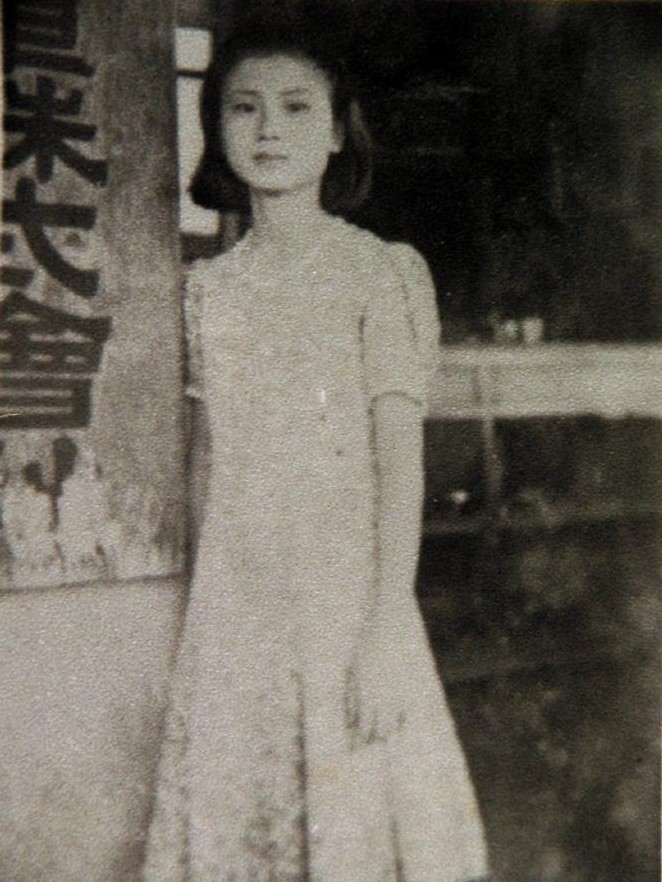

Around 140,000 Taiwanese were imprisoned under harsh treatment during this period, with many either indirectly dying or suffering various health problems in the process. About 3,000 to 4,000 were directly executed for their real or perceived opposition to the KMT's Chiang Kai-shek government.
Examples
- 1949: , TGC besieged dormitories of NTU and NTNU to arrest students for a public protest incited by a bicycle traffic ticket, which started the precedent of Academic White Terror, the military custom of entering schools to arrest students and teachers.
- 1949: July 13 Penghu incident, where secondary school students, mostly refugees from Shandong province, were conscripted by force as soldiers on 13 July. Two school principals and five students were executed for attempting to report the incident.
- 1949–1955: , 1196 Navy servicemen were imprisoned with numerous members being executed.
- 1952: , where many teachers were arrested and executed.
- 1952: Luku incident (鹿窟事件), during which 35 people were executed and 98 imprisoned.
- 1953: Aborigine leaders, including Major and musician Uyongʉ Yata'uyungana, were arrested, then executed in 1954.
- 1953–1954: Polish civilian tanker Praca and general cargo ship Prezydent Gottwald were assaulted on the Pacific Ocean with 1 death in custody; 29 Chinese sailors were imprisoned for up to 35 years, with 3 being executed and 6 others dying while imprisoned.
- 1954: : 51 postal staff were arrested and tortured for a socialist book found on a desk; 14 were sentenced to prison, including a pregnant woman Ting Yao-tiao. Ting and her close friend were executed two years later with Ting's daughter been born in prison being violently separated from the mother by the guard till her hair being torn off in 1956.
- 1954: Soviet civilian tanker Tuapse was privateered in high sea with 49 crew members being mistreated and detained up to 34 years, and 2 deaths and 1 suicide.
- 1955: Over 300 subordinate officers of pro-British/American general Sun Li-jen were arrested, tortured and imprisoned for high treason as communist spies. Sun was under house arrest for 33 years until 1988.
- 1957: May 24 incident, Chiang Ching-kuo's China Youth Corps along with military and police officers instigated anti-American riots after a shooting incident; Embassy of the United States was also sieged.
- 1960: Lei Chen, publisher of the Free China Journal and scholars organizing a democratic party were arrested, and imprisoned up to 10 years, where his memoir of his time in jail was incinerated.
- 1961: case: TGC arrested over 300 Taiwanese independence supporters in secret trials; the number held was reduced to 49 after reporting by French news agency AFP.
- 1963: Chen Chih-hsiung: Former ambassador of the with Swiss citizenship being kidnapped by KMT agents from Tokyo in 1959, Japan, Chen was the first executed Taiwanese independentist. Not wanting to let Chen walk to the execution field like a valiant, the corporal jailers cut his feet off with an axe and dragged him by his arms to the execution field.
- 1966: : Following the first wave of persecution and execution in 1947, newspaper journalists were framed and persecuted as suspected communist spies. Reporter was tortured to death naked by a rope cutting through the vagina, while her husband was beaten up next door to hear her screaming.
- 1968: Case: Imprisonment of 36 writers including Chen Yingzhen and , who supported independence.
- 1972–1975: NTU : 13 professors including Robert Martin and Chao Tien-yi were framed and fired as "communism sympathisers" supported by John King Fairbank.
- 1978: After the US established diplomatic relations with China, the US envoy to Taipei was attacked by government-mobilized protesters with stones, metal bats, bamboo sticks eggs and paints outside Songshan Airport. Secretary of State Warren Christopher's car window was broken and Ambassador Leonard Unger's ears were injured and his eyeglasses broken. NCCU Dean admitted that schools were assigned a quota of students to participate in the incident, with transportation provided for thousands. Ministry of Education awarded the school staffs vacations to Japan and Korea two months later.
- 1979–1980: TGC arrested over 100 pro-democracy activists after a protest on 10 December 1979. Some were tortured, 8 court-martialed for rebellion, 37 charged in civilian courts, and 91 eventually released. This was later known as the Kaohsiung Incident.
- 1980: The mother and twin daughters of democracy activist Lin Yi-hsiung (arrested following the Kaohsiung incident) were stabbed to death on 28 February.
- 1981: Carnegie Mellon statistics professor Chen Wen-chen is found dead on 3 July after a long interrogation session with government officials during a visit to Taiwan.
- 1984: Journalist Henry Liu is assassinated at his home in Daly City, California for writings disparaging President of the Republic of China, Chiang Ching-kuo. The assassination is thought to have been orchestrated by Pai Wan-hsiang.
- 1987: 1987 Lieyu massacre: 24 Vietnamese refugees calling for help were killed and evidence was destroyed by the military. The ROC government denied that the incident occurred after it was reported by journalists and during questioning by the parliament.
Legacy
Since the lifting of martial law in 1987, the government has set up the 228 Incident Memorial Foundation, a civilian reparations fund supported by public donations for the victims and their families. Many descendants of victims remain unaware that their family members were victims, while many of the families of victims, especially from mainland China, did not know the details of their relatives' mistreatment during the riot. The Taiwanese government also established the Transitional Justice Commission, which aimed to erase the authoritarian legacy of the KMT regime under Chiang and deliver justice to the families and relatives of the victims.
Oral Histories and Testimonies
In recent years, shifting social attitudes have encouraged more White Terror survivors to publicly recount their experiences of imprisonment and torture, often through oral histories and memoirs. The National Human Rights Museum and the Taiwan Human Rights Story House have collected extensive oral testimonies from survivors and their families, as well as published books and documentaries related to White Terror histories. Civil society groups have also played an active role in advancing transitional justice.
The book “Memories: A Witness of the White Terror” records the experiences of Chen Ming-chung, Yen Shih-hung, Huang Hua-chang, Chen Ying-tai, and others. Chen Ying-tai, who studied economics at National Taiwan University and was known for his exceptional memory, was recruited into the Communist Party by his classmate Cheng Wen-feng. He later meticulously documented the stories and life situations of the members of the underground organization, every person he met in prison, and former inmates after their release. Other survivors, such as Chang Chang-mei and Kao Chu-hua, have also publicly shared female victims’ experiences under the White Terror. In oral testimonies, Chang Chang-mei recounted witnessing fellow inmate Fu Ju-chih being led to execution and the forced separation of Ting Yao-tiao from her young daughter in prison, while in an interview, Kao Chu-hua has spoken about her experience of state-perpetrated sexual violence. Chang Chang-mei’s husband and a fellow White Terror victim, Ouyang Chien-hua, recorded forms of torture used against detainees through his artwork, now preserved by the National Human Rights Museum. Their eldest daughter, Ouyang Hui-chen, even adapted her parents’ stories into the stage play “Floating Lives: The One I Love is on Green Island”.
Film
- The 1958 film E.A. — Extraordinary Accident (**) by Viktor Ivchenko in 1958 tells the first year story of the Tanker Tuapse crew with the leading distribution of 47.5 million USSR viewers in 1959.
- Hou Hsiao-hsien's A City of Sadness, the first movie dealing with the February 28 incident, won the Golden Lion at the 1989 Venice Film Festival.
- The 1989 dark humor Banana Paradise is the second film of the Taiwan Modern Trilogy by Wang Toon, who applied a real cross-strait case reported in 1988 to develop the script with the preposterous irony of a Chinese Mainlander refugee couple's struggle living with fake identifications since the Chinese Civil War throughout the White Terror era till the reunion of divided families in 1988.
- The 1991 teen-crime drama A Brighter Summer Day by Edward Yang adopts a real street murder case in Taipei in 1961, where a group of high school students' lives were twisted by the gestapo-style Taiwan Garrison Command agents and the mafia activities in the military dependents' village. The film won the Best Film Award in the 36th Asia-Pacific Film Festival, Special Jury Prize in the Tokyo International Film Festival, Best Director Awards in the 13th Festival des 3 Continents and in the 5th Singapore International Film Festival.
- The 1995 romance Good Men, Good Women by Hou Hsiao-hsien based on the biography book named after the Japanese song in real life of Chiang Bi-Yu as a political prisoner (daughter of Chiang Wei-shui, starring Annie Yi in 3 interlude roles) to research the complexity of Taiwanese history and national identity.
- The 1995 blue drama Heartbreak Island, a winner of NETPAC Award in the 1996 International Film Festival Rotterdam describes the mind struggle flashbacks of a student activist being finally released after 10 years in prison for participating the 1979 Kaohsiung Incident, but only finding that her old comrades have changed to give up ideals and keep chilly distance.
- The 1995 film Super Citizen Ko by Wan Jen surrounding a political prisoner during martial law who looks for the grave of a friend who was executed.
- The 2000 criminal mystery Forgotten or Forgiven by Zhong-zheng Wang and Wei-jian Hong, portraits a grim police detective growing up from the harsh environment of a White Terror victim family follows a lead to discover the true identity of the low-profiled target, his partner's father, as actually a secret agency deserter with the repentance through life against the Agency who involved in his case, then solved the conundrum in 2 generations after the final showdown of the deserter confronting his old commander.
- The 2009 biography Prince of Tears by Yonfan, nominated for the Golden Lion at the 66th Venice International Film Festival and selected as the Hong Kong entry for the 82nd Academy Awards for Best Foreign Language Film, is a real-life story of Taiwanese actress Chiao Chiao (aka. Lisa Chiao), whose father was falsely accused and executed during the White Terror in 1950s. Then, her mother was also arrested, and she and her sister became homeless as their house was confiscated.
- The 2009 political thriller Formosa Betrayed by Adam Kane portraits an FBI investigator tracing multi-murder cases to find the truth, inspired by the real cases including the assassination of journalist Henry Liu in California in 1984, the unsolved death of Chen Wen-chen of Carnegie Mellon University in 1981, and the serial murders of Lin Yi-hsiung family in 1980.
- The 2019 horror film Detention, an adaptation of the eponymous video game based on true events, specifically the 1947 Keelung Senior High School Incident where dozens of students, teachers and journalists were either executed or imprisoned for political reasons during the White Terror.
- The 2019 VR film Bodyless by Prof. Hsin-Chien Huang of NTNU, Special Mention of 2019 Kaohsiung Film Festival, and Honorary Mention in the Computer Animation category of Prix Ars Electronica 2020, describes how the soul of a dead political prisoner left his jailed body in the suppressed environment of ROC military ruling with martial law, then finally freely found his way home.
- Historical film Untold Herstory about the detention of female political prisoners in the 1950s in Ludao Prison, in the beginning of the White Terror and the martial law.
Literature
- Vern Sneider's novel A Pail of Oysters in 1953 was based on the officer's personal field survey revealing people's life in Taiwanese society under suppression in 1950s, was banned by Chinese Nationalists' authorities until being reissued in 2016 – 35 years after his death.
- Tehpen Tasi's autobiography Elegy of Sweet Potatoes (**) in 1994, based on his testimony with the other political prisoners together for 13 months in 1954–1955.
- Julie Wu's The Third Son in 2013 describes the event and its aftermath from the viewpoint of a Taiwanese boy.
- Jennifer J. Chow's The 228 Legacy in 2013 focuses on how there was such an impact that it permeated throughout multiple generations within the same family.
- Shawna Yang Ryan's Green Island in 2016 tells the story of the incident as it affects three generations of a Taiwanese family.
- Ken Liu's The Paper Menagerie & Other Short Stories in 2016 includes a short story titled The Literomancer which references the 28 February incident from the perspective of a young American girl who had recently moved to Taiwan, and asks both her father, who works on an American military base, and a neighbor, and old man named Mr. Kan about the incident. It develops on these two different perspectives throughout the story, becoming progressively darker.
- Principle Jian Tian-lu's Hushen (), a 2019 literature award winner expresses the humanity concern in contrast with the brutality on the first scene of 1987 Lieyu massacre.
- Poet Hung-hung's The fog has no voice – mourning the souls lost in 7 March Incident (), a eulogy poet in memory of the victims and refugees in 2024.
Games
- In 2014, Sharp Point Press and Future-Digi publicized the 'Rainy Port Keelung with 3 light novels telling a love story in the background of Keelung Massacre during the 28 Feb incident.
- In 2017, Taiwanese game developer Red Candle Games launched Detention, a survival horror video game created and developed for Steam. It is a 2D atmospheric horror side-scroller set in 1960s Taiwan under martial law following the 28 February incident. The critically acclaimed game also incorporates religious elements based on Taiwanese culture and mythology. Rely On Horror gave the game a 9 out of 10, saying that "every facet of Detention moves in one harmonious lockstep towards an unavoidable tragedy, drowning out the world around you."
- In 2017, Erotes Studio produced Blue Blood Lagoon with the story of high-school students running for life to escape from the bloodshed of military conscription arrest, prosecution and execution during the July 13 Penghu incident.
- In 2019, Team Padendon publicized a ghost RPG PAGUI based on a true family story of the Kaohsiung Massacre victims in 28 Feb Incident: An orphan raised by a temple uncovered his identity and looked for his dispersed family for over 60 years with no result until he died; an old lady in her 90s heard the news arrives but only find her son in the coffin.
- In 2020, MatchB Studio produced an adventure puzzle Halflight with two brothers playing near a base witnessed an execution site upon 28 Feb incident, and one fell missing in chaos, followed by the family being persecuted apart, so the little boy went back trying to find the younger brother, but only stepped into the worse ending in 50 years.
Memorials
- 228 Peace Memorial Park
- Green Island White Terror Memorial Park
- Jing-Mei White Terror Memorial Park
- Tianma Tea House
References
- Rubinstein, Murray A.. (2007). "Taiwan: A New History". M. E. Sharpe.
- "White Terror Period".
- (31 March 1992). "Taiwan: Amendment of Article 100 of the Criminal Code".
- (27 February 2017). "30 years after end of martial law, scars from Taiwan's 'White Terror' remain".
- (30 August 2021). "Aboriginal White Terror period victims remembered – Taipei Times".
- (10 December 2021). "Book review: Stories from Taiwan's 'White Terror'".
- (7 December 2016). "Is Taiwan Really a Beacon of Freedom? – The Atlantic".
- (26 February 2017). "Victims demand justice 70 years after Taiwan's bloody 228 Incident massacre {{!}} The Straits Times".
- (13 March 2020). "肅殺的白色恐怖!寧可錯殺一千也不放過一人 – 歷史".
- Chen, Ketty. (Winter 2008). "Disciplining Taiwan: The Kuomintang's Methods of Control during the White Terror Era (1947–1987)". Taiwan International Studies Quarterly.
- (28 March 2011). "Syria to end 48 years of martial law". ABC News.
- Barnouin, Barbara and Yu Changgen. ''Zhou Enlai: A Political Life.'' Hong Kong: Chinese University of Hong Kong, 2006. p. 38
- "The Graveyard At The Center Of Taiwan's White Terror Period".
- Tsai, Shih-shan Henry. (2005). "Lee Teng-Hui and Taiwan's Quest for Identity". Palgrave Macmillan.
- Hau Pei-tsun. (1 January 2000). "<8-year Diary of the Chief of the General Staff (1981–1989)>". Commonwealth Publishing.
- (16 July 2008). "President Ma attends White Terror Memorial". China Post.
- "國家人權記憶庫".
- "臺灣時報".
- "監院報告:38年戒嚴令 發布有瑕疵(影音)-公視新聞網". 公視新聞網.
- "監院調查38年戒嚴令有爭議 {{!}} 重點新聞 {{!}} 中央社即時新聞 CNA NEWS".
- (11 August 2010). "臺灣發布戒嚴是否符合法定程序 監察院提調查報告(監察院─院新聞稿)".
- "2010年監察院人權工作實錄:第1冊 公民與政治權利".
- "監院稱38年戒嚴令實施有瑕疵 綠委:慎重研議補救體制 {{!}} NOWnews 今日新聞". NOWnews 今日新聞.
- "Compensation Foundation for Unfair Rebellion and Spy Trials During the Martial Law Period".
- 自由時報電子報. (2013-02-26). "228受害家屬 獲平反竟拿不到賠償金 - 政治 - 自由時報電子報". 自由時報電子報.
- "中国死刑观察--凝视左翼运动刑场——马场町".
- "公告資訊-促進轉型正義委員會撤銷有罪判決公告-促進轉型正義委員會". 促進轉型正義委員會.
- "公告資訊-本會撤銷有罪判決公告-促進轉型正義委員會". 促進轉型正義委員會.
- "公告資訊-本會撤銷有罪判決公告-促進轉型正義委員會". 促進轉型正義委員會.
- "公告資訊-本會撤銷有罪判決公告-促進轉型正義委員會". 促進轉型正義委員會.
- "Taiwan in Time: The women claimed by the White Terror". Taipei Times.
- Ping, Hsing Ku. "Wang Ruisong and Chiang Kai-Shek :Ping-Hsing Ku Abuse".
- Lu, Fang-shang. (1999). "《戒嚴時期台北地區政治案件相關人士口述歷史: 白色恐怖事件查訪(上、下)》". [[Taipei City Archives]].
- Huang, tHui-zhen. (28 November 2007). "四六事件". [[Ministry of Culture (Taiwan)]].
- Cheung, Han. (10 July 2016). "Students, soldiers and spies". Taipei Times.
- (13 October 2017). "臺灣外省人生命記憶與敘事資料庫 (II) – 揭開「白色封印」研究成果報告 (完整版)". Institute of Humanities and Social Sciences, [[Academia Sinica]].
- (2016). "台灣五零年代海軍白色恐怖案件". Institute of Information Science, Academia Sinica.
- Kuo, Chi-Bin. (16 July 2020). "桂永清與戰後海軍重整". Institute of Historical Research, [[National Central University]].
- (20 May 2005). "White Terror exhibit unveils part of the truth". [[Taipei Times]].
- (1998). "《鹿窟事件調查研究》". Cultural Affairs Department, New Taipei City Government.
- "Luku Incident survivor pens memoir of events". [[Taipei Times]].
- 傅琪貽. (13 October 2017). "戰後臺灣原住民的白色恐怖 (1950年代)". 臺灣日本綜合研究所.
- Yang, Bi-chuan. (27 February 2017). "The 228 Massacre In Alishan: 'All We Have Left Are Ashes And Bones'". [[The Reporter (Taiwan).
- Maciej Rosalak. (1 June 2021). "Statki PRL w pułapce Czang Kaj-szeka". Orle Pióro.
- Li, Zhen-hsiang. (8 January 2009). "Praca". Taiwan News Weekly, ver. 376, Taiwan Association for Truth and Reconciliation.
- Li, Shicheng. (16 February 2015). "《鹿窟風雲–八十憶往: 李石城回憶錄》". Elephant White Cultural Enterprise Publishing.
- Kan, Yao-ming. (6 February 2014). "《魔神仔的人類學想像》". Wu-Nan Book Inc..
- (18 July 2021). "Taiwan in Time: The women claimed by the White Terror". Taipei Times.
- (25 November 2015). "Exhibition on White Terror era opens in Tainan". Taipei Times.
- Prof. Sergey Vradiy. (20 February 2020). "'Tuapse' Oil Tanker Episode in the History of Taiwan-Russia Relations". Taiwan Fellowship, Center for Chinese Studies, [[National Central Library]].
- Lin, Hung-I. (2008). "《封鎖大陸沿海──中華民國政府的「關閉政策」, 1949–1960》".
- Лев КАПЛИН. "The tragedy of the tanker 'Tuapse'". Riddles of History.
- Moody, Peter R.. (1977). "Opposition and dissent in contemporary China". [[Hoover Press]].
- Tucker, Nancy Bernkopf. (1983). "Patterns in the dust: Chinese-American relations and the recognition controversy, 1949–1950". [[Columbia University Press]].
- (1970). "Biographical Dictionary of Republican China". [[Columbia University Press]].
- Craft, Stephen G.. (2015). "American Justice in Taiwan: The 1957 Riots and Cold War Foreign Policy". [[University Press of Kentucky]].
- Wang, Feng. (16 October 2015). "刺殺蔣介石: 美國與蔣政權鬥爭史". China Times Publishing.
- Han Cheung. (18 March 2018). "Taiwan in Time: Chiang Kai-shek's last challenger". Taipei Times.
- (5 September 2002). "One man's struggle for a nation's freedom". Taipei Times.
- (September 1988). "Military authorities burn Lei Chen Memoirs". International Committee for Human Rights in Taiwan.
- (1 December 2000). "蘇東啟政治案件專輯". Institute of Modern History, Academia Sinica.
- Shih, Ming-hsiong. (1998). "白色恐怖黑暗時代台灣人受難史". Avanguard Publishing.
- Shih, Ming-hsiong. (9 February 2016). "我終生敬仰的陳智雄烈士". Taiwan People News.
- [[Bo Yang]]. (20 April 1996). "《柏楊回憶錄》". Yuan-Liou Publishing.
- Yao, Mu-chi. (1 December 2012). "《秋蟬的悲鳴: 白色恐怖受難文集第一輯》". [[National Human Rights Museum]].
- Zhu, Li-hsi. (8 April 2019). "40年前, 松山機場外那面破車窗". EThe Foundation for Excellent Journalism Award.
- Chen, Yi-shen. (April 2022). "戰後台灣對外關係史論". [[National Chengchi University#Campus media.
- (January 1981). "Who murdered Mr Lin's mother and daughters?". International Committee for Human Rights in Taiwan.
- Kristof, Nicholas D.. (16 February 1992). "A Dictatorship That Grew Up". [[The New York Times Magazine]].
- Chen, Su-jen. (11 September 1981). "Statement of Chen Su-jen". International Committee for Human Rights in Taiwan.
- Hsu, Jenny W.. (2 July 2009). "Report sheds light on 1981 mystery". Taipei Times.
- (3 March 1985). "Rooted in Taiwan Connection: The Plot to Kill Henry Liu — Slayers Confess Details". Los Angeles Times.
- (1985). "The Murder of Henry Liu: Hearings and Markup before the Committee on Foreign Affairs and its Subcommittee on Asian and Pacific Affairs". [[United States Government Publishing Office]].
- (9 August 2024). "Relatives of Victims of 1987 Lieyu Massacre Call for Reburial". [[TaiwanPlus]].
- (13 June 1987). "". Freedom Era Weekly, Ver 175–176.
- Guan Ren-jian. (1 September 2011). "Taiwan you don't know: Stories of ROC Arm Forces". Puomo Digital Publishing.
- Hioe, Brian. (8 August 2024). "Control Yuan Calls for Justice Over 1987 Massacre of Vietnamese Refugees by the Military". New Bloom.
- "National Human Rights Museum".
- 陳, 英泰. (2005). "回憶,見證白色恐怖". 唐山出版社.
- "走過白色恐怖:受難者的劫後人生".
- 德國之聲. (2025-05-19). "性、暴力、羞恥感:看見台灣白色恐怖的女性故事".
- (2023-05-30). "白色恐怖受難者歐陽劍華畫作捐贈人權館 見證獄中刑求的血淚過往".
- "雙親白色恐怖經歷 歐陽慧珍搬上舞台 - 生活 - 自由時報電子報".
- Chen, Guang-hsing. (1 May 2001). "為什麼大和解不/可能? 〈多桑〉與〈香蕉天堂〉殖民/冷戰效應下省籍問題的情緒結構". 國際邊緣‧名家專欄 [[National Central University]].
- Liao, Shuyi. (11 July 2015). "時光倒影 一場時代的荒謬劇 ——《香蕉天堂》". Merit Times.
- Hsiao Chiu. (21 August 2002). "香蕉天堂 \ 大時代下外省人的悲情故事". Taiwan123.
- [[Jonathan Crow]]. "Good Men, Good Women (1995)". [[AllMovie]].
- "好男好女". [[Public Television Service]].
- [[Stephen Holden]]. (23 March 1996). "Heartbreak Island Film Review". [[The New York Times]].
- Centre of Taiwan Studies. (28 July 2014). "Film Screening: Super Citizen Ko and Q&A with Director Wan Jen". [[SOAS University of London]].
- Chen, Ping-hao. "". [[Taiwan Film and Audiovisual Institute]].
- (2000). "天公金 (2000) Forgotten or Forgiven". 1905電影網.
- Zhan, Zhengde. (15 November 2019). "白色恐怖懺情錄". [[Medium (website).
- Holden, Stephen. (26 February 2010). "When the Language of Diplomacy Includes 'Kapow!'". [[The New York Times]].
- Anderson, John. (26 February 2010). "'A Prophet': The Crime Epic Reborn". [[The Wall Street Journal]].
- Addiego, Walter. (7 January 2011). "Review: 'Formosa Betrayed'". [[The San Francisco Chronicle]].
- (26 February 2010). "'Easier With Practice' captivates". [[Los Angeles Times]].
- Liao, Leslie. "Taiwanese hit film 'Detention' based on true story". [[Radio Taiwan International]].
- (2020). "設計系黃心健《失身記》獲奧地利電子藝術節榮譽獎". National Taiwan Normal University Alumni Center.
- Jackson, Grace. (9 March 2017). "Remembering 2–28 Across Culture, Distance and Time". Taiwan Sentinel.
- Hong, Keelung. (28 February 2003). "My Search for 2–28". [[University of California, Berkeley]].
- Portteus, Danielle. (15 June 2006). "Back in print". Monroe News.
- Cheung, Han. (28 February 2016). "Literary redemption". [[Taipei Times]].
- Prof. Jianyuan Zeng. (2016). "哀音綿綿--蔡德本與《蕃薯仔哀歌》裡的嘉義朴子左翼青年身影". 台灣法律網 LawTW.
- (16 July 2021). "《靈魂與灰燼: 臺灣白色恐怖散文選》獨家書摘: 蔡德本《蕃薯仔哀歌》". Spring Hill Publishing and [[National Human Rights Museum]].
- Winterton, Bradley. (7 May 2014). "Book review: The Third Son". Taipei Times.
- Bloom, Dan. (19 August 2013). "US author probes 'legacy' of the 228 Incident in novel". Taipei Times.
- "Green Island by Shawna Yang Ryan – PenguinRandomHouse.com".
- (23 November 2019). "【19屍20命】浯島文學首獎探討「三七事件」 小金門的殺戮時代". [[Up Media]].
- Hung Hung. (7 March 2024). "霧沒有聲音——悼三七事件亡魂". United Daily News.
- (9 August 2024). "金門三七慘案: 難民家屬首度來台尋求真相與和解". Amnesty International Taiwan.
- (17 March 2014). "Finding Taiwanese Footprints of Taiwanese Through Games – An interview with the production team of ". Animen News.
- (15 January 2017). "Review: Detention – Rely on Horror".
- 吳柏緯. (5 April 2017). "July 13, February 28 and Zheng Nanrong...Learn about Taiwanese history by playing games". [[Liberty Times]].
This article was imported from Wikipedia and is available under the Creative Commons Attribution-ShareAlike 4.0 License. Content has been adapted to SurfDoc format. Original contributors can be found on the article history page.
Ask Mako anything about White Terror (Taiwan) — get instant answers, deeper analysis, and related topics.
Research with MakoFree with your Surf account
Create a free account to save articles, ask Mako questions, and organize your research.
Sign up freeThis content may have been generated or modified by AI. CloudSurf Software LLC is not responsible for the accuracy, completeness, or reliability of AI-generated content. Always verify important information from primary sources.
Report