From Surf Wiki (app.surf) — the open knowledge base
White Terror (Spain)
Assassinations and mass murders during the Spanish Civil War

Assassinations and mass murders during the Spanish Civil War
| Field | Value |
|---|---|
| title | Francoist Repression |
| partof | Spanish Civil War, World War II, Cold War |
| image | Francoists in Irún.jpg |
| image_size | 300px |
| caption | Francoists in captured Irún, December 1936 |
| location | Spain |
| target | Spanish Republicans (Socialists, communists, anarchists, liberals, and other leftists), Jews, Freemasons, homosexuals, intellectuals, Basque, Catalan, Andalusian and Galician nationalists, and atheists, |
| date | 1936–1947 |
| type | Politicide, mass murder, forced labour, human experimentation, war rape, genocide |
| fatalities | 160,000–400,000 |
| victims | |
| perps | Nationalist faction of Spain and the proceeding government |
| susperps | |
| numparts | |
| dfens |
The White Terror (), also called the Francoist Repression (), was the political repression and mass violence against dissidents that were committed by the Nationalist faction during the Spanish Civil War (1936–1939), as well as during the first nine years of the regime of General Francisco Franco.
The Francoist Repression was motivated by the right-wing notion of social cleansing (), which meant that the Nationalists immediately started executing people viewed as enemies of the state upon capturing territory.
Repression was ideologically hardwired into the Francoist regime, and according to Ramón Arnabat, it turned "the whole country into one wide prison". The regime accused the loyalist supporters of the Republic of having "adherence to the rebellion", providing "aid to the rebellion", or "military rebellion"; using the Republicans' own ideological tactics against them. Franco's Law of Political Responsibilities (), in force until 1962, gave legalistic color of law to the political repression that characterized the defeat and dismantling of the Second Spanish Republic and punished Loyalist Spaniards.
The historian Stanley G. Payne considers the White Terror's death toll to be greater than the death toll of the corresponding Red Terror.
Background
After a trio of crises in 1917, the spiral of violence in Morocco and the lead-up to the installment of the dictatorship of Miguel Primo de Rivera through a 1923 military coup d'état won the acquiescence of Alfonso XIII. Upon the political failure of the dictatorship, Alfonso XIII removed support from Primo de Rivera (who was thereby forced to resign in 1930) and favoured a return to the pre-1923 state of affairs during the so-called dictablanda. Nevertheless, he had lost most of his political capital along the way. Alfonso XIII voluntarily left Spain after the municipal elections of April 1931understood as a plebiscite for maintaining the monarchy or declaring a republicwhich led to the proclamation of the Second Spanish Republic on 14 April 1931. The Second Spanish Republic was led by President Niceto Alcalá-Zamora, whose government instituted a program of secular reforms, which included agrarian reform,
After the Popular Fronta coalition of leftist parties (Spanish Socialist Workers' Party (PSOE), Republican Left (IR), Republican Union (UR), Communist Party (PCE), Workers' Party of Marxist Unification (POUM), Republican Left of Catalonia (ERC) and others)won the general election of February 1936, the Spanish right-wing planned to overthrow the democratic Republic in a coup d'état to reinstall the monarchy. Finally, on 17 July 1936, a part of the Spanish Army, led by a group of far-right-wing officers (the generals José Sanjurjo, Manuel Goded Llopis, Emilio Mola, Francisco Franco, Miguel Cabanellas, Gonzalo Queipo de Llano, José Enrique Varela, and others) launched a military coup d'état against the Spanish Republic in July 1936. The generals' coup d'état failed, but the rebellious army, known as the Nationalists, controlled a large part of Spain; this was the start of the Spanish Civil War.
Franco, one of the coup's leaders, and his Nationalist army won the Spanish Civil War in 1939. Franco ruled Spain for the next 36 years until his death in 1975. and homosexuals were confined in psychiatric hospitals.
Repressive thinking

The Chief Prosecutor of the Francoist army, Felipe Acedo Colunga, wrote in the internal report of 1939:According to the historian Francisco Espinosa, Felipe Acedo proposed an exemplary model of repression to create the new fascist state "on the site of the race." Absolute purification was needed, "stripped of all feelings of personal piety." According to Espinosa, the legal model for repression was the German (National Socialist) procedural system, where the prosecutor could act outside legal considerations. What was important was the unwritten right that, according to Hermann Göring, people carry as "a sacred ember in their blood."
According to Franco, the issue of Catalonia was one of the main reasons for the war. General Gonzalo Queipo de Llano wrote in an article subtitled "Against Catalonia, the Israel of the modern world", published in Diario Palentino on November 26, 1936, that Franco's regime considered Catalan people to be "a race of Jews, because they use the same procedures that the Hebrews perform in all the nations of the globe." Queipo de Llano declared, "When the war is over, Pompeu Fabra and his works will be dragged along the Ramblas". Fabra standardized the Catalan language, and his house was raided; his large personal library was burned in the middle of the street, but Fabra was able to escape and went into exile.
Policy of extermination of the enemy

In November 1937, four months after the Collective Letter of the Spanish Bishops was signed and distributed, the Spanish bishops issued a second letter in which they justified the extermination of the enemy and testified that this was an existing policy. Otherwise, the explicit reference to a policy of extermination, not repression or elimination, leads to biopolitical interpretations, as using the war for an eugenic action over the Spanish population.
Red and White Terrors
From the beginning of the war in July 1936, the ideological nature of the Nationalist fight against the Republicans indicated the degree of dehumanisation of the lower social classes (peasants and workers) in the view of the politically reactionary sponsors of the nationalist forces, the Roman Catholic Church of Spain, the aristocracy, the landowners, and the military, commanded by Franco. Captain Gonzalo de Aguilera y Munro, a public affairs officer for the Nationalist forces, told the American reporter John Thompson Whitaker:
The Nationalists committed their atrocities in public, sometimes with assistance from members of the local Catholic Church clergy. In August 1936, the Badajoz massacre ended with the shooting of between 500 and 4,000 Republicans; and on August 20, after a Mass and a multitudinous parade, two Republican city mayors (Juan Antonio Rodríguez Machín and ), Socialist deputy Nicolás de Pablo and 15 other people (7 of them Portuguese) were publicly executed. The assassination of hospitalized and wounded Republican soldiers was also a common practice.
Among the children of the landlords, the joke name Reforma agraria (agrarian reform) identified the horseback hunting parties by which they killed insubordinate peasantry and so cleansed their lands of communists. The joke name alluded to the grave where the corpses of the hunted peasants were dumped: the piece of land for which the dispossessed peasants had revolted. Early in the civil war most of the victims of the White Terror and the Red Terror were killed in mass executions behind the respective front lines of the Nationalist and the Republican forces:
Common to the political purges of the left-wing and right-wing belligerents were the sacas, the taking of prisoners from jails and prisons, who then were taken for a paseo, a ride to summary execution. other people were killed after being denounced as an enemy of the people, by false accusations motivated by personal envy and hatred. Nevertheless, the significant differences between White political terrorism and Red political terrorism were indicated by Francisco Partaloa, prosecutor of the Supreme Court of Madrid (Tribunal Supremo de Madrid) and a friend of the aristocrat General Queipo de Llano, who witnessed the assassinations, first in the Republican camp and then in the Nationalist camp of the Spanish Civil War:
Historians of the Spanish Civil War, such as Helen Graham, Hugh Thomas, and Ian Gibson concurred that the mass killings committed behind the Nationalist frontlines were organized and approved by the Nationalist rebel authorities, while the killings behind the Republican front lines resulted from the societal breakdown of the Second Spanish Republic:
In the second volume of A History of Spain and Portugal (1973), Stanley G. Payne said that the political violence in the Republican zone was organized by the left-wing political parties:
That, unlike the political repression by the right wing, which "was concentrated against the most dangerous opposition elements", the Republican attacks were irrational, which featured the "murdering [of] innocent people, and letting some of the more dangerous go free. Moreover, one of the main targets of the Red Terror was the clergy, most of whom were not engaged in overt opposition" to the Spanish Republic. Nonetheless, in a letter-to-the-editor of the ABC newspaper in Seville, Miguel de Unamuno said that, unlike the assassinations in the areas held by the Republic, the methodical assassinations effected by the White Terror were ordered by the highest authorities of the Nationalist rebellion, and identified General Mola as the proponent of the political cleansing policies of the White Terror.
When news of the mass killings of Republican soldiers and sympathizersGeneral Mola's policy to terrorise the Republicansreached the Republican government, the Defence Minister Indalecio Prieto pleaded with the Spanish republicans:
Moreover, despite his political loyalty to the reactionary rebellion of the Nationalists, the right-wing writer José María Pemán was concerned about the volume of the mass killings; in My Lunches with Important People (1970), he reported a conversation with General Miguel Cabanellas in late 1936:
After a full minute of silent reflection, General Cabanellas grimly answered:
—Yes.}}
Civil War
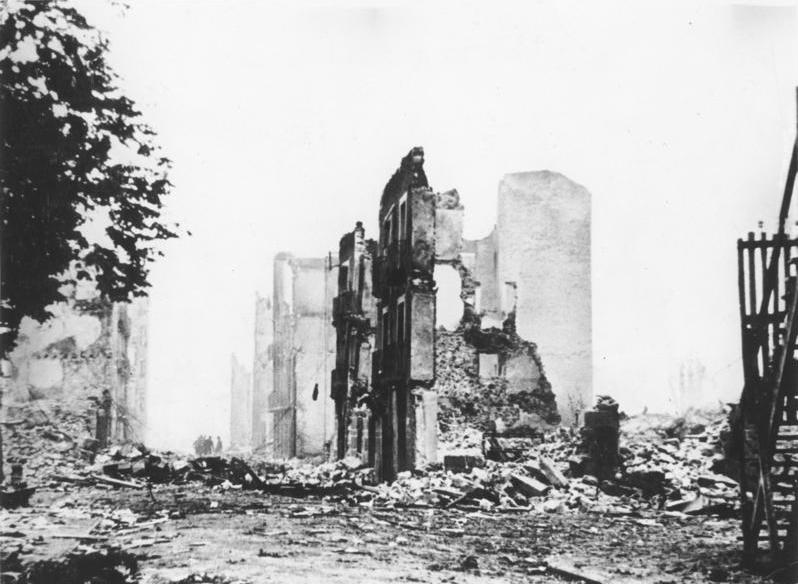

The White Terror commenced on 17 July 1936, the day of the Nationalist coup d'état, with hundreds of executions committed in the area controlled by the right-wing rebels, but it had been planned before earlier. In the 30 June 1936 secret instructions for the coup d'état in Morocco, Mola ordered the rebels "to eliminate left-wing elements, communists, anarchists, union members, etc."
In The Spanish Labyrinth (1943), Gerald Brenan said that:
... thanks to the failure of the coup d'état and to the eruption of the Falangist and Carlist militias, with their previously prepared lists of victims, the scale on which these executions took place exceeded all precedent. Andalusia, where the supporters of Franco were a tiny minority, and where the military commander, General Queipo de Llano, was a pathological figure recalling the Conde de España of the First Carlist War, was drenched in blood. The famous massacre of Badajoz was merely the culminating act of a ritual that had already been performed in every town and village in the South-West of Spain.
Other examples include the bombing of civilian areas in Guernica, Málaga, Almería, Lérida, Alcañiz, by the Luftwaffe (Legion Condor) and the Italian air force (Aviazione Legionaria) (according to Gabriel Jackson estimates range from 5,000 to 10,000 victims of the bombings), forced disappearancesand the establishment of Francoist prisons in the aftermath of the Republicans' defeat.
Goals and victims of the repression
The main goal of the White Terror was to terrify the civil population who opposed the coup, In fact, one of the leaders of the coup, General Mola, said:
Sánchez Léon says that the thanatopolitics and the biopolitics of the Francoist repression simultaneously obeyed to the logics of a civil war, a colonial conquest and a Catholic holy war, but was unleashed upon a population hitherto considered part of the same community. Features such as the institutional processes, policies and practices put in motion by the victors, the indiscriminate massacres, the re-catholisation of the defeated, the forced exile and the exclusion from the benefits of full citizenship or the application of retroactive repressive rulings crystallised in the definition of the Republicans as anti-Spanish, a terminology that intermingles the perception of the enemies as "non-citizens", as "inferior beings" and as alien to the values that defined the self-imagined (confessional) nation. Behind the generic term 'Reds' there was a notion of enemy in an absolute sense, targeted for eradication.
In areas controlled by the Nationalists, targeted were:
- government officials and Popular Front politicians (in the city of Granada 23 of the 44 councillors of the city's corporation were executed), and people suspected of voting for the Popular Front
- union leaders
- teachers, hundreds of whom were killed by the Nationalists in the first weeks of the war
- intellectuals - for example, in Granada, between 26 July 1936 and 1 March 1939, the poet Federico García Lorca, the editor of the left-wing newspaper El Defensor de Granada, the professor of paediatrics at Granada University, the rector of the university, the professor of political law, the professor of pharmacy, the professor of history, the engineer of the road to the top of the Sierra Morena and the best-known doctor in the city were killed by the Nationalists, and in the city of Cordoba, "nearly the entire republican elite, from deputies to booksellers, were executed in August, September and December...",
- suspected Freemasons, such as in Huesca, where there were only twelve Freemasons, the Nationalists killed a hundred suspected Freemasons,
- Basque, Catalan, Andalusian or Galician nationalists, among them Manuel Carrasco i Formiguera, leader of Democratic Union of Catalonia Unió Democrática de Catalunya, Alexandre Bóveda, one of the founders of the Partido Galeguista and Blas Infante.
- military officers who had remained loyal to the government of the Republic, among them the Army generals Domingo Batet, Enrique Salcedo Molinuevo, Miguel Campíns, Nicolás Molero, Nuñez de Prado, Manuel Romerales and Rogelio Caridad Pita. Victims were usually brought before local committees and imprisoned or executed. The living conditions in the improvised Nationalist prisons were very harsh. One former Republican prisoner stated:
At times we were forty prisoners in a cell built to accommodate two people. There were two benches, each capable of seating three persons, and the floor to sleep on. For our private needs, there were only three chamberpots. They had to be emptied into an old rusty cauldron which also served for washing our clothes. We were forbidden to have food brought to us from outside, and were given disgusting soup cooked with soda ash which kept us in a constant state of dysentery. We were all in a deplorable state. The air was unbreathable and the babies choked many nights for lack of oxygen... To be imprisoned, according to the rebels, was to lose all individuality. The most elementary human rights were unknown and people were killed as easily as rabbits...
Because of the mass terror in many areas controlled by the Nationalists, thousands of Republicans left their homes and tried to hide in nearby forests or mountainsthese Republicans became known as huidos. Many of them later joined the Spanish maquis, the anti-Francoist guerrilla force that continued to fight against the Francoist State in the post-war era. Hundreds of thousands of others fled to the areas controlled by the Second Republic. In 1938, there were more than one million refugees in Barcelona alone. In many cases, when someone fled the Nationalists executed their relatives. One witness in Zamora stated: "All the members of the Flechas family, both men and women, were killed, a total of seven persons. A son succeeded in escaping, but in his place, they killed his eight-months-pregnant fiancé Transito Alonso and her mother, Juana Ramos." Furthermore, thousands of Republicans joined the Falange and the Nationalist army in order to escape the repression. In fact, many supporters of the Nationalists referred to the Falange as "our reds" and to the *Falange'''s blue shirt as the *salvavidas'' (life jacket). In Granada, one supporter of the Nationalists said:
Another major target of the Terror was women, with the overall goal of keeping them in their traditional place in Spanish society. To this end, the Nationalist army promoted a campaign of targeted rape. Queipo de Llano spoke multiple times over the radio warning that "immodest" women with Republican sympathies would be raped by his Moorish troops. Near Seville, Nationalist soldiers raped a truckload of female prisoners, threw their bodies down a well, and paraded around town with their rifles draped with their victims' underwear. These rapes were not the result of soldiers disobeying orders, but official Nationalist policies, with officers specifically choosing Moors to be the primary perpetrators. Advancing Nationalist troops scrawled "Your children will give birth to fascists" on the walls of captured buildings, and many women taken prisoner were force fed castor oil, a powerful laxative, and then paraded in public naked.
Death toll
Main article: Victims of the White Terror (Spain)
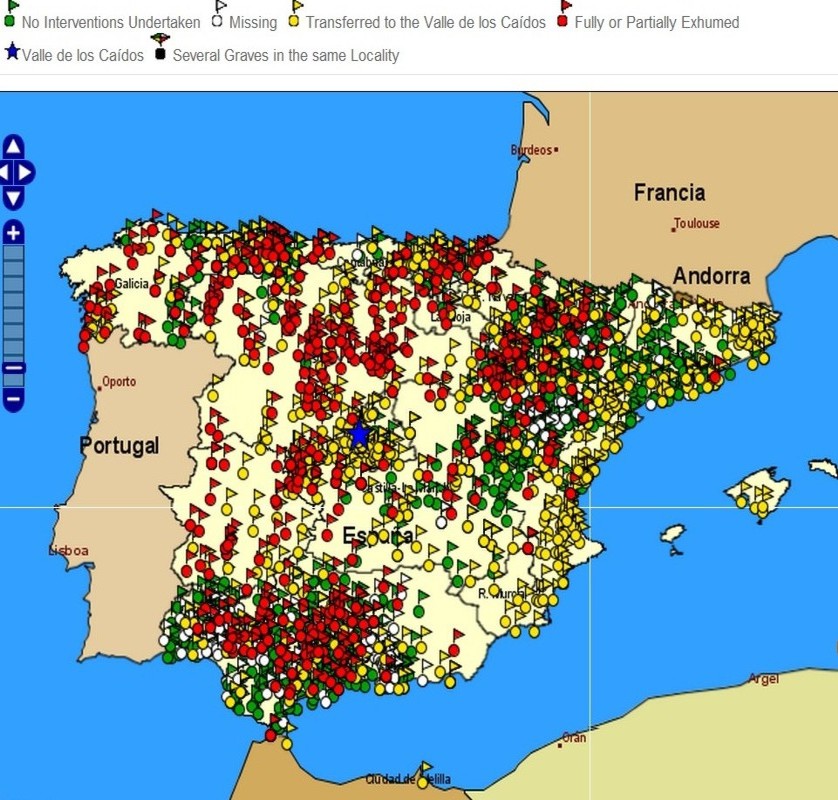
Estimates of executions behind the Nationalist lines during the Spanish Civil War range from fewer than 50,000) Most of the victims were killed without a trial in the first months of the war, and their corpses were left on the sides of roads or in clandestine and unmarked mass graves. He goes on to state that by 1938 the military courts there were directing summary executions.
Many of the executions in the course of the war were carried out by militants of the fascist party Falange (Falange Española de las J.O.N.S.) or militants of the Carlist party (Comunión Tradicionalista) militia (Requetés), but with the approval of the Nationalist government.
Cooperation of the Spanish Church
The Spanish Church approved of the White Terror and cooperated with the rebels.
Regarding the callous attitude of the Vatican, Manuel Montero, lecturer of the University of the Basque Country commented on 6 May 2007:
Repression in the South and the drive to Madrid
The White Terror was especially harsh in the southern part of Spain (Andalusia and Extremadura). The rebels bombed and seized the working-class districts of the main Andalusian cities in the first days of the war, Carlos Arias Navarro, then a young lawyer who as public prosecutor signed thousands of execution warrants in the trials set up by the triumphant rightists, became known as "The Butcher of Málaga" (Carnicero de Málaga). Over 4,000 people were buried in mass graves.
Even rural towns were not spared, such as Lora del Rio in the province of Seville, where the Nationalists killed 300 peasants as a reprisal for the assassination of a local landowner. although other estimates mention up to 2,000 victims following the Baena Massacre.
Paul Preston estimates the total number of victims of the Nationalists in Andalusia at 55,000.
Troops of North Africa
The colonial troops of the Spanish Army of Africa (Ejército de África), composed mainly of the Moroccan regulares and the Spanish Legion, under the command of Colonel Juan Yagüe, made up the feared shock troops of the Francoist military. In their advance towards Madrid from Sevilla through Andalusia and Extremadura these troops routinely killed dozens or hundreds in every town or city conquered. but in the Massacre of Badajoz the number of Republicans killed reached several thousands. Furthermore, the colonial troops raped many working-class women and looted the houses of the Republicans.
Anti-Catalan hostility

In Tarragona, in January 1939, Mass was held by a canon from Salamanca cathedral, José Artero. During the sermon he cried: "Catalan dogs! You are not worthy of the sun that shines on you." (¡Perros catalanes! No sois dignos del sol que os alumbra.) Regarding the men who entered and marched through Barcelona, Franco said the honour was not "because they had fought better, but because they were those who felt more hatred. That is, more hatred towards Catalonia and Catalans." (porque hubieran luchado mejor, sino porque eran los que sentían más odio. Es decir, más odio hacia Cataluña y los catalanes.)
A close friend of Franco, Victor Ruiz Albéniz, published an article in which he demanded that Catalonia receive "a Biblical punishment (Sodom and Gomarrah) to purify the red city, the headquarters of anarchism and separatism as the only remedy to remove these two cancers by relentless cauterisation" ("un castigo bíblico (Sodoma y Gomorra) para purificar la ciudad roja, la sede del anarquismo y separatismo como único remedio para extirpar esos dos cánceres por termocauterio implacable"), while for Serrano Suñer, brother-in-law of Franco and Minister of the Interior, Catalan nationalism was "an illness" ("una enfermedad.")
The man appointed as civil governor of Barcelona, Wenceslao González Oliveros, said that "Spain was raised, with as much or more force against the dismembered statutes as against Communism and that any tolerance of regionalism would again lead to the same processes of putrefaction that we have just surgically removed." ("España se alzó, con tanta o más fuerza contra los Estatutos desmembrados que contra el comunismo y que cualquier tolerancia del regionalismo llevaría otra vez a los mismos procesos de putrefacción que acabamos de extirpar quirúrgicamente.")
Even Catalan conservatives, such as Francesc Cambó, were themselves frightened by Franco's hatred and spirit of revenge. Cambó wrote of Franco in his diary: "As if he did not feel or understand the miserable, desperate situation in which Spain finds itself and only thinks about his victory, he feels the need to travel the whole country (...) like a bullfighter to gather applause, cigars, hats and some scarce jacket." ("Como si no sintiera ni comprendiera la situación miserable, desesperada, en que se encuentra España y no pensara más que en su victoria, siente la necesidad de recorrer todo el país (...) como un torero para recoger aplausos, cigarros, sombreros y alguna americana escasa.")
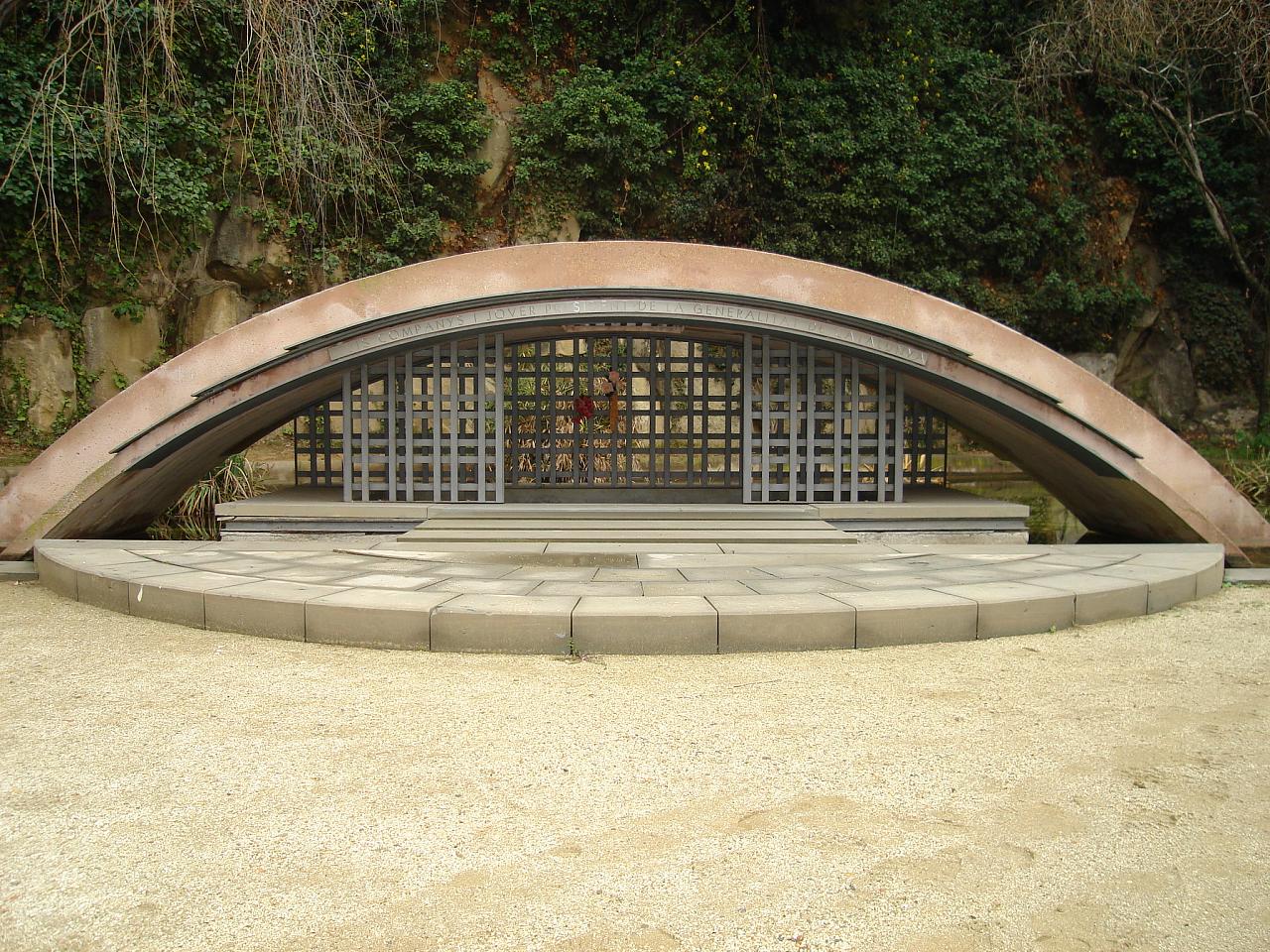
The 2nd president of the Generalitat de Catalunya, Lluís Companys, went into exile in France, like many others, in January 1939. The Spanish authorities asked for him to be extradited to Germany. The questions remains whether he was detained by the Gestapo or the German military police, known as the Wehrmacht. In any case, he was detained on August 13, 1940, and immediately deported to Franco's Spain.
After a summary court martial without due process, he was executed on October 15, 1940, at Montjuïc Castle. Since then there have been many calls to cancel that judgement, without success.
Francoist repression
There was a confluence between Spanish regenerationism and the degenerationist theories originated in France and Great Britain. During the first third of the 1900s, the ideal of the "new man" was growing in power, and its zenith was in Nazi racial politics. The Spanish political and social elites, who could not tolerate the loss of Spain's colonies, saw the Second Spanish Republic and Catalan autonomy as a threat to their status, power, and wealth, which caused them to subscribe to the ideal of the new man. The Spanish elites also could not tolerate Catalonia's industrial wealth, and accused Catalonia of being given preferable treatment, impoverishing the rest of Spain via behavior that was described as Semitic (the idea of using work as a means to exploit and subjugate nations in Nazi ideology).
According to Paul Preston in the book "Arquitectes del terror. Franco i els artifex de l'odi", a number of characters theorized about "anti-Spain", pointing to enemies, and in this sense accused politicians and republican intellectuals of being of Jewish race or servants of the same as masons. This accusation is widespread in Catalonia for most politicians and intellectuals, starting with Macià, Companys and Cambó, identified as Jews. "Racisme i supremacisme polítics a l'Espanya contemporània" documents this thought of the social part that would be raised against the Republic. In a mixture of degenerationism, regenerationism, and neocolonialism, it is postulated that the Spanish racealways understood as Castilianhas degenerated, and degenerate individuals are prone to "contract" communism and separatism. In addition, some areas, such as the south of the peninsula and the Catalan countries, are considered to be degenerate wholesale, the former due to Arab remains that lead them to a "rifty" behavior, and the latter due to Semitic remains that lead them towards communism and separatism (the catanalism of any kind is called separatism).
The degeneration of individuals calls for a cleansing if it wants a prosperous and leading nation, capable of building an empire, one of the obsessions of Franco (as well as other totalitarian regimes of the time). In this regard, rebel spokesman Gonzalo de Aguilera, in 1937, told a journalist: "Now I hope you understand what we mean by the regeneration of Spain ... Our program consists of exterminating a third of the Spanish male population ...", and an interview can also be mentioned in an Italian newspaper where Franco describes that the war was aimed at "to save the Homeland that was sinking in the sea of dissociation and racial degeneration".
In addition to the repression throughout Spain against certain individuals, all this seems to be the source of the fierce repression, such as the Terror of Don Bruno, in Andalusia, and the no less fierce repression against Catalonia, with the addition that as a result, the attack on Catalan culture, lasted throughout the Franco regime and ended up becoming a structural element of the state.
Post-war
When Heinrich Himmler visited Spain in 1940, a year after Franco's victory, he claimed to have been "shocked" by the brutality of the Falangist repression. In July 1939, the foreign minister of Fascist Italy, Galeazzo Ciano, reported of "trials going on every day at a speed which I would call almost summary... There are still a great number of shootings. In Madrid alone, between 200 and 250 a day, in Barcelona 150, in Seville 80". While authors like Payne have cast doubts on the democratic leanings of the Republic, "fascism was clearly on the other [side]."
Repressive laws
According to Beevor, Spain was an open prison for all those who opposed Franco. and the Law for the Repression of Banditry and Terrorism (Ley para la represión del Bandidaje y el Terrorismo) in April 1947, which targeted the maquis. Furthermore, in 1940, the Francoist State established the Tribunal for the eradication of Freemasonry and Communism (Tribunal Especial para la Represión de la Masonería y el Comunismo).
Political parties and trade unions were forbidden except for the government party, Traditionalist Spanish Phalanx of the Councils of the National Syndicalist Offensive (FET y de las JONS), and the official trade union Spanish Syndical Organization (Sindicato Vertical). Hundreds of militants and supporters of the parties and trade unions declared illegal under Francoist Spain, such as the Spanish Socialist Workers' Party (Partido Socialista Obrero Español, PSOE); the Communist Party of Spain (Partido Comunista de España, PCE); the General Union of Workers (Unión General de Trabajadores, UGT); and the National Confederation of Labor (Confederación Nacional del Trabajo, CNT), were imprisoned or executed. The regional languages, like Basque and Catalan, were also forbidden, and the statutes of autonomy of Catalonia, Galicia, and the Basque Country were abolished. Censorship of the press (the Law of Press, passed in April 1938) and of cultural life was rigorously exercised and forbidden books destroyed.
Executions, forced labour and medical experiments
Main article: Victims of the White Terror (Spain)
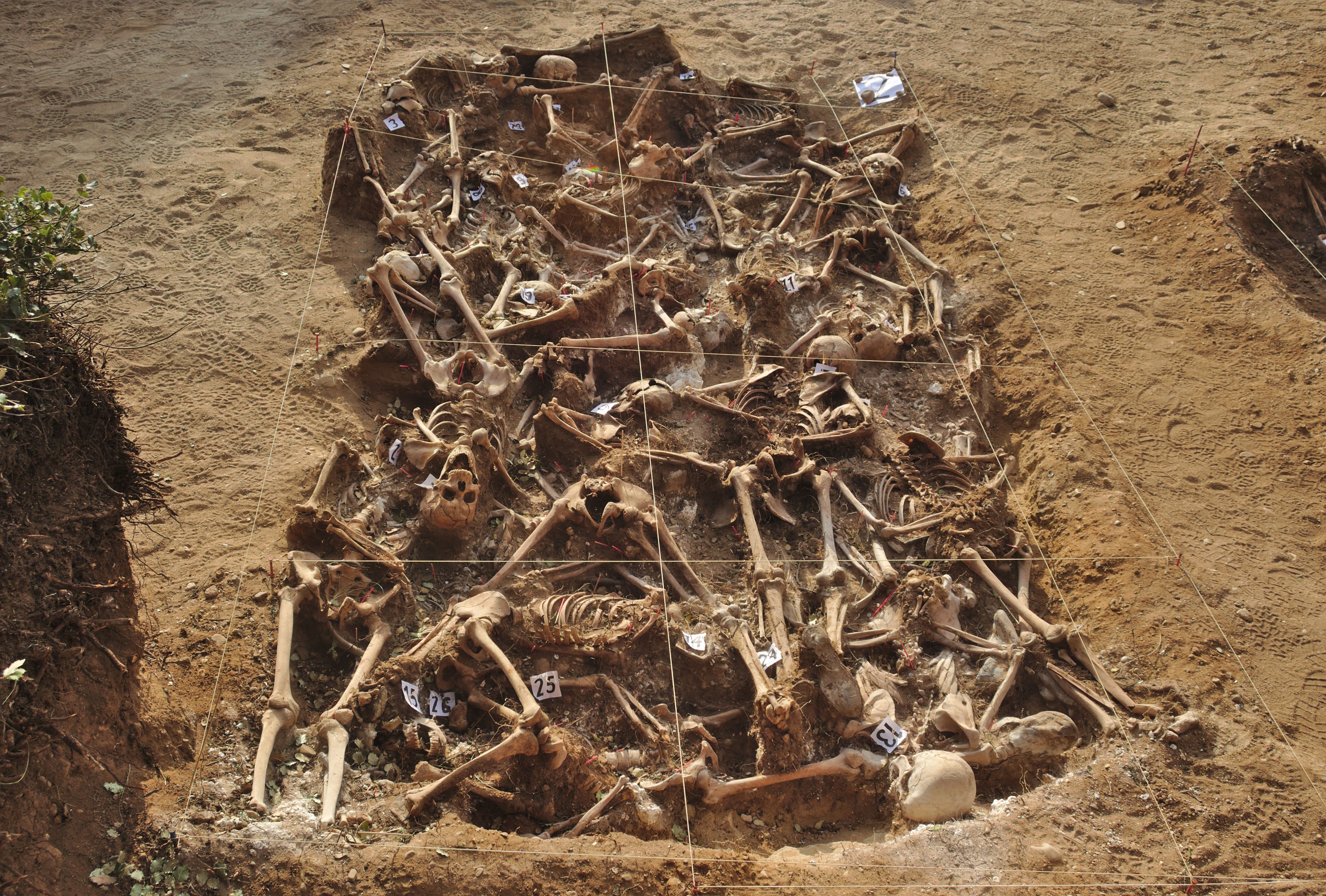
At the end of the Spanish Civil War the executions of the "enemies of the state" continued (some 50,000 people were killed), just seven years later, in 1940, just one year after the end of the civil war, 280,000 prisoners were held in more than 500 prisons throughout the country. The principal purpose of the Francoist concentration camps was to classify the prisoners of war from the defeated Spanish Republic; men and women who were classified as "unrecoverable", were put to death.
After the war, the Republican prisoners were sent to work in militarised penal colonies (Colonias Penales Militarizadas), penal detachments (Destacamentos Penales) and disciplinary battalions of worker-soldiers (Batallones Disciplinarios de Soldados Trabajadores).
Just as with the death toll from executions by the Nationalists during the Civil War, historians have made different estimations the victims of the White Terror after the war. Stanley Payne estimates 30,000 executions following the end of the war. Recent searches conducted with parallel excavations of mass graves in Spain (in particular by the Association for the Recovery of Historical Memory, ARMH) estimate that the total of people executed after the war arrive at a number between 15,000 and 35,000. Julián Casanova Ruiz, nominated in 2008 among the experts in the first judicial investigation (conducted by judge Baltasar Garzón) against the Francoist crimes, estimates 50,000. Historian Josep Fontana says 25,000. According to Gabriel Jackson, the number of victims of the White Terror (executions and hunger or illness in prisons) just between 1939 and 1943 was 200,000.
A Francoist psychiatrist, Antonio Vallejo-Nájera, carried out medical experiments on prisoners in the Francoist concentration camps to "establish the bio-psych roots of Marxism".
Vallejo Najera also said that it was necessary to remove the children of the Republican women from their mothers. Thousands of children were taken from their mothers and handed over to Francoist families (in 1943 12,043). Many of the mothers were executed afterwards. "For mothers who had a baby with themand there were manythe first sign that they were to be executed was when their infant was snatched from them. Everyone knew what this meant. A mother whose little one was taken had only a few hours left to live".
Stanley Payne observes that Franco's repression did not undergo "cumulative radicalisation" like that of Hitler; in fact, the opposite occurred, with major persecution being slowly reduced. All but 5 per cent of death sentences under Franco's rule occurred by 1941. During the next thirty months, military prosecutors sought 939 death sentences, most of which were not approved and others commuted. On October 1, 1939, all former Republican personnel serving a sentence of less than six years were pardoned. In 1940 special military judicial commissions were created to examine sentences and were given the power to confirm or reduce them but never to extend them. Later that year, provisional liberty was granted to all political prisoners serving less than six years, and in April 1941, this was also granted to those serving less than twelve years and then fourteen years in October. Provisional liberty was extended to those serving up to twenty years in December 1943. According to Julián Casanova Ruiz, Francoist repression was never exterminatory, and unlike the political repression in Nazi Germany, it became less radical as time went on, with the number of Republican political prisoners having decreased substantially by the time of Allied victory in World War II.
Fate of Republican exiles
Furthermore, hundreds of thousands were forced into exile (470,000 in 1939), such as Antonio Machado, Ramon J. Sender, Juan Ramón Jiménez, Rafael Alberti, Luis Cernuda, Pedro Salinas, Manuel Altolaguirre, Emilio Prados, Max Aub, Francisco Ayala, Jorge Guillén, León Felipe, Arturo Barea, Pablo Casals, Jesús Bal y Gay, Rodolfo Halffter, Julián Bautista, Salvador Bacarisse, Josep Lluís Sert, Margarita Xirgu, Maruja Mallo, Claudio Sánchez Albornoz, Américo Castro, Clara Campoamor, Victoria Kent, Pablo Picasso, Maria Luisa Algarra, Alejandro Casona, Rosa Chacel, Maria Zambrano, Josep Carner, Manuel de Falla, Paulino Masip, María Teresa León, Alfonso Castelao, Jose Gaos and Luis Buñuel.
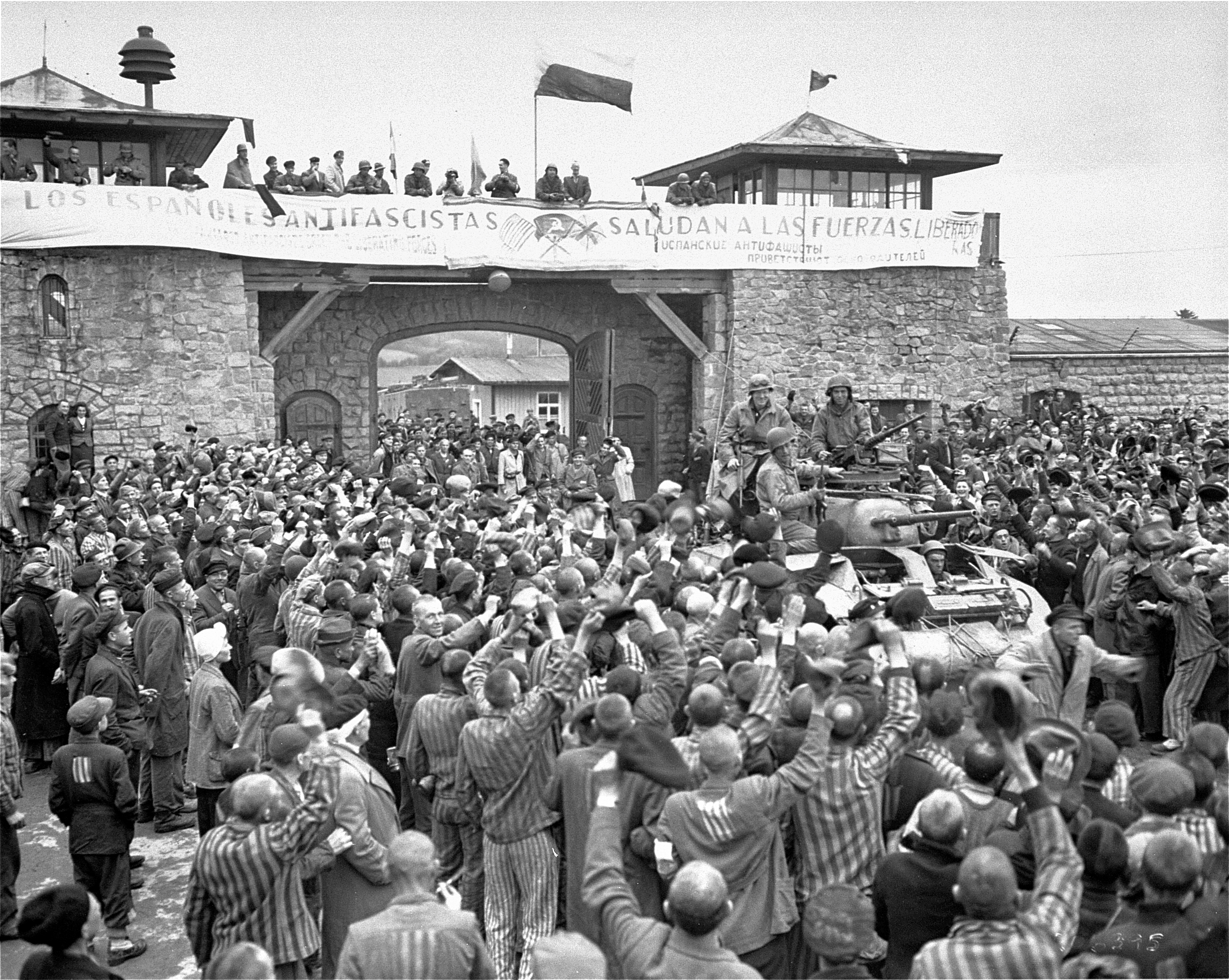
When Nazi Germany occupied France, Franco's politicians encouraged the Germans to detain and to deport thousands of Republican refugees to the concentration camps. and Mauthausen (5,000 out of 7,200 Spanish prisoners at Mauthausen died there). Other Spanish Republicans were detained by the Gestapo, handed over to Spain and executed, among them Julián Zugazagoitia, Juan Peiró, Francisco Cruz Salido and Lluis Companys (president of the Generalitat of Catalonia) and another 15,000 were forced to work building the Atlantic Wall. Moreover, 4,000 Spanish Republicans were deported by the Nazis to the occupied Channel Islands and were forced to work building fortifications; only 59 survived. Thus, thousands of Spanish refugees (10,000 fighters in 1944) joined the French Resistanceamong them Colonel Carlos Romero Giménezand the Free French Forces.
Purges and labour discrimination
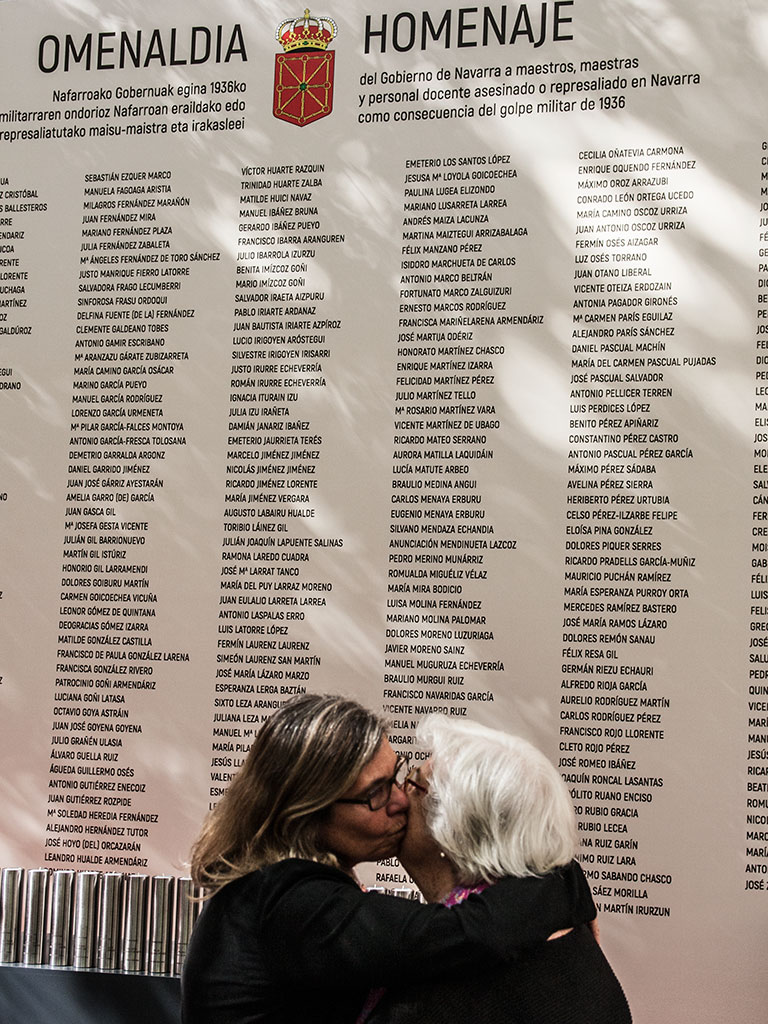
The Francoist State carried out extensive purges among the civil service. Thousands of officials loyal to the Republic were expelled from the army. Thousands of university and school teachers lost their jobs (a quarter of all Spanish teachers). Priority for employment was always given to Nationalist supporters, and it was necessary to have a "good behavior" certificate from local Falangist officials and parish priests. Furthermore, the Francoist State encouraged tens of thousands of Spaniards to denounce their Republican neighbours and friends:
Campaign against Republican women
Republican women were also victims of the repression in postwar Spain. Thousands of women suffered public humiliation (being paraded naked through the streets, being shaved and forced to ingest castor oil so they would soil themselves in public), sexual harassment and rape. In many cases, the houses and goods of the widows of Republicans were confiscated by the government. Thus, many Republican women, living in total poverty, were forced into prostitution. According to Paul Preston: "The increase in prostitution both benefited Francoist men who thereby slaked their lust and also reassured them that 'red' women were a fount of dirt and corruption". Furthermore, thousands of women were executed (for example the 13 roses) among them pregnant women. One judge said: "We cannot wait seven months to execute a woman".
Furthermore, under the Francoist legislation, a woman needed her husband's permission to take a job or open a bank account. Adultery by women was a crime, but adultery by the husband was a crime only if he lived with his mistress.
Marriage law
The divorce and marriage legislation of the Republic was retroactively reversed, with the divorces retroactively unmade and the children of civil marriages made illegitimate.
Homosexuals
Homosexuals were first sent to concentration camps. Then the 1954 reform of the 1933 "Ley de vagos y maleantes" ("Vagrancy Act") declared homosexuality illegal. Around 5,000 homosexuals were arrested during Francoism due to their sexual orientation.
Aftermath
The last concentration camp, at Miranda de Ebro, was closed in 1947. By the early 1950s, the parties and trade unions made illegal by the Francoist State had been decimated by the Francoist police, and the Spanish maquis had ceased to exist as an organized resistance. Nevertheless, new forms of opposition started, such as the unrest in the universities and strikes in Barcelona, Madrid and Vizcaya. The 1960s saw the start of the labour strikes led by the illegal union trade Workers' Commissions (Comisiones Obreras) linked to the Communist Party, and the protest in the universities continued to grow. Finally, with Franco's death in 1975, the Spanish transition to democracy commenced and in 1978 the Spanish Constitution of 1978 was approved.
After Franco's death, the Spanish government approved the Spanish 1977 Amnesty Law (Ley de Amnistia de 1977) which granted a pardon for all political crimes committed by the supporters of the Francoist State (including the White Terror) This investigation proceeded on the basis of the notion that this mass-murder constituted a crime against humanity which cannot be subject to any amnesty or statute of limitations. As a result, in May 2010, Mr. Garzón was accused of violating the terms of the general amnesty and his powers as a jurist have been suspended pending further investigation. In September 2010, the Argentine justice reopened a probe into crimes committed during the Spanish Civil War and during Franco's reign. Amnesty International, Human Rights Watch, the Council of Europe and United Nations have asked the Spanish government to investigate the crimes of Franco's reign.
In 2025, 50 years after Franco's death, the first investigation into torture was opened. This investigation focuses on cases of physical and psychological abuse perpetrated in the Via Laietana in Barcelona during 1977.
References
Sources
- Beevor, Antony. The Battle for Spain; The Spanish Civil War 1936–1939. Penguin Books. 2006. London. .
- Casanova, Julian. The Spanish Republic and civil war. Cambridge University Press. 2010. New York.
- Casanova, Julían; Espinosa, Francisco; Mir, Conxita; Moreno Gómez, Francisco. Morir, matar, sobrevivir. La violencia en la dictadura de Franco. Editorial Crítica. Barcelona. 2002.
- Espinosa, Francisco. La columna de la muerte. El avance del ejército franquista de Sevilla a Badajoz. Editorial Crítica. Barcelona. 2002.
- Espinosa, Francisco. La justicia de Queipo. Editorial Crítica. 2006. Barcelona.
- Espinosa, Francisco. Contra el olvido. Historia y memoria de la guerra civil. Editorial Crítica. 2006. Barcelona.
- Fontana, Josep, ed. España bajo el franquismo. Editorial Crítica. 1986. Barcelona.
- Gómez Bravo, Gutmaro and Marco, Jorge La obra del miedo. Violencia y sociedad en Espapa, 1936–1948, Península, Barcelona, 2011
- Gibson, Ian. The assassination of Federico Garcia Lorca. Penguin Books. London. 1983.
- Graham, Helen. The Spanish Civil War. A Very Short Introduction. Oxford University Press. 2005.
- Jackson, Gabriel. The Spanish Republic and the Civil War, 1931–1939. Princeton University Press. 1967. Princeton.
- Juliá, Santos; Casanova, Julián; Solé I Sabaté, Josep Maria; Villarroya, Joan; and Moreno, Francisco. Victimas de la guerra civil. Ediciones Temas de Hoy. 1999. Madrid.
- Moreno Gómez, Francisco. 1936: el genocidio franquista en Córdoba. Editorial Crítica. Barcelona. 2008.
- Preston, Paul. The Spanish Civil War. Reaction, revolution & revenge. Harper Perennial. 2006. London.
- Preston, Paul. Doves of War. Four women of Spain. Harper Perennial. London. 2002.
- Richards, Michael. A Time of Silence: Civil War and the Culture of Repression in Franco's Spain, 1936–1945. Cambridge University Press. 1998.
- Sender Barayón, Ramon. A death in Zamora. Calm unity press. 2003.
- Serrano, Secundino. Maquis. Historia de una guerrilla antifranquista. Ediciones Temas de hoy. 2001.
- Southworth, Herbert R. El mito de la cruzada de Franco. Random House Mondadori. 2008. Barcelona.
- Thomas, Hugh. The Spanish Civil War. Penguin Books. London. 2001.
- Many of the books of the Documentos collection, edited by the Galician publisher Ediciós do Castro.
References
- (5 November 2024). "Left Atheist Activism and Crime of Genocide in Francoist Spain". Journal of International Criminal Justice.
- (2004). "Morir, matar, sobrevivir: La violencia en la dictadura de Franco". Grupo Planeta.
- [[Josep Fontana. Fontana, J.]] (Ed.). (1986). ''España bajo el franquismo: coloquio celebrado en la universidad de Valencia, noviembre de 1984''. Universidad; Crítica: Departamento de Historia Contemporánea. p. 22
- Preston, Paul. (2006). "The Spanish Civil War. Reaction, revolution & revenge". Harper Perennial.
- Beevor, Antony. (2006). "The Battle for Spain; The Spanish Civil War 1936–1939". Penguin Books.
- Michael Richards, A Time of Silence: Civil War and the Culture of Repression in Franco's Spain, 1936–1945, Cambridge University Press. 1998. p. 11.
- {{rp. 89–94 From 1936–1945, [[Francoist Spain]] officially designated supporters of the [[Second Spanish Republic]] (1931–1939), [[Liberalism and radicalism in Spain. liberals]], [[Socialism. socialists]] of different stripes, [[Anarchism in Spain. anarchists]], [[intellectuals]], [[homosexuals]], [[Freemason]]s, and [[Spanish Jews. Jews]] as well as [[Basque nationalism. Basque]], [[Catalan nationalism. Catalan]], [[Andalusian nationalism. Andalusian]], and [[Galician nationalism. Galician]] nationalists as enemies.''Encyclopædia Britannica'', 15th ed., vol. 21, p. 836.
- Graham, Helen. (2005). "The Spanish Civil War: A Very Short Introduction". Oxford University Press.
- (2013-02-13). "La Ley de Responsabilidades Políticas, un arma más de represión durante el franquismo". Los ojos de Hipatia.
- Payne, Stanley. "Chapter 26: A History of Spain and Portugal vol. 2".
- Cohn, George. (2006). "Dictionary of Wars, Third Edition". Infobase Publishing.
- (13 November 2005). "Farewell To Franco".
- "Portada{{snd}}[La Virreina] Centre de la Imatge".
- Francisco Espinosa Maestre. Breve historia de una fotografía // Pasado y Memoria. Revista de Historia Contemporánea, 6, 2007.
- (April 23, 2019). "Fabra, diccionari d'un home sense biografia". TV3.
- Rueda Román, Andrés. (2013). "Franco, el ascenso al poder de un dictador". Nowtilus.
- Hochschild, Adam. (2016). "Spain in Our Hearts". Houghton Mifflin Harcourt.
- (2007-08-17). "Agosto de 1936: la sangre de miles de "rojos" inundó la plaza de toros de Badajoz". El Otro País.
- Espinosa Maestre, Francisco. (2017-12-27). "La dignidad del alcalde Madroñero". [[elDiario.es]].
- Vila Izquierdo, Justo. (1984). "Extremadura: la guerra civil". Universitas Editorial.
- "Chapter 26: A History of Spain and Portugal vol. 2".
- (2013). "La represión: el ADN del franquismo español". [[Universidad de Chile]].
- Jackson, Gabriel. (1967). "The Spanish Republic and the Civil War, 1931–1939". Princeton University Press.
- Ruiz, Julius. (2014). "The 'Red Terror' and the Spanish Civil War Revolutionary Violence in Madrid". Cambridge University Press.
- Miguel de Unamuno's letter to the ABC director in Seville in: Gonzalo Redondo, ''Historia de la Iglesia en España, 1931–1939: La Guerra Civil, 1936–1939'' p. 155
- ''¡No los imitéis! ¡No los imitéis! Superadlos en vuestra conducta moral; superadlos en vuestra generosidad. Yo no os pido, conste, que perdáis vigor en la lucha, ardor en la pelea. Pido pechos duros para el combate, duros, de acero, como se denominan algunas de las milicias valientes{{sndpechos de acero{{snd pero corazones sensibles, capaces de estremecerse ante el dolor humano y de ser albergue de la piedad, tierno sentimiento, sin el cual parece que se pierde lo más esencial de la grandeza humana."'' [[:es:q:Indalecio Prieto. Indalecio Prieto]]
- José María Pemán, ''Mis almuerzos con gente importante,'' 1970. p. 153
- Espinosa, Francisco. ''Contra el olvido. Historia y memoria de la guerra civil.'' Editorial Crítica. 2006. Barcelona. pp. 288–289
- Brenan, Gerald. ''The Spanish Labyrinth'' pp. 321–322 Cambridge University Press {{ISBN. 978-0521599627
- "CVC. Corresponsales en la Guerra de España. Crónicas. Ampliación.".
- [[Franz Borkenau. Borkenau, Franz]]. ''El reñidero español.'' Iberica de ediciones y publicaciones.Barcelona. 1977. p. 173
- Abella, Rafael. ''La vida cotidiana durante la guerra civil: la España republicana''. p. 254 Editorial Planeta 1975. Guernica was not the only town bombarded by German planes. The front page headlines of the ''[[Diario de Almeria]]'', dated June 3, 1937, referred to the press in London and Paris carrying the news of the "criminal bombardment of Almeria by German planes".
- "Granollers City Council web site: History and heritage".
- Espinosa, Francisco. (2006). "La justicia de Queipo". Editorial Crítica.
- Southworth, Herbert R. (2008). "El mito de la cruzada de Franco". Random House Mondadori.
- "Re: necesito ayuda datos de la brigada mixta 221 y 222 en castellon y valencia".
- Serrano, Secundino. (2001). "Maquis. Historia de una guerrilla antifranquista". Ediciones Temas de hoy.
- Moreno Gómez, Francisco. (2008). "1936: el genocidio franquista en Córdoba". Editorial Crítica.
- Sánchez León, Pablo. (2017). "¿Tan solo una guerra civil? 1936 como conquista colonial civilizadora y yihad católica moderna". [[Autonomous University of Madrid.
- Sender Barayón, Ramon. (2003). "A death in Zamora". Calm Unity Press.
- Ruiz, Julius. (2009). "Seventy Years On: Historians and Repression During and After the Spanish Civil War". Journal of Contemporary History.
- Preston, Paul. (2002). "Doves of War. Four women of Spain". Harper Perennial.
- Payne, Stanley. (1999). "Fascism in Spain". University of Wisconsin Press.
- Montero, Manuel. (6 May 2007). "Otros 'mártires' de la Guerra Civil". Revista de Prensa.
- La Opinión de Málaga. "San Rafael: la mayor fosa del país".
- (4 October 2007). "Málaga, 1937".
- "Málaga, historia de un siglo".
- "The massacre of Baena".
- Preston, Paul. (2012). "The Spanish Holocaust". W. W. Norton & Company.
- Juan Antonio Cortés Avellano. (28 October 2012). "Badajoz y la guerra (In) Civil".
- (15 October 2009). "El govern demana l'anul·lació del judici sumaríssim contra Lluís Companys".
- "Joan Vilarroya i Font, Doctor en Història per la Universitat de Barcelona".
- Paul, Preston. (2021). "Arquitectes del terror. Franco i els artífex de l'odi". Base.
- Llaudó Avila, Eduard. (2021). "Racisme i supremacisme polítics a l'Espanya contemporània". Parcir.
- (24 October 2005). "The Spanish Prisoner".
- Payne, Stanley. (2012). "The Spanish Civil War". Cambridge University Press.
- [http://www.elmundo.es/cronica/2002/351/1026114970.html Fosas Comunes{{sndLos desaparecidos de Franco. La Guerra Civil no ha terminado], ''[[El Mundo (Spain). El Mundo]]'', 7 July 2002 {{in lang. es
- [http://www.elpais.com/articulo/espana/Aportaremos/trozos/verdad/puzzle/resolvera/Garzon/elpepiesp/20081023elpepinac_11/Tes "Aportaremos trozos de verdad a un 'puzzle' que resolverá Garzón"], ''[[El País]]'', 23 de octubre de 2008.
- Payne, Stanley G., and Jesús Palacios. Franco: A personal and political biography. University of Wisconsin Pres, 2014, pp. 210–211
- Ruiz, Julius. (May 2005). "A Spanish Genocide? Reflections on the Francoist Repression after the Spanish Civil War". [[Contemporary European History]].
- Tusell, Javier. ''La dictadura de Franco.'' Ediciones Altaya. Madrid. 1996. p. 174
- Anderson, Peter. (January 2009). "Singling Out Victims: Denunciation and Collusion". [[European History Quarterly]].
- Richards, Michael. (1998). "A Time of Silence: Civil War and the Culture of Repression in Franco's Spain, 1936–1945". Cambridge University Press.
- Tremlett, Giles. (2006). "Ghosts of Spain: Travels through Spain and its silent past". Faber and Faber Ltd.
- Ortiz, Heras, M. (2013). [http://seft.uclm.es/seft/resources/source/Publicaciones/TODO%20CON%20PORTADA.pdf ''La violencia política en la dictadura franquista 1939–1977. La insoportable banalidad del mal''] {{Webarchive. link. (6 November 2018 . Editorial Bomarzo. p. 55.)
- Ediciones El País. (2008-10-17). "Garzón atribuye a Franco un plan de exterminio sistemático de los 'rojos'". EL PAÍS.
- Tremlett, Giles. (14 May 2010). "Judge Baltasar Garzón suspended over Franco investigation". The Guardian.
- (4 September 2010). "Argentine court reopens Franco probe". BBC News.
- (19 March 2010). "Spain: End Amnesty for Franco Era Atrocities{{snd}}Human Rights Watch".
- "Archived copy".
- ""No Global Exception When Investigating Crimes Past" Amnesty International".
- Pascual, Ana María. (2025-04-03). "La Fiscalía abre por primera vez diligencias de investigación por torturas durante el franquismo".
This article was imported from Wikipedia and is available under the Creative Commons Attribution-ShareAlike 4.0 License. Content has been adapted to SurfDoc format. Original contributors can be found on the article history page.
Ask Mako anything about White Terror (Spain) — get instant answers, deeper analysis, and related topics.
Research with MakoFree with your Surf account
Create a free account to save articles, ask Mako questions, and organize your research.
Sign up freeThis content may have been generated or modified by AI. CloudSurf Software LLC is not responsible for the accuracy, completeness, or reliability of AI-generated content. Always verify important information from primary sources.
Report