From Surf Wiki (app.surf) — the open knowledge base
White feather
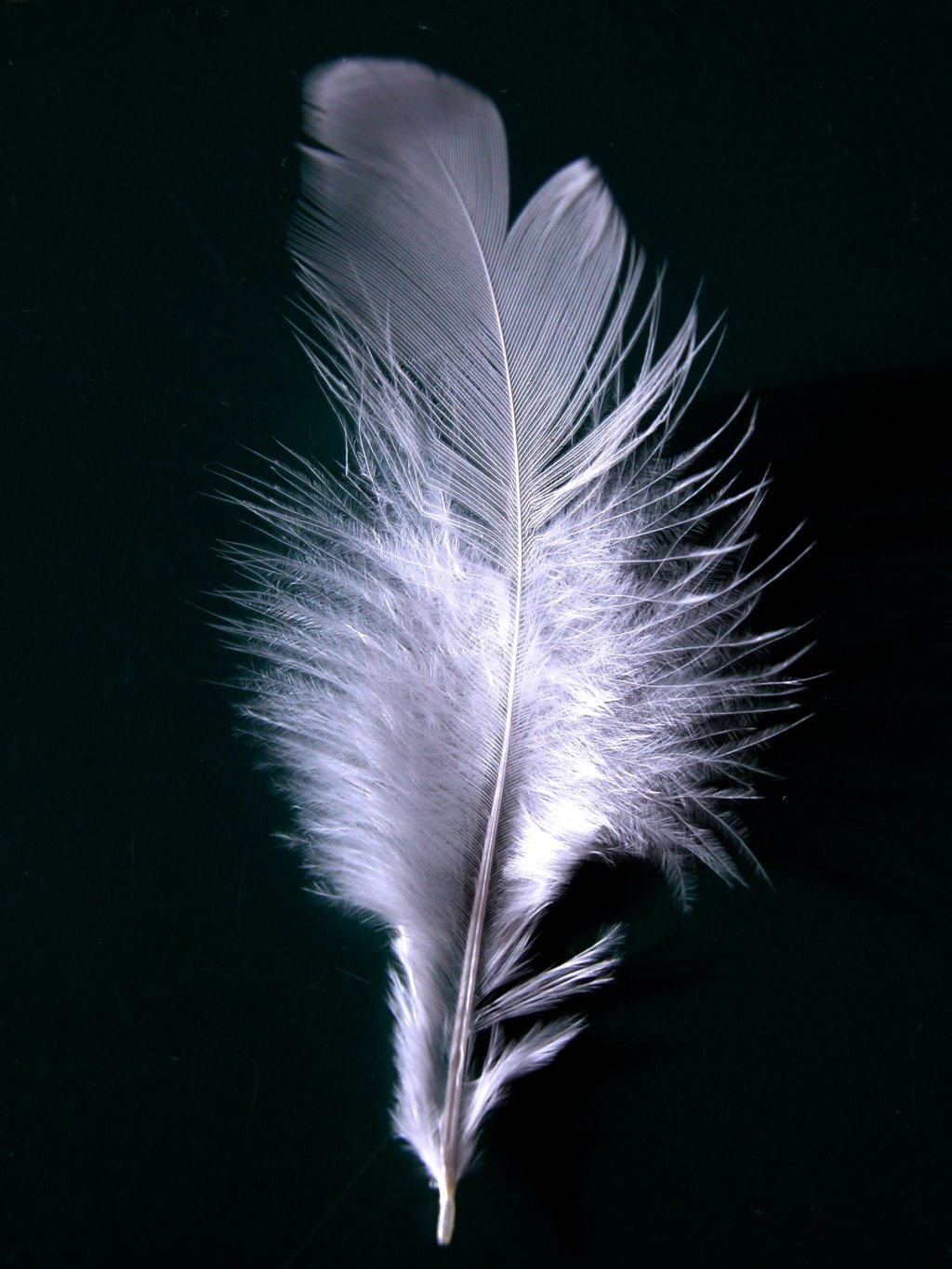
Symbol used for cowardice or bravery
Symbol used for cowardice or bravery
the symbol
The white feather was a widely recognised propaganda symbol in the United Kingdom, Australia and other Commonwealth countries. It was most prominently used in the 'white feather movement' in Britain during the First World War, in which women gave white feathers to non-enlisting men symbolizing cowardice and shaming them into signing up for military service.
Other than the White Feather movement, it has, among other meanings, represented cowardice or conscientious pacifism; as in A. E. W. Mason's 1902 book The Four Feathers. In the 21st century, the meaning of a white feather as a symbol of cowardice is almost entirely limited to historical reference. In the United States armed forces, however, it has been used to signify extraordinary bravery and excellence in combat marksmanship.
History
As a symbol of cowardice
The use of the phrase "white feather" to symbolise cowardice is attested from the late 18th century, according to the Oxford English Dictionary. The OED cites A Classical Dictionary of the Vulgar Tongue (1785), in which lexicographer Francis Grose wrote "White feather, he has a white feather, he is a coward, an allusion to a game cock, where having a white feather, is a proof he is not of the true game breed". This was in the context of cockfighting, a common entertainment in Georgian England.
The Crusades
Shame was exerted upon men in England and France who had not taken the cross at the time of the Third Crusade. "A great many men sent each other wool and distaff, hinting that if anyone failed to join this military undertaking they were only fit for women's work". Wool played an important role in the medieval economy, and a distaff is a tool for spinning the raw material into yarn; the activities of textile production were so firmly associated with girls and women that "distaff" became a metonym for women's work.
.jpg)
World War I
Main article: White Feather Campaign
In Britain, Admiral Charles Penrose-Fitzgerald founded in August 1914 what became known as the "Order of the White Feather", where groups of young women handed out white feathers to men in civilian attire in public places. This was intended to shame them into enlisting in military service.
The leaders of the British suffragette movement called Women's Social and Political Union (WSPU), Emmeline Pankhurst and her daughter Christabel both became prominent figures in the white feather movement. Their big outreach and influence towards women became important driving factors behind the movement.
The practice of presenting a white ribbon, personally or by mail, also occurred in other areas of the British Empire such as Australia and New Zealand.
World War II
The white feather campaign was renewed during World War II.
As a symbol of pacifism and peace
In contrast, the white feather has been used by some pacifist organisations as an icon of abstinence from violence.
In the 1870s, the Māori prophet of passive resistance Te Whiti o Rongomai promoted the wearing of white feathers by his followers at Parihaka. They are still worn by the iwi associated with that area, and by Te Āti Awa in Wellington. They are known as te raukura, which literally means the red feather, but metaphorically, the chiefly feather. They are usually three in number, interpreted as standing for "glory to God, peace on earth, goodwill toward people" (Luke 2:14). Albatross feathers are preferred but any white feathers will do. They are usually worn in the hair or on the lapel (but not from the ear).
Some time after the war, pacifists found an alternative interpretation of the white feather as a symbol of peace. The apocryphal story goes that in 1775, Quakers in a Friends meeting house in Easton, New York were faced by a tribe of Indians on the war path. Rather than flee, the Quakers fell silent and waited. The Indian chief came into the meeting house and finding no weapons he declared the Quakers as friends. On leaving he took a white feather from his quiver and attached it to the door as a sign to leave the building unharmed.
In 1937 the Peace Pledge Union sold 500 white feather badges as symbols of peace.
Criticism
Main article: White Feather Campaign#Criticism
Among other matters, such campaigns in World War I were unpopular among soldiers, not least because even soldiers who were home on leave could find themselves presented with feathers. In Australia this led to the formation of groups such as the Rejected Volunteers' Association and the Australian Patriots' League, and the wearing of a badge to recognise their patriotism. Other men were not of enlistment age, or performing other important war work and therefore were no reasonable target of the White Feather campaign.
In her 1938 essay on war and women Three Guineas writer Virginia Woolf expressed her opinion that the white feather campaign was less an actual female act of patriotism but rather a reflection of male hysteria.
21st century
In the 21st century, the meaning of a white feather as a symbol of cowardice is almost entirely limited to historical reference—especially tied to World War I—or to metaphor in literature or film. Outside of these contexts, most people would not make the connection.
In popular culture
Main article: White Feather Campaign#In popular culture
Literature
- The Four Feathers (1902), an adventure novel, tells of Harry, an officer in the British Army, who resigns his commission the day before his regiment is dispatched to fight in the Mahdist War in Sudan. Three fellow officers, as well as his fiancée, each send him a white feather. Stung by the criticism, Harry sails to Sudan, disguises himself as an Arab, and looks for the opportunity to redeem his honour. The novel has been the basis of at least seven films, including The Four Feathers (2002). It was parodied in the Dad's Army episode "The Two and a Half Feathers".
- The 1907 P. G. Wodehouse novel The White Feather is a school story about cowardice and the efforts a boy goes to redeem himself by learning boxing.
Music
- In 2009, "White Feather" was released as the third single from the Wolfmother album entitled Cosmic Egg.
- In 1985, progressive rock band Marillion released an anti-war song called "White Feather" as the end track to their album Misplaced Childhood.
- In 1983, new wave band Kajagoogoo released their debut album called White Feathers, whose opener was the title track, a light-hearted allegory for weak people.
Comics
- DC Comics' spoof superhero team the Inferior Five includes a cowardly archer named White Feather. He was intended as a reference to DC Comics' more heroic character Green Arrow and similar "super archer" characters.
Other meanings
In the United States, the white feather has also become a symbol of courage, persistence, and superior combat marksmanship. Its most notable wearer was US Marine Corps Gunnery Sergeant Carlos Hathcock, who was awarded the Silver Star medal for bravery during the Vietnam War. Hathcock picked up a white feather on a mission and wore it in his hat to taunt the enemy. He was so feared by enemy troops that they put a price on his head. Its wear on combat headgear flaunts an insultingly-easy target for enemy snipers.
Notes
References
- "White Feather". Etymonline.com.
- Kingsbury, Celia Malone. (2010). "For Home and Country: World War I Propaganda on the Home Front". University of Nebraska Press.
- "Oxford English Dictionary". Oxford University Press.
- Hurlock, Kathryn. (2012). "Britain, Ireland and the Crusades, C.1000–1300". Macmillan International Higher Education.
- Brain, Jessica. (8 January 2022). "The White Feather Movement". Historic UK.
- Press, History. (21 September 2016). "The Pankhursts: Politics, protest and passion". TheHistoryPress.
- (20 August 1915). "Springwood". The Blue Mountain Echo.
- (22 April 1940). "Rejected volunteer takes poison when sent white feathers". The Sun News-pictorial.
- Goldstein, Joshua S.. "The Women of World War I".
- "[http://historyoffeminism.com/wp-content/uploads/DailyMirror-1940.jpg Can It Be True?]" editorial by "W.M." from the 3 April 1940, issue of the [[Daily Mirror]]: "Is it possible that nitwit girls are reviving the infamous "white feather" campaign of the last war? Rumours reach us from Doncaster to the effect that certain female louts are thus insulting male workers in or out of reserved occupations". Referenced [http://historyoffeminism.com/white-feather-campaign-second-world-war/ 29 October 2012], retrieved 29 January 2013
- (19 November 1887). "Traveller". North Australian (Darwin).
- (17 August 1918). "White feather foolery". Coffs Harbour Advocate.
- (10 December 2009). "Jack's actions honoured". Air Force News.
- (24 April 2025). "'Rejected' soldiers from World War I remembered in Charters Towers". Australian Broadcasting Corporation.
- "Rejected Volunteers' Association of New South Wales badge".
- (11 January 1940). "White feather giver sought". [[The Daily Telegraph (Sydney)]].
- (24 February 1915). ""White feather"". The North Western Courier.
- "White Feathers and Wounded Men: Female Patriotism and the Memory of the Great War".
- [https://journals.gold.ac.uk/index.php/bjmh/article/download/1568/1682/1905? Stirling Moorey, ‘Step Forward the Cowards! – Humiliation, Shame and Countershame in Memories of the White Feather Campaign’, British Journal for Military History, 7.3 (2021), pp. 39-56.]
- Mason, A. E. W. (1902). ''The four feathers''. Smith, Elder & Co.
- Wodehouse, P. G. ''The White Feather''. A & C Black, 1907.
- Charles Henderson. ''Marine Sniper''. New York: [[Berkley Books]], 1986. {{ISBN. 0-425-18165-0.
This article was imported from Wikipedia and is available under the Creative Commons Attribution-ShareAlike 4.0 License. Content has been adapted to SurfDoc format. Original contributors can be found on the article history page.
Ask Mako anything about White feather — get instant answers, deeper analysis, and related topics.
Research with MakoFree with your Surf account
Create a free account to save articles, ask Mako questions, and organize your research.
Sign up freeThis content may have been generated or modified by AI. CloudSurf Software LLC is not responsible for the accuracy, completeness, or reliability of AI-generated content. Always verify important information from primary sources.
Report