From Surf Wiki (app.surf) — the open knowledge base
White elephant
Idiom for impractical possessions that are expensive to maintain but cannot be disposed of

Idiom for impractical possessions that are expensive to maintain but cannot be disposed of
A white elephant is a possession that its owner cannot dispose of without extreme difficulty, and whose cost, particularly that of maintenance, is out of proportion to its usefulness. In modern usage, it is a metaphor used to describe an object, construction project, scheme, business venture, facility, etc. considered expensive but without equivalent utility or value relative to its capital (acquisition) and/or operational (maintenance) costs.
Historical background

The term derives from the sacred white elephants kept by Southeast Asian monarchs in Burma, Thailand (Siam), Laos and Cambodia. To possess a white elephant was regarded—and is still regarded in Thailand and Burma—as a sign that the monarch reigned with justice and power, and that the kingdom was blessed with peace and prosperity. The opulence expected of anyone who owned a beast of such stature was great. Monarchs often exemplified their possession of white elephants in their formal titles (e.g., Hsinbyushin, and the third monarch of the Konbaung dynasty). Because the animals were considered sacred and laws protected them from labor, receiving a gift of a white elephant from a monarch was simultaneously a blessing and a curse. It was a blessing because the animal was sacred and a sign of the monarch's favour, and a curse because the recipient now had an animal that was expensive to maintain, could not be given away, and could not be put to much practical use.
In the West, the term "white elephant", relating to an expensive burden that fails to meet expectations, was first used in the 17th century and became widespread in the 19th century. According to one source it was popularized following P. T. Barnum's experience with an elephant named Toung Taloung that he billed as the "Sacred White Elephant of Burma". After much effort and great expense, Barnum finally acquired the animal from the King of Siam only to discover that his "white elephant" was actually dirty grey in color with a few pink spots.
The expressions "white elephant" and "gift of a white elephant" came into common use in the middle of the nineteenth century. The phrase was attached to "white elephant swaps" and "white elephant sales" in the early twentieth century. Many church bazaars held "white elephant sales" where donors could unload unwanted bric-à-brac, generating profit from the phenomenon that "one man's trash is another man's treasure" and the term has continued to be used in this context.
Modern usage
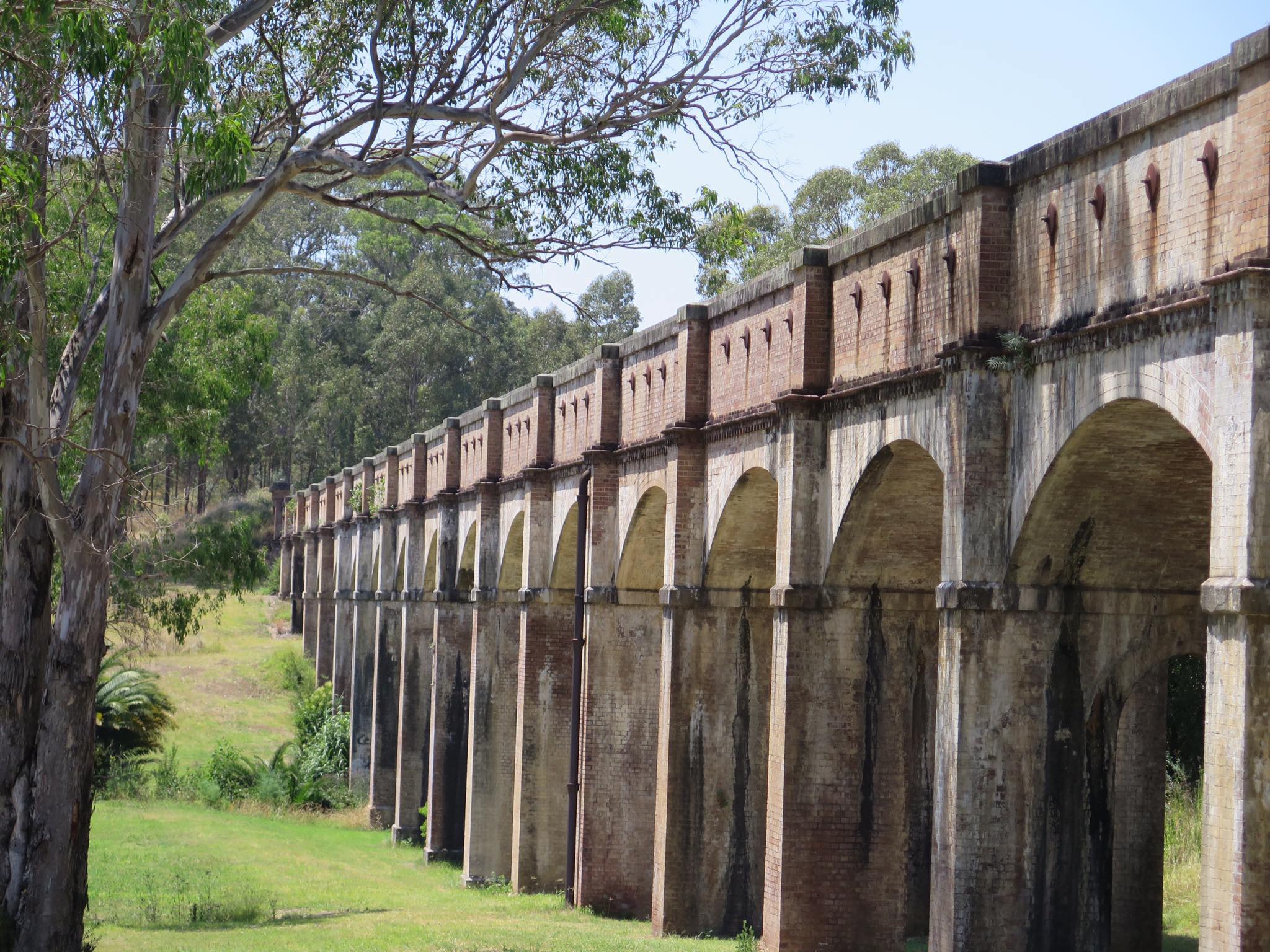
In modern usage, the term now often refers in addition to an extremely expensive building project that fails to deliver on its function or becomes very costly to maintain. Examples include prestigious but uneconomic infrastructure projects such as airports, dams, bridges, shopping malls and football stadiums.
Rail transport projects are also sometimes deemed white elephants. In Japan, it was feared that the Yurikamome at Odaiba would end up as a multibillion-yen white elephant. In Singapore, paper cutouts of white elephants were placed next to the completed but unopened Buangkok MRT station on the North East Line in 2005 to protest its non-opening. (The station eventually opened the following year.)
The American Oakland Athletics baseball team has used a white elephant as a symbol and usually its main or alternative logo since 1902, originally in sarcastic defiance of John McGraw's 1902 characterization of the new team as a "white elephant". The Al Maktoum International Airport on the outskirts of Dubai has also been named a white elephant. The Roman-styled Boothtown Aqueduct in Sydney, which was opened in 1888, has been referred to as a "white elephant" for its failure to operate as a long-serving aqueduct.
The term has also been applied to outdated or under-performing military projects like the U.S. Navy's Alaska-class cruiser. In Austria, the term "white elephant" means workers who have little or no use, but cannot be dismissed.
A former Polish astronomical observatory built in the Carpathian Mountains (now part of Ukraine) in 1938 is nicknamed White Elephant due to its appearance.
References
References
- "Home : Oxford English Dictionary". oxforddictionaries.com.
- {{Dead link. (August 2025 [http://www.thailandelephant.org/en/royalstable.html "Royal Elephant Stable"] {{Webarchive). link. (9 March 2021 . Thai Elephant Conservation Center.)
- Leider, Jacques P.. (December 2011). "A Kingship by Merit and Cosmic Investiture". Journal of Burma Studies.
- (2013). "The American Heritage Dictionary of Idioms, Second Edition". Houghton Mifflin Harcourt.
- (1999). "Elephant Story: Jumbo and P.T. Barnum Under the Big Top". McFarland.
- (23 June 2014). "Two-and-a-half Idioms – the History and Etymology of 'White Elephants'".
- (28 June 2014). "Two-and-a-Half More Idioms – "White Elephants" and Yankee Swaps".
- Roberta Jeeves, [https://www.whiteelephantrules.com/white-elephant-gift-around-house White Elephant Rules]. {{Webarchive. link. (4 October 2017 .)
- (5 June 2003). "White elephants and worthwhile causes".
- Shariatmadari, David. (18 July 2013). "The 10 greatest white elephants | David Shariatmadari". The Guardian.
- Govan, Fiona. (5 October 2011). "Spain's white elephants – how country's airports lie empty". The Daily Telegraph.
- "Dams as white elephants".
- Tim Ellis. (November 8, 2013). "State's Longest Bridge Nears Completion, But Budget Cuts May Limit Army's Ability to Use It". KUAC.
- "Russian bridge of trouble opens to world". The New Zealand Herald.
- Taylor, Adam. (5 March 2013). "New South China Mall: Tour A Ghost Mall".
- [https://www.theguardian.com/football/2006/mar/19/sport.comment1 Guardian Online]. [https://www.theguardian.com/football/2006/mar/19/sport.comment1] – Guardian Article regarding Stadio delle Alpi March 2006.
- (7 July 2010). "World Cup: Are South Africa's stadiums white elephants? – The Sentinel". Tucsonsentinel.com.
- Seemungal, Joshua. (May 7, 2023). "Grande $80M white elephant leaves residents peeved". Trinidad Guardian.
- Iwata, Kazuaki. (June 1998). "Tokyo's New Waterfront Transit System". Japan Rail and Transport Review.
- (7 November 2020). "Residents Bring Up 'White Elephant' Buangkok MRT During Minister's Visit". SafeTrolley.
- John Odell. "The Elephant in the Room". Baseball Hall of Fame.
- "After 'Boris Island': 10 other airport follies".
- Julie Power. "What did Romans ever do for Sydney? Aqueducts, gravity carried water". [[Sydney Morning Herald]].
- (2005). "Illustrated Directory of Warships of the World: From 1860 to the Present". ABC-CLIO.
- (14 January 2011). "Looking more like white elephant". Agence France-Presse.
- [[:de:Weißer Elefant#Redewendung]]
This article was imported from Wikipedia and is available under the Creative Commons Attribution-ShareAlike 4.0 License. Content has been adapted to SurfDoc format. Original contributors can be found on the article history page.
Ask Mako anything about White elephant — get instant answers, deeper analysis, and related topics.
Research with MakoFree with your Surf account
Create a free account to save articles, ask Mako questions, and organize your research.
Sign up freeThis content may have been generated or modified by AI. CloudSurf Software LLC is not responsible for the accuracy, completeness, or reliability of AI-generated content. Always verify important information from primary sources.
Report