From Surf Wiki (app.surf) — the open knowledge base
White Coke
Nickname for a clear variant of Coca-Cola from the 1940s
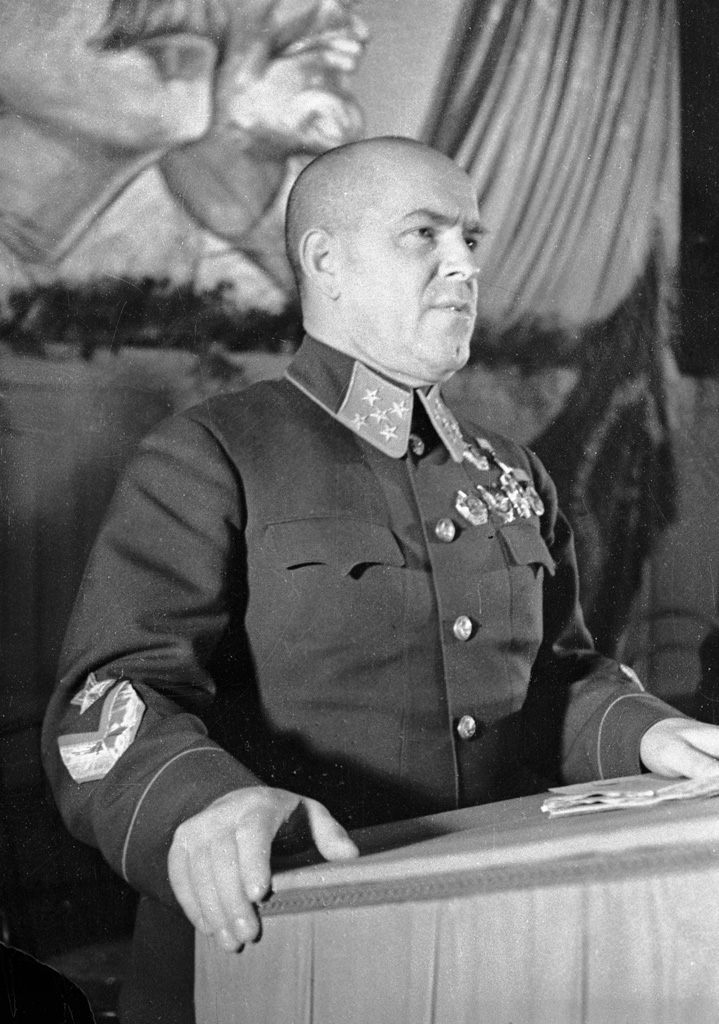
Nickname for a clear variant of Coca-Cola from the 1940s
| Field | Value |
|---|---|
| name | White Coke |
| logo | Coca-Cola logo.svg |
| logo_size | 200 |
| image_size | 200 |
| producttype | Clear cola |
| currentowner | The Coca-Cola Company |
| country | Soviet Union |
| introduced | 1946 |
| discontinued | |
| related | Coca-Cola Clear |
| markets | Soviet Union |
White Coke () was a clear variant of Coca-Cola produced in the 1940s at the request of Marshal of the Soviet Union Georgy Zhukov. It had the same flavor as the original, virtually unchanged by the absence of caramel coloring.
History
Zhukov was introduced to Coca-Cola during, or shortly after, World War II by his counterpart in Western Europe, Dwight D. Eisenhower, who was also a fan of the drink. As Coca-Cola was regarded in the Soviet Union as a symbol of American imperialism, Zhukov was apparently reluctant to be photographed with or reported as consuming such a product. According to journalist Tom Standage, without corroborating sources, Zhukov later asked whether Coca-Cola could be manufactured and packaged to resemble vodka.
Marshal Zhukov reportedly made this inquiry through General Mark W. Clark, commander of the US sector of Allied-occupied Austria, who passed the request on to US President Harry S. Truman. The President's staff contacted James Farley, chairman of the Board of the Coca-Cola Export Corporation. At the time, Farley was overseeing the establishment of 38 Coca-Cola plants in Southeast Europe, including Austria. Farley delegated Zhukov's special order to Mladin Zarubica, a technical supervisor for the Coca-Cola Company. He had been sent to Austria in 1946 to supervise establishment of a large bottling plant. Zarubica received a charge of Coca-Cola base ingredients without the coloring.
The colorless version of Coca-Cola was bottled using straight, clear glass bottles with a white cap and a red star in the middle. The bottle and the cap were produced by a Crown Cork and Seal Company satellite in Brussels.
One unusual consequence for the Coca-Cola Company was a relaxation of the regulations imposed by the occupying powers in Austria at the time. Coca-Cola supplies and products were required to transit a Soviet occupation zone while being transported between the Lambach bottling plant and the Vienna warehouse. While all goods entering the Soviet zone normally took weeks to be cleared by authorities, Coca-Cola shipments were never stopped.
Notes
References
References
- O'Callaghan, Tommy. (21 October 2018). "White Coke: The capitalist drink Soviet generals couldn't get enough of". [[Russia Beyond]].
- Hebblethwaite, Cordelia. (11 September 2012). "Who, What, Why: In which countries is Coca-Cola not sold?". [[BBC News]].
- Pendergrast, Mark. (15 August 1993). "Viewpoints; A Brief History of Coca-Colonization". [[The New York Times]].
- Standage, Tom. (2006). "A History of the World in Six Glasses". [[Doubleday Canada]].
- Loeb, Marion. (2 October 2005). "Raise a glass to the civilizing influences of what we drink". [[The Santa Fe New Mexican]].
- (2003). "Globalization and the American Century". [[Cambridge University Press]].
This article was imported from Wikipedia and is available under the Creative Commons Attribution-ShareAlike 4.0 License. Content has been adapted to SurfDoc format. Original contributors can be found on the article history page.
Ask Mako anything about White Coke — get instant answers, deeper analysis, and related topics.
Research with MakoFree with your Surf account
Create a free account to save articles, ask Mako questions, and organize your research.
Sign up freeThis content may have been generated or modified by AI. CloudSurf Software LLC is not responsible for the accuracy, completeness, or reliability of AI-generated content. Always verify important information from primary sources.
Report