From Surf Wiki (app.surf) — the open knowledge base
Wheatgrass
Freshly sprouted first leaves of the common wheat plant
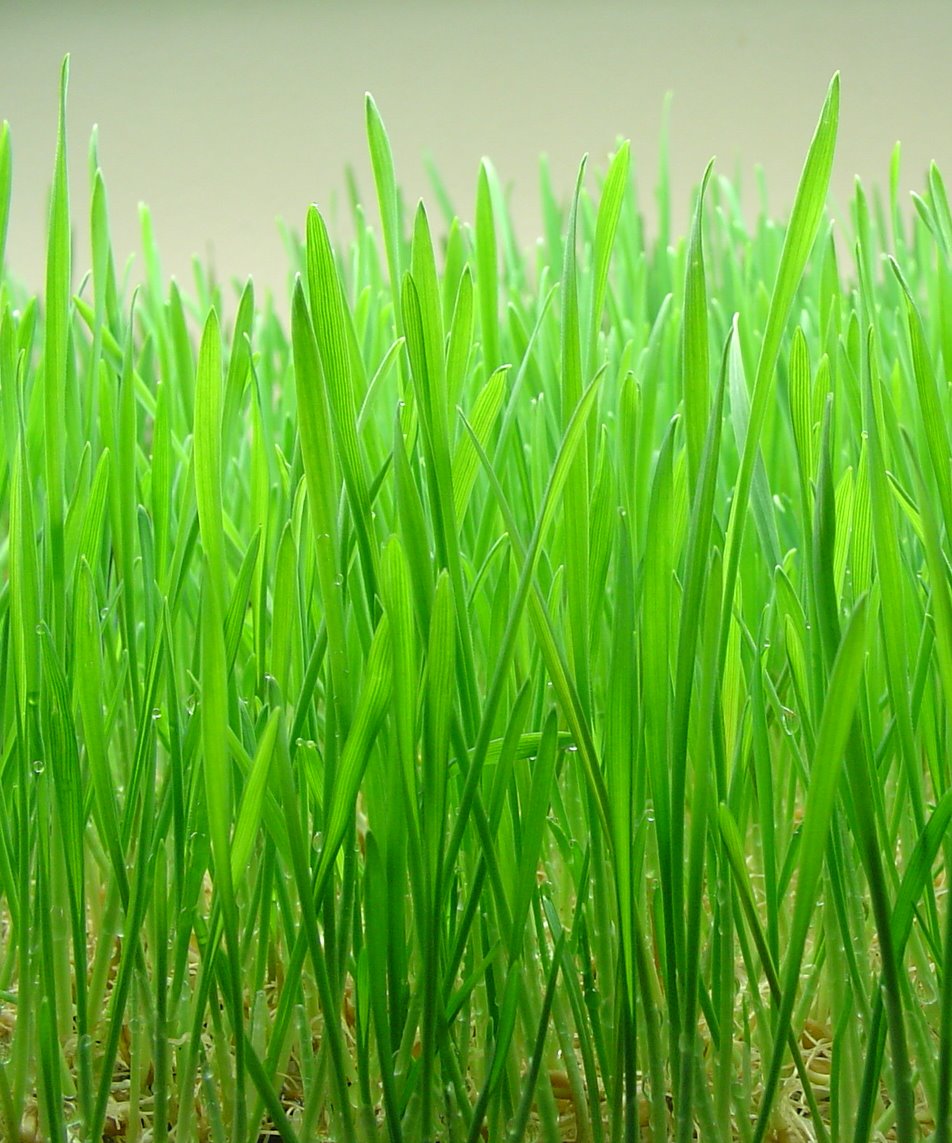
Freshly sprouted first leaves of the common wheat plant

Wheatgrass is the freshly sprouted first leaves of the common wheat plant (Triticum aestivum), used as a food, drink, or dietary supplement. Wheatgrass is served freeze dried or fresh, and so it differs from wheat malt, which is convectively dried. Wheatgrass is allowed to grow longer and taller than wheat malt.
Like most plants, wheatgrass contains chlorophyll, amino acids, minerals, vitamins and antioxidant enzymes. Claims about the health benefits of wheatgrass range from providing supplemental nutrition, anti-inflammatory effects, anti-oxiditative effects to having unique curative properties, but there is no good scientific evidence to support these uses.
History
The consumption of wheatgrass in the Western world began in the 1930s as a result of experiments conducted by Charles Schnabel in his attempts to popularize the plant. By 1940, cans of Schnabel's powdered grass were on sale in major drug stores throughout the United States and Canada.
Ann Wigmore was also a strong advocate for the consumption of wheatgrass as a part of a raw food diet. Wigmore, founder of the Hippocrates Health Institute, believed that wheatgrass, as a part of a raw food diet, would cleanse the body of toxins while providing a proper balance of nutrients as a whole food. She also taught that wheatgrass could be used to treat those with serious disease. Both of these claims are believed by many reputable health institutes to be entirely unfounded by facts, and possibly dangerous.
Cultivation

Wheatgrass can be grown indoors or outdoors. A common method for sprout production indoors is often on trays in a growth medium such as a potting mix. Leaves are harvested when they develop a "split" as another leaf emerges. These can then be cut off with scissors and allow a second crop of shoots to form. Sometimes a third cutting is possible, but may be tougher and have fewer sugars than the first.
Schnabel's research was conducted with wheatgrass grown outdoors in Kansas. His wheatgrass required 200 days of slow growth through the winter and early spring, when it was harvested at the jointing stage. He claimed that at this stage the plant reached its peak nutritional value; after jointing, concentrations of chlorophyll, protein, and vitamins decline sharply. Wheatgrass is harvested, freeze-dried, then sold in tablet and powdered concentrates for human and animal consumption. Indoor-grown wheatgrass is used to make wheatgrass juice powder.
Nutrition and health claims
| Nutrient | Wheatgrass juice | Broccoli | Spinach | Protein | Beta-carotene | Vitamin E | Vitamin C | Vitamin B12 | Phosphorus | Magnesium | Calcium | Iron | Potassium |
|---|---|---|---|---|---|---|---|---|---|---|---|---|---|
| 860 mg | 800 mg | 810 mg | |||||||||||
| 120 IU | 177 IU | 2658 IU | |||||||||||
| 2900 mcg | 220 mcg | 580 mcg | |||||||||||
| 1 mg | 25.3 mg | 8 mg | |||||||||||
| 0.30 mcg | 0 mcg | 0 mcg | |||||||||||
| 21 mg | 19 mg | 14 mg | |||||||||||
| 8 mg | 6 mg | 22 mg | |||||||||||
| 7.2 mg | 13 mg | 28 mg | |||||||||||
| 0.66 mg | 0.21 mg | 0.77 mg | |||||||||||
| 42 mg | 90 mg | 158 mg | |||||||||||
| Data on broccoli and spinach from USDA database. Data on wheatgrass juice from indoor grown wheatgrass. |
Proponents of wheatgrass make many claims for its health properties, ranging from promotion of general well-being to cancer prevention. However, according to the American Cancer Society, "available scientific evidence does not support the idea that wheatgrass or the wheatgrass diet can cure or prevent disease".{{cite web |access-date=February 10, 2017 |archive-url=https://web.archive.org/web/20150502001657/http://www.cancer.org/treatment/treatmentsandsideeffects/complementaryandalternativemedicine/dietandnutrition/wheatgrass |archive-date=May 2, 2015 |url-status=dead
Several trials and clinical reports report benefits in specific conditions e.g., reduced transfusion needs in thalassemia, reduced some chemotherapy side effects, improvements in some inflammatory bowel disease metrics, or modest antioxidant marker changes. However, the trials are generally small, often short. Top reviews advise cautious interpretation and call for larger, better-designed trials.
File:WheatGrassJuicing.jpg|Extracting wheatgrass juice with a manual juicing machine. File:WheatGrassJuice 02.JPG|Wheatgrass juice
Nutritional content
Wheatgrass is a source of potassium, dietary fiber, vitamin A, vitamin C, vitamin E (alpha tocopherol), vitamin K, thiamin, riboflavin, niacin, vitamin B6, pantothenic acid, iron, zinc, copper, manganese, and selenium. It is also a source of protein, with 8 grams per ounce if consumed in powder form or around 1 g in a "shot" of juice. This protein content consists of at least 17 forms of amino acids, including eight out of nine essential amino acids. As per in vitro study, wheatgrass juice is nutritionally superior to other fruit and vegetable juices, with higher bioavailable minerals and antioxidant compounds. Its addition to other juices markedly improves their overall nutritional quality.
The nutrient content of wheatgrass juice is roughly equivalent to that of dark leafy vegetables.
Vitamin B12 is not contained within wheatgrass or any vegetable, as vitamin B12 is not made by plants; rather it is a byproduct of the microorganisms living on plants or in the surrounding soil. There are some claims that analysis of wheatgrass have found B12 in negligible amounts; however, there are no reliable sources cited to back up the claim. An analysis of wheat grass by the USDA National Nutrient Database reports that wheatgrass contains no vitamin B12.
Preparation
Wheatgrass juice is cold-pressed from 7–9-day-old shoots, harvested before jointing, when chlorophyll, antioxidant enzymes, vitamin C, and phenolics peak . The grass should be washed with potable water, cold-pressed not blended or heated, and consumed within 10–15 minutes to avoid oxidation and enzyme loss . Heat, boiling, spray-drying, and high-speed blending are consistently discouraged due to chlorophyll degradation. When fresh juice is impractical, frozen fresh juice or low-temperature (
Pets
Wheatgrass is also cultivated for feeding to pet cats. Wheatgrass, along with shoots of other common grains such as oats, rye and barley, is sold for this purpose, including under the name cat grass. Many cats enjoy eating grass and wheatgrass is considered safe and healthy for them. It may provide nutrients and improve digestion by adding fiber to the diet. Eating wheatgrass may also provide mental stimulation. However, it is recommended to limit the quantity allowed, to avoid indigestion.
References
References
- (August 2018). "Nutritional Quality and Antioxidant Activity of Wheatgrass (Triticum aestivum) Unwrap by Proteome Profiling and DPPH and FRAP assays". Journal of Food Science.
- (October 2019). "A comparative study on the possible protective effect of esomeprazole, spirulina, wheatgrass on indomethacin-induced gastric ulcer in male albino rats". Molecular Biology Reports.
- "Wheatgrass". [[WebMD]].
- Murphy, Sean. (13 October 2002). "Wheatgrass, healthy for the body and the bank account". [[Landline (TV series).
- Jarvis, William. (15 January 2001). "Wheatgrass Therapy". [[The National Council Against Health Fraud]].
- "4 Ways to Grow Wheatgrass". [[wikiHow]].
- "Site Dedication and Construction Preliminaries, 1921-1923". Ahr-kc.com.
- "USDA Nutrient Database".
- Meyerowitz, Steve. (April 1999). "Wheatgrass Nature's Finest Medicine: The Complete Guide to Using Grass Foods & Juices to Revitalize Your Health". [[Book Publishing Company]].
- (2015). "The Medical Use of Wheatgrass: Review of the Gap Between Basic and Clinical Applications". Mini Reviews in Medicinal Chemistry.
- (2018-03-11). "Efficacy and Safety of Wheat Grass in Thalassemic Children on Regular Blood Transfusion". Cureus.
- "wheat grass Nutrition Facts & Calories".
- (24 December 2012). "How Much Protein Does Wheatgrass Have?".
- "A study on wheat grass and its Nutritional value". Food Science and Quality Management.
- (2022-02-02). "Effect of Wheatgrass Juice on Nutritional Quality of Apple, Carrot, Beet, Orange and Lemon Juice". Foods (Basel, Switzerland).
- Melina, Vesanto, MS, RD & Davis, Brenda, RD: "The New Becoming Vegetarian", pages 186–187. Healthy Living Publications, 2003.
- "Nutrition Facts". Nutritiondata.self.com.
- (June 2014). "The aesthetic and oncological challenges in the management of an atypical nodular hidradenoma of the pinna". Indian Journal of Surgical Oncology.
- (2018). "Prevalence and associated factors of anemia among adolescent girls attending high schools in Dembia District, Northwest Ethiopia, 2017". Archives of Public Health = Archives Belges de Sante Publique.
- (2016-11-01). "2,3-Dideoxyglucosides of selected terpene phenols and alcohols as potent antifungal compounds". Food Chemistry.
- (2016-12-27). "Reply: Risk Prediction in Acute Myocardial Infarction". Journal of the American College of Cardiology.
- (September 2015). "Does postoperative mechanical ventilation predispose to bronchopleural fistula formation in patients undergoing pneumonectomy?". Interactive Cardiovascular and Thoracic Surgery.
- (11 October 2023). "Is Wheatgrass Good for Cats?".
This article was imported from Wikipedia and is available under the Creative Commons Attribution-ShareAlike 4.0 License. Content has been adapted to SurfDoc format. Original contributors can be found on the article history page.
Ask Mako anything about Wheatgrass — get instant answers, deeper analysis, and related topics.
Research with MakoFree with your Surf account
Create a free account to save articles, ask Mako questions, and organize your research.
Sign up freeThis content may have been generated or modified by AI. CloudSurf Software LLC is not responsible for the accuracy, completeness, or reliability of AI-generated content. Always verify important information from primary sources.
Report