From Surf Wiki (app.surf) — the open knowledge base
Weston-super-Mare
Seaside town in Somerset, England
Seaside town in Somerset, England
| Field | Value |
|---|---|
| official_name | Weston-super-Mare |
| population_demonym | Westonian |
| country | England |
| region | South West England |
| static_image_name | {{multiple image |
| border | infobox |
| perrow | 1/2/2/2/2 |
| total_width | 250 |
| image1 | The three piers, Weston-super-Mare (2022).JPG |
| image2 | Weston-Super-Market - The Winter Gardens (geograph 2814835).jpg |
| image3 | Weston-Super-Mare , The Town Hall - geograph.org.uk - 1913646.jpg |
| image4 | The Blakehay Theatre (geograph 3743271).jpg |
| image5 | Grand Pier, Weston-Super-Mare, Somerset, England, UK (7304088786).jpg |
| footer | From the top to bottom-right, Weston-super-Mare beach, Winter Gardens Pavilion, Town Hall, Blakehay Theatre, Grand Pier |
| population | 82,418 |
| population_ref | (in 2021) |
| mapframe | yes |
| mapframe-zoom | 10 |
| mapframe-point | none |
| os_grid_reference | ST320613 |
| coordinates | |
| post_town | WESTON-SUPER-MARE |
| postcode_area | BS |
| postcode_district | BS22–BS24 |
| dial_code | 01934 |
| constituency_westminster | Weston-super-Mare |
| civil_parish | Weston-super-Mare |
| unitary_england | North Somerset |
| lieutenancy_england | Somerset |
| mapframe-zoom = 10 | mapframe-point = none Weston-super-Mare ( ) is a seaside town and civil parish in the North Somerset unitary district, in the county of Somerset, England. It lies by the Bristol Channel 20 mi south-west of Bristol between Worlebury Hill and Bleadon Hill. Its population at the 2021 census was 82,418.
The area around the town has been occupied since the Iron Age. It was still a small village until the 19th century when it developed as a seaside resort. A railway station and two piers were built. In the second half of the 20th century it was connected to the M5 motorway but the number of people holidaying in the town declined and some local industries closed, although the number of day visitors has risen.
Attractions include the Grand Pier, Weston Museum and The Helicopter Museum. Cultural venues include The Playhouse, the Winter Gardens and the Blakehay Theatre.
The Bristol Channel has the second largest tidal range in the world; the low tide mark in Weston Bay is about 1 mi from the seafront. The beach is sandy but low tide reveals areas of thick mud which are dangerous to walk on. The mouth of the River Axe is at the south end of the beach. To the north of the town is Sand Point which marks the upper limit of the Bristol Channel and the lower limit of the Severn Estuary. In the centre of the town is Ellenborough Park, which is a biological Site of Special Scientific Interest (SSSI) due to the range of plant species found there.
Toponymy
Weston comes from the Old English word for west, and 'tun', a word with several different meanings. Although it is most likely to have an original meaning of enclosure, it could also mean settlement, farmstead or estate. Super-mare is Latin for "upon the sea" and was added to distinguish it from other settlements named Weston in the Diocese of Bath and Wells.
Other 'tuns' nearby are Norton (the 'north tun'), which was in existence by the early 13th century and is probably of at least late Anglo-Saxon foundation. Milton (the 'middle tun') on Worlebury Hill is mentioned in the Domesday Book of 1086 and is also of at least late Anglo-Saxon origin. Taking the three places together – the west, the middle, and the north tuns - their directions might relate to Worle which was already a substantial estate by the time of the census for the Domesday Book. Weston itself is not identified in the Domesday Book although Ashcombe is.
The town was known as Weston-juxta-Mare ('beside the sea') prior to 1348; the name seems to have been changed to this during the time when Ralph of Shrewsbury was Bishop of Bath and Wells from 1329 to 1363. Between the 14th and 17th centuries the juxta-mare part of the name disappeared and it was known as just Weston. In 1610 it was recorded as 'Weston on the More', with 'more' in this context most likely to be in the Somerset sense of 'moor' as low lying, damp, semi-marshland.
History
Early history

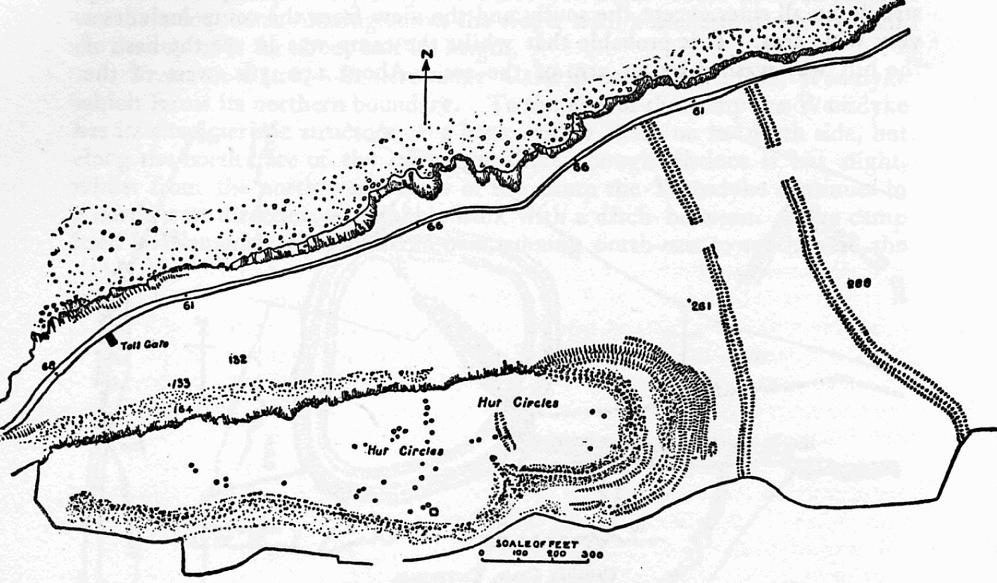
Weston's oldest structure is Worlebury Camp on Worlebury Hill which dates from the Iron Age. Outside of the hillfort are many rock-cut burials and fragmentary remains which have been discovered during the course of progressive development on the southern slope of the hill. Two particular clusters of these burials have been identified: one in the Montpelier area, and the other to the north-east of Knightstone Road. Recent researchers suggest that there may have been a major Iron Age cemetery related to the hillfort and remarks on the area near Knightstone Road was the site later chosen for the parish church, suggesting a link to the Iron Age burials. Many of these remains were chance finds during 19th or early 20th century building work and were poorly recorded. During archaeological evaluation work in 2005, prior to the construction of a new parish room on the north-western side of St John's church, a crouched inhumation burial, with pottery indicating a mid- to late-Iron Age date, was discovered within the churchyard, below a series of unmarked post-medieval burials.
An occupation site of Romano-British date was investigated in 2008–2009 as part of a planning application by Weston College immediately to the west of their School of Science and Art, on the south side of South Terrace. This built on investigations that had already been carried out on the site in the late 1950s which strongly suggested the presence of Romano-British occupation. It is the only site known of this date in central Weston and was probably a small farmstead or hamlet. Finds included an extremely important burial of a male individual who had clearly led a very hard life, and had suffered multiple medical conditions which were expressed on his skeletal remains. It is possible that he had been a slave.
The parish was part of the Hundred of Winterstoke. The medieval church of St John was demolished in 1824 and rebuilt on the same site. The former rectory, now known as Glebe House,is a 19th-century structure but may have been remodelled from a 17th century building.
The Old Thatched Cottage restaurant on the seafront is listed Grade II. Its official Historic England list entry states that it is 'late 18th century, certainly before 1804' and that it is 'thought to be Weston-Super-Mare's oldest building'. Although the building carries the date 1774, the date of its construction is unknown. Evidence exists that it was definitely built by June 1804. A local tradition of an earlier building on the site, occupied by a man called Light, is without any clear historical evidence.
19th century
Early in the 19th century, Weston was a small village of about 30 houses. They were protected from the sea by a line of sand dunes which had been created as a sea defence after the Bristol Channel floods of 1607. A harbour was made in the late 1820s at Knightstone Island, and a slipway built from Anchor Head towards Birnbeck Island. A walkway was built along the dunes in 1826 from Knightstone to Leeves' Cottage and 1829 an extension carried it to the end of Regent Street.
Weston's growth during the 19th century was largely due to its development as a seaside resort. The Pigott family of Brockley were the Lords of the Manor and had a summer residence at Grove House. Construction of the first hotel, 'Reeve's Hotel' (now the Royal Hotel), started in 1808.
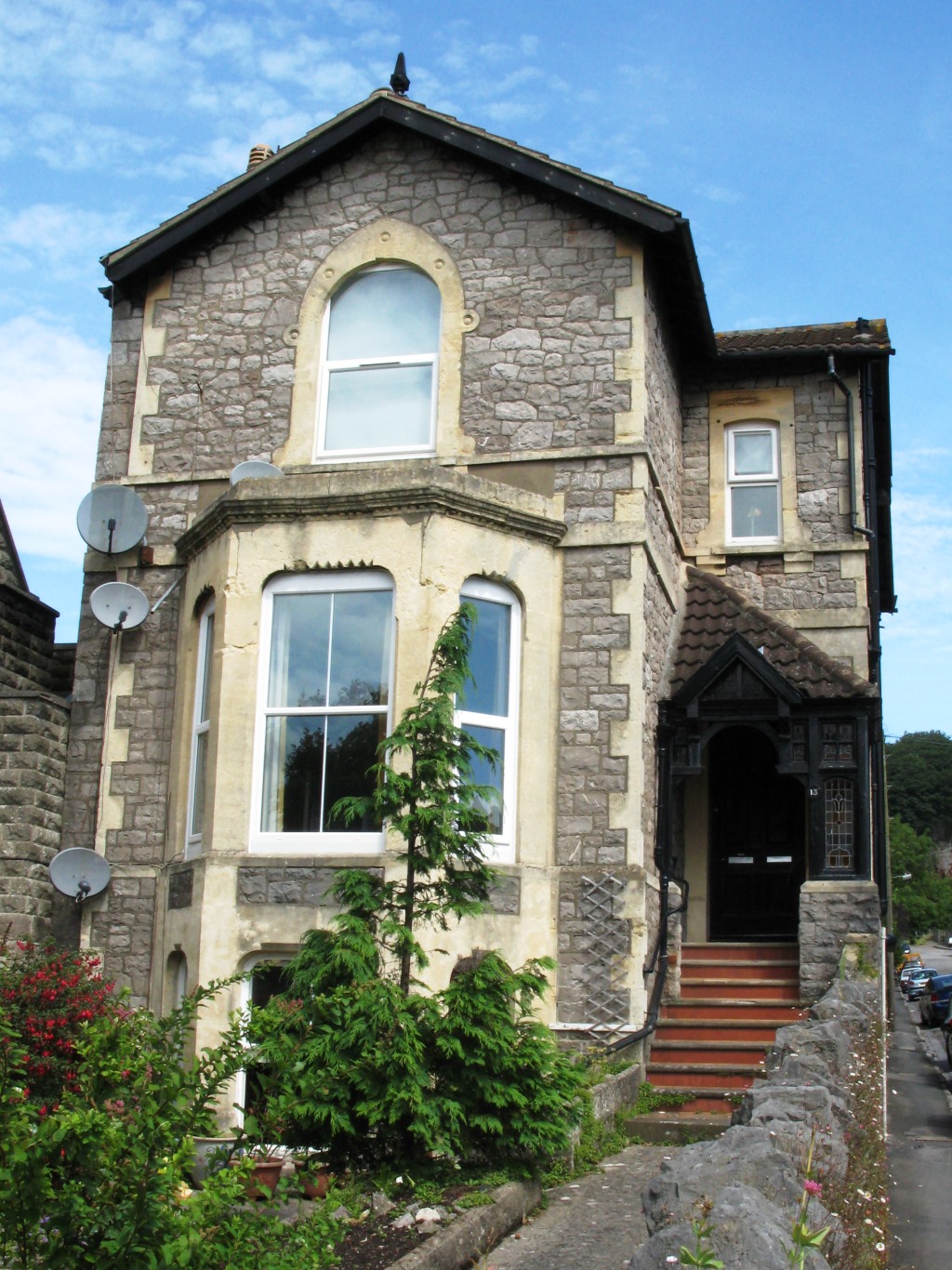
John Pigott sold off some land for development in 1807 and the Weston Act of 1810 allowed enclosure and road building. This resulted in some houses being built in the Whitecross area south of the town centre, and large detached villas for the middle classes were built on the southern slopes of Worlebury Hill. Many of the houses and public buildings erected from about 1870 were built from local grey limestone with details of soft yellow Bath Stone and slate roofs. These were designed in by local architect Hans Price.
The Bristol and Exeter Railway opened the first part of its line on 14 June 1841. A station at gave a connection to a station in the town centre. The railway connected with the Great Western Railway at and made it easier for visitors from Bristol, the Midlands, London and further afield to travel to Weston for a day or longer holidays.
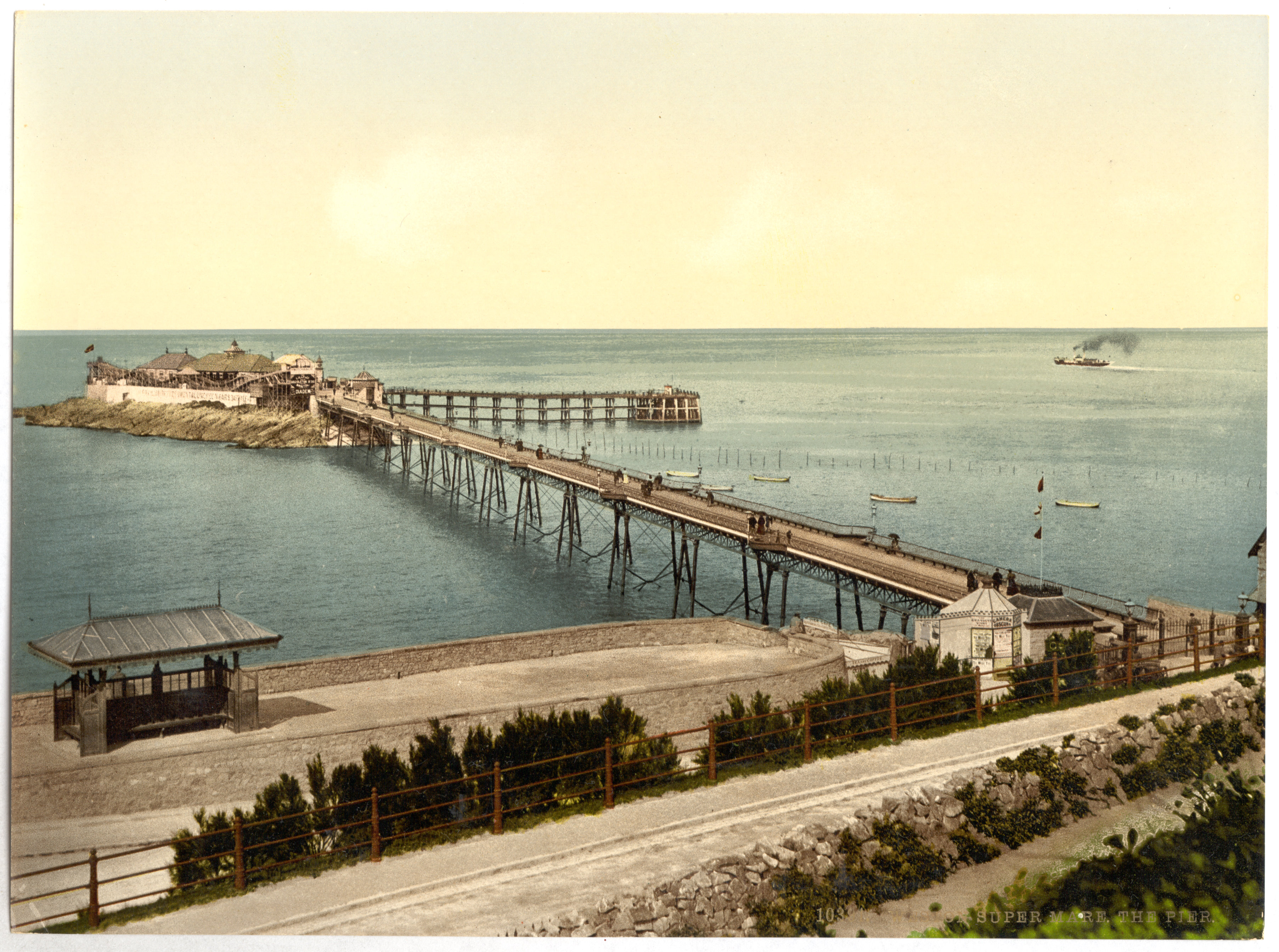
Birnbeck Pier was opened in 1867 at the end of Worlebury Hill. Visitors, including many Welsh mining families, came across the Bristol Channel by paddle steamer to the pier. In its heyday it offered amusement arcades, tea rooms, amusement rides and a photographic studio. Although listed Grade II* it is now in a derelict state and is classed as 'highly vulnerable' on Historic England's Heritage at Risk Register. It was designed by Eugenius Birch with ironwork by the Isca Foundry of Newport, Monmouthshire.
The Seafront Improvement Scheme started in 1883. This saw the construction of the sea wall and esplanade, starting from Glentworth Bay at Knightstone. As far south as Regent Street it replaced the walkway of 1826 and reclaimed up to 40 ft from the beach. By 1886 it had been completed south to the sanatorium and this section saw the sand dunes replaced by lawns, although the dunes beyond the sanatorium remain to this day. A further section was built to take it around the end of Worlebury Hill to Anchor Head and Birnbeck Pier.
The first transatlantic telegraph cable of the Commercial Cable Company was brought ashore at Weston in 1885 after which the company had an association until in 1962. Guglielmo Marconi, the inventor of wireless telegraphy, successfully transmitted radio signals across the Bristol Channel in the spring of 1897, from Penarth (near Cardiff) to Brean Down, the promontory at the south end of Weston Bay.
A second railway, the Weston, Clevedon and Portishead Light Railway, opened on 1 December 1897, connecting Weston to Clevedon, the Weston terminus being at Ashcombe Road. The railway was extended to Portishead on 7 August 1907 but was closed in 1940.
20th century
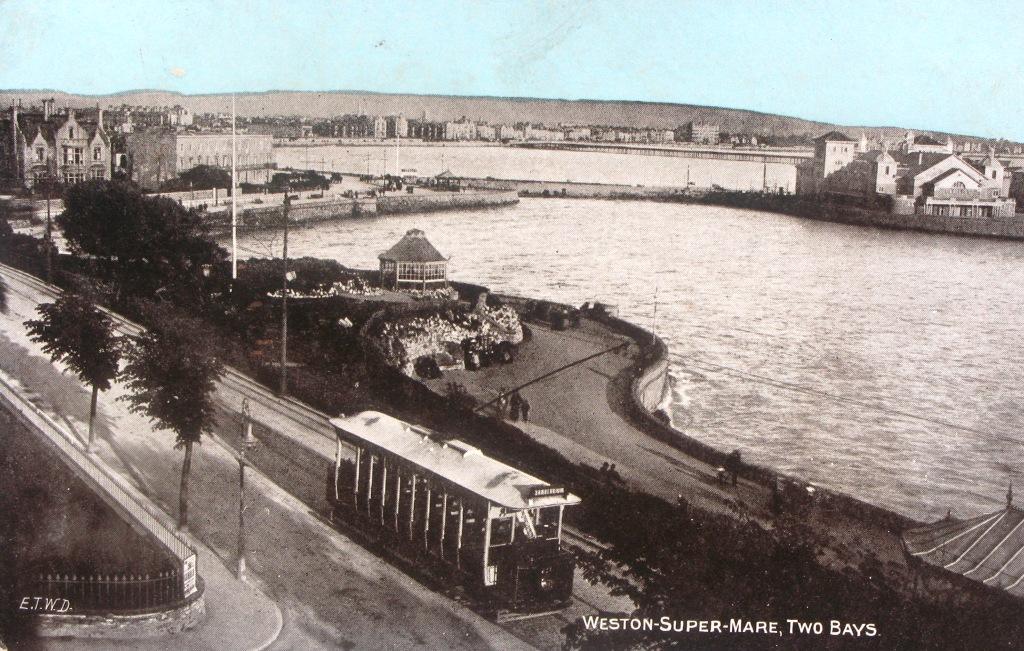
A proposal for the Weston, Clevedon and Portishead Light Railway to run along the streets of the town to the sea front failed to materialise, but a 2.9 mi gauge Weston-super-Mare Tramways network opened on 12 May 1902. The main route ran from Birnbeck Pier along the sea front to the Sanatorium (now Royal Sands); a branch line ran to the railway station and on to the tram depot in Locking Road. The fleet originally consisted of 12 double deck cars and 4 open-sided 'toast rack' cars. The system was bought out by the competing bus company and closed on 18 April 1937, by which time the fleet comprised 8 double deck and 6 'toast racks'.
Local traders, unhappy that visitors arriving at Birnbeck Pier were not coming into the centre of the town, built a new pier closer to the main streets. Opened in 1904, and known as the Grand Pier, it was designed to be 1.5 mi long.

Several cinemas opened after 1911, the one near the Town Hall being rebuilt as the Odeon Cinema (now the Plaza) in 1935 using a distinctive moderne style. The Winter Gardens Pavilion opened between the High Street and sea front in 1927, and in 1929 work was completed on the Marine Lake. A causeway was built across Glentworth Bay and facilities provided on the shore to create an area where sea bathing would be available at all states of the tide. The Open Air Pool (now the Tropicana), with its arched concrete diving board, opened in 1937 midway between the Grand Pier and the Sanitorium.
Weston Airfield opened in 1936, just outside the town on Locking Moor. Commercial flights were operated by Western Airways until World War II, the most popular being to Cardiff which flew twice an hour at busy periods. The site was also operated as RAF Weston-super-Mare by No. 24 Group. It served as a flying candidates selection and initial training facility, and as a relief airport during the war, latterly as the Polish Air Force Staff College from April 1944 to April 1946. Several factories were set up near the airfield, both on the Winterstoke Road in Oldmixon and nearer Locking, which became the targets for air raids. The Bristol Aeroplane Company diversified production after the war and started to build helicopters in 1956. The factory was taken over by Westland Helicopters in 1960 and the company operated in Weston until 2002, although production finished in 1987. The airfield closed in 1978 but Westland's bought it for training pilots.
The factories around the airfield attracted air raids and the town was also on the return route of bombers targeting Bristol and was itself bombed by the Luftwaffe. The first bombs fell in June 1940, but the worst attacks were in January 1941 and in June 1942. Large areas of the town were destroyed, particularly Orchard Street and the Boulevard. On 3 and 4 January 1941, incendiary bombs fell on the town. The Air Ministry set up a "Q-station" decoy at Bleadon in an attempt to divert the bombers to an unpopulated area. In all 110 civilians lost their lives through enemy action in the borough. United States Army troops were billeted in the area in the later part of the war but were moved elsewhere in the run-up to D-Day. Birnbeck Pier was taken over for weapons development as 'HMS Birnbeck'. During the war II more than 10,000 evacuees were accommodated in the town, however only 130 spent four or more years in the town.

Milton was absorbed into the Weston-super-Mare Urban District in 1902 and residential areas expanded eastwards along the Locking Road and Milton Road. England's first council housing estate was built at Milton Green in the 1919. Further estates followed with Milton Brow on the hill and Bournville which started to be developed the south of the town before World War II. The town expanded again in 1932 when Worle and Uphill were absorbed. After the war Bournville was completed and other estates were built at Coronation in the 1950s and Oldmixon in the 1960s, the latter to support further industrial estates that were built off the Winterstoke Road. The opening of the M5 Motorway in the 1970s pulled development back to the east side of the town with new building around Worle and Locking Castle south of the railway line.
Victorian housing around Carlton Street (between the Town Hall and seafront) was demolished in the 1960s and the area redeveloped as the Dolphin Square shopping precinct. The Sovereign shopping centre was opened in 1992. Unlike Dolphin Square, this was fully covered and visible from the High Street.
A new Weston General Hospital was opened at Uphill in 1986. This replaced several older hospitals and health facilities around the town including the Royal West of England Sanatorium on the seafront, and the original Weston Hospital which had opened on Alfred Street in 1865 and expanded as the Queen Alexandra Memorial Hospital onto The Boulevard in 1927.
21st century
_by_day.jpg)
Weston saw a growth in residential drug and alcohol rehabilitation treatment centres in the early years of the 21st century. Related criminal and social problems were identified by local newspapers and the town council. They were also featured in the John Penrose's maiden speech as a Member of Parliament in 2005. By 2009, Weston was home to around 11% of drug rehabilitation places in the UK, and North Somerset Council proposed an accreditation system examining the quality of counselling, staff training, transparency of referral arrangements, along with measures of the treatment's effectiveness and site inspections. There was a reduction in the number of rehabilitation facilities in the town by 2012, with the number of patient beds having nearly halved.
A structure known as Silica was installed at Big Lamp Corner during 2006. It is a piece of public art, an advertising sign, a retail kiosk selling newspapers and hot food, as well as a bus shelter. It was criticised by local residents who liken it to a carrot or a space ship, although it is meant to symbolise man's harmony with the sea. It was part of North Somerset Council's civic pride initiative that has sought to revitalise Weston-super-Mare's public spaces after a period of decline. There were also improvements to the street scene around Grove Park. A £34 million redevelopment of the promenade was completed in 2010. Scour protection and a splash wall were constructed between Knightstone and Oxford Street. Pier Square was pedestrianised, and Marine Lake was refurbished.
The Grand Pier's pavilion was destroyed by a fire on 28 July 2008. Work to build a new pavilion started in 2009 and it reopened on 23 October 2010. Birnbeck Pier was closed in 1994 and Weston-super-Mare lifeboat station, which had been at Birnbeck since 1882, moved to temporary facilities at Knightstone in 2013. After several private schemes to reopen the pier failed, North Somerset Council bought the pier in July 2023 with the intention of repairing it and returning the lifeboat station Birnbeck, although the Royal National Lifeboat Institution later withdrew from the project due to concerns about financing the repairs and maintaining the pier when they were complete.
Weston was chosen in March 2017 as one of the 10 successful bids for the first phase of the creation of Heritage Action Zones (HAZ), a scheme where Historic England works with local partners in places with significant historic environment to use that heritage to help build economic growth and other opportunities in the locality. Over a three-year period the Heritage Action Zone aimed to boost economic growth and researched Weston's heritage and urban development, by reviewing Weston's listed buildings, using aerial photographs, undertaking a historic characterisation of Weston-super-Mare, its land and sea environs and a report on the architecture of the town, which culminated with the publication in 2020 of a new book Weston-super-Mare The town and its seaside heritage.
Governance
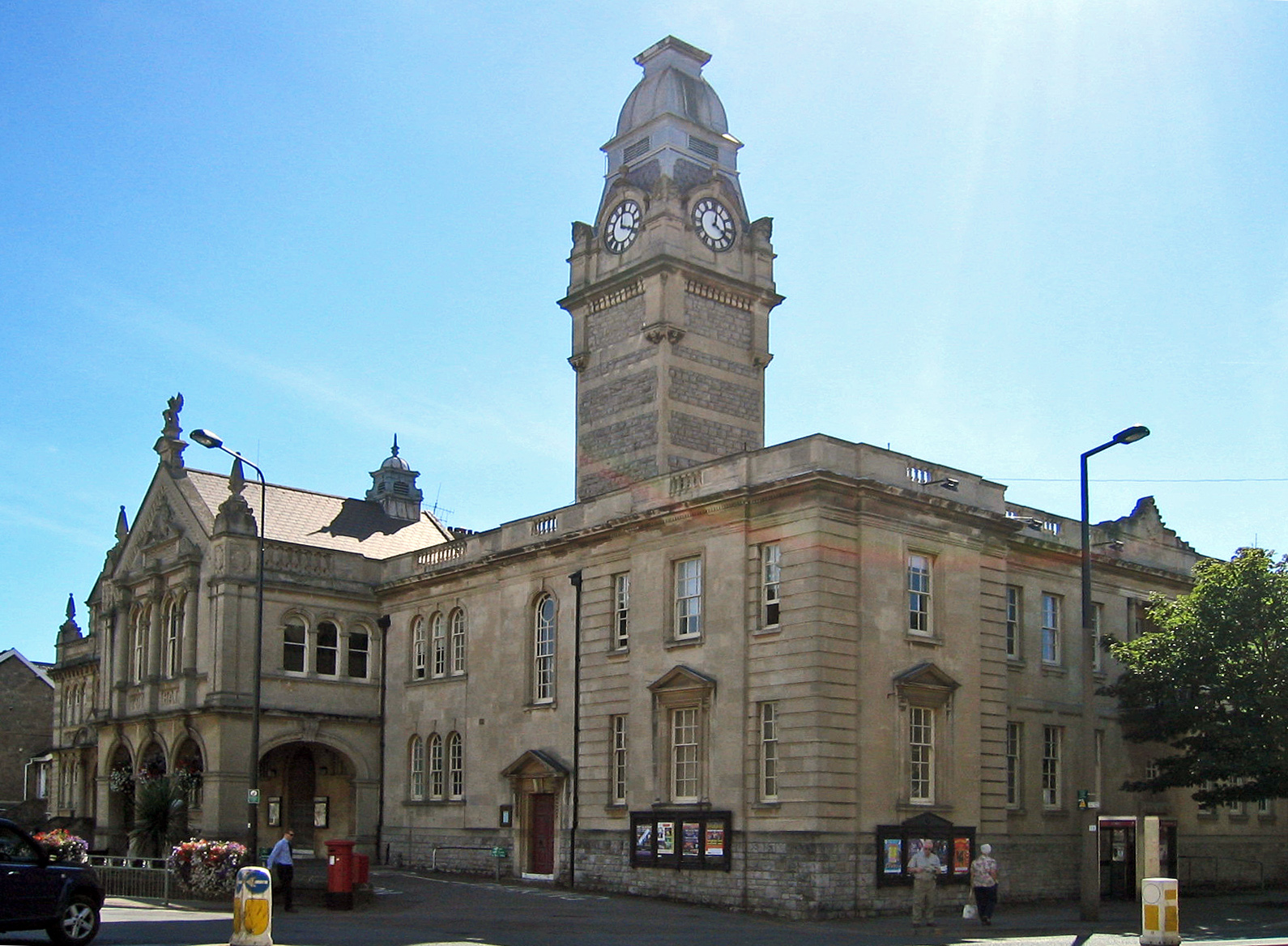
Weston was established as a town by the Improvement and Market Act which was passed in 1842. This vested powers in 18 Town Commissioners to raise rates, establish public highways, and enforce building regulations. The first part of Weston-super-Mare Town Hall was built near the railway station in 1858. The Commissioners were replaced by an Urban District Council in 1894 and in 1937 the town became a municipal borough, adopting the motto Ever Forward.
The council was abolished in 1974 as part of the local government reorganisation following the Local Government Act 1972. Instead Weston became part of the Woodspring district of the Avon County Council, which itself replaced Somerset County Council at that time as the higher level of local government for Weston. Avon only lasted until 1996. It was replaced by a number of unitary authorities with the Woodspring district becoming North Somerset Council. Weston Town hall has been used by both Woodspring and North Somerset as their headquarters. North Somerset remains part of the ceremonial county of Somerset.
Weston-super-Mare Town Council was established in 2000 as a parish council providing local services including cemeteries, youth services, public toilets, parks and green spaces. 31 town councillors represent 10 wards. The council is based in Waterloo Street.
There are 10 North Somerset electoral wards in Weston which return 19 of the council's 50 councillors.
The MP for the Weston-super-Mare parliamentary constituency is Dan Aldridge of the Labour Party, who won the seat from John Penrose of the Conservative Party in the 2024 general election.
Geography

The mainly flat landscape of Weston is dominated to the north by Worlebury Hill (109 m above sea level). Bleadon Hill (176 m and Brean Down (97 m) forms its southern border. The River Axe flows into Weston Bay at Uphill, cutting Brean Down off from the town. Much of Worlebury Hill is wooded with some Ancient Woodland sites. The remains of Worlebury Camp hillfort are at its far western end.
The beach lies on the western edge of the town. The upper part is sandy, but the tidal rise and fall in the Severn Estuary and Bristol Channel can be as great as 14.5 m, second only to Bay of Fundy in Eastern Canada. This tidal movement contributes to the deposition of natural mud in bays such as Weston. There has been concern about pollution levels from industrial areas in Wales and at the eastern end of the Bristol Channel; however this tends to be diluted by the Atlantic waters. There are measurable levels of chemical pollutants, and little is known about their effects. Of particular concern are the levels of cadmium and to a lesser degree residual pesticides and hydrocarbons.
Ellenborough Park, on the sea front near the town centre, is a Site of Special Scientific Interest due to the range of plant species found there.
The early village of Weston was located around the northern end of today's High Street, Worthy Place and the church by Grove Park. The town has developed eastwards along and below Worlebury Hill to envelop the villages of Milton and Worle. It has also spread south behind the seafront and with housing estates at Bournville, Coronation and Oldmixon which leave a small undeveloped strip around the village of Uphill.
Climate
Along with the rest of South West England, Weston has a temperate climate which is generally wetter and milder than the rest of the country. The annual mean temperature is approximately 11 °C. Seasonal temperature variation is less extreme than most of the United Kingdom because of the adjacent sea temperatures. The summer months of July and August are the warmest with mean daily maxima of approximately 22 °C. In winter mean minimum temperatures of 2 - are common.
The Azores high pressure affects the south-west of England in the summer, however convective cloud sometimes forms inland which reduces the number of hours of sunshine. Annual sunshine rates are slightly less than the regional average of 1,600 hours. There were 20 days without sun recorded at Yeovilton (the nearest weather station) in December 1998. Most of south-west England's rainfall in autumn and winter is caused by Atlantic depressions, which is when they are most active. A large proportion of the rainfall in the summer is caused by sun heating the ground leading to convection which results in showers and thunderstorms. Average rainfall is around 900 mm. About 8–15 days of snowfall is typical. November to March have the highest mean wind speeds, and June to August have the lightest winds. The predominant wind direction is from the south-west.
|Jan record high C = 14.0 |Feb record high C = 15.6 |Mar record high C = 21.1 |Apr record high C = 22.7 |May record high C = 26.0 |Jun record high C = 30.2 |Jul record high C = 28.7 |Aug record high C = 29.4 |Sep record high C = 28.3 |Oct record high C = 25.6 |Nov record high C = 17.1 |Dec record high C = 15.9 |Jan record low C = -11.4 |Feb record low C = -7.9 |Mar record low C = -9.0 |Apr record low C = -4.5 |May record low C = 0.2 |Jun record low C = 1.9 |Jul record low C = 5.9 |Aug record low C = 4.2 |Sep record low C = 0.4 |Oct record low C = -4.0 |Nov record low C = -7.2 |Dec record low C = -8.1
Demography
Weston's population started to grow in the 19th century. In 1811 it was just 163 people, in 1821 it was 738, and in 1831 it was 1,310. By 1851 there were 4,033 people in the town and more than 8,000 by 1861. The town's expansion in the middle of the 20th century saw the population increase to more than 28,000 in 1931 and more than 40,000 in 1951 with further increases coming as new housing estates were built.
The United Kingdom Census 2021 recorded the population of Weston-super-Mare as 82,418 people. Of these
- 17,602 (21%) were aged over 65
- 73,147 (89%) were born in the United Kingdom
- 77,951 (95%) declared themselves as white
Economy

Since the 1970s, Weston has suffered a decline in popularity as a holiday destination, as have most British seaside resorts, due to the advent of cheap foreign holidays and the demise of the traditional "works holidays" of heavy and manufacturing industries elsewhere in UK. The town had become a centre of industries such as helicopter production, and maintenance at the GKN Westland factory until its closure in 2002, however the company still retains a design office under the name GKN Aerospace Engineering Services at the Winterstoke Road site. Road transport links were improved with the M5 motorway running close by, and the town now supports light industries and distribution depots, including Lidl's distribution centre for its southern based stores, and is also a dormitory town for Bristol. Vutrix, one of the largest semiconductor and video/audio distribution equipment companies in the television broadcasting industry, is based in the town. Two of the town's largest employers are the local council and Weston College, which has recently begun to offer university degrees as a secondary campus of Bath Spa University.
Tourism
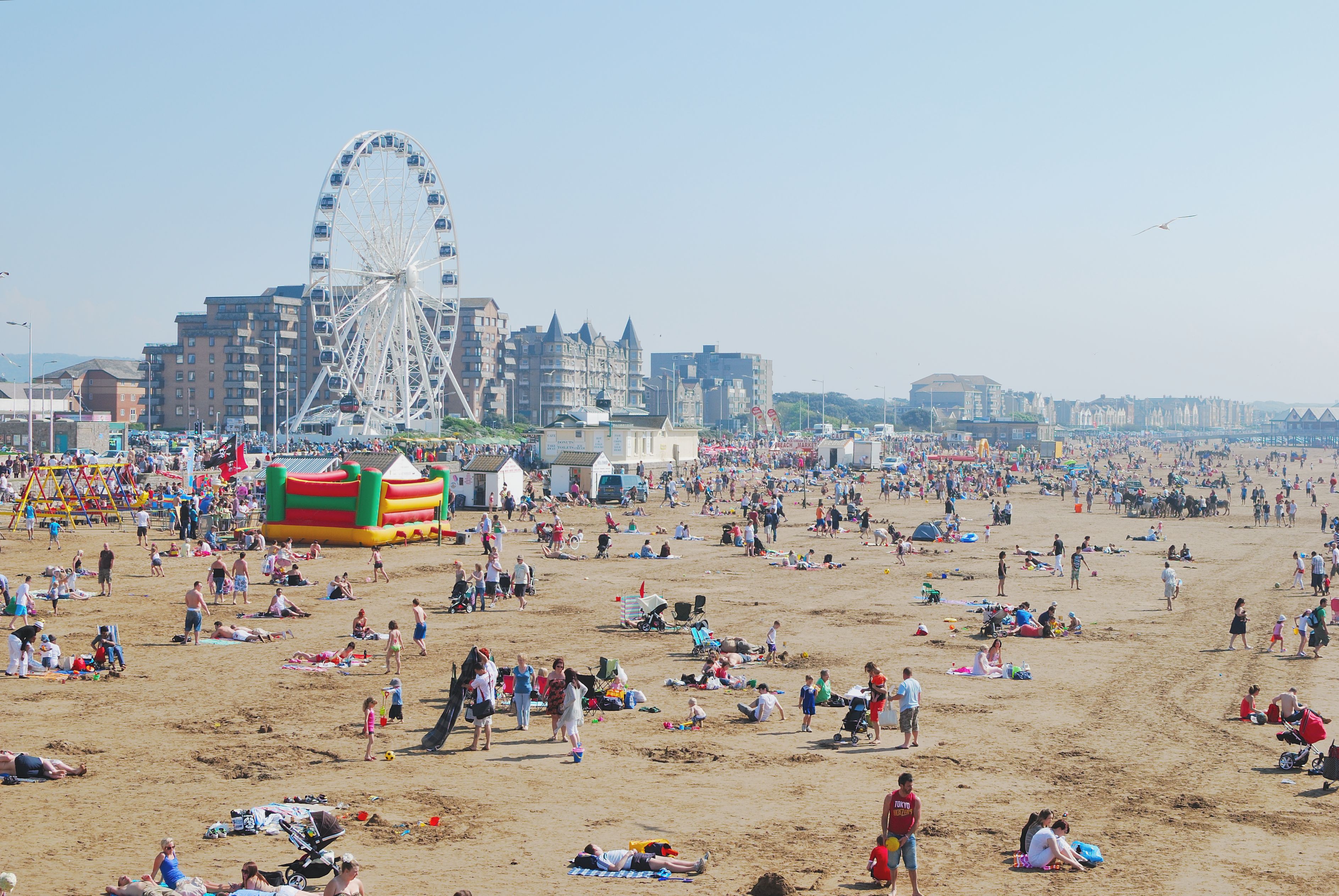
Weston-super-Mare is a tourist destination, with its long sandy beach, Helicopter Museum, Weston Museum, Grand Pier and seasonal Wheel of Weston. A 2009 survey by Visit England placed the Grand Pier in the top ten free attractions in England. However, as of 2014, the pier charges for admission. On the Beach Lawns was a miniature railway operated by steam and diesel locomotives, which closed in 2012. The Paddle Steamer Waverley and MV Balmoral offer day trips from Knightstone Island to various destinations along the Bristol Channel and Severn estuary.
Since the 1970s the number of visitors staying for several nights in the town has decreased, but the numbers of day visitors has increased. In 1995 there were 4 million visitors but by 2005 this had risen to 5.3 million. In 2007 69% of visitors to the resort were day visitors, compared to 58% in 2005. The 2005 survey showed that day visitors stay in Weston-super-Mare for an average of six hours whilst overnight visitors stay for an average of five nights. The largest percentage of visitors (22%) were from the West Midlands. Weston was found to attract two distinct groups: "grey tourists" over the age of 60 and families with young children.
The Art Deco Tropicana, once a very popular lido on the beach, suffered years of neglect before closing to the public in 2000, and despite a number of attempts to reopen it, permission was given to demolish it in 2012. However, the complex reopened in 2015 and now serves as an events space, primarily hosting a seasonal amusement park and ice rink.
In July 2011, North Somerset Council gave planning approval to the £50 million Leisure Dome, a 210 m indoor ski slope to be built on the site of RAF Locking. It was planned to include a 40 m climbing wall, a vertical wind tunnel for indoor skydiving, indoor surfing, a BMX track, a health and fitness club, and a number of shops and restaurants. The ski slope was to be the longest in the United Kingdom. In 2015 the future of the project was in doubt because of the need for additional funding, and no mention of the LeisureDome proposals appear on the information provided by St. Modwen Properties, the developers about their plans for Locking Parklands as the site is now known.
'International HeliDays', in association with The Helicopter Museum, are staged at the beach lawns over a long weekend around the end of July, when up to 75 helicopters from Europe fly in for a static display. There are frequent Helicopter Air Experience flights from the Museum heliport. There is also an annual display by the Red Arrows.
Weston Bike Nights are motorcycle meetings on the Promenade each Thursday during the summer. They are organised by The Royal British Legion Riders Branch to raise money for the Poppy Appeal.
Transport
Road
The early route into Weston was along the south side of Worlebury Hill on what became Bristol Road. As the national road network developed, Locking Road became part of the A370 road. This links Weston with Bristol and also the A38 road to the south. The M5 motorway between Birmingham and Exeter was completed in 1973 and includes a junction for Weston-super-Mare near Worle. A link road to the town centre was built later and is now the designated route of the A370. The A371 road runs east through Locking to Wells and Wincanton.
Rail

The first Weston-super-Mare railway station opened on 14 June 1841, the terminus of a short branch line from which was where Hutton Moor Lane crosses the railway. The present station opened on 1 March 1881 along with a new line which allowed trains to run through the town.
The weekday daytime in 2026 has Great Western Railway trains approximately every hour each way between Weston-super-Mare and:
- via
- or via Bristol Temple Meads
- (many of which continue to or ). There are less frequent Great Western Railway services via Bristol Temple Meads to and . There are also CrossCountry services once each day to via Bristol Temple Meads, and to via Taunton.
Worle railway station is served by most trains to and from Weston-super-Mare. Weston Milton railway station is served by the Avonmouth/Severn Beach service and a few trains on the Cardiff and London routes.
Bus
.JPG)
Weston used to have a bus station on Beach Road. When it opened in 1928 it was the only bus station in the area. It closed in 1987, since when buses have departed from various streets including on the sea front. Most services now call at the bus interchange (also known as the 'bus hub') that opened in 2022 on Regent Street adjacent to Tesco.
Most local services are provided by First West of England. These include buses to Bristol, Wells and Burnham-on-Sea as well as town routes. The service to Sand Bay is sometimes operated by an open top bus. WESTlink provides a demand-responsive minibus service for the area.
Long-distance coach services are operated by National Express and FlixBus from the bus interchange; FlixBus also calls at Worle railway station.
Air
Weston Airfield opened in 1936 and was the second busiest airfield in the country before World War II. It closed in 1978.
The nearest operational airport to Weston is now Bristol Airport, located 15 mi away at Lulsgate. The A3 'Weston Airport Flyer' bus links the town and airport.
Education

The Unitary authority of North Somerset, provides support for 78 schools, delivering education to approximately 28,000 pupils.
Secondary education is provided by Broadoak Academy, Priory Community School Academy, Winterstoke Hundred Academy, Worle Community School Academy and Hans Price Academy. The town's main further education provider is Weston College, and the town's expanding higher education provision is supplied by University Centre Weston.
Nigel Leat, a teacher at Hillside First School, was jailed indefinitely in summer 2011 for paedophile offences that happened over a 14-year period. The school's headmaster lost his job in December 2011 due to the incident.
Culture

The town contains several arts venues. The Playhouse serves both tourists and the local population. The Winter Gardens on the seafront hosts shows, exhibitions and conferences. The Blakehay Theatre & Community Arts Centre is a small venue housed in a former Baptist church. All Saints Church hosts regular concerts, some of high national standing. This church is also used for recording, especially by the Emerald Ensemble and has featured on BBC TV programme Songs of Praise.

The Odeon Cinema (now the plaza Cinema) was opened in 1935 and is a building in the modernist style designed by Thomas Cecil Howitt. It houses the only Compton theatre pipe organ in an Odeon cinema outside London and is one of only two working theatre organs left in the country still performing in their original location in commercially operating cinemas. This Compton organ was installed in 1935 and is the only one left in the West Country, the next nearest being the Odeon Leicester Square, London. All other models have been either restored and moved elsewhere, or destroyed. Occasional organ concerts continue to be held at the venue. The building has Grade II Listed status. The cinema was sold to Merlin Cinemas in 2023 and renamed Plaza Cinema, Weston-super-Mare.
The Weston Arts Festival takes place each year during September and October using local venues including the Blakehay Theatre, Playhouse, All Saints, and galleries and offering a wide range of cultural events.
.JPG)
The Tropicana was used by the artist Banksy in August 2015 for a temporary art installation named Dismaland. In 2022 it was used for another temporary art installation when a retired gas platform was repurposed as the See Monster. It was part of the national Unboxed: Creativity in the UK art festival.
The T4 on the Beach concert was hosted annually from 2006 until 2012, by Channel 4 youth programme T4. Well known bands and singers perform four or fewer of their hits. However, artists would have to organise a lip sync performance (in which the vocals are mimed) in case they were unable to sing live as the event is being produced for live TV broadcast. Each summer the beach is also used as the venue for the Weston-super-Mare Sand Sculpture Festival.
The town was the subject of a song "Sunny Weston-super-Mare" performed by local band The Wurzels. The last scenes of The Remains of the Day, a James Ivory film of 1993, were shot at locations in the town including the Grand Pier and the Winter Gardens.
.JPG)
Weston is one of the towns in the November Somerset Guy Fawkes carnival circuit. A large number of brightly illuminated 'carts' parade through the streets on an evening in November, attracting thousands of locals and visitors. The first November carnival was in 1891 although other illuminated events had taken place since 1869. Daylight summer carnivals were also held during the twentieth century.
The 2011–2013 Sky1 television comedy series The Café was co-written by Michelle Terry who was born in the town and the series was filmed in Weston-super-Mare.
News and television
The town's weekly newspaper is The Weston & Somerset Mercury, which has been serving the population since 1843. It is now owned by publishing company Archant.
Local television news programmes are BBC Points West and ITV News West Country.
Weston Super Television was an on-line community television channel set up in 2011. Its volunteers make and present studio programmes, including interviews with local councillors, musicians and community leaders, as well as filming local events in and around the town.
Twinning
Weston has been twinned with Hildesheim in Germany since 1983.
Landmarks

The Grand Pier is one of the most popular tourist attractions in the town. It houses funfair style attractions, a go-kart track, cafes, a fudge factory, and a host of arcade games, and underwent a £34 million re-development after a fire in 2008 destroyed the main pavilion. After a harsh winter which delayed progress, the new pier pavilion reopened on 23 October 2010.
Weston's first pier, Birnbeck Pier opened in 1867 but closed in 1994. The old Weston-super-Mare Lifeboat Station can be seen on the island with its 100 ft slipway. A third pier was opened near the Tropicana in 1995 for a Sea Life aquarium.
.jpg)
Knightstone Island was developed as a sea water spa in 1820. It was purchased by the physician Edward Long Fox in 1830 , linked to the mainland by a causeway and expanded with a theatre, swimming pool and sauna. After these facilities were closed, it was redeveloped with luxury apartments and commercial outlets but this was done with regard to its [listed building]] status. Historic ships Waverley and Balmoral call at Knightsone occasionally for excursions to Steep Holm and Flat Holm islands as well as short trips around Weston Bay.
The Tropicana, an outdoor swimming pool, opened in 1937 but closed in 2000. Since then it has been used for temporary events and installation art such as Dismaland in 2015 and See Monster in 2022.
The First World War memorial in Grove Park, containing a sculpture by Alfred Drury, was unveiled in 1922, with additions by Walter Cave for the Second World War. It contains the names of 402 men from the area who fell in the First World War. It consists of a winged allegorical figure of Victory holding an olive branch, which stands on an octagonal column. The memorial is a grade II listed building.
Architecture
.jpg)
Much of the character of the buildings in the town derives from the use of local stone, much of it from the Town Quarry. Notable among the architects working in the 19th century was Hans Price (1835–1912). Many examples of his work are still to be seen: the Town Hall, the Mercury Office, the Constitutional Club (originally the Lodge of St Kew), villas and numerous other domestic dwellings.
The Odeon Cinema by Thomas Cecil Howitt is notable for fully retaining many Art Deco features both internally and externally, and retaining its original theatre organ, a Compton from 1935. It is believed to be the only cinema organ in the West Country left working in its original location and is still in regular use.
Religious sites

Most of the town's churches and chapels are neo-Gothic 19th century structures. The Medieval village church of St John the Baptist was completely demolished in 1824 to make way for a new and larger place of worship. The Catholic St Joseph's Church was built in 1858 by Charles F. Hansom and extended in 1893 by Alexander Scoles.
All Saints Church was built between 1898 and 1902 to a design by George Frederick Bodley and completed by his pupil F. C. Eden in the 14th century style so favoured by Bodley. It is a Grade II* listed building. Holy Trinity Church, designed by H Lloyd and opened in 1861, is also Grade II*.
There is a Greek Orthodox Church of St Andrew the Apostle in Grove Road, Milton. Victoria Methodist Church was built in 1935–36 to replace an earlier church of 1899–1900, which was destroyed by fire in 1934.
Sport
Football team Weston-super-Mare A.F.C. play in the National League South at the purpose-built Woodspring Stadium, which opened in August 2004.
There are two rugby clubs in the town; Weston-super-Mare RFC, formed in 1875, and Hornets RFC, formed in 1962.
Somerset County Cricket Club played first class and one-day matches for one week a season on a pitch prepared at Clarence Park, near the sea front. This began in 1914 and continued until the last "festival" in 1996. Weston-super-Mare Cricket Club play at Devonshire Park Ground.
The town is well known amongst motocross enthusiasts for staging the Weston beach race every autumn. In addition, races are also held for youth riders, sidecarcross riders and quad bike competitors.
Notable people
Notable current and former residents of the town include:
- Aaron Allard-Morgan: winner of Big Brother 2011 (UK)
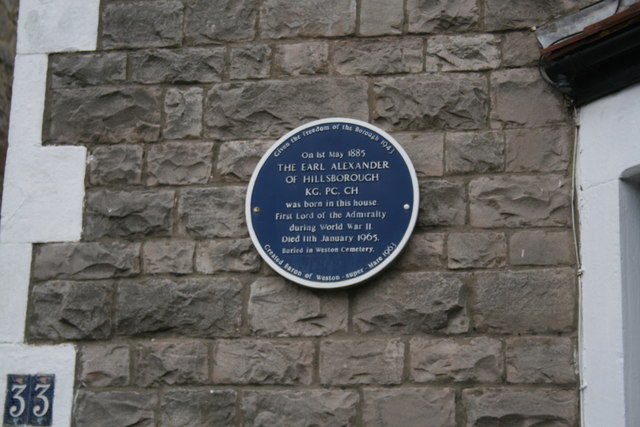
- A. V. Alexander, 1st Earl Alexander of Hillsborough: Minister of Defence in the Attlee government, raised in Weston-super-Mare
- Jeffrey Archer: author, politician and convicted perjurer
- Jhonn Balance: musician, founding member of Psychic TV and founder of Coil (band)
- Ritchie Blackmore: guitarist and founding member of Deep Purple, Rainbow and Blackmore's Night
- Peter Christopherson: musician, founding member of Throbbing Gristle, Psychic TV and Coil (band)
- John Cleese: actor and member of Monty Python
- Roald Dahl: Welsh children's author, attended St Peter's School from 1925 to 1929
- Jill Dando: murdered broadcaster and journalist, after whom the sixth form centre at Weston College and a garden in Grove Park are named
- Arthur Stanley Eddington: one of the foremost astrophysicists of the early 20th century, grew up in the town
- Henry Edwards, film actor, director and producer
- Daphne Fowler: game show champion
- William Tatem, 1st Baron Glanely, ship- and racehorse-owner, died during an air raid at 16 Malvern Road in June 1942
- Rupert Graves: actor, born and educated in the town 30 June 1963
- Bob Hope: comedian and actor, lived there as a child
- Curtis Langdon: rugby player
- Sean Martin: writer and film director
- Con O'Neill: actor
- John Oldmixon (1673–1742): historian; born in Oldmixon
- John Polkinghorne: particle physicist and theologian
- Hans Price: (1835–1912) architect; responsible for much of the Victorian architecture which gives the town its distinctive character
- Paulo Radmilovic: Olympic gold medal athlete
- Gareth Taylor: footballer; born 25 February 1972 in the town
- Michelle Terry: actress and writer
- Peter Trego: cricketer
Notes
References
References
- "Weston-super-Mare (North Somerset, South West England, United Kingdom) - Population Statistics, Charts, Map, Location, Weather and Web Information".
- (25 January 2020). "Weston-super-Mare, North Somerset: Historical and Architectural Development. Historic England Research Report 1/2020".
- "Bristol Channel Tides - ABP South Wales".
- "Weston super Mare". University of Portsmouth.
- "Weston super Mare". Bristol Nomads.
- "Miles of Golden Sands". Weston super Mare.
- Smith, A H. (1956). "English Place-Name Elements, Part II: JAFN-YTRI". Cambridge University Press (for the English Place-Name Society).
- Field, John. (2008). "Discovering Place-names: A Pocket Guide to Over 1500 Place-names in England, Ireland, Scotland and Wales". Osprey Publishing.
- (2 March 2006). "How did Weston-super-Mare get its name?". Weston, Worle & Somerset Mercury.
- Mugglestone, Lynda. (2006). "The Oxford history of English". Oxford University Press.
- Walker, David. (1998). "The Cartulary of St Augustine's Abbey, Bristol". Bristol and Gloucestershire Archaeological Society.
- Jones, Richard. (2012). "Sense of Place in Anglo-Saxon England". Shaun Tyas.
- (1980). "Domesday Book: Somerset". Phillimore.
- "Worlebury Camp". Megalithic Portal.
- "Worlebury Residents' Association.". Worlebury Residents Association.
- Bowden, M. "Worlebury Hillfort and the Linear Earthworks to its east, Weston-super-Mare, North Somerset: Archaeological Survey Report. Historic England Research Report 93/2019".
- Bateman, Emily La-Trobe. (1999). "Avon Extensive Urban Survey, Archaeological Assessment Report: Weston-super-Mare". Avon County Council/North Somerset Council.
- Broomhead, Richard. (2007). "Weston-super-Mare, church of St John the Baptist". Proceedings of the Somerset Archaeological and Natural History Society..
- Young, Andrew. (2022). "Excavation of a Roman coastal occupation site at the Hans Price building, Weston College, Weston-super-Mare, North Somerset". Proceedings of the Somerset Archaeological and Natural History Society.
- Thorn, Frank. (2011). "Defining 'Winterstoke' Hundred, Somerset". Proceedings of the Somerset Archaeological and Natural History Society.
- {{NHLE
- {{NHLE
- "The Thatched Cottage". Historic England.
- "Brief history of Weston-super-Mare". Weston-super-Mare.
- Evans, Jane. (2022). "George Cumberland: Farming - Family - Fossils". Somerset Archaeological and Natural History Society.
- Farr, Grahame Edgar. (1954). "Somerset harbours, including the port of Bristol". Christopher Johnson.
- (2002). "History & Guide: Weston-super-Mare". Tempus Publishing.
- (2004). "Hans Fowler Price: An introduction to his work in Weston-super-Mare". Weston Civic Society.
- MacDermot, E. T.. (1931). "History of the Great Western Railway, volume II 1863–1921". [[Great Western Railway]].
- District of Woodspring. (1991). "Steam to the Seaside". Woodspring Museum Service.
- "Birnbeck Pier, Weston-Super-Mare - North Somerset (UA)".
- {{NHLE
- (2001). "Weston-super-Mare Past". Phillimore.
- "The Commercial Cable Company, early development as told by the president and others". John Crellin.
- Phillips, Barrie. (1996). "Marconi – the Father of Radio". South Western Electricity Historical Society.
- (1981). "The Weston, Clevedon and Portishead Railway". Avon-Anglia.
- Oppitz, Leslie. (1990). "Tramways Remembered: West and South West England". Countryside Books.
- {{NHLE
- "Odeon Cinema". English Heritage.
- Rose, Steve. (17 July 2006). "Just add water". The Guardian.
- "RAF Weston-super-Mare". rafweb.org.
- "bombing in the Bristol area". Century of Flight.
- "Severn Estuary RCZAS NMP". english-heritage.org.uk.
- "Weston-super-Mare Municipal Borough, with list of casualties". [[Commonwealth War Graves Commission]].
- Elcock, Audrey. “Government Evacuation Schemes and Their Effect on School Children in Sheffield During the Second World War.” University of Sheffield, 1999, p. 376.
- (2004). "The Book of Weston-super-Mare with Worle and Uphill". Halsgrove.
- (6 June 2005). "Hansard Debates". [[House of Commons of the United Kingdom]].
- Bowcott, Owen. (22 July 2009). "Turning the tide". The Guardian.
- Angear, Simon. (28 August 2012). "Joy at Weston's rehab rehabilitation". Weston, Worle and Somerset Mercury.
- "Silica artwork". North Somerset Council.
- Richardson, Report by Charlotte. "Our mouldy 'carrot'...". Weston Mercury.
- (9 March 2006). "Grove Village improvements". North Somerset Council.
- (September 2010). "Stunning £34m seafront improvements wow visitors". North Somerset Council.
- "Weston pier destroyed by fire". [[Avon Fire and Rescue Service]].
- (23 October 2010). "Weston-super-Mare pier reopens two years after fire". BBC News.
- (1996). "Birnbeck Pier, a short history". North Somerset Museum Service.
- (23 December 2013). "New home for Weston-super-Mare's RNLI lifeboat". BBC.
- (13 July 2023). "Council buys derelict Birnbeck Pier 'for future generations'". BBC News.
- (27 June 2025). "Birnbeck Pier plan 'in jeopardy' as RNLI pulls out".
- "Great Weston Heritage Action Zone {{!}} Historic England".
- (17 May 2018). "Great Weston Heritage Action Zone – One Year On {{!}} Historic England".
- "A Historic Characterisation of Weston-Super-Mare and its Land and Sea Environs. Historic England Research Report 47/2018".
- Brodie, Roethe and Hudson-McAulay. (2020). "Weston-super-Mare The town and its seaside heritage".
- "Avon Structural Change order". Parliament UK.
- "Our services".
- "Your councillors".
- "Council make-up and group leaders".
- "Weston-super-Mare - General election results 2024". BBC News.
- Mark Jackson. "P100m HILLS of ENGLAND, Region 41 South Central England, Section 41A Hills of Somerset". peaklist.org.
- "Brean Down, Somerset".
- "River Axe".
- (1974). "Weston-super-Mare and Bleadon Hill". Ordnance Survey.
- "Natural England Map of Ancient Woodland Sites". Natural England.
- "Severn River Basin District". Envioprnment Agency.
- (2003). "Extreme Depositional Environments: Mega End Members in Geologic Time". [[Geological Society of America]].
- "Coast: Bristol Channel". BBC.
- "State of the park report. Chapter 5 Coasts". Exmoor National Park.
- "Citation – Ellenborough Park West". English Nature.
- "South West England: climate". Met Office.
- "Station: Weston-super-mare No 2, Climate period: 1991–2020". Met Office.
- "Monthly Extreme Maximum Temperature, Monthly Extreme Minimum Temperature". Starlings Roost Weather.
- (1842). "The Penny Cyclopaedia for the Society for the Diffusion of Useful Knowledge". Charles Knight & Co.
- Rutter, John. (1829). "Delineations of the North Western Division of the County of Somerset, and of Its Antediluvian Bone Caverns, with a Geological Sketch of the District". Longman, Rees, and Company.
- "Census 2021: Weston-super-Mare". Office for National Statistics.
- "Weston-super-Mare". City Population.
- "The Weston Vision". CPRE Avonside.
- (20 May 2004). "GKN confirms Westland sale talks". BBC News.
- (6 February 2008). "Can Weston-super-Mare cope with development?". BBC.
- "Vutrix". Vutrix.
- "Helicopter Museum". Culture24.
- "Wheel of Weston". North Somerset Council.
- (29 August 2009). "England visitor numbers 'rising'". BBC News.
- "Weston Miniature Railway". Weston Miniature Railway.
- "Knightstone". Ports and Harbours of the UK.
- "Introduction and brief tourism economy history and influences". Weston super Mare chamber of trade and commerce.
- "Introductory Section". North Somerset Council.
- "Tourism Strategy". North Somerset Council.
- (8 August 2012). "Tropicana: Government approves demolition". Weston, Worle & Somerset Mercury.
- "Tropicana history". Tropicana Weston.
- Pickstock, Heather. (18 September 2019). "The UK's biggest ice rink is opening near Bristol this winter". Bristol Post.
- Ross, Alex. (22 July 2011). "£50million Leisuredome gets planning approval". The Weston Mercury.
- "Case File". North Somerset Council.
- (17 November 2015). "Leisuredome project could be scrapped". Weston, Worle & Somerset Mercury.
- "Locking Parklands". St. Modwen.
- (17 November 2015). "Leisuredome project could be scrapped". Weston, Worle & Somerset Mercury.
- Angear, Simon. (4 August 2012). "Ski centre buy-out 'won't block Leisuredome'". The Weston Mercury.
- (28 August 2008). "Crowds turn out for Red Arrows at Weston-super-Mare". This is Western daily Press.
- (5 May 2009). "Weston Bike Night – Bigger and Better for 2009". [[Motorcycle News]].
- (1974). "Weston-super-Mare and Bridgwater". Ordnance Survey.
- "B4: Cardiff and Bristol to Weston-super-Mare and Taunton".
- (2013). "Badgerline: Bristol's country buses". Ian Allan Publishing.
- (6 February 2022). "Weston-super-Mare's £6.8 million bus hub opens after delay".
- Frost, Sam. (27 October 2017). "Alexandra Parade to become bus interchange as part of big changes to Weston town centre's roads".
- "First Bus routes in Weston-super-Mare". First Bus.
- "Sand Bay: Weston-super-Mare’s Serene Coastal Escape".
- "Weston rural".
- "Route Map". National Express.
- "FlixBus stop: Weston super Mare Alexandra Parade". FlixBus.
- "FlixBus stop: Worle Station - Diamond Batch Car Park Stop". FlixBus.
- "Google".
- "Weston Airport Flyer".
- "Schools". North Somerset.
- "Higher Education". Weston College.
- Morris, Steven. (26 January 2012). "Nigel Leat school 'failed on every level' to prevent his sexual abuse of pupils". The Guardian.
- (26 January 2012). "Paedophile teacher Nigel Leat 'too cuddly'". BBC News.
- "Our History". Clarence Park Baptist Church.
- "Songs of Praise factsheet for Sunday 23 November 2008". BBC.
- "Odeon Weston-super-Mare". Cinema Treasures.
- {{NHLE
- (9 August 2023). "Merlin Cinemas announce purchase of Weston's ODEON". [[The Weston & Somerset Mercury]].
- "Plaza Weston".
- "Weston super Mare Arts Festival". Weston super Mare Arts Festival.
- "Location – Dismaland".
- (23 September 2022). "Weston-super-Mare See Monster opens to public". BBC News.
- [[T4 on the Beach#T4 on the Beach 2012]]
- (29 April 2006). "Bands threaten to pull out of T4 event". digital spy.
- "Weston super Mare sand sculpture festival". Weston super Mare sand sculpture festival.
- "Wurzelmania". Somerset Made.
- "The Remains of the Day film locations". The Worldwide Guide to Movie Locations.
- "A night to remember at town carnival".
- "Somerset seafront sitcom The Cafe ready for airing on Sky One". This is Somerset.
- "Michelle is right at home for new Sky comedy show". [[Weston Mercury]].
- "Weston & Somerset Mercury". British Newspapers Online.
- "A day in the life of Points West". BBC.
- "ITV regional TV coverage maps". Redwood advertising.
- Henzell, Beth. (17 February 2011). "TV station for Town". Weston, Worle & Somerset Mercury.
- (31 October 2011). "Have you heard about Weston Super Television?". Western and North Somerset Echo.
- "Weston Super Television". Weston Super Television.
- (16 August 2008). "Special service on burnt-out pier". BBC News.
- (4 September 2009). "Weston Hildesheim Exchange". Weston-super-Mare People.
- (22 October 2008). "Pier blaze 'probably electrical'". BBC News.
- (23 October 2010). "Weston-super-Mare pier reopens two years after fire". BBC News.
- (2000). "The Story of Weston-super-Mare Lifeboats". Jeff Morris.
- (19 November 2008). "Heritage Matters". Mendip District Council.
- Smith, Leonard. (June 2008). "A Gentleman's mad-doctor in Georgian England: Edward Long Fox and Brislington House". [[History of Psychiatry (journal).
- {{NHLE
- (8 June 2012). "Weston-super-Mare Tropicana demolition". This is Bristol.
- "Funland at the Tropicana".
- {{National Heritage List for England
- "Odeon Cinema". Cinema Organ Society.
- [[Historic England]], [https://taking-stock.org.uk/building/weston-super-mare-st-joseph/ Weston-super-Mare], ''Taking Stock'', retrieved 3 June 2022
- {{NHLE
- {{NHLE
- "Orthodox churches in the UK". The Hellenic Book Service.
- (3 January 1936). "Up-to-date Methodist church at Weston". The Western Daily Press.
- "History". Weston super Mare AFC.
- "Weston RFC History".
- "Hornets History". Hornets RFC.
- (19 March 2010). "Campaign to bring back cricket festival". Weston & Somerset Mercury.
- "Devonshire Park Ground, Weston-super-Mare". CricketArchive.
- (11 October 2009). "Weston Beach race cancelled after pile-up injures 21 riders". The Daily Telegraph.
- "Big Brother winner's new bar venture". Weston, Worle & Somerset Mercury.
- "The Papers of A V Alexander". Cambridge University.
- Hough, Andrew. (7 December 2009). "Jeffrey Archer lands 'record £18 m deal for modern Forsyte Saga'". The Daily Telegraph.
- (25 November 2010). "Obituary for Peter Christopherson". The Vinyl Factory.
- "Ritchie Blackmore". Ritchie Blackmore.com.
- "Interview in 'The Wire'". The Wire.
- (21 March 2018). "Roald Dahl plaque for 'seedy' Weston-super-Mare - BBC News". Bbc.com.
- Barker, Dennis. (27 April 1999). "Jill Dando Obituary". The Guardian.
- (2000). "The Historical Development of Quantum Theory: Pt. 1, the Fundamental Equations of Quantum Mechanics, 1925–1926, Jagdish Mehra". Springer.
- "Edwards, Henry (1883-1952)". BFI.
- "Daphne Fowler – Quiz Players".
- "Tatem, William James". Commonwealth War Graves Commission.
- "Biography". Rupert Graves Online.
- "Bob (and Dolores) Hope". adoption.com.
- (23 January 2015). "Young Gun: Curtis Langdon – St Paul's & London Irish hooker".
- "Sean Martin". Internet Movie Database.
- (19 March 2007). "20 Questions With ... Con O'Neill". Whats on Stage.
- {{cite EB1911
- "John Polkinghorne". Gifford Lectures.
- "The History of the Blakehay". Weston super Mare Town Council.
- "Paul Radmilovic". Sports Reference.
- "Gareth Taylor Profile and Career". FastScore.com.
- (7 May 2009). "Gareth Taylor". Sky Sports.
- (18 November 2011). "The Cafe: Hoping for a big splash". The Stage.
- "Peter Trego". Cricinfo.
This article was imported from Wikipedia and is available under the Creative Commons Attribution-ShareAlike 4.0 License. Content has been adapted to SurfDoc format. Original contributors can be found on the article history page.
Ask Mako anything about Weston-super-Mare — get instant answers, deeper analysis, and related topics.
Research with MakoFree with your Surf account
Create a free account to save articles, ask Mako questions, and organize your research.
Sign up freeThis content may have been generated or modified by AI. CloudSurf Software LLC is not responsible for the accuracy, completeness, or reliability of AI-generated content. Always verify important information from primary sources.
Report