From Surf Wiki (app.surf) — the open knowledge base
West Highland Line
Railway line in Scotland

Railway line in Scotland
| Field | Value | |
|---|---|---|
| name | West Highland Line | |
| image | A Glasgow - Fort William train climbs onto Rannoch Moor - geograph.org.uk - 676941.jpg | |
| image_width | 270px | |
| caption | A First ScotRail train to crossing Rannoch Moor in August 2007 | |
| type | Rural Rail | |
| system | National Rail | |
| status | Operational | |
| locale | ||
| start | ||
| end | ||
| stations | 33 | |
| owner | Network Rail | |
| operator | ||
| stock | ||
| linelength | ||
| tracks | Single-track | |
| gauge | ||
| speed | 70 mph maximum | |
| map | [[File:West Highland Line.png | 270px]] |
| (Click to expand) |
(Click to expand) The West Highland Line ( – "Iron Road to the Isles") is a railway line linking the ports of Mallaig and Oban in the Scottish Highlands to Glasgow in Central Scotland. The line was voted the top rail journey in the world by readers of independent travel magazine Wanderlust in 2009, ahead of the notable Trans-Siberian line in Russia and the Cuzco to Machu Picchu line in Peru. The ScotRail website has since reported that the line has been voted the most scenic railway line in the world for the second year running.
The West Highland Line is one of two railway lines that access the remote and mountainous west coast of Scotland, the other being the Kyle of Lochalsh Line which connects Inverness with Kyle of Lochalsh. The line is the westernmost railway line in Great Britain.
At least in part, the West Highland Line is the same railway line as that referred to as the West Highland Railway.
History
The route was built in several sections:
- Glasgow Queen Street to Cowlairs Junction - Edinburgh and Glasgow Railway
- Cowlairs Junction to Bowling - Glasgow, Dumbarton and Helensburgh Railway (later absorbed into the Edinburgh and Glasgow Railway)
- Bowling to Dumbarton Central - Lanarkshire and Dumbartonshire Railway, operated by the Caledonian Railway
- Dumbarton Central to Dalreoch - Caledonian and Dumbartonshire Junction Railway
- Dalreoch to Craigendoran - Glasgow, Dumbarton and Helensburgh Railway
- Craigendoran to Fort William (opened 11 August 1894) - West Highland Railway sponsored by the North British Railway
- Crianlarich to Oban - Callander and Oban Railway, operated by the Caledonian Railway.
There is an additional section from Fort William (or a junction near Fort William) to Mallaig, built as the Mallaig Extension Railway. The West Highland Railway approved the construction of the line at their annual meeting in January 1895.
The line faced potential closure as part of the Beeching cuts in 1963 and again in 1995 due to reduced revenues.
Route description
Shortly after leaving Glasgow Queen Street station, and beyond Queen Street Tunnel, the line diverges from the main trunk route to and at and follows a northwesterly course through the suburbs of Maryhill and Kelvindale. Between and Dumbarton, the route is shared with the North Clyde Line to before branching northward at Craigendoran Junction towards , the section where the West Highland Line itself is generally accepted to begin. It gives high-level views of the Gare Loch and Loch Long before emerging alongside the northwesterly shores of Loch Lomond, then climbs Glen Falloch to .
The branch to Oban diverges at Crianlarich, an important Highland junction of both road and rail, and runs through Glen Lochy to and through the Pass of Brander to reach salt water at and before a final climb over a hill to . About 3 mi from Crianlarich, the Mallaig and Oban routes both pass through the village of Tyndrum, but they are served by separate stations, making it an unusually small settlement to be served by more than one railway station.
After , the line to Mallaig climbs onto Rannoch Moor, past the former crossing point at Gorton Crossing to station. In winter, the moor is often covered with snow, and deer may be seen running from the approaching train. The station at on the moor is one of the most remote stations in Britain and is not accessible by any public road. This is the summit of the line at 1347 ft (410 m) above sea level. Carrying on northwards, the line descends above the shores of Loch Treig and through the narrow Monessie Gorge. The final stop before Fort William is . The section between Fort William and Mallaig passes over the Glenfinnan Viaduct, through Arisaig with its views of the Small Isles of Rùm, Eigg, Muck and Canna, and the white sands of Morar before coming to Mallaig itself.
With the exception of the route between Glasgow Queen Street and Helensburgh Upper, and the short section between Fort William Junction and Fort William station, the railway is signalled using the Radio Electronic Token Block, controlled from the signal box at Banavie station.
Services
Passenger services on the line are operated by ScotRail and Caledonian Sleeper. As of May 2021, the service pattern is as follows:
- 3tpd each way Mallaig -
- 1tpd each way Mallaig -
- 1tpd Oban - Dalmally
- 6tpd each way Oban - Glasgow Queen Street. Additionally, 1tpd Glasgow Queen Street - Oban (one way only)
All of the services from Glasgow Queen Street - Mallaig are combined with services to Oban, splitting at Crianlarich. Similarly, two of the return services combine at Crianlarich.
During the summer season from May until October a steam locomotive-hauled daily return service between Fort William and Mallaig known as The Jacobite is operated by West Coast Railways. There is one train a day in May, September and October, and two trains per day from June until the end of August.
Caledonian Sleeper operates a nightly service from Fort William to London Euston.
Onward ferry connections operated by Caledonian MacBrayne are available from Mallaig to the Isle of Skye, to the small isles of Rùm, Eigg, Muck, and Canna, to South Uist, and to Inverie on the Knoydart peninsula. From Oban ferries sail to the islands of Lismore, Colonsay, Coll, Tiree, Mull and Barra.
As of 2021, there is a single regular freight operation on the line, consisting of alumina services from North Blyth to a smelter near Fort William.
Route timings
Since improvements to Scottish trunk roads in the 1980s, a train journey can take significantly longer than the equivalent road journey. There are several reasons for this. The line is entirely single track once it leaves the North Clyde suburban network at and trains must wait at stations with crossing loops for opposite direction trains to pass. Even when no crossing is timetabled, each train must pause at the various token exchange points whilst the driver contacts the main signalling centre at to swap tokens electronically and obtain permission to proceed. Up to 15 minutes have to be allocated for trains to divide or combine at the junction station at , whilst trains heading to/from Mallaig also have to reverse at Fort William & traverse the Banavie swing bridge at low speed. A further issue is finding suitable timetable paths for Oban & Mallaig trains on the busy North Clyde line, which carries an intensive local stopping service. As West Highland trains only stop at Dumbarton Central and Dalmuir on this stretch, it is not uncommon for them be delayed by a preceding local train and so recovery time has to be included in their schedules to reduce the possibility of a late arrival in Glasgow.
Over much of the Rannoch Moor section the speed limit is 60 mph for the Sprinter and 70 mph on the approach to Rannoch station. The Caledonian Sleeper travels at 40 mph maximum, slowing down for a number of bridges on the route due to the heavy weight of the locomotive which hauled the train until the end of the old franchise in April 2015. The operator of the sleeper Serco has replaced these with refurbished electro-diesels since it took over, which have a lighter axle load; it is not yet clear whether the new locomotives will be cleared to run at higher speeds now they are in service.
Rolling stock
| Class | Image | Operator | Route | Maximum speed | Builder/Built | In service on the line | Leased from | Notes | mph | km/h | Past rolling stock (from 1980) | Current fleet | |
|---|---|---|---|---|---|---|---|---|---|---|---|---|---|
| [[File:The Royal Scotsman at County March Summit - geograph.org.uk - 772782.jpg | 150px]] | British Rail (Until 1983) | |||||||||||
| BR ScotRail (From 1983) | to / (Until 1989) | ||||||||||||
| London Euston to | |||||||||||||
| (Takes over from electric loco at Edinburgh) | |||||||||||||
| Freight | 80 | 130 | English Electric | ||||||||||
| 1960-1965 | 1981-1985 | N/A | Class 37/0 | ||||||||||
| BR ScotRail | Glasgow Queen Street to Oban/Mallaig (Until 1989) | ||||||||||||
| London Euston to Fort William | |||||||||||||
| (Takes over from electric loco at Edinburgh) | |||||||||||||
| Freight | 90 | 145 | 1985-2006 | Class 37/4 | |||||||||
| BR Standard Class 4 2-6-0 | [[File:76079 Castleton East Junction.jpg | 150px]] | West Coast Railways | Fort William to Mallaig | 60 | 96 | Horwich Works 1957 | The Jacobite | |||||
| LNER Class K4 2-6-0 | [[File:61994 The Great Marquess in Blaenau Ffestiniog.jpg | 150px]] | Darlington Works 1938 | ||||||||||
| Mark 1 Passenger Coach | [[File:Mark 1 coach 6313 at Bristol Temple Meads 2006-03-01 05.jpg | 150px]] | British Rail (Until 1983) | ||||||||||
| BR ScotRail (From 1983) | |||||||||||||
| Royal Scotsman (1985 - 1989) | Glasgow Queen Street to Oban or Mallaig | 100 | 160 | 1951-1963 | 1961-1989 | N/A | |||||||
| Mark 2 Passenger Coach | [[File:Caledonian Sleeper in Fort william.JPG | 150px]] | Caledonian Sleeper | London Euston to Fort William | 100 | 160 | BREL 1963-1975 | 1964-2019 | It was replaced by the Mark 5 passenger coach. | ||||
| Mark 3 Sleeper Coach | [[File:Caledonian Sleeper at Euston.jpg | 150px]] | Caledonian Sleeper | London Euston to Fort William | 125 | 200 | BREL 1979-1980 | 1980-2019 | It was replaced by the Mark 5 sleeping coach. | ||||
| [[File:Class 66 66708 GBRF Hatton 09-05-19 (47810954931).jpg | 150px]] | Freight | 75 | 120 | Electro-Motive Diesel 1998-2015 | 2000- | N/A | Class 66/7 | |||||
| Belmond Limited | Special Passenger Workings | ||||||||||||
| (Royal Scotsman) | GB Railfreight | ||||||||||||
| [[File:67004Waverley.jpg | 150px]] | First ScotRail (Until 2015) | |||||||||||
| Caledonian Sleeper | London Euston to Fort William | ||||||||||||
| (Took over from electric loco at Edinburgh) | 125 | 200 | Alstom 1999-2000 | 2006-2016, 2023- | DB Cargo UK | ||||||||
| [[File:73966, Class 73 Electro-diesel in Caledonian Sleeper livery at Fort William Station.JPG | 150px]] | 90 | 145 | British Railways Eastleigh Works 1962 | |||||||||
| English Electric 1965-1967 | |||||||||||||
| Rebuilt 2014-2016 | 2016- | GB Railfreight | Replaced Class 67 when their lease from DB Cargo UK Expired Class 73/9. | ||||||||||
| [[File:Exeter TCD - GWR 153377.JPG | 150px]] | ScotRail (2021-present) | Glasgow Queen Street to Oban/Mallaig | 75 | 120 | Leyland Bus 1987-1988 as | |||||||
| Converted to Class 153 by Hunslet-Barclay 1991-1992 | 2021– | N/A | In service from 19 July | ||||||||||
| [[File:156 458 near Inverlochy Castle.jpg | 150px]] | BR ScotRail (until 1997) | |||||||||||
| National Express (1997-2004) | |||||||||||||
| First ScotRail (2005-2015) | |||||||||||||
| ScotRail (2015-present) | Metro-Cammell 1987-1989 | 1989– | |||||||||||
| LMS Stanier Class 5 4-6-0 | [[File:The Jacobite Express - geograph-3677281-by-Stuart-Wilding.jpg | 150px]] | West Coast Railways | Fort William to Mallaig | 60 | 96 | Armstrong Whitworth (45212 & 45407) 1935 & 1937 | - | The Jacobite | ||||
| Peppercorn Class K1 | [[File:The Jacobite - geograph.org.uk - 902375.jpg | 150px]] | 60 | 96 | North British Locomotive Company 1949-1950 | - | |||||||
| Mark 1 Passenger coach | [[File:West Coast Railways Mk1 SK 99712 (25893) at Taunton.JPG | 150px]] | 100 | 160 | Cravens 19511963 | ||||||||
| Mark 2 Passenger Coach | [[File:Caledonian Sleeper in Fort william.JPG | 150px]] | 100 | 160 | BREL 1963–1975 | ||||||||
| Pullman Mark 3 coach | [[File:Dining car - geograph.org.uk - 892799.jpg | Dining car - geograph.org.uk - 892799 | 150px]] | Belmond Limited | Special Passenger Workings | ||||||||
| (Royal Scotsman) | 125 | 200 | BREL 1979–1980 | ||||||||||
| Mark 3 Sleeper Coach | [[File:Caledonian Sleeper at Euston.jpg | 150px]] | Belmond Limited | Special Passenger Workings | |||||||||
| (Royal Scotsman) | 125 | 200 | BREL 1979–1980 | ||||||||||
| Mark 5 Passenger Coach | [[File:CAF mk5 sleeper coach.jpg | 150px]] | Caledonian Sleeper | London Euston to Fort William | 100 | 160 | CAF 2016–2018 | Oct 2019– | Caledonian Sleeper Rail Leasing | It replaced the Mark 2 passenger coach. | |||
| Mark 5 Sleeper Coach | It replaced the Mark 3 sleeping coach. |
In early 2018 it was widely reported that would be used from Q3-Q4 2018 to replace the Class 156s. However, following investigation it was discovered that the line does not have sufficient gauge clearance for the class. studies were still ongoing.
Notable railway-related features
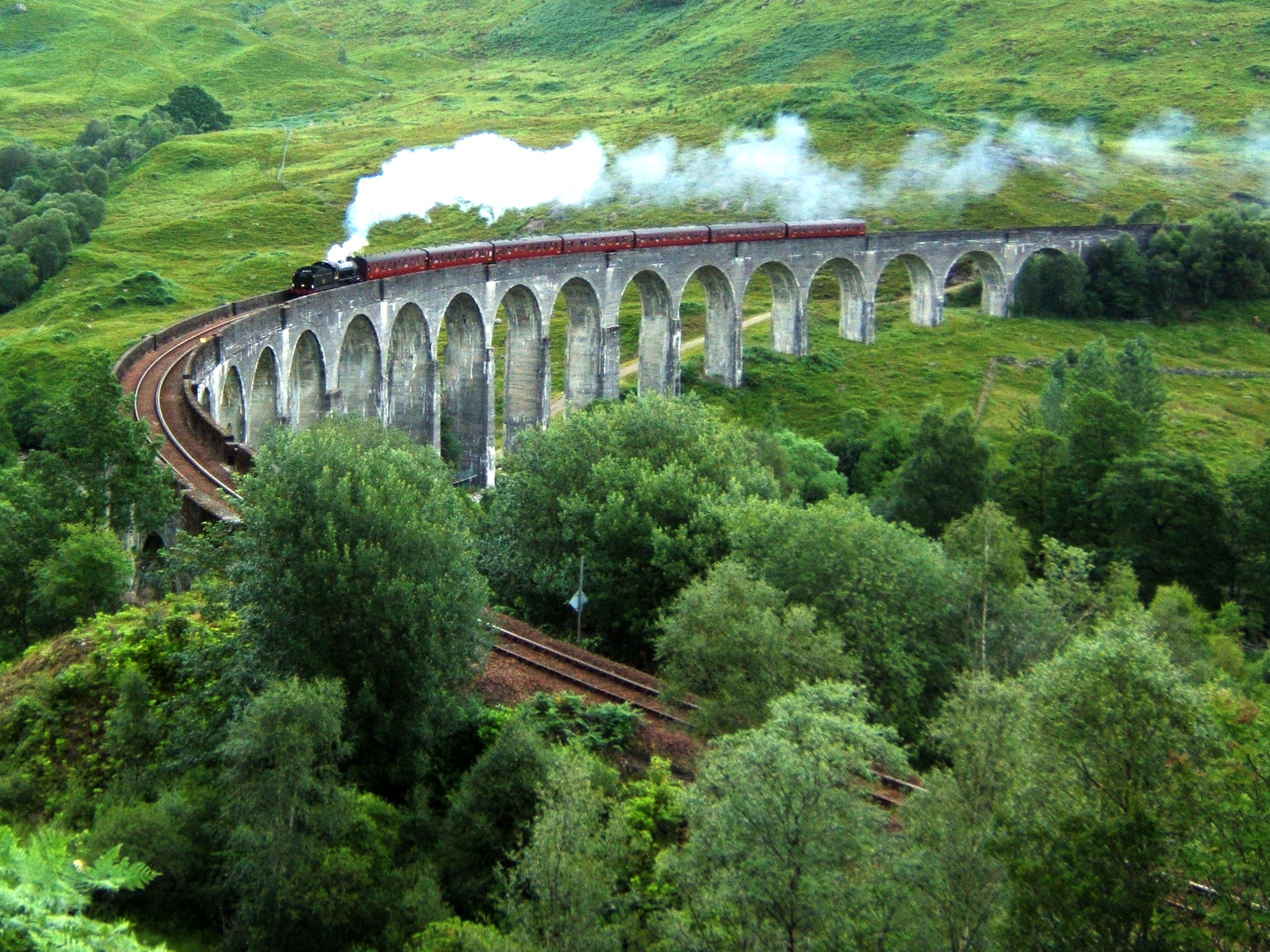
- The Horse Shoe Curve, between and
- The Cruach Rock snowshed, between and
- Glenfinnan Viaduct, between and
- The Pass of Brander stone signals, between and
- is the most westerly railway station in Great Britain
The two branches of the line are described in detail by John Thomas in his two books (see ).
Route in detail
Places served along the route from Glasgow Queen Street are listed below. Sleeper services to Fort William start, however, at London Euston, calling at and Queen Street Low Level (to pick up or set down depending on direction).
| Place | Station | OS reference | Notes | Glasgow to Crianlarich | Glasgow | Dalmuir | Dumbarton | Helensburgh | Garelochhead | Arrochar and Tarbet | Ardlui | Crianlarich | Crianlarich to Oban | Tyndrum | Dalmally | Loch Awe | Loch Awe | Taynuilt | Connel | Oban | Crianlarich to Fort William | Tyndrum | Bridge of Orchy | Rannoch | Corrour | Tulloch | Roy Bridge | Spean Bridge | Fort William | Fort William and Mallaig route | Banavie | Corpach | Loch Eil | Loch Eil | Glenfinnan | Lochailort | Beasdale | Arisaig | Morar | Mallaig |
|---|---|---|---|---|---|---|---|---|---|---|---|---|---|---|---|---|---|---|---|---|---|---|---|---|---|---|---|---|---|---|---|---|---|---|---|---|---|---|---|---|
| Request stop for the Caledonian Sleeper. | ||||||||||||||||||||||||||||||||||||||||
| At Crianlarich the former West Highland Railway route to Fort William and Mallaig links to the remaining section of the former Callander and Oban Railway to Oban | ||||||||||||||||||||||||||||||||||||||||
| Used mainly by hikers | ||||||||||||||||||||||||||||||||||||||||
| Request stop for the Caledonian Sleeper | ||||||||||||||||||||||||||||||||||||||||
| Request stop for the Caledonian Sleeper | ||||||||||||||||||||||||||||||||||||||||
| Services from Glasgow reverse out of Fort William to continue to Mallaig. | ||||||||||||||||||||||||||||||||||||||||
| The Jacobite runs from Fort William to Mallaig. | ||||||||||||||||||||||||||||||||||||||||
| Request stop | ||||||||||||||||||||||||||||||||||||||||
| Request stop | ||||||||||||||||||||||||||||||||||||||||
| Request stop | ||||||||||||||||||||||||||||||||||||||||
| Ferries link Mallaig to Armadale, the Isle of Skye, South Uist and the Small Isles |
West Highland Line in film


- Glenfinnan Viaduct, on the line between Fort William and Mallaig, is a filming location for the Hogwarts Express in the Harry Potter series of films.
- Eddie McConnell's poetic documentary A Line for All Seasons (1970) showcases the line and its history set against the scenery of the western highlands as it changes through the seasons.
- features in Trainspotting (1996), directed by Danny Boyle.
Museum
There is a museum dedicated to the history of the West Highland Line situated at Glenfinnan station.
Future
In the Scottish Government's National Transport Strategy, published in February 2020, it was stated that the line will not be electrified with overhead lines. Instead, an alternative to diesel traction will be found.
Notes
References
Footnotes
Sources
References
- Network Rail. "Delivering for You - Route Plans 2007".
- (2009-02-06). "Highland train line best in world". BBC News.
- (2009-02-05). "Wanderlust Travel Awards announced".
- (2009-02-06). "Highland line voted world's most scenic train journey".
- "West Highland Railway Line {{!}} Oban {{!}} Fort William {{!}} Mallaig {{!}} ScotRail".
- (12 August 1894). "Opening of the West Highland Railway". The Observer.
- (13 August 1894). "A New Highland Railway". The Bristol Mercury and Daily Post, Western Countries and South Wales Advertiser.
- Fine, Mary Jane. (26 January 2003). "Fling: Highland train". The Record.
- (15 August 1895). "Railway Enterprise in the North - Railway extension in the West Highlands". The Courier and Argus.
- (28 April 1894). "The West Highland Railway (Mallaig Extension) Bill". Glasgow Herald.
- (18 January 1895). "Railway Meetings - West Highland Railway". Glasgow Herald.
- Ascherson, Neal. (13 January 1963). "Lifeline in Jeopardy". The Observer.
- Johnson, Maureen. (14 May 1995). "Scottish rail ride faces closure". Johnson City Press.
- O'Kelly, Lisa. (14 May 1995). "Deerstalker sees light at end of the tunnel". The Observer.
- (10 January 1895). "The Weather - The snow blocks in Scotland - A passage cut through the West Highland Line". Sheffield and Rotherham Independent.
- (8 February 1895). "(untitled)". Glasgow Herald.
- (9 January 1895). "The storm disasters". Aberdeen Journal, and General Advertiser for the North of Scotland.
- Clive Kessell. (28 October 2025). "RETB 40 years on".
- (May 2021). "West Highlands Timetable May 2021".
- (May 2021). "London to Fort William timetable".
- (2021-02-18). "End of freight on Harry Potter line".
- Munro, Alistair. (2 February 2021). "End of the line? West Highland Line freight fears".
- "Class 73s for sleeper train".
- Dave Coxon. "Class 155 Super Sprinter DMU".
- "Class 153 - Arriva Trains Wales, Great Western Railway, East Midlands Trains, Arriva Rail North".
- "2018 AGM Report".
- Hawkes, Will. (16 February 2020). "Slow train's rewards just outside window". The Philadelphia Inquirer.
- "Full record for 'LINE FOR ALL SEASONS, a'".
- Shirres, David. "Decarbonising Scotland's Railway".
This article was imported from Wikipedia and is available under the Creative Commons Attribution-ShareAlike 4.0 License. Content has been adapted to SurfDoc format. Original contributors can be found on the article history page.
Ask Mako anything about West Highland Line — get instant answers, deeper analysis, and related topics.
Research with MakoFree with your Surf account
Create a free account to save articles, ask Mako questions, and organize your research.
Sign up freeThis content may have been generated or modified by AI. CloudSurf Software LLC is not responsible for the accuracy, completeness, or reliability of AI-generated content. Always verify important information from primary sources.
Report