From Surf Wiki (app.surf) — the open knowledge base
Wenzhou

| Field | Value | |
|---|---|---|
| name | Wenzhou | |
| other_name | Wenchow, Iu Tsiu, Dong Ou | |
| native_name | 温州市 | |
| native_name_lang | zh-Hans | |
| settlement_type | Prefecture-level city | |
| total_type | ||
| motto | ||
| image_skyline | {{multiple image | |
| border | infobox | |
| total_width | 290 | |
| image_style | border:1; | |
| perrow | 1/2/2 | |
| image1 | Vue générale de Wenzhou.JPG | |
| caption1 | Wenzhou skyline | |
| image2 | Shopping street in Wenzhou.jpg | |
| caption2 | Wuma shopping street | |
| image3 | Jiangxin_Temple_07_2018-10.jpg | |
| caption3 | Jiangxin Temple | |
| image4 | Pearl Beach.jpg | |
| caption4 | Pearl Beach | |
| image5 | 温州市图书馆_-_panoramio_(1).jpg | |
| caption5 | Wenzhou Library | |
| image_map | ||
| image_map1 | Location map of Wenzhou, Zhejiang.png | |
| map_caption1 | Location of Wenzhou City jurisdiction in Zhejiang | |
| pushpin_map | China | |
| pushpin_label_position | right | |
| pushpin_map_caption | Location in China | |
| pushpin_mapsize | ||
| subdivision_type | Country | |
| subdivision_name | China | |
| subdivision_type1 | Province | |
| subdivision_name1 | Zhejiang | |
| subdivision_type2 | County-level divisions | |
| subdivision_name2 | 9 | |
| seat_type | Municipal seat | |
| seat | Lucheng District | |
| parts_style | ||
| parts | ||
| p2 | ||
| leader_title | CPC City Secretary | |
| leader_name | Zhang Zhenfeng (张振丰) | |
| leader_title1 | Mayor | |
| leader_name1 | Zhang Wenjie (张文杰) | |
| established_title | ||
| established_title1 | ||
| established_title2 | ||
| named_for | ||
| area_total_km2 | ||
| area_land_km2 | 12255.74 | |
| area_water_km2 | ||
| area_urban_km2 | 1243.4 | |
| area_blank1_km2 | ||
| elevation_footnotes | ||
| elevation_min_ft | ||
| population_as_of | 2020 census | |
| population_footnotes | ||
| population_total | 9,572,903 | |
| population_density_km2 | ||
| population_metro | 6,642,592 | |
| population_blank1 | 15th | |
| population_urban | 3,604,446 | |
| population_density_urban_km2 | auto | |
| population_blank1_title | Rank in China | |
| demographics_type2 | GDP | |
| demographics2_title1 | Prefecture-level city | |
| demographics2_info1 | CN¥ 972 billion | |
| US$ 136.5 billion | ||
| demographics2_title2 | Per capita | |
| demographics2_info2 | CN¥ 101,524 | |
| US$ 14,256 | ||
| <!-- General information ---------------> | timezone | China Standard |
| utc_offset | +8 | |
| coor_pinpoint | Wenzhou municipal government | |
| coordinates | ||
| postal_code_type | Postal code | |
| postal_code | 325000 | |
| area_code | 0577 | |
| blank2_name | License Plate | |
| blank2_info | 浙C | |
| iso_code | CN-ZJ-03 | |
| blank4_name | Spoken language | |
| blank4_info | Wenzhounese | |
| blank5_name | ||
| website | www.wenzhou.gov.cn |
Default is list if up to 5 items, coll if more than 5-- US$ 136.5 billion US$ 14,256
Archaeological evidence shows that human activity in the area dates back at least 5,000 years. The Ou people, also known as the Ouyue and part of the wider Yue people, established the polity of Dong’ou by at least the fourth century BC and voluntarily surrendered to the Han dynasty of China in 138 BC. The area was successively organised under different administrative names and ranks, including Yongning County from 138, Yongjia Commandery from 323, and Wenzhou Prefecture from 675, later being promoted to Rui’an Fu in 1265 and renamed Wenzhou Circuit in 1276. In the Ming and Qing periods it was known as Wenzhou Fu, and in 1914 it was designated Ouhai Circuit. Despite repeated changes in administrative status and territorial extent, the seat of Wenzhou prefecture and Yongjia county has remained within the walled city first established in the 4th century, until 1949 when the county seat of Yongjia moved away.
A major seaport in southeastern China, Wenzhou was authorised as a foreign trade port during the Song (960–1279) and Yuan (1271–1368) periods, was designated as a treaty port following the 1876 Chefoo Convention, and in 1984 was designated as one of China’s first 14 open coastal cities. Historically, Wenzhou has been renowned for its developed handicraft industries, and is recognised as one of the places of origin of Chinese celadon. Noted during the Southern Song (1127–1279) for the Yongjia School, city has long upheld cultural traditions emphasising commercialism and utilitarianism. A birthplace of China’s private economy, the city pioneered most other Chinese cities in economic reforms since 1978, prompting extensive debates over the Wenzhou model of economic development.
The city is also known for its religious tradition and widespread overseas communities. Since the 1990s, large numbers of Wenzhou people have migrated to other parts of China and overseas, making Wenzhou a major hometown of overseas Chinese. By 2025, more than two million people of Wenzhou origin were living worldwide, including over 800,000 overseas Chinese across more than 100 countries, forming over 200 Wenzhou chambers of commerce and more than 300 overseas Chinese associations, together constituting a vast business network. With the highest proportion of religious believers among Chinese cities and Buddhism as the predominant religion, the city has also been referred to as “China’s Jerusalem”, as it has more Christians than any other Chinese city.
Etymology and terminology
Uen1tseu1 (Shanghainese)
Wenzhou was originally inhabited by the Ou people, also known as the Ouyue, who formed part of the wider Yue people. The Ou established their capital at Dong’ou, and the region was therefore also known as Ou or Dong’ou. The earliest textual reference appears in the Classic of Mountains and Seas, which describes the area as “Ou dwells in the midst of the sea”.
In 323, the Jin dynasty established Yongjia Commandery, with its territory covered both banks of the Ou River, and the name “Yongjia” was taken to mean “long and beautiful waters”. The old city was designed by the Jin dynasty scholar Guo Pu in accordance with feng shui principles. Observing that the surrounding mountains resembled the Northern Dipper, Guo based the city’s layout on this configuration, giving rise to the alternative name Doucheng, or the “Dipper City”. According to local legend, when the city was founded a white deer carrying flowers appeared, hence the names Lucheng or the “Deer City”.
In 675, the Tang dynasty established Wen Zhou, or Wenzhou Prefecture. Its name, literally meaning “the warm prefecture”, derived from the area’s location west of Wenjiao Mountain, where slash-and-burn agriculture was widely practised and the land remained comparatively warm in winter, with severe cold being rare. The prefectural seat of Wenzhou and the county seat of Yongjia were in the same walled city from 675 to 1949, making the two names often interchangeable in the history. In early European sources, the name Wenzhou Fu or -Foo was often transcribed Ouen-tcheou-fou or Wen-tcheou after the accounts of French-speaking missionaries.{{cite book
History
The Ou people
The Caowan Mountain site, excavated in 2002, shows that human activity in the Wenzhou area can be traced back to the Neolithic period around 5,000 years ago. Prehistoric communities survived in an environment shaped by repeated cycles of marine transgression and regression and by the interweaving of mountains and sea. Frequent migration gave rise to settlement patterns characterised by fishing and hunting, gathering, and supplementary early agriculture. The co-existence of dolmen-tomb sites, hanging-coffin burial sites, and earthen-mound tomb sites indicates that different ancient cultures interacted and influenced one another locally. This process formed a Neolithic cultural complex represented by the Haochuan culture and ultimately gave rise to the Ou people.
As documented in the Lost Book of Zhou, by no later than the Western Zhou (c. 1046–771 BC), the Ou people had developed tribal leaders and were already paying tribute to the Zhou dynasty of China. Strategies of the Warring States mentions that “those who wear their hair loose, tattoo their bodies, cross their arms, and fasten their garments to the left are the people of Ouyue”.
Kingdom of Dong'ou
The Ou people were originally part of the state of Yue. After Chu conquered Yue, Yue aristocrats crossed the Qiantang River and moved south, establishing new polities; however, the precise date of Chu’s conquest is disputed, with estimates centring on either 333 BC or around 306 BC. Dong’ou was among the kingdoms founded by descendants of King Goujian of Yue.
From the reign after King Wujiang to that of the last Dong’ou ruler, Anzhu, the deeds of the Dong’ou kings are largely unrecorded. In 222 BC, Dong’ou was abolished by the Qin dynasty who conquered the Yue people. The Dong’ou king was demoted to a local chieftain under Minzhong Commandery. In 209 BC, Xiang Yu rose in rebellion against the Qin, and was joined by the Dong’ou chieftain Yao. After the Qin dynasty fell, the uprising evolved into a contest between Xiang Yu and Liu Bang. Yao led his Dong’ou troops to defect to Liu Bang, resentful that Xiang Yu had not granted him a kingship. In 201 BC, Liu Bang enfeoffed Yao as Marquis of Haiyang Qixin; in 192 BC, Emperor Hui of Han posthumously elevated him to King of Donghai, recognising Dong’ou as a vassal of the Han dynasty.
In 154 BC, at the persuasion of a Han envoy, the people of Dong’ou killed Liu Pi, who had fled to Dong’ou after his defeat in the Rebellion of the Seven States. Liu Pi’s sons escaped to Minyue and urged Minyue to attack Ouyue. In 138 BC, Minyue besieged Ouyue, prompting Ouyue to seek assistance from the Han court. Emperor Wu of Han dispatched forces by sea to rescue Dong’ou. Soon afterwards, the Han government permitted the people of Dong’ou to relocate inland to Lujiang Commandery, and the Dong’ou king surrendered his royal title. From then, the kingdom of Dong’ou ceased to exist.
Immigration and sinicisation
In 111 BC, the Han dynasty conquered Minyue and relocated its population inland in its entirety, leaving much of southern Zhejiang almost uninhabited. A small number of Yue people who refused to migrate, together with Han Chinese who fled into the mountains to evade conscription and taxation, gradually formed the group known as the Shanyue, or the Mountain Yue. In 85 CE, the Han government established Dongye and Huipu counties to administer Yue people who had re-emerged from the mountain forests. In 87 CE, Huipu County was renamed Zhang’an County. In 138 CE, Yongning County was carved out of the Dong’ou Township of Zhang’an. The county seat was located on the northern bank of the Ou River, marking the first county-level administration in Wenzhou.
Following Sun Ce's conquests in Jiangdong in 199, the Eastern Wu regime launched continuous military campaigns against the Shanyue, which continued until 237, when resistance was largely suppressed. To consolidate control south of the Ou River, Wu established Luoyang County from Yongning County in 239, where the government set up the Hengyu naval garrison as a penal colony. In 257, Wu reorganised the Eastern Commandantcy of Kuaiji into Linhai Commandery; Yongning became one of its subordinate counties, and Luoyang was renamed Anyang. In 280 CE, after Emperor Wu of Jin conquered Wu, Anyang was renamed Angu, Hengyang County was created, and Yongning, Zhang’an, Angu, and Hengyang were all placed under Linhai Commandery.
In 323 , the Jin dynasty carved out Yongjia Commandery from five counties (Yongning, Angu, Hengyang, Songyang, and Luojiang of Jin’an) located south of Wenqiao Mountain in Linhai. The new commandery was placed under Yangzhou, with Yongning designated as the commandery seat, marking the first prefectural administration in Wenzhou. Ongoing warfare in northern China prompted large-scale southward migration of officials and commoners alike. This influx accelerated local economic development in Wenzhou, expanded the cultivation of coastal plains, and gradually replaced traditional fishing and hunting with settled agriculture. Northern literati active in Wenzhou fostered the development of landscape poetry, further enhancing the national reputation of Wenzhou’s natural scenery. Ou ware celadon gained renown across the empire and for a time exerted greater influence than Yue wares.
Trading port
From the late Jin period to the early Tang, the region endured successive upheavals and warfare, including the rebellions of Sun En and Lu Xun (399-411), the rebellion of Hou Jing (548–552), the separatist regime of Liu Yi (556-562), the revolt of Zhang Dabao (585), and the rebellions during the Sui dynasty (581-618), leading to severe population decline. After a series of administrative changes between 621 and 627, following the Tang dynasty’s takeover, Yongjia Commandery was dissolved, leaving Yongjia County as its sole remaining administrative unit. Still, Yongjia emerged as a major trading port, with marine trade with Japan starting in 659.
In 675, a resident of Yongjia named Li Xingfu petitioned the imperial court for the establishment of a prefecture. The court approved the creation of Wen Zhou, or Wenzhou Prefecture, from Yongjia and Angu counties. In 689, Yuecheng county was established from Yongjia county. In 701, Hengyang county was established from Angu county. In 742, Wenzhou was renamed Yongjia Commandery, administering four counties: Yongjia, Angu, Hengyang, and Yuecheng. In 758, Yongjia Commandery was reverted to Wenzhou Prefecture and placed under the Zhedong Circuit. A Jinghai Army Commissioner was appointed to govern Wenzhou, with concurrent authority over Taizhou and Mingzhou. The court also established the Yongjia Salt Inspectorate in Wenzhou, one of ten such inspectorates nationwide.
As the Tang dynasty fell, regional warlords carved out autonomous domains and waged wars against one another, and the Wenzhou area experienced repeated military upheavals. As the central government proved unable to exercise effective control over Wenzhou, it instead sought support by conferring formal titles on local powers. Wenzhou eventually fell into the Kingdom of Wuyue (907-978), during which maritime trade flourished, and a maritime trading office was established; exports included ceramics, tea, juan paper, lacquerware, and other goods. Because Fujian were ruled by a rival regime, Wenzhou’s connections with the south and with overseas markets were obstructed; however, it developed direct trading links with northern coastal cities such as Dengzhou and Laizhou.

In 978, Qian Chu surrendered his territory to the Song dynasty. In 997, Wenzhou Prefecture was restored and placed under the Liangzhe Circuit. During the Song dynasty (960-1279), as the economy of southern China expanded rapidly, Wenzhou saw growth in rice cultivation, tea and citrus planting, and salt production. Local manufactures such as juan paper and lacquerware became more refined, entrepôt trade flourished, and Longquan celadon emerged as a major export commodity. In 1090, a shipyard was established at the foot of Guogong Hill, with annual output reportedly reaching 600 vessels, the highest in the country. In 1117, because the Wenzhou-born Daoist priest Lin Lingsu was held in high regard at the court of Emperor Huizong, the Song court elevated Wenzhou to the status of a regional military command.

In 1130, amid the Jurchen invasion of China, Emperor Gaozong fled south by boat, calling at Wenzhou and staying at Jiangxin Temple. The upheaval triggered large-scale in-migration, members of the imperial clan, officials, and refugees, while maritime trade became still more buoyant. The civil service examinations flourished locally, with a marked rise in the number of jinshi graduates, enhancing Wenzhou’s reputation for scholars and men of letters. The Yongjia School, distinguished by its emphasis on practical statecraft, also took shape and for a time was seen as a counterweight to the teachings associated with Zhu Xi and Lu Jiuyuan. In 1166, Wenzhou was struck by a severe flood, resulting in migrants from Fujian. Fujian’s strong scholarly tradition, in turn, further reinforced local enthusiasm for the civil service examinations.
In 1265, Emperor Duzong elevated Wenzhou, his former fief, to the status of Rui’an Prefecture. In 1276, as Yuan dynasty forces closed in on Lin’an, the dynastic capital, the Wenzhou-born chancellor Chen Yizhong fled to his hometown with Prince Yi and Prince Guang; the two were later enthroned in turn as Emperor Duanzong and Emperor Shaodi, the last two emperors of Song. After Rui’an Prefecture capitulated, the Yuan administration reorganised it as the Wenzhou Circuit. Popular support for Chen, however, fuelled continued resistance to Mongol rule, while Wenzhou remained a major port: it was a principal outlet for Longquan celadon and also a key shipbuilding base for the Mongol invasion of Java.
Sea bans
In 1367, the Ming dynasty took control of Wenzhou from the anti-Yuan revolts. In 1368, the Wenzhou Circuit was redesignated as Wenzhou Prefecture. Throughout the Ming period, pirates were active off the Wenzhou coast, and in the mid-to-late Ming the threat from wokou raids became particularly pronounced. Raiding vessels could ride the north-easterly winds from the Satsuma, Gōtō Islands and Nagasaki to the Zhejiang coast. In response, the Ming court progressively established a tightly organised weisuo garrison system in the Wenzhou area to strengthen coastal defence.
In 1448, the Deng Maoqi uprising broke out in Shaxian, Fujian; rebel forces later entered Wenzhou territory before being suppressed. In 1452, Taishun County was created from the south-western border areas of Rui’an and Pingyang as part of the post-rebellion settlement. After these disturbances, powerful clans openly flouted official prohibitions by engaging in smuggling. In 1547, Zhu Wan was appointed Grand Coordinator of Zhejiang. Stationed in Wenzhou, he cracked down on pirates, attacked the Shuangyu port and the Nanji Island; however, he was impeached by influential lineages whose interests depended on illicit maritime trade, and he later committed suicide.

In 1552, after his request to lift the maritime ban was rejected, Wang Zhi launched raids along the eastern Zhejiang coast, including Wenzhou. In 1557, Hu Zongxian lured Wang Zhi into captivity; in retaliation, Wang’s followers besieged multiple locations around Wenzhou, prompting local communities to build fortified villages such as Yongxing Fort and Yongchang Fort for self-protection. The following year, Qi Jiguang moved south and defeated the wokou, largely stabilising the situation in Wenzhou. As coastal defences were strengthened thereafter, although naval fighting continued, pirates generally failed to land in Wenzhou.
In 1646, the Qing dynasty took the city without resistance. In 1656, the Qing court imposed a sea ban. In 1658, Koxinga landed at Pingyang and attacked Rui’an by land, assaulted Wenzhou by sea, and captured Yueqing; in response, the Qing court stationed the Zhejiang Governor-General in Wenzhou. In 1661, the Qing court enforced coastal evacuations to sanction Koxinga. In 1670, the Wenchu Circuit was established, administering Wenzhou and Chuzhou prefectures under Zhejiang. In 1674, during the Revolt of the Three Feudatories, forces under Geng Jingzhong entered Pingyang; the Wenzhou garrison commander Zu Hongxun rose in support but was defeated and surrendered the following year.
In 1683, following the conquest of Taiwan, the Qing court lift the sea ban and the coastal evacuation order. In 1685, the Zhejiang Customs was established, with branch ports at Wenzhou, Rui’an, and Pingyang. From the Kangxi period onwards, overseas navigation from Wenzhou Port became increasingly frequent, and most vessels engaged in trade with Japan were built in Wenzhou or Ningbo. In 1757, the Zhejiang Customs was closed, cutting off overseas trade; thereafter, the smuggling of Southeast Asian goods and opium gradually increased.
,_Published_1849.jpg)
From the 1840s, Wenzhou became increasingly entangled in the crises of the late Qing. During the Opium War, British forces raided Yueqing in 1841 but encountered organised local resistance. Domestic unrest associated with secret societies soon followed: in 1855, the Yueqing native Qu Zhenhan joined the Taiping Heavenly Kingdom and briefly seized the county seat. In 1861, the Jinqian Society uprising spread from Pingyang into Wenzhou itself, but collapsed after internal defections. Around the same time, Catholic missions entered the region and were widely suspected of links with secret societies, triggering repeated clashes between local communities and missionaries.
Treaty port
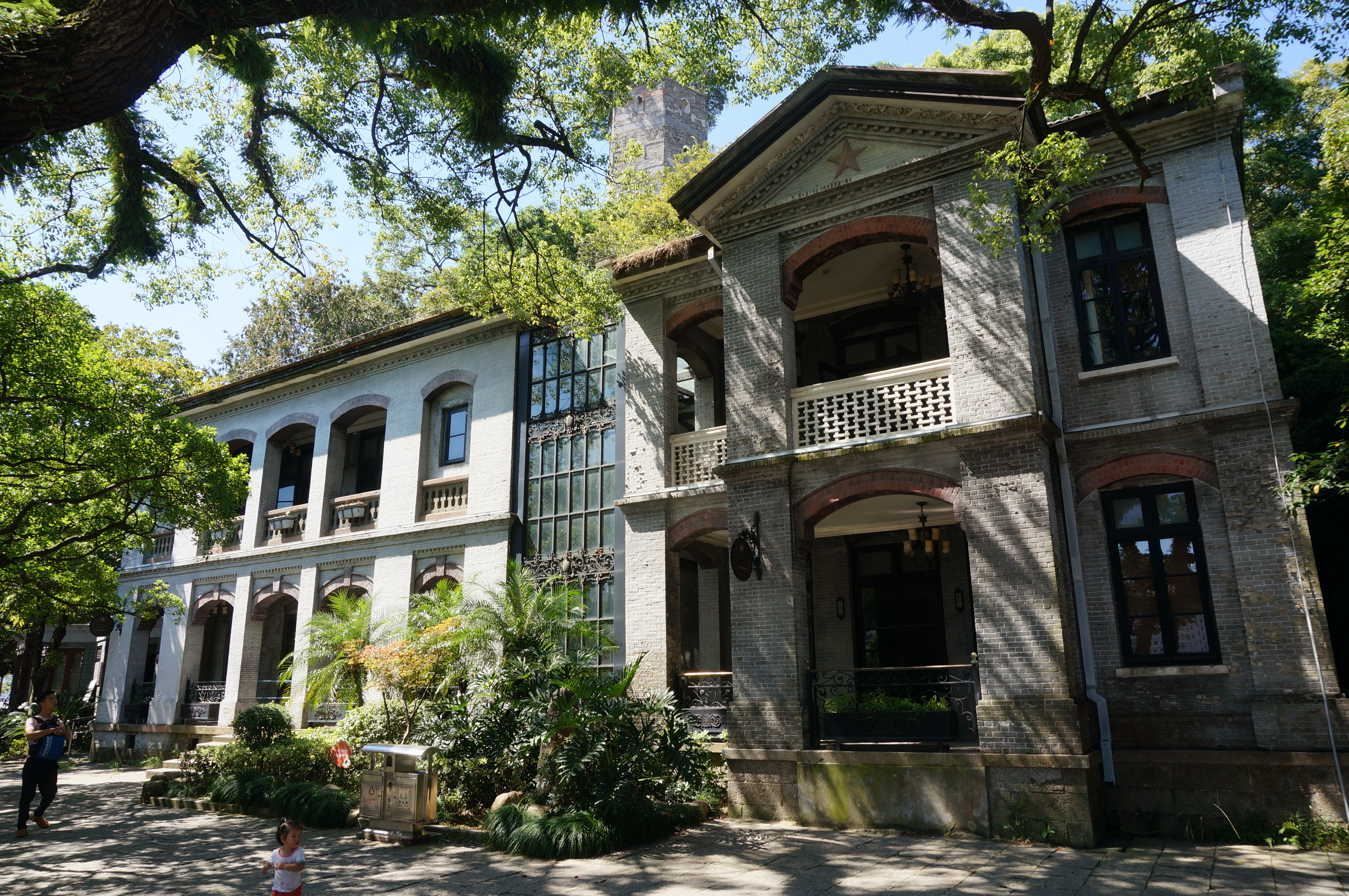
In 1876, Wenzhou was designated as a treaty port under the Chefoo Convention in the wake of the Margary Affair. A customs office was established the following year. Steamship travel then allowed local scholars, among them Chen Qiu, Sun Yiyan, and Sun Yirang, to travel widely and return to establish hospitals, schools, and libraries, helping to introduce new educational and social institutions. The foreign trade led to a significant Wenzhounese diaspora of merchants in France, but no foreign settlement was ever established there. Nevertheless, tensions persisted: an anti-missionary riot broke out in 1884, Britain built a consulate on Jiangxin Islet in 1894, and Boxer-related unrest in Rui’an and Pingyang was suppressed in 1900.
After the Wuchang Uprising in 1911, revolutionary authority spread rapidly across China. On 29 November, Wenzhou established a local military–civil administration and formally entered the Republican era. In early 1912, the Wenzhou native Chen Fuchen organised a new political party in Wenzhou, which later merged into the Democratic Party. From 1919, overseas migration accelerated: more than 2,000 labourers were recruited from Qingtian to work in Europe during the First World War, many of whom did not return, marking the first large wave of massive Wenzhounese emigration. Soon afterwards, increasing numbers of Wenzhou people emigrated to Japan.
In 1924, the Chinese Communist Party established an independent Wenzhou branch and, during the First United Front, cooperated with the Nationalists to organise women’s, student, labour, and peasant movements locally. During the Northern Expedition in 1926, defeated warlord forces retreated into Wenzhou, bringing widespread disorder; local society openly welcomed the arrival of the National Revolutionary Army. After the breakdown of Nationalist-Communist cooperation, Communist activists were suppressed. Administrative reforms followed, including the abolition of circuits in 1927 and the establishment of successive regional inspectorates during the 1930s.

Natural disasters in 1929, typhoons, flooding, and pest outbreaks, triggered another surge of overseas migration. Rural unrest spread across southern Zhejiang, and Communist forces organised armed resistance, including the Red Thirteenth Army, which remained active until 1932. Following the failure of the Fifth Encirclement Campaign in 1934, Communist guerrilla activity intensified along the Zhejiang-Fujian border, continuing until the Second United Front was formed in 1937. In 1938, Communist forces in the region were reorganised into the New Fourth Army. After 1937, and especially following the closure of the Burma Road in 1941, Wenzhou’s coastal position made it an important wartime logistics hub. Several universities relocated to the area, including National Yingshi University and the National Peiyang Institute of Technology. Japanese forces occupied Wenzhou on three occasions between 1941 and 1944. Prolonged warfare, combined with severe inflation, left the local economy deeply depressed Student protests and popular resistance were frequent, while overseas migration resumed with support from established diaspora networks.
_-_btv1b531895412.jpg)
In 1947, Communist guerrilla forces in southern Zhejiang expanded their operations. On 7 May 1948, following negotiations between Nationalist commanders and Communist representatives, Wenzhou was taken peacefully. Nationalist forces nevertheless remained active along the coast until the evacuation of the Dachen Islands in 1955.
Mao Zedong era
After Communist forces entered Wenzhou, a municipal Military Control Commission was established to take over administration. In the early years, the new authorities launched a succession of political campaigns, including the suppression of local strongmen, the campaign to suppress counter-revolutionaries, the banning of groups such as the Legion of Mary and various sectarian organisations, socialist transformation, and patriotic production drives.

In May 1956, Yongjia County experimented with the household responsibility in agricultural output, which spread rapidly across Wenzhou. By August 1957, however, the county leadership was instructed to reverse the practice. In 1962, policy adjustment again targeted privately run industry: many locally managed factories were closed, workers were laid off, and the number of such enterprises fell by roughly two thirds.
As a frontline region facing Taiwan, Wenzhou received limited state investment for many years. State-owned industry remained small in scale, and external transport links were poor. Tensions developed between locally rooted cadres, many with guerrilla backgrounds, and officials dispatched from northern China. With limited prospects for promotion and weaker political standing, local cadres sought to protect local interests in order to retain grassroots support. As a result, political campaigns such as collectivisation and the “Learn from Dazhai” movement were often implemented only superficially. After the outbreak of the Cultural Revolution, the Wenzhou Prefectural Commission was attacked, the People’s Liberation Army intervened, and military control was reimposed. Local cadres quietly tolerated the revival and expansion of markets and petty commerce as a means of preserving social support and self-protection.

During the Cultural Revolution, state-owned and collective enterprises frequently ceased production, unemployment rose, and social order deteriorated amid factional confrontation and armed clashes. Yet household production and informal markets survived in concealed forms, generating private contracting and significant revenues.
Economic reforms

With the end of the Cultural Revolution in 1976, many locally rooted officials, who had been less affected by the turmoil, were able to return to office relatively quickly. Once reinstated, they consolidated political support by backing local private enterprise. The so-called wan yuan households, meaning the household with over 10,000 yuan savings, that had emerged in the 1970s expanded under reform policies into private businesses.
Reform measures followed in quick succession. On 8 January 1979, Wenzhou reopened eleven grain and edible-oil markets, including Wutian, Zhuangyuan, and Quxi, allowing farmers and production teams that had met procurement quotas to sell surplus grain and oil. In April 1980, Wenzhou piloted greater managerial autonomy for collectively owned industrial enterprises. In May, homes in Puxieshi were put up for sale, pioneering the commercial housing model. In October, the Jinxiang Credit Cooperative introduced floating interest rates, the first such experiment nationwide. In December, Zhang Huamei received China’s first sole trader licence from the Wenzhou Municipal Administration for Industry and Commerce.
Wenzhou’s reform experiments provoked sharply divided reactions. Critics questioned whether they were “socialist or capitalist” in nature, yet the initiatives nonetheless won backing from senior officials at both local and central levels of the Communist Party. In 1984, the Wenzhou municipal leadership formally rehabilitated 8 businesspeople who had previously been denounced for “getting rich too conspicuously”. In April, Longgang was established and built through pooled investment by farmers, becoming China’s first “farmer-built city”. In May, Wenzhou was designated one of fourteen coastal open cities. In July, the city launched pilot reforms introducing the factory director responsibility system in state-owned enterprises.
In 1985, Jiefang Daily first coined the term “Wenzhou Model”. The following year became known as the “Wenzhou Year”, as the city’s distinctive approach to developing a commodity economy attracted more than 600,000 visitors for study and observation. In 1987, Wenzhou was approved by the State Council as one of the country’s first thirteen pilot areas for rural reform. Between 1978 and 1985, Wenzhou’s combined industrial and agricultural output grew by nearly 200 per cent, while per capita incomes rose sharply; local farmers even earned more than the average university lecturer. As reform-related tensions surfaced, the State Council formally recognised the legal status of private firms, and the National People’s Congress enacted legislation to regulate administrative disputes. The surge in visitors became so overwhelming that, in 1988, the State Council issued an order suspending all study visits to Wenzhou.

In the late 1980s, disorder in Wenzhou’s markets, most notably the widespread production of counterfeit and substandard goods, prompted a nationwide clean-up. In 1989, students in Wenzhou echoed the democracy movement in Beijing, although local business owners largely remained aloof. Debate over the “Wenzhou Model” intensified, and the city was briefly portrayed as an example of market-driven reform that could ultimately undermine Communist political control. Amid concerns over the political climate, a number of private entrepreneurs voluntarily suspended operations. In response to mounting controversy, the Party Central Committee and the State Council dispatched four investigation teams to Wenzhou; all ultimately reaffirmed support for its reform trajectory.
After Deng Xiaoping’s Southern Tour in 1992 reaffirmed reform and opening, the Wenzhou municipal leadership recalibrated its approach. In 1993 it promoted “quality-led development”, followed in 1994 by a call for a “second start-up”, strengthening regulation, curbing counterfeit production, and encouraging industrial upgrading. Private firms in Wenzhou transitioned from shareholding cooperatives to limited liability or joint-stock companies, and business groups began to emerge. In 1995, Wenzhou entrepreneurs founded the Kunming Wenzhou General Chamber of Commerce, the first cross-regional, non-governmental business association of its kind in China. By the early 2000s, Wenzhou had developed more than twenty industrial clusters each generating over 10 billion yuan in annual output, alongside dozens of nationally designated industrial production bases. For many years, per capita disposable income ranked first among Zhejiang’s cities and consistently placed among the top three nationwide.
Industrial transition
After 1998, Wenzhou’s economic growth began to slow. At the same time, large numbers of Wenzhou people started to settle outside the city. By 2001, around 1.6 million were working elsewhere in commerce or services. Overseas and domestic Wenzhou communities took shape in places such as Zhejiang Village in Beijing, Belleville in Paris, and Prato in Italy. Once commercial opportunities were identified, Wenzhou businesspeople often mobilised kinship and hometown networks to act collectively, with a marked preference for sectors such as real estate and mining. As migration spread, Wenzhou chambers of commerce expanded rapidly across China and abroad.
From 2001 onwards, groups of Wenzhou investors began purchasing residential property collectively in Shanghai which later extended their activities nationwide and overseas. After 2004, large volumes of capital flowed into property speculation and private lending, contributing to a contraction of the local real economy. The global financial crisis of 2008 further strained small and medium-sized enterprises, while informal finance expanded rapidly. From 2010, tighter national monetary policy reduced bank lending, leading to broken cash flows at some firms. Guarantee companies and mutual-guarantee networks were hit in succession, prompting direct intervention by local government.
Following the private lending crisis, Wenzhou’s property prices declined continuously from 2012, falling back to around 2007 levels and wiping out large amounts of accumulated private wealth. In July 2011, a rear-end collision between two southbound high-speed trains in Wenzhou drew intense domestic and international attention. From 2014, competitive church construction among local Christian communities prompted government intervention; many churches were forcibly demolished or had crosses removed, triggering prolonged disputes.

Since the financial crisis in 2011, the municipal government has sought to steer industrial upgrading, shifting from fragmented, low-end production towards more technology-intensive sectors. In March 2012, Wenzhou was approved by the State Council as a Financial Comprehensive Reform Pilot Zone, intended to test institutional innovation and provide lessons for national financial reform. In 2012, the television drama Family On The Go popularised Wenzhou’s entrepreneurial history, attracted nationwide attention, and helped reshape public perceptions of the city’s business culture. In 2013, the municipal leadership launched a campaign encouraging Wenzhou entrepreneurs to return and invest locally, receiving extensive support from Wenzhou chambers of commerce.
In 2020, Wenzhou, as China’s second city to enter COVID-19 lockdown, suffered a severe economic shock. Since the early 2020s, signs of recovery have become clearer. Population growth and economic expansion have returned to above the provincial average, while new growth areas, including digital industries and new energy, have taken shape. Wenzhou also established Zhejiang’s first dedicated artificial intelligence administrative body to support industrial development. In 2025, the city’s GDP exceeded 1 trillion yuan, the 28th in China.
Geography

Wenzhou is located in the southeastern Zhejiang of China. It borders the East China Sea to the east, adjoins Fujian to the south, neighbours Lishui to the west and northwest, and meets Taizhou to the north and northeast. The municipality covers a land area of 12,110 km2 and a maritime area of 8,649 km2.
Its terrain is dominated by low mountains and hills, with plains and offshore islands as secondary features. The landscape slopes from southwest to northeast, traversed by mountain ranges including the Donggong, Kuocang, and Yandang ranges. The highest peak is Baiyunjian in Taishun, at 1,611.3 m above sea level. The eastern plains are interlaced with dense river networks, with the Ou River, Feiyun River, and Ao River forming the principal drainage systems. The city has more than 150 rivers in total, a coastline extending 502 km, and approximately 714 islands.
Wenzhou has a humid subtropical climate, with distinct seasons and abundant rainfall. Mean annual temperatures range from 17.3-19.4 C, while average annual precipitation varies between 1,113-2,494 mm.
Landscape
Wenzhou lies in a transitional zone between the mountainous regions of southern Zhejiang and the coast of the East China Sea. The overall terrain slopes from south-west to north-east, with mountains, hills, river-valley basins, and coastal plains interspersed. This produces a fourfold geomorphological pattern: mid- to low-mountain areas in the west; low mountains, hills, and basins in the centre; plains and tidal flats in the east; and offshore island zones along the coast. The Ou River, Feiyun River, and Ao River constitute the city’s three major drainage systems, with river valleys extending along their main courses and tributaries.[[File:Dayu Bay - Yandun Shan - P1210613.JPG|thumb|On the coast of the Dayu Bay in [[Cangnan County]]]]
In the Southern Yandang Mountains, incision by the Feiyun and Ao rivers has created a series of intermontane and river-valley basins of varying size, which connect with the surrounding low mountain–hill landscape. Wenzhou’s mountain ranges belong mainly to three systems: the Donggong, Kuocang, and Yandang ranges. After entering Wenzhou, the Kuocang Range extends across much of Yongjia County, forming the watershed between the Ling River and the Ou River and abutting the Northern Yandang Mountains. The Donggong Range lies along the Zhejiang–Fujian border; its branches form the watershed between the Xiaoxi, a tributary of the Ou River, and the Feiyun River. The Northern Yandang Mountains run along the Yongjia–Yueqing boundary, separating the Nanxi River from eastward-flowing coastal rivers. The Southern Yandang Mountains, a residual branch of the Donggong system, enter from Fu’an in Fujian and extend from Taishun towards western Ouhai. The city contains 17 peaks above 1,000 m, with Baiyunjian in Taishun County reaching 1,611.3 m, the highest point in Wenzhou.[[File:ISS007-E-17785 - View of China.jpg|thumb|A view of the Jiangnan Plain seen from space]]The eastern plains are densely interlaced with waterways, including the Wenrui River system, the Ruiping River system, the Pingcang river network, and the Liulehong Plain river network. The Yueqing Plain lies north of the Ou River estuary, stretching from the foothills of the Northern Yandang Mountains in the west to the coast of Yueqing Bay in the east, from Dajing Town in the north to the northern bank of the Ou River estuary in the south, covering about 330 km2. The Yongjia Plain, on the northern bank of the lower Ou River and adjoining the Yueqing Plain, has an area of about 145 km2.
The Wenrui Plain lies between the southern bank of the Ou River and the northern bank of the Feiyun River, comprising the Sanxi, Coastal, Zhuangyuan, Wutian, Xianyan, and Xincheng plains, with a total area of about 543 km2. The Ruiping Plain occupies the lower reaches and southern estuary bank of the Feiyun River, including Xiangjiang and Mayu in Rui’an and Wanquan in Pingyang, covering about 229 km2. The Taoshan Plain lies along the northern bank of the Feiyun River and the lower reaches of its tributary Jinchao Harbour, including Taofeng, Tongxi, and Chaoji, with a total area of about 75 km2. The Beigang Plain extends along the middle and lower Ao River in Pingyang County, incorporating the Ao River Plain as well as the Xiaojiang, Mabu, and Shuitou plains, and covers about 183 km2. The Jiangnan Plain, also known as the Nangang Plain, lies south of the Ao River, encompassing Longgang City and northeastern Cangnan County, with a total area of about 297 km².[[File:Intertidal change in Wenzhou, 1984-2016.png|thumb|Changes in Wenzhou’s coastal intertidal zone from 1984 to 2016]][[File:China Eastern Airlines fly above Wenzhou City.jpg|thumb|An aerial view of Lingkun Island at the Ou River Estuary, together with the Dongtou Islands]]Wenzhou’s coastline is highly indented, with a mainland shoreline of roughly 514 km. Bays and tidal inlets are well developed, and near-shore islands are numerous. Coastal bays include Yueqing Bay, Wenzhou Bay, Yanpu Bay, and Dayu Bay. The islands are mainly arranged in chains or clusters, forming archipelagos such as the Dongtou, Dabei, Beiji, Nanji, and Qixing islands. Extensive tidal flats occur along the coast, with the largest continuous area lying south of the Ou River estuary and extending southwards along the shoreline to the Pipamen area of Cangnan County. These tidal flats are distributed outside river mouths and across near-shore shallow seas. Yueqing Bay contains sizeable inner-bay tidal flats. Around Lingkun Island, encircling shorelines and relatively weak hydrodynamics have produced ring-shaped tidal flats. Near the Dongtou Archipelago, smaller tidal-flat patches occur between islands and in adjacent shallow waters, often connected to reefs and shoals. In Cangnan County, enclosed bays at Dayu Harbour and Yanpu Harbour also contain tidal flats of notable size.
Land reclamation
In April 2003, the Wenzhou Peninsula Project was launched, aiming to link the Dongtou Islands with the mainland. In 2014, the Oufei Project () was initiated as a land reclamation project in Wenzhou. The original targeted area upon completion was , with an estimated construction cost of 60 billion RMB (c. US$8bn).{{cite web
Geology
Wenzhou lies in the northeastern part of the South China fold belt, and is structurally dominated by the Taishun–Wenzhou fault depression and the Huangyan–Xiangshan fault depression. During the Jurassic and Cretaceous, the Yanshanian tectonic episode was intense, triggering large-scale volcanic eruptions, magmatic intrusions, and faulting. Under the control of NNE-trending faults, a series of fault-bounded basins developed. In the Cretaceous, these basins were filled mainly by fluvial–lacustrine sediments, with intermittent volcanic outpourings, forming numerous small volcanic–sedimentary basins such as Xianyan, Fanshan, and the Shanmen–Wencheng–Taishun basins, where red clastic rocks are common. The oldest exposed rocks in the area are shallowly metamorphosed strata of the Lower Jurassic Fengping Formation. Pre-Mesozoic strata are largely absent, aside from scattered exposures of Upper Palaeozoic metamorphosed clastic rocks and marble. Quaternary deposits occur mainly along the coast and riverbanks, comprising coastal sediments and fluvial alluvium.
As of 2022, the city had identified and registered onshore mineral resources comprising 19 types of solid minerals across 37 mineral occurrences. Non-metallic minerals predominate; key resources include alunite, pyrophyllite, and construction stone and aggregate. Major construction-stone lithologies include K-feldspar granite, granodiorite, and dolerite, while tuff is the most widely distributed source rock for construction aggregate. Ten mineral types are currently exploited, chiefly construction aggregate, with smaller-scale extraction of pyrophyllite, fluorite, decorative dimension stone, and limited development of geothermal resources and mineral water. There are 55 mining licences (45 for solid-mineral mines—39 of which are construction-aggregate mines—and 10 for geothermal and mineral-water sites), as well as 9 exploration licences, covering targets such as fluorite, pyrophyllite, lead, silver, beryllium, illite, and geothermal resources. Alunite is so abundant that sometimes Wenzhou claims to be the "Alunite Capital of the World".
Hydrology

- The Ou River is Zhejiang’s second-largest river. It rises at Guomaojian on the northwestern slopes of Baishanzu, on the boundary between Longquan and Qingyuan, and runs for 388 km, draining 17859 km2 before reaching the East China Sea. Within Wenzhou, the Ou River is mainly represented by its lower course, about 78 km long with a catchment of 4066 km2. Downstream of Meiao, the channel widens markedly, from narrow reaches to roughly 500 to in width, and near the estuary it develops a deltaic harbour area; the Nanxi River enters on the left and flows into Wenzhou Bay. The total elevation drop from source to mouth is about 1250 m. The Ou is a strongly tidal river: the tidal reach is about 90 km, with a mean tidal range of 3.92 m and a maximum of 5.7 m.
- The Nanxi River is the largest tributary of the lower Ou River. It rises at Luoling on the southern flank of the Kuocang Range in northwestern Yongjia, runs from north to south through central Yongjia, and has a main channel length of 139.92 km with a basin area of 2490 km2. It joins the Ou River at Qingshuibu.
- The Feiyun River is Zhejiang’s fourth-largest river and Wenzhou’s second-largest. It originates at Zhongxi Village in Jingnan Township, Jingning She Autonomous County, flows through Taishun, Wencheng, and Rui’an, and enters the East China Sea. The main channel is 198.7 km long and drains 3713.9 km2. Its estuary is about 3000 m wide; the tidal reach extends about 59 km inland from the mouth, with a mean tidal range of 4.5 m and a maximum of 6.2 m.
- The Ao River is Zhejiang’s eighth-largest river and Wenzhou’s third-largest. It rises near Guiku at the foot of Wudi Mountain in Shanxi Town, Wencheng, and flows into the East China Sea. The main channel is 82 km long with a basin area of 1542 km2
Across the coastal plains, river networks are structured around tanghe (canalised waterways), distributary channels, and plain drainage ditches. The Yongle Plain network is distributed around Hongqiao, Lecheng, and Liushi in Yueqing, and the Wuniu area of Yongjia. The Wenrui tanghe network collects inflows from multiple mountain streams; its main canal runs from Xiaonanmen in Lucheng to the East Gate of Rui’an’s urban area, with a length of about 36 km. The Ruiping tanghe network, whose main channel was formerly known as the Jiangnan Canal, runs from Rui’an via Wuqiao and Sunqiao to Pingyang’s county seat, a total of 17 km. The Nangang Jiangnan river network is organised around the Hengyang distributary channel and is distributed across the two major plains of Nangang and Jiangnan.
Climate

Rainfall is highly seasonal. The flood season typically accounts for around two thirds of annual precipitation. Flooding is concentrated in the meiyu period (May–June) and the typhoon season (July–September), when intense downpours can readily trigger flash floods in mountainous areas. Typhoons occur mainly in summer and autumn; in particularly active years, Wenzhou may be affected 5–7 times, bringing damaging winds and heavy rain. Drought is also a recurrent hazard. The most common—and most damaging—type is midsummer drought, followed by autumn drought; midsummer drought persisting into autumn can significantly affect agriculture and daily life. Midsummer drought is often associated with prolonged control by the western Pacific subtropical high, whereas autumn and winter drought more commonly occur under strong continental high pressure with northerly winds and weaker inflows of warm, moist air. Hail occurs occasionally, mainly in mountainous areas and during the warmer season.
| Jan record high C = 25.6 | Jan record low C = -4.5 | Feb record high C = 27.9 | Feb record low C = -3.9 | Mar record high C = 31.4 | Mar record low C = -1.7 | Apr record high C = 33.2 | Apr record low C = 2.4 | May record high C = 36.0 | May record low C = 9.0 | Jun record high C = 35.6 | Jun record low C = 14.9 | Jul record high C = 41.1 | Jul record low C = 17.9 | Aug record high C = 40.4 | Aug record low C = 19.1 | Sep record high C = 38.6 | Sep record low C = 13.7 | Oct record high C = 36.9 | Oct record low C = 5.7 | Nov record high C = 30.3 | Nov record low C = 0.2 | Dec record high C = 26.7 | Dec record low C = -3.5 |script-title = zh:中国地面国际交换站气候标准值月值数据集(1971-2000年) |access-date = 2010-05-27 |archive-url = https://web.archive.org/web/20131016192548/http://old-cdc.cma.gov.cn/shuju/search1.jsp?dsid=SURF_CLI_CHN_MUL_MMON_19712000_CES&tpcat=SURF&type=table&pageid=3 |archive-date = 16 October 2013 |url-status = dead |access-date= 2024-09-09
Administration
Incumbent leadership
| Institution | [[File:Danghui.svg | 25x25px]] | [[File:National_Emblem_of_the_People's_Republic_of_China_(2).svg | 27x27px]] | [[File:National_Emblem_of_the_People's_Republic_of_China_(2).svg | 27x27px]] | [[File:Charter_of_the_Chinese_People's_Political_Consultative_Conference_(CPPCC)_logo.svg | 25x25px]] | CCP Wenzhou Municipal Committee | Wenzhou Municipal People’s Congress | Wenzhou Municipal | CPPCC Wenzhou Municipal Committee | Title | Secretary | Director | Mayor | Chairperson | Name | Ethnicity | Ancenstral home | Born | Assumed office |
|---|---|---|---|---|---|---|---|---|---|---|---|---|---|---|---|---|---|---|---|---|---|---|
| Zhang Zhenfeng | Zhang Jiabo | Zhang Wenjie | Shi Aizhu | |||||||||||||||||||
| Han | Han | Han | Han | |||||||||||||||||||
| Hangzhou, Zhejiang | Pingyang, Zhejiang | Lujiang, Anhui | Yueqing, Zhejiang | |||||||||||||||||||
| November 2023 | January 2025 | December 2023 | January 2025 |
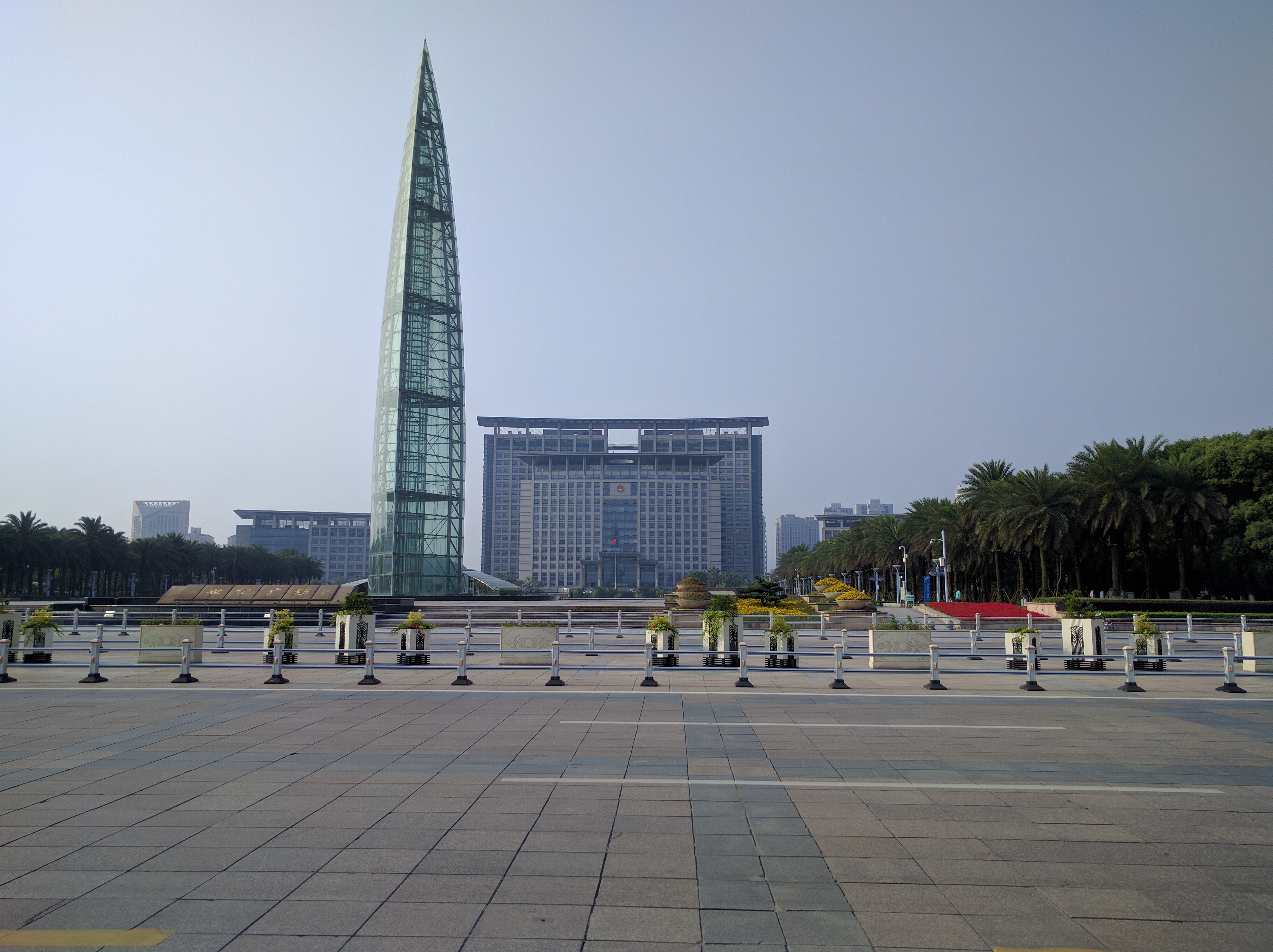
Administrative division
On 26 August 1948, the Fifth Special Administrative Region of Zhejiang was established to administer the rural areas around Wenzhou, while the urban areas, namely the Wuyan, Yongqiang, Sanxi, Tengqiao, and Xi’an districts, were separated to form Wenzhou City, placed under the direct administration of Zhejiang. The Fifth Special Administrative Region was later reorganised and became known as Wenzhou Prefecture.[[File:Wenzhou.jpg|thumb|250px|right|[[Rui'an]], one of the satellite cities under Wenzhou's jurisdiction]]In January 1952, Lishui Prefecture was abolished, and the five counties of Lishui, Yunhe, Longquan, Jingning, and Qingyuan were incorporated into Wenzhou Prefecture. In May 1954, Taizhou Prefecture was likewise abolished, with Wenling, Huangyan, and Xianju counties, as well as the Haimen directly administered area, being reassigned to Wenzhou. Taizhou Prefecture was briefly re-established between 1957 and 1958. Between 1962 and 1963, both Taizhou Prefecture and Lishui Prefecture were successively restored, after which the overall administrative configuration of Wenzhou largely stabilised.
In 1981, Wenzhou City and Wenzhou Prefecture were merged to form the Wenzhou Municipal People’s Government. In June, Cangnan County was created from the southern part of Pingyang County, with Lingxi as its county seat; in December, Wenzhou’s suburban district was reorganised as Ouhai County. In 1983, Wenzhou’s East, South, and West districts were designated as urban districts and were renamed Lucheng District the following year. In December 1984, Longwan District was established from parts of Wenzhou’s inner suburban areas and Ouhai County. Currently, Wenzhou comprises four urban districts and five counties, and administers three county-level cities.
| Administrative divisions of Wenzhou | Code | Division | Pinyin | Area | Population | Seat | Postal code | Township-level divisions | Subdistricts | Towns | Townships | of which: | 330300 | Wenzhou City | 330302 | Lucheng District | 330303 | Longwan District | 330304 | Ouhai District | 330305 | Dongtou District | 330324 | Yongjia County | 330326 | Pingyang County | 330327 | Cangnan County | 330328 | Wencheng County | 330329 | Taishun County | 330381 | Rui'an City | 330382 | Yueqing City | 330383 | Longgang City |
|---|---|---|---|---|---|---|---|---|---|---|---|---|---|---|---|---|---|---|---|---|---|---|---|---|---|---|---|---|---|---|---|---|---|---|---|---|---|---|
| 12102.65 km2 | 9,572,903 | Lucheng District | 325000 | 66 | 92 | 26 | 5 | |||||||||||||||||||||||||||||||
| 292.80 km2 | 1,167,164 | Wuma Subdistrict | 325000 | 12 | 2 | |||||||||||||||||||||||||||||||||
| 316.46 km2 | 725,049 | Yongzhong Subdistrict | 325000 | 10 | ||||||||||||||||||||||||||||||||||
| 466.28 km2 | 963,238 | Louqiao Subdistrict | 325000 | 12 | 1 | |||||||||||||||||||||||||||||||||
| 272.95 km2 | 148,807 | Beiao Subdistrict | 325700 | 5 | 1 | 1 | ||||||||||||||||||||||||||||||||
| 2677.36 km2 | 869,548 | Beicheng Subdistrict | 325100 | 7 | 11 | 4 | ||||||||||||||||||||||||||||||||
| 1035.64 km2 | 863,166 | Kunyang Town | 325400 | 14 | 2 | 1 | ||||||||||||||||||||||||||||||||
| 1079.34 km2 | 843,959 | Lingxi Town | 325800 | 16 | 2 | 2 | ||||||||||||||||||||||||||||||||
| 1296.44 km2 | 288,168 | Daxue Town | 325300 | 12 | 5 | 1 | ||||||||||||||||||||||||||||||||
| 1768.01 km2 | 265,973 | Luoyang Town | 325500 | 12 | 7 | 1 | ||||||||||||||||||||||||||||||||
| 1341.53 km2 | 1,520,046 | Anyang Subdistrict | 325200 | 12 | 9 | 2 | ||||||||||||||||||||||||||||||||
| 1395.54 km2 | 1,453,090 | Chengdong Subdistrict | 325600 | 8 | 14 | 3 | ||||||||||||||||||||||||||||||||
| 160.32 km2 | 464,695 | Jinchaihe Community | 325802 | Not applicable |
Economy
Wenzhou is a port city with a well-documented trading history. It was officially authorised as a port for foreign trade during the Song and Yuan dynasties, while in the Ming and Qing dynasties, it was developed as a coastal defensive stronghold in response, first to wokou raids and piracy and then Koxinga and anti-Qing forces. Historically, Wenzhou was renowned for its highly developed handicraft industries, and is recognised as one of the places of origin of Chinese celadon. Local crafts such as shipbuilding, papermaking, carving, lacquerware, embroidery, and leatherworking were once famous nationwide. In 1876, it was designated as a treaty port under the 1876 Chefoo Convention, which initiated the city's industrialisation and modernisation.[[File:泽雅唐宅梯田风光 - panoramio (7).jpg|thumb|Tangzhai [[Terrace (earthworks)|rice terraces]] in [[Zeya Scenic Area|Zeya]], Ouhai]]Before 1978, Wenzhou had a weak industrial base and poor transport links with Yangtze Delta hinterland. Large state-owned enterprises were largely absent, and unemployment remained high. In 1978, manufacturing output in Wenzhou was less than half that of Ningbo or Huzhou within Zhejiang. The local economy relied heavily on agriculture, with farmers consistently accounting for over 80% of the city’s population, yet agricultural development was constrained by a shortage of arable land. Following the launch of reform and opening up in 1978, Wenzhou rapidly achieved industrialisation and urbanisation during the 1980s through bottom-up, locally initiated reforms led by farmers, and subsequently experienced decades of rapid economic growth.
After the 2011 private lending crisis, Wenzhou’s economy suffered a severe setback. In response, the local government promoted industrial restructuring, and economic momentum gradually recovered. By 2019, Wenzhou’s GDP had returned to the national top thirty. In the following years, its GDP exceeded 1 trillion yuan; within Zhejiang, Wenzhou became the third city after Hangzhou and Ningbo to reach this level, and it was the 28th nationwide to do so. In 2025, Wenzhou recorded a regional GDP of 1,021.39 billion yuan, representing year-on-year growth of 6.1 per cent, 1.1 and 0.6 percentage points higher than the national and provincial averages, respectively. The growth rate of value added by industrial enterprises above designated size also ranked among the highest in Zhejiang.
Private sector

Wenzhou has a highly developed private sector, with particularly active private capital and financial activity. As a major centre of the private economy in China, the private sector has long been a key pillar of the city’s development. By November 2025, Wenzhou had a combined total of 1.564 million registered private enterprises and self-employed businesses; value added by private enterprises accounted for 90.8% of the city’s industrial output. In 2012, in response to the private lending crisis, the State Council established the Wenzhou Financial Reform Pilot Zone, aiming to improve financing for small and medium-sized enterprises, build a financial safety net, and strengthen the insurance system. However, as it did not address core issues such as interest-rate liberalisation, the initiative also drew criticism. Since 2020, annual private investment in Wenzhou has exceeded 200 billion yuan, accounting for nearly 60% of total fixed-asset investment; across indicators such as the number of enterprises, contribution to GDP, industrial value added, employment, and tax revenue, the private economy has accounted for over 90%.
Entrepreneurship is widespread among Wenzhou residents, resulting in large numbers of small firms and family workshops. Because small firms often lack collateral and face difficulties accessing bank credit through formal channels, most local households and businesses participate in informal finance networks structured around kinship ties and trusted acquaintances. Wenzhou’s per capita GDP has often ranked towards the lower end within Zhejiang, yet the ratio of per capita disposable income to per capita GDP has consistently remained above 80%, with residents’ per capita disposable income and annual consumption per capita have frequently ranked among the highest nationwide. In 2024, per capita disposable income in Wenzhou reached 70,829 yuan, with urban and rural figures of 81,527 yuan and 44,263 yuan, respectively, while Per capita wage income was 37,521 yuan, including 42,168 yuan for urban residents and 25,980 yuan for rural residents.
Public sector

Wenzhou has also been approved for several national-level pilot programmes, such as the Wenzhou Financial Reform Pilot Zone, one of the first national demonstration zones supported by central government finance for the development of inclusive finance, and a national pilot for deepening financial services reform for private and micro and small enterprises, thereby receiving central fiscal support aimed at strengthening financing for local small enterprises.
In 2024, Wenzhou’s outstanding local government debt balance was 365.414 billion yuan, against a debt ceiling of 365.420 billion yuan. The city’s general public budget revenue totalled 63.258 billion yuan, representing 95.8% of the budget target; major revenue items included value-added tax of 22.814 billion yuan, non-tax revenue of 12.670 billion yuan, and corporate income tax of 6.885 billion yuan. Including transfer revenues of 89.224 billion yuan, total revenue reached 152.482 billion yuan. General public budget expenditure was 117.764 billion yuan, representing 97.1% of the budget target, alongside transfer expenditures of 34.718 billion yuan.
Industrial mix

In 2024, value added by the primary, secondary, and tertiary sectors was 19.47 billion yuan, 356.83 billion yuan, and 595.58 billion yuan, respectively, corresponding to an output structure of 2.0%, 36.7%, and 61.3%. Wenzhou has developed two major industrial clusters, electrical equipment and green energy, each exceeding 300 billion yuan in scale. Electrical equipment, long a traditional pillar and the city’s first cluster to exceed 100 billion yuan, has grown into an internationally significant base for small and low-voltage electrical appliances; the green energy sector is also competitive at the national level.
By the end of 2024, Wenzhou had 9,291 industrial enterprises above the designated size, producing industrial value added of 173.69 billion yuan. Total industrial sales output was 857.0 billion yuan, with export delivery value of 105.91 billion yuan; total profits of these larger industrial firms reached 45.77 billion yuan. Wenzhou was home to 63 listed companies and 104 companies quoted on the NEEQ. Several Wenzhou-based private firms, including Tsingshan Holding Group, Dofor International, CHINT Group, Delixi Group, Renmin Holding Group, and Huafon Group, were included in the 2024 list of China’s Top 500 Enterprises.
High streets

Since the 1990s, Wenzhou city centre has developed a recognisable shopping core, with Renmin Road as a main commercial spine and nearby Wuma Street as the city’s best-known high-street area. The latter was designated in 1984 as one of the first nationally recognised pedestrian streets.{{cite news
Outside the city centre, Yueqing was ranked as the county-level jurisdiction with the highest level of urban and county consumption nationwide, according to a report by CCID Consulting. Within Yueqing, Chengnan Subdistrict has concentrated several major retail complexes, including Nanhong Plaza and Zhongjinhui, as well as Songhu Lifang, a provincial-level cultural and creative street district. The area is also served by Xuyang Road Station, one of the busiest stations on the Wenzhou rail transit Line S2. In addition, Zhongyi Street and Wuyue Plaza in Rui’an have been identified by the Wenzhou municipal government as priority retail districts for further development.
Tourism

Wenzhou has three national-level scenic areas, namely Yandang Mountains, the Nanxi River, and Baizhangji–Feiyun Lake, with a combined area of 1,637.39 km2. It also had eight provincial-level scenic areas, namely Yaoxi, Xianyan, Zeya, Dongtou, Zhailiao Stream, the Nanji Islands, Radon Springs–Jiufeng, and the Maritime–Yucang Mountains, covering a combined area of 254.26 km2.
Local produce

Demography
Main article: Wenzhou people
Wenzhou has the second-largest population in Zhejiang, after Hangzhou, with migration constituting the main driver of population growth. At the end of 2024, the city has a resident population of 9.852 million, an increase of 91,000 from the previous year, yet the natural population growth rate was −0.6‰. During the year, there were 54,000 births, giving a birth rate of 5.6‰, and 61,000 deaths, corresponding to a death rate of 6.2‰. The urbanisation rate of the resident population stood at 76.0%.
Data from the 2020 Chinese census show that Wenzhou’s population increased by 450,801 over the preceding decade, representing growth of 4.94% and an average annual growth rate of 0.48%. The overall sex ratio was 112.86 males per 100 females. Children aged 0–14 accounted for 15.28% of the population, those aged 15–59 for 68.22%, and people aged 60 and above for 16.5%, including 11.71% aged 65 and over.
Ethnicity
According to the 2020 Chinese census, the city's resident population included 9,189,267 Han people, accounting for 95.99% of the total, while ethnic minority groups totalled 383,636 people, or 4.01%. Compared with the 2010 Chinese census, the Han population increased by 368,877, up 4.18%, but its share of the total fell by 0.7%; ethnic minority populations increased by 81,924, up 27.15%, with their combined share rising by 0.7%. Among Wenzhou’s ethnic minorities, the She people form the largest group, followed by the Hui. The She are described as having originated in the mountainous areas around the Fujian–Guangdong–Jiangxi border; their presence in Wenzhou can be traced back to the Song dynasty or earlier, with larger-scale migration from Guangdong occurring during the Ming and Qing periods. She communities in Wenzhou are often interspersed with Han settlements in Cangnan, Taishun, Pingyang and Wencheng. The history of Hui migration to Wenzhou can be traced back to the Yuan dynasty, although most Hui residents today are thought to have moved from Fujian around the transition from Ming to Qing.
Languages
Main article: Wenzhounese
Linguistic variation within Wenzhou is striking, with speech changing markedly from village to village. Several mutually unintelligible varieties are spoken across the municipality. The most widely used is Wenzhounese, which is spoken across all counties and districts and has the broadest reach. Hokkien is spoken mainly in southern Wenzhou, especially in Cangnan and Pingyang, and is close to the Hokkien spoken in southern Fujian. In Yueqing, the Dajing dialect is spoken north of the Qingjiang River, while areas to the south are predominantly Wenzhounese-speaking. Taishun has six additional mutually unintelligible varieties alongside Wenzhounese, including Manjiang, Hokkien, Luoyang, Jujiang, She, and Tingzhou dialects. In Cangnan, in addition to Wenzhounese and Hokkien, Manhua, She, and Jinxiang dialects are also spoken.
Wenzhounese is widely regarded as particularly hard for outsiders to understand. With mountains on three sides and the sea on the fourth, Wenzhou was historically relatively isolated, which helped preserve a number of archaic features in local languages. Wenzhounese is often noted for retaining features associated with earlier stages of Chinese, such as Middle Chinese, and is sometimes described in the literature as unusually conservative compared with many other modern varieties. Its development is traced back to the late Han and Eastern Wu periods, becoming recognisable by the Tang dynasty and reaching maturity by the Northern Song; by the Southern Song it is considered broadly close to modern usage. Continuities are often illustrated through early sources that record vernacular words and pronunciations, as well as the colloquial language found in Southern Drama texts.
Education

According to the 2020 Chinese census, by the end of 2020, Wenzhou had 1,209,696 residents with tertiary education qualifications, 1,381,490 with upper secondary education, 3,044,455 with lower secondary education, and 2,805,725 with primary education. The illiteracy rate stood at 4.65%.
Diasporas

Since the 1990s, large-scale migration from Wenzhou to other parts of China and overseas has turned the city into a major origin of overseas Chinese in China. By 2025, more than 2 million people of Wenzhou origin were living worldwide, including over 800,000 overseas, spread across more than 100 countries. Together they had established more than 200 chambers of commerce outside Wenzhou and over 300 overseas Chinese associations, forming an extensive global network of businesses and communities associated with Wenzhou people. Qingtian County in Lishui, which neighbours Wenzhou and whose local language is closely related to that of Wenzhou, is often grouped together overseas, with people frequently identifying themselves as “Wenzhou people”.{{cite journal
Religion

Wenzhou is often described as having one of the highest proportions of religious believers in China, with Buddhism as the largest religion locally. Traditional religious practice in Wenzhou has also been notably elaborate. Local gazetteers record that, from the time of the Dong’ou ruler Yao, local custom placed strong emphasis on spirits and temple worship. In the Yongjia walled city, there were said to be more than ninety temples and over twenty monasteries. In ordinary households, people commonly venerated a set of domestic deities, such as the kitchen god, eaves god, well god, god of wealth, white tiger god, and earth god, while also worshipping Guanyin, the Three Officials, and other gods.
Prior to 1949, there were 2,000 registered places of worship and 4,500 priests, pastors and monks in the city. But, the state officially designated Wenzhou as an experimental site for an "atheistic zone" in 1958 and during the Cultural Revolution (1966–1976), religious buildings were either closed or converted for other uses. Religion revived quickly since the 1980s, and today there are more registered places of worship than before. Specifically, the city has 8,569 registered folk religious temples and 3,961 registered places of worship of the five institutional religions (Buddhism, Taoism, Islam, Catholicism and Protestantism). The city was the forefront in the registration and management of folk religious temples which was started in January 2015 and later extended to all Zhejiang.
Folk religion

Local religious life has long centred on a rich mix of deity worship, ancestral veneration, and everyday ritual practice. Among the most prominent figures in local belief is Yao, the ancient ruler of Dong’ou, who is commonly honoured alongside the City God in rites concerned with protection, rainmaking, and communal well-being. The earth god and the god of wealth also attract widespread devotion, while a wide range of more specialised deities reflects the practical concerns of daily life. Historical and legendary figures have frequently been incorporated into this religious landscape, and local traditions also include forms of animal and nature worship, such as auspicious white deer imagery and tiger spirits.
Ancestral veneration has been equally important. Families place strong emphasis on remembering and honouring the dead, with regular rites held on festivals as well as on the birthdays and death anniversaries of ancestors. In wealthier households, portraits commissioned during a person’s lifetime were sometimes displayed after death as part of domestic ritual practice. Alongside these beliefs, a dense set of everyday taboos has shaped social behaviour, from table etiquette and forms of speech to attitudes towards numbers, animals, and written text, embedding religious sensibilities deeply into ordinary life.
Buddhism

Buddhism has been present in Wenzhou since the Jin dynasty. In 295, a Buddhist pagoda was erected on Luofu Mountain in Yongjia; from the Southern Dynasties through the Sui and Tang periods, monasteries gradually became more numerous. Over time, Tiantai and Chan traditions developed side by side, and in the modern era eminent monks such as Dixian and Hongyi were active in Wenzhou in rebuilding temples and establishing lecture halls and Buddhist academies.
Among local temples, Jiangxin Temple in Lucheng is the most emblematic. It was given the imprial grant of the name “Longxiang Xingqing Chan Temple” in the Song dynasty and was listed in 1983 as a nationally designated key temple open to the public. Other locally significant historic temples include Miaoguo Temple on Songtai Hill in Lucheng, Miyin Temple on Toutuo Mountain in Ouhai, Lingyan Temple on Yandang Mountain in Yueqing, Xianyan Shengshou Chan Temple in Rui’an, and Guoan Temple and the Qianfo Pagoda in Yaoxi, Longwan.
Daoism
Daoist activity in Wenzhou can be traced back to the Three Kingdoms period. Local tradition holds that, in the Jin dynasty, the alchemist Ge Hong travelled to sites such as Dongmeng Mountain in Yongjia and Dongmen in Kunyang to practise alchemy. Daoism flourished at times during the Song and Yuan periods, when numerous temples were established and prominent figures emerged. In the Song, the Shenxiao tradition was particularly influential: Lin Lingsu of Yongjia is said to have travelled to the imperial capital to transmit Shenxiao texts and rites, gaining considerable prominence. In the Yuan, the Donghua tradition became notable; Lin Ling-zhen, a native of Lin’ao in Pingyang, promoted Donghua teachings in the early Yuan, and his followers were known as the Shuinan lineage, which later gradually merged into Zhengyi Dao. Since the Ming and Qing periods, Daoist lineages in Wenzhou have increasingly consolidated into the two main systems of Quanzhen and Zhengyi.
Wenzhou’s Daoist temples have undergone repeated cycles of rise and decline since the opening of rock-cut chambers at Daluoyan in Yongjia. Among the best-known surviving sites is the Zixiao Temple at Jingshan Jingshuigu in Ouhai. Tao Gong Cave at Daluoyan in Yongjia is recognised as the twelfth “Blessed Grotto-Heaven” in Daoist geography. From the Tang dynasty onwards, it hosted temples such as Jizhen Temple and Guangfu Lingzhen Palace; many of the existing buildings were rebuilt during the Qianlong reign of the Qing dynasty.
Christianity
Wenzhou is also frequently noted for having one of the highest proportions of Christians in China. It has consequently acquired the nickname “China’s Jerusalem”, and is associated with a group sometimes described as “boss Christians”, who combine strong religious commitment with active involvement in business.The city has been for centuries a hub of Christian missionary activity; prior to 1949 it was home to 115,000 Christians, more than one-tenth of the total Christians in China at that time. Today it remains an important center of Christianity in China. In 2006, it was reported that between 15 and 20% of the city's population was Christian. In 2012, according to official data the city's Christians were at least one million (about 11% of the 2010 population). Because of its large concentration of Christians, the city has been dubbed the "Jerusalem of the East" or "China's Jerusalem" in some media reports. Recent reporting has described controversial government actions affecting Wenzhou’s Christian community, including church demolitions and large-scale cross removals beginning in 2014, which officials have framed as enforcement of land-use rules, but which journalists and human-rights groups have argued were aimed at reducing Christianity’s public visibility; the campaign has also prompted local resistance, including the jailing of a pastor in 2015 after protests.
Protestantism

Protestant Christianity was introduced to Wenzhou in 1866 and gradually developed into six main traditions, including the China Inland Mission, the Methodist Church, the China Christian Independent Church, the Seventh-day Adventist Church, the Wenzhou Chinese Christian Independent Church, and the Christian Assembly. In 1950, local believers responded to the call for churches to be self-governing, self-supporting, and self-propagating. A Three-Self Patriotic Movement committee was established in 1956, and in 1958 the six traditions were merged, with denominational names discontinued. Church activities were suspended during the Cultural Revolution, resumed in 1979, and in 1983 the Wenzhou Christian Association was established.
Several Protestant churches are particularly representative in contemporary Wenzhou, including Garden Lane Church, Chengxi Church which now serves as the main church of the municipal Christian organisations, Hongqiao Church, Yahou Church in Rui’an, Yongping Church in Aojiang, Yongling Church in Cangnan, and Zhuyintang Church in Longgang.
Protestantism in Wenzhou was also historically active in education and healthcare. In 1897, Dingley Hospital was founded as the city’s first Western-style hospital. In 1905 it was incorporated into Whiteley Hospital, and in 1953 it was taken over by the government, becoming what is now Wenzhou Central Hospital.
Catholicism
Main article: Diocese of Yongjia

Wenzhou’s Roman Catholic tradition is linked in local accounts to earlier forms of Christianity dating back to 1304. Modern missionary activity resumed after 1846 as the Vincentians expanded their work in Zhejiang. After the founding of the People’s Republic of China, church administration in Wenzhou was reorganised under the Wenzhou Catholic Patriotic Association.
Wenzhou is reported to have around 100,000 Catholic believers, accounting for roughly 70% of Zhejiang’s total. Besides Zhouzhai Cixiang Catholic Church, other major churches include Yongqiang Catholic Church, Fenglin Catholic Church in Yongjia, Hongqiao Catholic Church in Yueqing, Chengguan Catholic Church in Rui’an, Kunyang Catholic Church in Pingyang, Qianku Catholic Church in Cangnan, and Hedigao Catholic Church in Longgang, many of which were first built during the Republican period.
The Catholic Church in Wenzhou also ran schools and medical services. In 1913, the John de God infirmary began offering clinical services and later became known as the John de God Hospital. In 1951, it was taken over by the municipal government and became today’s Wenzhou People’s Hospital.
Culture
Literary tradition
Literary activity in Wenzhou can be traced back to poetry of the Northern and Southern Dynasties. During the Eastern Jin, Xie Lingyun served as prefect of Yongjia and, inspired by the local landscape, helped pioneer the tradition of Chinese landscape poetry.
The Yongjia School, which emerged from Wenzhou, was one of the most important Confucian schools of thought of the Southern Song period. It developed alongside, and in debate with, other major strands of thought associated with Zhu Xi and Lu Jiuyuan. The school is best known for its stress on practical statecraft and real-world results, arguing that material benefit and moral principle could be aligned rather than treated as opposites. Its thinkers maintained that advantage should be pursued within an ethical framework, and criticised moral philosophy that, in their view, became detached from social and economic realities. Ye Shi is generally regarded as the leading figure and the most fully developed representative of the school. Because Wenzhou produced a notable number of scholars in the Southern Song dynasty, it acquired a reputation as a major cultural and intellectual centre in southeast China.
The Yongjia School is considered one of the most distinctive schools of thought in the history of China and was one of the three most influential schools of thought in the Song Dynasty. It has a high status in Chinese philosophy. Since its founding it has been the cultural gene of the Wenzhou and has influenced China. There are four main characteristics and aspects of the Yongjia School. First, it emphasizes the significance of practice over pure theory. Second, it proposes that chivalry should not be divorced from welfare. Third, it promotes the conglomeration of agriculture and commerce. Fourth it underscores the significance of powerful military and economic prosperity. Yongjia School is arguably the only prestigious Chinese school of thought of which the main teachings emphasize currency, commerce, and private economy. Modern scholars attribute the unprecedented economic prosperity in the Song Dynasty to the influence of Yongjia School.
The people of Wenzhou are thought to be equipped with business sense and a commercial culture more dominant than anywhere else in China. Wenzhou has two economic characteristics: it was the first to launch a market economy, and it continues to have an active and developed private economy. In 1983, Southern Zhejiang Daily described local entrepreneurs as people who had “travelled thousands of miles, spoken thousands of words, explored thousands of approaches, and endured thousands of hardships”, a phrase later summarised as the “Four Thousands Spirit”. In 2009, the Chinese Academy of Social Sciences ranked Wenzhou as China’s most culturally competitive city, sparking wider discussion of what was often characterised as the Wenzhou capacity for recognising commercial opportunities and willingness to seek livelihoods beyond the local area. Entrepreneurship and business life associated with people from Wenzhou have become a recurring theme in Chinese film and television. The most prominent example is the television drama series Family on the Go series, which together attracted widespread national attention and strong viewing figures. China Daily also notes that investments from Wenzhounese buyers play a disproportionately large role in the increased property prices all over China.
Performing arts
Cuisine

Wenzhou cuisine forms a distinct branch within Zhejiang cuisine. Its overall character can be summarised as seafood-centred, light in flavour, and focused on preserving the natural taste of ingredients. Benefiting from abundant coastal resources, fish, shellfish, and other seafood feature prominently in everyday cooking. Common techniques include steaming, blanching, quick stir-frying, and light thickening, all of which emphasise freshness, tenderness, and balance rather than heavy seasoning or strong spices. In coastal areas, traditional practices of eating raw or lightly cured seafood have been preserved. These are often paired with pickled vegetables, which help balance flavour and texture and reflect long-standing local food customs shaped by maritime life.
.jpg)
Wenzhou also has a highly developed tradition of local snacks, characterised by a wide variety of items, strong street-food culture, and clear regional identity. These range from rice- and wheat-based staple snacks to sweets and soups, generally favouring soft, chewy textures and a balance of savoury and sweet flavours, with an emphasis on freshly prepared food.
Handcrafts
Wenzhou’s folk crafts are closely tied to both everyday life and religious or festive traditions, and many local forms later developed into recognised fine and decorative arts with wider markets. Several traditions originated as practical or ceremonial embellishments, such as decorations for lantern festivals, temples, household furnishings, and clothing, before being refined by specialist artisans and adapted into collectible, display-oriented works.[[File:清朱子常黄杨木雕——东坡观砚.jpg|thumb|Dongpo Admiring an Inkstone, a Qing-dynasty boxwood carving by Zhu Zichang, in the collection of the Wenzhou Museum]]A distinctive feature of Wenzhou craftsmanship is its strong material and technique basis. Woodcarving, especially the Yueqing tradition of boxwood carving, evolved from festival ornamentation into an independent art form in the late Qing, gaining broader recognition through awards at major exhibitions in the early 12th century. Modelling in oil-based clay, traditionally used for temple decoration, was later reworked into decorative screens and hanging pieces. Textile arts also became important: local embroidery developed into one of China’s major embroidery traditions, expanding from workshop production to export-oriented craft industries by the late Qing and Republican periods, and later benefiting from more organised production after 1949. Rural needlework traditions, including cross-stitch lacework, were valued for their delicacy and became notable export items.
Stone-based crafts form another strand. Local stone carving, related to the wider tradition of Qingtian stone carving, combined practical uses, such as seals and ritual or decorative objects, with architectural ornamentation. Inlay work became a hallmark, particularly colour-stone inlay set into hardwood, which connected carving with furniture and decorative objects and reached overseas markets; bamboo-filament inlay later emerged as a distinctive local technique and was revived in the mid-twentieth century. Finally, the fine-cut paper-cutting tradition of Yueqing developed from festive and household decoration into a highly detailed craft used for patterns and ornamental motifs.
Festival customs
Seasonal customs in Wenzhou traditionally followed the rhythm of the year. The calendar opened in the first lunar month with lantern displays and New Year visits. In the second and third months, spring was welcomed through outdoor games and activities such as kite flying and playing simple wind instruments made from wheat stalks. During spring, the city also observed Lan Jie Fu, a rotating street-based ritual held from the first day of the second lunar month to the fifteenth day of the third, with different neighbourhoods taking turns to host festivities. Early summer was marked most prominently by the Dragon Boat Festival, which extended beyond the day itself to include dragon boat racing and processional performances. In autumn, attention shifted to the Qixi festival and Mid-Autumn moon viewing. Winter customs centred on preparing for the cold season, making New Year rice cakes at year’s end, staying up on New Year’s Eve, and giving lucky money. Since 1949, some of these practices have gradually declined or continued in modified forms.
Sports

Since 1983, Wenzhou has been designated the “Home of Swimming” by the General Administration of Sport of China. According to statistics from the Wenzhou Municipal Sports Bureau, as of August 2024 athletes from Wenzhou had won a total of 5 Olympic gold medals, 92 world titles including Olympic titles, 51 Asian Games titles, and 69 National Games titles, with 40 athletes currently training or selected for national teams, many of them in swimming, including Xu Jiayu, Li Zhuhao, Liu Yaxin and Pan Zhanle.
In 1995, Wenzhou was designated the “City of Chess” by China Qiyuan, the national body overseeing board and card games in mainland China. In 2020, the city marked the 25th anniversary of the title. To mark the occasion, FIDE President Arkady Dvorkovich sent a congratulatory letter praising Wenzhou for producing outstanding players such as Ye Rongguang, Zhu Chen, and Ding Liren.
Major venues
-
Wenzhou Sports Centre: The complex covers more than 200 mu, with a total floor area of 70,319 square metres and an investment of 280 million yuan. Its main facilities include an indoor arena with 5,000 seats, a swimming and diving hall with 2,000 seats, and a stadium with a capacity of 20,000. Construction of the arena began on 8 November 1994 and was completed on 8 December 1995, with a total build period of 395 days. The stadium, designed by the Wenzhou Architectural Design Institute, started construction on 8 June 1995 and was completed in July 1997.
-
Wenzhou Olympic Sports Centre: Located at the foot of Daluo Mountain, south of the Longwan administrative centre, the complex includes a main stadium with a capacity of 50,000, a multi-purpose indoor arena seating 5,000, and a swimming venue with seating for around 1,000. It hosted football matches during the 2022 Asian Games.
Mathematics
Wenzhou has a long tradition of mathematical education. In 1896, the Wenzhou scholar Sun Yirang established what is described as China’s first specialist academy devoted to mathematics in Rui’an. In 1897, Huang Qingcheng founded China’s first periodical dedicated to mathematics, and in 1899 Wenzhou saw the formation of an organised mathematics society, often cited as the country’s earliest regional mathematical association. Wenzhou-born scholars subsequently played an outsized role in the rise of modern mathematics in China. Over the 20th century, the city produced more than 200 mathematicians of national and international standing, including Jiang Lifu, Su Buqing. In 2003, during a visit to Wenzhou at the invitation of Gu Chaohao, Shiing-Shen Chern openly praised the city as a “Home of Mathematicians”.
Transport

Historically, Wenzhou was one of the most remote and poorly connected cities in Zhejiang, being the farthest from the provincial capital, Hangzhou. In earlier times, travelling overland from Wenzhou to Hangzhou often took at least two weeks, although transport conditions improved gradually in the modern era.{{cite journal
Air
Main article: Wenzhou Longwan International Airport
A stop on the Shanghai–Guangzhou route operated by China National Aviation Corporation from 1932, Wenzhou was the first city in Zhejiang to establish air transport links, until the route and the airfield was destroyed during the Second Sino-Japanese War. In 1984, Wenzhou was designated by the State Council as one of China’s 14 coastal open cities, which gave rise to plans for airport construction. With total investment of 132 million yuan, including more than 60 million yuan raised from the public, Wenzhou Airport was China’s first airport built primarily through locally raised funds. Construction began in May 1987, and the airport opened on 12 July 1990. In 1991, Wang Junyao contracted the Changsha–Wenzhou route, pioneering privately operated charter services in China’s civil aviation sector. The airport has since undergone repeated expansion and upgrading, with a rail transit station within the airport built in 2019.

In 2024, the airport handled 12.53 million passengers and 123,000 tonnes of cargo and mail. From 2021 to 2025, it opened a cumulative total of 127 domestic passenger routes and newly launched or resumed 14 international routes. Among airports of comparable size in China, it was the only one to operate direct intercontinental services to Rome, Milan, and Madrid.
Rail

Commuter rail
Main article: Wenzhou rail transit

Roads
Wenzhou’s first external road link dates to October 1934, when the Wenzhou–Qingtian–Lishui road opened. For much of the 20th century, external connections still relied heavily on waterways, but from the 1990s the expanding road network gradually reduced the role of inland water transport. In May 1998, the Wenzhou Bridge opened, marking the first expressway-standard road infrastructure in the city. Wenzhou’s first full expressway route followed in 2003, when the Wenzhou section of the Ningbo–Taizhou–Wenzhou Expressway opened. In 2020, the opening of the Wencheng–Taishun Expressway helped complete expressway access across all county-level areas in Wenzhou and, more broadly, across Zhejiang. By 2025, Wenzhou had a total road length of 17,700 km, with all natural villages of 100 residents or more connected by graded roads. Its expressway mileage ranked among the top three in Zhejiang.{{cite news
Bus services

Intercity coach services began in 1935, with scheduled buses operating between Wenzhou and Yiwu. The city introduced its first urban bus route in 1956. In December 2010, the Wenzhou Public Transport Group and Changyun Group merged to form Wenzhou Transport Group. In 2015, Wenzhou opened its first bus rapid transit line and later expanded the network to five routes; by 2018, the B1 line and its extensions carried an average of 1.389 million passenger trips per month, reported as the highest-ridership bus route in Zhejiang. By 2025, daily bus patronage in Wenzhou exceeded 700,000 passenger trips.
Port
The Port of Wenzhou is located on China’s southeast coast, south of the Port of Ningbo and north of the Port of Fuzhou. Across the sea to the southeast lie the ports of Kaohsiung and Keelung. The port forms part of the Yangtze Delta economic zone. With a coastline of about 350 km, Wenzhou Port serves as the principal hub for coastal and deep-sea shipping in southern Zhejiang and is one of China’s 25 major coastal ports.
The port is organised into seven port areas. The core areas are Zhuangyuan’ao, Yueqing Bay, and Daxiaomen Island, supported by four auxiliary areas along the Ou River, Rui’an, Pingyang, and Cangnan. Before 2010, the main facilities were concentrated along the Ou River and lacked deep-water berths, prompting the development of the Zhuangyuan’ao and Yueqing Bay port areas.{{cite web
Wenzhou Port maintains shipping and trade links with ports in more than ten countries and regions, including Japan, South Korea, Kuwait, Russia, Singapore, and Hong Kong. Regular routes connect it with Busan, Singapore, Qingdao, Guangzhou, Ningbo, Shanghai, and Yingkou, as well as ports along China’s northern and southern coasts and the Yangtze River. In 2025, cargo throughput at Wenzhou Port exceeded 100 million tonnes for the first time.
Notes
References
Sources
-
Economic profile for Wenzhou at HKTDC
-
Nanlai Cao, Constructing China's Jerusalem: Christians, Power and Place in the City of Wenzhou, Stanford, Stanford University Press, 2010, 232 pp.
References
- "China: Zhèjiāng (Prefectures, Cities, Districts and Counties) - Population Statistics, Charts and Map".
- link
- (2008-09-26). "温州正式归入长三角区域".
- (2024-06-03). "我与长三角有个约|当长三角遇上海西区,会产生哪些化学反应".
- (2010-05-22). "老鼠山遗址:史前温州人的探寻遥望". Wenzhou Daily.
- (2024-07-05). "历史上曾先后有两个东瓯国,"方国"和"藩国"有何区别?".
- Jin, Shuai. (2025-03-01). "如何建设新时代"世界的温州"?温州出台《实施方案》".
- 杨亚东. (2015-05-11). "温州模式30年{{!}}"温州模式"是怎么横空出世的?".
- (2007-12-29). "中国首批私营企业主说市场变迁 温州模式成时代缩影".
- (2026-01-20). "中国民营经济发祥地温州GDP破万亿".
- (2015). "温州人经济:历史演进、理论逻辑与研究意义". 技术经济.
- Ke, Rui. (2025-03-17). "第十五届中国国际园林博览会将于明年在温州举行".
- (2015-09-07). "Capital with beliefs—a study of charitable donations of private business owners in Wenzhou, China". The Journal of Chinese Sociology.
- Martin, David. (2011). "Constructing China's Jerusalem: Christians, Power, and Place in Contemporary Wenzhou". Journal of Contemporary Religion.
- (2021-07-27). "温州为何古称东瓯?"瓯居海中"又隐藏了哪些文化"密码"?".
- "郭璞为温州布局 贛州風水養生堂".
- (2023-04-09). "何谓"永嘉"?".
- (2010-05-22). "老鼠山遗址:史前温州人的探寻遥望". Wenzhou Daily.
- (2021-07-30). "身为温州人,这些东瓯国的历史你可曾听说".
- 蔡钢铁. (2014). "东瓯国简史". 温州文物.
- 季永交. (2026-01-07). "温州地区古越土著是怎样汉化的?".
- (2016). "横屿船屯的设立与建制问题探析". 温州文物.
- 錢志熙. (2014). "唐代温州地域内外詩歌創作活動考論". 国学研究.
- 蔡钢铁. "温州古陶瓷". 文物出版社.
- (2011). "东晋孙恩、卢循起事的浙东因素". 浙江海洋学院学报(人文科学版).
- (2025). "陈朝统一南方过程中的文化向心力与政治认同塑造". 中州学刊.
- (2017). "永康市志(全6册)第六册". 上海人民出版社.
- 滕宇鹏. (2013). "温州港贸易的历史变迁". 温州职业技术学院学报.
- (2007). "温州市盐业志". 中华书局.
- 朱如明. "这位唐代温州刺史是"修城达人",温州、福州两地子城都与他有关!".
- (2022). "唐五代温州静海军新考及目前所见温州刺史补正". 温州职业技术学院学报.
- 滕宇鹏. (2013). "温州港贸易的历史变迁". 温州职业技术学院学报.
- (2025-09-19). "古地图里的温州是怎么样的?".
- (2006). "宋代东南山区的农业开发——以温州为例". 浙江社会科学.
- (2015). "宋代温州科举的兴盛及其背景". 杭州师范大学学报(社会科学版).
- (2003-05-15). ""皇祐三先生"与"东南邹鲁"". 温州日报.
- (2020). "论南宋时期温州的"文化自觉"——以永嘉学派为中心". 温州大学学报(社会科学版).
- (2020-06-15). "大罗山这处摩崖题刻 记录温州史上最大水灾". 温州新闻网.
- 连佳佳. (2022-06-23). ""海禁"下的明代温州城".
- 尤育号. (2018). "温州沿海卫所及其地域亚文化考察". 中国地方志.
- (2024). "邓茂七起义与明中叶的社会治理". 社会科学战线.
- (2014). "朱纨与嘉靖温州海患". 温州职业技术学院学报.
- (2010). "明代温州倭寇研究". 浙江学刊.
- 王兴文. (2014). "清前中期温州造船业". 温州职业技术学院学报.
- 罗士杰. (2010). "地方神明如何平定叛乱:杨府君与温州地方政治(1830-1860)". 温州大学学报(社会科学版).
- {{Cite EB1911
- 常琳瑶. (2023). "英国驻温州领事馆旧址的历史沿革". 温州文物.
- 张宪文. (1994). "温州文史资料 第9辑". 浙江人民出版社.
- 冯筱才. (2024). "民国温州:一个区域历史的变化脉络". 温州大学学报(社会科学版).
- "县政督察专员制与行政督察区-中国行政区划通史".
- 刘明兴. (2013). "地方政府的非正式权力结构及其经济影响". 社会学研究.
- 金延锋. (2020-07-08). "新中国建立近五年之后,蒋介石竟然回到过浙江?".
- (2017-08-24). "解放军赶周岩入海". 人民网.
- 易芳. (2008-10-29). "温州——敢为天下先(上)".
- (2008-01-17). "温州改革开放大事记".
- 李心怡. (2024-09-26). "家住解放路·温州丨中国第一号个体户诞生地:从古道老巷到繁华地标".
- 俞红霞. (2011-12-08). ""温州模式"的历史考察".
- (2018-11-09). "温州改革开放40年十大突破性事件".
- 谢思思. (2024-10-06). "时光宝藏|温州供销大军闯天下".
- 袁瑜. (1987-06-01). "中國大陸最有錢的城市-溫州".
- (1990). "中华民国年鉴". 中华民国年鉴社.
- (2002). "温州悬念". 浙江人民出版社.
- 薛洁. (2008-11-05). "温州——敢为天下先(下)".
- 郑娜. (2022-01-25). "炒房团全国扫货,房价曾高过上海 温州楼市20年潮起潮落 {{!}} 楼市地理(十五)".
- 陳良榕. (2004-04-15). "溫州人憑什麼稱霸中國? — 像台商的衝、猶太人的敢". 天下雜誌.
- Hooper, John. (2010-11-17). "Made in little Wenzhou, Italy: the latest label from Tuscany". The Guardian.
- (2025-03-17). "考考你:温州有多少种方言?".
- 林宸誼. (2010-07-22). "溫州「狼」繞著地球跑".
- (2004). "温州商会的兴起:温州模式研究的政治社会学范式转型". 学术月刊.
- 陳雪齡. (2008-08-21). "從杜拜到台灣 最會炒樓的中國猶太人".
- 黄越. (2012). "民间借贷危机的成因及治理对策——以温州民间借贷为例". 常州大学学报(社会科学版).
- 楊方儒. (2011-10-06). "直擊黑暗溫州".
- 王平. (2012). "突发公共事件中微博意见领袖的实证研究——以"温州动车事故"为例". 现代传播.
- 闻浩. (2011). ""7·23"温州动车事故存活伤员损伤特点及救治分析". 中华急诊医学杂志.
- (2011-07-28). "China train crash caused by 'signal design flaw', says report". The Guardian.
- Gracie, Carrie. (2014-05-04). "China's city of churches brought to heel". BBC News.
- Zhao, Kiki. (2014-07-24). "Christians in Wenzhou Fight to Keep Church's Cross".
- (2012-03-29). "温家宝主持国务院常务会议决定设立温州市金融综合改革试验点". 人民网.
- 杨明. (2012-03-28). "中国金融改革在温州开始试行".
- 王益敏. (2013-11-05). "文化温商巡礼 打拼文化新产业的在京温商-浙江新闻-浙江在线".
- (2020-02-02). "温州宣布实施严厉出行管制".
- 邱莉燕. (2020-02-03). "大陸餐飲業恐掀倒閉潮!武漢肺炎衝擊,光春節就損失逾2兆台幣".
- 黄佳琪. (2026-01-21). "新GDP万亿之城悬念:温州已入列,徐州有多远?".
- 谢锦芳. (2023-12-22). "平阳通福门".
- 温州市发展改革委. (2021-08-31). "市发展改革委、市自然资源和规划局关于印发《浙江省温州市地质灾害防治“十四五”规划》的通知".
- (2023). "温州年鉴2023". 商务印书馆.
- "新闻中心---温州网".
- 温州市地方志. (2017-10-16). "瓯飞工程". 温州市人民政府主办.
- School of Pharmaceutical Sciences, Wenzhou Medical University. "Introduction of Wenzhou".
- Hu, Xiaofei. (2025-03-13). "A 1 km monthly dataset of historical and future climate changes over China". Scientific Data.
- link. [[China Meteorological Administration]]
- "张振丰 简历". 人民网地方领导资料库.
- "张加波当选温州市人大常委会主任 周一富、白洪楞当选副主任". 中国经济网.
- "张文杰任温州市代市长".
- "施艾珠当选温州市政协主席 木力当选副主席". 中国经济网.
- (20 March 2013). "Understanding China's Political System". Congressional Research Service.
- (2022-06-23). "图说温州“成长史”(下):温州的诞生 你见证了多少?".
- (2019). "Administrative division codes above county level of the People's Republic of China". Ministry of Civil Affairs of the People's Republic of China.
- "2020 land use status change table". zrzyj.wenzhou.gov.cn.
- Ministry of Civil Affairs of the People's Republic of China. (October 2018). "Concise Handbook of Township-level Administrative Divisions of the People's Republic of China (2018)". China Social Sciences Press.
- Zhu, Jieming. (2026). "Clans as social capital in Wenzhou's in situ urbanization: exclusive or inclusive development?". Journal of Rural Studies.
- 刘亚宁. (2026-01-26). "GDP突破万亿,温州如何留住“出走”的温州人?".
- Zeng, Jinghan. (2015-03-04). "Did Policy Experimentation in China Always Seek Efficiency? A case study of Wenzhou financial reform in 2012". Journal of Contemporary China.
- (2023-09-28). "温州市促进民间投资工作典型经验".
- 朱玫洁. (2019-07-31). "“穷”温州如何致富?".
- 丁骋骋. (2011). "浙江非国有经济年鉴". 中华书局.
- 林小昭. (2023-06-09). "40大城市2022年人均收入:京沪逼近8万大关,长沙领跑中西部".
- 谢施琦. (2023-04-17). "这项消费温州排第八 温州人均花钱比北京人还多".
- 谢甜泉. (2025-03-21). "2024年温州经济社会发展“交卷亮分”".
- 王言. (2025-12-01). "太能买了,山姆盒马都盯上了温州中产".
- (2021-06-28). "温州“财力”解读丨以财政硬核担当助推高质量发展".
- 温州市财政局. (2025-01-20). "关于温州市2024年全市和市级预算执行情况及2025年全市和市级预算草案的报告".
- 柯哲人. (2025-01-21). "坚持以“千万工程”为牵引缩小“三大差距” 今年继续将财政支出增量的 三分之二以上用于民生".
- (2023-09-04). "聚焦高质量发展丨浙江温州以财政力量保障大发展".
- (2025-06-05). "立体都市新范本,重塑温州商业版图".
- (2025-02-07). "春节消费力地图:大虹桥这两座商场位列榜单前三".
- (2024). "浙江统计年鉴". 中国统计出版社.
- (2023). "温州年鉴2023". 商务印书馆.
- 谢甜泉. (2025-03-13). "温州常住人口新增9.1万人,他们都在哪?".
- 温州市统计局. (2025-03-21). "2024年温州市国民经济和社会发展统计公报".
- "温州市2020年第七次全国人口普查主要数据公报".
- Baptista, Eduardo. (2018-09-21). "Fangyan Friday #2: Wenzhounese".
- 于国宁. (2013-12-23). "“难懂方言榜”有科学依据吗?".
- 江迅. (2005-04-04). "透視孟學會說“話”". BBC中文網.
- (2010-12-30). "温州话,古汉语的活化石". 温州日报.
- 邬焕庆. (2024-06-14). "一“桥”架中美,相知无远近——温州肯恩大学设校十年记-新华网".
- (2001-07-19). "中國移民的歐洲夢:溫州人成功的秘訣". BBC中文網.
- (2025-04-29). "关税风暴下,温州企业如何以“地瓜式”韧性突围".
- 周峰. (2017-11-08). "二战前后意大利青田华侨兴衰转折及流向".
- Krause, Elizabeth L.. (2015). "Fistful of Tears": Encounters with Transnational Affect, Chinese Immigrants and Italian Fast Fashion". University of Massachusetts Amherst Anthropology Department Faculty Publication Series.
- Ceccagno, Antonella. "City Making and Global Labor Regimes: Chinese Immigrants and Italy's Fast Fashion Industry".
- Nanlai Cao. ''Constructing China's Jerusalem: Christians, Power and Place in the City of Wenzhou''. Stanford, Stanford University Press, 2010, 232 pp., Chapter One
- Joseph Fewsmith. ''The Logic and Limits of Political Reform in China''. p. 111
- Katharina Wenzel-Teuber, Katharina Feith. ''News Update on Religion and the Church in China''. On: ''[http://p30969.typo3server.info/fileadmin/redaktion/RCTC_2015-2_Complete_Issue.pdf Religions & Christianity in Today's China] {{Webarchive. link. (21 July 2015'', Vol. V, 2015, No. 2. China-Zentrum. p. 17)
- (2006-08-20). "The War For China's Soul".
- [https://www.scmp.com/news/china/article/1557358/christianity-wenzhou-rose-humble-beginnings-one-million-adherents Christianity in Wenzhou rose from humble beginnings to one million adherents] {{Webarchive. link. (23 July 2014, South China Morning Post)
- (16 September 2014). "China: Christians scramble to save churches, crosses". CNN.
- Li, Zoe. (May 2014). "China denies persecution of Christians". CNN.
- (30 May 2014). "Church-State Clash in China Coalesces Around a Toppled Spire". The New York Times.
- (2006-08-20). "The War For China's Soul". Time.
- http://www.wzcityhope.com {{Dead link. (March 2022)
- "www.zaobao.com.sg".
- "永嘉学派"义利并举"思想 对新时代温州经济社会发展的启示".
- "温州市叶适与永嘉学派研究会--温州社科网".
- "第三节 永嘉学派的发祥地 – 永嘉网".
- "China's Capital of Capitalism Weathers Recession". NPR.
- 姚似璐. (2023-03-21). "“四千精神”再溯源:最早文字表述见诸1983年1月《浙南日报》".
- (2023-03-14). "李强总理力挺的“四千精神”溯源:来自民间,发端于温州等地".
- 何惜薇. (2009-05-06). "联合早报:从一则故事看中国的“东方犹太人”".
- (2021-05-16). "《温州三家人》拿下多日全国收视冠军 温二代有啥不同?".
- "Chinese speculators eye property overseas".
- "南戏博物馆:戏曲故里寻声腔遗韵".
- link
- link
- link
- 华晓露. (2024-04-19). "看戏了!“戏从温州来”南戏经典文化周启幕".
- (2021-04-12). "温州小吃重磅攻略,没吃20种以上不算来过温州哦!-新闻中心-温州网".
- 黄佳佳. (2024-08-14). "“全国游泳之乡”,何以温州?".
- (2015-07-24). "二十年,棋城铸棋魂".
- (22 September 2020). ""棋城"温州的这些"全国第一",你都知道吗?".
- "温州体育中心概况".
- "溫州體育館 溫州南戲網".
- link. 科學社
- link. (2002-08-21)
- "温籍数学家十院士".
- 杨冰杰. (2019-08-30). "渐行渐远的十大地标 它们的故事沉淀为最美的温州乡愁".
- "温州飞机场的前世今生:曾几时 温州领先空中航线".
- 夏晶莹. (2020-07-14). "三十而立再出发——写在温州龙湾国际机场通航30周年之际".
- (2024-10-07). "75年,温州原来有这么多“全国第一”-新闻中心-温州网".
- "轨道交通S1线全线贯通,温州机场实现飞机地铁零换乘".
- "机场概况".
- 张晨. (2025-12-11). "温州龙湾国际机场枢纽能级“硬核”彰显 振翅浙南 链通全球".
- 胡方松. (2018-03-19). "一代宗师南怀瑾的家乡情怀".
- 夏晶莹. (2023-12-07). "牢记嘱托、扛起使命,温州持续大干交通、干大交通——逐梦的通途". 温州日报.
- link. (2015-12-25)
- 吕进科. (2024-09-07). "冲破关山千万重——写在杭温高铁开通之际".
- "S1线石坦隧道开工建设 温州驶向市域铁路时代_温州 市域铁路时代_要闻_温州网".
- "溫州城市軌道交通建設吸收35億民資 國內首例 劉建民".
- (2011-02-16). "温州市投资达百亿元的24个重点交通项目年内开工". 中华人民共和国交通运输部网.
- (2011-02-24). "温州将建5条轨道交通 128个站点的方位区间确定". 温州网.
- (2011-10-27). "市铁投集团“十大项目”实施绩效公示栏". 温州督考网.
- 许雅晶. (2023-02-16). "从零起步到全省第二:“老交通”眼里的温州“新速度”".
- 徐再杰. (2019-07-02). "从“2”到“219”,看温州公交如何实现跨越式发展".
- "溫州自然地理 溫州政府網".
- "港口介绍-温州港". 温州港集团网站.
- "温州状元岙国际邮轮港开港迎来首批客人".
- "温州港 中國港口網".
This article was imported from Wikipedia and is available under the Creative Commons Attribution-ShareAlike 4.0 License. Content has been adapted to SurfDoc format. Original contributors can be found on the article history page.
Ask Mako anything about Wenzhou — get instant answers, deeper analysis, and related topics.
Research with MakoFree with your Surf account
Create a free account to save articles, ask Mako questions, and organize your research.
Sign up freeThis content may have been generated or modified by AI. CloudSurf Software LLC is not responsible for the accuracy, completeness, or reliability of AI-generated content. Always verify important information from primary sources.
Report