From Surf Wiki (app.surf) — the open knowledge base
Wels
City in Upper Austria, Austria

City in Upper Austria, Austria
| Field | Value | |
|---|---|---|
| name | Wels | |
| native_name | Wös | |
| settlement_type | Statutory city | |
| image_skyline | {{Photomontage | position=center |
| photo1a | Wels - Ansicht v Marienwarte - 2023 11 02-2.jpg | |
| photo2a | Gebäude Stadtplatz Wels September 2013.jpg | |
| photo3a | Wels - Ledererturm.JPG | |
| photo3b | Wels - Stadtpfarrkirche.JPG | |
| photo3c | Wels - Innere Stadt - Pollheimerstraße Medienkulturhaus - 2023 11 02.jpg | |
| photo4a | Burg Wels - Kaiser Maximilian.jpg | |
| size | 250 | |
| spacing | 2 | |
| color | #FFFFFF | |
| border | 0 | |
| foot_montage | From top down, left to right: view of Wels from Thalheim, Stadtplatz in the city center, Ledererturm, city parish church, former savings bank, Burg Wels}} | |
| image_flag | Flag of Wels.gif | |
| image_shield | Wels coat of arms.svg | |
| shield_size | 90px | |
| pushpin_map | Austria Upper Austria#Austria | |
| pushpin_mapsize | 270 | |
| pushpin_map_caption | Location within Austria | |
| map_caption | Location within Statutarstadt district | |
| coordinates | ||
| subdivision_type | Country | |
| subdivision_name | ||
| subdivision_type1 | State | |
| subdivision_name1 | Upper Austria | |
| subdivision_type2 | District | |
| subdivision_name2 | Statutory city | |
| parts_style | para | |
| leader_title | Mayor | |
| leader_name | Dr. Andreas Rabl | |
| leader_party | ||
| area_footnotes | ||
| area_total_km2 | ||
| elevation_m | 317 | |
| population_as_of | ||
| population_footnotes | ||
| population_total | ||
| population_metro | 88,577 | |
| population_density_km2 | auto | |
| timezone | CET | |
| timezone_DST | CEST | |
| utc_offset | +1 | |
| utc_offset_DST | +2 | |
| registration_plate | WE | |
| postal_code_type | Postal code | |
| postal_code | 4600–4606 | |
| area_code_type | Area code | |
| area_code | 07242 | |
| website | www.wels.at |
Wels (; Central Bavarian: Wös) is a city in Upper Austria, on the Traun River near Linz. It is the county seat of Wels-Land, and with a population of 65,482 (January 2025), the eighth largest city in Austria.
Geography
Wels is in the Hausruckviertel at an elevation of 317 m. From north to south, it extends over 9.5 km, from west to east over 9.6 km. 3.4% of the area is covered with forest, 23.5% is used for agriculture.
The town comprises the following boroughs: Aichberg, Au, Berg, Brandln, Dickerldorf, Doppelgraben, Eben, Gaßl, Höllwiesen, Hölzl, Kirchham, Laahen, Lichtenegg, Mitterlaab, Nöham, Niederthan, Oberhaid, Oberhart, Oberlaab, Oberthan, Pernau, Puchberg, Roithen, Rosenau, Schafwiesen, Stadlhof, Trausenegg, Unterleithen, Waidhausen, Wels, Wimpassing, Wispl.
History
Prehistoric
The area of Wels has been settled since the Neolithic era (between 3500 and 1700 B.C.E.), as evidenced by archaeological finds of simple tools, especially from around the banks of the Traun River in what is now the city center.
A Bronze Age (after 1700 B.C.E.) cemetery was found in the area of the current airport and dated to the time of the Urnfield Culture (1100–750 B.C.E.). It contained 60 graves with such items as bronze jewelry and food.
Swords from the Halstatt Period (750–400 B.C.E.) have been found in the area of Pernau.
During the Iron Age La Tène Culture (up to 100 B.C.E.) Celts inhabited the area, leaving behind gold coins, swords, earthenware and iron brooches. The name "Traun" comes from this time, and it is possible that "Wels" is similarly of Celtic origin. The name "Wels" could be Celtic for "Settlement on the bend of the Traun River".
Roman Era
Wels gained importance in Roman times because of its central location in the province of Noricum. Around the year 120, Wels received Roman city rights under the name of Municipium Ovilava. The enclosed built-up area by the Traun River was at the present level of Kaiser-Josef-Platz. There were brick houses, a bath, an arena and an irrigation system of pure mountain water brought from beyond the Traun.
Around 215, during the reign of Emperor Caracalla, it was renamed Colonia Aurelia Antoniana Ovilabis and given Colonia status. At this time, the city had around 18,000 inhabitants.
Due to the impending threat of the Alemanni, the city was surrounded by a city wall that enclosed an area of about 90 hectares and a road was built along the Danube to Passau. It is known that six towers with gates were integrated into the walls, controlling entrances from along the western road, towards the Traun, and to the fields beyond the city.
As part of his reforms Emperor Diocletian made Ovilava the capital city of the province of Noricum Ripensis. It was governed by two duumviri who served as municipal judges, two aediles, who advocated compliance with the laws and market rights, a quaestor, who managed the city treasury, and a 100-member city council.
Ovilava administered an area enclosed by the Inn and Danube, from Lauriacum (Enns) in the east to submitted to Bad Ischl in the west. In this area are included the border fortifications, Linz (Lentia) and Passau (Boiodurum), as well as numerous settlements in what are now the regions of Upper Austria and Salzburg.
During the early migration period (3rd, 4th and 5th century), the area around Ovilava was often invaded by the Alamanni, Vandals and other Germanic tribes as well as by Attila's army. During the time of the Emperor Gallienus the province of Noricum was described as “devastated”. By the time of Odoacer, the first Germanic King of Italy, Noricum was described as “vacant”. From the 4th century onward, it is likely that Wels was again a small and insignificant village for several centuries.
File:Römermedaillon Wels.JPG|A medallion from a Roman grave reused in a house in Wels File:Römische Stadtmauer in Wels.jpg|Remnant of the Roman walls of Wels, Schubertstrasse File:Venus von Wels.jpg|The "Venus of Wels"
The economy of Roman Wels
Agriculture and regional trade formed the basis for the economy of Ovilava. While most agriculture was subsistence level, cows and horses were produced in large enough numbers to be exported. The oldest granary in the Eastern Alps has been discovered in Wels, which housed diverse grains such as wheat, dwarf wheat, emmer wheat, barley and rye. There were additionally significant brick and pottery works as well as mines for construction stone.
Due to its situation at an important crossing of several Roman roads, both east-to-west and to the south, archeology reveals a large number of objects manufactured in other areas of the empire, such as Terra Sigillata pottery and statuettes (such as the "Venus of Wels") from Gaul and Germania Inferior, as well as oyster shells and coins from Italy.
Middle Ages
Wels served as a minor trading centre during the Middle Ages. In 943, the Hungarians were defeated by the Bavarians and Carantanians at the Battle of Wels. In 1222, during the rule of the Babenberger family, Wels again received city rights. A document dating to 1328 provides evidence for Wels' important role as the location of a market. Its endowment with economic privileges, and its advantageous position on several rivers allowed it to gain an important position in the region.
Emperor Maximilian I died in Wels on January 12, 1519, after having been denied access to Innsbruck by its citizens.
20th century
During World War II, a subcamp of Mauthausen concentration camp was located here.
On 18 January 1964, Wels became a Statutarstadt of Austria.
Demographics
|1869|11704 |1880|13175 |1890|14735 |1900|17308 |1910|22015 |1923|24248 |1934|25956 |1939|29533 |1951|38120 |1961|41060 |1971|47527 |1981|51060 |1991|52478 |2001|55478 |2011|58713 |2021|62,654 |2025|65,482}}
| Nationality | Population (2025) | |
|---|---|---|
| Croatia | ||
| Bosnia and Herzegovina | ||
| Romania | ||
| Turkey | ||
| Serbia | ||
| Hungary | ||
| Syria | ||
| Slovenia | ||
| Ukraine | ||
| Bulgaria | ||
| Slovakia | ||
| Italy | ||
| Poland | ||
| Iraq | ||
| Czech Republic |
Economy
There are about 36,000 people employed in Wels. Of that, about 63% are in the service sector. Wels is known as an important city for shopping and the location of several gymnasiums (academic secondary schools) and higher vocational schools and also of a vocational college. Furthermore, it is famous for the Wels Fair, which takes place every year in autumn and spring.
Notable residents

.png)
- Alois Auer (1813–1869), printer, inventor and botanical illustrator
- Heinrich Brunner (1840–1915), historian
- Hugo Gerard Ströhl (1851–1919), heraldist
- Carl Rabl (1853–1917), physician and anatomist
- Julius Wagner-Jauregg (1857–1940), physician, winner of Nobel Prize in Physiology or Medicine in 1927
- Grete Hinterhofer (1899–1985), classical pianist and composer
- Walter Kolneder (1910–1994), musicologist and violist
- Josef Friedrich Doppelbauer (1918–1989), composer, organist and choral conductor
- Thomas Christian David (1925–2006), composer and performer
- Werner Kreindl (1927–1992), television actor
- Karl Ridderbusch (1932–1997), operatic bass, lived and died locally
- Herbert Lindinger (born 1933), graphic artist, exhibition & industrial designer; designs trains and trams
- Lukas David (1934–2021), classical violinist
- Karin Hannak (born 1940), artist
- Sybil Danning (born 1947), an Austrian–American actress, model, and film producer
- Manfred Buchroithner (born 1950), cartographer, geologist and professor
- Paul Rübig (born 1953), politician (ÖVP), member of the European Parliament
- Christoph Ransmayr (born 1954), writer
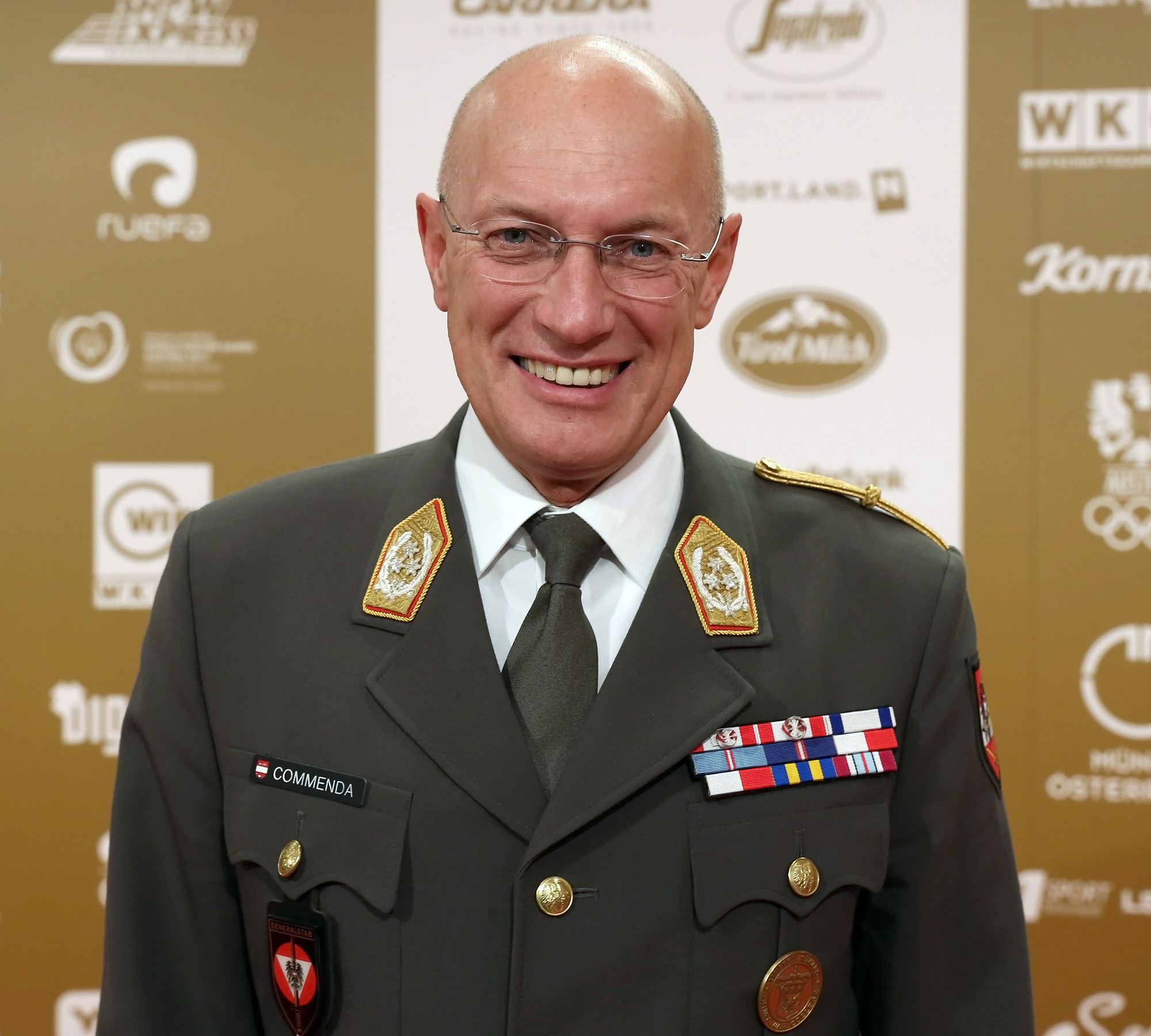
- Othmar Commenda (born 1954), retired General of the Austrian Armed Forces worked locally
- Thomas Steiner (born 1956), film director
- Franz Welser-Möst (born 1960), conductor, grew up locally
- Rudolf Anschober (born 1960), Austrian politician
- Stefan Sonvilla-Weiss (born 1961), communication scientist and arts and media educator
- Götz Spielmann (born 1961), film director and screenwriter
- Sabine Derflinger (born 1963), director, writer, producer and dramaturgical consultant
- Norbert Trawöger (born 1971), flautist and artistic director
- Christoph Wigelbeyer (born 1973), choir director, conductor, singer and music educator
Sport
.jpg)
- Max Hagmayr (born 1956), retired footballer, played 286 games and 9 for Austria
- Christoph Sieber (born 1971), sailor, gold medallist in the Mistral class at the 2000 Summer Olympics
- Christian Mayrleb (born 1972), footballer, top scorer in the top division; played 584 games and 30 for Austria
- Johannes Wipplinger (born 1978), athlete and bobsledder
- Helge Payer (born 1979), football goalkeeper, played 271 games and 20 for Austria
- Kevin Wimmer (born 1992), football player, played 220 games and 9 for Austria
- Felix Großschartner (born 1993), cyclist
- Robert Žulj (born 1992), footballer, played over 300 games
- Peter Žulj (born 1993), footballer, played over 300 games and 11 for Austria
- Marcel Sabitzer (born 1994), footballer, played 370 games and 77 for Austria
- Shamil Borchashvili (born 1995), Austrian judoka; bronze meadllist at the 2020 Summer Olympics
- Emma Felbermayr (born 2007), racing driver
References
References
- "Bevölkerung zu Jahres-/Quartalsanfang".
- Dr. Renate Miglbauer: [http://www.ooegeschichte.at/Ovilava-Das-roemische-Wels.470.0.html "Ovilava - Das römische Wels"], ooegeschichte.at, 8 February 2012.
- Christine O'Keefe [http://www.tartanplace.com/tartanhistory/concentrationcamps.html . "Concentration Camps"], tartanplace.com; accessed 4 November 2016.
- {{Cite NIE
- {{Cite EB1911. .
This article was imported from Wikipedia and is available under the Creative Commons Attribution-ShareAlike 4.0 License. Content has been adapted to SurfDoc format. Original contributors can be found on the article history page.
Ask Mako anything about Wels — get instant answers, deeper analysis, and related topics.
Research with MakoFree with your Surf account
Create a free account to save articles, ask Mako questions, and organize your research.
Sign up freeThis content may have been generated or modified by AI. CloudSurf Software LLC is not responsible for the accuracy, completeness, or reliability of AI-generated content. Always verify important information from primary sources.
Report