From Surf Wiki (app.surf) — the open knowledge base
Weird menace
Subgenre of horror and detective fiction
Subgenre of horror and detective fiction
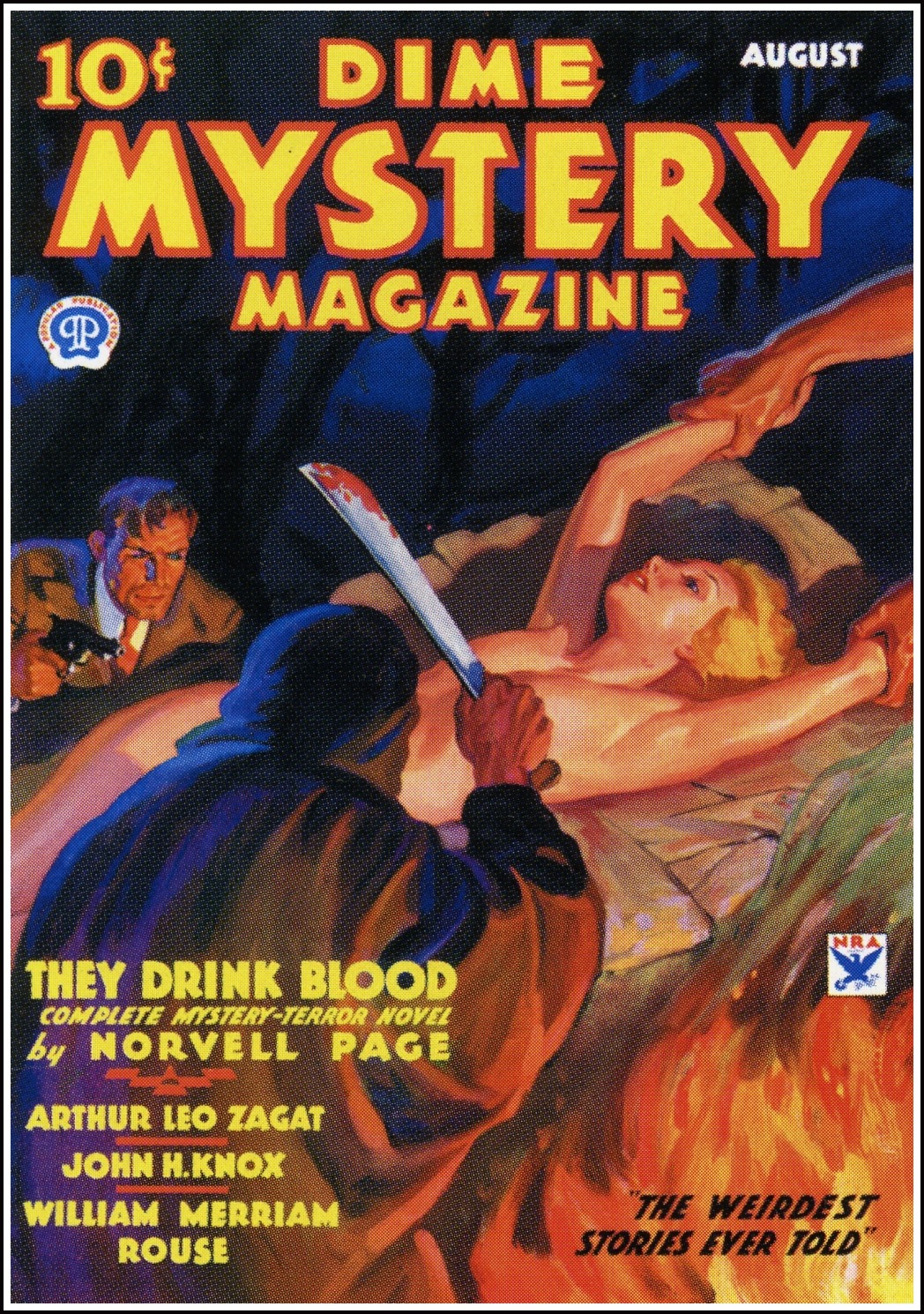
Weird menace is a subgenre of horror fiction and detective fiction that was popular in the pulp magazines of the 1930s and early 1940s. The weird menace pulps, also known as shudder pulps, generally featured stories in which the hero was pitted against sadistic villains, with graphic scenes of torture and brutality.
History
In the early 1930s, detective pulps like Detective-Dragnet, All Detective, Dime Detective, and the short-lived Strange Detective Stories, began to favor detective stories with weird, eerie, or menacing elements. Eventually, the two distinct genre variations branched into separate magazines; the detective magazines returned to stories predominantly featuring detection or action, while the eerie mysteries found their own home in the weird menace titles. Some magazines, for instance Ten Detective Aces (the successor to Detective-Dragnet), continued to host both genre variations.
Popularity and demise
The first weird menace title was Dime Mystery Magazine, which started out as a straight crime fiction magazine but began to develop the new genre in 1933 under the influence of Grand Guignol theater. Popular Publications dominated the genre with Dime Mystery, Terror Tales, and Horror Stories. After Popular issued Thrilling Mysteries, Standard Magazines, publisher of the "Thrilling" line of pulps, claimed trademark infringement. Popular withdrew Thrilling Mysteries after one issue, and Standard issued their own weird menace pulp, Thrilling Mystery. In the 1930s, the Red Circle pulps, with Mystery Tales, expanded the genre to include increasingly graphic descriptions of torture.
This provoked a public outcry against such publications. For example, The American Mercury published a hostile account of the terror magazines in 1938, "This month, as every month, the 1,508,000 copies of terror magazines, known to the trade as the shudder group, will be sold throughout the nation... They will contain enough illustrated sex perversion to give Krafft-Ebing the unholy jitters."
A censorship backlash brought about the demise of the genre in the early 1940s.
References
References
- Locke, John. Introduction to ''Cult of the Corpses'', by Maxwell Hawkins, Off-Trail Publications, 2008. {{ISBN. 978-1-935031-05-5.
- Gary Hoppenstand; Ray B Browne. ''The Defective Detective in the pulps''. Bowling Green, Ohio: Bowling Green State University Popular Press, 1983. pp. 4–5.
- Bruce Henry, ''The American Mercury'', April 1938; quoted in Jones, ''The Shudder Pulps'', pp. 138–39.
This article was imported from Wikipedia and is available under the Creative Commons Attribution-ShareAlike 4.0 License. Content has been adapted to SurfDoc format. Original contributors can be found on the article history page.
Ask Mako anything about Weird menace — get instant answers, deeper analysis, and related topics.
Research with MakoFree with your Surf account
Create a free account to save articles, ask Mako questions, and organize your research.
Sign up freeThis content may have been generated or modified by AI. CloudSurf Software LLC is not responsible for the accuracy, completeness, or reliability of AI-generated content. Always verify important information from primary sources.
Report