From Surf Wiki (app.surf) — the open knowledge base
Waukegan, Illinois

| Field | Value | ||||||||
|---|---|---|---|---|---|---|---|---|---|
| name | Waukegan, Illinois | ||||||||
| settlement_type | City | ||||||||
| image_skyline | {{multiple images | ||||||||
| border | infobox | ||||||||
| total_width | 285 | ||||||||
| perrow | 1/2/2 | ||||||||
| caption1 | Downtown Waukegan | ||||||||
| image2 | Genesee Theatre.jpg | ||||||||
| caption2 | Genesee Theatre | ||||||||
| image3 | Slippery when wet - Flickr - Joe K Gage.jpg | ||||||||
| caption3 | Waukegan Harbor Lighthouse | ||||||||
| caption4 | Waukegan Harbor | ||||||||
| image5 | Waukegan Downtown During the Holidays.jpg | ||||||||
| caption5 | Genesse Street | ||||||||
| motto | An Illinois Arts-Friendly Community | ||||||||
| nicknames | WaukTown, Green Town | ||||||||
| mapframe | yes | ||||||||
| mapframe-zoom | 10 | ||||||||
| mapframe-point | none | ||||||||
| pushpin_map | Illinois#USA | ||||||||
| pushpin_label | Waukegan | ||||||||
| pushpin_relief | yes | ||||||||
| image_seal | WaukeganILseal.png | ||||||||
| blank_emblem_size | 150 | ||||||||
| image_blank_emblem | City of Waukegan Logo.jpg | ||||||||
| blank_emblem_type | Wordmark | ||||||||
| subdivision_type | Country | ||||||||
| subdivision_name | United States | ||||||||
| subdivision_type1 | State | ||||||||
| subdivision_name1 | Illinois | ||||||||
| subdivision_type2 | Counties | ||||||||
| subdivision_name2 | Lake | ||||||||
| subdivision_type3 | Townships | ||||||||
| subdivision_name3 | Waukegan, Warren, Libertyville, Benton, Newport, Shields | ||||||||
| established_title | Founded | ||||||||
| established_date | 1829 | ||||||||
| established_title1 | Incorporated (town) | ||||||||
| established_date1 | March 31, 1849 | ||||||||
| established_title2 | Incorporated (city) | ||||||||
| established_date2 | February 23, 1859 | ||||||||
| named_for | |||||||||
| (Fortress or Trading Post) | |||||||||
| government_type | Mayor–council | ||||||||
| leader_title | Mayor | ||||||||
| leader_name | Samuel D. Cunningham, Jr (D) | ||||||||
| unit_pref | Imperial | ||||||||
| area_footnotes | |||||||||
| area_total_km2 | 63.38 | ||||||||
| area_land_km2 | 62.72 | ||||||||
| area_water_km2 | 0.66 | ||||||||
| area_total_sq_mi | 24.47 | ||||||||
| area_land_sq_mi | 24.22 | ||||||||
| area_water_sq_mi | 0.26 | ||||||||
| population_as_of | 2020 | ||||||||
| population_total | 89321 | ||||||||
| population_rank | 10th largest in Illinois | ||||||||
| 390th largest in U.S. | |||||||||
| population_density_km2 | 1424.06 | ||||||||
| population_density_sq_mi | 3688.36 | ||||||||
| population_metro | 9472676 | ||||||||
| population_demonym | Waukeganite | ||||||||
| pop_est_as_of | 2024 | ||||||||
| pop_est_footnotes | |||||||||
| population_est | 88570 | ||||||||
| timezone | CST | ||||||||
| utc_offset | −6 | ||||||||
| timezone_DST | CDT | ||||||||
| utc_offset_DST | −5 | ||||||||
| elevation_footnotes | |||||||||
| elevation_ft | 715 | ||||||||
| area_codes | 847 & 224 | ||||||||
| postal_code_type | ZIP Codes | ||||||||
| postal_code | 60079, 60085, 60087 | ||||||||
| coordinates | |||||||||
| blank_name | FIPS code | ||||||||
| blank_info | 17-79293 | ||||||||
| blank1_name | GNIS feature ID | ||||||||
| blank1_info | 2397222 | ||||||||
| blank2_name | U.S. Routes | ||||||||
| blank2_info | [[File:US 41.svg | 26px | link=U.S. Route 41 in Illinois]] | ||||||
| blank3_name | Major State Routes | ||||||||
| blank3_info | [[File:Illinois 120.svg | 31px | link=Illinois Route 120]] [[File:Illinois 131.svg | 31px | link=Illinois Route 131]] [[File:Illinois 132.svg | 31px | link=Illinois Route 132]] [[File:Illinois 137.svg | 31px | link=Illinois Route 137]] |
| blank4_name | Waterways | ||||||||
| blank4_info | Waukegan River | ||||||||
| blank5_name | Airports | ||||||||
| blank5_info | Waukegan National Airport | ||||||||
| website |
| mapframe-zoom = 10 | mapframe-point = none (Fortress or Trading Post) 390th largest in U.S.
Waukegan ( ) is a city in Lake County, Illinois, United States, and its county seat. Located 36 mi north of Chicago, Waukegan is a satellite city within the greater Chicago metropolitan area.
As of the 2020 census, its population was 89,321, making it the most populous city in Lake County, the seventh-most populous city within the Chicago metropolitan area and the 10th-most populous city in Illinois. However, unlike nearby wealthy North Shore suburbs, Waukegan has long been classified by the Illinois state government as overall "socioeconomically distressed" despite having some middle class inhabitants.
History
Founding and 19th century
The site of present-day Waukegan was recorded as Rivière du Vieux Fort ("Old Fort River") and Wakaygagh on a 1778 map by Thomas Hutchins. By the 1820s, the French name had become "Small Fort River" in English, and the settlement was known as "Little Fort". The name "Waukegance" and then "Waukegan" (meaning "little fort"; cf. Potawatomi wakaigin "fort" or "fortress") was created by John H. Kinzie and Solomon Juneau, and the new name was adopted on March 31, 1849.
Waukegan had an abolitionist community dating to these early days. In 1853, residents commemorated the anniversary of emancipation of slaves in the British Empire with a meeting. Waukegan arguably has the distinction of being the only place where Abraham Lincoln failed to finish a speech. When he was campaigning in the town in 1860, he was interrupted by a ringing fire alarm.
During the middle of the 19th century, Waukegan was becoming an important industrial hub. Industries included ship and wagon building, flour milling, sheep raising, pork packing, and dairying. William Besley's Waukegan Brewing Company was one of the most successful of these businesses, being able to sell beyond America. The construction of the Chicago and Milwaukee Railway through Waukegan by 1855 stimulated the growth and rapid transformation and development of the city's industry, so much that nearly 1000 ships were visiting Waukegan harbor every year. During the 1860s, a substantial German population began to grow inside the city.
Waukegan's development began in many ways with the arrival of industries such as United States Sugar Refinery, which opened in 1890, Washburn & Moen. This barbed-wire manufacturer prompted both labor migration and land speculation beginning in 1891, U.S. Starch Works, and Thomas Brass and Iron Works. Immigrants followed, mostly from southeastern Europe and Scandinavia, with large groups from Sweden, Finland, and Lithuania. The town also became home to a considerable Armenian population. One member of this community, Monoog Curezhin, even became embroiled in an aborted plot to assassinate Sultan Abdul Hamid II, reviled for his involvement in massacres of Armenians in the Ottoman Empire. Curezhin lost two fingers on his right hand while testing explosives for this purpose in Waukegan in 1904.
20th century
By the 1920s and 1930s, African Americans began to migrate to the city, mostly from the South. The town was afflicted with racial strife. In June 1920, an African-American boy allegedly hit the car of an off-duty sailor from nearby Great Lakes Naval Base with a rock, and hundreds of white sailors gathered at Sherman House, a hotel reserved for African Americans. Although newspaper reports and rumors suggested that the officer's wife was hit with glass from the broken windshield, subsequent reports revealed that the officer was not married. The sailors called for lynchings, but were kept back by the intervention of the police.
Marines and sailors renewed their attack on the hotel several days later. The Sherman House residents fled for their lives as the military members carried torches, gasoline, and the American flag. The Waukegan police once again turned them away, but not before firing and wounding two members of the crowd. The police were not always so willing to protect Waukegan's citizens. The chief of police and the state's attorney in the 1920s, for example, were avowed members of the Ku Klux Klan, facts that came to light when a wrongfully convicted African-American war veteran was released from prison on appeal after 25 years. Labor unrest also occurred regularly. In 1919, a strike at the US Steel and Wire Company – which had acquired Washburn & Moen – led to a call for intervention from the state militia.
Noted organized crime boss Johnny Torrio served time in Waukegan's Lake County jail in 1925. He installed bulletproof covers on the windows of his cell at his own expense for fear of assassination attempts.
The Waukegan urban area developed independently of Chicago before being officially incorporated into the Chicago metropolitan area during the 2000 census. This inclusion took place as a result of suburban sprawl, effectively dissolving the region's identity as self-standing. Despite this, Waukegan has retained a distinct industrial character in contrast to many of the residential suburbs along Chicago's North Shore. The financial disparity created by the disappearance of manufacturing from the city in part contributed to the Waukegan riot of 1966. Central to this event and the remainder of Waukegan's 20th-century history was Robert Sabonjian, who served as mayor for 24 years, and earned the nickname the "Mayor Daley of Waukegan" for his personal and sometimes controversial style of politics.
21st century
On Sunday, May 31, 2020, a peaceful protest against the murder of George Floyd by police in Minneapolis turned violent when a portion of the protesters looted and damaged local businesses along Lewis Avenue from Glen Flora Street north into the Village of Beach Park. According to local activist Ralph Peterson, who organized the earlier peaceful march moving east along Grand Avenue into the downtown area, two intoxicated locals and about five "professional provocateurs" not recognized by attendees attempted to incite to violence 50-75 protesters gathered at the corner of Glen Flora and North Lewis Avenue. Following the arrival of police, Peterson and Clyde McLemore, founder of the Lake County chapter of Black Lives Matter, attempted to disperse the crowd and diffuse police confrontations. Many in the dispersed and agitated crowd then began damaging and looting local businesses near Waukegan Plaza, as well as confronting arriving police with displays of violence and damage to police vehicles. The crowd size was then estimated to have grown to several hundred.
Businesses from Glen Flora Avenue north to Yorkhouse Road in Beach Park suffered looting of merchandise, property damage, and vandalism. In addition to the Waukegan Police Department, about 100 officers from neighboring departments and several dozen sheriff's deputies were dispatched to the area. Mayor Sam Cunningham issued a city-wide curfew. Five county squad cars were damaged during the confrontations, and over twenty people were arrested with no injuries reported. Upon finding that the vast majority of rioters were Waukegan residents, Cunningham stated, "That really hurts, that you would hurt your own block, your own store, your own business, your own neighborhood, city." The next day, local business owners and volunteers gathered to clean up the damage. Later on Monday, another protest was held at Waukegan Plaza, which was peaceful and caused no damage. On Tuesday, local faith leaders organized a vigil to denounce looting as counterproductive while demanding justice for the murder of George Floyd. At least one attendee and long-time resident was also present at the 1966 Waukegan Riot and expressed regret that it had occurred again.
Geography
Waukegan is on the shore of Lake Michigan, about 11 mi south of the border with Wisconsin and 37 mi north of downtown Chicago at an elevation around 650 ft above sea level. Chicago has two major streets that venture north to Waukegan, one being Sheridan Road, which extends north from Diversey Parkway in Lincoln Park. The second street is Milwaukee Avenue, which starts at the intersection of Desplaines Street and Kinzie Street in downtown Chicago.
According to the 2021 census gazetteer files, Waukegan has a total area of 24.48 sqmi, of which 24.23 sqmi (or 98.99%) is land and 0.25 sqmi (or 1.01%) is water.
Major streets
- [[Image:US 41.svg|20px]] Skokie Highway
- [[Image:Illinois 43.svg|20px]] Waukegan Road
- [[Image:Illinois 120.svg|20px]] Belvidere Road
- [[Image:Illinois 131.svg|20px]] Green Bay Road
- [[Image:Illinois 132.svg|20px]] Grand Avenue
- [[Image:Illinois 137.svg|20px]] Sheridan Road/Amstutz Expressway
- Lewis Avenue
- Washington Street
- Genesee Street
Climate
Waukegan is located within the humid continental climate zone (Köppen: Dfa) with warm to hot (and often humid) summers and cold and snowy winters. The record high temperature is 108 F, which was set in July 1934, while the record low is −27 F, set in January 1985. Waukegan's proximity to Lake Michigan moderates the climate, cooling it in the summer and warming it in the winter.
| Jan record high F = 64 | Feb record high F = 71 | Mar record high F = 83 | Apr record high F = 92 | May record high F = 95 | Jun record high F = 105 | Jul record high F = 108 | Aug record high F = 102 | Sep record high F = 103 | Oct record high F = 90 | Nov record high F = 80 | Dec record high F = 69 | year record high F = 108 | Jan avg record high F = 48 | Feb avg record high F = 51 | Mar avg record high F = 67 | Apr avg record high F = 80 | May avg record high F = 86 | Jun avg record high F = 92 | Jul avg record high F = 95 | Aug avg record high F = 93 | Sep avg record high F = 90 | Oct avg record high F = 81 | Nov avg record high F = 67 | Dec avg record high F = 53 | year avg record high F = 96 | Jan avg record low F = -9 | Feb avg record low F = -3 | Mar avg record low F = 8 | Apr avg record low F = 23 | May avg record low F = 32 | Jun avg record low F = 42 | Jul avg record low F = 49 | Aug avg record low F = 49 | Sep avg record low F = 38 | Oct avg record low F = 27 | Nov avg record low F = 13 | Dec avg record low F = -2 | year avg record low F = -12 | Jan record low F = -27 | Feb record low F = -24 | Mar record low F = -12 | Apr record low F = 8 | May record low F = 24 | Jun record low F = 32 | Jul record low F = 41 | Aug record low F = 40 | Sep record low F = 27 | Oct record low F = 11 | Nov record low F = -5 | Dec record low F = -23 | year record low F = -27
Superfund sites

Waukegan contains three Superfund sites of hazardous substances that are on the National Priorities List.
In 1975, PCBs were discovered in Waukegan Harbor sediments. Investigation revealed that during manufacturing activities at Outboard Marine Corporation (OMC), hydraulic fluids containing PCBs had been discharged through floor drains at the OMC plant, directly to Waukegan Harbor and into ditches discharging into Lake Michigan. The OMC plants were subsequently added to the National Priorities List, and was designated as one of 43 Great Lakes Areas of Concern. Cleanup of the site began in 1990, with OMC providing $20–25 million in funding. During the OMC cleanup, additional soil contaminants were found at the location of the former Waukegan Manufactured Gas and Coke Company. Soil removal was completed at the coke site in 2005, and cleanup of that soil will continue for several years.
The Johns Manville site is located 1 mi north of the OMC site. In 1988, asbestos contamination found in groundwater and air prompted listing on the National Priorities List and subsequent cleanup. In 1991, the soil cover of the asbestos was completed. However, additional asbestos contamination was found outside the Johns-Manville property, which will require further cleanup.
The Yeoman Creek Landfill is a Superfund site located 1.5 mi west of the Johns Manville site. The site operated as a landfill from 1959 to 1969. In 1970, it was discovered that the lack of a bottom liner in the landfill had allowed leachate to enter groundwater, contaminating the water with volatile organic compounds and PCBs, and releasing gases that presented an explosion hazard. All major cleanup construction activities were completed in 2005, and monitoring of local water and air continues. The book Lake Effect by Nancy Nichols gives an account of the effects of PCBs on Waukegan residents. The Johns Manville site was cited due to its high concentration of PCBs and asbestos.
Demographics
|align-fn=center
There were 29,822 households, out of which 40.3% had children under the age of 18 living with them, 44.11% were married couples living together, 17.44% had a female householder with no husband present, and 32.05% were non-families. 26.29% of all households were made up of individuals, and 9.41% had someone living alone who was 65 years of age or older. The average household size was 3.50 and the average family size was 2.85.
The city's age distribution consisted of 26.7% under the age of 18, 11.5% from 18 to 24, 29% from 25 to 44, 22.7% from 45 to 64, and 10.3% who were 65 years of age or older. The median age was 33.1 years. For every 100 females, there were 99.7 males. For every 100 females age 18 and over, there were 100.1 males.
The median income for a household in the city was $53,778, and the median income for a family was $63,401. Males had a median income of $34,308 versus $26,367 for females. The per capita income for the city was $24,827. About 12.6% of families and 15.5% of the population were below the poverty line, including 24.1% of those under age 18 and 10.1% of those age 65 or over.
| Race / Ethnicity (NH = Non-Hispanic) | title=P004: Hispanic or Latino, and Not Hispanic or Latino by Race – 2000: DEC Summary File 1 – Waukegan city, Illinois | url=https://data.census.gov/table?g=1600000US1779293&tid=DECENNIALSF12000.P004 | website=United States Census Bureau | access-date=January 26, 2024}} | title=P2: Hispanic or Latino, and Not Hispanic or Latino by Race – 2010: DEC Redistricting Data (PL 94-171) - Waukegan city, Illinois | url=https://data.census.gov/cedsci/table?q=p2&g=1600000US1779293&tid=DECENNIALPL2010.P2 | website=United States Census Bureau | access-date=January 26, 2024}} | % 2000 | % 2010 |
|---|---|---|---|---|---|---|---|---|---|---|
| White alone (NH) | 27,186 | 19,370 | 14,003 | 30.93% | ||||||
| Black or African American alone (NH) | 16,354 | 16,240 | 14,647 | 18.61% | ||||||
| Native American or Alaska Native alone (NH) | 168 | 173 | 129 | 0.19% | ||||||
| Asian alone (NH) | 3,092 | 3,722 | 4,576 | 3.52% | ||||||
| Native Hawaiian or Pacific Islander alone (NH) | 37 | 26 | 35 | 0.04% | ||||||
| Other race alone (NH) | 398 | 577 | 817 | 0.45% | ||||||
| Mixed or Multiracial (NH) | 1,270 | 1,358 | 2,011 | 1.44% | ||||||
| Hispanic or Latino (any race) | 39,396 | 47,612 | 53,103 | 44.82% | ||||||
| Total | 87,901 | 89,078 | 89,321 | 100.00% |
2023 American Community Survey 1-Year Estimates
| thumb = left | url=https://data.census.gov/table/ACSDT1Y2023.B03002?q=B03002&g=160XX00US1779293 | title=B03002 Hispanic or Latino, and Not Hispanic or Latino by Race – Waukegan, Illinois – 2023 American Community Survey 1-Year Estimates | date=July 1, 2023 | publisher=U.S. Census Bureau | access-date=November 17, 2024}} | label1 = White alone | color2=#36A | label2 = Black alone | color1=#6A5 | label3 = Native American alone | color3=#FF33AC | label4 = Asian alone | color4=#1A9 | label5 = Pacific Islander alone | color5=#E17720 | label6 = Some other race | color6=#F0FF00 | label7 = Two or more races | color7=#64ECDF | thumb = left | caption = Racial Makeup of Waukegan treating Hispanics as a Racial Category (2023) | ||||||||||||
|---|---|---|---|---|---|---|---|---|---|---|---|---|---|---|---|---|---|---|---|---|---|---|---|---|---|---|---|---|---|---|---|---|---|
| NH=Non-Hispanic | label1 = White NH | color2=#36A | label2 = Black NH | color1=#6A5 | label3 = Native American NH | color3=#FF33AC | label4 = Asian NH | color4=#1A9 | label5 = Pacific Islander NH | color5=#E17720 | label6 = Other race NH | color6=#F0FF00 | label7 = Two or more races NH | color7=#64ECDF | label8 = Hispanic Any Race | color8=#9400D3 | thumb =left | caption = Racial Makeup of Hispanics in Waukegan (2023) | label1 = White alone | color2=#36A | label2 = Black alone | color1=#6A5 | label3 = Native American alone | color3=#FF33AC | label4 = Asian alone | color4=#1A9 | label5 = Pacific Islander alone | color5=#E17720 | label6 = Other race alone | color6=#F0FF00 | label7 = Two or more races | color7=#64ECDF |
Religion
Over half (54.4%) of the population identified as members of a religious group. The largest group were Roman Catholics, who comprised 31.0% of city residents. Other Christian groups included Lutherans (3.2%), Baptists (1.9%), Presbyterians (1.6%), and Methodists (1.5%); about 11% adhered to other Christian denominations. Other faiths practiced include Judaism (2.7%) and Islam (1.4%).
Christ Episcopal Church on the corner of Grand Avenue and West Street is a historic church, one of the first in Waukegan.
The Roman Catholic Archdiocese of Chicago operates Catholic churches. On July 1, 2020, St. Anastasia Parish and St. Dismas Parish merged, with the former having the parish school and the latter having the parish church.
Economy
According to Waukegan's 2023 Comprehensive Annual Financial Report, the top employers in the city were:
| # | Employer | # of Employees |
|---|---|---|
| 1 | Lake County | 2,400 |
| 2 | Southwire Co., LLC | 1,500 |
| 3 | Vista Medical Center East | 840 |
| 4 | Lake Behavioral Hospital | 700 |
| 5 | Medline Industries Inc. | 650 |
| 6 | Jewel-Osco | 515 |
| 7 | Waukegan Community Unit School District 60 | 500 |
| 8 | City of Waukegan | 483 |
| 9 | Bel Resources | 450 |
| 10 | Kiley Developmental Center | 425 |
Revitalization
The city has plans for the redevelopment of the lakefront. The lakefront and harbor plan calls for most industrial activity to be removed, except for the Midwest Generation power plant and North Shore wastewater treatment facilities. The existing industry would be replaced by residential and recreational space. The city also set up several tax increment financing zones, which have been successful in attracting new developers. The first step in the revitalization effort, the opening of the Genesee Theatre, has been completed, many new restaurants have opened, buildings have been renovated, and the City of Waukegan has made substantial investments in the pedestrian areas and other infrastructure.
The city has had an annual "Scoop the Loop" summer festival of cruising since 1998, which, since 2010, has become a monthly event during the summer. The current incarnation is known as "Scoop Unplugged".
Arts and culture
ArtWauk is an art event that happens every third Saturday of the month in downtown Waukegan. It features paintings, sculptures, films, dance, theater, comedy, music, performance art, food, and pedicabs all in the Waukegan Arts District. Other events include the Chicago Latino Film Festival and HolidayWauk. The Fiestas Patrias Parade and Festival in downtown Waukegan highlights and celebrates the independence of the many Hispanic countries that are represented in Waukegan.
Historical sites
- Bowen Park
- Genesee Theatre
- Jack Benny Center for the Arts
- Naval Station Great Lakes
- Waukegan Building
- Waukegan Harbor Light
- Waukegan Public Library
Government
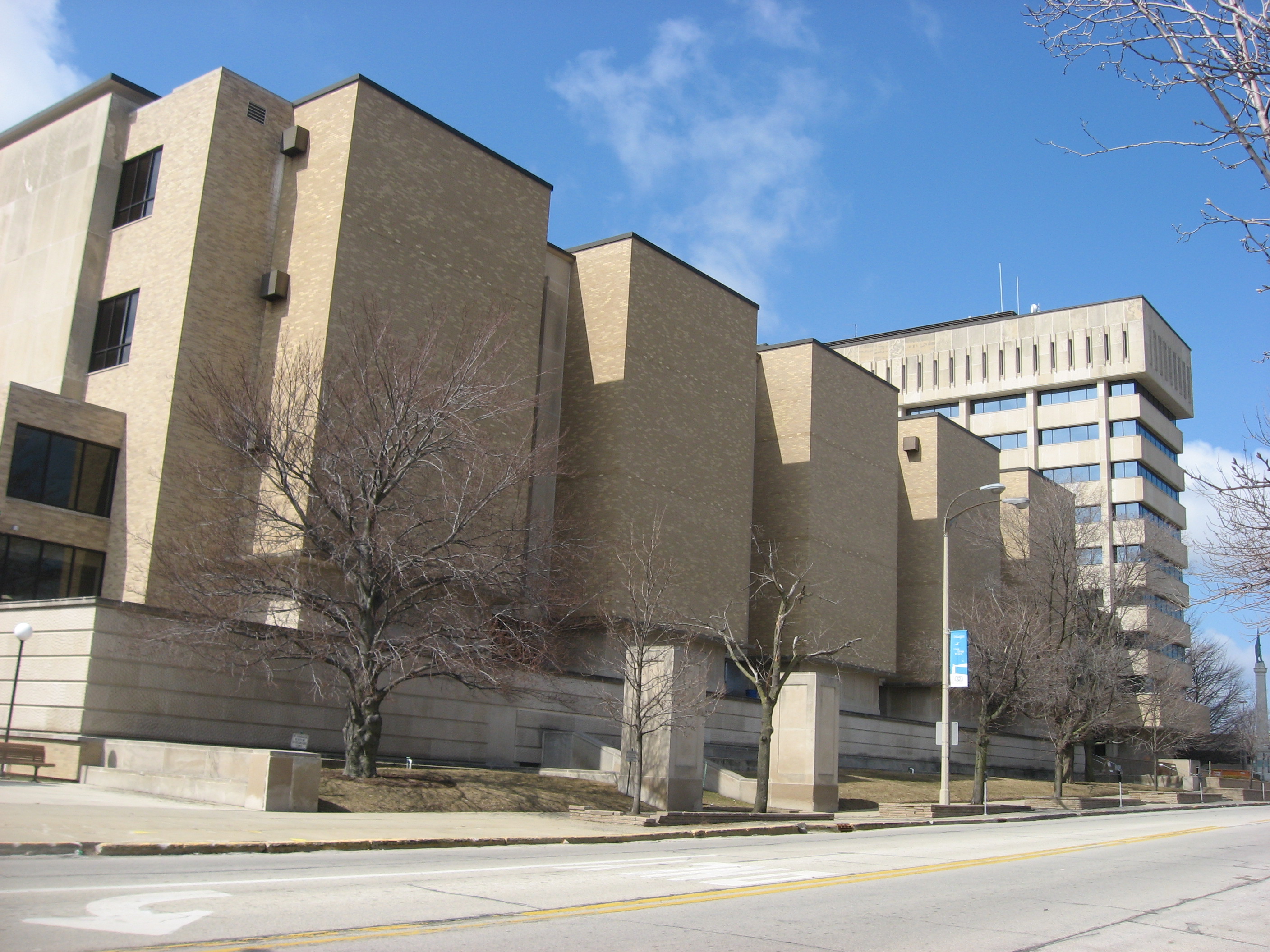
Waukegan is run on a mayor–council government. The city government consists of a single elected mayor and city clerk, with a city council composed of nine alderpersons, who are elected to represent the nine wards of the city. Any new members are sworn in on the first Monday in May of their respective election year, as it coincides with the first city council meeting of the month.
The mayor of Waukegan is Sam Cunningham. He was elected in April 2025, defeating incumbent Ann B. Taylor. He had previously been mayor from 2017–2021.
| Name | Term start | Term end | Notes | |||||
|---|---|---|---|---|---|---|---|---|
| Robert V. Sabonjian | 1957 | 1977 | url=https://en.wikipedia.org/wiki/Robert_Sabonjian | title=Robert Sabonjian | publisher=Wikipedia | access-date=April 4, 2025}} | ||
| Bill Morris | 1977 | 1985 | Defeated Sabonjian in 1977; served two terms. | |||||
| Robert V. Sabonjian | 1985 | 1989 | Returned for a sixth term after Morris's tenure. | |||||
| Haig Paravonian | 1989 | 1993 | Succeeded Sabonjian upon his retirement. | |||||
| William F. Durkin | 1993 | 2001 | url=https://www.chicagotribune.com/2025/03/17/former-mayor-william-f-durkin-remembered-for-deeply-inspired-vision-of-what-waukegan-could-be/ | title=Former Mayor William F. Durkin remembered for 'deeply inspired vision of what Waukegan could be' | publisher=Chicago Tribune | date=March 17, 2025 | access-date=April 4, 2025}} | |
| Robert Sabonjian Jr. | 2009 | 2013 | Son of Robert V. Sabonjian; served one term. | |||||
| Sam Cunningham | 2017 | 2021 | url=https://en.wikipedia.org/wiki/Sam_Cunningham_(mayor) | title=Sam Cunningham (mayor) | publisher=Wikipedia | access-date=April 4, 2025}} | ||
| Ann B. Taylor | 2021 | 2025 | First female mayor. | |||||
| Sam Cunningham | 2025 | Incumbent | date=2025-04-01 | title=Former Waukegan Mayor Sam Cunningham defeats incumbent Ann Taylor | url=https://www.nbcchicago.com/news/local/chicago-politics/former-waukegan-mayor-sam-cunningham-defeats-incumbent-ann-taylor/3711609/ | access-date=2025-04-20 | work=NBC Chicago | language=en-US}} |
Education
The majority of Waukegan is within Waukegan Public School District 60. It serves about 17,000 students in preschool through grade 12. Waukegan has three early childhood schools, 13 elementary schools, five middle schools, and three high schools. The multicampus Waukegan High School serves local high school students in two different campuses: Brookside and Washington. Brookside Campus serves as a 9th–10th grade learning center, while Washington Campus serves as an 11th–12th grade learning center.
Parts of Waukegan extend into other school districts. One portion is within Gurnee School District 56 and Warren Township High School District 121, and a small section is in Beach Park Community Consolidated School District 3 and Zion-Benton Township High School District 126.
A network of private schools exists within the city. Cristo Rey St. Martin College Prep is a private Catholic high school, located within a former Kmart in Waukegan. Immanuel Lutheran School is a prekindergarten - grade 8 school of the Wisconsin Evangelical Lutheran Synod in Waukegan.
Transportation
.jpg)
Waukegan has a port district that operates the city harbor and regional airport. Waukegan Harbor has a recreational marina and an industrial port, which provides access for 90–100 large shipping vessels yearly. Companies with cargo facilities at the port include Gold Bond Building Products (capacity for 100,000 tons of gypsum), LaFarge Corp (12 cement silos), and St Mary's Cement Co (two cement silos).
Waukegan National Airport is certified for general aviation traffic and has a U.S. Customs facility, allowing for direct international flights.
Pace provides bus service on numerous routes throughout the city with a hub in downtown Waukegan. Separated from downtown by the Amstutz Expressway, the Waukegan station provides Metra commuter rail service along the Union Pacific North Line. Trains travel south to Ogilvie Transportation Center in Chicago and north to Kenosha, Wisconsin.
The Lake County McClory recreational trail passes through Waukegan. It provides a non-motor route spanning from Kenosha, Wisconsin, to the North Shore, along the right of way of the former Chicago North Shore and Milwaukee Railroad.
Notable people
Main article: List of people from Waukegan, Illinois
In popular culture
- In her poem 'Twee visschers' (two fishermen), written in Dutch by the Surinam writer two men, a white and a black, are fishing together near Waukegan. They are described as the new future.
- Eleanor Taylor Bland is an author of crime fiction taking place in "Lincoln Prairie" an amalgam of Waukegan, North Chicago, and Zion.
- The character Johnny Blaze from the Marvel comic book Ghost Rider is described as having been born in Waukegan.
- Ray Bradbury spent his childhood in Waukegan and used it as the basis for Green Town, the setting of three of his books: Dandelion Wine (1957), Something Wicked This Way Comes (1962), and Farewell Summer (2006). In his essay "Just This Side of Byzantium" and poem "Byzantium, I come not from," Bradbury explains the relationship between Green Town and his memories of Waukegan.
- Waukegan's Amstutz Expressway, locally known as the "Expressway to Nowhere", has been used as a shooting location for such films as Groundhog Day, The Ice Harvest, The Blues Brothers, Contagion and Batman Begins.
- The music video "In Love with a Thug" sung by Sharissa featuring R. Kelly was filmed in Waukegan, predominantly on the corner of Water Street and Genesee Street.
- In 2005, Ringo Starr and the Roundheads recorded a concert for an episode of Soundstage at the Genesee Theatre in Waukegan.
- In their 1979 novel Stardance, Spider & Jeanne Robinson refer to Waukegan as if it were a prototypical Earth location, as identified by gravity vs. free fall.
- The hip-hop group Atmosphere namechecks the city in live performances of the song "You."
- Tom Waits mentions Waukegan in the song "Gun Street Girl" from his album Rain Dogs (1985): "He left Waukegan at the slamming' of the door".
- The band The Ike Reilly Assassination mentions Waukegan in the song "The Ex-Americans" from the 2004 album Sparkle in the Finish.
- The band Eddie From Ohio has a song titled "HoJo's in Waukegan" on the album Actually Not.
- The 2024 film, Ghostlight, was filmed in various neighborhoods in the Chicago area, including Waukegan.
Sister cities
Waukegan has one sister city:
Japan Miyazaki, Japan
Although the city has no official sister city relationship, Waukegan is home to about 6,000 people from Tonatico, Mexico, according to a February 2017 article in The Washington Post. This has created ongoing ties between the two cities.
References
References
- "2020 U.S. Gazetteer Files". United States Census Bureau.
- "All cities, towns, villages and unincorporated places in Illinois of more than 15,000 inhabitants.".
- "U.S. Census website".
- (March 2025). "City and Town Population Totals: 2020-2024". U.S. Department of Commerce.
- {{GNIS. 2397222
- "Waukegan city, Illinois".
- "U.S. Census Bureau QuickFacts: Waukegan city, Illinois".
- "2025 Economically Distressed Communities List".
- Callary, Edward. 2009. ''Place Names of Illinois''. Champaign: University of Illinois Press, p. 368.
- Chicago and North Western Railway Company. (1908). "A History of the Origin of the Place Names Connected with the Chicago & North Western and Chicago, St. Paul, Minneapolis & Omaha Railways".
- (August 18, 1853). "West India Emancipation". The National Era (Washington, DC).
- Fitzpatrick, Rita. (June 29, 1947). "Waukegan has City's Din Amid Rural Scenes". Chicago Daily Tribune.
- "Waukegan, IL".
- Dretske, Diana. (April 27, 2010). "Waukegan saw business boom in 1890".
- (January 25, 1891). "Wild Activity at Waukegan: the Town is Fairly Overrun with Enthusiastic Acre Speculators". Chicago Daily Tribune.
- "Places".
- Kirkpatrick, Clayton. (January 31, 1951). "Waukegan: It's Working Man's Town – and How! City Glories in Smoking Stacks along Lake". Chicago Daily Tribune.
- "Armenians in Waukegan – St. George Armenian Church".
- Mirak, Robert. (1983). "Torn Between Two Lands: Armenians in America, 1890 to World War I". Harvard University Press.
- (August 20, 1907). "Armenian Plotter is Taken: Chicagoan Admits Having Been Assigned to Kill the Sultan". Chicago Daily Tribune.
- "Places".
- Chicago Commission on Race Relations. "Racial Clashes, 1920".
- (June 1, 1920). "Sailors Riot in Waukegan Race Clash". Chicago Daily Tribune.
- (June 3, 1920). "2 Marines Shot as Sailors and Police Clash: Waukegan Site of New Race Riot". Chicago Daily Tribune.
- (June 3, 1920). "Sailors Renew Race Riots". New York Times.
- (August 11, 1949). "Crime Non-Existent, Trial 'Sham,' Court Frees Negro After 26 Years". New York Times.
- Coleman, Ted. (September 24, 1949). "Ku Kluxers Still Stalking 'Big Jim' After 25 Years". The Pittsburgh Courier.
- (September 30, 1919). "2,000 in Riot at Waukegan". The Washington Herald.
- (September 26, 1919). "State Militia Sent". The Daily Gate City and Constitution Democrat.
- (June 25, 1925). "Torrio Fortifies Jail Cell; Rumors of War". Chicago Daily Tribune.
- Myers, Linner. (June 9, 1985). "'Mayor Daley of Waukegan' Back to Show 'Em Who's Boss". Chicago Tribune.
- Coleman, Emily K.. (June 1, 2020). "Waukegan mayor imposes curfew amid unrest; protesters return after looters take over weekend demonstration".
- Coleman, Emily K.. (June 2, 2020). "Waukegan mayor defends city's response to unrest, says police were prepared".
- Tribune, Chicago. (June 2, 2020). "George Floyd fallout: Here's what happened June 1 in the Chicago area".
- Olson, Yadira Sanchez. (June 2, 2020). "Lake County faith leaders lead vigil to call for end to 'systemic racism'".
- US Census Bureau. "Gazetteer Files".
- "XMACIS2". National Weather Service.
- "Monthly Climate Normals (1981–2010) Waukegan, IL". National Weather Service.
- (August 20, 2015). "Waukegan Harbor River Area of Concern". [[United States Environmental Protection Agency.
- [https://maps.google.com/maps?f=q&hl=en&geocode=&q=42.387744,-87.82033&ie=UTF8&t=h&om=1&ll=42.38562,-87.811661&spn=0.038101,0.09407&z=14 Coordinates of Johns Mannville site]. Maps.google.com (January 1, 1970).
- "Johns-Manville Corp". EPA.
- (November 2006). "Asbestos contaminated shore". Dunesland Preservation Society.
- "Yeoman Creek Landfill".
- "ILD980500102, NPL Fact Sheet – Region 5 Superfund – US EPA". epa.gov.
- Wilson, Gary. (2018-06-11). "A Great Lakes tragedy: growing up near a toxic harbor".
- (30 November 2008). "Toxic Town". Washington Post.
- "Decennial Census of Population and Housing by Decades". [[US Census Bureau]].
- "Explore Census Data".
- "P004: Hispanic or Latino, and Not Hispanic or Latino by Race – 2000: DEC Summary File 1 – Waukegan city, Illinois".
- "P2: Hispanic or Latino, and Not Hispanic or Latino by Race – 2010: DEC Redistricting Data (PL 94-171) - Waukegan city, Illinois".
- "P2: Hispanic or Latino, and Not Hispanic or Latino by Race – 2020: DEC Redistricting Data (PL 94-171) - Waukegan city, Illinois".
- (July 1, 2023). "B03002 Hispanic or Latino, and Not Hispanic or Latino by Race – Waukegan, Illinois – 2023 American Community Survey 1-Year Estimates". [[U.S. Census Bureau]].
- Anderson, Javonte. (February 7, 2020). "23 Chicago-area Roman Catholic parishes to close, merge in latest round of restructuring". [[Chicago Tribune]].
- "Comprehensive Annual Financial Reports {{!}} Waukegan, IL – Official Website".
- [https://www.waukeganvision.com/ Plans for redevelopment of the lakefront]. Waukeganvision.com.
- "Scoop Unplugged and Oktoberfest". Waukegan Arts Council.
- "ArtWauk". Waukegan Main Street.
- "Aldermen".
- (April 9, 2024). "Waukegan Mayor Ann Taylor announces reelection bid; will face at least 3 challengers". Chicago Tribune.
- Sadin, Steve. (April 7, 2021). "Ann Taylor declares victory in bid to become Waukegan's first female mayor in one of 345 election races in Lake County".
- "Past Mayors of Waukegan".
- "Robert Sabonjian". Wikipedia.
- (March 17, 2025). "Former Mayor William F. Durkin remembered for 'deeply inspired vision of what Waukegan could be'". Chicago Tribune.
- "Sam Cunningham (mayor)". Wikipedia.
- (2025-04-01). "Former Waukegan Mayor Sam Cunningham defeats incumbent Ann Taylor". NBC Chicago.
- "2020 CENSUS - SCHOOL DISTRICT REFERENCE MAP: Lake County, IL". [[U.S. Census Bureau]].
- "Immanuel Lutheran Church and School".
- "Immanuel Ev. Lutheran Church and School – Waukegan, IL".
- [http://www.iwr.usace.army.mil/ndc/ports/pdf/ps/ps48.pdf seriesmain_rpt] {{Webarchive. link. (August 23, 2007 . (PDF).)
- (August 8, 2007). "Harbor cleanup moves forward". Chicago Tribune.
- "Waukegan Harbor". U.S. Army Corps of Engineers.
- "RTA System Map".
- "Eleanor Taylor Bland".
- [http://www.marveldirectory.com/individuals/g/ghostrider.htm Ghost Rider Marveldirectory.com.]
- "Sister Cities". Lake County, Illinois Convention & Visitors Bureau.
- (February 4, 2017). "Trump policies strain the ties that bind a Mexican village to small-town Illinois". [[Washington Post]].
This article was imported from Wikipedia and is available under the Creative Commons Attribution-ShareAlike 4.0 License. Content has been adapted to SurfDoc format. Original contributors can be found on the article history page.
Ask Mako anything about Waukegan, Illinois — get instant answers, deeper analysis, and related topics.
Research with MakoFree with your Surf account
Create a free account to save articles, ask Mako questions, and organize your research.
Sign up freeThis content may have been generated or modified by AI. CloudSurf Software LLC is not responsible for the accuracy, completeness, or reliability of AI-generated content. Always verify important information from primary sources.
Report