From Surf Wiki (app.surf) — the open knowledge base
Watts, Los Angeles

| Field | Value | |
|---|---|---|
| <!-- Basic info ----------------> | name | Watts |
| native_name | ||
| settlement_type | Neighborhood of Los Angeles | |
| total_type | ||
| motto | ||
| image_skyline | Part of Watts Towers, a collection of structures and art in the low-income Watts section of Los Angeles, California LCCN2013631540.tif | |
| image_caption | The Watts Towers, created by Simon Rodia | |
| image_map | Welcome_to_Watts_California.jpg | |
| map_caption | "Welcome to Watts" sign on Central Avenue | |
| pushpin_map | United States Los Angeles Southern#Los Angeles#USA California Southern#California#USA | |
| pushpin_label_position | right | |
| pushpin_map_caption | Location of Watts, Los Angeles##Location within Southern Los Angeles##Location within Southern California##Location within California##Location within United States | |
| pushpin_mapsize | 250 | |
| <!-- Location ------------------> | subdivision_type | Country |
| subdivision_name | United States | |
| subdivision_type1 | State | |
| subdivision_name1 | California | |
| subdivision_type2 | County | |
| subdivision_name2 | Los Angeles | |
| subdivision_type3 | City | |
| subdivision_name3 | Los Angeles | |
| leader_title | City Council | |
| leader_name | Tim McOsker | |
| leader_title1 | State Assembly | |
| leader_name1 | Mike Gipson (D) | |
| leader_title2 | State Senate | |
| leader_name2 | Steven Bradford (D) | |
| leader_title3 | U.S. House | |
| leader_name3 | Nanette Barragán (D) | |
| established_date | ||
| area_footnotes | ||
| area_total_sq_mi | 2.0 | |
| area_water_percent | ||
| elevation_footnotes | ||
| elevation_min_ft | ||
| population_as_of | 2000 | |
| population_footnotes | ||
| population_total | 34830 | |
| population_density_sq_mi | 17350 | |
| coordinates | ||
| postal_code_type | ZIP Code | |
| postal_code | 90002, 90059 | |
| area_code | 323 | |
| website | Watts Neighborhood Council |
Watts is a neighborhood in southern Los Angeles, California. It is located within the South Los Angeles region, bordering the cities of Lynwood, Huntington Park and South Gate to the east and southeast, respectively, and the unincorporated community of Willowbrook to the south.
Founded in the late nineteenth century as a ranching community, the arrival of the railroads and the construction of Watts Station saw the rapid development of Watts as an independent city, but in 1926 it was consolidated with Los Angeles. By the 1940s, Watts transformed into a primarily working class African-American neighborhood, but from the 1960s developed a reputation as a low-income, high-crime area, following the Watts riots and the increasing influence of street gangs. Watts has become a predominantly Hispanic neighborhood with a significant African American minority, and remains one of the most impoverished neighborhoods in Los Angeles despite falling crime rates since the 1990s. Notable civic activities by residents of Watts include the "Toys for Watts" toy drive, the Watts Christmas parade, and the "Watts Summer Games" athletic tournament, as well as a local theatre and a dance company, in an effort to improve the neighborhood.
Watts is noted internationally for the landmark Watts Towers by Simon Rodia, which are a Los Angeles Historic-Cultural Monument and also listed on the National Register of Historic Places. The neighborhood has also been featured or referenced in numerous forms of media, particularly West Coast hip-hop music, and movies and television shows set in Los Angeles.
History
Founding
The area now known as Watts is situated on the 1843 Rancho La Tajauta Mexican land grant. As on all ranchos, the principal vocation at that time was grazing and beef production. There were household settlers in the area as early as 1882, and in 1904, the population was counted as 65 people; a year later it was 1,651. C.V. Bartow of Long Beach was noted as one of the founders of Watts.
Naming
In 1904, it was reported that Watts was named after Pasadena businessman Charles H. Watts, who was found dead by suicide in the St. Elmo Hotel, Los Angeles, on August 23 of that year. The Los Angeles Times said: "Watts at one time conducted a livery stable on North Main Street and another at Pasadena and was a man of considerable means. ... Watts station on the Salt Lake road is named after the deceased, and is located on property which he once owned." The Los Angeles Evening Express said: "Among other property he owned a ranch south of the city through which the Salt Lake railroad passes, and the station of Watts is named for him."
In 1919, Watts Mayor Z. A. Towne said that the settlement was named after a widow who lived on ten acres which was later occupied by a Pacific Electric power house. She later moved to Arlington, California, Towne said.
In 1912 and 1913, a movement was afoot to change the name of Watts because, as one headline writer put it, the residents were tired of the "quips and jests" at the town's expense. One real-estate agent said that prospective clients backed out of a property inspection tour when they found out their streetcar ride would end up in Watts. The name "South Angeles" was proposed. Another plan for a city name change surfaced in 1919, when the city trustees asked for suggestions. Mayor Towne said: "Watts has got a bad reputation in Southern California, somehow or other ... a good many of us felt that the liquor element left a black mark upon the community's name. ... Towns are something like people. They can live up to a good name easier than they can live down a bad name."
Subdivision
A subdivision with the name Watts was platted, possibly by the Golden State Realty Company, between 1903 and 1905, when the settlement had a population of about 150 people. In 1905 lots were being sold by that firm for prices ranging from $100 to $200: The terms were advertised at a dollar as down payment and a dollar a month thereafter, with the company claiming there would be "no interest and no taxes." The Watts Lumber Company had a plan of "easy payments" which "enabled those desiring houses in the little settlement to secure their material and to build and occupy their houses at once."
After 1903, Watts saw the establishment of a newspaper, a general merchandise store, a lumber yard, a grocery store, a millinery, dry goods and confectionery stores, a blacksmithery and bakeries. The Pacific Coast Laundry Company opened in August 1907, with a payroll promised to be between $750 and $1,000 a month. Laundry deliveries were to be made via the electric railway.
Cityhood
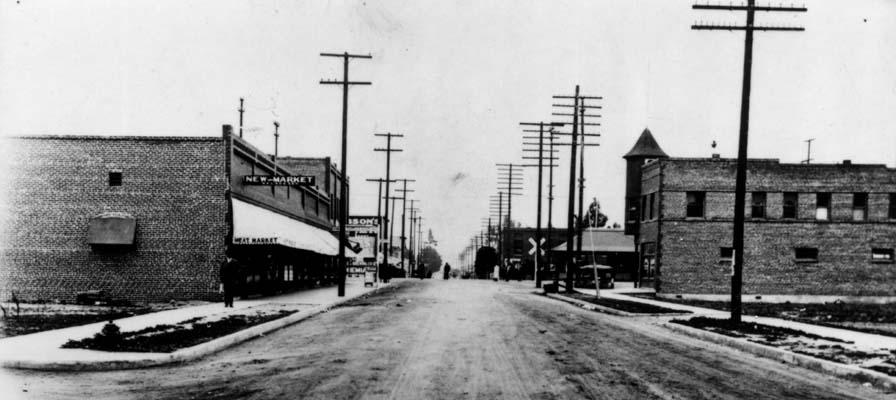

Watts became a city in 1907, after three petitions objecting to the proposed borders were presented to the Los Angeles County Board of Supervisors. Seven ranchers said that they had no intention of subdividing and that all unimproved land should be omitted from the proposed city. Another petition declared that most of the property owners in Watts did not pay taxes inasmuch as they were buying the 25-foot lots for speculation, that the residents were "migratory" and that most of them were transitory "Mexican railroad laborers." A third petition for exemption was submitted by residents of the Palomar stop, who dressed up their plea with quotations ranging from Greek philosophers to Hamlet. Those petitioners announced that they had recently changed the name of their settlement from "Watts Park" because they did not want any affiliation with Watts.
The City of Watts was approved by voters of the district, and it became a municipality in May 1907, with J. F. Donahue, who was a driver for the Blue Ribbon beer company, as mayor and Frederick J. Rorke as city clerk. There was, however, no money to run the city because it had become incorporated too late to levy and collect any taxes. A proposed business license fee raised so much objection that the Board of Trustees, or the city council, submitted to the people a straw vote (nonbinding) question about allowing liquor to be sold in the city. A majority of the 250 votes did agree that Watts should allow saloons, or bars, and that the municipality should raise money by taxing them. Rorke said:
We have two retail saloons and one wholesale as a result, and an income that more than pays our running expenses. In fact, we have several hundred in the treasury. The voters, who admitted the saloons, looked upon it as a business proposition. While many of them are not really in favor of having them in our midst, the experience was adopted for giving us a working fund. Some of the surplus funds are being used to employ engineers to establish street grades, looking forward to improvements in our thoroughfares in the near future. As an instance of prosperity, there is not a vacant house in Watts, and it is impossible to find one to rent.
Watts was brought to nationwide attention in 1908 with the New York production of a musical comedy called "Lonesome Town," which was set in an imaginary place called Watts, California, in the year 1902. The endeavor, with music by J.A. Rayne and book by Judson D. Brusie, ran for 88 performances at the Circle Theatre, 1825 Broadway, from January 20 through April 24, 1908. It was produced by the vaudeville team of Kolb and Dill – Clarence Kolb and Max Dill.
In response to the raillery occasioned by the play, a "big advertising excursion" took place on Thursday, May 30, 1912, via a special train of three chartered electric railway cars. The route was scheduled over the Balloon Route by way of Los Angeles, Hollywood, the Soldiers' Home, Ocean Park, Venice, Redondo, Gardena and back to Watts. The object of the excursion was to call attention "to the fact that Watts has been 'born again,' and the name 'Lucky Watts' will be used as much as possible, the idea being to get new ideas into people's heads, so they will get away from the notion that there is any joke about what the people here believe is the most promising suburban community in the county." Some 25,000 pieces of advertising material were distributed. The excursion was repeated in 1913.
By 1910, Watts had a population of about 2,500, "well improved streets, a fire department, a weekly newspaper" (the Watts Advertiser), and it was completing a $12,000 city hall. It had "the best of public schools, churches of the leading denominations, the principal fraternal orders, a chamber of commerce and a good government league." That year, business enterprises included the California Gold Recovery Company, which manufactured a machine used in mining districts to capture "flour gold,"
Joining Los Angeles

In a special election on April 2, 1926, Watts residents decided to enter Los Angeles by a vote of 1,338 to 535. It was the heaviest vote ever in Watts, with 1,933 voters at the polls of the 2,513 registered. Thus 23,000 more people were added to Los Angeles when the decision was put into effect on June 1 of that year. Mayor L.A. Edwards of Watts led the fight for consolidation with Los Angeles. Opposed were the Watts Chamber of Commerce, the Farmers and Merchants Bank, the Taxpayers League, the Ku Klux Klan and the Watts Welfare League. Edwards was re-elected to the outgoing Watts Board of Trustees, the other winners being William Booth, Robert Rhoads and James West.
Watts did not become predominantly black until the 1940s. Before then, there were some African American residents, many of whom were Pullman car porters and cooks. Schoolroom photos from 1909 and 1911 show only two or three black faces among the 30 or so children pictured. By 1914, a black realtor, Charles C. Leake, was doing business in the area. Racially restrictive covenants prevented blacks from living in any other neighborhoods outside of Central Avenue District and Watts.{{Cite book
World War II brought the Second Great Migration, tens of thousands of African American migrants, mostly from Louisiana, Mississippi, Arkansas and Texas, who left segregated Southern states in search of better opportunities in California. During World War II, the city built several large housing projects (including Jordan Downs and Imperial Courts) for the thousands of new workers in war industries. By the early 1960s, these projects had become nearly 100 percent black, as whites moved on to new suburbs outside the central city. As industrial jobs disappeared from the area, the projects housed many more poor families than they had traditionally. Passenger rail service on the Long Beach Line was shut down in 1961, severing the area's primary transportation link to jobs and services in the greater region.

Longstanding resentment by Los Angeles's working class black community over discriminatory treatment by police and inadequate public services (especially schools and hospitals) exploded on August 11, 1965, into what were commonly known as the Watts riots. The event that precipitated the disturbances, the arrest of a black youth by the California Highway Patrol on drunk-driving charges, actually occurred outside Watts.
The damage from the riots was particularly severe along the stretch of 103rd Street between Compton and Wilmington Avenues. 103rd Street was the neighborhood's historic commercial center, consisting of a traditional main street lined with storefronts, easily accessible by foot from Watts Station. After suffering extensive arson in the riots, the ruined, burnt-out area was nicknamed "Charcoal Alley".
An urban renewal plan was drawn up by the redevelopment agency in 1966, with the aim of demolishing all structures between Century Boulevard and 104th Street and redeveloping the area into a modern shopping district. By 1972, the entire area had been acquired and demolished. Century Boulevard, 103rd Street, Compton Avenue, and Wilmington Avenue were all widened into large arterial roads, and the surrounding plots were gradually redeveloped with suburban-style garden apartments and single family subdivisions of much lower density than the previous and surrounding development. The modern shopping center, a main promise of the redevelopment program, was completed in the early 1980's.
This project dramatically altered the urban fabric of Watts, replacing the densely populated, walkable main street with large surface parking lots and wide roads carrying hazardous high speed traffic. Community activism in response these problems would eventually lead to a "green streets" project to improve pedestrian safety and environmental quality in the area, beginning in 2016.
Watts suffered further in the 1970s, as gangs gained strength and raised the level of violence in the neighborhood. Between 1989 and 2005, police reported more than 500 homicides in Watts, most of them gang-related and tied to wars over control of the lucrative illicit market created by illegal drugs. Four of Watts's influential gangsWatts Cirkle City Piru, Grape Street Watts Crips, Bounty Hunter Watts Bloods, and PJ Watts Cripsformed a Peace Treaty agreement, known as the Watts truce on April 26, 1992. Key hallmarks of the pact continue to influence life in Watts to date, with colors and territory having little to do with gang-related crime.
Beginning in the 1980s, those African Americans who could leave Watts moved to other suburban locations in the Antelope Valley, the Inland Empire, the San Gabriel Valley, Orange County and the San Joaquin Valley. African Americans in Watts have also moved to Southern cities such as Atlanta, Dallas, Houston, Birmingham, Memphis, San Antonio and Jackson. The black population in Watts has been increasingly replaced by other demographic groups, primarily Hispanic immigrants of Mexican and Central American ancestry, as well as by a median proportion of Ethiopian and Indian ancestry. This demographic change accelerated after the 1992 riots.
Neighborhood leaders have begun a strategy to overcome Watts's reputation as a violence-prone and impoverished area. Special promotion has been given to the museums and art galleries in the area surrounding Watts Towers. This sculptural and architectural landmark has attracted many artists and professionals to the area. I Build the Tower, a feature-length documentary film about the Watts Towers and their creator, Simon Rodia, provides a history of Watts from the 1920s to the present and a record of the activities of the Watts Towers Arts Center. Watts is one of several Los Angeles neighborhoods with a high concentration of convicted felons. In 2000, singer and actor Tyrese Gibson chartered a foundation to build a community center in Watts.
In 2019, the Watts Towers were a gathering place along the 25.5 mile funeral procession from the memorial for Nipsey Hussle at the Staples Center that wound through the streets of South L.A. At times, the crowd flooded the street creating gridlock.
Geography

The Mapping L.A. project of the Los Angeles Times states as follows:
The neighborhood's irregular street boundaries follow the Los Angeles city limits on the north and east, except for a small patch of Los Angeles County territory surrounding Ritter Elementary School, between 108th Street and Imperial Highway, which the Times includes in Watts.
The southern boundary runs east–west on Imperial Highway, the eastern line is north–south on Alameda Street and the western line is north–south on Central Avenue to 103rd Street. Ted Watkins Park and other county areas are excluded. Thence the line is Success Avenue between Century Boulevard and 92nd Street.
Watts is flanked on the north by Florence-Firestone, on the east by South Gate, on the southeast by Lynwood, on the south by Willowbrook and on the north and west by Green Meadows.
Climate
| Jan record high F = 91 | Feb record high F = 92 | Mar record high F = 93 | Apr record high F = 105 | May record high F = 102 | Jun record high F = 110 | Jul record high F = 107 | Aug record high F = 104 | Sep record high F = 111 | Oct record high F = 106 | Nov record high F = 100 | Dec record high F = 91 | year record high F = 111 | Jan record low F = 24 | Feb record low F = 31 | Mar record low F = 32 | Apr record low F = 37 | May record low F = 40 | Jun record low F = 43 | Jul record low F = 47 | Aug record low F = 46 | Sep record low F = 45 | Oct record low F = 40 | Nov record low F = 33 | Dec record low F = 30 | year record low F = 24
Demographics
A total of 36,815 people lived in Watts's 2.12 square miles, according to the 2000 U.S. censusaveraging 17,346 people per square mile, among the highest population densities in Los Angeles. Population was estimated at 41,028 in 2008. The median age was 21, making Watts the Los Angeles neighborhood with the youngest population. The percentages of residents aged birth to 18 were among the county's highest.
Hispanics made up 61.6% of the population, blacks 37.1%, non-Hispanic whites 0.5%, Asian 0.2%, and others 0.5%. Mexico and El Salvador were the most common places of birth for the 34% of the residents who were born abroad, an average percentage of foreign-born when compared with the city or county as a whole.
The $25,161 median household income in 2008 dollars was considered low for the city and county. The percentage of households earning $20,000 or less was high, compared to the county at large. The average household size of 4 people was high for the city. Renters occupied 67% of the housing units, and homeowners occupied the rest.
In 2000, there were 2,816 families headed by single parents, or 38.9%, the highest rate for any neighborhood in the city. The percentages of never-married women (45.3) and never-married men (44.7) were among the county's highest.
In 2000, there were 739 military veterans, or 3.6% of the population, low when compared to the rest of the city.
Government
Local
Watts Neighborhood Council 10221 Compton Avenue, Suite 106A, LA CA 90002.
Los Angeles Fire Department Station 65 (Watts) serves the community.
Los Angeles County Fire Department Station 16 (Watts) serves the community.
Los Angeles Police Department operates the nearby Southeast Community Police Station.
County, state, federal
The Los Angeles County Department of Health Services operates the South Health Center in Watts.
The California Department of Corrections and Rehabilitation operates the L.A. Watts Juvenile Parole Center.
The United States Postal Service Augustus F. Hawkins Post Office is located at 10301 Compton Avenue. On January 24, 2000, the United States House of Representatives and the United States Senate presented a bill to rename the Watts Finance Office as the Hawkins Post Office.
Education

There was a school in Watts from an early date. In 1905 it was reported that "steps have already been taken to enlarge the present school building", and a new building was erected in 1911 at a cost of $30,000. By 1914, however, that structure had become overcrowded, and additional desks were "installed everywhere, in the library, in the halls and in the auditorium." There were 630 pupils and 18 teachers. While work was under way on a new school, the contractor absconded with some of the money and his bondsman was compelled to finish the job. Older students attended Redondo Union High School. Later, Watts was a part of the Compton School District, but in January 1914, a mass meeting was held in Watts to make plans to secede from Compton and build a new high school in Watts, at a cost of about $100,000. By 1925 Watts voters had approved $170,000 in bonds for a new high school, and the town was served by four public grammar schools and one Catholic school. There were seven grade schools.
Just 2.9% of Watts residents aged 25 and older had earned a four-year degree, according to the 2000 census, which is considered a low figure for both the city and the county. The percentage of those residents with less than a high school diploma was high in comparison with the county at large.
Schools
Schools within Watts are as follows:
- Jordan Senior High School, LAUSD, 2265 East 103rd Street
- Animo College Prep Academy, Green Dot Public Schools, 2265 East 103rd Street https://ca.greendot.org/collegeprep/
- Thomas Riley High School, LAUSD alternative, 1524 East 103rd Street
- Alliance Cindy & Bill Simon Technology High School, charter school, 10720 South Wilmington Avenue
- Verbum Dei High School, private, 11100 South Central Avenue
- Simon Rodia Continuation School, LAUSD, 2315 East 103rd Street
- Edwin Markham Middle School, LAUSD, 1650 East 104th Street
- Ninety-Sixth Street Elementary School, LAUSD, 1471 East 96th Street
- St. Lawrence of Brindisi Elementary School, 10044 Compton Avenue
- Weigand Avenue Elementary School, LAUSD, 10401 Weigand Avenue
- Dorothy V. Johnson Community Day School, LAUSD, 10601 South Grandee Avenue
- San Miguel Catholic School, private elementary, 2270 East 108th Street
- Lovelia P. Flournoy Elementary School, LAUSD, 1630 East 111th Street
- Grape Street Elementary School, LAUSD, 1940 East 111th Street
- Ritter Elementary School, LAUSD, 11108 Watts Avenue
- Ninety-Second Street Elementary School, LAUSD, 9211 Grape Street
- Alain Leroy Locke College Preparatory Academy, Green Dot Public Schools grades 9–12, 325 East 111th Street
- Compton Avenue Elementary School, 1515 East 104th Street
- 112th Street Elementary School, E 112th St, Los Angeles, CA 90059 King Drew Magnet High School of Medicine and Science opened in bungalows of Jordan in 1982. In 1999 it moved to a standalone campus in Willowbrook.
In May 2013, Wiegand Avenue Elementary School became the first school in California from which a principal was ordered to be removed in response to the state's 2010 "trigger law," which compels the dismissal of a school administrator on petition of a majority of parents. As a result of the pending loss of principal Irma Cobian, 21 of 22 teachers asked for transfer to other schools.
Public libraries
A Watts public library was established in 1913, with Maud Walton as the first librarian and Bessie Hunt as the second. In the same year the city received word that its application for construction of a new Carnegie Library had been approved. The cornerstone of the library was laid in January 1914. In 1914 the library moved into a newly built Carnegie library. Los Angeles annexed Watts in 1926, so the library became the Watts Branch of the Los Angeles library system. In 1957 voters approved a library branch bond, and a 3600 sqft Watts Branch opened in 1960. In 1991 the Los Angeles City Council approved a measure, backed by the Friends of the Watts Branch Library, the 15th District Council Office, and the Community Redevelopment Agency (CRA) of the City of Los Angeles, to build a new library as a part of the 1.3 acre Watts Civic Center. $1.3 million from Proposition 1, the branch library facility bond issue of 1989, funded the construction of the new Watts library. On June 25, 1996, the city council voted to name the library after Alma Reaves Woods, a woman in the community who encouraged reading and library usage. James C. Moore, AIA & Associates designed the current Watts Library, which opened on June 29, 1996. Los Angeles Public Library operates the Alma Reaves Woods–Watts Branch.
Community service
CicLAvia Tour
On January 22, 2012, the popular cycling event called CicLAvia took place in south L.A.'s Central–Alameda neighborhood to the Watts Towers. Volunteers were excited to hold an event close to the CicLAvia events in downtown L.A. The event was meant to encourage civic engagement. Throughout the group of volunteers the diversity was large. Cyclists took photos for a "crowd-source" map made up of photos and recordings by the cyclists.
Watts Re-Imagined
Watts Re:Imagined is a local urban planning initiative led by Grant Housing Economic Development Corps (Grant EDC, a non-profit division of the community-based Grant AME church) and the Natural Resources Defense Council (NRDC) Urban Solutions program. Its mission is to help the community of Watts realize their full potential by promoting economic opportunity, social equity, public health, and an improved quality of life, all while working with community leaders to preserve the identity of the area. It is trying to achieve this goal by implementing different existing plans proposed for the area. The Watts Re:Imagined initiative was formed in response to the dissolution of the Community Redevelopment Agency of Los Angeles.
Parks and recreation
The following recreation facilities are within the Watts boundaries:
- Watts Senior Citizen Center, 1657 East Century Boulevard
- 109th Street Recreation Center, 1464 East 109th Street. The center, which acts as a Los Angeles Police Department stop-in center, has an auditorium, a lighted baseball diamond, lighted indoor and outdoor basketball courts, a children's play area, a lighted football field, an indoor gymnasium with weights, an outdoor gymnasium without weights, a lighted soccer field, and lighted tennis courts. The 109th Street Pool is a seasonal outdoor unheated pool. In June 2008, a group of young men attacked a manager there, forcing the city to close the pool for a short period of time. When it re-opened, police were stationed there. The pool, located between the Nickerson Gardens and Jordan Downs public housing complexes, also lay between two competing gangs in 2008.
Attractions
Watts Towers
Main article: Watts Towers
The Watts Towers or Towers of Simon Rodia is a collection of 17 interconnected structures, two of which reach heights of over 99 feet (30 m). The Towers were built by Italian immigrant construction worker Sabato ("Sam" or "Simon") Rodia in his spare time over a period of 33 years, from 1921 to 1954. The work is an example of non-traditional vernacular architecture and American Naïve art.
Watts Station
Main article: Watts Station

The Watts station was a train station built in 1904. It is a National Historic Landmark. It has been known as one of the few structures that were untouched by a huge fire along 103rd Street stores during the 1965 Watts riots. When it was found intact, it was a symbol of hope and faith for the Watts community. Being one of the most original buildings that was first constructed in Watts, it was a popular stop for the Pacific Electric Railway's "Red Car" that ran through Los Angeles, CA, to Long Beach, CA, for 50 years. It was also admitted to the NRHP (National Register of Historic Places) four months after the riots.
Watts Christmas Parade
The Watts Christmas parade was created in 1964 by Edna Aliewine before the Watts riots. She put together a group of local volunteers to fundraise and create the parade. Ms. Aliewine started a drill team with neighborhood girls which marched in homemade Santa hats. She died at the age of 90 in her home in Watts on July 5, 2011.
Watts Summer Games
The L.A. Watts Summer Games started in 1968 and were held at Locke High School. The games are a three-day athletic tournament that brings together more than 5,000 students from 200 California schools. Almost 200,000 youth have competed in the games over the past 30 years. The Watts Summer Games have a scholarship program for students who are dedicated to the community and have awarded more than $300,000 since their inception in 1992.
Performing arts
Dance
Epifani Dance Company was founded by Lakesha Buchanon in Watts in 2002. They compete in year-round SHARP International competitions, where they have won several first-place trophies.
Theater
Located on 107th Street, the Watts Village Theater Company is a multicultural urban company whose mission is to "inspire its community with an appreciation of all cultures." The company was started in 1996 and has been involved in helping the community with educational workshops ever since. The members strive to make a more understanding Watts whose citizens can harmoniously live together in a diverse community.
Newspapers
The L.A. Watts Times Weekender Newspaper is an African American newspaper in both print form and online. It was started in 1965 with the motto: "The Voice of Our Community Speaking for Itself." In 2010 the Bakewell family negotiated to purchase the LA Watts Times. Danny Bakewell said, "I am proud and honored that Melanie chose me and my family to continue the great legacy of the Watts Times, its founders and her parents,".
LA Youth, a bimonthly newspaper written by and for teenagers, was published between 1988 and 2013. It had a satellite office in Watts.
In popular culture
Music
Watts, along with several other California areas, is referenced in the hip-hop songs "California Love" by 2Pac featuring Dr. Dre & Roger Troutman, and "Creep N Crawl" by Eazy E, although in the former, Watts is referenced erroneously as a "city", when in actuality is just a neighborhood within the city of Los Angeles. The neighborhood is also mentioned in The Avalanches’ 2016 song Wildflower, which features the opening lyric: “Jim Keranga of Watts, California, is eating a bowl of ethereal cereal” — a sample from the 1969 film Putney Swope.
For five years, the record label Top Dawg Entertainment has hosted a Christmas benefit concert in the Nickerson Gardens Housing Projects. The free concert draws tens of thousands of attendees and includes performances from TDE artists SZA, Kendrick Lamar, and Jay Rock, who was raised in the Nickerson Gardens Housing Projects.
Television and film
- The television series Sanford and Son was set in Watts, and the neighborhood was mentioned prominently by the characters.
- Roy Scheider and Daniel Stern crash a police helicopter into a construction site in Watts in the 1983 movie Blue Thunder.
- The television series Two and a Half Men had an episode called "Weekend in Bangkok with Two Olympic Gymnasts", which makes reference to Watts in a brief scene. The show also features a restaurant called “Clucky's” located in Watts in the same episode.
- A plot in the film The Big Lebowski involves the embezzlement of a million dollars from a foundation that ensures a college education for youngsters from Watts, the so-called Little Lebowski Urban Achievers.
- The film Menace II Society was filmed at the Jordan Downs public housing project in Watts.
- Charles Burnett's Killer of Sheep was filmed in and is set in Watts in the early 1970s.
- Wassup Rockers was filmed in Watts, and parts were filmed at Locke High School and Gompers Middle School.
- Portions of the Oscar award-winning movie Training Day were filmed in and around the Imperial Courts public housing project in Watts.
- The television series What's Happening!! and its sequel What's Happening Now!! was set in Watts, where the characters lived.
- The reality television series Pit Boss filmed a Season 1 episode in which Shorty Rossi returns to his community to do a fundraiser for the kids of the Nickerson Gardens public housing project in Watts.
- The episode of Quantum Leap "Black on White on Fire" was set in Watts during the riots in 1965.
- Watts tower is a notable location in the movie Ricochet (1991) with Denzel Washington and John Lithgow.
Video games
- Imperial Courts which is located in Watts, appears in the video game Grand Theft Auto: San Andreas where it is parodied as Ganton Courts.
- The neighborhood of Rancho also resembles Watts, as it appears in the video game Grand Theft Auto V.
Notable people
- 03 Greedo, rapper
- P. P. Arnold, singer
- Bambu, rapper
- Arna Bontemps, poet and novelist of the Harlem Renaissance
- Don Cherry, jazz musician
- Dr. Dre, rapper, record producer, and entrepreneur
- Robert C. Farrell (born 1936), journalist and member of the Los Angeles City Council, 1974–91; Watts newspaper publisher
- Shawn Fonteno (actor)
- Nipsey Hussle, Rapper, activist, and entrepreneur
- Tyrese Gibson, R&B singer and actor
- Florence Griffith-Joyner, Olympic track and field gold medalist; raised in the Jordan Downs projects
- "Sweet Alice" Harris, community organizer; founder and executive director of local youth outreach group Parents of Watts
- Etta James, singer
- Glasses Malone, rapper; born in Watts
- Imarjoe Miller, professional boxer; born in Watts
- Charles Mingus, jazz musician, composer, bandleader, and civil rights activist; raised largely in the Watts area
- Walter Mosley, novelist
- Anthony Ortega jazz saxophonist, Smithsonian Honoree, cousin of Ray Vasquez
- Jerron "Blind Boy" Paxton, musician, vocalist and multi-instrumentalist
- Jay Rock, rapper
- Shorty Rossi, reality television star
- Sylvester, disco singer
- Glenn T. Seaborg, chemist, Nobel Prize winner in chemistry{{cite book |url-access=registration
- Ray Vasquez Singer, Trombonist, Actor, Jordan High School Watts
- JuJu Watkins, basketball player
- Barry White, R&B singer, actor, and voice artist
- The Watts Prophets, hip-hop/jazz and poetry group
- The Sylvers, family R&B/disco/pop group
Transportation
Watts was situated at a point on a rail line that ran south from Los Angeles (eight miles to the north) to Long Beach and, according to real estate advertisements and publicity releases, was about minutes from the terminal at Sixth and Main Streets. In 1910 it was a transfer point for the Santa Ana, Long Beach and San Pedro lines of the Pacific Electric system. The Watts Station, which is now a National Historic Landmark, included Wells Fargo Express and Western Union telegraph facilities. Pioneer settler A. E. Ruoff recalled that the electric line was installed about 1902. The point known as Latin Station, just a mile north of Watts station, was called North Watts, and Abila station, 1.5 miles south of Watts, was South Watts (later "Palomar").
Around 1905, a junction was installed for a line that ran to Santa Ana. In February 1909 the railroad changed its schedule so that Watts travelers would have to take local trains rather than expresses, thereby increasing the length of the ride to Los Angeles from 15 minutes to one hour. In 1912 Watts passengers could get a car into Los Angeles about every three minutes, and those returning from the city "have the choice of riding five different lines of cars, not to mention the Watts locals, namely the Long Beach, Santa Ana, San Pedro, Redondo and Newport lines."
In 1925, there were 800 freight and passenger trains stopping in Watts, and "a great number of wide boulevards" passed through the city.
Public transportation
Watts is currently served by the 103rd Street/Watts Towers station on the LA Metro Rail A Line.
Historically, the neighborhood was served by the Pacific Electric Watts Station and several Pacific Electric lines, including the Watts Line.
References
References
- "Mapping L.A. 'Watts'". [[Los Angeles Times]].
- "Watts".
- Shaver, Shonassee. (February 27, 2014). "The Beautiful Color of Watts; Lynn Manning's gift for theatre thrives at the Watts Village Theater Company". L.A. Watts Times.
- Ray, Mary Ellen Bell. (1985). "The City of Watts, California: 1907 to 1926". Rising Publications.
- [https://www.proquest.com/docview/159123316 "Watts Pioneer Dies," ''Los Angeles Times,'' June 16, 1907, p. 18]
- [http://chroniclingamerica.loc.gov/lccn/sn85042462/1905-10-08/ed-1/seq-26/#date1=1836&index=14&date2=1922&searchType=advanced&language=&sequence=0&lccn=sn85042460&lccn=sn84038806&lccn=sn84025968&lccn=sn85042462&words=Watts&proxdistance=5&rows=20&ortext=Watts&proxtext=&phrasetext=&andtext=&dateFilterType=yearRange&page=1 " 'The Marvel of Suburbs,' ": Rapid Growth and Development of Town of Watts Set Forth in a Folder," ''Los Angeles Herald,'' October 8, 1905, p. 8]
- [http://chroniclingamerica.loc.gov/lccn/sn85042462/1910-01-02/ed-1/seq-50/#date1=1836&index=2&date2=1922&searchType=advanced&language=&sequence=0&lccn=sn85042460&lccn=sn84038806&lccn=sn84025968&lccn=sn85042462 "The Watts Lumber Company," ''Los Angeles Herald,'' January 2, 1910, p. 6]
- [https://www.newspapers.com/image/380066901/?terms=Charles%20H.%20Watts&match=1 "Took His Own Life," ''Los Angeles Times,'' August 24, 1904, image 17]
- [https://www.newspapers.com/image/607766105/ "Took Deadly Potion," ''Los Angeles Express,'' August 23, 1904, image 5]
- [https://www.proquest.com/docview/160555096 "Name of Widow Wearies Watts," ''Los Angeles Times,'' January 25, 1919, p. II-1]
- [https://www.newspapers.com/image/380600542/?terms=Name%20of%20Widow%20Wearies%20Watts&match=1 "Name of Widow Wearies Watts," ''Los Angeles Times,'' January 25, 1919, image 13]
- [https://www.newspapers.com/image/608056418/?terms=watts%20mayor%20towne&match=1 "Watts," ''Sunday Express Tribune,'' July 7, 1918, image 36 (source for initials of Mayor Towne)]
- [https://www.proquest.com/docview/159832930 "Shall It Remain Watts?" ''Los Angeles Times,'' August 10, 1912, p. I-14]
- [https://www.proquest.com/docview/159738216 "South Angeles Is New Name: Citizens of Watts Tire of Quips and Jests at Expense of City and Will Rechristen Town," ''Los Angeles Times,'' January 17, 1913, p. II-9]
- [https://www.proquest.com/docview/159122678 "Enterprising Cityette," ''Los Angeles Times,'' June 7, 1907, p. I-15]
- [http://chroniclingamerica.loc.gov/lccn/sn85042462/1905-11-12/ed-1/seq-26/#date1=1836&index=9&date2=1922&searchType=advanced&language=&sequence=0&lccn=sn85042460&lccn=sn84038806&lccn=sn84025968&lccn=sn85042462&words=Watts+WATTS&proxdistance=5&rows=20&ortext=Watts&proxtext=&phrasetext=&andtext=&dateFilterType=yearRange&page=1 "There's Only One Town of Watts," advertisement, ''Los Angeles Herald,'' November 12, 1905, p. 2]
- [http://chroniclingamerica.loc.gov/lccn/sn85042462/1905-12-17/ed-1/seq-27/#date1=1836&index=13&date2=1922&searchType=advanced&language=&sequence=0&lccn=sn85042460&lccn=sn84038806&lccn=sn84025968&lccn=sn85042462&words=WATTS+Watts&proxdistance=5&rows=20&ortext=Watts&proxtext=&phrasetext=&andtext=&dateFilterType=yearRange&page=1 "Sunday the Best Day of All: Watts," ''Los Angeles Herald,'' advertisement, December 17, 1905, p. 3]
- [https://www.proquest.com/docview/159165218 "Would Remain Outside: Many Protests Made Against Lines of Proposed City of Watts," ''Los Angeles Times,'' February 6, 1907, p. II-8]
- [https://www.proquest.com/docview/159132297 "Saloon Taxes Run the City," ''Los Angeles Times,'' August 11, 1907, p. II-8, August 21, 1907]
- [http://chroniclingamerica.loc.gov/lccn/sn85042462/1907-07-12/ed-1/seq-3/#date1=1836&sort=relevance&date2=1922&searchType=advanced&language=&sequence=0&lccn=sn85042460&lccn=sn84038806&lccn=sn84025968&lccn=sn85042462&index=19&words=WATTS+Watts&proxdistance=5&rows=20&ortext=Watts&proxtext=&phrasetext=&andtext=&dateFilterType=yearRange&page=5 "Mayor of Watts Is Exonerated," ''Los Angeles Herald,'' July 12, 1907, p. 3]
- [https://www.proquest.com/docview/159668079 "Watts Will Proclaim Itself," ''Los Angeles Times,'' May 17, 1912, p. II-6]
- [https://www.proquest.com/docview/159788195 "Watts Boosters Ride," ''Los Angeles Times,'' June 2, 2012, p. IV-14]
- [https://www.proquest.com/docview/159692275 "Watts Boosters Busy," ''Los Angeles Times,'' April 24, 1913, p. II-10]
- which is fine gold floating on a liquid surface. In 1925, Watts had a pump-manufacturing plant, a [[machine shop]], two sash-and-door plants, and a pickle works. There was a steel plant, McClintic Marshal Company, which covered fifteen acres and employed 180 men. A new California Thorn [[Rope|Cordage]] factory was set to hire five hundred men. A new 34-room hotel was going up on West Main Street.[https://www.proquest.com/docview/161732680 "Towns Enjoying Rapid Progress," ''Los Angeles Times,''; July 19, 1925, p. F-8]
- [https://www.newspapers.com/article/the-los-angeles-times/33742711/ "Watts Votes to Enter City]," ''Los Angeles Times,'' April 3, 1926, p. I-1
- [https://www.proquest.com/docview/161906429 "Annexing Body Wins at Watts," ''Los Angeles Times,'' April 13, 1926, p. A-1]
- Rothstein, Richard. (August 20, 2017). "Why Los Angeles is still a segregated city after all these years". [[LA Times]].
- Harrison, Scott. (April 2, 2017). "From the Archives: Darkness falls in Watts during riots".
- "The Los Angeles Times 27 Feb 1966, p. 40".
- "Renewal Trickles Through Watts". Christian Science Monitor.
- Stevens, Matt. (December 13, 2016). "$4-million settlement will fund stormwater projects and a 'green street' for Watts".
- Chang, Jeff. (2007). "Can't Stop Won't Stop: A History of the Hip-Hop Generation". St. Martin's Press.
- William H. Frey (May 2004). "[https://www.brookings.edu/research/the-new-great-migration-black-americans-return-to-the-south-1965-2000/ The New Great Migration: Black Americans' Return to the South, 1965 – to the present]". [[Brookings Institution]]. brookings.edu. Retrieved July 10, 2017.
- (August 13, 2021). "Latinos, Blacks Show Strong Growth in San Antonio as White Population Declines".
- "Library of Congress Web Archives". Los Angeles Times.
- Wick, Julia. (April 11, 2019). "An altar of love blooms for Nipsey Hussle in the shadow of the Watts Towers". [[Los Angeles Times]].
- Jennings, Angel. "Tens of thousands mourn Nipsey Hussle. But his memorial service was all about South L.A.". [[Los Angeles Times]].
- (2015). "Mapping L.A.: "South L.A."". Los Angeles Times.
- (2006). "[[Thomas Guide]]".
- "Zipcode 90002".
- "Watts, CA Climate".
- "Culver City, California Travel Weather Averages".
- (2015). "Mapping L.A.: Median Age Ranking". Los Angeles Times.
- (2015). "Mapping L.A.: Single Parents Ranking". Los Angeles Times.
- "Station 65 – Los Angeles Fire Department".
- "Station 16".
- "Southeast Community Police Station". [[Los Angeles Police Department]].
- "South Health Center". [[Los Angeles County Department of Health Services]].
- "Southern Region Division of Juvenile Parole Operations". [[California Department of Corrections and Rehabilitation]].
- "Post Office Location – Augustus F. Hawkins". [[United States Postal Service]].
- (2015). "H.R. 643: To redesignate the Federal building located at 10301 South Compton Avenue, in Los Angeles, California". Library of Congress.
- [http://chroniclingamerica.loc.gov/lccn/sn85042462/1905-04-23/ed-1/seq-17/ "At the Town of Watts," ''Los Angeles Herald,'' April 23, 1905, p. 7]
- [https://www.proquest.com/docview/160057331 "Watts Election Case Dismissed," ''Los Angeles Times,'' October 1, 1914, p. B-10]
- [https://www.proquest.com/docview/160222474 "Fever of War Stirs Watts", ''Los Angeles Times,'' November 3, 1915, p. II-7]
- "Neighbors in a Controversy", ''Los Angeles Times,'' August 31, 1912, p. II-4]
- Later the same month, Watts boosters made the same statement at a meeting with Compton backers in that city.[https://www.proquest.com/docview/160054474 "Watts Wars on Compton," ''Los Angeles Times,'' January 30, 1914, p. II-2]
- [https://www.proquest.com/docview/161605589 "Los Angeles County, First in America," ''Los Angeles Times,'' January 1, 1925, p. G-2]
- (2015). "Mapping L.A.: Watts Schools". Los Angeles Times.
- Landsberg, Mitchell. (April 27, 2005). "This King/Drew, a Magnet School, Is a Robust Success". [[Los Angeles Times]].
- Landsberg, Mitchell. (April 27, 2005). "This King/Drew, a Magnet School, Is a Robust Success". [[Los Angeles Times]].
- Watanabe, Teresa. (May 24, 2013). "Popular Principal's Dismissal Leaves a South L.A. School Divided". Los Angeles Times.
- [https://www.proquest.com/docview/159975915 "Watts Briefs," ''Los Angeles Times,'' October 13, 1913, p. II-6]
- [https://www.proquest.com/docview/160050534 "Watts Briefs", ''Los Angeles Times'', November 4, 1913, p. II-8]
- [https://www.proquest.com/docview/160105788 "Watts Would Secede", ''Los Angeles Times'', January 22, 1914, p. II-8]
- WILGOREN, JODI. (June 26, 1996). "Council Lifts Policy, Names Watts Library for Volunteer". [[LA Times]].
- "A Brief Watts Branch Library History". [[Los Angeles Public Library]].
- "Alma Reaves Woods - Watts Branch Library". [[Los Angeles Public Library]].
- Song, Jason. (January 22, 2012). "Bicyclists tour Watts on a CicLAvia ride". Los Angeles Times.
- "Watts Re:Imagined – People – Place – Possibility".
- "NRDC".
- staff writer. (May 21, 2015). "Watts ReImagined 50 Years After the Riots". Our Weekly Los Angeles.
- (2015). "109th Street Pool". City of Los Angeles Department of Recreation and Parks.
- Mitchell, John L.. (June 26, 2008). "Watts pool reopens with tighter security". Los Angeles Times.
- Mitchell, John L.. (June 24, 2008). "Watts pool drowned in violence". Los Angeles Times.
- (September 18, 2007). "Watts Towers". National Park Service.
- Goldstone, Arloa Paquin. (June 18, 1990). ["The Towers of Simon Rodia"]({{NHLS url). National Park Service.
- "Watts Metro Adventure". DiscoverLosAngeles.com.
- Landsberg, Mitchell. (December 5, 2010). "Thousands turn out for Watts/Willowbrook Christmas Parade". Los Angeles Times.
- (July 7, 2011). "Edna Aliewine, a giant has fallen". LA Sentinel.
- (May 25, 2011). "The Los Angeles Watts Summer Games are back!". LA Sentinel.
- (June 13, 2011). "Watts Summer Games 2011". Supervisor Mark Ridley-Thomas.
- (2015). "Epifani Dance Company". epifanidancecompany.org.
- "WVTC Serving Its Community". Watts Village Theater Company.
- "Home". LA Watts Times.
- Brooks, Brandon I.. (June 10, 2010). "Bakewell Family to Purchase LA Watts Times". New America Media.
- Rojas, Rick. (2013-01-20). "A paper produced by teens for teens is no longer pressing ahead".
- "Foster Youth Writing and Education Project".
- "The Avalanches – Wildflower".
- "Jay Rock {{!}} Biography & History".
- (December 20, 2018). "Top Dawg Entertainment's Christmas party in Watts was equally reflective and celebratory".
- ""Sanford and Son" Watts Side Story (TV Episode 1973)". IMDb.
- ""Sanford and Son" Greatest Show in Watts (TV Episode 1976)". IMDb.
- (September 19, 2005). ""Two and a Half Men" Weekend in Bangkok with Two Olympic Gymnasts - September 19, 2005 (TV Episode 2005)". IMDb.
- (April 5, 2006). "Wassup Rockers (2005)". IMDb.
- (January 16, 2018). "The Impossible Tale of 03 Greedo, the Future of West Coast Rap". Noisey.
- John Wikane, Christian. (August 8, 2019). "Survival and Serendipitry: An Interview With Northern Soul Legend P.P. Arnold".
- Ben Westhoff: ''Original Gangstas: Tupac Shakur, Dr. Dre, Eazy-E, Ice Cube, and the Birth of West Coast Rap''. Hachette UK.
- Wick, Julia. (April 11, 2019). "An altar of love blooms for Nipsey Hussle in the shadow of the Watts Towers". [[Los Angeles Times]].
- (September 23, 1998). "A Community Remembers FloJo". [[Los Angeles Times]].
- Armstrong, Robin. (2006). "Alice Harris". [[Gale (Cengage).
- Gulla, Bob. (2008). "Icons of R&B and Soul". Greenwood Press.
- (November 28, 2011). "Boxing Debut of Freddie Roach Protege". Dog House Boxing.com.
- Santoro, Gene. (1994). "Myself When I am Real: The Life and Music of Charles Mingus". Oxford University Press.
- Jeffries, David. "Jay Rock".
- Lau, Clement. (February 26, 2024). "Representing Watts". [[Planetizen]].
- Hunt, Dennis. (July 7, 1990). "Barry White's Sound Has Made a Comeback, but Can He? : Music: The man who loves women has married his silky vocals to a hip-hop beat. He'll : be at the Universal Amphitheatre Sunday.". Los Angeles Times.
- "Watts Metro Adventure". DiscoverLosAngeles.com.
- [http://chroniclingamerica.loc.gov/lccn/sn85042462/1910-01-02/ed-1/seq-48/C. H. Dodd, "Watts: A Growing Suburb With a Future," ''Los Angeles Herald,'' January 2, 1910]
- [https://www.proquest.com/docview/159589908 "What Publicity Did for Watts," ''Los Angeles Times,'' September 11, 1910, p. V-19]
- [http://chroniclingamerica.loc.gov/lccn/sn85042462/1905-08-20/ed-1/seq-5/ "You Pay the Landlord's Taxes," advertisement, ''Los Angeles Herald,'' August 20, 1905, p. 5]
- [https://www.proquest.com/docview/159280348 "Watts," ''Los Angeles Times'', February 12, 1909, age II-3]
- "Want Ten Thousand: Watts Business Men Organize to Advertise the Town and Increase Its Population," ''Los Angeles Times,'' July 31, 1912, p. II-10]
- Melley, Brian. (August 10, 2020). "55 years after riots, Watts section of LA still bears scars". AP NEWS.
This article was imported from Wikipedia and is available under the Creative Commons Attribution-ShareAlike 4.0 License. Content has been adapted to SurfDoc format. Original contributors can be found on the article history page.
Ask Mako anything about Watts, Los Angeles — get instant answers, deeper analysis, and related topics.
Research with MakoFree with your Surf account
Create a free account to save articles, ask Mako questions, and organize your research.
Sign up freeThis content may have been generated or modified by AI. CloudSurf Software LLC is not responsible for the accuracy, completeness, or reliability of AI-generated content. Always verify important information from primary sources.
Report