From Surf Wiki (app.surf) — the open knowledge base
War on drugs
U.S.-led campaign against illegal drug use and trade

U.S.-led campaign against illegal drug use and trade
| Field | Value | ||
|---|---|---|---|
| conflict | War on drugs | ||
| partof | the Illegal drug trade in the United States, the post–Cold War era and the war on terror | ||
| image | Just say no (4647883256).jpg | ||
| caption | A U.S. government PSA from the Alcohol, Drug Abuse, and Mental Health Administration with a photo image of two marijuana cigarettes and a "Just Say No" slogan | ||
| date | June 17, 1971 – present | ||
| () | |||
| place | Globally, but mainly in Latin America and the Caribbean | ||
| status | Ongoing | ||
| combatant1 | {{plainlist | ||
| combatant2 | {{plainlist | 21st century: | |
| ** {{flagicon image | General de Brigada (PNG).png | size | 22px}} Cartel of the Suns (alleged by the United States) |
| commander1 | {{ubli | ||
| commander2 | {{ubli | ||
| campaignbox |
()
- United States
- Other allies of the United States including:
- United Nations
- NATO
- Mexico
- Colombia
- El Salvador
- Philippines
- Venezuela (2025–present)
- General de Brigada (PNG).png Cartel of the Suns (alleged by the United States)
- Cártel del Golfo logo.png Gulf Cartel
- Cartel De Sinaloa.png Sinaloa Cartel
- Cártel de Jalisco Nueva Generación logo 3.png CJNG
- Cartel del Noreste CDN logo.png Northeast Cartel (formerly Los Zetas)
- Mara Salvatrucha
- Tren de Aragua
- Flag of ELN.svg National Liberation Army
- Flag_of_The_AGC.png Gulf Clan
- Other prominent organized crime syndicates including: paramilities, rebel groups, drug cartels and drug-trafficking gangs
20th century:
- Panama (1989–1990)
- Medellin Cartel
- Cali Cartel
- Other major drug cartels and drug-trafficking gangs |United States Richard Nixon |United States Gerald Ford |United States Jimmy Carter |United States Ronald Reagan |United States George H. W. Bush |United States Bill Clinton |United States George W. Bush |United States Barack Obama |United States Joe Biden |United States Donald Trump |General de Brigada (PNG).png Nicolás Maduro |Cártel del Golfo logo.png Osiel Cárdenas Guillén |Cártel del Golfo logo.png Antonio Cárdenas Guillén |Cártel del Golfo logo.png Jorge Eduardo Costilla Sánchez |Cartel De Sinaloa.png Joaquín "El Chapo" Guzmán |Cartel De Sinaloa.png Ismael "El Mayo" Zambada |Cartel De Sinaloa.png Jesús Alfredo Guzmán Salazar |Cartel De Sinaloa.png Iván Archivaldo Guzmán Salazar |Cártel de Jalisco Nueva Generación logo 3.png Nemesio Oseguera Cervantes
|Panama Manuel Noriega |Pablo Escobar |Gilberto Rodríguez Orejuela |Miguel Rodríguez Orejuela
The war on drugs, sometimes referred to in the 21st century as the war on cartels in contexts of military intervention and counterterrorism, is a global anti-narcotics campaign led by the United States federal government, including drug prohibition and foreign assistance, with the aim of reducing the illegal drug trade in the US. The initiative's efforts includes policies intended to discourage the production, distribution, and consumption of psychoactive drugs that the participating governments, through United Nations treaties, have made illegal.
The term "war on drugs" was popularized by the media after a press conference, given on June 17, 1971, during which President Richard Nixon declared drug abuse "public enemy number one". Earlier that day, Nixon had presented a special message to the US Congress on "Drug Abuse Prevention and Control", which included text about devoting more federal resources to the "prevention of new addicts, and the rehabilitation of those who are addicted"; that aspect did not receive the same media attention as the term "war on drugs".
In the years since, presidential administrations and Congress have generally maintained or expanded Nixon's original initiatives, with the emphasis on law enforcement and interdiction over public health and treatment. Cannabis presents a special case; it came under federal restriction in the 1930s, and since 1970 has been classified as having a high potential for abuse and no medical value, with the same level of prohibition as heroin. Multiple mainstream studies and findings since the 1930s have recommended against such a severe classification. Beginning in the 1990s, cannabis has been legalized for medical use in 39 states, and also for recreational use in 24, creating a policy gap with federal law and non-compliance with the UN drug treaties.
In June 2011, the Global Commission on Drug Policy released a critical report, declaring: "The global war on drugs has failed, with devastating consequences for individuals and societies around the world." In 2023, the UN high commissioner for human rights stated that "decades of punitive, 'war on drugs' strategies had failed to prevent an increasing range and quantity of substances from being produced and consumed." That year, the annual US federal drug war budget reached $39 billion, with cumulative spending since 1971 estimated at $1 trillion.
On January 3, 2026, the United States launched a large-scale military operation (Operation Absolute Resolve), capturing Venezuelan President Nicolas Maduro and his wife, Cilia Flores, who face federal charges (United States v. Carvajal-Barrios) including narcoterrorism and cocaine trafficking.
History
America's "first opioid crisis"
The 1880s saw opiate addiction surge among housewives, doctors, and Civil War veterans, creating America's "first opioid crisis." By the end of the century, an estimated one in 200 Americans were addicted to opiates, 60% of them women, typically white and middle- to upper-class. Medical journals of the later 1800s were replete with warnings against overprescription. As medical advances presented better treatment options, prescribed opiate use began to decline. Meanwhile, opium smoking remained popular among Chinese immigrant laborers, thousands of whom had arrived during the California gold rush. The public face of opiate use began to change, from affluent white Americans, to "Chinese, gamblers, and prostitutes."
During this period, states and municipalities began enacting laws banning or regulating certain drugs. In Pennsylvania, an anti-morphine law was passed in 1860. In 1875, San Francisco enacted an anti-opium ordinance, vigorously enforced, imposing stiff fines and jail for visiting opium dens. The rationale held that "many women and young girls, as well as young men of a respectable family, were being induced to visit the Chinese opium-smoking dens, where they were ruined morally and otherwise." The law catered to resentment towards the Chinese laborer population who were being accused of taking jobs; other uses of opiates or other drugs were unaffected. Similar laws were enacted in other states and cities. The federal government became involved, selectively raising the import tariff on the smoking grade of opium. None of these measures proved effective in significantly reducing opium use. In the following years, opioids, cocaine, and cannabis were associated with various ethnic minorities and targeted in other local jurisdictions.
In 1906, the Pure Food and Drug Act, also known as the Wiley Act, addressed problems with tainted and adulterated food in the growing industrial food system, and with drug quality, by mandating ingredient labels and prohibiting false or misleading labeling. For drugs, a listing of active ingredients was required; a set of drugs deemed addictive or dangerous, that included opium, morphine, cocaine, caffeine, and cannabis, was specified. Oversight of the act was assigned to the US Department of Agriculture's Bureau of Chemistry, which evolved into the Food and Drug Administration in 1930.
1909–1971: Rise of federal drug prohibition

On February 9, 1909, the Smoking Opium Exclusion Act, "to prohibit the importation and use of opium for other than medicinal purposes", became the first US federal law to ban the non-medical use of a substance. This was soon followed by the Harrison Narcotics Tax Act of 1914, that regulated and taxed the production, importation, and distribution of opiates and coca products. Amending the Smoking Opium Exclusion Act, the Anti-Heroin Act of 1924 specifically outlawed the manufacture, importation and sale of heroin.
During World War I (1914–1918), soldiers were commonly treated with morphine, giving rise to addiction among veterans. An international wartime focus on military use of opiates and cocaine for medical treatment and performance enhancement, and concern over potential abuse, led to the global adoption of the International Opium Convention, through its incorporation into the Treaty of Versailles in 1919, with administration by the newly established League of Nations. The treaty, originally formulated in 1912 but not widely implemented, became the basis of current international drug control policy. It was initially concerned with regulating the free trade of drugs, without affecting production or use. The US, one of the most prohibitionist countries, felt these provisions did not go far enough in restricting drugs.
In 1919, the 18th Amendment to the US Constitution was ratified, prohibiting the manufacture, sale and transportation of "intoxicating liquors", with exceptions for religious and medical use. To enforce the amendment, Congress passed the National Prohibition Act, also known as the Volstead Act. By the 1930s, the policy was seen as a failure: production and consumption of alcohol persisted, organized crime flourished in the alcohol black market, and tax revenue, particularly needed after the start of the Great Depression in 1929, was lost. Prohibition was repealed by passage of the 21st Amendment in 1933, with President Franklin D. Roosevelt (1933–1945) asking Americans not to abuse "this return to personal freedom."
In 1922, the Narcotic Drugs Import and Export Act broadened federal regulation of opiates and coca products by prohibiting import and export for non-medical use, and established the Federal Narcotics Control Board (FNCB) to administrate.
Anslinger era begins
_control_discussed._Washington,_D.C.,_March_24._Closer_cooperation_in_the_control_of_the_use_of_marihuana_weed_is_expected_to_be_the_outcome_of_a_LCCN2016873283.jpg)
The Federal Bureau of Narcotics (FBN) was established as an agency of the US Department of the Treasury by an act of June 14, 1930, with Harry J. Anslinger appointed as commissioner, a position he held for 32 years, until 1962. Anslinger supported Prohibition and the criminalization of all drugs, and spearheaded anti-drug policy campaigns. He did not support a public health and treatment approach, instead urging courts to "jail offenders, then throw away the key." He has been characterized as the first architect of the punitive war on drugs. According to a report prepared for the Senate of Canada, Anslinger was "utterly devoted to prohibition and the control of drug supplies at the source" and is "widely recognized as having had one of the more powerful impacts on the development of US drug policy, and, by extension, international drug control into the early 1970s."
During his three decades heading the FBN, Anslinger zealously and effectively pursued harsh drug penalties, with a particular focus on cannabis. He used his stature as the head of a federal agency to draft legislation, discredit critics, discount medical opinion and scientific findings, and convince lawmakers. Publicly, he used the media and speaking engagements to introduce hyperbolic messages about the evils of drug use. In the 1930s, he referred to a collection of news reports of horrific crimes, making unsubstantiated claims attributing them to drugs, particularly cannabis. He announced that youth become "slaves" to cannabis, "continuing addiction until they deteriorate mentally, become insane, turn to violent crime and murder." He promoted a racialized view of drug use, saying that blacks and Latinos were the primary abusers. In Congressional testimony, he declared "of all the offenses committed against the laws of this country, the narcotic addict is the most frequent offender." He was also an effective administrator and diplomat, attending international drug conferences and steadily expanding the FBN's influence.
In 1935, the New York Times reported on President Roosevelt's public support of the Uniform State Narcotic Drug Act under the headline, "Roosevelt Asks Narcotic War Aid". The Uniform Law Commission developed the act to address the 1914 Harrison Act's lack of state-level enforcement provisions, creating a model law reflecting the Harrison Act that states could adopt to replace the existing patchwork of state laws. Anslinger and the FBN were centrally involved in drafting the act, and in convincing states to adopt it.
Cannabis effectively outlawed, prescription drugs
With the passage of the Marihuana Tax Act of 1937, federal law reflected state lawby 1936, the non-medical use of cannabis had been banned in every state. That year, the first two arrests for tax non-payment under the act, for possession of a quarter-ounce (7g), and trafficking of four pounds (1.8 kg), resulted in sentences of nearly 18 months and four years respectively. The American Medical Association (AMA) had opposed the tax act on grounds that it unduly affected the medical use of cannabis. The AMA's legislative counsel, a physician, testified that the claims about cannabis addiction, violence and overdoses were not supported by evidence. Scholars have posited that the act was orchestrated by powerful business interests – Andrew Mellon, Randolph Hearst, and the Du Pont family – to head off cheap competition to pulp and timber and plastics from the hemp industry.{{efn|Various sources discussed this claim. Despite media reports at the time touting hemp as the new wonder fiber, harvesting and processing technology weren't sufficiently developed to compete commercially.}} After the act, cannabis research and medical testing became rare.
In 1939, New York City Mayor Fiorello LaGuardia, an opponent of the Marihuana Tax Act, formed the LaGuardia Committee to conduct the first US in-depth study of cannabis use. The report, produced by the New York Academy of Medicine and released in 1944, systematically contradicted government claims, finding that cannabis is not physically addictive, and its use does not lead to using other drugs or to crime. The FBN's Anslinger branded the study "unscientific", denounced all involved, and disrupted other cannabis studies at the time.
In the late 1930s, questions emerged from League of Nations' Opium Advisory Committee concerning the focus on drug prohibition over public health measures such as mental health treatment, drug dispensaries and education. Anslinger, backed by his Canadian counterpart and policy ally, Charles Henry Ludovic Sharman, successfully argued against this view, and kept the focus on increasing global prohibition and supply control measures.
While narcotics were under the jurisdiction of the FBN, the Federal Food, Drug, and Cosmetic Act of 1938 required the FDA to ensure that non-narcotic drugs were labeled for safe use. The act determined that certain drugs, including amphetamines, commercialized in the later 1930s, and barbiturates, were unsafe to use without medical supervision and could only be obtained by doctor's prescription. This marked the beginning of the federal distinction between over-the-counter and prescription drugs (clarified in the Durham–Humphrey Amendment of 1951).

Amphetamines, harsher penalties, international obligations
During World War II (1939–1945), in addition to the widespread use of morphine, amphetamines entered military use to combat fatigue and improve morale. In the US, the Benzedrine brand was widely used in the military, and quickly became popular in the public for a variety of medical and recreational applications. Beginning in 1943, American soldiers could buy Benzedrine directly from the army on demand. Post-war, amphetamines were promoted as mood elevators and diet pills to great success; by 1945, an estimated 750 million tablets a year were being produced in the US, enough to provide a million people with a daily supply, a trend that grew during the 1950s and 1960s.
Having failed to preserve world peace, the League of Nations ended post-war, transferring responsibilities to its successor, the United Nations. Anslinger, supported by Sharman, successfully campaigned to ensure that law enforcement and the prohibitionist view remained central to international drug policy. With the 1946 Lake Success Protocol, he helped to make sure that law enforcement was represented on the UN's new drug policy Supervisory Body (today's International Narcotics Control Board), and that it did not fall under a public health-oriented agency like the WHO.
In the early 1950s, responding to "white suburban grassroots movements" concerned about dealers preying on teenagers, liberal politicians at state level cracked down on drugs. California, Illinois, and New York passed the first mandatory minimum sentences for drug offenses; Congress followed with the Boggs Act of 1951, creating the first federal mandatory minimums for drugs. The act unified penalties for the Narcotic Drugs Import and Export Act and the Marihuana Tax Act, effectively criminalizing cannabis. Anslinger testified in favor of the inclusion of cannabis, describing a "stepping-stone" path leading from cannabis to harder drugs and crime. First-offense possession of cannabis carried a 2–10-year minimum and a fine of up to $20,000. This marked a change in Congress's approach to mandatory minimums, increasing their number, severity, and the crimes they covered. According to the United States Sentencing Commission, reporting in 2012: "Before 1951, mandatory minimum penalties typically punished offenses concerning treason, murder, piracy, rape, slave trafficking, internal revenue collection, and counterfeiting. Today, the majority of convictions under statutes carrying mandatory minimum penalties relate to controlled substances, firearms, identity theft, and child sex offenses.".
In 1961, the Single Convention on Narcotic Drugs became the first of three UN treaties that together form the legal framework for international drug control, and require that domestic drug laws in member countries comply with the conventions. The Single Convention unified existing international drug agreements, and limited possession and use of opiates, cannabis and cocaine to "medicinal and scientific purposes", prohibiting recreational use. Sixty-four countries initially joined; it was ratified and came into force in the US in 1967. The Convention on Psychotropic Substances of 1971 added synthetic, prescription and hallucinogenic drugs. The United Nations Convention Against Illicit Traffic in Narcotic Drugs and Psychotropic Substances of 1988 addressed international drug trafficking and "criminalized the entire drug market chain, from cultivation/production to shipment, sale, and possession."
In 1968, President Lyndon B. Johnson (1963–69) decided that the government needed to make an effort to curtail the social unrest that blanketed the country at the time. He focused on illegal drug use, an approach that was in line with expert opinion on the subject at the time. In the 1960s, it was believed that at least half of the crime in the US was drug-related, and this estimate grew as high as 90% in the next decade. He created the Reorganization Plan of 1968 which merged the Bureau of Narcotics and the Bureau of Drug Abuse Control to form the Bureau of Narcotics and Dangerous Drugs within the Department of Justice.
Federal drug schedule system introduced
The Richard Nixon presidency (1969–74) incorporated his predecessor's anti-drug initiative in a tough-on-crime platform. In his 1968 presidential nomination acceptance speech, Nixon promised, "Our new Attorney General will ... launch a war against organized crime in this country. ... will be an active belligerent against the loan sharks and the numbers racketeers that rob the urban poor. ... will open a new front against the filth peddlers and the narcotics peddlers who are corrupting the lives of the children of this country." In a 1969 special message to Congress, he identified drug abuse as "a serious national threat".
On October 27, 1970, Nixon signed into law the Comprehensive Drug Abuse Prevention and Control Act of 1970, establishing his approach to drug control. The act largely repealed mandatory minimum sentences: simple possession was reduced from a felony to a misdemeanor, the first offense carried a maximum of one year in prison, and judges had the latitude to assign probation, parole or dismissal. Penalties for trafficking were increased, up to life depending on the quantity and type of drug. Funding was authorized for the Department of Health, Education and Welfare to provide treatment, rehabilitation and education. Additional federal drug agents were provided, and a "no-knock" power was instituted, that allowed entry into homes without warning to prevent evidence from being destroyed. Licensing and stricter reporting and record-keeping for pharmaceutical manufacturers and distributors occurred under the act. Title II of Act, the Controlled Substances Act (CSA), helped align US law with the UN Single Convention, with "many of the provisions of the CSA ... enacted by Congress for the specific purpose of ensuring U.S. compliance with the treaty." The CSA's five drug Schedules, an implementation of the Single Convention's four schedule system, categorized drugs based on medical value and potential for abuse.
Under the new drug schedules, cannabis was provisionally placed by the administration in the most restrictive Schedule I, "until the completion of certain studies now underway to resolve the issue." As mandated by the CSA, Nixon appointed the National Commission on Marijuana and Drug Abuse, known as the Shafer Commission, to investigate.
1971–present: the "war on drugs"
On May 27, 1971, after a trip to Vietnam, two congressmen, Morgan F. Murphy (Democrat) and Robert H. Steele (Republican), released a report describing a "rapid increase in heroin addiction within the United States military forces in South Vietnam". They estimated that "as many as 10 to 15 percent of our servicemen are addicted to heroin in one form or another." On June 6, a New York Times article, "It's Always A Dead End on 'Scag Alley, cited the Murphy-Steele report in a discussion of heroin addiction. The article stated that, in the US, "the number of addicts is estimated at 200,000 to 250,000, only about one‐tenth of 1 per cent of the population but troublesome out of all proportion." It also noted, "Heroin is not the only drug problem in the United States. 'Speed' pillsamong them, amphetaminesare another problem, and not least in the suburbs where they are taken by the housewife (to cure her of the daily 'blues') and by her husband (to keep his weight down)."
On June 17, 1971, Nixon presented to Congress a plan for expanded anti-drug abuse measures. He painted a dire picture: "Present efforts to control drug abuse are not sufficient in themselves. The problem has assumed the dimensions of a national emergency. ... If we cannot destroy the drug menace in America, then it will surely in time destroy us." His strategy involved both treatment and interdiction: "I am proposing the appropriation of additional funds to meet the cost of rehabilitating drug users, and I will ask for additional funds to increase our enforcement efforts to further tighten the noose around the necks of drug peddlers, and thereby loosen the noose around the necks of drug users." He singled out heroin and broadened the scope beyond the US: "To wage an effective war against heroin addiction, we must have international cooperation. In order to secure such cooperation, I am initiating a worldwide escalation in our existing programs for the control of narcotics traffic."
Later the same day, Nixon held a news conference at the White House, where he described drug abuse as "America's public enemy number one." He announced, "In order to fight and defeat this enemy, it is necessary to wage a new, all-out offensive. ... This will be a worldwide offensive dealing with the problems of sources of supply ... It will be government wide, pulling together the nine different fragmented areas within the government in which this problem is now being handled, and it will be nationwide in terms of a new educational program." Nixon also stated that the problem wouldn't end with the addiction of soldiers in the Vietnam War. He pledged to ask Congress for a minimum of $350 million for the anti-drug effort (when he took office in 1969, the federal drug budget was $81 million).
The news media focused on Nixon's militaristic tone, describing his announcement with variations of the phrase "war on drugs". The day after Nixon's press conference, the Chicago Tribune proclaimed, "Nixon Declares War on Narcotics Use in US". In England, The Guardian headlined, "Nixon declares war on drug addicts." The US anti-drug campaign came to be commonly referred to as the war on drugs; the term also became used to refer to any government's prosecution of a US-style prohibition-based drug policy.
Facing reelection, with drug control as a campaign centerpiece, Nixon formed the Office of Drug Abuse Law Enforcement (ODALE) in late 1971. ODALE, armed with new federal enforcement powers, began orchestrating drug raids nationwide to improve the administration's watchdog reputation. In a private conversation while helicoptering over Brooklyn, Nixon was reported to have commented, "You and I care about treatment. But those people down there, they want those criminals off the streets." From 1972 to 1973, ODALE performed 6,000 drug arrests in 18 months, the majority of the arrested black.
In 1972, the Shafer Commission released its report, "Marihuana: A Signal of Misunderstanding", comprising a review of the medical literature and a national drug survey. It recommended decriminalization for personal possession and use of small amounts of cannabis, and prohibition only of supply. The conclusion was not acted on by Nixon or by Congress. Citing the Shafer report, a lobbying campaign from 1973 to 1978, spearheaded by the National Organization for the Reform of Marijuana Laws (NORML), convinced 11 states to decriminalize cannabis for personal use.
In 1973, Nixon created the Drug Enforcement Administration (DEA) by an executive order accepted by Congress, to "establish a single unified command to combat an all-out global war on the drug menace." The agency was charged with enforcing US controlled substances laws and regulations nationally and internationally, coordinating with federal, state and local agencies and foreign governments, and overseeing legally produced controlled substances. The DEA absorbed the Bureau of Narcotics and Dangerous Drugs, ODALE, and other drug-related federal agencies or personnel from them.
Nixon's role reviewed
Decades later, a controversial quote attributed to John Ehrlichman, Nixon's domestic policy advisor, claimed that the war on drugs was fabricated to undermine the anti-war movement and African-Americans. In a 2016 Harper's cover story, Ehrlichman, who died in 1999, was quoted from journalist Dan Baum's 1994 interview notes: "... by getting the public to associate the hippies with marijuana and blacks with heroin, and then criminalizing both heavily, we could disrupt those communities. We could arrest their leaders, raid their homes, break up their meetings, and vilify them night after night on the evening news. Did we know we were lying about the drugs? Of course we did." The veracity of the quote was challenged by Ehrlichman's children, and Nixon-era officials. In the end, the increasingly punitive reshaping of US drug policy by later administrations was most responsible for creating some of the conditions Ehrlichman described.
In a 2011 commentary, Robert DuPont, Nixon's drug czar, argued that the Comprehensive Drug Abuse Act had represented a degree of drug reform. He noted that the act had rolled back mandatory minimum sentencing and balanced the "long-dominant law enforcement approach to drug policy, known as 'supply reduction'" with an "entirely new and massive commitment to prevention, intervention and treatment, known as 'demand reduction'". Thus, Nixon was not in fact the originator of what came to be called the "war on drugs". During Nixon's term, some 70% of federal anti-drug money was spent on demand-side public health measures, and 30% on supply-side interdiction and punishment, a funding ratio not repeated under subsequent administrations.
The war on drugs under the next two presidents, Gerald Ford (1974–77) and Jimmy Carter (1977–81), was essentially a continuation of their predecessors' policies. Carter's campaign platform included decriminalization of cannabis and an end to federal penalties for possession of up to one ounce. In a 1977 "Drug Abuse Message to the Congress", Carter stated, "Penalties against possession of a drug should not be more damaging to an individual than the use of the drug itself." None of his advocacy was translated into law.
Reagan escalation, militarization, and "Just Say No"
Reagan The presidency of Ronald Reagan (1981–89) saw a significant increase in federal focus on drug interdiction and prosecution. Shortly after his inauguration, Reagan announced, "We're taking down the surrender flag that has flown over so many drug efforts; we're running up a battle flag." From 1980 to 1984, the annual budget of the Federal Bureau of Investigation (FBI) drug enforcement units went from $8 million to $95 million. In 1982, Vice President George H. W. Bush and his aides began pushing for the involvement of the Central Intelligence Agency (CIA) and the US military in drug interdiction efforts.
Early in the Reagan term, First Lady Nancy Reagan, with the help of an advertising agency, began her youth-oriented "Just Say No" anti-drug campaign. Propelled by the First Lady's tireless promotional efforts through the 1980s, "Just Say No" entered the American vernacular. Later research found that the campaign had little or no impact on youth drug use. One striking change attributed to the effort: public perception of drug abuse as America's most serious problem, in the 2–6% range in 1985, rose to 64% in 1989.
In January 1982, Reagan established the South Florida Task Force, chaired by Bush, targeting a surge of cocaine and cannabis entering through the Miami region, and the sharp rise in related crime. The project involved the DEA, the Customs Service, the FBI and other agencies, and Armed Forces ships and planes. It was called the "most ambitious and expensive drug enforcement operation" in US history; critics called it an election year political stunt. By 1986, the task force had made over 15,000 arrests and seized over six million pounds of cannabis and 100,000 pounds of cocaine, doubling cocaine seizures annuallyadministration officials called it Reagan's biggest drug enforcement success. However, law enforcement agents at the time said their impact was minimal; cocaine imports had increased by 10%, to an estimated 75–80% of America's supply. According to the head of the task force's investigative unit, "Law enforcement just can't stop the drugs from coming in." A Bush spokesperson emphasized disrupting smuggling routes rather than seizure quantities as the measure of success."
In 1984, Reagan signed the Comprehensive Crime Control Act, which included harsher penalties for cannabis cultivation, possession, and distribution. It also established equitable sharing, a new civil asset forfeiture program that allowed state and local law enforcement to share the proceeds from asset seizures made in collaboration with federal agencies. Under the controversial program, up to 80% of seizure proceeds can go to local law enforcement, expanding their budgets. , $36.5 billion worth of assets had been seized, much of it drug-related, much of it distributed to state and local agencies.
At the same time, the Central Intelligence Agency (CIA) was accused of facilitating the drug trade in Mexico and elsewhere to fund anticommunist guerilla forces in Central and South America. A number of former DEA agents, CIA agents, Mexican police officers, and historians contend that the CIA was complicit in the murder of DEA agent Kiki Camarena, who discovered and attempted to reveal the CIA's role in the drug trade. Between 2013 and 2015, the Mexican newspaper Proceso, journalist Jesús Esquivel, journalists Charles Bowden and Molly Malloy, and historians Russell and Silvia Bartley published investigative reports and books making the same allegation. They wrote that Camarena, like Mexican journalist Manuel Buendía, discovered that the CIA helped organize drug trafficking from Mexico into the United States to fund the anti-communist Contras in Nicaragua as a part of the Cold War. Historian Wil Pansters explained that US victory in the Cold War was more important to the CIA than the DEA's war on drugs: The CIA has denied allegations of involvement in killing Camarena. Historian Benjamin T. Smith said the allegations have "...holes. Big holes." He also calls Russell and Silvia Bartley's investigation "occasionally paranoid" and notes the fact that "Many-including some members of the DEA" dismiss one of the key sources for this (i.e. Lawrence Victor Harrison) as a "crank". However Smith also acknowledged the fact that the case is a "deep, dark hole....[where] Fiction and reality are firmly intertwined."
Crackdown on crack
As the media focused on the emergence of crack cocaine in the early 1980s, the Reagan administration shored up negative public opinion, encouraging the DEA to emphasize the harmful effects of the drug. Stories of "crack whores" and "crack babies" became commonplace. In mid-1986, crack dominated the news. Time declared crack the issue of the year. Newsweek compared the magnitude of the crack story to Vietnam and Watergate. The cocaine overdose deaths of rising basketball star Len Bias, and young NFL football player Don Rogers, both in June, received wide coverage. Riding the wave of public fervor, that October Reagan signed into law much harsher sentencing for crack through the Anti-Drug Abuse Act, commonly known as the Len Bias law. According to historian Elizabeth Hinton, "[Reagan] led Congress in criminalizing drug users, especially African American drug users, by concentrating and stiffening penalties for the possession of the crystalline rock form of cocaine, known as 'crack', rather than the crystallized methamphetamine that White House officials recognized was as much of a problem among low-income white Americans".
The Anti-Drug Abuse Act appropriated an additional $1.7 billion to drug war funding, and established 29 new mandatory minimum sentences for drug offenses (until then, the American legal system had seen 55 minimum sentences in total). Of particular note, the act made sentences for larger amounts of cocaine 100 times more severe for crack than for the powder form. With the 100:1 ratio, conviction in federal court for possession of 5 grams of crack would receive the same 5-year mandatory minimum as possession of 500 grams of powder cocaine. Debate at the time considered whether crack, generally used by blacks, was more addictive than the powder form, generally used by whites, comparing the effects of snorting powder cocaine with the briefer, more intense high from smoking crack; pharmacologically, there is no difference between the two. According to the DEA, at first crack "was not fully appreciated as a major threat because it was primarily being consumed by middle class users who were not associated with cocaine addicts ... However, partly because crack sold for as little as $5 a rock, it ultimately spread to less affluent neighborhoods."
Support for Reagan's drug crime legislation was bipartisan. According to historian Hinton, Democrats supported drug legislation as they had since the Johnson administration, though Reagan was a Republican.
Internationally, the Reagan term saw a huge increase in US military anti-drug activity in other countries. The Department of Defense budget for interdiction increased from $4.9 million in 1982 to $397 million by 1987. The DEA also expanded its foreign presence. Countries were encouraged to adopt the same type of punitive drug approach that was in place in the US, with the threat of economic sanctions for non-compliance. The UN Single Convention provided a legal framework, and in 1988, the Convention against Illicit Traffic expanded that framework, working the US-style punitive approach into international law.
By the end of Reagan's presidency in 1989, illicit drugs were more readily available and cheaper than at the start of his first term in 1981.
Hard line maintained and a new opioid crisis

Next to occupy the Oval Office, Reagan protégé and former VP George H. W. Bush (1989–93) maintained the hard line drawn by his predecessor and former boss. In his first prime time address to the nation, Bush held up a plastic bag of crack "seized a few days ago in a park across the street from the White House" (it was later revealed that DEA agents had to lure the seller to Lafayette Park to make the requested arrest). The administration increased narcotics regulation in the first National Drug Control Strategy, issued by the Office of National Drug Control Policy (ONDCP) in 1989. The director of ONDCP became commonly known as the US drug czar. In the National Defense Authorization Act for 1990–91, Congress included Section 1208the 1208 Program, expanded into the 1033 Program in 1996authorizing the Department of Defense to transfer surplus military equipment that the DoD determined to be "suitable for use in counter-drug activities", to local law enforcement agencies.
As president, Bill Clinton (1993–2001), seeking to reposition the Democratic Party as tough on crime, dramatically raised the stakes for drug felonies with his signing of the Violent Crime Control and Law Enforcement Act of 1994. The act introduced the federal "three-strikes" provision that mandated life imprisonment for violent offenders with two prior convictions for violent crimes or drugs, and provided billions of dollars in funding for states to expand their prison systems and increase law enforcement. During this period, state and local governments initiated controversial drug policies that demonstrated racial biases, such as the stop-and-frisk police practice in New York City, and state-level "three strikes" felony laws, which began with California in 1994.
During the 1990s, opioid use in the US dramatically rose, leading to the ongoing situation commonly called the opioid epidemic. A loose consensus of observers describe three main phases to date: overprescription of legal opioids beginning in the early to mid-1990s; a rise in heroin use in the later 2000s as prescription opioids became more difficult to obtain; and the rise of more powerful fentanyl and other synthetic opioids around the mid-2010s. Prior to 1990s, the use of opioids to treat chronic pain in the US was limited; some scholars suggest there was hesitation to prescribe opioids due to historical problems with addiction dating back to the 1800s. A critical point in the development of the epidemic is often seen as the release in 1996 of OxyContin (oxicodone) by Purdue Pharma, and the subsequent aggressive and deceptive opioid marketing efforts by Purdue and other pharma companies, conducted without sufficient official oversight. Thus the problem emerged from within the healthcare system: the DEA initially targeted doctors, pharmacists, pill mills, and pharmaceutical companies. As law enforcement cracked down on the pharmaceutical supply, illicit drug trafficking in opioids grew to meet demand.
The George W. Bush (2001–2009) administration maintained the hard line approach. In a TV interview in February 2001, Bush's new attorney general, John Ashcroft, said about the war on drugs, "I want to renew it. I want to refresh it, relaunch it if you will." In 2001, after 9/11 and the Patriot Act, the DEA began highlighting the tie between drug trafficking and international terrorism, gaining the agency expanded funding to increase its global presence.
Growing dissent
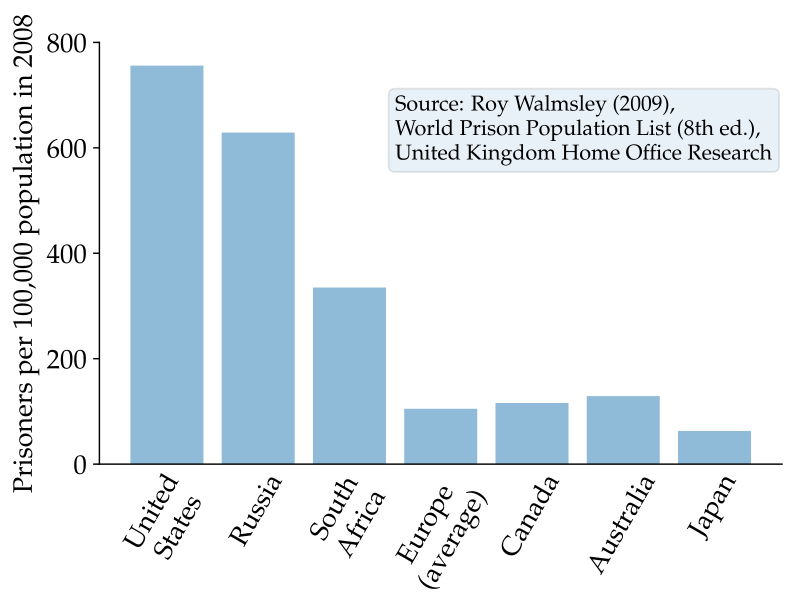
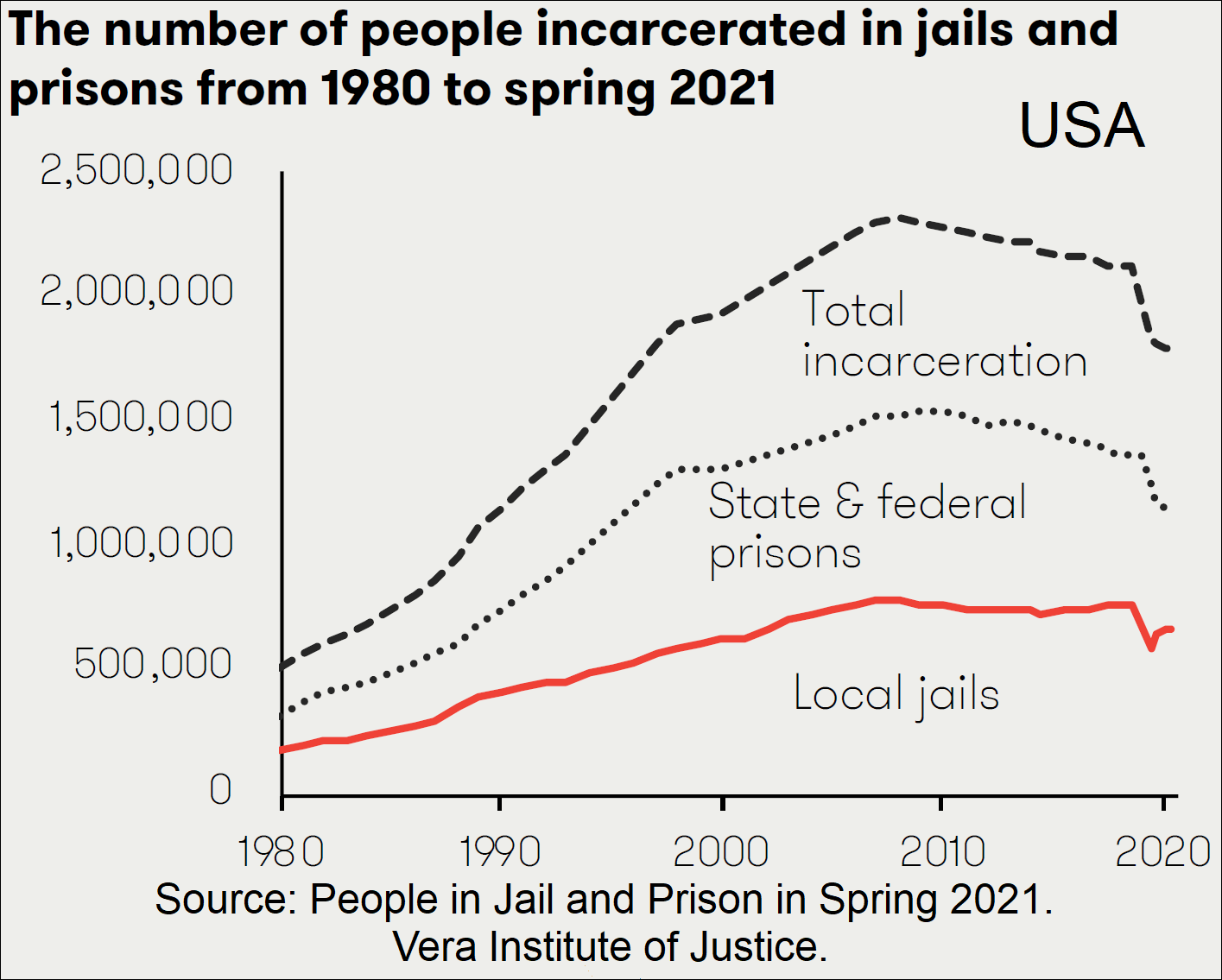

In mid-2001, a report by the American Civil Liberties Union (ACLU), "The Drug War is the New Jim Crow", tied the vastly disproportionate rate of African American incarceration to the range of rights lost once convicted. It stated that, while "whites and blacks use drugs at almost exactly the same rates ... African-Americans are admitted to state prisons at a rate that is 13.4 times greater than whites, a disparity driven largely by the grossly racial targeting of drug laws." Between federal and state laws, those convicted of even simple possession could lose the right to vote, eligibility for educational assistance including loans and work-study programs, custody of their children, and personal property including homes. The report concluded that the cumulative effect of the war on drugs amounted to "the US apartheid, the new Jim Crow". This view was further developed by lawyer and civil rights advocate Michelle Alexander in her 2010 book, The New Jim Crow: Mass Incarceration in the Age of Colorblindness.
In the year 2000, the US drug-control budget reached $18.4 billion, nearly half of which was spent financing law enforcement while only one-sixth was spent on treatment. In the year 2003, 53% of the requested drug control budget was for enforcement, 29% for treatment, and 18% for prevention.
During his presidency, Barack Obama (2009–2017) implemented his "tough but smart" approach to the war on drugs. While he claimed that his method differed from those of previous presidents, in reality, his practices were similar. In May 2009, Gil Kerlikowske, Director of the ONDCPObama's drug czarindicated that the Obama administration did not plan to significantly alter drug enforcement policy, but that it would not use the term "war on drugs", considering it to be "counter-productive". In August 2010, Obama signed the Fair Sentencing Act into law, reducing the 100:1 sentencing disparity between crack and powder cocaine to 18:1 for pending and future cases. In 2013, Obama's Justice Department issued a policy memorandum known as the Cole Memo, stating that it would defer to state laws that authorize the production, distribution and possession of cannabis, "based on assurances that those states will impose an appropriately strict regulatory system."
In 2011, the Global Commission on Drug Policy, an international non-governmental group composed primarily of former heads of state and government, and leaders from various sectors, released a report that stated, "The global war on drugs has failed." It recommended a paradigm shift, to a public health focus, with decriminalization for possession and personal use. Obama's ONDCP did not support the report, stating: "Drug addiction is a disease that can be successfully prevented and treated. Making drugs more available ... will make it harder to keep our communities healthy and safe."
International divisions, state-level changes

In May 2012, the ONDCP published "Principles of Modern Drug Policy", broadly focusing on public health, human rights, and criminal justice reform, while targeting drug traffickers. According to ONDCP director Kerlikowske, drug legalization is not the "silver bullet" solution to drug control, and success is not measured by the number of arrests made or prisons built. That month, a joint statement, "For a humane and balanced drug policy", was signed by Italy, Russia, Sweden, the United Kingdom and the US, promoting a combination of "enforcement to restrict the supply of drugs, with efforts to reduce demand and build recovery." Meanwhile, at the state level, 2012 saw Colorado and Washington become the first two states to legalize the recreational use of cannabis with the passage of Amendment 64 and Initiative 502 respectively.
A 2013 ACLU report declared the anti-marijuana crusade a "war on people of color". The report found that "African Americans [were] 3.73 times more likely than whites to be apprehended despite nearly identical usage rates, and marijuana violations accounting for more than half of drug arrests nationwide during the previous decade". Under Obama's policies, nonwhite drug offenders received less excessive criminal sanctions, but by examining criminals as strictly violent or nonviolent, mass incarceration persisted.
In March 2016, the International Narcotics Control Board stated that the UN's international drug treaties do not mandate a "war on drugs" and that the choice is not between "'militarized' drug law enforcement on one hand and the legalization of non-medical use of drugs on the other", health and welfare should be the focus of drug policy. That April, the UN General Assembly Special Session (UNGASS) on the "World Drug Problem" was held. The Wall Street Journal assessed the attendees' positions as "somewhat" in two camps: "Some European and South American countries as well as the U.S. favored softer approaches. Eastern countries such as China and Russia and most Muslim nations like Iran, Indonesia and Pakistan remained staunchly opposed." The outcome document recommended treatment, prevention and other public health measures, and committed to "intensifying our efforts to prevent and counter" drug production and trafficking, through, "inter alia, more effective drug-related crime prevention and law enforcement measures."
Under President Donald Trump (2017–2021), Attorney General Jeff Sessions reversed the previous Justice Department's cannabis policies, rescinding the Cole Memo that deferred federal enforcement in states where cannabis had been legalized He instructed federal prosecutors to "charge and pursue the most serious, readily provable offense" in drug cases, regardless of whether mandatory minimum sentences applied, which could trigger mandatory minimums for lower-level charges. With cannabis legalized to some degree in over 30 states, Sessions' directive was seen by both Democrats and Republicans as a rogue throwback action, and there was a bipartisan outcry. Trump fired Sessions in 2018 over other issues.
Some policy reversal attempts and successes

In 2018, Trump signed into law the First Step Act which, among other federal prison reforms, made the 2010 Fair Sentencing Act retroactive. A US Supreme Court decision in 2021 determined that retroactivity applied to cases where mandatory minimum penalties had been imposed.
In 2020, both the ACLU and The New York Times reported that Republicans and Democrats were in agreement that it was time to end the war on drugs. During his presidential campaign, President Joe Biden (2021–2025) stated that he would take the steps to alleviate the war on drugs and end the opioid epidemic.
On December 4, 2020, during the Trump administration, the House of Representatives passed the Marijuana Opportunity Reinvestment and Expungement Act (MORE Act), which would decriminalize cannabis at the federal level by removing it from the list of scheduled substances, expunge past convictions and arrests, and tax cannabis to "reinvest in communities targeted by the war on drugs". The MORE Act was received in the Senate in December 2020 where it remained. In April 2022, the act was again passed by the House, and awaits Senate action.
Over time, states in the US have approached drug liberalization at a varying pace. Initially, in the 1930s, the states were ahead of the federal government in prohibiting cannabis; in recent decades, the trend has reversed. Beginning with cannabis for medical use in California in 1996, states began to legalize cannabis. , 38 states, four US territories, and the District of Columbia (DC) had legalized cannabis for medical use; for non-medical use, 24 of the states, three territories, and DC, had legalized it, and seven states decriminalized. Decriminalization in this context usually refers to first-time offenses and small quantities, such as, in the case of cannabis, under an ounce (28g). In November 2020, Oregon became the first state to decriminalize a number of drugs, including heroin, methamphetamine, PCP, LSD and oxycodone, shifting from a criminal approach to a public health approach; portions of that policy were reversed in April 2024.
In 2022, Biden signed into law the Medical Marijuana and Cannabidiol Research Expansion Act, to allow cannabis to be more easily researched for medical purposes. It is the first standalone cannabis reform bill enacted at the federal level. That October, Biden stated on social media, "We classify marijuana at the same level as heroin – and more serious than fentanyl. It makes no sense," and pledged to start a review by the Attorney General on how cannabis is classified. On October 6, he pardoned all those with federal convictions for simple cannabis possession (to a degree symbolic, as none of those affected were imprisoned at the time), and urged the states, where the large majority of convictions rest, to do the same. His action affected 6,500 people convicted from 1992 to 2021, and thousands convicted in the District of Columbia.
Focus on fentanyl
In 2023, the US State Department announced plans to launch a "global coalition to address synthetic drug threats", with more than 80 countries expected to join. That April, Anne Milgram, head of the DEA since 2021, stated to Congress that two Mexican drug cartels posed "the greatest criminal threat the United States has ever faced." Supporting a DEA budget request of $3.7 billion for 2024, Milgram cited fentanyl in the "most devastating drug crisis in our nation's history."
In October 2023, OFAC sanctioned a China-based network of fentanyl manufacturers and distributors. The drug is usually manufactured in China, then shipped to Mexico, where it is processed and packaged, which is then smuggled into the US by Mexican drug cartels.
In January 2024, the DEA confirmed that it was reviewing the classification of cannabis as a Schedule I narcotic. Days later, documents were released from the Department of Health and Human Services stating that cannabis has "a currently accepted medical use" in the US and a "potential for abuse less than the drugs or other substances in Schedules I and II." On 30 April, indicating a DEA decision, the Justice Department announced, "Today, the Attorney General circulated a proposal to reclassify marijuana from Schedule I to Schedule III. Once published by the Federal Register, it will initiate a formal rulemaking process as prescribed by Congress in the Controlled Substances Act." Schedule III drugs, considered to have moderate to low potential for dependence, include ketamine, anabolic steroids, testosterone, and Tylenol with codeine.
In the DEA's "National Drug Threat Assessment 2024", director Milgram outlined the "most dangerous and deadly crisis", involving synthetic drugs including fentanyl and methamphetamine. She singled out the Sinaloa and Jalisco cartels in Mexico, which manufacture the synthetics in Mexican labs supplied with precursor chemicals and machinery from China, sell through "vast distribution networks" in the US, and use Chinese money laundering operations to return the proceeds to Mexico. Milgram states, "As the lead law enforcement agency in the Administration's whole-of-government response to defeat the Cartels and combat the drug poisoning epidemic in our communities, DEA will continue to collaborate on strategic counterdrug initiatives with our law enforcement partners across the United States and the world."
War on cartels (2025–present)
The war on cartels is a hybridization of the war on terror and the war on drugs that describes the most aggressive and militarized phase of US foreign and security policy toward transnational criminal organizations, particularly active beginning in 2025 and into early 2026. Some analysts have noted that this war is moving away from previous paradigms of the war on drugs to become an official war.
Unlike the law enforcement–centered efforts of previous decades, this phase is characterized by treating drug cartels not merely as ordinary criminal groups, but as national security threats equivalent to insurgent or terrorist organizations, thereby authorizing the use of high-level military capabilities. As a result, this strategy represents an operational and legal hybridization, as it merges the core objective of the war on drugs—the interdiction of narcotics flows and the dismantling of illicit economies—with the combat doctrine of the war on terror, shifting the paradigm from civilian law enforcement toward military counterinsurgency. By classifying these organizations as existential threats and narcoterrorist entities, the US legitimizes the use of tools traditionally reserved for enemy combatants, such as drone strikes, offensive cyber warfare, and extraterritorial special operations, including Operation Southern Spear, under the premise that cartels are no longer simple criminal groups to be arrested, but rather paramilitary structures that erode state sovereignty and require an asymmetric warfare response to be neutralized.
In January 2025, President Donald Trump signed an executive order demanding that various drug cartels and criminal organizations (Sinaloa Cartel, Gulf Cartel, La Nueva Familia Michoacana, Jalisco New Generation Cartel, Northeast Cartel, United Cartels, Tren de Aragua and Mara Salvatrucha) be added to the list of Foreign Terrorist Organizations and Specially Designated Global Terrorists, which was officially enacted on 20 February, 2025, making such groups officially Foreign Terrorist Organizations. Similarly, Canada has also joined in designating drug cartels as Foreign Terrorist Organizations.
On October 1, 2025, in the context of Operation Southern Spear and the US naval deployment in the Caribbean, President Donald Trump formally declared that the US is engaged in a "non-international armed conflict" with "unlawful combatants" associated with drug cartels operating in the Caribbean.
This legal shift enabled operations such as the recent Operation Absolute Resolve on January 3, 2026, in which US special forces captured former Venezuelan leader Nicolás Maduro in Caracas on charges of narco-terrorism. Meanwhile, tensions with Mexico remain at a critical point; although President Claudia Sheinbaum has rejected unilateral military intervention, the threatened use of drones and precision strikes against fentanyl laboratories in border regions has become a recurring tool of the current administration in its effort to curb the opioid crisis.
CIA involvement
During the second presidency of Donald Trump, the CIA will play a larger and more aggressive role in combating drug cartels. It has been reported that the CIA has been conducting covert surveillance operations with unarmed drones in Mexico to monitor cartel activities.
Second Trump presidency
NATO involvement
The North Atlantic Treaty Organization (NATO) has played a role in addressing the issue of drug trafficking, particularly in Afghanistan, as part of its broader security and stabilization efforts. NATO has supported counter-narcotics initiatives by assisting the Afghan government in building its capacity to combat the illegal drug trade, which is seen as a major source of funding for insurgent groups. NATO's efforts include training and equipping Afghan security forces to enhance their ability to disrupt drug trafficking networks, as well as supporting intelligence-sharing and coordination with international partners. These activities are framed within NATO's mission to promote stability and security, recognizing the link between the drug trade and threats to regional and global security.
However, perspectives on NATO's involvement in counter-narcotics operations have varied, with some reports highlighting tensions with other international actors, such as the United Nations. While NATO emphasizes its contributions to reducing the drug trade through capacity-building and support for Afghan-led initiatives, other sources have noted discrepancies in reported outcomes, suggesting that the drug trade in Afghanistan remained robust despite these efforts. For instance, data from 2012 indicates that opium production continued to thrive, raising questions about the effectiveness of NATO's strategies in this domain. Nonetheless, NATO's engagement reflects a commitment to addressing the complex interplay between security, governance, and the illicit drug economy, even as challenges persist in achieving measurable reductions in trafficking activities.
Foreign involvement
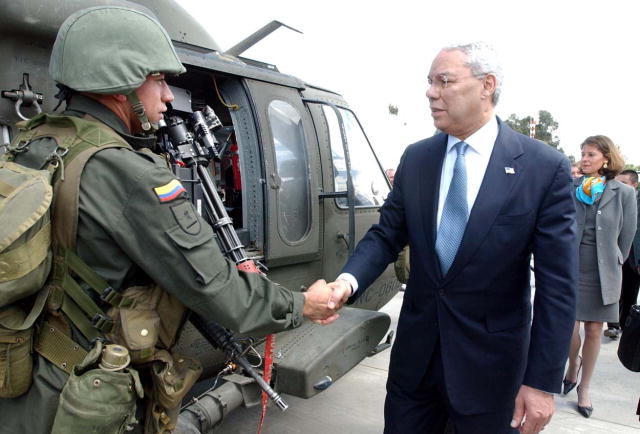
US international involvement in drug control rests on the premise that assisting foreign governments in their anti-drug efforts reduces drug supply within the US.
Scholars have claimed that the war on drugs, a metaphorical war, is propaganda cloaking an extension of earlier military or paramilitary operations. Others have argued that large amounts of anti-drug foreign aid money, training, and equipment actually goes to fighting leftist insurgencies and is often provided to groups who themselves are involved in large-scale narco-trafficking, such as corrupt members of the Colombian military.
UN treaties and US influence
The three UN drug control conventions, adopted by over 180 countries, provide a legal framework for cooperation between countries. Each state is obligated to incorporate the treaty provisions in their domestic laws. While there is a degree of interpretative flexibility, "each of the treaties encourages – and often requires – that member countries put in place strong domestic penal provisions" to deal with illicit drugs; punitive policies have been the common approach. The US, emerging as the dominant power after WWII, exerted considerable influence over how the conventions were adopted by other nations, promoting a prohibitionist and criminalizing view. Historically, the US has been "the key player in most multilateral negotiations" and the prohibitionist approach "derives largely from U.S. policy – the various forms, past and present, of the U.S. 'war on drugs'".
US economic power is focused on the war on drugs through the Foreign Assistance Act (FAA). Enacted in 1961, the FAA integrated various federal foreign aid initiatives under the new US Agency for International Development (USAID), and has remained the core legislation governing foreign financial assistance. In 1972, reacting to concerns over illicit drugs from foreign sources, Congress added an "International Narcotics Control" chapter to the FAA, which allowed the president to enter into agreements and provide assistance for counternarcotic activities in foreign countries. It also made US economic and military aid, including arms sales, dependent on countries aligning with US anti-drug policies. Later, the terms "major illicit drug-producing country" and "major drug-transit country" were defined in the act; as of 1986, the president has been required to annually determine which countries fit those definitions. Those not adequately cooperating with counter-drug efforts would not be eligible to receive US financial aid, although the president could and has provided waivers to individual countries. The so-called "majors list" has influenced how US assistance money is used internationally in the war on drugs, although in recent years, it has remained relatively static and lost a degree of relevancy. In September 2023, President Biden added China to the majors list, citing its production of precursor chemicals.
Foreign anti-drug initiatives initially focused on Latin America, and expanded globally over time. Since the 1970s, billions of US aid dollars have been directed to anti-drug activity in Latin America. The US initially treated drug control as a law enforcement issue in foreign countries, providing assistance to police forces. In the 1980s, the US increasingly involved the military and private security firms, to provide training and support to armed forces in drug-producing and transit countries. , the DEA has, in addition to 241 domestic offices, 93 foreign offices in 69 countries. In addition to numerous cooperative law enforcement actions worldwide against drug trafficking and money laundering, the DEA and other agencies, and the US military, have been involved in multi-year foreign drug campaigns, including in Colombia, Mexico and Afghanistan.
On January 3, 2026, the United States launched a large-scale military operation, including airstrikes across northern Venezuela, and captured Venezuelan President Nicolas Maduro and his wife, Cilia Flores, during a raid in Caracas. U.S. forces flew them to New York, where they are to face federal charges including narco-terrorism and cocaine trafficking related to a long-standing indictment.
Latin America
In 2021, Gustavo Gorriti, journalist and founder of corruption-focused IDL-Reporteros news media, wrote a sharply critical editorial in the Washington Post on the impact of 50 years of the war on drugs on Latin America. He described the flow of drugs to the US as an "unstoppable industry" that triggered an economic revolution throughout the region, where the illegal drug trade with its high profit margins far exceeded the potential of legitimate businesses. Corruption among politicians and anti-drug forces soared, even as those in charge were "cultivating close relationships with U.S. enforcement and intelligence agencies." An underclass of poor farmers became economic hostages, depending on drug crops for their survival. The big winners were "the systems built to wage a fight that they soon realized would have no end. ... [The war on drugs] became a source for endless resources, inflated budgets, contracts, purchase orders, power, influence – new economies battling drug trafficking but also dependent on it."
At a meeting in Guatemala in 2012, three former presidents from Guatemala, Mexico and Colombia said that the war on drugs had failed and that they would propose a discussion on alternatives, including decriminalization, at the Summit of the Americas in April of that year. Guatemalan President Otto Pérez Molina said that the war on drugs was exacting too high a price on the lives of Central Americans and that it was time to "end the taboo on discussing decriminalization". At the summit, the government of Colombia pushed for far-reaching changes to drugs policy, citing the catastrophic effects of the war on drugs in Colombia.
Colombia
Main article: Plan Colombia, Paramilitarism in Colombia
Historically, the illicit drug trade in Colombia had strong connections to right-wing paramilitaries like the United Self-Defenders of Colombia (AUC) and leftist guerilla groups like the Revolutionary Armed Forces of Colombia (FARC), thus US anti-drug efforts in the country overlapped with support for counterinsurgency efforts. In the late 1960s, when drug smuggling to the US from Mexico rose to a major scale, the two governments cooperated in the launch of the Mexican war on drugs; the market disruption gave Colombian traffickers an opportunity to fill US demand for cannabis.
Until the 1970s, Colombia "had played no major role in the production and circulation of illegal drugs in the hemisphere". After a military coup in Chile in 1973 and the spread of political repression through the Southern Cone countries disrupted cocaine smuggling from Peru and Bolivia, Colombia stepped in to fill the demand for cocaine. Pressed by the US, the Colombian government, under president Misael Pastrana (1970–1974), worked with the newly formed DEA to establish the future path for the country's war on drugs.
During the 1970s, the "marijuana boom" dominated Colombia's drug trade, peaking mid-decade. That soon gave way to cocaine and the rise of the infamous Medellin and Cali Cartels that grew through the 1980s and early 1990s to dominate the global cocaine market. By the end of the century, the brutal anti-drug war left the security situation in Colombia in critical condition. Through the Plan Colombia program, between 2000 and 2015, the US provided Colombia with $10 billion in funding, primarily for military aid, training, and equipment, to fight both drugs and left-wing guerrillas such as FARC (which had been accused of participation in drug trafficking).
The Clinton administration initially waived all but one of the human rights conditions attached to Plan Colombia, considering such aid as crucial to national security at the time. Private US military contractors, including the former DynCorp, were contracted by the State and Defense Departments, to carry out anti-drug initiatives as part of Plan Colombia. Colombian military personnel received extensive counterinsurgency training from US military and law enforcement agencies, including the School of Americas (SOA).
The efforts of the US and Colombian governments have been criticized for focusing on fighting leftist guerrillas in southern regions without applying enough pressure on right-wing paramilitaries and continuing drug smuggling operations in the north of the country. Human Rights Watch, congressional committees and other entities have documented connections between members of the Colombian military and the AUC, which the US government has listed as a terrorist group, and that Colombian military personnel have committed human rights abuses which would make them ineligible for US aid under current laws.
Coca eradication by aerial spraying of herbicides such as glyphosate was a controversial element of Plan Colombia. Environmental consequences resulting from spraying have been criticized as detrimental to some of the world's most fragile ecosystems; the same spraying practices are further credited with causing health problems in local populations.
A report by the RAND Corporation, examining the Colombian experience for insights applicable to the Mexican drug war, noted that "Plan Colombia has been widely hailed as a success, and some analysts believe that, by 2010, Colombian security forces had finally gained the upper hand once and for all." The report cited dramatic reductions in kidnappings and terrorist acts, and the recapture of territory, attributed to "a reinforced military and reinvigorated police force." It also found that, as of 2010, "Colombia is still a major source country for illicit narcotics. Moreover, the state continues to share sovereignty with a range of violent nonstate actors, including rebel groups and rightwing paramilitaries allied with drug traffickers and wealthy landowners." The Washington Office on Latin America concluded in 2010 that both Plan Colombia and the Colombian government's security strategy "came at a high cost in lives and resources, only did part of the job, are yielding diminishing returns and have left important institutions weaker."
Mexico

Under the leadership of Juan García Ábrego, the Gulf Cartel underwent a significant transformation in drug trafficking in Mexico during the 1980s and early 1990s. García Ábrego, who assumed control of the cartel in 1984, diversified its operations by forging a strategic alliance with the Cali Cartel in Colombia, shifting from primarily trafficking marijuana and heroin to focusing on cocaine, a higher-value product in the U.S. market. This partnership enabled the cartel to capitalize on the growing demand for cocaine in the United States, particularly after U.S. authorities blocked Caribbean routes in the 1990s, making Mexico, and especially Tamaulipas, a key corridor for drug smuggling. García Ábrego's organizational structure, reliant on corrupting government and police officials, solidified the Gulf Cartel as one of Mexico's most influential criminal organizations, laying the groundwork for its later expansion. His arrest in 1996 marked a turning point, creating a power vacuum that would be filled by Osiel Cárdenas Guillén.
Osiel Cárdenas Guillén, who took over the Gulf Cartel after García Ábrego's capture, revolutionized drug trafficking by introducing a paramilitary approach with the creation of Los Zetas in 1999, a group initially composed of elite former Mexican military personnel. This armed wing not only protected the cartel's operations but also expanded its activities to include kidnappings, extortion, and territorial control, marking an escalation in criminal violence. Under his leadership, the cartel intensified cocaine trafficking to U.S. cities such as Houston and Atlanta, generating millions of dollars, as evidenced by records showing profits of 41 million dollars in just three and a half months from shipments to Atlanta. Direct confrontations with authorities and rivals, such as the Sinaloa Cartel over control of Nuevo Laredo, heightened tensions that set the stage for the war on drug trafficking launched in 2006 by President Felipe Calderón. Cárdenas' capture in 2003 and extradition in 2007 weakened the cartel, but the resulting fragmentation and the independence of Los Zetas intensified violence in the context of the drug war, leaving a lasting legacy of conflict in Mexico in the decades that followed. Following the capture of Osiel Cárdenas Guillén in 2003 and his extradition in 2007, leadership fell to Jorge Eduardo Costilla Sánchez, a key figure in the Gulf Cartel, who led the criminal organization until 2012. Internal dynamics and rivalries, especially with Los Zetas, defined his era.
The pursuit of Joaquín "El Chapo" Guzmán from 2001 to 2014 is a pivotal case in the context of the 21st-century global war on drugs, as it exemplifies the challenges of combating sophisticated transnational criminal organizations. Guzmán, as the leader of the Sinaloa Cartel, orchestrated one of the most powerful drug trafficking networks, responsible for smuggling vast quantities of narcotics into the United States and Europe, generating billions in illicit revenue. His 2001 escape from a high-security Mexican prison and subsequent evasion until his 2014 capture highlighted the systemic corruption, institutional weaknesses, and cross-border complexities that hinder effective counter-narcotics strategies. The operation to apprehend him, involving Mexican authorities and U.S. agencies like the DEA, underscored the necessity of international cooperation, intelligence-sharing, and advanced surveillance technologies, while also exposing the limitations of militarized approaches in addressing the socio-economic drivers of the drug trade. Guzmán's high-profile status and the Sinaloa Cartel's global reach made his capture a symbolic victory, yet it also revealed the resilience of drug trafficking networks, as the cartel continued operations unabated, reflecting the broader, ongoing struggle to dismantle such organizations in the global anti-drug campaign.
The Mérida Initiative, launched in 2008, was a security cooperation program between the US and Mexico, aimed at combating drug trafficking and transnational crime. From 2008 to 2021, the US provided $3.5 billion in funding. The initial focus was anti-drug and rule-of-law measures, later broadened to include US-Mexico border activities. Components included military and law enforcement training and equipment, and technical advice and training to strengthen the national justice systems. In 2021, it was replaced by the Bicentennial Framework for Security, Public Health, and Safe Communities.
In 2013, a Pew Research Center poll found that 85% of Mexican citizens supported using the Mexican army against drug cartels, 74% supported US training assistance for their police and military, 55% supported the US supplying of weapons and financial aid, and 59% were against deploying US troops on Mexican soil. Anti-drug efforts were seen as making progress by 37%, losing ground by 29%, and staying the same by 30%; 56% believed that the US and Mexico are both to blame for drug violence in Mexico.
, the DEA considers the Sinaloa and Jalisco cartels, tied to materials and services from China, as the major source of synthetic drugs like fentanyl and methamphetamine, posing the biggest threat to the US.
Central America
The countries of Central America – Belize, Costa Rica, El Salvador, Guatemala, Honduras, Nicaragua, and Panama – are major transit and storage points for drugs headed to Mexico and the US that annually appear on the American "majors list". The US has had varying levels of direct anti-drug involvement in each of these countries, particularly since the late 2000s when concern over trafficking activity increased. Beginning in 2008, the Central America Regional Security Initiative (CARSI) has provided the seven countries with equipment, training, and technical support for law enforcement efforts, and the US has advised taking an intelligence-based approach.
During the 1980s civil war in Nicaragua, the drug situation was intertwined with the US backing of the anti-leftist rebel force known as the Contras. Senator John Kerry's 1988 Senate Committee on Foreign Relations report on Contra drug links concluded that members of the State Department "who provided support for the Contras are involved in drug trafficking ... and elements of the Contras themselves knowingly receive financial and material assistance from drug traffickers." The involvement included payments to drug traffickers from funds authorized by the Congress for humanitarian assistance to the Contras, in some cases after the traffickers had been indicted by federal law enforcement agencies on drug charges, in others while traffickers were under active investigation by these same agencies."

On December 20, 1989, the US invaded Panama with 25,000 American troops in Operation Just Cause, to depose and arrest the Panamanian head of government, Manuel Noriega. Noriega had been providing military assistance to Contra groups in Nicaragua at the request of the US, which in turn paid him and tolerated his drug trafficking activities, known since the 1960s. Relations with the US deteriorated in the mid-1980s, and his dealings with the US government were exposed in the US news media. The killing of a US soldier in Panama was the final act leading to the invasion. Noriega surrendered to US soldiers on January 3, 1990. He was indicted by the DEA and sentenced by a US court to 45 years in prison for racketeering, drug smuggling, and money laundering. The UN General Assembly resolved that the invasion was a "flagrant violation of international law."
Ecuador, located between the world's two largest cocaine-producing countries, Colombia and Peru,has long been a major drug transit point. From 1999, the Manta air base was the US military's most prominent South American presence, originating some 100 drug surveillance flights monthly. In 2009, citing unwanted internal influence by the CIA, Ecuador declined to renew the base's lease, ending official US military presence. Since 2018, drug activity and anti-drug efforts in Ecuador have dramatically intensified. In 2023, the US-Ecuador Defense Bilateral Working Group was formed to address the Ecuadorian situation, and a memorandum of agreement to help strengthen the Ecuadorian military was signed. A drug-related wider conflict broke out in 2024.
In 2012, the US sent DEA agents to Honduras to assist security forces in counter-narcotic operations. Honduras has been a major stop for drug traffickers, who use small planes and landing strips hidden throughout the country to transport drugs. The DEA, working with other US agencies such as the State Department, the CBP, and Joint Task Force-Bravo, assisted Honduran troops in conducting raids on traffickers' sites of operation.

Impact on growers
The US-supported coca eradication policy has been criticized for its negative impact on the livelihood of South American coca growers, in a region where the coca leaf has traditionally been chewed and used in tea and for religious, medicinal and nutritional purposes by locals Making traditional coca cultivation illegal is viewed as unjust. In areas where forced eradication also destroyed other food or market crops, without providing an alternative, farmers were left starving and destitute. Section on poppy eradication in Afghanistan removed because it was not relevant to the War on Drugs and it was factually inaccurate and directly contradicted sourced facts on Opium production in Afghanistan#Rise of the Taliban (1994–2001) and Taliban#Opium--
Afghanistan
In 2001, a US-led military coalition invaded Afghanistan and toppled the ruling Taliban as part of the war on terror response to 9/11. For generations, Afghanistan had been producing opium; the Taliban, in power since 1996, banned opium in 2000, reducing domestic production by 90% within a year, cutting the world opium supply by an estimated 65%. With the invasion, poppy cultivation and opium manufacture resumed, and the war on drugs became an element of the US presence.
Initially, "everyone did their own thing, not thinking how it fit in with the larger effort. State was trying to eradicate, USAID was marginally trying to do livelihoods, and DEA was going after bad guys," a senior Department of Defense official stated in a later report. In 2004, opium production dramatically increased and eradication became the focus. The DEA operating budget in Afghanistan grew from $3.7 million in 2004 to $40.6 million in 2008. In 2009, eradication was halteda senior US official called it "the least effective program ever"in favor of an "alternative livelihoods" approach that encouraged farmers to grow other crops. In 2017, eradication once again became the main initiative; the US military launched an aerial campaign involving B-52 bombers and F-22 fighters striking a network of drug labs that turned out to be mostly empty compounds, though there were significant civilian casualties.
Undermining US efforts, the prohibitionist policies encouraged a flourishing opium black market, which in turn incentivized widespread, systemic corruption in the Afghan government. In 2018, the US Special Inspector General for Afghanistan Reconstruction called the counternarcotics operation to date "a total failure". As the US military presence neared an end in 2020, Afghanistan was producing an estimated 85% of the world's opium. Having spent some $9 billion in the 20-year anti-drug campaign, US forces left Afghanistan in 2021, and the Taliban returned to power.
Venezuela
Since Hugo Chávez came to power in 1999, Venezuela has played a pivotal role in the landscape of the war on drugs, establishing itself as a strategic hub for the transit of narcotics, particularly cocaine, due to its geographic position between Colombia, the world's leading cocaine producer, and routes to the US and Europe. Chávez's decision in 2005 to sever ties with the DEA, accusing its representatives of espionage, marked a turning point that weakened international interdiction efforts in the country. This rupture not only curtailed intelligence sharing and bilateral cooperation but also allowed Venezuela to become a more permeable corridor for drug trafficking, with a significant increase in the volume of drugs transiting through its territory. The involvement of the Venezuelan government in drug trafficking activities has been extensively documented, with allegations pointing to high-ranking officials and military personnel as key actors in what is known as the Cartel of the Suns.
China
Independent law enforcement operations
Prior to 2018, the of the Ministry of Public Security Active Service Forces was involved in many anti-drug operations on the China-Myanmar border, where much of the illegal Chinese drug trade is located. In March 25, 2007, 3 PAPBDC officers were killed in action during a shootout with drug traffickers on the China-Myanmar border.
Between 2013 and 2023, the China Coast Guard seized a total of 9.875 tonnes of drugs.
American involvement
In the mid-2010s, the US identified China as a primary source of illicit fentanyl and other synthetic opioids. American anti-drug intervention regarding China is influenced and constrained by the geopolitical sensitivities of US-China relations. The US employs several approaches: exerting diplomatic pressure on China to impose internal controls on illicit drugs; seeking cooperation in US and international law enforcement efforts; unilaterally imposing targeted sanctions; and bringing criminal indictments against Chinese companies and individuals. The effectiveness of these approaches depends significantly on China's level of implementation and enforcement, which is directly related to the fluctuating state of overall US-China relations.
Following China's scheduling of fentanyl-class substances in 2019, the flow of synthetic opioids from China to the US appeared to subside; trafficking from China shifted to precursor chemicals and related equipment, and Mexico's drug cartels emerged as major clients.
In November 2023, President Biden announced an agreement with General Secretary Xi Jinping for China to crack down on the export of precursor chemicals and pill presses to the Western Hemisphere. A US House committee report released in April 2024 found companies making fentanyl precursors in China can still apply for Chinese state tax rebates and other financial benefits after exporting the product. According to the US, in 2024, China continues to be the primary supplier of chemical precursors to Mexican drug cartels, and Chinese money launderers have become central to the global drug trade.
In December 2024, a Chinese national in Chicago was sentenced to 10 years in prison laundering $62 million in drug money for Mexican traffickers involving currency swaps between United States and China, and China and Mexico. In January 2025, two former executives of a Chinese chemical company were convicted of a scheme to import fentanyl precursor chemicals into the United States. One was sentenced to 25 years in prison and the other to 15 years.
Domestic impact
Psychiatrist Thomas Szasz wrote in 1997, "Over the past thirty years, we have replaced the medical-political persecution of illegal sex users ('perverts' and 'psychopaths') with the even more ferocious medical-political persecution of illegal drug users." Assessing from a health perspective, a study in the Annals of Medicine noted: "The U.S. war on drugs has subjected millions to criminalization, incarceration, and lifelong criminal records, disrupting or altogether eliminating their access to adequate resources and supports to live healthy lives."
Arrest and incarceration
The war on drugs caused soaring arrest rates in the US that disproportionately targeted African Americans due to various factors. Anti-drug and tough-on-crime policies from the 1970s through the 1990s created a situation where the US, with less than 5% of the world population, houses nearly 25% of the world's prisoners. Increased demand lead to the development of privatization and the for-profit prison industry. , the US prison population rate was 716 per 100,000 people, the highest in the world, six times higher than Canada and six to nine times higher than Western European countries.

In the 1980s, while the number of arrests for all crimes had risen by 28%, the number of arrests for drug offenses rose 126%. In 1994, the New England Journal of Medicine reported that the war on drugs resulted in the incarceration of one million Americans each year. In 2008, The Washington Post reported that of 1.5 million Americans arrested each year for drug offenses, half a million would be incarcerated, and one in five black Americans would spend time behind bars due to drug laws. In 2019, the FBI estimated about 1.5 million drug arrests nationally, 32.1% for cannabis and 31% for "other dangerous nonnarcotic drugs".
Federal and state policies also impose collateral consequences on those convicted of drug offenses, separate from fines and prison time, that are not applicable to other types of crime. To comply with a federal law known as the Solomon–Lautenberg amendment, a number of states require a six-months driver's license suspension for anyone convicted of a drug offense. Other examples of collateral consequences for drug offenses, or for felony offenses in general, include loss of professional license, loss of ability to legally purchase a firearm under Federal law, loss of eligibility for food stamps, loss of eligibility for Federal Student Aid, loss of eligibility to live in public housing, loss of ability to vote, and deportation, a total of over 460 benefits at risk at the federal level alone. The US provides for the deportation of non-citizens convicted of drug offenses.
Prison overcrowding
One consequence of the war on drugs policy has been the overcrowding of American prisons. The policy's approach to prosecuting drug-related crimes led to a surge in incarcerated individuals for nonviolent drug offenses. As a result, many prisons have become overburdened, often operating at capacities far beyond their intended limits. Overcrowding strains the prison system and raises questions about the effectiveness of incarceration as a solution to drug-related issues. Resources that could be allocated to address the root causes of drug abuse, provide rehabilitation and treatment programs, or support communities affected by drug-related issues, are instead used to manage the considerable prison population. Critics argue that focusing solely on incarceration fails to address the underlying social factors contributing to drug abuse and perpetuates a cycle of criminality without offering pathways to recovery and reintegration into society.
Racial disparities in sentencing
Main article: Race and the war on drugs
Racial disparities have been a prominent and contentious aspect of the war on drugs in the US. In 1957, a belief at the time about drug use was summarized by journalist Max Lerner in his work, America as a Civilization: "As a case in point we may take the known fact of the prevalence of reefer and dope addiction in Negro areas. This is essentially explained in terms of poverty, slum living, and broken families, yet it would be easy to show the lack of drug addiction among other ethnic groups where the same conditions apply."
The Anti-Drug Abuse Act of 1986 created a 100:1 sentencing disparity in the US for the trafficking or possession of crack when compared to penalties for trafficking of powder cocaine. The bill had been widely criticized as discriminatory against minorities, mostly blacks, who were more likely to use crack than powder cocaine. In 1994, studying the effects of the 100:1 sentencing ratio, the United States Sentencing Commission (USSC) found that nearly two-thirds of crack users were white or Hispanic, while nearly 85% of those convicted for possession were black, with similar numbers for trafficking. Powder cocaine offenders were more equally divided across race. The USSC noted that these disparities resulted in African Americans serving longer prison sentences than other ethnicities. In a 1995 report to Congress, the USSC recommended against the 100:1 sentencing ratio. In 2010, the 100:1 sentencing ratio was reduced to 18:1.
Other studies indicated similarly dramatic racial differences in enforcement and sentencing. Statistics from 1998 show that there were wide racial disparities in arrests, prosecutions, sentencing and deaths. African-American drug users made up for 35% of drug arrests, 55% of convictions, and 74% of people sent to prison for drug possession crimes. Nationwide African-Americans were sent to state prisons for drug offenses 13 times more often than other races, even though they supposedly constituted only 13% of regular drug users. Human Rights Watch's report, "Race and the Drug War" (2000), provided extensive documentation of racial disparities, citing statistics and case studies highlighting the unequal treatment of racial and ethnic groups by law enforcement agencies, particularly in drug arrests. According to the report, in the US in 1999, compared to non-minorities, African Americans were far more likely to be arrested for drug crimes, and received much stiffer penalties and sentences.
Reporting on the effects of state initiatives, the Department of Justice found that, from 1990 through 2000, "the increasing number of drug offenses accounted for 27% of the total growth among black inmates, 7% of the total growth among Hispanic inmates, and 15% of the growth among white inmates."
In Malign Neglect – Race Crime and Punishment in America (1995), criminologist Michael Tonry wrote, "The War on Drugs foreseeably and unnecessarily blighted the lives of hundreds and thousands of young disadvantaged black Americans and undermined decades of effort to improve the life chances of members of the urban black underclass."
Permanent underclass creation
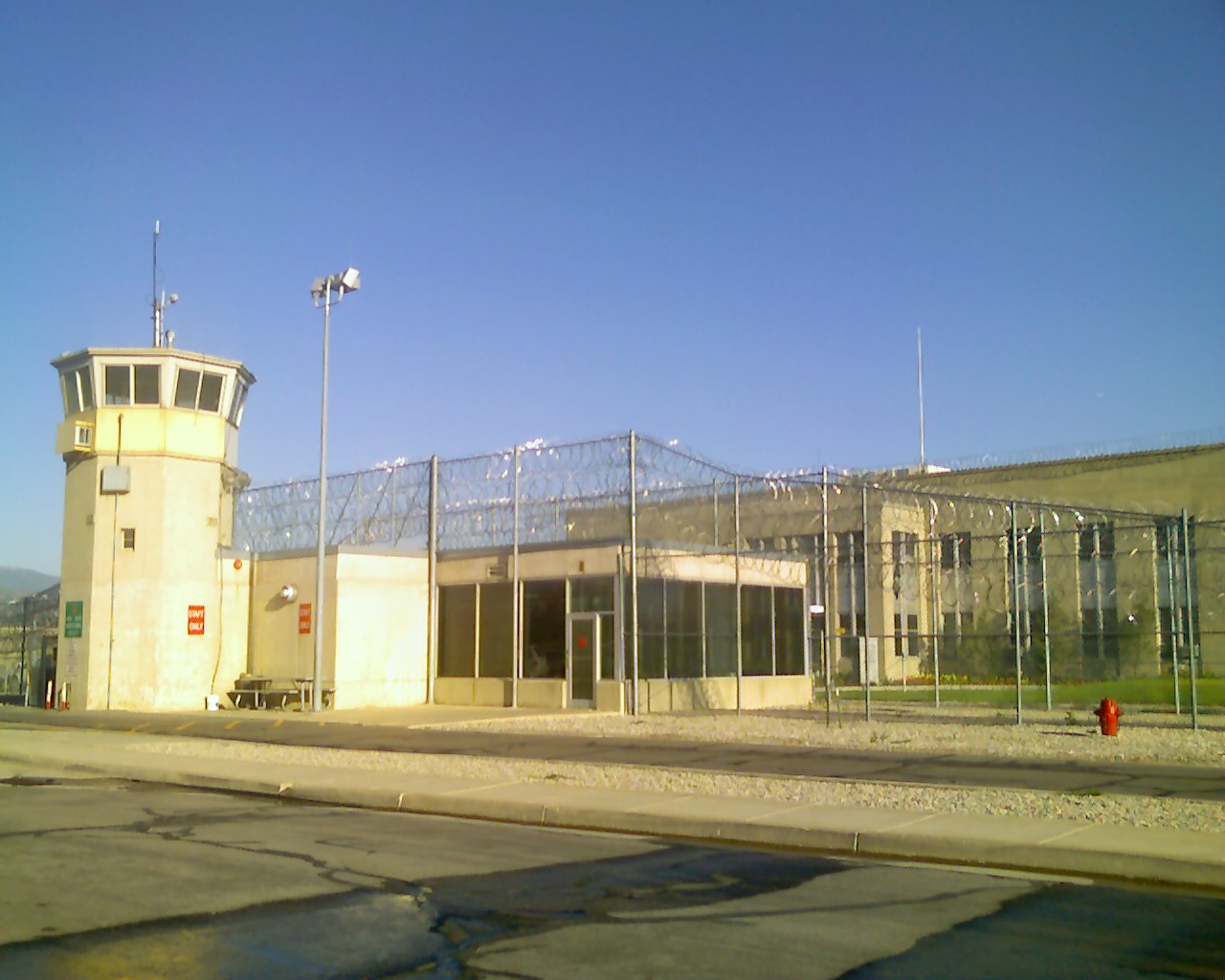
Penalties for drug crimes among American youth almost always involve permanent or semi-permanent removal from opportunities for education, strip them of voting rights, and later involve creation of criminal records which make employment more difficult. One-fifth of the US prison population are incarcerated for a drug offense. Thus, some authors maintain that the war on drugs has resulted in the creation of a permanent underclass of people who have few educational or job opportunities, often as a result of being punished for drug offenses which in turn have resulted from attempts to earn a living in spite of having no education or job opportunities.
In her 2010 book, The New Jim Crow: Mass Incarceration in the Age of Colorblindness, Michelle Alexander argues that the war on drugs has effectively perpetuated a racial caste system, with African American and Hispanic individuals experiencing disproportionately high rates of arrest, conviction, and incarceration for drug-related offenses. This system functions as a modern form of racial control, stripping individuals of their rights and opportunities, and reinforcing societal inequalities. According to Alexander, the consequences extend beyond criminal justice, affecting economic opportunities, access to education, and overall social mobility for affected individuals and communities.
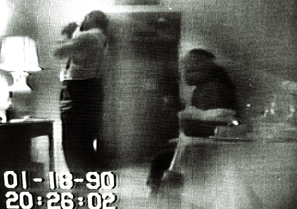
Drug testing in the workplace
Workplace drug testing has been widespread and controversial in the US since the late 1980s: there is no clear measure of its effectiveness in improving safety and productivity, and testing affects significantly more non-whites than whites. Testing is more prevalent in the US than elsewhere in the world. Most common is urine analysis for amphetamines, cocaine, marijuana, opioids and PCP; usually with no practical discrimination between the effects of the different drugs. Workplace testing rapidly gained popularity after the Reagan administration made it mandatory for federal workers, peaking in 1996, with 81% of companies reporting drug screening, up from 21% in 1987.
In the 1980s, testing had been promoted to business as a way to reclaim what were said to be huge losses in productivity caused by drug use. Studies released in the 1990s refuted these claims; a 1994 report from the National Academy of Sciences, "Under the Influence? Drugs and the American Work Force", concluded that "the data... do not provide clear evidence of the deleterious effects of drugs other than alcohol on safety and other job performance indicators." By 2004, workplace testing was down to 62% of companies, in 2015, it was reported as below 50%. Drug use continues to be blamed for productivity losses, and testing remains common.
In 2021, some companies began to reduce drug testing to improve hiring prospects in a tight labor market. Amazon, America's second largest employer, eliminated cannabis testing in job pre-screening, where not required by government regulations, stating, "Pre-employment marijuana testing has disproportionately affected communities of color by stalling job placement." In a survey of 45,000 companies worldwide, 9% reported the elimination of testing to improve hiring. In 2022, thousands of US truck drivers were taken off the road after testing positive for cannabis, contributing to a severe driver shortage; a conflict between the majority of states with some form of cannabis legalization, and the federal Department of Transportation's zero-tolerance cannabis policy, even for medical use, is cited as a problem.
Public opinion

In the 21st century, according to polling, a majority of Americans have been skeptical about the methods and effectiveness of the war on drugs. In 2014, a Pew Research Center poll found that 67% of Americans feel that a movement towards treatment for drugs like cocaine and heroin is better versus 26% who feel that prosecution is the better route. Moving away from mandatory prison terms for drug crimes was favored by two-thirds of the population, a substantial shift from a fifty-fifty split in 2001. A large majority saw alcohol as a greater danger to health (69%) and society (63%) than cannabis. In Gallup polls on whether cannabis should be legal, 15% of Americans agreed in March 1972, rising to 28% in April 1977, where it roughly stayed until 2000, when it began rising again, to 68% in October 2021. In May 2021, a Bully Pulpit Interactive/ACLU poll found that 83% of Americans, across party lines, considered the war on drugs a failure, and 12% considered it a success.
Legality
Main article: Legality of the war on drugs
The legality of drug prohibition within the US has been challenged on various grounds. One argument holds that drug prohibition, as presently implemented, violates the substantive due process doctrine in that its benefits do not justify the encroachments on rights that are supposed to be guaranteed by the Fifth and Fourteenth Amendments to the US Constitution. Another argument interprets the Commerce Clause to mean that drugs should be regulated in state law not federal law. A third argument states that the reverse burden of proof in drug-possession cases is incompatible with the rule of law, in that the power to convict is effectively taken from the courts and given to those who are willing to plant evidence.
Efficacy
Efficacy
There is no clear measure of the effectiveness of the war on drugs, and it has been widely called a policy failure. Thirty years into the campaign, a National Research Council report, "Informing America's Policy on Illegal Drugs" (2001), found that "existing drug-use monitoring systems are strikingly inadequate to support the full range of policy decisions that the nation must make." The report noted that studies of efforts to address drug usage and smuggling, from US military operations to eradicate coca fields in Colombia, to domestic drug treatment centers, had all been inconclusive, if the programs had been evaluated at all: It concluded, "It is unconscionable for this country to continue to carry out a public policy of this magnitude and cost without any way of knowing whether and to what extent it is having the desired effect."
Writing in the New Statesmen in 2021, journalist James Bloodworth stated, "The war on drugs is a failure. We know this. We've long known it. In fact, there is such an abundance of evidence for its failure that we have more certainty here than in most areas of policy. ... According to the International Drug Policy Consortium there was a 31 per cent global increase in drug taking between 2011 and 2016. ... It is impossible to suppress the demand for drugs." He quoted Helen Clark, former prime minister of New Zealand and head of the Global Commission on Drug Policy: "The total elimination of drugs? Dream on, there's never been a time in human history where human beings haven't resorted to some kind of substances that will take them out of their current reality for whatever reason."
Interdiction
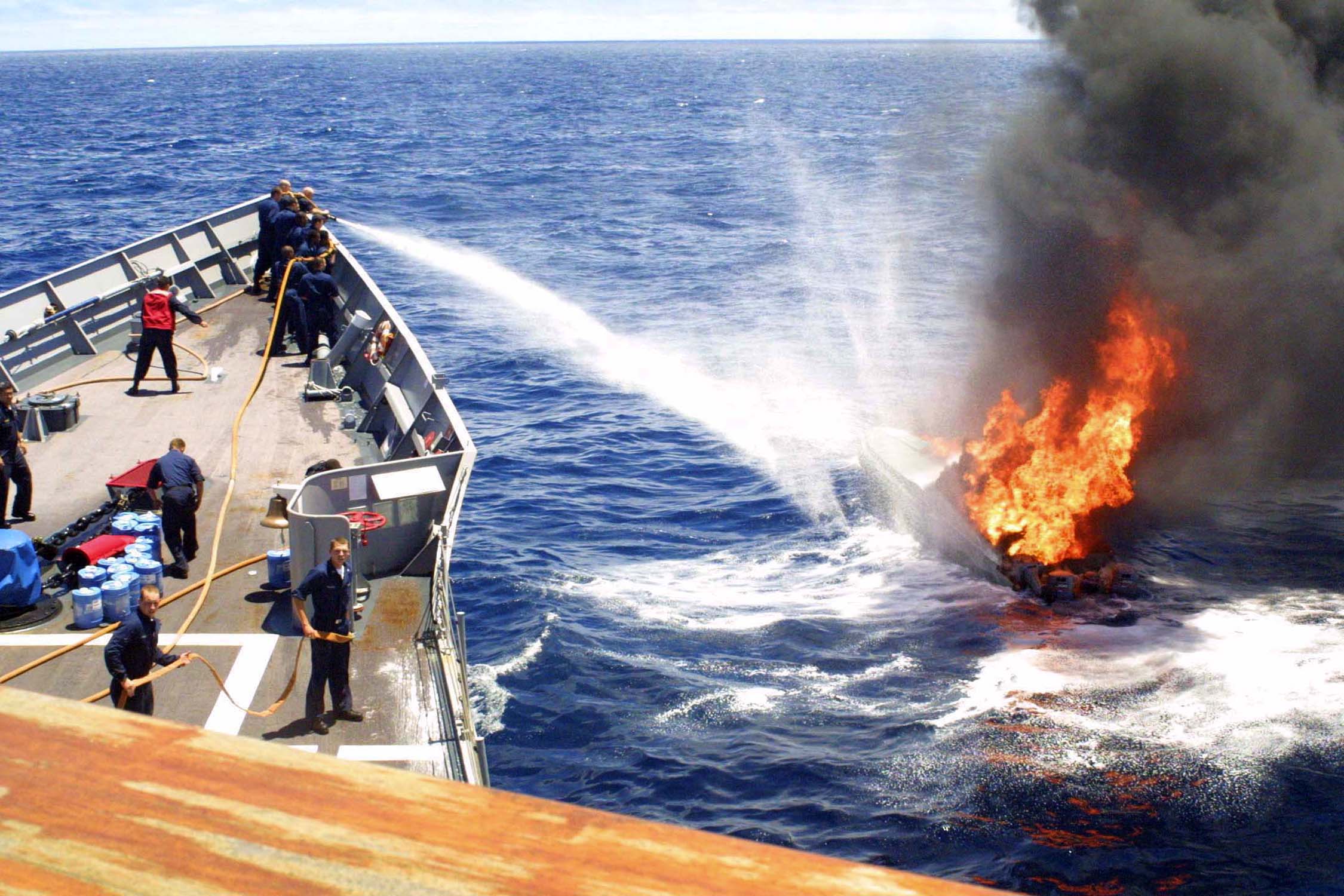
In 1988, the RAND Corporation released a Department of Defense-funded two-year study, Sealing the Borders: The Effects of Increased Military Participation in Drug Interdiction. It concluded that the use of the armed forces to interdict drugs coming into the US would have little or no effect on cocaine traffic and might, in fact, raise the profits of cocaine cartels and manufacturers. It noted that seven prior studies, including one by the Center for Naval Research and the Office of Technology Assessment, had come to similar conclusions.

In mid-1995, the US government tried to reduce the supply of methamphetamine precursors to disrupt the market of this drug. According to a 2009 study, this effort was successful, but its effects were largely temporary.
In the six years from 2000 to 2006, the US spent $4.7 billion on Plan Colombia, an effort to eradicate coca production in Colombia. The main result of this effort was to shift coca production into more remote areas and force other forms of adaptation. The overall acreage cultivated for coca in Colombia at the end of the six years was found to be the same, after the US Drug Czar's office announced a change in measuring methodology in 2005 and included new areas in its surveys. Cultivation in the neighboring countries of Peru and Bolivia increased, some would describe this effect like squeezing a balloon.
Richard Davenport-Hines, in his book The Pursuit of Oblivion, criticized the efficacy of the war on drugs by pointing out that "10–15% of illicit heroin and 30% of illicit cocaine is intercepted. Drug traffickers have gross profit margins of up to 300%. At least 75% of illicit drug shipments would have to be intercepted before the traffickers' profits were hurt."
Alberto Fujimori, president of Peru from 1990 to 2000, described US foreign drug policy as "failed": "For 10 years, there has been a considerable sum invested by the Peruvian government and another sum on the part of the American government, and this has not led to a reduction in the supply of coca leaf offered for sale. Rather, in the 10 years from 1980 to 1990, it grew 10-fold."
According to a report commissioned by the Drug Policy Alliance, and released in March 2006 by the Justice Policy Institute, harsher sentences for drug offenses committed in drug-free school zones are ineffective at keeping youths away from drugs and instead create strong racial disparities in the judicial system.
According to data collected by the Federal Bureau of Prisons 45.3% of all criminal charges were drug related and 25.5% of sentences for all charges last 5–10 years. Furthermore, non-whites make up 41.4% of the federal prison system's population and over half are under the age of 40. The Bureau of Justice Statistics states that over 80% of all drug related charges are for mere possession rather than the sale or manufacture of drugs.
Drug use
In 2005, the federally funded Monitoring the Future annual survey reported about 85% of high school seniors found marijuana "easy to obtain", virtually unchanged since 1975, never dropping below 82.7% in three decades of national surveys. The DEA stated that the number of users of cannabis in the US declined between 2000 and 2005, even with many states passing new medical cannabis laws, making access easier, though usage rates remain higher than they were in the 1990s according to the National Survey on Drug Use and Health.

The ONDCP stated in April 2011 that there had been a 46% drop in cocaine use among young adults over the previous five years, and a 65% drop in the rate of people testing positive for cocaine in the workplace since 2006. At the same time, a 2007 study found that up to 35% of college undergraduates used stimulants not prescribed to them.
A 2013 study found that prices of heroin, cocaine and cannabis had decreased from 1990 to 2007, while the purity of these drugs had increased.
The National Survey on Drug Use and Health for 2019 found that 1.7% of US adults over 25 had used cocaine in the previous 12 months, compared to 1.8% in 2002, and cannabis use went from 7% in 2002 to 15.2%. The DEA's 2021 National Drug Threat Assessment stated that "a steady supply of cocaine was available throughout domestic markets" in 2019 and 2020.
According to the Centers for Disease Control (CDC), drug abuse fatalities in 2021 reached an all-time high of 108,000 deaths, a 15% increase from 2020 (93,000) which, at the time, was the highest number of deaths and a 30% increase from 2019.
During alcohol prohibition, from 1920 to 1933, alcohol use initially fell but began to increase as early as 1922. It has been extrapolated that even if prohibition had not been repealed in 1933, alcohol consumption would have surpassed pre-prohibition levels. One argument against the war on drugs is that it uses similar measures as Prohibition and is no more effective.
Government efficiency
In 1997, Rolling Stone published a comprehensive snapshot of the US government's implementation of the war on drugs, spanning 44 federal agencies and hundreds of thousands of government workers, and without unified management, oversight, or cohesive strategy. Among the agencies there were over a dozen separate drug intelligence operations. The White House's Office of National Drug Control Policy, home of the drug czar and ostensibly the coordinating agency, had a staff of 150, and a $36 million budget; the overall federal drug war budget for 1998 was $16 billion. Most of the agencies involved did not report to the ONDCP, instead to one of 13 congressional appropriations subcommittees. The largest single share of the budget, $2 billion, went to the Bureau of Prisons. Federal agencies also passed on billions of anti-drug dollars to the states, with little oversight or accountability. In 2024, the ONDCP requested $461 million of a $46 billion federal budget allocated across some 50 federal agencies.
Alternatives
Alternatives to the predominantly punitive, law enforcement approach to the war on drugs in the US fall under two broad categories: a public health orientation built around education, prevention and treatment, and decriminalization or legalization with regulation similar to the handling of alcohol. Jefferson Fish has edited scholarly collections of articles offering a wide variety of public health-based and rights-based alternative drug policies.
A public-health approach
A common critical view holds that the war on drugs has been costly and ineffective largely because US federal and state governments have chosen the wrong methods, focusing on interdiction and punishment rather than regulation and treatment of drug abuse and addiction. In the US, current public health-oriented interventions include harm reduction, drug courts, and Law Enforcement Assisted Diversion (LEAD) programs which give police treatment or social services options rather than arrest with minor drug offenses. Harm reduction approaches include provision of sterile syringes, medically supervised injection sites (SIF), and availability of the opioid overdose-countering drug naloxone.
As an alternative to imprisonment, drug courts in the US identify substance-abusing offenders and place them under strict court monitoring and community supervision, as well as provide them with long-term treatment services. According to a National Drug Court Institute report, 16.4% of the nation's drug court graduates are rearrested and charged with a felony within one year of completing the program; overall 44.1% of released prisoners end up back in prison within one year. The drug court program is also significantly cheaper than imprisonment. Annual per offender cost is $20,000–$50,000 for imprisonment, and $2,500–$4,000 in the drug court system.
A survey by the Substance Abuse and Mental Health Services Administration (SAMHSA) found that substance abusers who remain in treatment longer are less likely to resume their former drug habits. Of the people studied, 66% were cocaine users. After experiencing long-term in-patient treatment, only 22% returned to the use of cocaine.
During the 1990s, the Clinton administration commissioned a major cocaine policy study by the RAND Drug Policy Research Center. The report recommended that $3 billion be switched from federal and local law enforcement to treatment, concluding that treatment is the cheapest way to cut drug use, and twenty-three times more effective than the supply-side war on drugs.
Decriminalization and legalization
In a 2023 UN report, the UN High Commissioner for Human Rights stated that "decades of punitive, 'war on drugs' strategies had failed to prevent an increasing range and quantity of substances from being produced and consumed", described punitive drug policies as a failure, and called for an approach "based on health and human rights, including through the legal regulation of drugs."
Considering outright legalization of recreational drugs, New York Times columnist Eduardo Porter noted: Jeffrey Miron, an economist at Harvard who studies drug policy closely, has suggested that legalizing all illicit drugs would produce net benefits to the United States of some $65 billion a year, mostly by cutting public spending on enforcement as well as through reduced crime and corruption. A study by analysts at the RAND Corporation, a California research organization, suggested that if marijuana were legalized in California and the drug spilled from there to other states, Mexican drug cartels would lose about a fifth of their annual income of some $6.5 billion from illegal exports to the United States.
In 2007, "An Open Letter to the President, Congress, Governors, and State Legislatures" signed by over 550 economists, including Nobel Laureates Milton Friedman, George Akerlof and Vernon L. Smith, endorsed the findings of a 2006 paper, "The Budgetary Implications of Marijuana Prohibition," by Harvard economist Jeffrey A. Miron. Comparing the cost of prohibition to the tax revenue if cannabis was taxed as regular consumer good, or similarly to alcohol, the letter stated that the budgetary impact, considered alongside evidence that "suggests prohibition has minimal benefits and may itself cause substantial harm", favors "a regime in which marijuana is legal but taxed and regulated like other goods." According to a 2010 report on co-authored by Miron, the annual savings on enforcement and incarceration costs from the legalization of drugs would amount to roughly $41.3 billion, with $25.7 billion being saved among the states and over $15.6 billion accrued for the federal government. Miron further estimated at least $46.7 billion in tax revenue based on rates comparable to those on tobacco and alcohol: $8.7 billion from marijuana, $32.6 billion from cocaine and heroin, and $5.4 billion from other drugs.
Regarding economic arguments for legalization that make a comparison with alcohol, a 2013 study noted that the $14.6 billion in annual alcohol tax collected at the US federal and state levels represented less than 10% of the estimated $185 billion of alcohol-related health care, criminal justice and lost productivity costs.
Notes
References
References
- Mann, Brian. (June 17, 2021). "After 50 Years Of The War On Drugs, 'What Good Is It Doing For Us?'".
- Lopez, German. (2017-01-30). "How the war on drugs has made drug traffickers more ruthless and efficient".
- Scherlen, Renee. (4 January 2012). "The Never-Ending Drug War: Obstacles to Drug War Policy Termination". PS: Political Science & Politics.
- Doward, Jamie. (2016-04-02). "The UN's war on drugs is a failure. Is it time for a different approach?". The Observer.
- Pierson, Brendan. (14 December 2017). "Nephews of Venezuela's first lady sentenced to 18 years in U.S. drug case". [[Reuters]].
- (March 2020). "Beyond the narcostate narrative — What U.S. Drug Monitoring Data uSays About Venezuela". Washington Office on Latin America.
- Kenney, Chelsa. (3 July 2023). "Venezuela: Illicit Financial Flows and U.S. Efforts to Disrupt Them". [[United States Government Accountability Office]].
- (August 28, 2025). "US targets Venezuela over 'Soles' cartel. Does it exist?".
- Pozzebon, Stefano. (1 September 2025). "Trump claims Venezuela's Maduro is a drug-trafficking threat to the US. Does the data back him up?". CNN.
- (24 November 2025). "What is Cartel de los Soles, which the US is labelling as a terrorist organisation?". BBC.
- (August 28, 2025). "US targets Venezuela over 'Soles' cartel. Does it exist?".
- (March 5, 2025). "How US military action against drug cartels in Mexico could unfold".
- (November 23, 2024). "The Dangerous Narrative of the "War on Cartels"".
- (July 17, 2023). "Dangerous Words: The Risky Rhetoric of U.S. War on Mexican Cartels".
- (June 2011). "War on Drugs: Report of the Global Commission on Drug Policy".
- Baum, Writer Dan. "Legalize All Drugs? The 'Risks Are Tremendous' Without Defining The Problem".
- Cockburn and St. Clair, 1998: Chapter 14
- (March 1990). "A Trojan horse: Anti-communism and the war on drugs". Crime, Law and Social Change.
- "Richard Nixon: Special Message to the Congress on Drug Abuse Prevention and Control".
- Mann, Brian. (Jun 17, 2021). "After 50 Years Of The War On Drugs, 'What Good Is It Doing For Us?'".
- (June 18, 1971). "Nixon Calls War on Drugs".
- Dufton, Emily. (March 26, 2012). "The War on Drugs: How President Nixon Tied Addiction to Crime". The Atlantic.
- Chinni, Dante. (July 2, 2023). "Costs in the war on drugs continue to soar".
- "US captures Maduro, carries out 'large scale strike' in Venezuela: Trump".
- "Trump says U.S. will run Venezuela after U.S. captures Maduro". Reuters.
- Trickey, Erick. (Jan 4, 2018). "Inside the Story of America's 19th-Century Opiate Addiction".
- Das, G. (April 1993). "Cocaine abuse in North America: a milestone in history". Journal of Clinical Pharmacology.
- (Aug 21, 2018). "Cocaine".
- Rorabaugh, W.J.. (1981). "The Alcohol Republic: An American Tradition". Oxford University Press.
- (1981). "Temperance and Prohibition in America: A Historical Overview". National Academies Press (US).
- "Marijuana Timeline".
- Braun, Richard L.. (January 1991). "Uniform Controlled Substances Act of 1990". Campbell Law Review.
- (Mar 30, 2015). "Beyond America's War on Drugs: Developing Public Policy to Navigate the Prevailing Pharmacological Revolution". Aims Public Health.
- Little, Becky. (Sep 13, 2023). "How Civil War Medicine Led to America's First Opioid Crisis".
- Ruane, Michael E.. (December 1, 2021). "America's first opioid crisis grew out of the carnage of the Civil War". [[Washington Post]].
- Chasin, Alexandra. (Apr 14, 2017). "The Man Who Declared War On Drugs".
- (May 31, 2017). "War on Drugs".
- Whitford and Yates. ''Presidential Rhetoric and the Public Agenda 36''
- Brecher, Edward M.. (1972). "Licit and Illicit Drugs: The Consumers' Union Report on Narcotics, Stimulants, Depressants, Inhalants, Hallucinogens, and Marijuana – Including Caffeine, Nicotine, and Alcohol".
- Swann, John P.. (April 24, 2019). "The 1906 Food and Drugs Act and Its Enforcement". U.S. Food and Drug Administration.
- Powers, Kristin. (September 14, 2022). "A History of Research: 1906 Pure Food & Drug Act – The Birth of the FDA".
- "Opium prohibition law in library of congress".
- "Opium and Narcotic Laws".
- "Opium Throughout History". PBS Frontline.
- "Harrison Narcotics Tax Act, 1914". Drug Reform Coordination Network.
- (June 10, 2019). "Heroin, Morphine and Opiates". history.com.
- Kamieński, Łukasz. (March 7, 2019). "Drugs".
- Berridge, Virginia. (November 22, 2014). "Drugs, alcohol, and the First World War". [[The Lancet]].
- (2009). "A Century of International Drug Control".
- (Oct 8, 2015). "The UN Drug Control Conventions – A Primer".
- Klein, Christopher. (Mar 28, 2023). "The Night Prohibition Ended".
- "Narcotic Drug Import and Export Act Law & Legal Definition". definitions.uslegal.com.
- "Drugs, The Law, and The Future". UMSL.
- "Records of the Drug Enforcement Administration DEA". Archives.gov.
- Filan, Kenaz. (2011). "The Power of the Poppy: Harnessing Nature's Most Dangerous Plant Ally". Park Street Press.
- Krebs, Albin. (18 November 1975). "Harry J. Anslinger Dies at 83; Hard-Hitting Foe of Narcotics". [[The New York Times]].
- Adams, Cydney. (November 17, 2016). "The man behind the marijuana ban for all the wrong reasons".
- Chasin, Alexandra. (2016). "Assassin of Youth: A Kaleidoscopic History of Harry J. Anslinger's War on Drugs". [[University of Chicago Press]].
- (Aug 12, 2019). "America's War on Drugs Has Treated People Unequally Since Its Beginning".
- Sinha, Jay. (21 February 2001). "The History and Development of the Leading International Drug Control Conventions".
- Moynihan, Colin. (August 10, 2020). "An Exhibition Tells the Story of a Drug War Leader, but Not All of It".
- (April 7, 2022). "The Evolution of Marijuana as a Controlled Substance and the Federal-State Policy Gap".
- Smith, Benjamin T.. (June 2021). "Why we should remember Richard Nixon's war on drugs".
- "Roosvelt Asks Narcotics War Aid, 1935". Druglibrary.net.
- "Letter to the World Narcotic Defense Association. March 21, 1935". Presidency.ucsb.edu.
- (1972). "Marihuana – A Signal of Misunderstanding (First Report of the National Commission on Marihuana and Drug Abuse)".
- For repeal, see section 1101(b)(3), Comprehensive Drug Abuse Prevention and Control Act of 1970, Pub. L. No. 91-513, 84 Stat. 1236, 1292 (Oct. 27, 1970) (repealing the Marihuana Tax Act which had been codified in Subchapter A of Chapter 39 of the Internal Revenue Code of 1954).
- (2005). "Cannabis: A History". St. Martin's Press.
- (1977). "The Puzzle of the Social Origins of the Marihuana Tax Act of 1937". [[Social Problems]].
- Glick, Daniel. (December 6, 2016). "80 Years Ago This Week, Marijuana Prohibition Began With These Arrests". [[Leafly]].
- "Statement of Dr. William C. Woodward, Legislative Counsel, American Medical Association".
- Committee on Finance, U.S. Senate, 75c 2s. HR6906. Library of Congress transcript. July 12, 1937
- (2004). "NAFTA & neocolonialism: comparative criminal, human & social justice". University Press of America.
- link. (January 10, 2016)
- Peet, 2004: [https://books.google.com/books?id=uC0_YznYjScC&pg=PA55 p. 55]
- Evans, Sterling. (2007). "Bound in twine: the history and ecology of the henequen-wheat complex for Mexico and the American and Canadian Plains, 1880–1950". Texas A&M University Press.
- (2006). "The borderlands of the American and Canadian Wests: essays on regional history of the forty-ninth parallel". University of Nebraska Press.
- Gerber, Rudolph Joseph. (2004). "Legalizing marijuana: drug policy reform and prohibition politics". Greenwood Publishing Group.
- Earleywine, Mitchell. (2005). "Understanding marijuana: a new look at the scientific evidence". Oxford University Press.
- (2007). "Lies, damned lies, and drug war statistics: a critical analysis of claims made by the office of National Drug Control Policy". SUNY Press.
- Rowe, Thomas C.. (2006). "Federal narcotics laws and the war on drugs: money down a rat hole". Psychology Press.
- (2005). "Encyclopedia of Law Enforcement: Federal". Sage.
- Lusane, Clarence. (1991). "Pipe dream blues: racism and the war on drugs". South End Press.
- "Was there a conspiracy to outlaw hemp because it was a threat to theDuPonts and other industrial interests?".
- LH, Dewey. (1943). "Fiber production in the western hemisphere". United States Printing Office, Washington, DC.
- (July 2001). "Is Industrial Hemp Worth Further Study in the US? A Survey of the Literature".
- (Dec 20, 2019). "Did You Know... Marijuana Was Once a Legal Cross-Border Import?".
- Downs, David. (April 19, 2016). "The Science behind the DEA's Long War on Marijuana".
- "Hemp Around Their Necks by Harry Anslinger".
- [[Jack Herer]]. 1985. ''[[The Emperor Wears No Clothes]]''. Ah Ha Publishing, Van Nuys, CA.
- Swann, J.P.. (Jan–Feb 1997). "Drug abuse control under FDA, 1938–1968.". [[Public Health Reports]].
- Racine, Nicholas. (Spring 2019). "Blood, Meth, and Tears: The Super Soldiers of World War II".
- Holland, James. (Jun 25, 2019). "World War Speed".
- Hicks, Jesse. (Apr 15, 2012). "Fast Times: The Life, Death, and Rebirth of Amphetamine".
- Blakemore, Erin. (October 27, 2017). "A Speedy History of America's Addiction to Amphetamine".
- Lassiter, Matthew D.. (Dec 7, 2023). "America's War on Drugs Has Always Been Bipartisan{{snd}}and Unwinnable".
- Courtwright, David T.. (1992). "A Century of American Narcotic Policy". [[National Academies Press]].
- (March 1972). "Marihuana: A Signal of Misunderstanding".
- "Marijuana timeline". [[PBS]].
- United States Sentencing Commission. (2012). "Report to Congress: Mandatory Minimum Penalties in the Federal Criminal Justice System". [[Federal Sentencing Reporter]].
- Hilotin-Lee, J.D., Lyle Therese A.. (October 20, 2023). "The Single Convention on Narcotic Drugs".
- (June 2017). "The Case for International Guidelines on Human Rights and Drug Control". [[Health and Human Rights]].
- (August 2012). "The International Drug Control Treaties: How Important Are They to U.S. Drug Reform?". [[New York City Bar Association]] (Committee on Drugs & the Law).
- "Treaties".
- "Conventions".
- James Inciardi, ''The War on Drugs'' IV, ed. 4. (Delaware: Pearson Allyn and Bacon, 2008), 286.
- Andrew B. Whitford and Jeffrey Yates, ''Presidential Rhetoric and the Public Agenda'' (Baltimore: Johns Hopkins University Press, 2009), 40.
- (Aug 30, 2008). ""Law and Order" in Richard Nixon 1968 Presidential acceptance speech".
- Newell, Walker. (26 April 2013). "The Legacy of Nixon, Reagan, and Horton: How The Tough On Crime Movement Enabled A New Regime Of Race Influenced Employment Discrimination".
- (April 2, 2007). "Timeline: America's War on Drugs".
- (2013). "A War that Can't Be Won". [[University of Arizona Press]].
- Gill, Molly M.. (Oct 2008). "Correcting Course: Lessons from the 1970 Repeal of Mandatory Minimums". [[Federal Sentencing Reporter]].
- (October 28, 1970). "Nixon Signs Drug Abuse Control Bill".
- "Preliminary Note Regarding Treaty Considerations".
- [https://www.pbs.org/wgbh/pages/frontline/shows/drugs/cron/ Thirty Years of America's Drug War, a Chronology] {{Webarchive. link. (February 24, 2011. [[Frontline (U.S. TV series)]].)
- Aggarwal, Sunil. (2010). "Cannabis: A Commonwealth Medicinal Plant, Long Suppressed, Now at Risk of Monopolization". Denver University Law Review.
- (May 27, 1971). "The World Heroin Problem".
- [https://www.pbs.org/wgbh/pages/frontline/shows/drugs/interviews/dupont.html WGBH educational foundation. Interview with Dr. Robert Dupoint] {{Webarchive. link. (September 5, 2017. Pbs.org (February 18, 1970).)
- link. (March 29, 2018. April 2, 2007. [[National Public Radio). NPR]].
- Buckley, Tom. (June 6, 1971). "It's Always A Dead End on 'Scag Alley'".
- Nixon, Richard. (June 17, 1971). "Special Message to the Congress on Drug Abuse Prevention and Control.". [[UC Santa Barbara]] – The American Presidency Project.
- Nixon, Richard. (June 17, 1971). "Remarks About an Intensified Program for Drug Abuse Prevention and Control". [[UC Santa Barbara]] – The American Presidency Project.
- Farber, David. (June 17, 2021). "The War on Drugs turns 50 today. It's time to make peace.". [[The Washington Post]].
- Rosino, Michael. (2021). "Debating the Drug War: Race, Politics, and the Media". [[Routledge]].
- Ricordeau, Gwenola. (2023). "The Palgrave Encyclopedia of Global Security Studies". Palgrave Macmillan.
- Whitford and Yates. ''Presidential Rhetoric and the Public Agenda'' 47
- (February 1, 2019). "National Commission on Marijuana and Drug Abuse 1971 Poll". [[Roper Center]].
- Downs, David. (Apr 19, 2016). "The Science behind the DEA's Long War on Marijuana".
- (June 2012). "From the Frontlines to the Bottom Line: Medical Marijuana, the War on Drugs, and the Drug Policy Reform Movement". UC Santa Cruz Electronic Theses and Dissertations.
- Esquivel-Suárez, Fernando. (August 23, 2018). "The Global War on Drugs".
- (December 6, 2022). "Drug Enforcement Administration".
- (February 15, 1999). "John D. Ehrlichman Dead At 73". [[CBS News]].
- Baum, Dan. (Apr 2016). "Legalize It All".
- "Home".
- Linkins, Jason. (June 8, 2009). "Dan Baum, Fired by New Yorker, Recounting His Story on Twitter". HuffPost.
- Lopez, German. (March 22, 2016). "Nixon official: real reason for the drug war was to criminalize black people and hippies".
- LoBianco, Tom. (March 24, 2016). "Report: Aide says Nixon's war on drugs targeted blacks, hippies".
- Hanson, Hilary. (Mar 25, 2016). "Nixon Aides Suggest Colleague Was Kidding About Drug War Being Designed To Target Black People".
- Lopez, German. (Mar 29, 2016b). "Was Nixon's war on drugs a racially motivated crusade? It's a bit more complicated.".
- [http://www.ibhinc.org/pdfs/IBHCommentaryonGlobalCommissionReport71211.pdf Global Commission on Drug Policy Offers Reckless, Vague Drug Legalization Proposal, Institute for Behavior and Health, Inc, July 12, 2011] {{webarchive. link. (July 26, 2011. (PDF).)
- (Feb 22, 2023). "America Has Lost the War On Drugs. What Now?".
- Sullum, Jacob. (Jun 17, 2011). "Did Jimmy Carter End the War on Drugs?".
- Carter, Jimmy. (August 2, 1977). "Drug Abuse Message to the Congress".
- Whitford and Yates. ''Presidential Rhetoric and the Public Agenda'', 58.
- (1997). "Making Crime Pay: Law and Order in Contemporary American Politics". Oxford University Press.
- ((98th Congress, 1st Session)). "Federal Budget of United States Government, 1984". Federal Reserve of Saint Louis.
- Scott and Marshall, 1991: p. 2
- Stuart, Tessa. (Mar 7, 2016). "Pop-Culture Legacy of Nancy Reagan's 'Just Say No' Campaign".
- (Jan 1, 2014). "Why "Just Say No" Doesn't Work".
- (Aug 21, 2018). "Just Say No".
- Tarricone, Jackson. (Sep 10, 2020). "Richard Nixon and the Origins of the War on Drugs".
- Brinkley, Joel. (Sep 4, 1986). "4-Year Fight in Florida 'Just Can't Stop Drugs'".
- Pincus, Walter. (October 7, 1982). "War on Florida Drug Smugglers Is Costly, Political, Makes a Dent". [[Washington Post]].
- (1986). "America's Habit: Drug Abuse, Drug Trafficking, & Organized Crime{{snd}}Chapter V Drug Enforcement, Policy, and Reducing Drug Demand". President's Commission on Organized Crime.
- (25 September 1984). "S.1762 – 98th Congress (1983–1984): Comprehensive Crime Control Act of 1984".
- JOHN ENDERS (ASSOCIATED PRESS). (April 18, 1993). "Forfeiture Law Casts a Shadow on Presumption of Innocence: Legal system: Government uses the statute to seize money and property believed to be linked to narcotics trafficking. But critics say it short-circuits the Constitution.". Los Angeles Times.
- Freivogel, William. (Feb 18, 2019). "No Drugs, No Crime and Just Pennies for School: How Police Use Civil Asset Forfeiture".
- "The Last Narc (Documentary)". Amazon Studios.
- (2021). "The Last Narc: A Memoir by the DEA's Most Notorious Agent". Renaissance Literary & Talent.
- (12 October 2013). "A Camarena lo ejecutó la CIA, no Caro Quintero". Proceso.
- (2014). "La CIA, Camarena y Caro Quintero: la historia secreta". Grijalbo.
- (19 November 2014). "Blood on the Corn". Medium.
- (2015). "Eclipse of the Assassins". University of Wisconsin Press.
- (2017). "Spies, Assassins, and Statesmen in Mexico's Cold War". European Review of Latin American and Caribbean Studies.
- (21 December 2020). "Former DEA Agent Accuses Amazon of Portraying Him as Murder Accessory in 'The Last Narc'". Variety.
- (2021). "The Dope: The Real History of the Mexican Drug Trade". W.W. Norton.
- Michelle Alexander. ''[[The New Jim Crow]]: Mass Incarceration in the Age of Colorblindness''. (New York: The New Press, 2010), 51.
- Gelber, Jonathan. (29 Jun 2021). "How Len Bias's death helped launch the US's unjust war on drugs".
- "The Evening Independent – Google News Archive Search".
- Whitford and Yates. ''Presidential Rhetoric and the Public Agenda'', 61.
- Hinton, Elizabeth. "From the War on Crime to the War on Drugs". From the War on Poverty to the War on Crime: the Making of Mass Incarceration in America, by Elizabeth Hinton, Harvard University Press, 2017, pp. 307–332.
- Jesse Ventura. ''American Conspiracies'' (New York: Skyshore Publishing, 2010), 117.
- Elsner, Alan. (2004). "Gates of Injustice: The Crisis in America's Prisons". Financial Times Prentice Hall.
- (Nov 20, 1996). "Crack cocaine and cocaine hydrochloride. Are the differences myth or reality? JAMA. 1996 Nov 20;276(19):1580-8. PMID 8918856.". [[JAMA]].
- "Cocaine and crack drug profile".
- (2006-08-23). "DEA History Book, 1985–1990".
- (2020). "The Impact of Global Drug Policy on Women: Shifting the Needle". [[Emerald Publishing]].
- Foldvary, Fred E.. (Jul 15, 2013). "The Foreign Economic Effect of the U.S. War on Drugs".
- Isikoff, Michael. (Sep 22, 1989). "Drug Buy Set Up For Bush Speech". [[Washington Post]].
- Tonry. ''Malign Neglect – Race, Crime and Punishment in America'', 91.
- Wofford, Taylor. (Feb 25, 2016). "How America's Police Became an Army: The 1033 Program".
- From, Al. (2013). "The New Democrats and the Return to Power". St. Martin's Publishing Group.
- Farley, Robert. (April 12, 2016). "Bill Clinton and the 1994 Crime Bill".
- Michelle Alexander. ''The New Jim Crow – Mass Incarceration in the Age of Colorblindness'', 92
- (2019). "US Foreign Relations and the New Drug History". [[University of Chicago Press]].
- (January 2020). "Fentanyl Flow to the United States".
- (Apr 2022). "The Opioid Crisis, Health, Healthcare, and Crime: A Review Of Quasi-Experimental Economic Studies". National Bureau of Economic Research.
- (2017-07-13). "Evidence on Strategies for Addressing the Opioid Epidemic". National Academies Press (US).
- Whitford and Yates. Presidential Rhetoric and the Public Agenda. 72
- Beith, Malcolm. (August 29, 2016). "The DEA's war on narco-terrorism just got more complicated".
- Walmsley, Roy (30 Jan 2009). [http://www.prisonstudies.org/sites/default/files/resources/downloads/wppl-8th_41.pdf World Prison Population List (8th Edition)]. From [http://www.prisonstudies.org/research-publications?shs_term_node_tid_depth=27 World Prison Population Lists]. By [[World Prison Brief]]. "The information is the latest available in early December 2008. ... Most figures relate to dates between the beginning of 2006 and the end of November 2008." According to the summary on page one there were 2.29 million U.S. inmates and 9.8 million inmates worldwide. The U.S. held 23.4% of the world's inmates. The U.S. total in this report is for December 31, 2007 (see p. 3), and does not include inmates in juvenile detention facilities.
- [https://www.bjs.gov/index.cfm?ty=pbdetail&iid=6226 Correctional Populations in the United States, 2016] (NCJ 251211). Published April 2018 by [[U.S. Bureau of Justice Statistics]] (BJS). By Danielle Kaeble and Mary Cowhig, ''BJS statisticians.'' See [https://www.bjs.gov/content/pub/pdf/cpus16.pdf PDF]. Appendix table 1 on p. 11 has rates and counts by state. See p. 1 "highlights" section for the "1 in ..." numbers. See table 4 on page 4 for a timeline of nationwide incarceration rates. See appendix table 3 on p. 13, for "Persons held in custody in state or federal prisons or in local jails, 2000, 2010, and 2015–2016". That table also has incarceration rates. See appendix, table 2, p. 12 for the number or persons incarcerated in territorial prisons, military facilities, and jails in Indian country.
- Jacob Kang-Brown, Chase Montagnet, and Jasmine Heiss. [https://www.vera.org/publications/people-in-jail-and-prison-in-spring-2021 People in Jail and Prison in Spring 2021]. New York: [[Vera Institute of Justice]], 2021.
- Boyd, Graham. (2001). "The Drug War Is the New Jim Cro". [[American Civil Liberties Union (ACLU)]].
- Remnick, David. (17 January 2020). "Ten Years After 'The New Jim Crow.'". [[The New Yorker]].
- Alter, Jonathan. "The War on Addiction". ''Newsweek'', February 12, 2001, pp. 37–43
- ''How Goes the "War on Drugs": An Assessment of U.S. Drug Problems and Policy''. RAND Corporation Drug Policy Research Center, 2005
- Lassiter, Matthew. "'Tough and Smart' The Resilience of the War on Drugs During the Obama Administration." The Presidency of Barack Obama: A First Historical Assessment, edited by Julian E. Zelizer, Princeton University Press, 2018, pp. 162–178.
- Fields, Gary. (May 14, 2009). "White House Czar Calls for End to 'War on Drugs'". The Wall Street Journal.
- Lampe, Joanna R.. (January 19, 2023). "The Controlled Substances Act (CSA): A Legal Overview for the 118th Congress".
- [https://www.washingtonpost.com/wp-dyn/content/article/2010/08/02/AR2010080204360.html "The Fair Sentencing Act corrects a long-time wrong in cocaine cases"] {{Webarchive. link. (November 20, 2017, ''[[The Washington Post]]'', August 3, 2010. Retrieved September 30, 2010.)
- link. (September 22, 2014. Thomas.loc.gov.)
- Avery, Dan. (May 31, 2023). "Where Is Marijuana Legal? Cannabis Laws in Every State".
- (August 29, 2013). "Justice Department Announces Update to Marijuana Enforcement Policy".
- "War on Drugs: Report of the Global Commission on Drug Policy".
- [https://obamawhitehouse.archives.gov/ondcp/policy-and-research/principles-of-modern-drug-policy Principles of Modern Drug Policy] {{Webarchive. link. (January 23, 2017 . Whitehouse.gov.)
- [https://obamawhitehouse.archives.gov/ondcp/news-releases-remarks/principles-of-modern-drug-policy-directors-remarks-at-the-world-federation-against-drugs Statement of the Government of the United States of America World Federation Against Drugs 3rd World Forum, May 21, 2012, Stockholm, Sweden] {{Webarchive. link. (January 23, 2017 . Whitehouse.gov (September 21, 2012).)
- "Joint statement For a humane and balanced drug policy, Stockholm 20 May 2012".
- (November 6, 2012). "Colorado, Washington first states to legalize recreational pot". Reuters.
- [http://www.unis.unvienna.org/unis/en/pressrels/2016/unisnar1264.html INCB Report 2015 ] {{Webarchive. link. (April 26, 2017 United Nations Information Service 2.3.2016.)
- (2016). "30th Special Session of the General Assembly on the World Drug Problem, 19–21 April 2016, New York".
- Fassihi, Farnaz, [https://www.wsj.com/articles/u-n-conference-on-drugs-ends-without-shift-in-policy-1461299583 "U.N. Conference on Drugs Ends Without Shift in Policy"], Wall Street ''Journal'', April 22, 2016. Retrieved 2016-04-25.
- (2016). "Outcome Document of the 2016 United Nations General Assembly Special Session on the World Drug Problem".
- [http://enewspf.com/2016/04/21/public-statement-by-the-global-commission-on-drug-policy-on-ungass-2016 "Public Statement by the Global Commission on Drug Policy on UNGASS 2016"], Press release, April 21, 2016. Retrieved 2016-04-25.
- Laura Jarrett. (January 4, 2018). "Sessions to nix Obama-era rules leaving states alone that legalize pot". [[CNN]].
- (May 12, 2017). "Jeff Sessions enacts harsher sentencing and charges in criminal justice overhaul".
- Beckett, Lois. (Aug 21, 2017). "How Jeff Sessions and Donald Trump have restarted the war on drugs".
- Laslo, Matt. (January 19, 2018). "Pot Showdown: How Congress Is Uniting to Stop Jeff Sessions' War on Drugs".
- (November 8, 2018). "Trump fires Attorney General Jeff Sessions".
- Ofer, Udi. (6 January 2021). "50 Years Into the War on Drugs, Biden-Harris Can Fix the Harm It Created". [[American Civil Liberties Union (ACLU)]].
- Kristof, Nicholas. (2020-11-07). "Republicans and Democrats Agree: End the War on Drugs". [[The New York Times]].
- (Apr 1, 2022). "Summary: H.R.3617{{snd}}117th Congress (2021–2022)".
- Nadler, Jerrold. [https://www.congress.gov/bill/116th-congress/house-bill/3884 "H.R.3884 – 116th Congress (2019–2020): MORE Act of 2020"]; {{Webarchive. link. (February 10, 2021 Congress.gov, 7 Dec. 2020.)
- Adams, Benjamin M.. (Apr 1, 2022). "U.S. House Passes MORE Act To Decriminalize Cannabis at the Federal Level".
- (June 27, 2018). "State Medical Marijuana Laws".
- "MARIJUANA OVERVIEW".
- (September 23, 2020). "Decriminalization of marijuana in the United States".
- Selsky, Andrew. (November 4, 2020). "Oregon leads the way in decriminalizing hard drugs". Associated Press News.
- (3 November 2020). "Oregon Measure 110 Election Results: Decriminalize Some Drugs and Provide Treatment". The New York Times.
- Campbell, Josh. (April 1, 2024). "Oregon governor signs drug re-criminalization bill, reversing voter ballot measure".
- (December 2, 2022). "New U.S. law promises to light up marijuana research". Science Magazine.
- (December 2, 2022). "Biden Signs Marijuana Research Bill, A Historic First For Federal Cannabis Reform". Marijuana Moment.
- Fertig, Natalie. (November 16, 2022). "Congress sends first weed bill to Biden". Politico.
- Sinclair, Sarah. (Jan 18, 2024). "DEA Considers Rescheduling Cannabis: What This Means For U.S. And Global Policy".
- (October 6, 2022). "Biden announces pardons for thousands convicted of federal marijuana possession".
- (6 July 2023). "Wanted: A united front against opioids".
- (7 July 2023). "Biden administration to launch global coalition to fight fentanyl".
- "Assistant Secretary for International Narcotics and Law Enforcement Todd D. Robinson On the Secretary's Participation in a Virtual Ministerial to Launch the Global Coalition to Address Synthetic Drug Threats".
- (April 28, 2023). "DEA: 2 Mexican cartels pose 'greatest criminal threat' ever faced by the US".
- Milgram, Anne. (Apr 27, 2023). "Fiscal Year 2024 Request for the Drug Enforcement Administration".
- (2023-10-03). "US takes action against Chinese companies, people tied to fentanyl". [[Reuters]].
- Linthicum, Kate. (2020-04-24). "Coronavirus chokes the drug trade — from Wuhan, through Mexico and onto U.S. streets".
- (April 30, 2024). "US poised to ease restrictions on marijuana in historic shift, but it'll remain controlled substance".
- "Drug Scheduling".
- (2024). "National Drug Threat Assessment 2024". [[Drug Enforcement Administration]].
- Caputo, Marc. ""We've never seen this before": Trump's drug war looks like a real war".
- (17 September 2025). "Trump Invokes Post-9/11 Playbook in Attacks on Drug Cartels".
- Heinz, Brett. (23 September 2025). "Proposed war authorization could allow Trump to target 60+ countries".
- (30 September 2025). "Trump's approach to cartels mirrors the global war on terror, officials say". NPR.
- (30 September 2025). "With 'drug boat' strikes, Trump leans into war on terror tactic against cartels". NPR.
- (2 October 2025). "Trump Notifies Congress That the U.S. Is at War with Drug Cartels". [[National Review]].
- "Designating Cartels and Other Organizations as Foreign Terrorist Organizations and Specially Designated Global Terrorists".
- Carpenter, Susan. (February 19, 2025). "U.S. designates 8 cartels as foreign terrorist organizations".
- (February 20, 2025). "Government of Canada lists transnational criminal organizations as terrorist entities".
- (2 October 2025). "Trump declares drug cartels operating in Caribbean unlawful combatants". ABC News.
- (February 17, 2025). "Under Trump, CIA plots bigger role in drug cartel fight". [[The Washington Post]].
- (2012). "NATO and UN tell contrasting stories about Afghan drug trade".
- "NATO building capacity against drug trafficking".
- "Colombia Program At-A-Glance". United States Agency for International Development.
- Bennett, Brian. (June 9, 2011). "U.S. can't justify its drug war spending, reports say". Los Angeles Times.
- "Drug War Clock". DrugSense.
- Vulliamy, Ed. (April 3, 2011). "How a big US bank laundered billions from Mexico's murderous drug gangs". The Guardian.
- (9 June 2011). "Congress: US Wasting Billions in War on Drugs".
- Rosen, Liana W.. (March 16, 2015). "International Drug Control Policy: Background and U.S. Responses".
- {{Harvnb. Armenta. Jelsma. 2015 "Emerging from the Second World War as the dominant political, economic and military power, the United States was then in a position to forge a new drug control regime (the 1946 Lake Success Protocol) and apply the necessary pressure to impose it on other countries in the setting of the United Nations. The political climate enabled the globalisation of prohibitionist anti-drug ideals."
- (Feb 25, 2021). "The U.S. "Majors List" of Illicit Drug-Producing and Drug-Transit Countries".
- (June 2023). "Militarization and privatization of security: From the War on Drugs to the fight against organized crime in Latin America".
- (2024). "Divisions".
- Gorriti, Gustavo. (June 14, 2021). "It's time to end five decades of strategic fallacy". [[Washington Post]].
- (March 31, 2012). "Politics this week". The Economist.
- [https://www.bbc.co.uk/news/world-latin-america-17502417 BBC News – Guatemala's president urges debate on drug legalisation] {{Webarchive. link. (July 6, 2019. Bbc.co.uk (March 25, 2012).)
- Vulliamy, Ed. (April 15, 2012). "Colombia calls for global drugs taskforce". The Observer.
- (May 3, 2002). "War in Colombia: Guerrillas, Drugs and Human Rights in U.S.-Colombia Policy, 1988–2002".
- Vulliamy, Ed. (2010). "Amexica: war along the borderline". Bodley Head.
- Britto, Lina. (2020-09-28). "The Drug Wars in Colombia".
- Rampton, Roberta. (4 February 2016). "Obama pledges more than $450 million aid to help Colombia peace plan".
- Lee, Brendon. (Jan 9, 2020). "Not-So-Grand Strategy: America's Failed War on Drugs in Colombia".
- (May 2020). "Summary: FY 2010 State and Foreign Operations Appropriations".
- Weiser, Benjamin. (September 5, 2012) [http://topics.nytimes.com/top/reference/timestopics/organizations/r/revolutionary_armed_forces_of_colombia/index.html FARC – Revolutionary Armed forces of Colombia"] {{Webarchive. link. (May 27, 2012 ''The New York Times''.)
- Stokes, Doug. (2005). "America's Other War: Terrorizing Colombia". Zed Books.
- link. (April 17, 2008'' José Alvear Restrepo Lawyers' Collective February 2008.)
- Gill, Leslie. (2004). "The School of the Americas: military training and political violence in the Americas". Duke University Press.
- Peet, 2004: [https://books.google.com/books?id=uC0_YznYjScC&pg=PA61 p. 61]
- "Colombia".
- Bowe, Rebecca. (October 27, 2004). "The drug war on the Amazon". E: The Environmental Magazine.
- Rohter, Larry. (May 1, 2000). "To Colombians, Drug War is a Toxic Foe". The New York Times.
- "Mexico Is Not Colombia". RAND Corporation National Security Research Division.
- link. (August 4, 2010, July 13, 2010 Retrieved on May 8, 2010)
- "Operation Intercept: The perils of unilateralism".
- "Consumers Union Report on Licit and Illicit Drugs". Druglibrary.org.
- (20 August 2024). "Cartel del Golfo".
- Ribando Seelke, Clare. (December 18, 2024). "Osiel Cárdenas, the first drug cartel capitalist".
- (30 August 2024). "Osiel Cárdenas Guillén".
- (13 September 2012). "Mexico says Gulf Cartel boss arrested".
- Radden Keefe, Patrick. (June 15, 2012). "Cocaine Incorporated".
- Grillo, Ioan. (2016). "El Narco: Inside Mexico's Criminal Insurgency".
- Ribando Seelke, Clare. (Oct 9, 2023). "U.S.–Mexico Security Cooperation: From the Mérida Initiative to the Bicentennial Framework".
- "Mexican public favors military use, U.S. aid to fight drug cartels". Pew Research Center.
- (2013-04-29). "U.S. Image Rebounds in Mexico". Pew Research Center's Global Attitudes Project.
- "North and Central America".
- Rosen, Liana W.. (February 25, 2021). "The U.S. "Majors List" of Illicit Drug-Producing and Drug-Transit Countries".
- (Dec 17, 2015). "Central America Regional Security Initiative: Background and Policy Issues for Congress".
- Cockburn and St. Clair, 1998: {{Page needed. (September 2010)
- Cockburn and St. Clair, 1998: pp. 287–290
- Buckley, Kevin. (1991). "Panama: The Whole Story". Simon and Schuster.
- Baker, Russell. (January 3, 1990). "Observer; Is This Justice Necessary?". The New York Times Company.
- Rohter, Larry. (April 10, 1992). "The Noriega Verdict; U.S. Jury Convicts Noriega of Drug-Trafficking Role as the Leader of Panama". The New York Times.
- United Nations General Assembly, A/RES/44/240, 88th Plenary Meeting, December 29, 1989 [http://www.un.org/documents/ga/res/44/a44r240.htm]
- Goette-Luciak, CD. (Jan 11, 2024). "Cocaine, cartels, and corruption: The crisis in Ecuador, explained".
- Romero, Simon. (April 21, 2008). "Ecuador's Leader Purges Military and Moves to Expel American Base".
- (January 24, 2024). "Ecuador: Country Overview and U.S. Relations".
- Collyns, Dan. (2023-09-12). "'We should treat it as a war': Ecuador's descent into drug gang violence". The Guardian.
- Saviano, Roberto. (2024-02-09). "The world is hungry for cocaine and happy to buy it. But think of the ravaged countries that pay the price". The Guardian.
- (May 31, 2012). "A New Front Line in the U.S. Drug War". New York Times.
- Lindsay, Reed. (March 25, 2003). "Bolivian Coca Growers Fight Eradication". Washington Times.
- Hall, Abigail. (July 20, 2015). "The Drug War Failed in Afghanistan Too".
- Woody, Christopher. (Dec 5, 2019). "The war on drugs in Afghanistan 'has just been a total failure,' the US's top watchdog there says".
- Fox, Kara. (September 29, 2021). "Afghanistan is the world's opium king. Can the Taliban afford to kill off their 'un-Islamic' cash cow?".
- (June 2018). "Counternarcotics: Lessons from the U.S. Experience in Afghanistan".
- (26 July 2012). "In Venezuela, Remote Areas Provide a Drug Trafficking Hub « Previous". The New York Times.
- al-Ameri, Alaa. (31 March 2014). "Venezuela's Drug-Running Generals May Be Who Finally Ousts Maduro". [[Vice (magazine).
- (17 May 2018). "Drug Trafficking Within the Venezuelan Regime: The 'Cartel of the Suns'".
- (2015-06-26). "中缅边境缉毒亲历记:武警在漫天杂草中"生擒"吸毒者".
- (2023-07-17). "献身使命的新时代海疆卫士——追记广东汕尾海警局执法员汪晓龙烈士".
- (Feb 20, 2024). "China Primer: Illicit Fentanyl and China's Role".
- Felbab-Brown, Vanda. (Mar 31, 2023). "China's role in the fentanyl crisis".
- Shivaram, Deepa. (November 15, 2023). "Biden announces new agreements with China on fentanyl and resuming military talks".
- (April 16, 2024). "Report: China continues to subsidize deadly fentanyl exports".
- Martina, Michael. (December 17, 2024). "US lawmakers propose set of bills to hit China over fentanyl trade". [[Reuters]].
- (2024-12-16). "Chinese National learns sentence for laundering $62M in drug money for Mexican cartels".
- (2024-12-16). "Northern District of Illinois: Chinese National Sentenced to Ten Years in Prison for Laundering $62 Million in Drug Proceeds on Behalf of Mexican Traffickers".
- "Chinese Co. Execs Convicted Of Fentanyl Import Scheme".
- (2025-01-16). "Chinese citizens stand trial for fentanyl-related charges in landmark US case".
- Admin. (2025-09-19). "Two Chinese nationals sentenced for shipping fentanyl precursors to U.S.".
- ''The Manufacture of Madness: A Comparative Study of the Inquisition and the Mental Health Movement'' (1997), p. xi
- (Dec 2022). "How the war on drugs impacts social determinants of health beyond the criminal legal system". [[Annals of Medicine]].
- (May 2000). "The Impact of the War on Drugs on U.S. Incarceration". Human Rights Watch.
- [[Private prison#Development 3. Development of private prisons in the United States]]
- Ye Hee Lee. (April 30, 2015). "Does the United States really have 5 percent of the world's population and one quarter of the world's prisoners?". [[Washington Post]].
- Austin J, McVey AD. The 1989 NCCD prison population forecast: the impact of the war on drugs. San Francisco: National Council on Crime and Delinquency, 1989.
- (February 3, 1994). "The War on Drugs – A Peace Proposal". [[New England Journal of Medicine]].
- Will, George F.. (October 29, 2009). "A reality check on drug use". [[The Washington Post]].
- (2019). "Crime in the United States 2019".
- link. (April 21, 2008 , v. 6 ''Journal of Gender, Race, Justice'' p. 253 (2002))
- (November 16, 1990). "States Are Pressed to Suspend Driver Licenses of Drug Users". The New York Times.
- (December 12, 2016). "Reinstating Common Sense: How driver's license suspensions for drug offenses unrelated to driving are falling out of favor". Prison Policy Initiative.
- ""Possess a Joint, Lose Your License": July 1995 Status Report". Marijuana Policy Project.
- Schlosser, Eric. (August 1994). "Reefer Madness".
- (1995). "A War on Drugs or a War on Immigrants? Expanding the Definition of 'Drug Trafficking' in Determining Aggravated Felon Status for Non-Citizens". Maryland Law Review.
- (June 2013). "The War on Marijuana in Black and White".
- (May 2015). "The Human Rights Impact of Over-Incarceration in the U.S.". Office of the United Nations High Commissioner for Human Rights (OHCHR).
- Inciardi, James A. (2008). "The War on Drugs IV: The Continuing Saga of the Mysteries and Miseries of Intoxication, Addiction, Crime, and Public Policy". [[Allyn and Bacon]].
- Abrams, Jim. (July 29, 2010). "Congress passes bill to reduce disparity in crack, powder cocaine sentencing". [[The Washington Post]].
- Burton-Rose (ed.), 1998: pp. 246–247
- United States Sentencing Commission. (2002). "Cocaine and Federal Sentencing Policy".
- [https://www.washingtonpost.com/wp-dyn/content/article/2010/08/02/AR2010080204360.html "The Fair Sentencing Act corrects a long-time wrong in cocaine cases"] {{Webarchive. link. (November 20, 2017 , ''[[The Washington Post]]'', August 3, 2010. Retrieved September 30, 2010.)
- "A Social History of America's Most Popular Drugs".
- (Feb 1995). "Special Report to the Congress: Cocaine and Federal Sentencing Policy".
- "Key Findings at a Glance". Human Rights Watch.
- Human Rights Watch. (2000). "Race and the Drug War".
- (2000). "I. Summary and Recommendations". Human Rights Watch.
- Michael Tonry, Malign Neglect – Race Crime and Punishment in America (London: Oxford University Press, 1995), 82.
- (2021-05-04). "Why drugs should be not only decriminalised, but fully legalised".
- (May 16, 2002). "How to construct an underclass, ''or'' how the War on Drugs became a war on education". Drug Policy Forum of Massachusetts.
- Newman, Tony. (Jan 3, 2013). "Connecting the Dots: 10 Disastrous Consequences of the Drug War". HuffPost.
- Alexander, Michelle. (2010). "The New Jim Crow: Mass Incarceration in the Age of Colorblindness". The New Press.
- Engber, Daniel. (Dec 27, 2015). "Why Do Employers Still Routinely Drug-Test Workers?".
- (November 21, 2023). "Drug Testing".
- DePillis, Lydia. (March 10, 2015). "Companies drug test a lot less than they used to – because it doesn't really work". [[Washington Post]].
- McCluskey, Megan. (Oct 20, 2021). "Amid a Labor Shortage, Companies Are Eliminating Drug Tests. It's a Trend That Could Create More Equitable Workplaces".
- Davis, Leesa. (May 18, 2022). "Marijuana violations have taken over 10,000 truck drivers off the road this year, adding more supply chain disruptions".
- (2014-04-02). "America's New Drug Policy Landscape". Pew Research Center for the People and the Press.
- (2014-04-01). "New Pew Poll Confirms Americans Ready to End War on Drugs".
- Qamar, Zoha. (Oct 14, 2022). "Five Decades Into The War On Drugs, Decriminalizing Marijuana Has High Bipartisan Support".
- Slisco, Aila. (Jun 10, 2021). "Two-Thirds of American Voters Support Decriminalizing All Drugs: Poll".
- (June 9, 2021). "Poll Results on American Attitudes Toward War on Drugs".
- Redlich, Warren. (2005-02-05). "A Substantive Due Process Challenge to the War on Drugs".
- [http://www.boalt.org/bjcl/v8/v8tennenprint.htm Is the Constitution in Harm's Way? Substantive Due Process and Criminal Law] {{Webarchive. link. (2011-07-03 Eric Tennen)
- Shapiro, Ilya. (Summer 2020). "This is Your Constitution on Drugs".
- "The universally unconstitutional war on drugs (3rd Ed.)". Atlant IndyMedia.
- Chalabi, Mona. (Apr 16, 2016). "The 'war on drugs' in numbers: a systematic failure of policy".
- "End the Drug War".
- (2007). "US Foreign Policy and the War on Drugs: Displacing the Cocaine and Heroin Industry". Routledge.
- (22 June 2003). "A Tale of Two Borders: The U.S.–Mexico and U.S.–Canada Lines After 9/11". Center for Comparative Immigration Studies.
- Westhoff, Lotte Berendje Rozemarijn. (2013). "Ronald Reagan's War on Drugs: A Policy Failure But A Political Success". Leiden University.
- (1988). "US Foreign Policy and the War on Drugs: Analysis of a Policy Failure". Journal of Interamerican Studies and World Affairs.
- Mitchell, Ojmarrh. (2009-01-01). "Ineffectiveness, Financial Waste, and Unfairness: The Legacy of the War on Drugs". Journal of Crime and Justice.
- [https://web.archive.org/web/20081205024427/http://www.dpeg.org/dpeg_2001_spg.pdf Drug Policy News], Drug Policy Education Group, Vol. 2 No. 1, Spring/Summer 2001, p. 5
- (2001). "Informing America's Policy on Illegal Drugs: What We Don't Know Keeps Hurting Us". [[National Academies of Sciences]].
- Bloodworth, James. (Dec 7, 2021). "The government is tripping if it thinks this renewed war on drugs won't backfire".
- (March 26, 2015). "The President Interviews the Creator of "The Wire" About the War on Drugs". [[whitehouse.gov]].
- Peter H. Reuter, ''Sealing the borders: the effects of increased military participation in drug interdiction'' (RAND 1988); Robert E. Kessler, "Study: Military Can't Curb Drugs", ''Newsday'', May 23, 1988 at 23; "Military support would have little effect on drug smuggling, study says", United Press International, March 4, 1988.
- (February 2009). "The War on Drugs: Methamphetamine, Public Health, and Crime". American Economic Review.
- (April 14, 2006). "2005 Coca Estimates for Colombia". Office of National Drug Control Policy.
- Juan Forero, "Colombia's Coca Survives U.S. plan to uproot it", ''The New York Times'', August 19, 2006
- (2002). "The Pursuit of Oblivion: A Global History of Narcotics". W. W. Norton.
- Don Podesta and Douglas Farah, "Drug Policy in Andes Called Failure", ''[[The Washington Post]]'', March 27, 1993
- "How drug-free zone laws impact racial disparity–and fail to protect youth". Justice Policy Institute.
- "BOP Statistics: Inmate Race".
- "Crime & Justice Electronic Data Abstracts".
- (November 30, 2005). "Table 13: Trends in Availability of Drugs as Perceived by Twelfth Graders". Monitoring the Future.
- "The DEA Position On Marijuana".
- "truth: the Anti-drugwar NSDUH Trends in Past Month Substance Use (1979–2008) by Percentage of Population 1 of 2".
- [http://www.drugabuse.gov/related-topics/trends-statistics/overdose-death-rates Drug Overdose Death Rates] By [[National Institute on Drug Abuse]] (NIDA).
- [http://www.whitehousedrugpolicy.gov/news/press11/032111.html White House Drug Policy Director Kerlikowske Meets with Swedish Counterdrug Officials, ONDCP, March 21, 2011] {{Webarchive. link. (December 27, 2022 . Whitehousedrugpolicy.gov.)
- [http://www.jaacap.com/article/S0890-8567%2809%2962081-5/abstract Elsevier] {{Webarchive. link. (December 27, 2022 . Jaacap.com.)
- (September 30, 2013). "The temporal relationship between drug supply indicators: an audit of international government surveillance systems". BMJ Open.
- (March 2014). "National Drug and Control Budget". [[Office of National Drug Control Policy]].
- (2022). "Cato Handbook for Policymakers: The International War on Drugs".
- (May 13, 2022). "A Record Number of Drug-Related Deaths Shows the Drug War Is Remarkably Effective at Killing People". Reason.com.
- (July 15, 2021). "A Record Number of Drug-Related Deaths Illustrates the Lethal Consequences of Prohibition". Reason.com.
- (July 17, 1991). "Alcohol Prohibition Was a Failure". Cato.org.
- Dreyfuss, Bob. (Dec 11, 1997). "The Drug War: Where the Money Goes".
- (March 2023). "National Drug Control Budget: FY 2024 Funding Highlights".
- Fish, J. M. (Ed.) (1998). ''How to legalize drugs''. Northvale, New Jersey: Jason Aronson.
- Fish, J. M. (Ed.) (2000). "Is our drug policy effective? Are there alternatives?" New York City, New York: ''Fordham Urban Law Journal''. (Proceedings of the March 17 & 18, 2000 joint conference of the New York Academy of Sciences, New York Academy of Medicine, and Association of the Bar of the City of New York. Vol. 23, No. 1, pp. 3–262.)
- Fish, J. M. (Ed.) (2006). ''Drugs and society: U. S. public policy''. Lanham, Maryland: Rowman & Littlefield.
- Pearl, Betsy. (Jun 27, 2018). "Ending the War on Drugs: By the Numbers".
- [http://whitehousedrugpolicy.gov/publications/policy/ndcs04/index.html The President's National Drug Control Strategy], ''White House'', 2004. {{webarchive. link. (February 13, 2009)
- Huddleston, C. West III, et al. ''Painting the Current Picture: A National Report Card on Drug Courts and Other Problem Solving Court Programs in the United States'', Vol. 1, Num. 1, May 2004
- "Drug Courts as an Alternative to Incarceration".
- C. Peter Rydell, ''Controlling Cocaine: Supply Versus Demand Programs'' (Rand Drug Policy Research Center 1994).
- (August 15, 2023). "Human rights challenges in addressing and countering all aspects of the world drug problem". Office of the United Nations High Commissioner for Human Rights.
- (2023-09-20). "The International Community Must Act on UN Human Rights Chief's Ground-Breaking Call for Systemic Drug Policy Reform".
- "134 NGOs sign collective statement urging the international community to act on UN human rights chief's ground-breaking call for systemic drug policy reform".
- Porter, Eduardo. (July 3, 2012). "Numbers Tell of Failure in Drug War". The New York Times.
- "An open letter". Prohibition Costs.
- (2010). "The Budgetary Impact of Ending Drug Prohibition". CATO.org.
- (July 2014). "Measuring Success in the War on Drugs".
This article was imported from Wikipedia and is available under the Creative Commons Attribution-ShareAlike 4.0 License. Content has been adapted to SurfDoc format. Original contributors can be found on the article history page.
Ask Mako anything about War on drugs — get instant answers, deeper analysis, and related topics.
Research with MakoFree with your Surf account
Create a free account to save articles, ask Mako questions, and organize your research.
Sign up freeThis content may have been generated or modified by AI. CloudSurf Software LLC is not responsible for the accuracy, completeness, or reliability of AI-generated content. Always verify important information from primary sources.
Report